
Last Updated on: Aug 06, 2026
Cutting into a chicken breast to check if it is done lets the juices run out, and it still does not tell you much. A meat thermometer is the one kitchen tool that takes the guesswork out of cooking meat. It tells you exactly when a roast is ready, keeps a steak from going past medium, and, most important, tells you when food has reached a safe temperature.
What We'll Cover
Thermometers range from a simple dial you leave in a roast to wireless probes that send alerts to your phone while you are in another room. This guide explains why a thermometer matters, the main types, how to use and check one, and several options from current best-seller lists.
Top Meat Thermometers
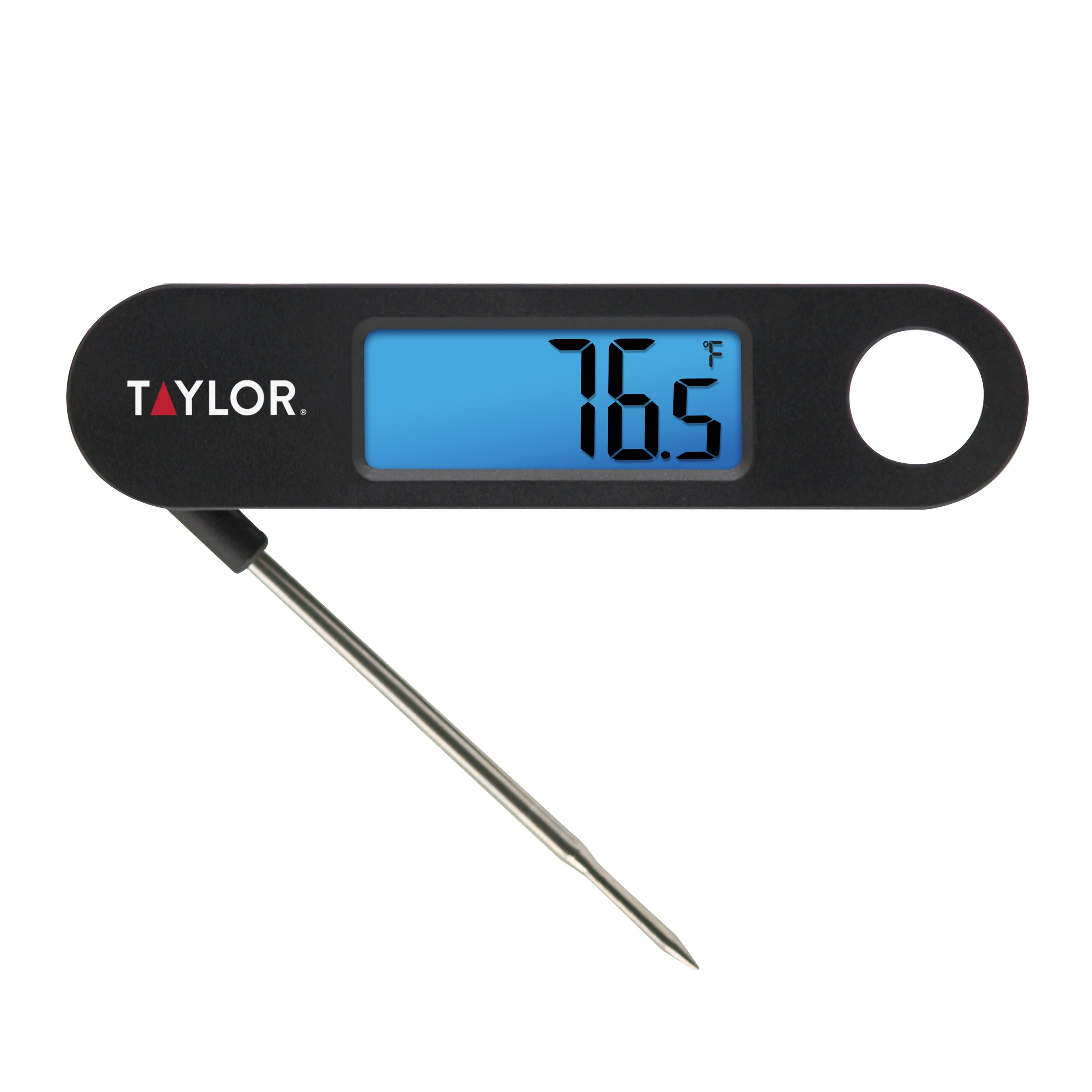
Why color and feel are not enough
Many people judge doneness by color, grill marks, or how firm the meat feels. The USDA's Food Safety and Inspection Service says those visual and physical cues are not reliable. The only way to know food has been cooked to a safe internal temperature is to use a food thermometer. In a USDA meal preparation study, 88 percent of participants said they owned a food thermometer, but only 55 percent used one to check whether their food was done. The rest relied on cues like color, firmness, and time.
The temperatures to know
The USDA's safe minimum internal temperature chart gives these numbers, measured with a food thermometer before you take food off the heat:
Beef, pork, veal, and lamb steaks, chops, and roasts: 145°F, then let the meat rest for at least 3 minutes.
Ground meats: 160°F.
All poultry, including whole birds, breasts, legs, thighs, wings, ground poultry, and stuffing: 165°F.
Fish and shellfish: 145°F.
Eggs: 160°F.
Leftovers and casseroles: 165°F.
These are minimums for safety. The USDA notes that you may choose to cook food to higher temperatures for personal preference, which is why many people take a brisket or pulled pork far past 145°F to make it tender.
The main types
Instant-read digital
You insert the probe, read the number in a second or two, and pull it out. These are the most versatile and the best first thermometer for most kitchens. They work for steaks, chicken, burgers, bread, and even oil and candy. They are not meant to stay in the oven or grill while food cooks.
Leave-in probe with a display
A probe on a heat-safe cable stays in the meat, while a display outside the oven or grill shows the temperature and sounds an alarm at your target. These are great for roasts, turkeys, and slow smoking, where you want to watch the temperature climb without opening the door.
Wireless and smart probes
A probe with no cable sits in the meat and sends the temperature to a base or phone app. Some have separate sensors for the air around the food. They cost more, but they let you walk away from the grill and still know exactly what is happening.
Dial oven-safe
The classic analog thermometer with a metal stem stays in a roast in the oven. It is cheap and needs no batteries, but it reads more slowly and is harder to see through an oven window.
How to use one the right way
A thermometer only helps if it is in the right spot. The USDA says to place the thermometer in the thickest part of the food, away from bone, fat, or gristle. For thin foods like burgers or chicken breasts, insert it through the side until the tip reaches the center.
For a whole chicken or turkey, the USDA recommends checking in three places: the innermost part of the thigh, the innermost part of the wing, and the thickest part of the breast, avoiding the bone.
Read the maker's instructions for how deep the probe needs to go. Check near the end of cooking, and clean the probe with hot, soapy water between uses, especially after testing raw meat.
Common mistakes to avoid
Checking too early and too often. Every time you poke a roast, you open a new path for juices to escape. With an instant-read, start checking near the end of the expected cooking time. With a leave-in probe, put it in once and let the alarm do the work.
Touching bone or the pan. Bone and hot metal conduct heat differently from meat, so a probe resting against them gives a false reading. Pull it back slightly and check again.
Forgetting carryover and rest. Large roasts keep rising a few degrees after they leave the heat. For steaks, chops, and roasts, the USDA's chart includes a rest of at least 3 minutes, so plan for it before you slice.
Leaving an instant-read in the oven. Most instant-read models are not built to stay inside a hot oven or closed grill. Use a leave-in probe for that job.
Checking your thermometer's accuracy
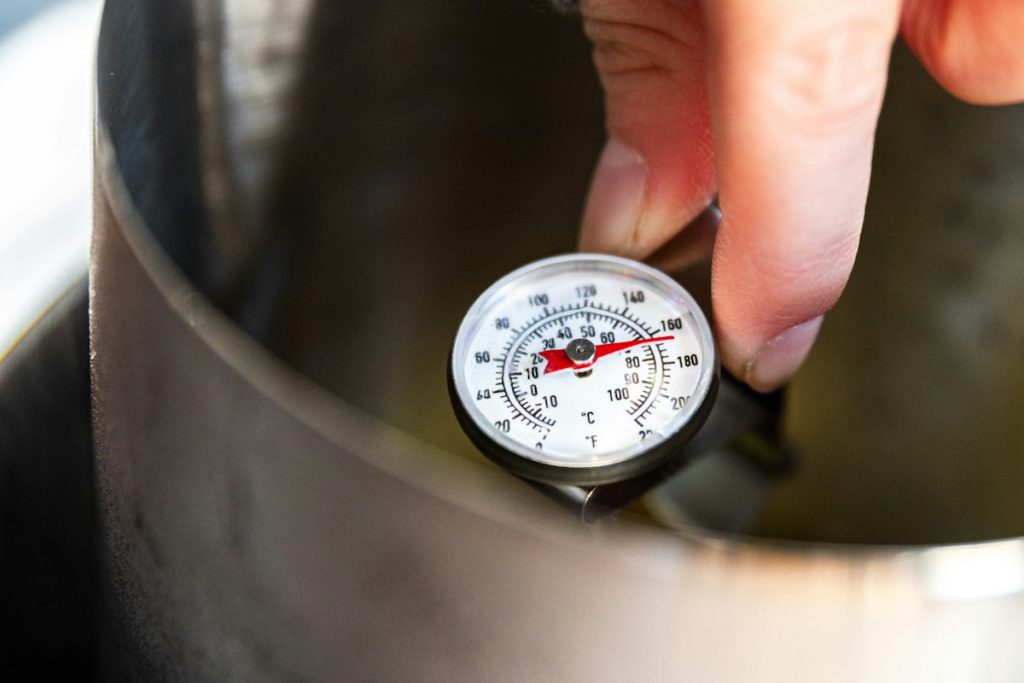
Even good thermometers can drift. The USDA describes two simple checks. For the ice water method, fill a large glass with ice cubes, add water, stir, and put the stem at least 2 inches into the mixture without touching the sides or bottom. It should read 32°F.
For higher temperatures, you can use boiling water, where the thermometer should read 212°F at sea level. The USDA notes that water boils at a lower temperature at high altitudes, so adjust for that. Many digital thermometers have a recalibration button, and many dial models have a nut under the dial that you can turn.
Meat thermometers worth a look
These picks cover instant-read, leave-in, wireless, and dial models. Specs are from the makers.
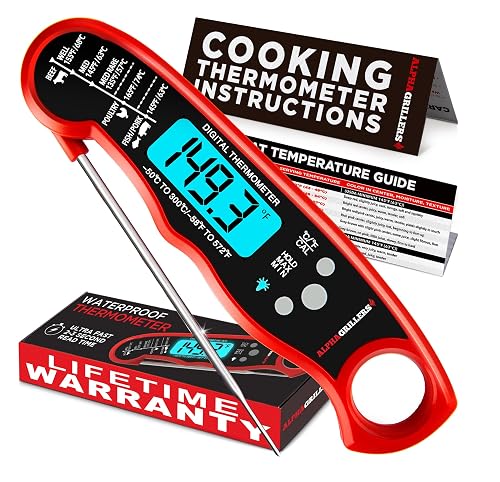
Instant Read Food Thermometer | Our instant read thermometer features a temperature probe and advanced, highly accurate technology with 1-2 seconds response time; Instructions, meat temperature cha...
Alpha Grillers' instant-read model is a low-cost digital pick. The maker says it reads in 1 to 2 seconds, comes pre-calibrated with a recalibration feature, and has a bright blue backlight for grilling after dark. It also works for liquids, frying oil, and candy.
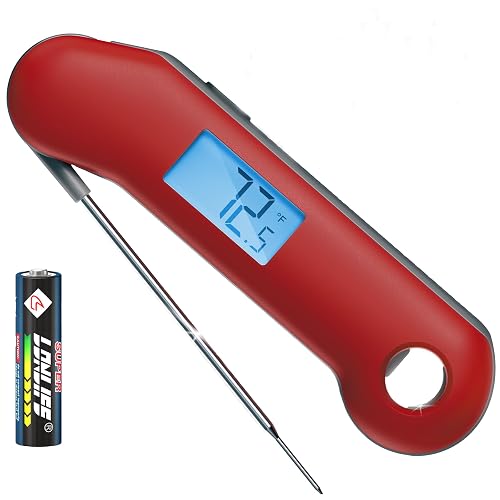
Industry-leading 0.5s Response Time: Our patented thermocouple technology places the sensor on the tip of the probe, allowing for direct contact with the heat.
NIST Certified Accuracy: Officially c...
ThermoMaven's professional instant-read places the sensor at the very tip of the probe for a 0.5-second response. The maker says it is NIST certified to plus or minus 0.5°F and rated IP67 waterproof, with an auto-rotating display for left- or right-handed use.
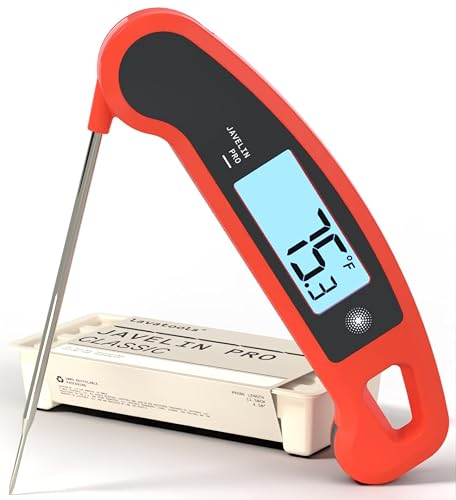
🥇 Voted #𝟭 𝗺𝗶𝗱-𝗽𝗿𝗶𝗰𝗲𝗱 𝘁𝗵𝗲𝗿𝗺𝗼𝗺𝗲𝘁𝗲𝗿 by America's Test Kitchen and Wirecutter and #𝟭 𝘁𝗵𝗲𝗿𝗺𝗼𝗺𝗲𝘁𝗲𝗿 by NBC News. Featured in major publications: WIRED, GQ, Gear Patrol, Men's Health, Bloomberg, Bon Appét...
The Lavatools Javelin PRO Classic has a large 2-inch display that rotates as you turn it. The maker says it reads in 2 to 3 seconds, with plus or minus 0.5°F accuracy achievable through laboratory calibration.
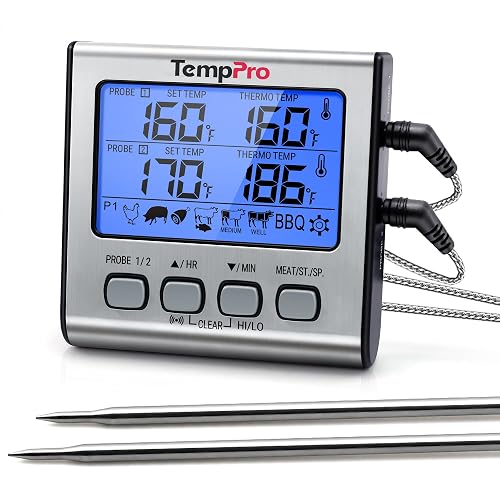
BBQ HI/LOW temp range alarm: Set your desired food temp and HI/LOW temp range for your grill or smoker to know when to add more fuel smoker thermometer will flash and beep to remind you if the temp...
TempPro's TempTrack is a leave-in thermometer with two probes, so you can track two pieces of meat, or one piece of meat plus the grill temperature. It includes USDA preset temperatures and a high and low range alarm for smokers.
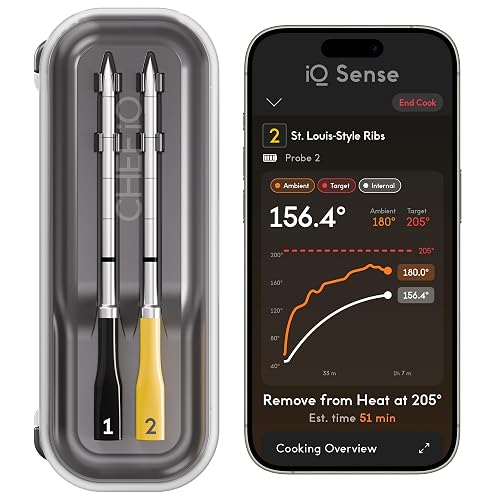
PERFECT DONENESS, EVERY TIME: This smart cooking thermometer takes away guesswork with real-time internal temperature updates, flip reminders, rest timers, estimated cooking times, Guided Cooking r...
CHEF iQ Sense comes with two ultra-thin probes that the maker says handle up to 1,000°F. It connects over Wi-Fi and offers flip reminders, rest timers, and guided recipes in its app.
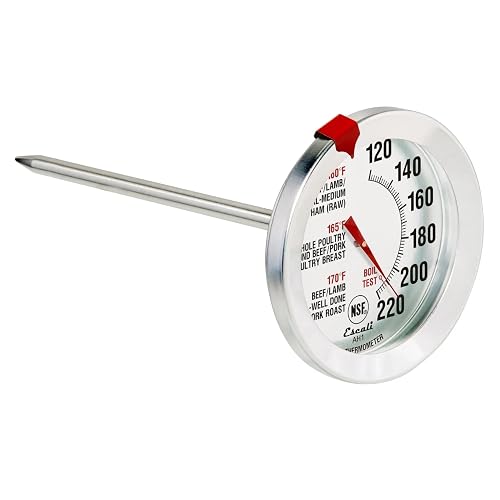
Temperature Range: 140° to 190°F / 60° to 87°C. Probe Length: 4.75-inches Dial Diameter: 2.375-inches
Target Cooking Temperatures: Internal cooking temperatures are labeled on the large dial displa...
For a low-tech option, Escali's stainless steel dial thermometer can stay in a roast in the oven. Its 140 to 190°F dial is labeled with target temperatures for beef, poultry, pork, veal, and lamb, and it is dishwasher safe.
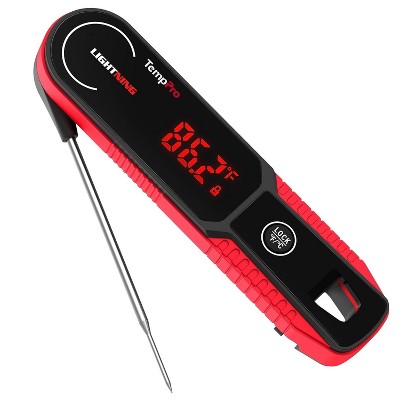
At Target, the TempPro Lightning is an instant-read thermocouple with readings in about a second, plus or minus 0.5°F accuracy, custom calibration, and a 2-inch rotating display.
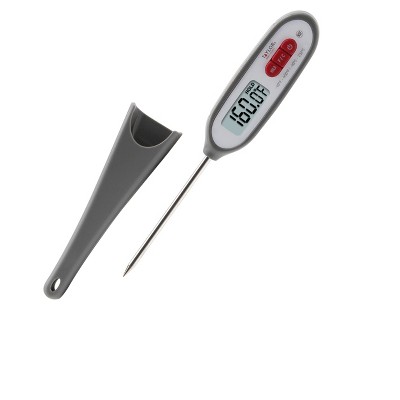
If you want something that fits in a drawer or apron pocket, Taylor's compact pen-style thermometer at Target has a stainless probe, a digital display, and a range of -40 to 450°F. It is slower than a thermocouple but costs much less.
The Taylor foldable probe thermometer is a simple budget pick. The probe folds into the body so it is safe to toss in a drawer, and a blue backlight helps when you are checking food on the grill after dark.
Which one to choose
If you only buy one, make it a fast instant-read digital thermometer. It covers weeknight chicken, burgers on the grill, and holiday roasts. If you often smoke meat or cook large roasts, add a leave-in probe with an alarm. Choose a wireless model if you want to leave the grill and still keep an eye on dinner. Whatever you pick, check it in ice water now and then, place it in the thickest part of the food, and trust the number, not the color.
The responses below are not provided, commissioned, reviewed, approved, or otherwise endorsed by any financial entity or advertiser. It is not the advertiser’s responsibility to ensure all posts and/or questions are answered.
How often should you do the ice water check? Every time before a big cook, or just once in a while?