
Last Updated on: Sep 23, 2026
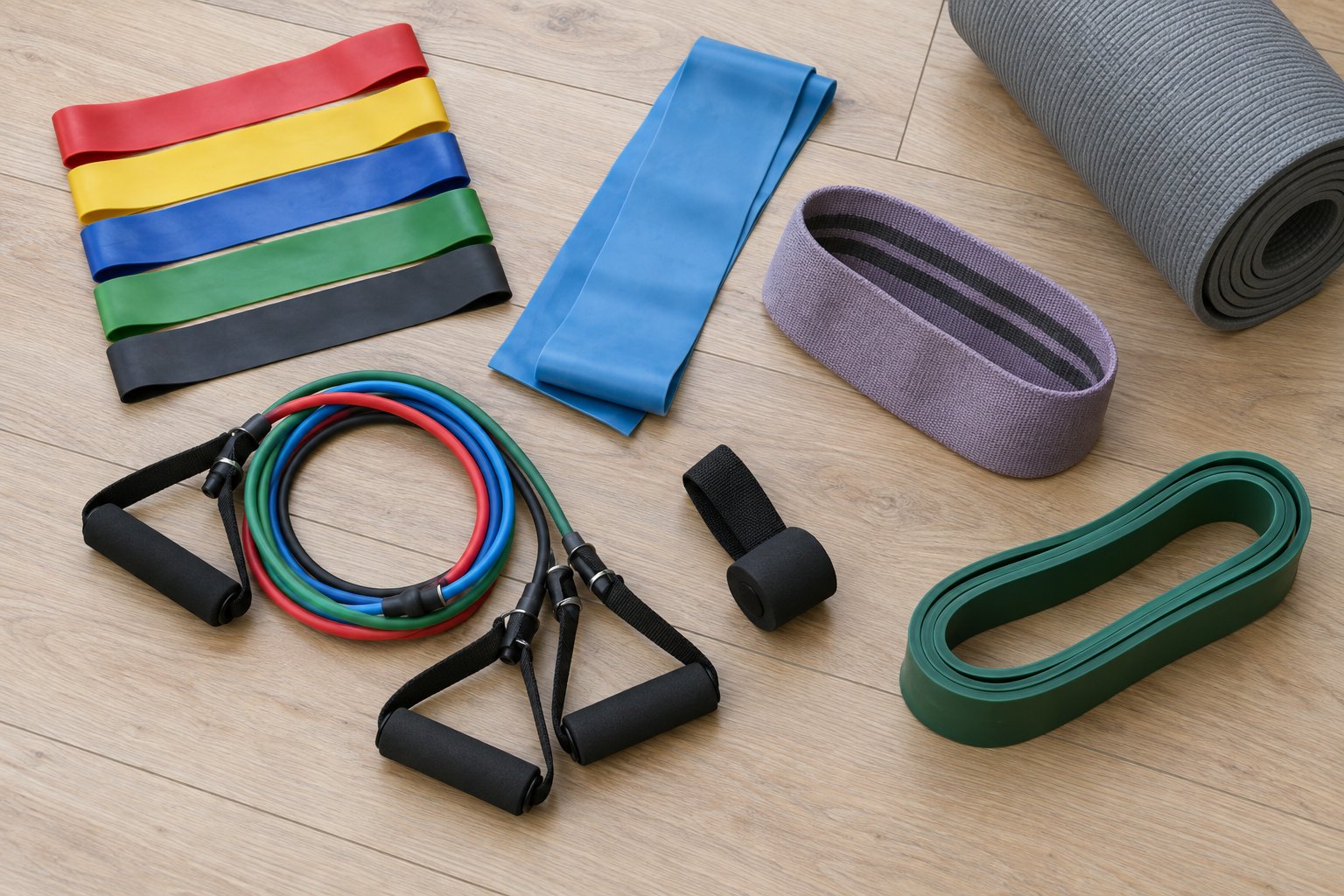
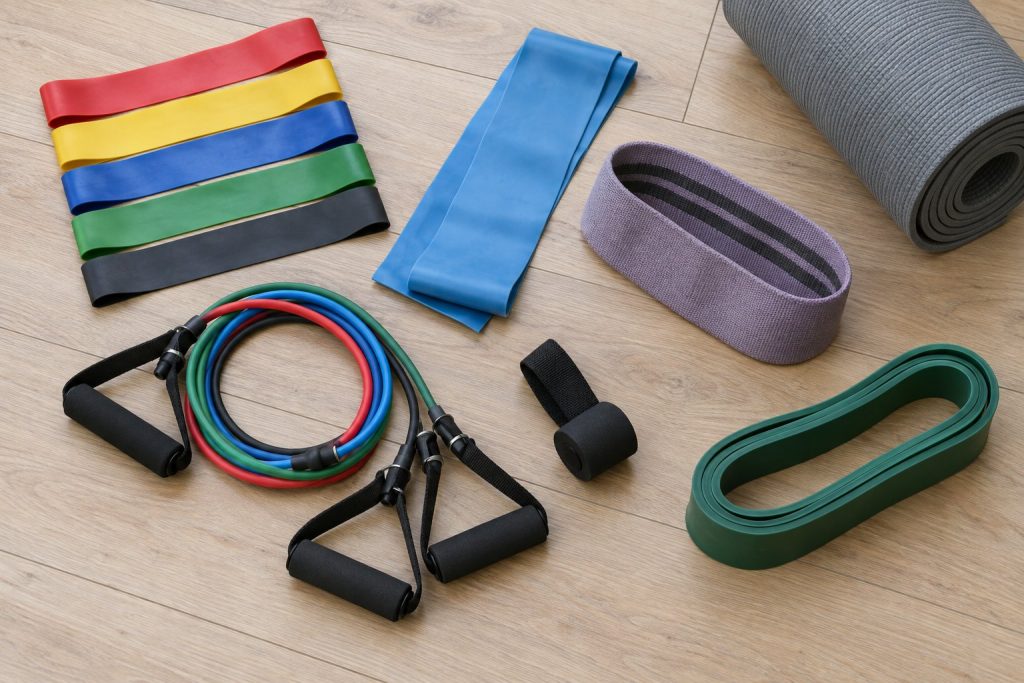
Resistance bands are the cheapest way to add strength training at home, and they fit in a drawer. That is the whole appeal. The confusing part is that "resistance band" covers at least five very different tools, from the small colored loops used in glute workouts to the long flat bands physical therapists hand out after surgery. Buying the wrong type is the most common reason bands end up untouched in a closet.
What We'll Cover
- Top Resistance Bands
- The five main types
- Mini loops for hips and glutes
- Flat bands for therapy and mobility
- Tube bands for a home gym feel
- Power loops for pull-ups and heavy work
- Why the pound numbers are only a guide
- Form tips that make bands work
- A simple starter routine
- How to make bands last
- Bands or dumbbells?
- Which should you buy first?
The CDC recommends that adults do muscle-strengthening activities at least two days a week, alongside regular aerobic activity. Bands are an easy way to hit that target without a gym, as long as you choose the kind that suits the exercises you actually plan to do.
Top Resistance Bands
The five main types
| Type | Looks like | Best for |
|---|---|---|
| Mini loop | Short latex loop, about a foot long | Glutes, hips, warmups, lateral walks |
| Fabric loop | Wide cloth band with grip | Squats and hip work without rolling |
| Flat therapy band | Long flat strip, no handles | Rehab, mobility, light upper body |
| Tube with handles | Rubber tubes, clips, door anchor | Gym-style presses, rows, curls |
| Power loop | Long thick loop | Pull-up assist, stretching, heavy work |
Mini loops for hips and glutes
Small latex loops go around your thighs or ankles and add tension to squats, bridges, clamshells, and side steps. They are the band most people start with, and they come in color-coded sets so you can move up as you get stronger.
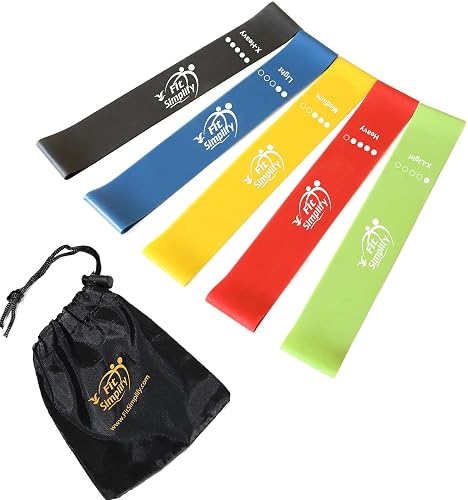
High End Exercise Bands. Our 12"³ By 2"³ Heavy Duty Loop Resistance Bands Come In 5 Varying Resistance Levels. This Makes Them Perfect Whether You Are Just Starting To Workout Or A Seasoned Workout...
Fit Simplify loop bands are one of the longest-running best sellers in the category. The set includes five bands from extra light to extra heavy, each 12 by 2 inches, plus a carry bag and an instruction guide. The lighter bands suit beginners and warmups. The heavier ones are for more advanced lower-body work.
Latex loops can roll up or pinch skin during squats, especially above the knee. If that bothers you, fabric bands are the fix.
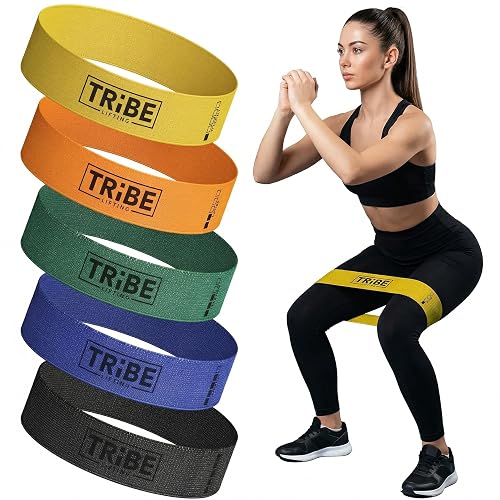
THICK FABRIC RESISTANCE LOOPS THAT STAY PUT — Wide cloth weave grips your thigh and legs without rolling or pinching bare skin during squats, lunges, and hip circle exercises for a booty workout
5 ...
This fabric set uses a wide cloth weave that grips your legs without rolling or pinching bare skin. It includes five levels, from mini to extra heavy. Fabric bands tend to be stronger than latex loops of the same color, so start a level lower than you think you need.
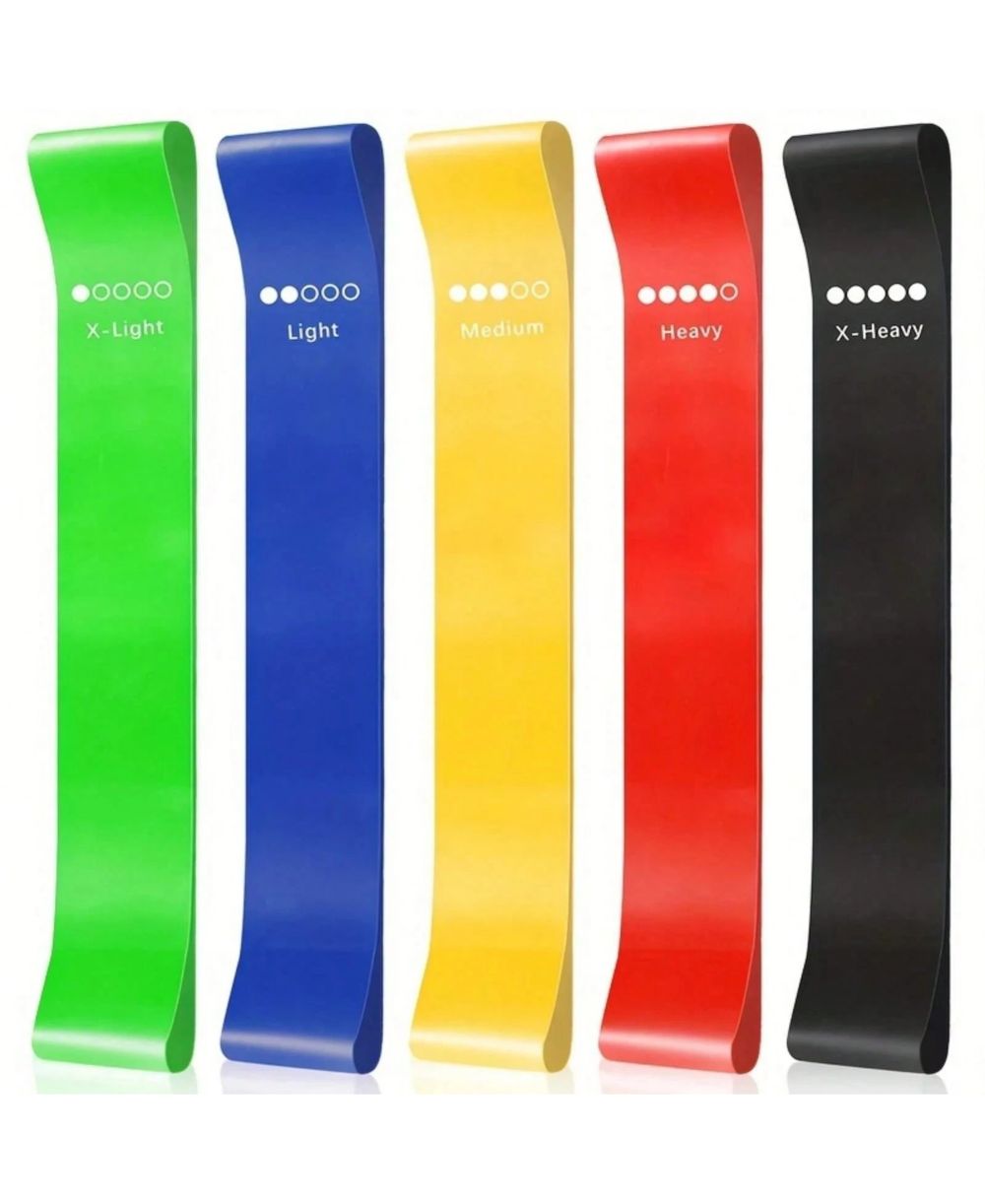
If you want mini loops that are not made of latex or fabric, Macy's lists a SEVORLEY set made from TPE. It has five bands, from extra light to extra heavy, and comes with a carry bag, so it covers the same range as a standard latex loop set.
Flat bands for therapy and mobility
Long flat bands are what you get in a physical therapy clinic. You can wrap them around your hands, loop them under your feet, or tie them to a sturdy anchor. They are gentle and very flexible in how you use them, which makes them good for shoulder rehab, ankle work, and stretching.
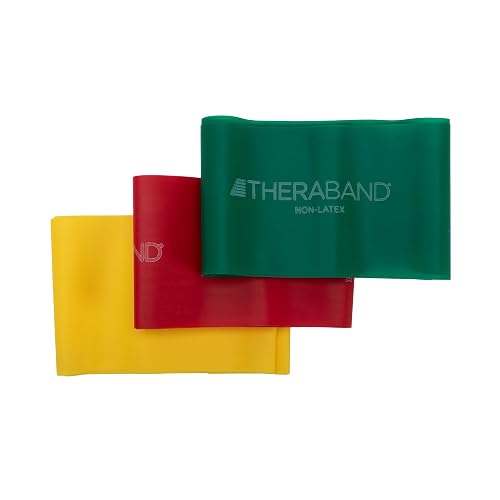
BEGINNER-FRIENDLY STRENGTH TRAINING TOOL: Designed for safe, low-impact resistance workouts at home or on-the-go, THERABAND latex resistance bands are ideal for beginners improving flexibility, ton...
THERABAND is the name most therapists use, and this starter set is aimed at beginners and people recovering from injury. Each band is 5 feet long and 4 inches wide. The set includes yellow, red, and green bands, with clearly marked resistance levels so you can track progress. If you are working through an injury, follow your physical therapist's plan for which color to use.
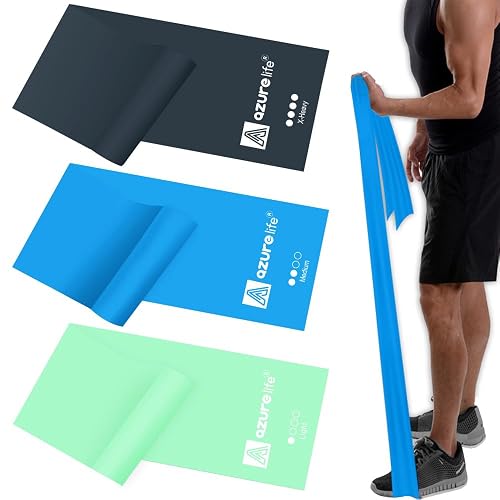
【Premium Quality】 3 Exercise Bands with Color-coded Resistance Levels (Light, Medium, X-Heavy), Made from Upgraded Rubber Material, Not Sticky Material, Eco-Friendly, Non-Toxic, Latex-Free, People ...
If you have a latex allergy, the AZURELIFE set is a good alternative. The three bands are latex-free, 5 feet long, and a wider 6 inches, in light, medium, and extra heavy. The extra width spreads pressure across your hands and feet, which is more comfortable for longer sessions.
Tube bands for a home gym feel
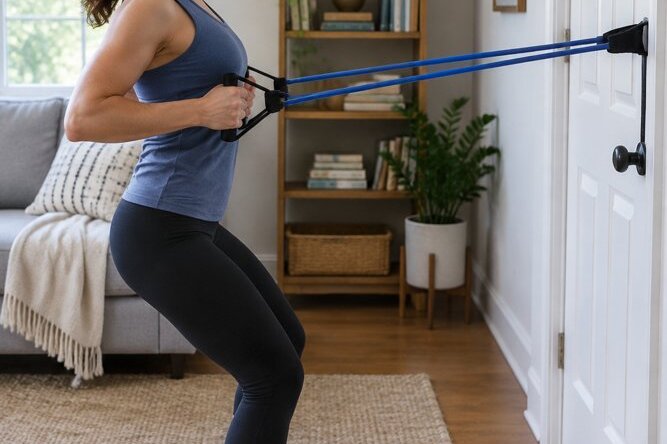
Tube bands with handles are the closest thing to a cable machine at home. Each tube clips onto the handles, and you can stack several for more resistance. A door anchor lets you attach them at chest height, overhead, or near the floor, so you can do rows, chest presses, pulldowns, and triceps extensions.
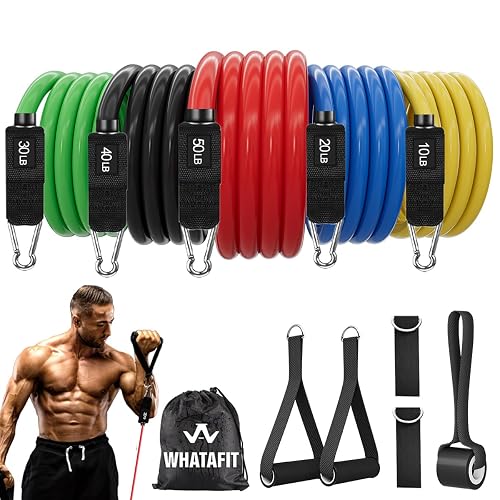
5 STACKABLE RESISTANCE LEVELS — Train with 10, 20, 30, 40 or 50 lb, or connect multiple tube resistance bands with handles for up to 150 lb. The 10 lb steps make it easy to adjust resistance for wa...
The WHATAFIT set includes five stackable tubes at 10, 20, 30, 40, and 50 pounds, for up to 150 pounds combined. It comes with handles, a door anchor, and a travel pouch. The 10-pound steps make it easy to progress gradually, which is the whole point of strength training.
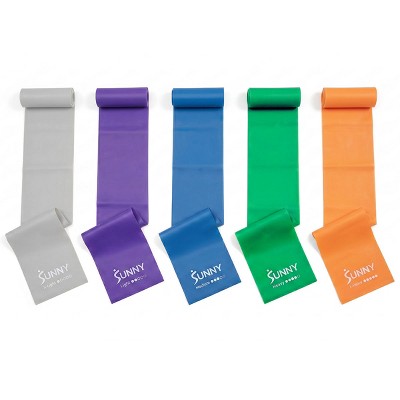
Target stocks a 5-level resistance band set from Sunny Health and Fitness, a brand known for home cardio gear, if you would rather pick one up in person.
Always check the door anchor before you pull. Close the door firmly on the hinge side if you can, and make sure it opens away from you. That way, if anything slips, the door stays shut.
Power loops for pull-ups and heavy work
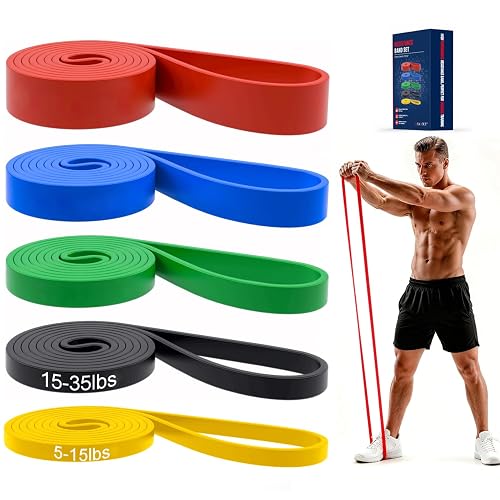
100% Natural Latex
【Natural Latex & Durable Elasticity】Our pull up bands are made of 100% natural Malaysia latex, making these resistance bands soft, odorless and highly durable. The workout bands ...
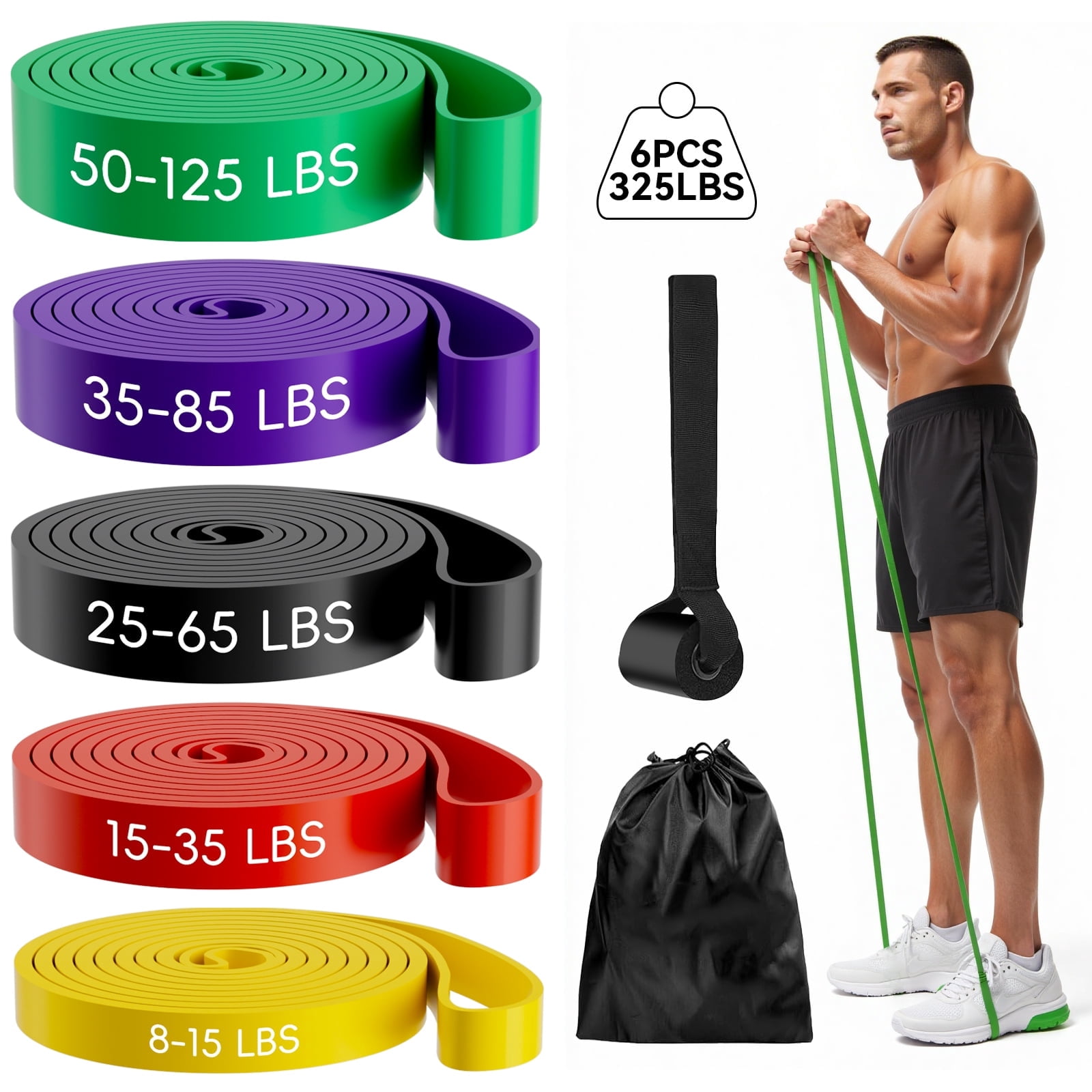
Long, thick loop bands are what you see hanging from pull-up bars at gyms. Loop one around the bar and put a knee or foot in it, and it takes some of your body weight so you can practice full pull-ups. The same bands work for heavy banded squats, push-ups, and assisted stretching. This set is made from natural latex. Sets like it come in several widths, and thicker bands give more help.
Walmart carries a KAMIDA set of six long natural latex loop bands for pull-up assistance and heavier work. It comes with a door anchor and a carry bag, so the same bands can go from a pull-up bar to a door frame at home.
Why the pound numbers are only a guide
Band packaging often lists resistance in pounds, but a band does not work like a dumbbell. The tension rises the farther you stretch it. A band rated at 30 pounds might give you 10 at the start of a row and closer to 30 at the end. That is actually useful, since most muscles are strongest near the end of a movement, but it means you cannot compare a band to a weight one to one.
The ratings also vary from brand to brand. One company's heavy band may feel like another's medium. Treat colors and numbers as a way to rank bands within a single set, and judge by feel. If the last three reps of a set are hard but your form holds, the band is right.
Form tips that make bands work
Control the return. The easy part of a band exercise is letting it pull you back, and that is where many people lose tension. Count two seconds out and two seconds back. It makes a light band feel much heavier and cuts the risk of the band snapping back toward your face.
Set up so the band stays taut at the start. If the band is slack when you begin, the first part of the rep does nothing. Step farther from the anchor or choke up on the band until you feel light tension before you move.
Keep your wrists straight and your shoulders down during presses and rows. For squats with a loop, push your knees out against the band rather than letting them cave in. That small cue is why loops are so popular for glute training.
A simple starter routine
Two or three sessions a week of 20 to 30 minutes is enough to build strength with bands. Pick five or six moves that cover your whole body, such as banded squats, rows, chest presses, glute bridges, overhead presses, and side steps. Do two or three sets of 10 to 15 reps for each.
Choose a band where the last few reps of each set feel hard but your form stays clean. When you can finish every set easily, move to the next band up or stack another tube. That steady increase is what makes the workouts pay off.
How to make bands last
Inspect your bands before each use. Look for nicks, tears, thin spots, or sticky areas, and throw away any band that shows them. A band that snaps mid-rep can hit you hard. Keep bands out of direct sunlight and away from heat, which break down latex over time. Store them loosely in a bag instead of stretched or knotted.
Do not anchor bands to sharp or rough edges, and avoid stepping on them with shoes that have deep treads, which can cut the rubber. Wipe latex bands with a damp cloth now and then. Fabric bands can usually be hand-washed and air dried.
Bands or dumbbells?
Bands will not fully replace heavy weights for someone chasing big lifts, but they cover far more than most people expect. They are light enough to pack in a suitcase, quiet enough for an apartment, and safer to use alone because there is no weight to drop. Many lifters also use them next to dumbbells, adding a loop to a squat or a tube to a press for extra tension at the top. For beginners, returning exercisers, and travelers, they are often the better place to start.
Which should you buy first?
If you mainly want lower-body and glute work, start with a loop set, latex or fabric. If you want a full-body routine that feels like the gym, get tube bands with handles and a door anchor. If you are recovering from an injury or have a latex allergy, start with flat bands. And if pull-ups are the goal, add a couple of power loops.
Many people end up owning two types, usually a loop set plus tubes. Together they cost less than a month at many gyms and cover nearly every exercise you would want to do at home.
The responses below are not provided, commissioned, reviewed, approved, or otherwise endorsed by any financial entity or advertiser. It is not the advertiser’s responsibility to ensure all posts and/or questions are answered.
Is it okay to store latex bands in a garage, or does the heat and cold wear them out faster?