
Last Updated on: May 18, 2026
Every home office and small business collects paper that should never go into the recycling bin whole. Bank statements, pay stubs, old invoices, pre-approved credit offers, and anything with an account number or a Social Security number can be pulled out of a bin and used. A shredder turns that risk into confetti in a few seconds.
What We'll Cover
- Top Paper Shredders
- What to shred, and what to keep
- Cut type is the first decision
- Sheet capacity and run time
- Heavy-duty picks for regular shredding
- Micro-cut picks for sensitive records
- Compact and budget picks
- Matching the shredder to your volume
- Bin size and where it will live
- Keep it running
- Safety around kids and pets
- The short answer
The hard part is picking one. Shredders look alike, but they differ in how small they cut, how many sheets they take at once, how long they run before they need a rest, and how often you will be emptying the bin. Get those four things right and a shredder will quietly do its job for years. Get them wrong and you will be feeding it two sheets at a time and waiting for it to cool down.
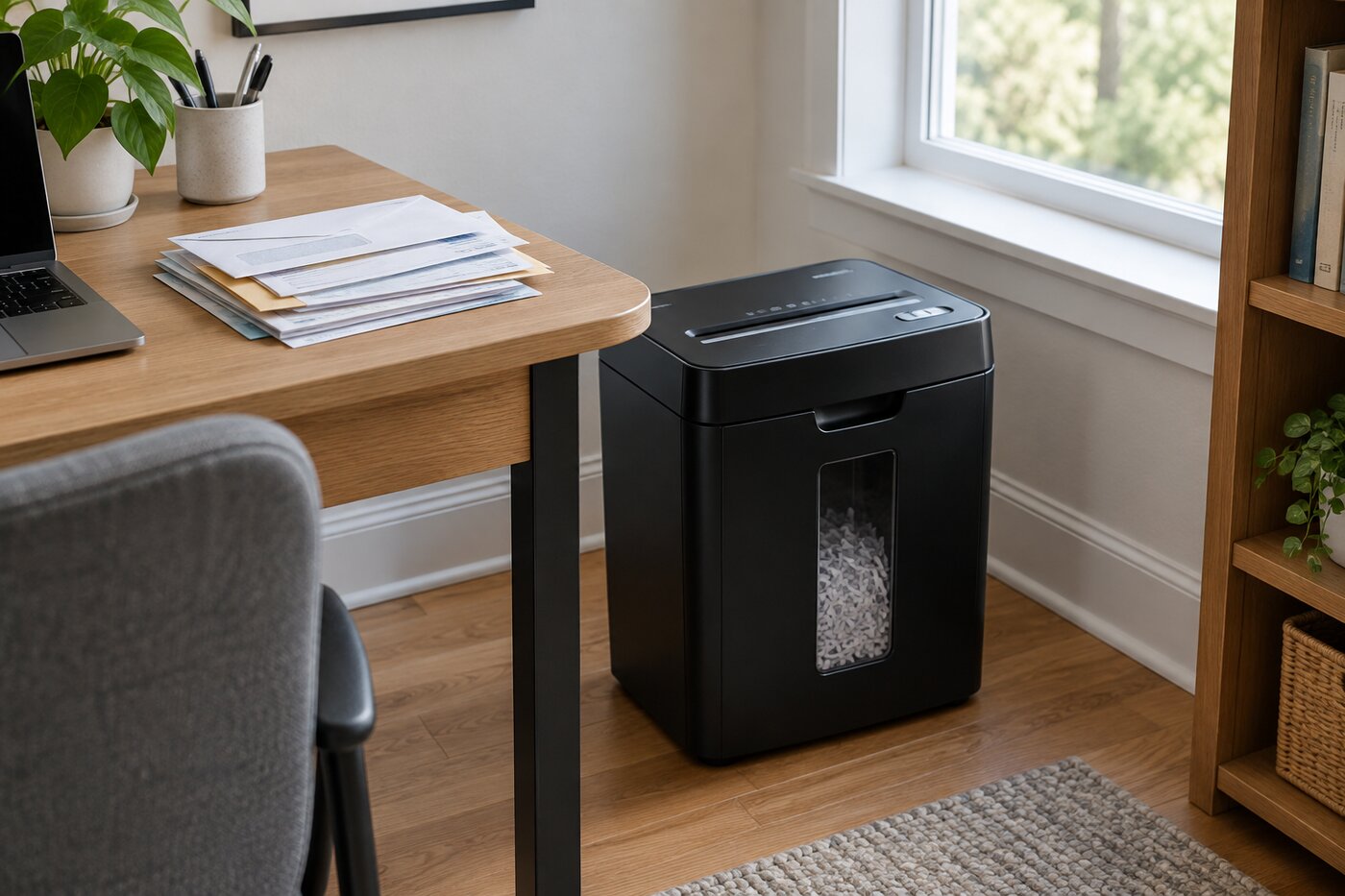
Top Paper Shredders
What to shred, and what to keep
The Federal Trade Commission recommends shredding documents with personal or financial information once you no longer need them, rather than throwing them away. Its consumer guidance lists items such as ATM receipts, offers of credit or insurance, and cleared checks as things to shred. It also suggests keeping bank statements, pay stubs, and credit card and utility bills for about a year, and income tax returns and related documents for at least three years, and it notes that the IRS sometimes recommends longer.
For a small business, the list grows: customer order forms, employee records you are allowed to dispose of, supplier invoices, and printed emails with account details. If you run a business, check what your industry and state require before you destroy records, since some must be kept for set periods.
Cut type is the first decision
Shredders are rated by the size of the pieces they leave behind. The common standard is DIN 66399, which sorts paper shredding into seven levels, P-1 through P-7. The higher the number, the smaller the pieces and the harder it is to put a page back together.
- Strip-cut (usually P-1 or P-2) slices pages into long ribbons. It is fast and cheap, but strips can be lined up again. It is fine for junk mail, not for statements.
- Cross-cut (often P-3 or P-4) cuts both ways into short pieces. Under DIN 66399, P-4 allows particles of no more than 160 square millimeters. This is the sensible default for most homes and small offices.
- Micro-cut (often P-4 or P-5) leaves tiny pieces. P-5 caps particles at 30 square millimeters. Choose it if you handle medical, legal, or client financial records.
Smaller pieces come at a cost. Micro-cut machines usually take fewer sheets per pass, fill their bins faster because the confetti packs less tightly, and may need more frequent oiling. Always check the security level printed on the listing rather than relying on the word "micro" alone.
Sheet capacity and run time
Sheet capacity tells you how many pages of standard 20 lb paper the shredder takes in one pass. The number on the box is a maximum. Feeding a shredder at its limit every time is the fastest way to cause jams, so plan on using about two-thirds of the rated capacity. A 12-sheet model is comfortable with eight or nine pages at a time.
Run time matters more than most people expect. Many home shredders are rated for a few minutes of continuous shredding followed by a longer cool-down. If you shred a handful of envelopes each week, that is fine. If you save everything for one big session at tax time, look for a model rated for a long run time, such as 30 minutes or more.
Heavy-duty picks for regular shredding
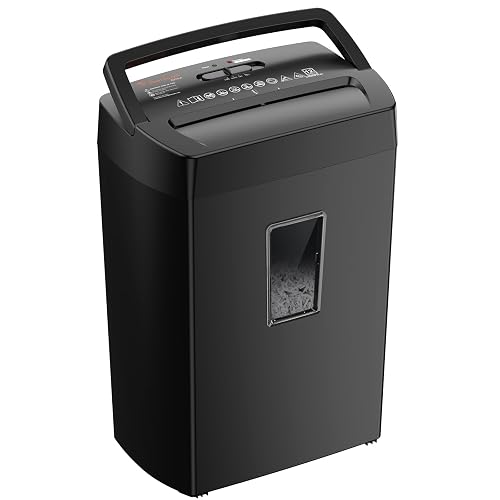
P-4 Level Security: Crosscut shredder for home office heavy duty can handle 12 sheets effortlessly per pass, make sure your important documents are securely shredded, can shred paper, credit card, ...
The Bonsaii 12-sheet cross-cut shredder is a good middle ground for a busy home office. It takes up to 12 sheets per pass, cuts to the P-4 level, and has a 5.5-gallon bin with a clear window so you can see when it is time to empty it. It is also rated to take credit cards, staples, and mail.
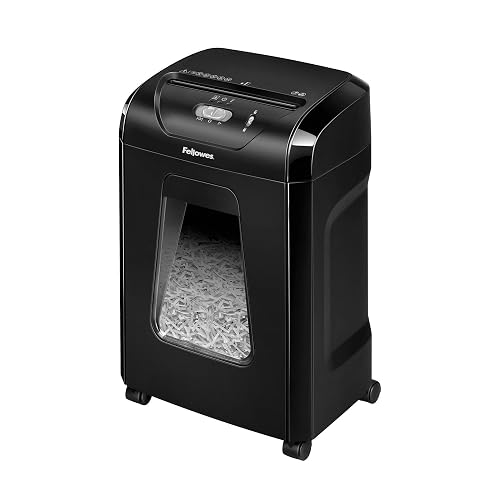
Enhanced Efficiency and Security: Effectively shreds 14 sheets of paper per pass into 5 /32” x 1-9/16” cross-cut particles (Security Level P-4), providing greater security for confidential document...
The Fellowes 14C10 steps up to 14 sheets per pass. It is a cross-cut machine aimed at home offices that shred more than a few pages at a time, which makes it a better fit when two or three people share one shredder.
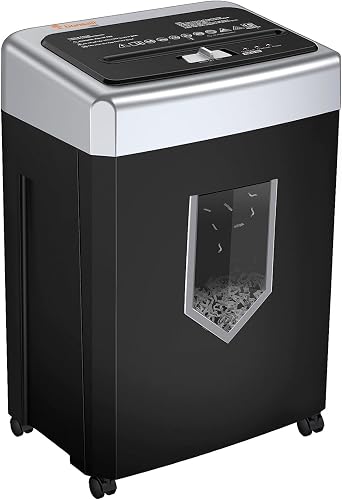
【Paper Shredder for Office Use】Max 15 sheets of paper shredding capacity, Bonsaii crosscut office shredder heavy duty can shred paper, CDs, credit cards, mail and staples into tiny particles measur...
For shops that shred in long sessions, the Bonsaii 15-sheet cross-cut model is rated for up to 40 minutes of running before it needs a break. That longer run time is the main reason to pay more for it.
Micro-cut picks for sensitive records
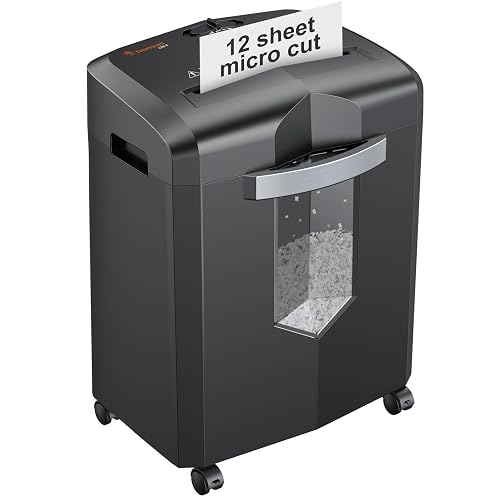
【20 Minutes & 12 Sheets Shredder】Using advanced cooling system and patented cutting technology, paper shredder can continuous running up to 20 minutes, shred up to 12 sheets at a time, and also shr...
The Bonsaii 12-sheet micro-cut shredder is the pick if you handle client or patient paperwork. Micro-cut particles are much smaller than cross-cut pieces, so this model takes fewer sheets per pass than a cross-cut machine of the same size would suggest. Check the listing for its exact security level.
The micro-cut shredder function takes your data down to 4.3mm x 12mm pieces
The micro-cut shredder function takes your data down to 4.3mm x 12mm pieces. Includes essential safety features like Auto...
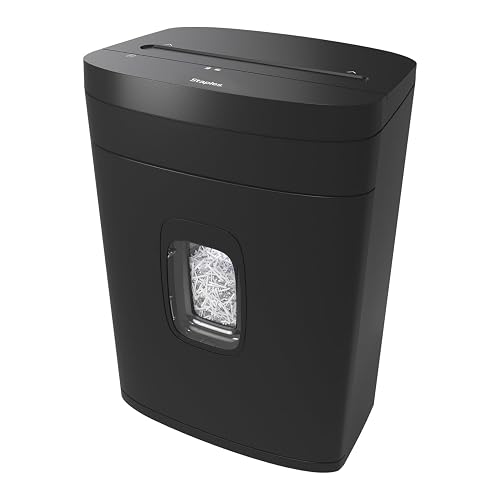
The Staples 12-sheet micro-cut shredder is sold with an anti-jam design, which helps when several people feed it without paying close attention to sheet counts. It is a solid choice for a small shared office.
Compact and budget picks
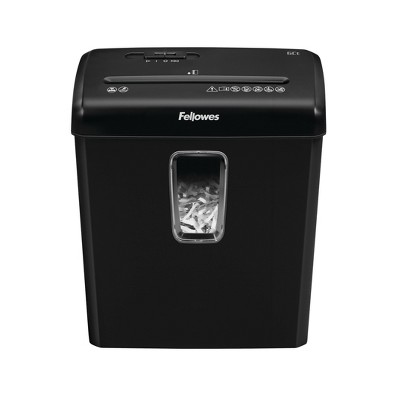
At Target, the Fellowes Powershred 6Ct is a small cross-cut shredder that fits under a desk. It takes six sheets at a time, shreds credit cards and staples, and starts automatically when you insert paper. It suits a home where shredding means a few pieces of mail each week.
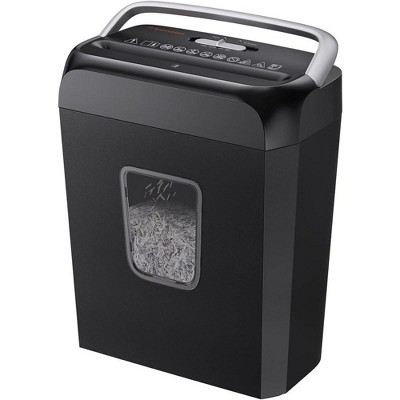
Also at Target, the Bonsaii 6-sheet cross-cut shredder has auto start and stop, a jam-resistant design, and a 3.4-gallon wastebasket. It is light enough to move between rooms.
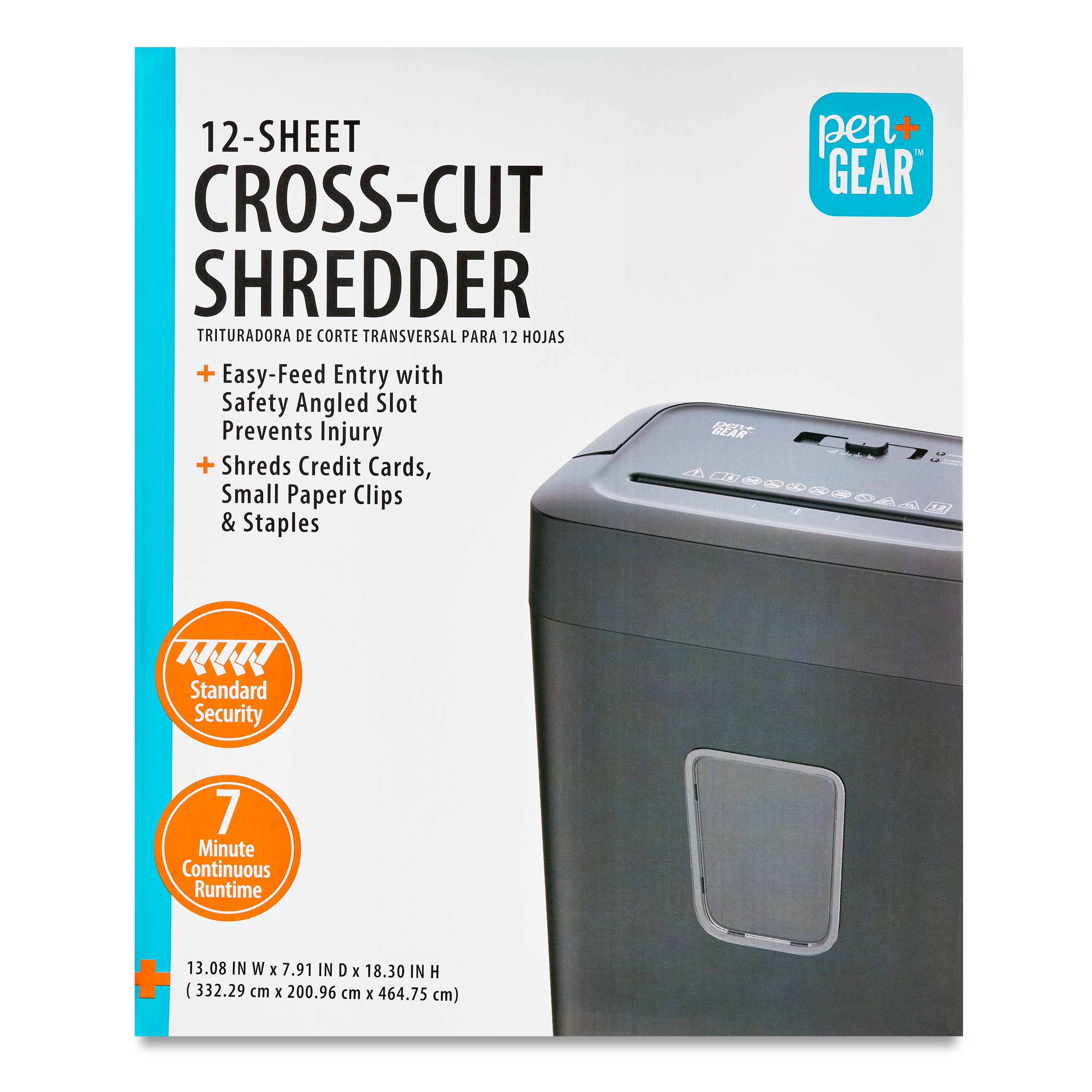
If you want 12-sheet capacity without a big price, the Pen+Gear 12-sheet cross-cut shredder handles paper and credit cards and has a 5.55-gallon bin. It is a practical choice for a small office on a tight budget.
Matching the shredder to your volume
A quick way to size a shredder is to count how much paper you actually destroy. A single person clearing out weekly mail rarely shreds more than a few dozen sheets a week, so a six-sheet compact model is enough. A home office that handles invoices, receipts, and client paperwork may shred a few hundred sheets a month, which calls for 10 to 14 sheets per pass and a bigger bin. A small business with several people sharing one machine should look at 15 sheets or more, a long run time, and an anti-jam feature, because shared shredders tend to be overfed.
If your volume is mostly a once-a-year purge, a mid-size machine plus a local shredding event or service can cost less than buying a large office model you rarely use.
Bin size and where it will live
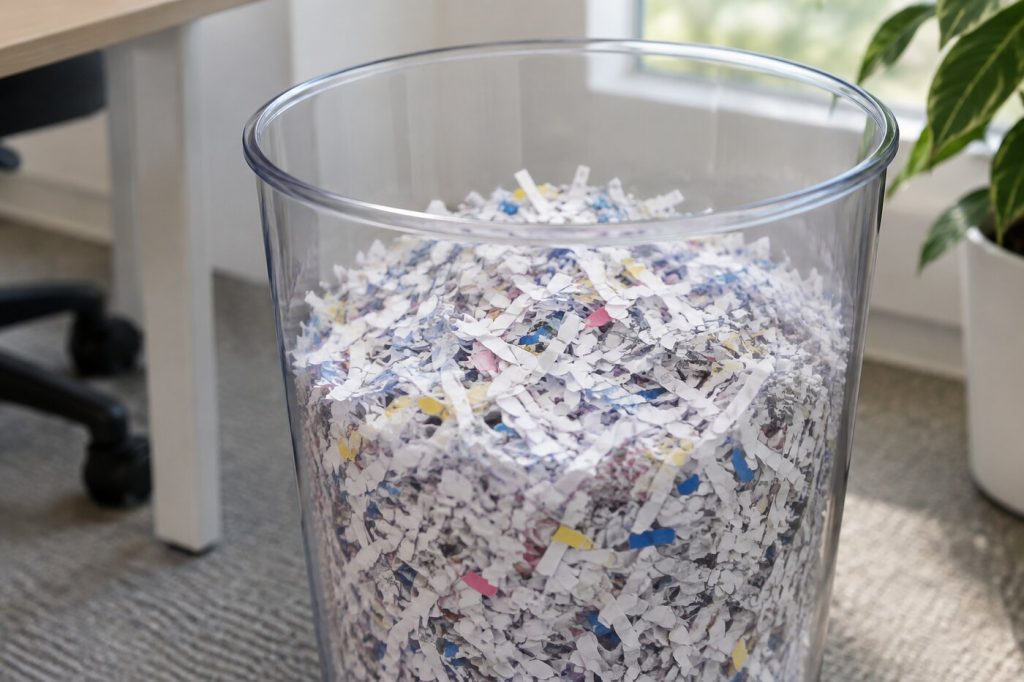
Bin size decides how often you empty the machine. Two to four gallons is enough for occasional mail. Five to seven gallons suits a home office. Anything larger is for shared spaces. Pull-out bins are easier to empty than lift-off heads, and a window saves you from overfilling, which is a common cause of jams.
Measure the spot before you buy. Many shredders are tall enough that they will not slide under a standard desk, and noise matters if the shredder sits next to where you take calls.
Keep it running
- Oil the cutters every few bin-fulls, or when the motor starts to sound strained. Use shredder oil or oiled sheets and follow the maker's directions.
- Remove large binder clips and thick plastic before feeding. Check the listing before you shred cards, CDs, or staples.
- Do not force paper that stalls. Use reverse, pull the stack back out, and split it.
- Empty the bin before it is completely full so paper does not back up into the cutters.
- Unplug the machine before clearing a jam or cleaning the feed opening.
Safety around kids and pets
Shredder feed openings can catch fingers, hair, loose sleeves, ties, and pet paws. Keep the machine switched off or unplugged when you are not using it, keep children away from it, and choose a model with a safety sensor or a lock switch if little ones share the space.
The short answer
For most home offices, a 10- to 14-sheet cross-cut shredder with a P-4 rating and a five-gallon bin is the right balance of security, speed, and cost. Pick micro-cut if you handle other people's sensitive records, and pick a long run time if you shred in big batches. Whichever you choose, feed it below its limit and oil it now and then, and it will keep your paperwork out of the wrong hands.
The responses below are not provided, commissioned, reviewed, approved, or otherwise endorsed by any financial entity or advertiser. It is not the advertiser’s responsibility to ensure all posts and/or questions are answered.
Is it worth oiling a shredder that only gets used a couple of times a month, or is that mainly for heavy use?