
Last Updated on: Sep 24, 2026
Most people only think about their thermometer when someone in the house already feels awful. That is the worst time to find out the battery is dead, the old one got lost in a move, or the one in the drawer is a stick model that your toddler will not hold under their tongue. A few minutes of thought now saves a lot of guessing at 2 a.m.
Home thermometers come in four main styles, and each one fits different people and situations. This guide covers how they differ, which ones pediatric experts recommend for babies and young kids, and how to get a reading you can rely on. It is general information, not medical advice. When in doubt about a fever, especially in a baby, call your pediatrician or health care professional.
Top Family Thermometers
What We'll Cover
- Top Family Thermometers
- Why a real thermometer beats a hand on the forehead
- The four main types
- Digital stick thermometers
- Ear thermometers
- Temporal artery thermometers
- Non-contact infrared thermometers
- Which type for babies and kids
- When to call the doctor
- Getting an accurate reading
- Features worth paying for
- A thermometer for every setting
- Care and storage
Why a real thermometer beats a hand on the forehead
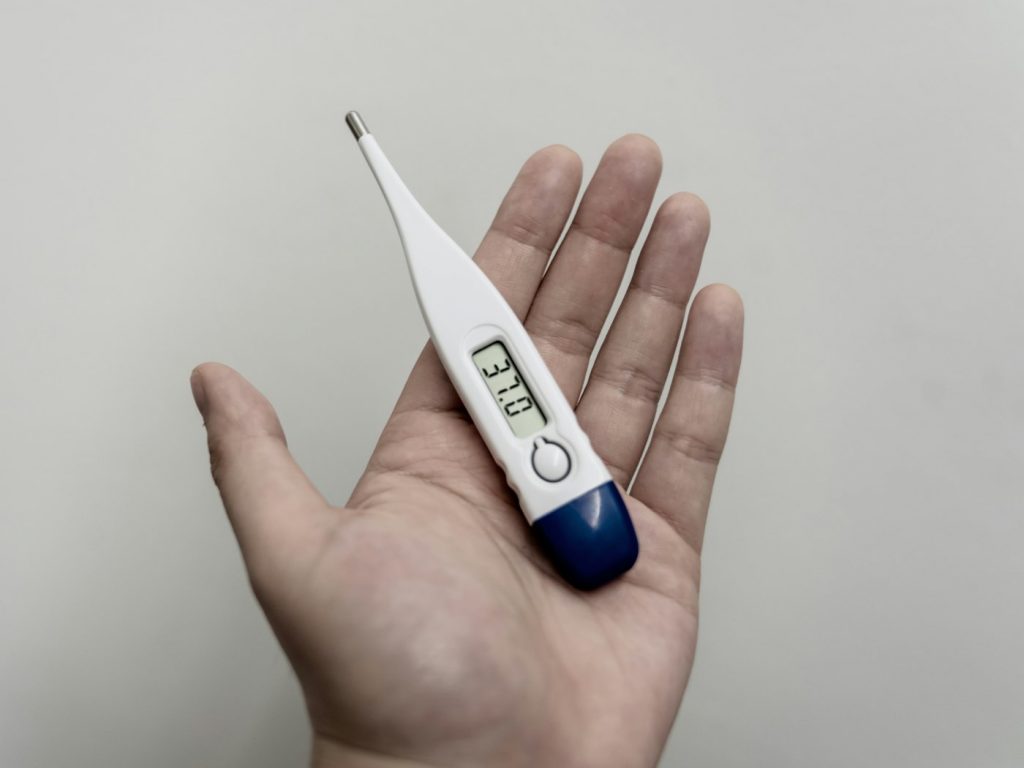
It is tempting to check for a fever by touch. The American Academy of Pediatrics says that feeling a child's forehead or skin is not accurate, especially if the child has chills. The AAP also says temperature-sensitive tape and fever strips are not reliable. If you think someone has a fever, use a thermometer.
Normal temperature is not one fixed number, either. The AAP notes that it varies with age, activity, and time of day, running highest in the late afternoon and early evening and lowest around midnight and early morning. That is one reason to measure rather than guess, and to note the time when you do.
The four main types
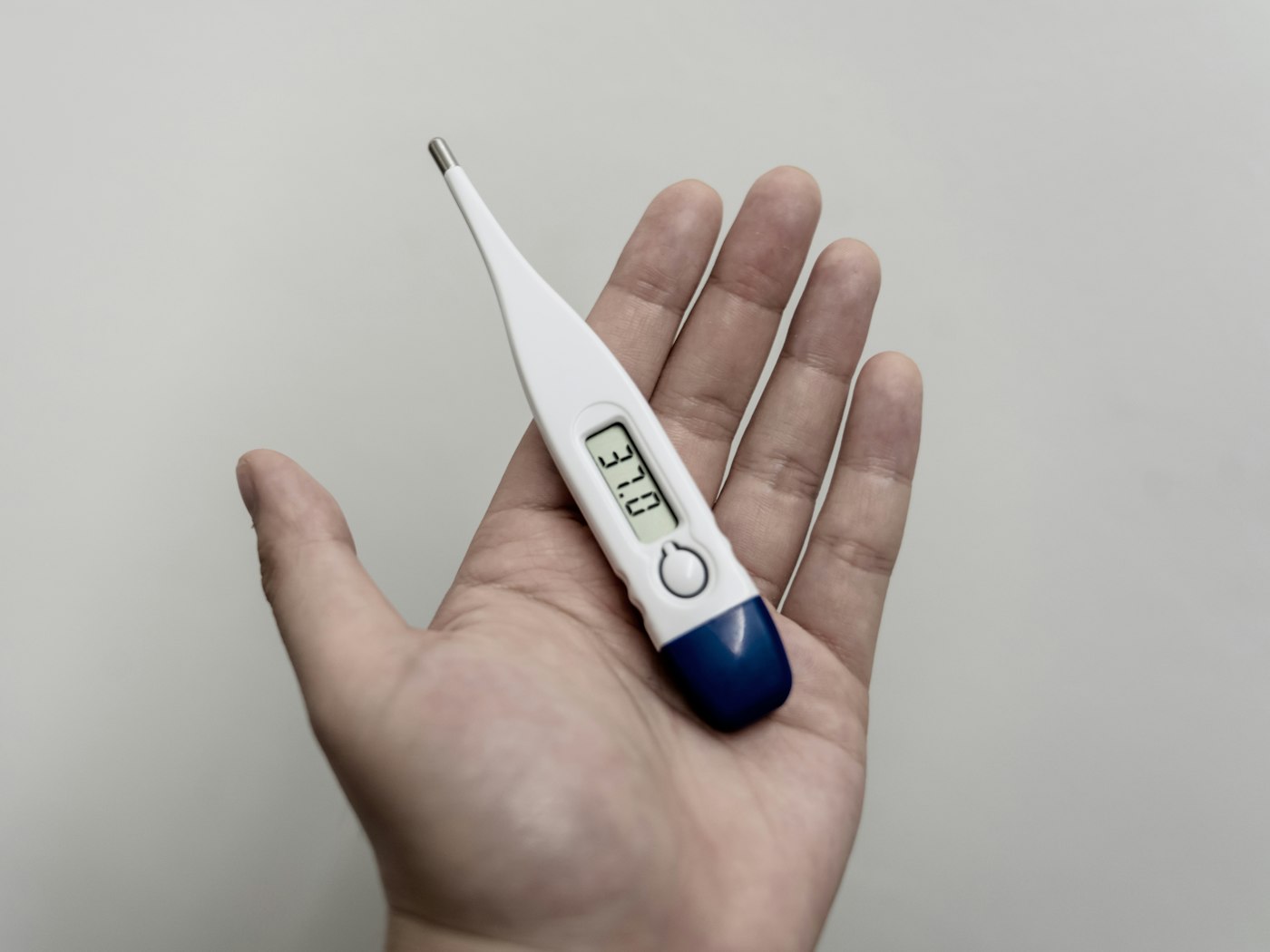
Digital stick thermometers
These are the familiar pen-shaped thermometers. Most can be used in the mouth, under the arm, or rectally, and many have a flexible tip that is more comfortable. They are cheap, simple, and last for years with a battery change now and then. Readings usually take somewhere between a few seconds and a minute, depending on the model.
One tip: if a household uses a stick thermometer rectally, keep a separate one, clearly labeled, just for that. Disposable probe covers are also cheap and make cleaning easier.
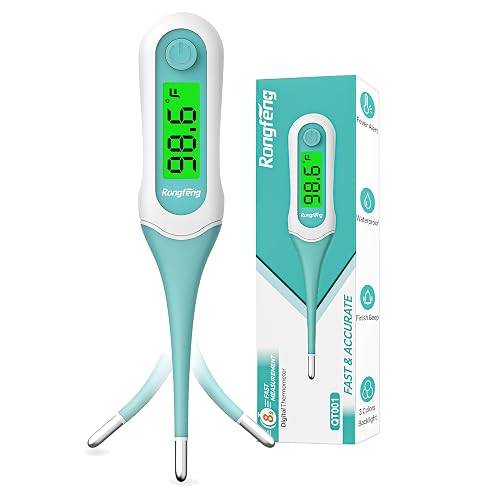
8‑Second Fast & Reliable Temperature Readings. Built‑in high‑precision sensor delivers stable oral readings in as fast as 8 seconds. Important note: underarm and rectal measurements require longer ...
Ear thermometers
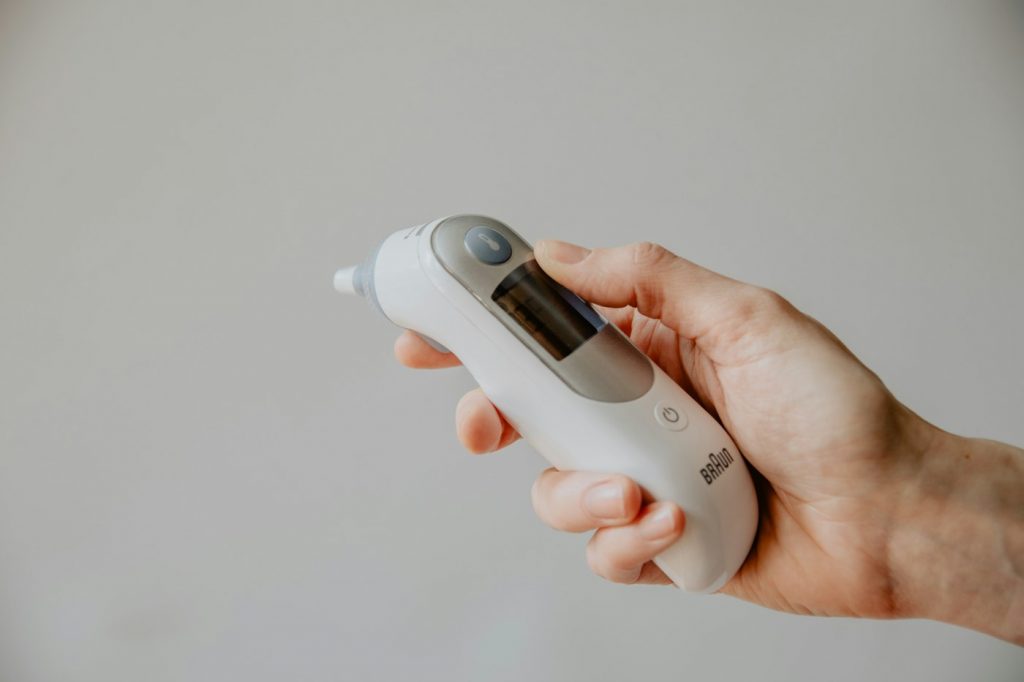
Ear, or tympanic, thermometers read the temperature inside the ear canal in a second or two. They are quick and popular with parents of wriggly toddlers. Most use small disposable lens covers, so keep a box of refills on hand. The AAP advises against using an ear thermometer for babies under 6 months old, because their ear canals are too small for an accurate reading.
Temporal artery thermometers
These are swiped across or held against the side of the forehead to read the temporal artery. They are fast and gentle, and many families like them for sleeping children. Some models combine a forehead mode and an ear mode in one device.
Non-contact infrared thermometers
Non-contact models are held a short distance from the forehead and give a reading in about a second without touching the skin. They became very common in recent years. The FDA notes that how and where they are used, such as head covers, the room, and positioning on the forehead, can affect the reading, so following the instructions matters a great deal with this type.
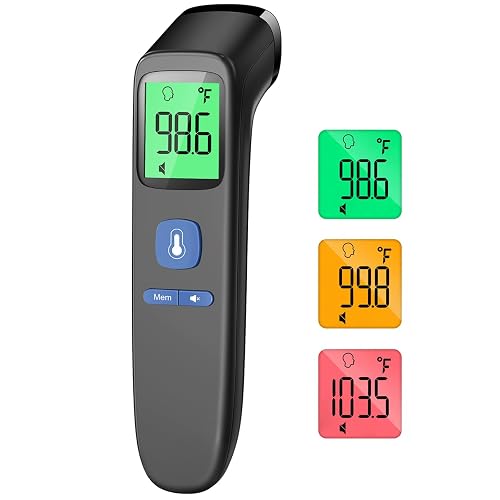
✨Swift Results in Just 1 Second: Experience the efficiency of ANMEATE thermometer for adults with its remarkable 1-second read capability. Obtain accurate temperature readings swiftly, providing yo...
Which type for babies and kids
For infants, the AAP says a rectal reading is the most reliable and accurate, especially for babies under 3 months old. Many parents find the idea uncomfortable, but a digital stick with a short, flexible tip and a calm approach make it quick. Some rectal thermometers are designed with a short probe and a wide base so they cannot go in too far.
For oral, ear, and temporal artery readings, the AAP says to still generally use 100.4 degrees Fahrenheit (38 degrees Celsius) or higher as the cutoff for a true fever. Underarm readings are less exact and may have a lower cutoff, so ask your pediatrician how to read them. Oral readings only work once a child is old enough to hold the thermometer under their tongue with their mouth closed.
A simple plan many families use: a rectal-capable digital stick for the baby, a fast ear or forehead thermometer for older kids who will not sit still, and an oral stick for adults.
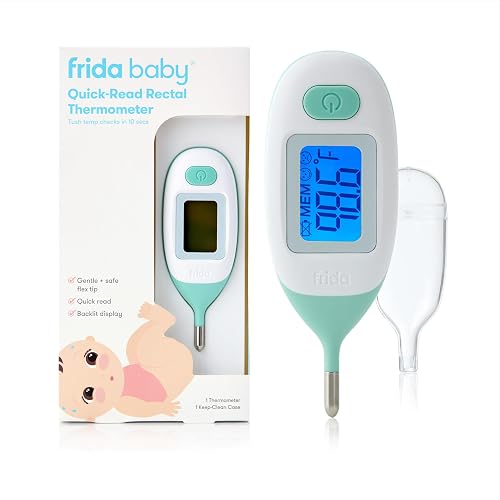
PRECISION FOR PEACE OF MIND: Delivers accurate temperature readings in just 10 seconds, so you can quickly assess your baby's health at any time of day or night.
MEMORY RECALL FUNCTION: Stores up t...
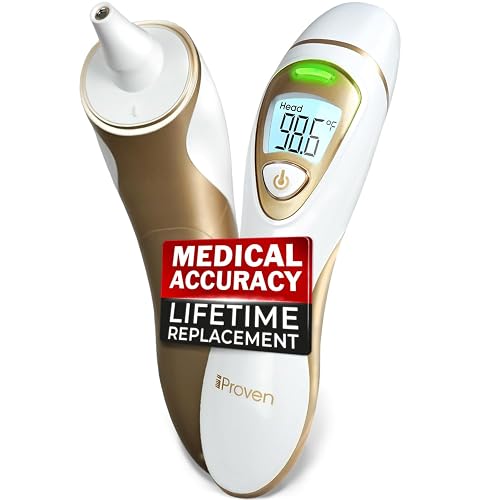
UPGRADED DUAL MODE - Our device combines forehead and ear measurements for double accuracy. Forehead mode offers indicative readings in 3 seconds, while ear measurements are medically accurate and ...
When to call the doctor
The AAP is clear on one point: if a baby is 3 months old or younger and has a rectal temperature of 100.4 degrees Fahrenheit (38 degrees Celsius) or higher, call your pediatrician right away, even if the baby shows no other signs of being sick. The AAP adds that you may also need to call the doctor for babies between 3 and 6 months with a fever of 101 degrees Fahrenheit (38.3 degrees Celsius) or higher, and for children older than 6 months with a temperature of 103 degrees Fahrenheit (39.4 degrees Celsius) or higher. For older children and adults, follow your health care professional's advice, and seek care for any fever that comes with worrying symptoms.
You can read the full guidance on the American Academy of Pediatrics' HealthyChildren.org fever page.
Getting an accurate reading
Each type has its own steps, and the maker's instructions come first. A few general habits help with all of them:
- Wait after eating or drinking before an oral reading, since hot or cold food and drinks can throw it off. Check your model's instructions for how long.
- Wait after a bath or heavy blankets. Being bundled up or fresh out of a warm bath can raise a reading.
- Hold still. Movement is the most common cause of odd readings, especially with ear and forehead models.
- Take a second reading if a number seems surprising, and write down the time and result.
For non-contact thermometers, the FDA lists typical instructions: use the device in a draft-free space out of direct sun and away from heat sources, and let it sit in the room for 10 to 30 minutes before use so it can adjust. Make sure the forehead is clean, dry, and not covered, and that the person has not been warmed or cooled by heavy clothing, headbands, or facial cleansing wipes. Hold the sensor straight toward the forehead at the distance the maker specifies, and keep the sensor clean and dry. More detail is on the FDA's non-contact thermometer page.
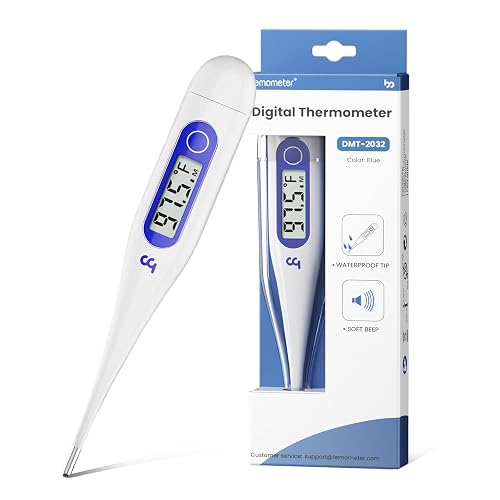
Safe and Accurate Reading: This digital thermometer is used lastest advance sensory probe and the temperature is with high precision to detect the fever accurately, which can help you determine whe...
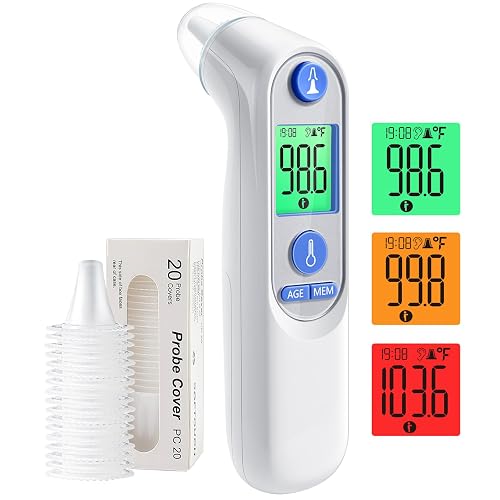
FAST & ACCURATE: Viproud Ear thermometer is equipped with the latest technology to intelligently measure temperature for three different age groups, providing accurate results in less than 1 second...
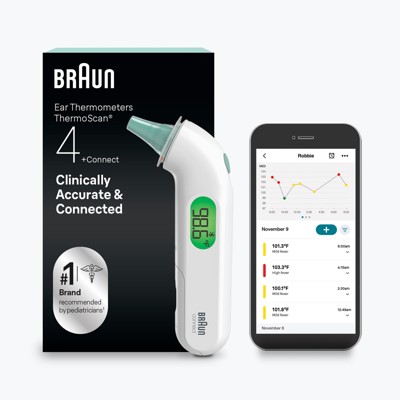
Connected ear thermometer. Target carries the Braun ThermoScan 4+ Connect, which reads in the ear in about a second and syncs by Bluetooth to an app where you can keep a profile for each person. That makes it easy to see how a fever changes through the night. Like any ear model, it is not the pick for babies under 6 months.
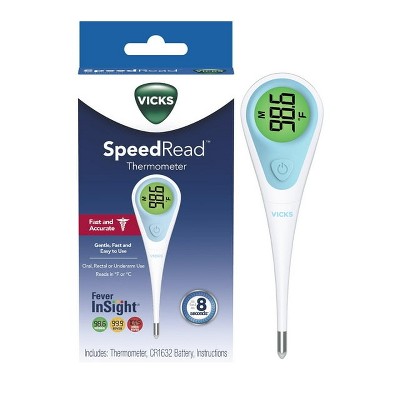
Low-cost digital stick. Also at Target, the Vicks SpeedRead gives a reading in about 8 seconds and can be used by mouth, under the arm, or rectally. It is waterproof for cleaning and remembers the last reading, which helps when you are writing down times.
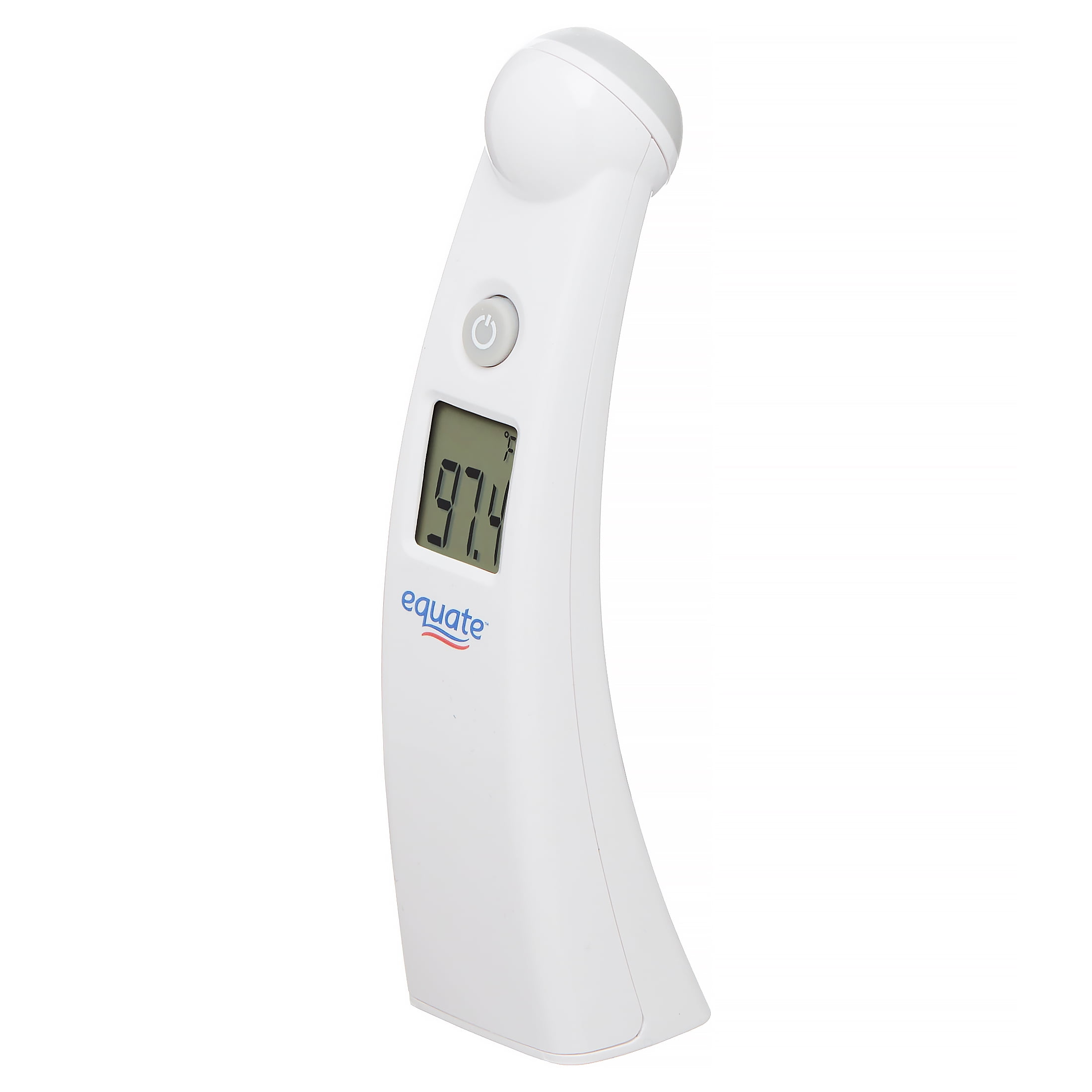
Budget temple thermometer. Walmart's Equate Temple Touch reads at the temple in as little as 6 seconds and is labeled for all ages. It comes with its battery, so it is ready to go in a medicine cabinet or a diaper bag.
Features worth paying for
- Memory. Stores recent readings, handy when you are tracking a fever overnight or reporting to a doctor.
- Color-coded or backlit screens. Easy to read in a dark bedroom without turning on the light.
- Silent mode. Turns off the beep so you do not wake a sleeping child.
- Fahrenheit and Celsius switch. Useful if you travel or follow guidance written in either scale.
- Water-resistant body. Makes cleaning a stick thermometer much easier.
A thermometer for every setting
One thermometer in the bathroom cabinet is a start, but many households end up with a few. A spare stick model in the travel bag or the car's first aid kit means you are not buying one at a pharmacy far from home. Families with kids often keep a fast ear or forehead model in the nursery or a bedroom and a basic stick in the kitchen. Grandparents who babysit may want their own, too.
If you share thermometers between people, clean them between uses and use fresh probe covers. And whatever you have, check it once in a while: press the button, make sure the screen lights up, and swap the battery if it looks dim. It is the kind of small task that is easy to forget until the night you need it.
Care and storage
Clean the tip or probe after every use as the maker describes. For stick thermometers, that usually means soap and cool water or rubbing alcohol on the tip. The FDA notes that most non-contact thermometers should never be put in water or other liquids. Store the thermometer in its case in the same place every time, with spare batteries and probe covers, so it is ready when you need it.
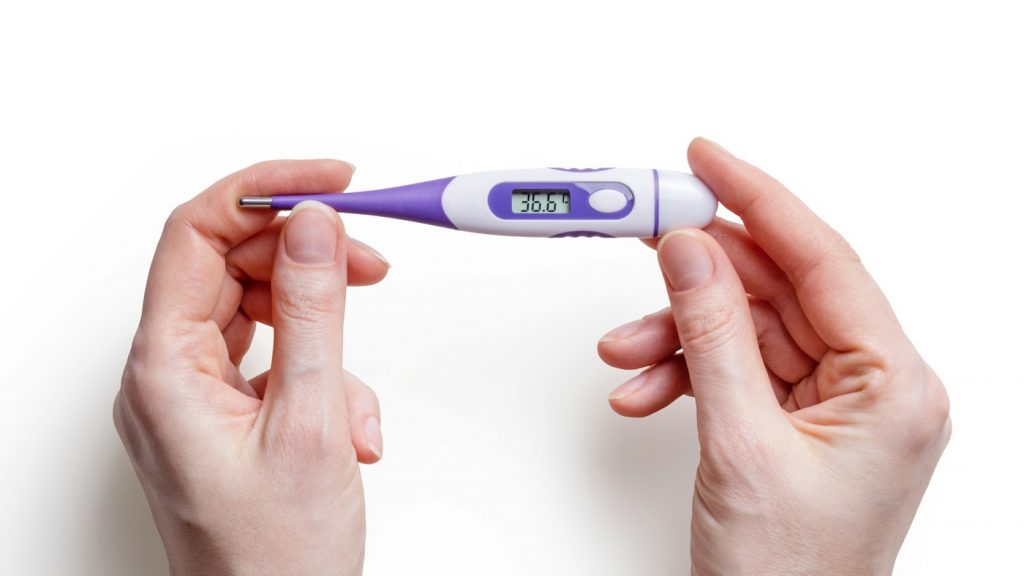
A good thermometer is a small purchase that pays off the first night someone wakes up flushed and miserable. Pick the type that suits the ages in your home, learn how to use it before you need it, and keep it where everyone can find it.
The responses below are not provided, commissioned, reviewed, approved, or otherwise endorsed by any financial entity or advertiser. It is not the advertiser’s responsibility to ensure all posts and/or questions are answered.