
Last Updated on: Sep 25, 2026
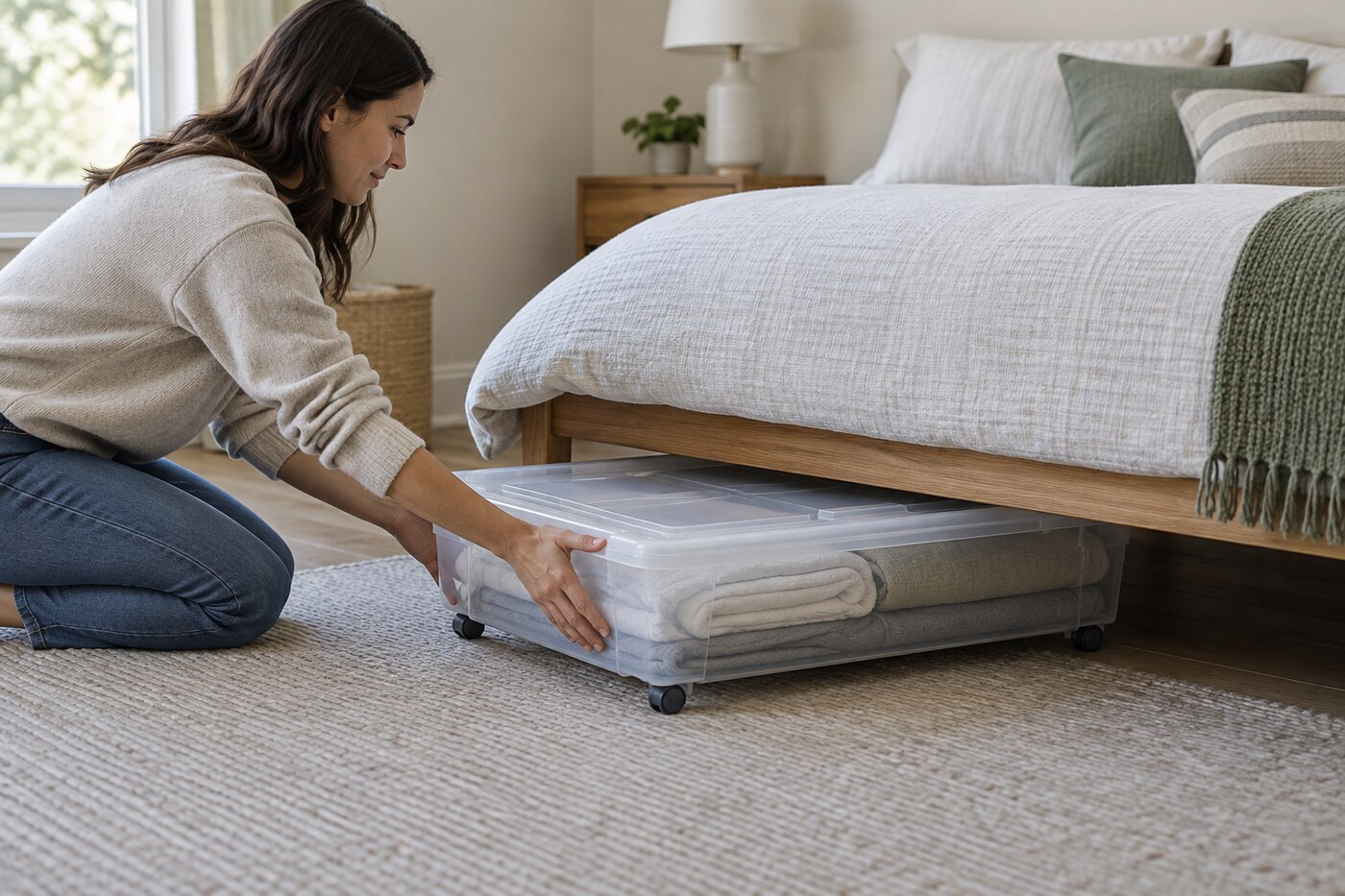
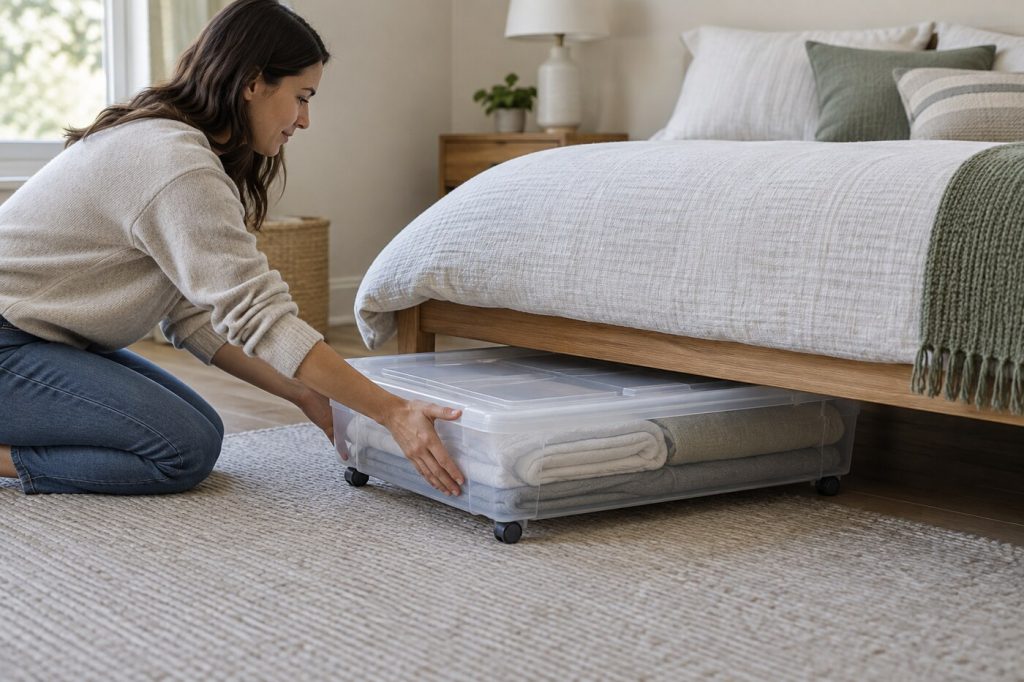
The space beneath a bed looks like free storage until a bin meets the center support, a thick rug, or a frame rail. Measure the actual opening before buying anything. Start at the lowest point between the floor and the underside of the bed, not at the decorative side rail or mattress height. Then consider whether you can pull the bin out without moving a nightstand. These eight current retailer listings include rolling frames, rigid plastic boxes, and bundles in several sizes.
What We'll Cover
Decide what belongs there. Spare bedding, off-season clothes, and shoes make sense when they are clean and dry. Things needed daily may be frustrating if the bin is heavy or the bed is close to a wall. Important papers, food, and items vulnerable to humidity deserve a more suitable location. Storage should make the room easier to use, not hide a problem until the next move.
Top Under-Bed Storage
Measure clearance in several places
Check height near the outer edge, midway in, and beside any center legs. A bed frame can be lower toward the middle than it appears from the doorway. Include the height of the bin lid, handles, and wheels, not only the body of the container. Leave enough margin for a rug pile, a slightly uneven floor, and the small lift required when pulling a bin over a threshold.
Next measure usable width and depth. A long box may fit in theory but run into a center leg before it is fully tucked away. An extra-wide bin might prevent a second bin from fitting beside it. If the mattress overhangs the frame, make sure a person can still grasp the handle. Sketch the path from the open bedroom floor into its parking place rather than shopping from capacity alone.
- Height: Use the lowest actual opening and allow spare clearance.
- Length: Check for center legs, bed skirts, and nearby furniture.
- Width: Plan how many bins will fit side by side.
- Access: Leave room to pull out, open, and lift the lid.
Wheels, floors, and handles
Wheels make a loaded bin easier to pull across a smooth hard floor. On thick carpet, small casters can sink or catch, so check the wheel size and whether the maker describes carpet use. A flat fabric bag with side handles can be simpler when the gap is short or the bin is light. A rigid rolling frame is more useful when you intend to pull shoes or bedding out often.
Think about the path after a bin leaves the bed. If it must turn around a nightstand or roll over a rug edge, try a cardboard template cut to the bin footprint. Plastic wheels and metal frames can mark delicate flooring, so consider the material and the load. Avoid yanking a stuck container by a fabric handle; first find what has caught underneath the bed.
Handles should remain accessible while the bin is parked. Some products put them on the short ends, while others place them along the long sides. Check that the chosen orientation lets you reach the correct handle without crawling beneath the frame. For heavy winter blankets or multiple shoes, split the load among smaller bins rather than packing one large container until it is hard to move.
Rigid boxes, open frames, or fabric
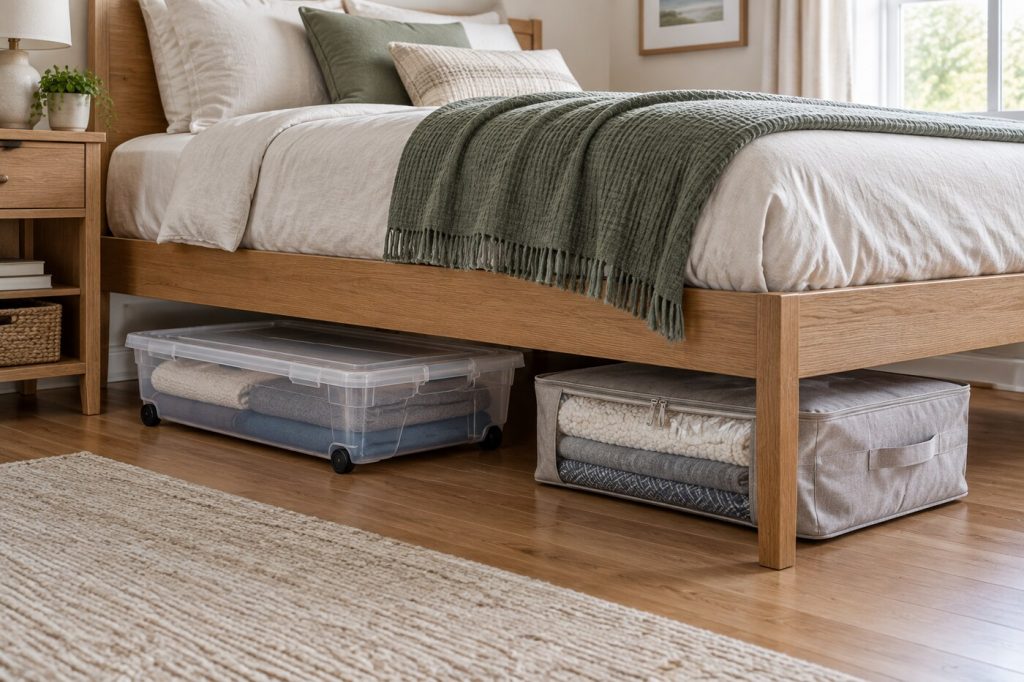
A latching plastic bin gives visible contents and a more defined shell, but even a “clear” box can be hard to see through beneath a bed. A label on the accessible end helps. Inspect the lid design: some lift all the way off, others hinge in the middle, and latches add steps when you need something quickly. Choose the access method to match how often the contents come out.
A fabric bin can be lighter and may fold flat between seasons. Its sides may bow under heavy contents, and a soft top can be awkward to zip if bedding is overstuffed. A mesh or open-frame drawer lets air move around items but provides less dust protection. Neither a fabric bag nor a plastic box magically protects a damp item. Wash or dry textiles fully before storing them and check for moisture in the room.
Shoe storage needs a little more planning. Keep muddy shoes out of a closed bin until cleaned and dry. Look at the internal length and divider layout, not just a claim about the number of pairs. Boots, high tops, and adult shoes occupy more space than sandals or children’s shoes. Removable dividers can make a unit more adaptable, but verify whether they are included.
Compare eight retailer listings
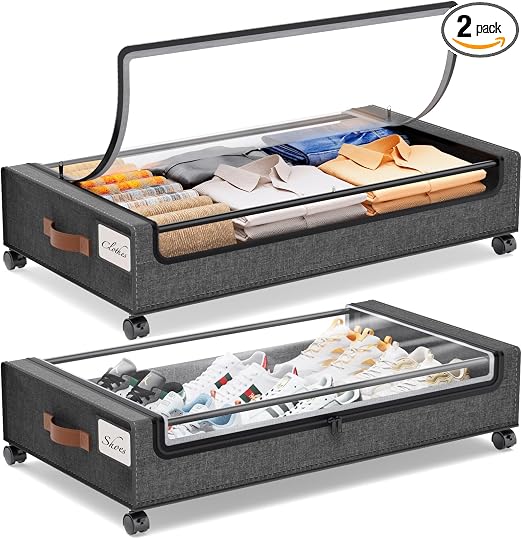
Hold Up to 66lbs: Yecaye under bed storage with wheels is made of high quality 300D PU fabric and sturdy metal frame, can hold up to 66 lbs, stronger than other fragile metal mesh, spacious capacit...
Yecaye’s two-pack lists a 6.69-inch height, rolling wheels, and metal-framed bins. Compare that height with your lowest bed clearance and check where its handles will face.
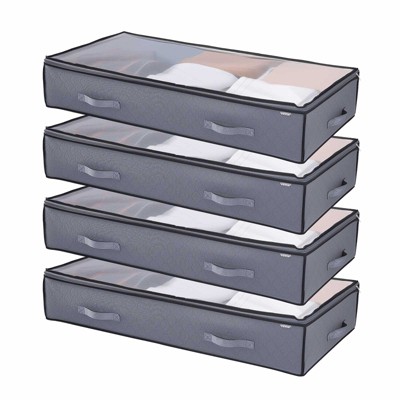
Target’s four-pack VEVOR bins lists clear lids and a 7.1-inch height. Confirm the long 39.2-inch listed dimension can move past any center bed supports before buying multiple pieces.
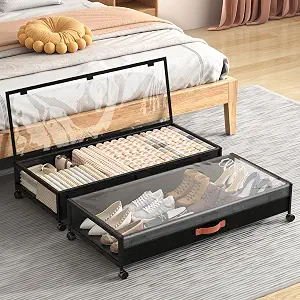
[ EXTRA LONG UNDER BED STORAGE ] Maximize hidden space under your bed with our 36" extra long rolling storage containers. The extended design provides more room for clothes, blankets, bedding, shoe...
Eastherry’s two-pack lists extra-long 36-inch bins with wheels. A long format can use a deep bed efficiently but needs a clear pulling path across the room.
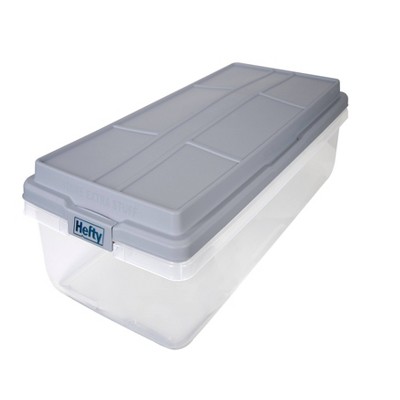
The Hefty 63-quart Hi-Rise listing at Target is a clear rigid bin with locking handles and latches. Check its total external height and how the lid opens in your actual space.
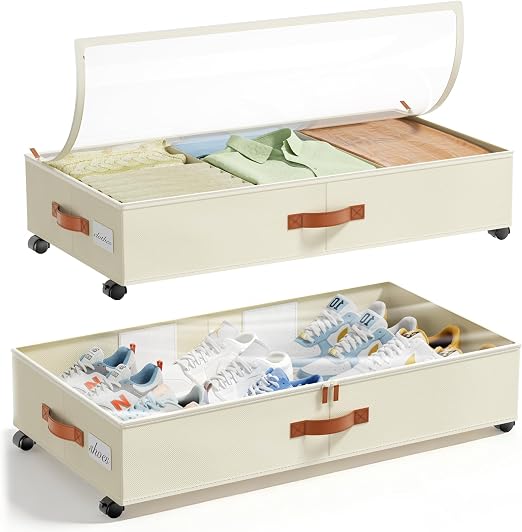
Customizable Compartments: Our under bed storage containers fit everything from boots to blankets by reason of its adjustable dividers. Instantly create custom compartments to perfectly organize bu...
LAMU’s two-pack lists rolling bins, clear lids, and labels. Think about whether the labels will face the side from which you pull the containers.
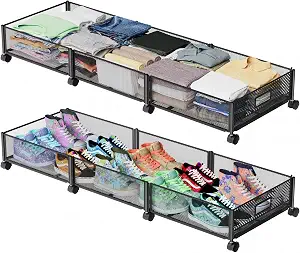
57.6L LARGE CAPACITY: Upgrade your storage game with Nonkky new, large underbed storage with wheels. Measuring 47.2x15.7x6.3 inch, it fits more shoes, clothes, toys, towels, books, and snacks than ...
The long rolling metal-frame listing advertises a 47.2-inch length. It needs more uninterrupted space than a short bin, so center legs and nearby furniture matter especially here.
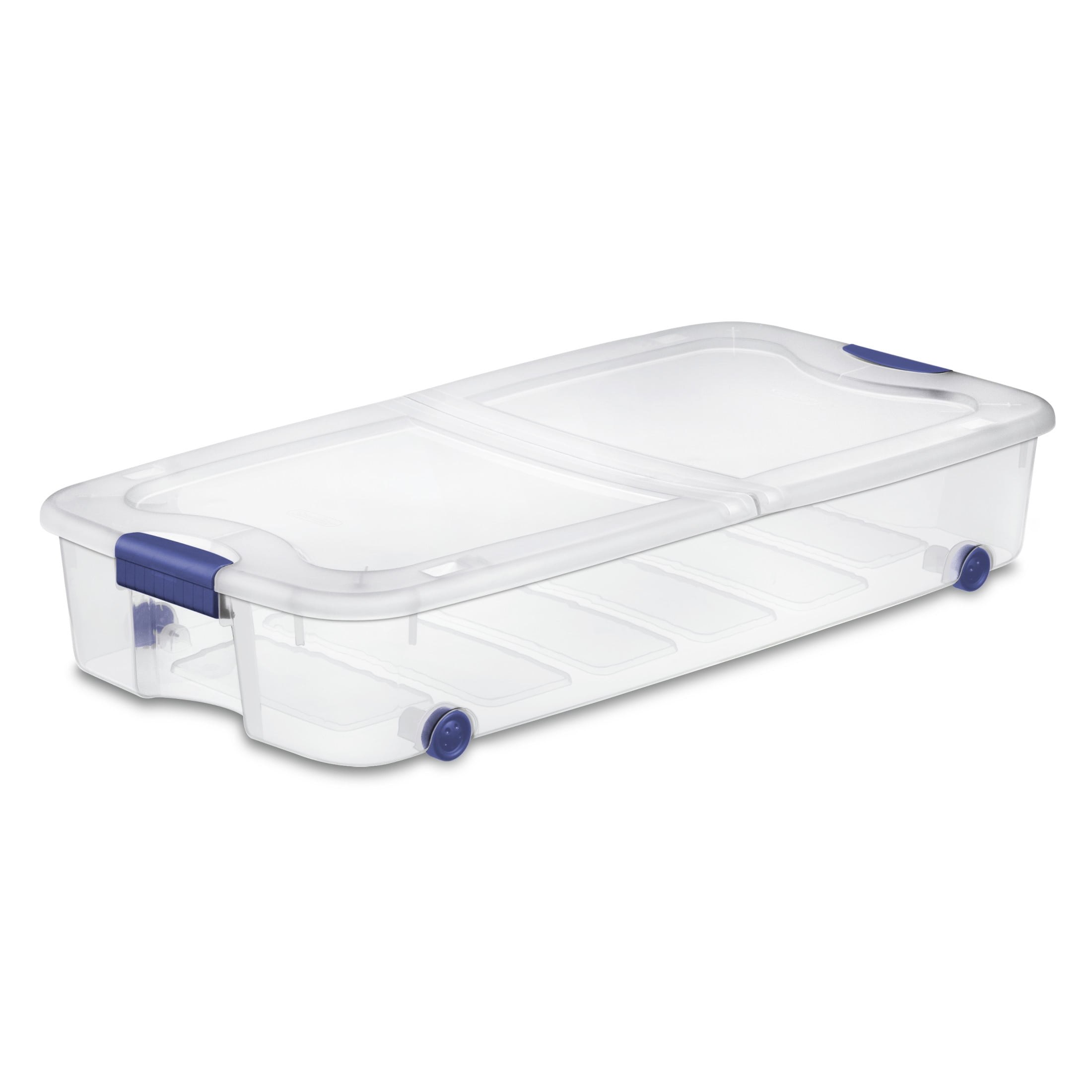
Walmart lists a Sterilite 66-quart clear bin with a latch lid and wheels. Verify the current seller, quantity, and exterior measurements rather than relying on quart volume for clearance.
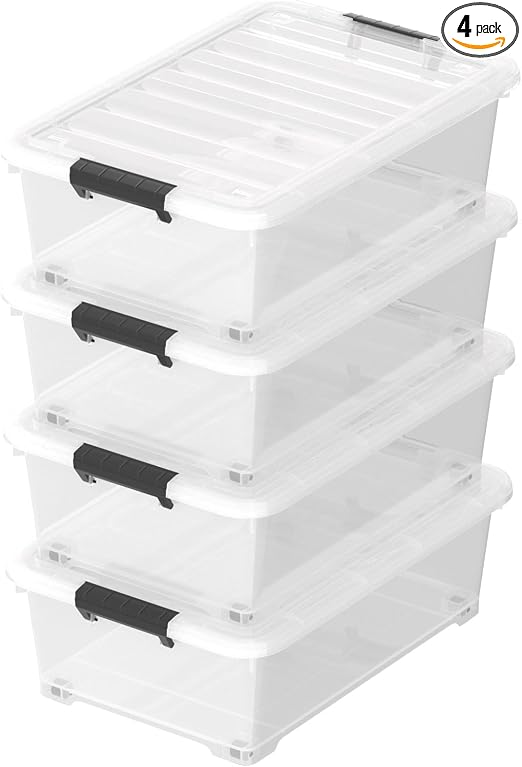
DIMENSIONS: 20.67 x 14.37 x 6.61 inches, 20-quart capacity, perfect for maximizing under-bed storage space
WHEELED DESIGN: Features 4 small wheels for smooth sliding and easy access, making it conv...
Sandmovie’s four-pack uses smaller 20-quart plastic bins with lids and wheels. Several compact bins may be easier to categorize and pull out than a single large one.
Packing and upkeep
Give each bin a plain category, such as spare sheets or winter accessories. Put heavier items at the bottom and do not exceed a stated load limit. Keep commonly used things nearest the opening. If you have a bed skirt, check it does not catch in the wheels. Revisit the contents once or twice a year so outgrown clothes or broken items do not permanently occupy the hidden space.
Vacuum under the bed before sliding in clean containers, and check periodically for dust or moisture. In a humid room, address the room conditions instead of sealing damp textiles in a bin. A clear lid and a written inventory can help you locate an item without opening every box, but neither substitutes for keeping the stored items clean and dry.
Questions before checkout
- What is the lowest floor-to-frame clearance along the full path?
- Will the bin pass center legs and roll on the actual flooring?
- Can you pull it out and open the lid without moving furniture?
- What quantity and pack size does the current listing actually include?
- Will the contents remain clean, dry, and easy to identify?
If you use bed risers to create more storage room, follow the bed and riser manufacturers’ compatibility and load instructions. A few inches of added height can change stability and access, and a new storage plan is not worth an insecure bed. Avoid blocking vents, heating equipment, outlets, or a bedroom exit with stacked containers. Keep the floor path clear so a person can get out of bed without stepping on a pulled-out bin. The container’s best placement is one that remains safe and convenient in an ordinary night, not just in a styled photograph.
Before ordering a multi-pack, try the dimensions of one piece on paper. Mark its height on a ruler or scrap cardboard and slide the template beneath the bed. Test the deepest spot and the route to the doorway. Record any rail, leg, or drawer that interferes. Then compare that sketch with the seller’s external dimensions and quantity. A listing can call a bin low profile while still exceeding the clearance under a platform bed. The measurement is more reliable than the marketing label.
The right under-bed container fits the real opening and the rhythm of your home. Measure with margin, think through access, and resist buying extra capacity simply because a large box sounds efficient. Storage that comes out smoothly is storage you will use.
The responses below are not provided, commissioned, reviewed, approved, or otherwise endorsed by any financial entity or advertiser. It is not the advertiser’s responsibility to ensure all posts and/or questions are answered.