
Last Updated on: Mar 23, 2026
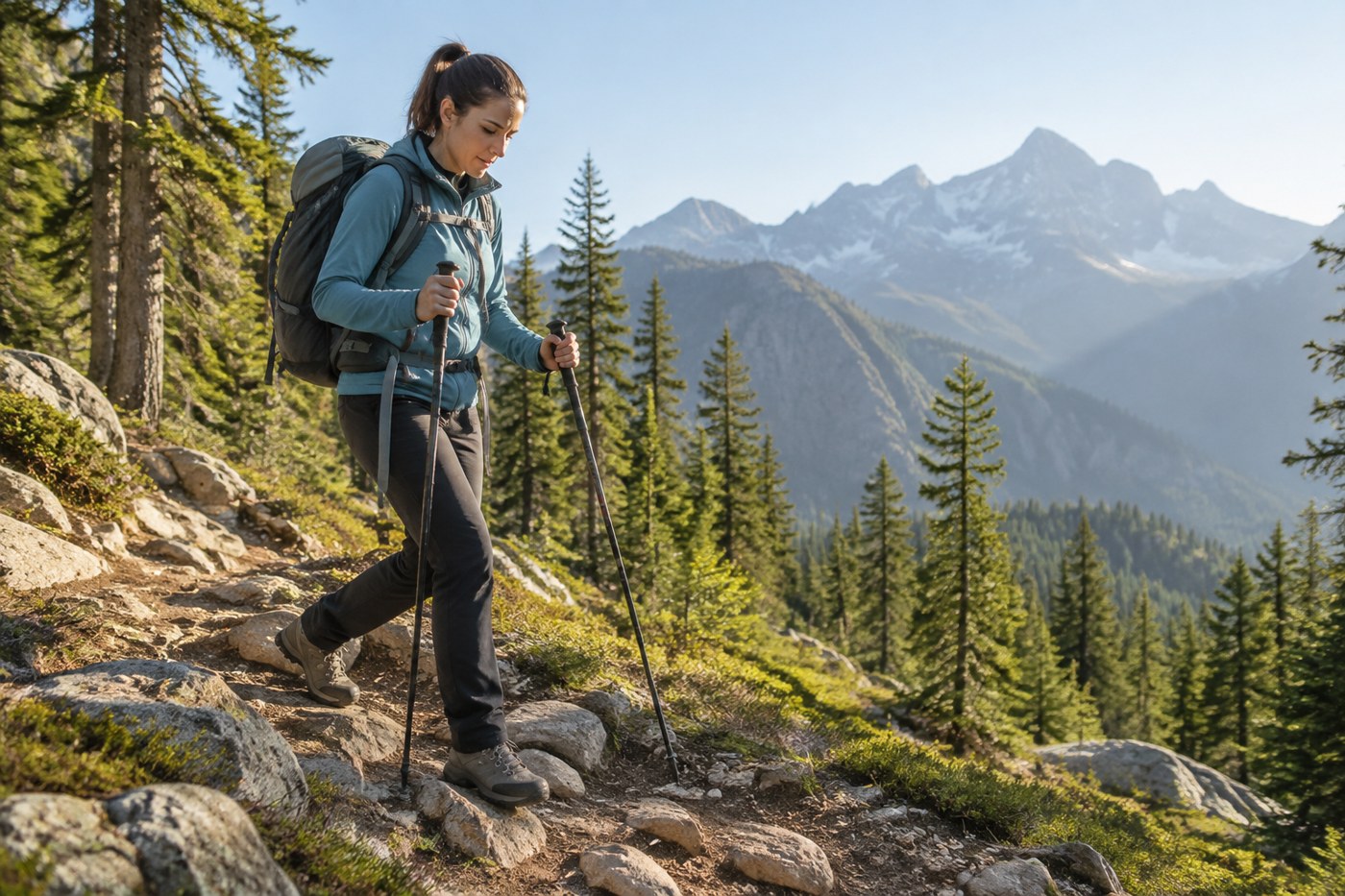
A good pair of trekking poles can change how a hike feels. They give you two extra points of contact on loose gravel, wet rock, and stream crossings, help you keep a steady rhythm on long climbs, and give your arms a way to share some of the work on steep descents. They also double as tent poles for some shelters and as a quick probe for mud or snow.
What We'll Cover
Poles are simple tools, but the details matter. Shaft material, lock style, grip, weight, and length all change how a pair feels after a few hours on the trail. This guide walks through each choice so you can match a pair to the way you hike, then covers how to size and use them.
Top Trekking Poles
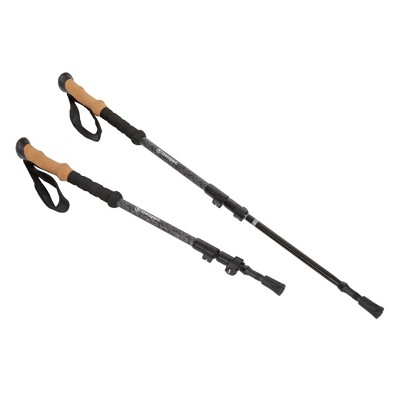
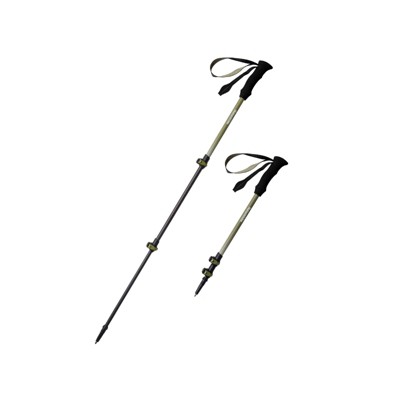
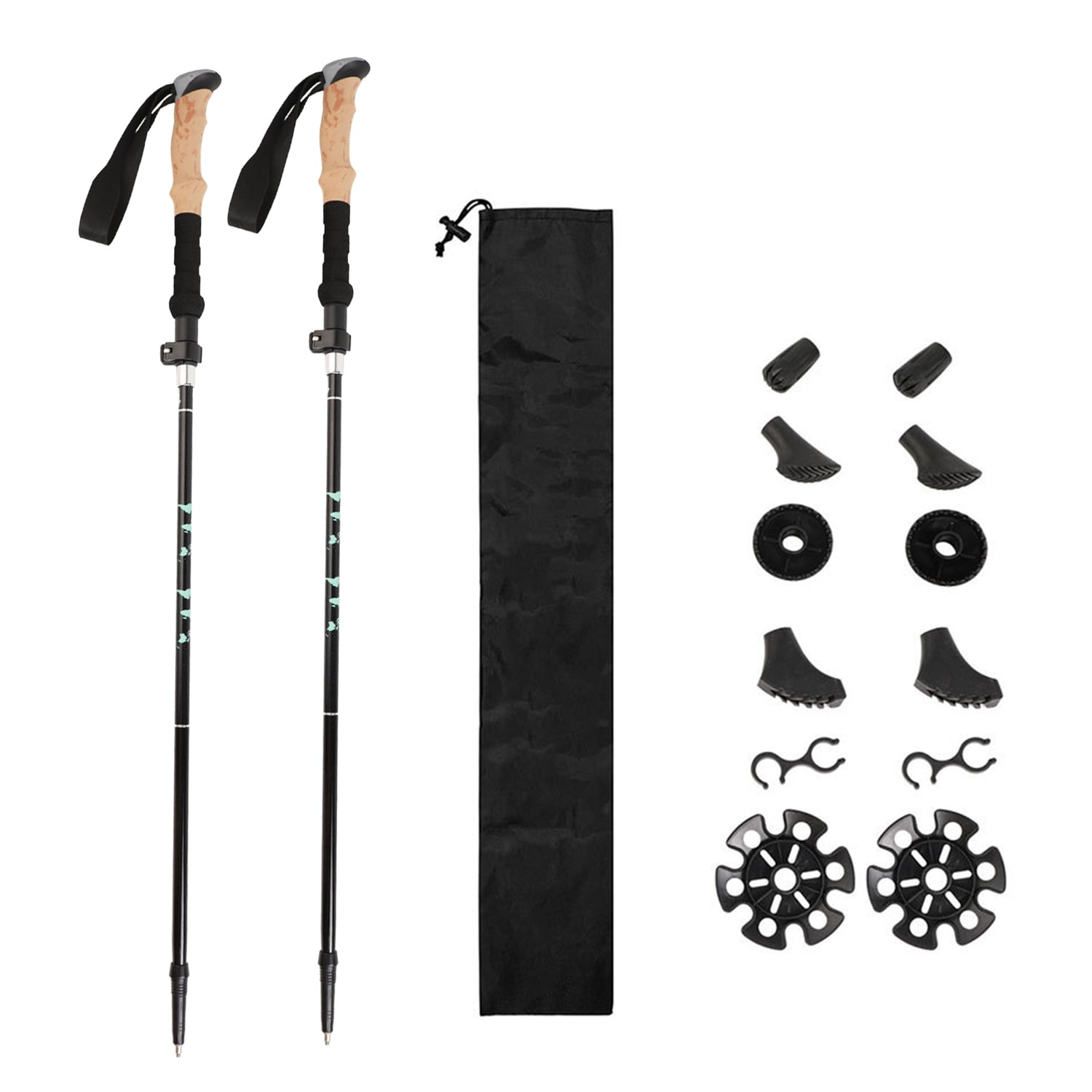
Do you need trekking poles?
Plenty of people hike without poles, and short walks on smooth, flat paths rarely call for them. Poles earn their place on longer days, steep or rocky terrain, trails with creek crossings, and hikes where you carry a heavier pack. Many hikers also like them for balance on uneven ground and for keeping a steady pace on long climbs.
The National Park Service advises hikers to research the route and terrain before they go, pick the right equipment for the trip, check that gear is in good working condition, and learn how to use it before setting out. That advice fits trekking poles well. Try a new pair on a short local trail first so you know how the locks work and how long you like them before a big day.
Aluminum or carbon fiber
Aluminum poles are the classic choice. They weigh a bit more, but they tend to bend rather than snap under a hard sideways load, and they usually cost less. That makes them a sensible pick for beginners, rocky trails, and anyone who is hard on gear.
Carbon fiber poles are lighter and feel less tiring to swing over a long day. Many hikers also find they pass along less trail vibration. The tradeoff is that carbon can crack or break if it is levered hard between rocks, and it usually costs more. Carbon suits long-distance hikers, fast hikers, and people who count every ounce in their pack.
Telescoping or folding
Telescoping poles have two or three sections that slide inside each other and lock at the length you set. They are easy to adjust on the move, which helps when a trail goes from long climbs to steep descents.
Folding poles, sometimes called Z-style, break into sections held together by an inner cord, like a tent pole. They pack much smaller, so they fit in or on a daypack and in a suitcase. Many have only a small range of adjustment, so check the length range before you buy.
Lock styles
- Lever or flip locks: A clamp on the outside of the pole. Easy to use with gloves, easy to check at a glance, and simple to tighten with a small screw.
- Twist locks: The sections twist to tighten. They are sleek, but can slip if they are not tightened well, and can be hard to loosen when cold or dirty.
- Push-button locks: Common on folding poles. A button snaps into place when the sections are fully seated.
Whatever the style, test each lock before a hike by leaning some weight on the pole. A lock that slips on a descent can throw off your balance.
Grips and straps
Cork grips wick sweat, stay comfortable in heat, and slowly mold to your hand. Foam or EVA grips are soft, light, and feel warm in cold weather. Rubber grips insulate well in cold and snow but can cause blisters in hot weather. An extended grip, a strip of foam below the main handle, lets you choke down on the pole during short climbs without changing its length.
Wrist straps help you keep hold of the poles and let you push down through the strap instead of gripping hard all day. Look for padded, adjustable straps that do not rub.
Folding and ultralight poles
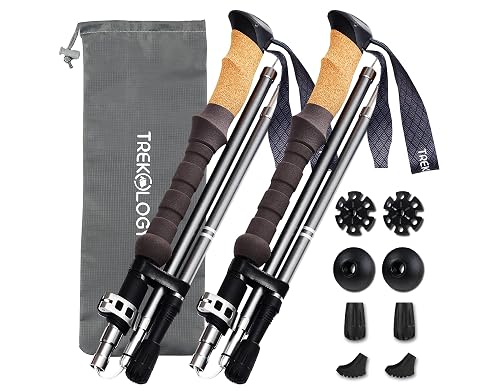
Natural Cork Grip Handle: Cork grips naturally absorb hand moisture to keep your grip dry on long hikes. Note: cork grips have a slight rotational flex; this is an anti-torque ergonomic feature, no...
The Trekology Trek-Z uses a folding design with cork grips, so it packs small enough to strap to a daypack or slip into a carry-on.
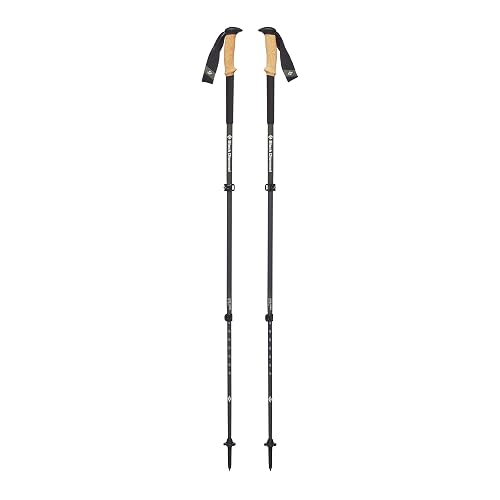
PREMIUM CARBON FIBER CONSTRUCTION: Built from 100% carbon fiber for exceptional strength, stiffness, and low weight. Provides efficient support for backpacking, trekking, and mountaineering in all ...
The Black Diamond Alpine Carbon Cork set combines carbon shafts with cork grips, a lighter option for long days.
At Target, the Naturehike carbon pole weighs 169 grams and is sold as a single pole, handy for someone who only wants one for balance.
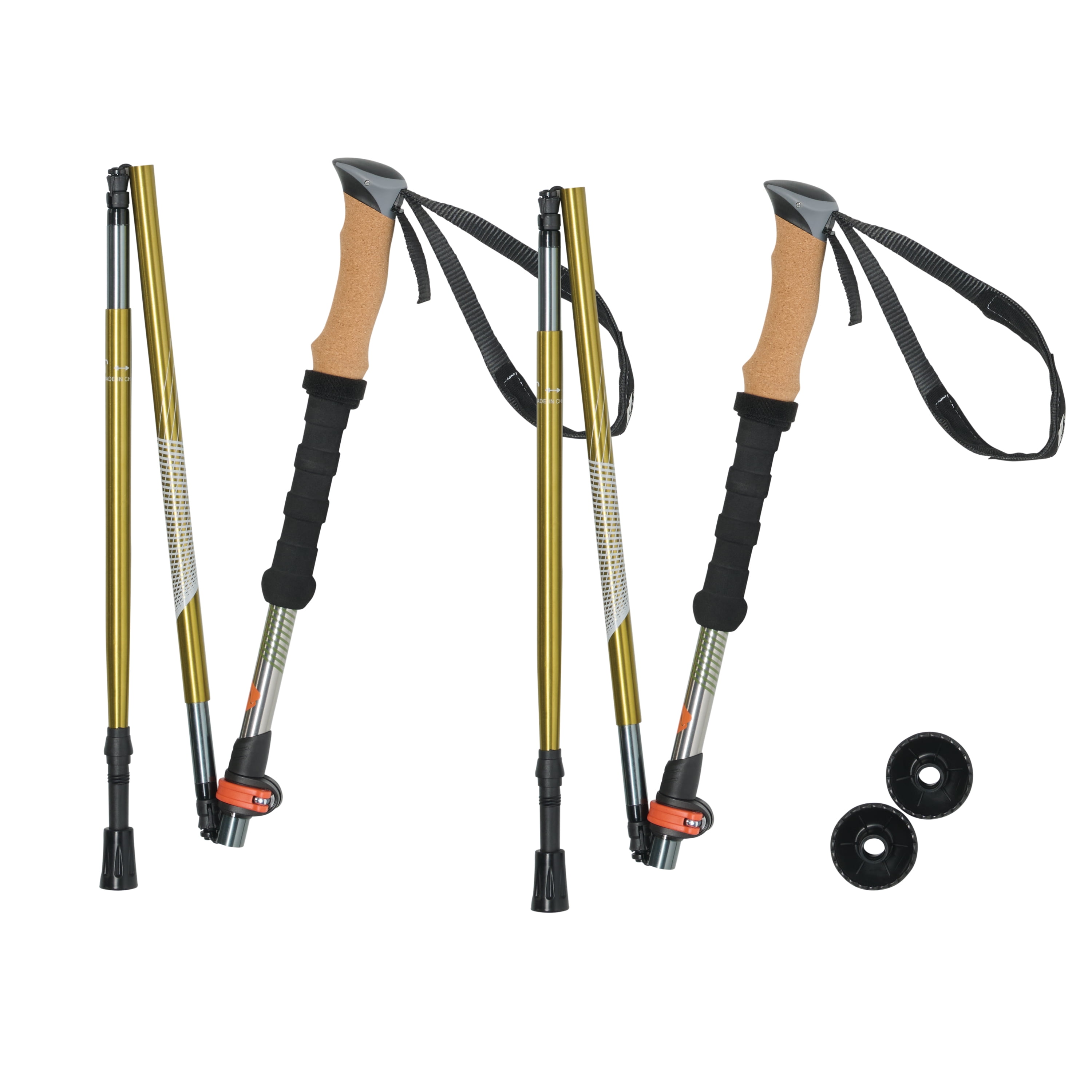
The Ozark Trail folding pair at Walmart has aluminum shafts, a quick lock, and cork grips at a lower price.
Carbon fiber poles
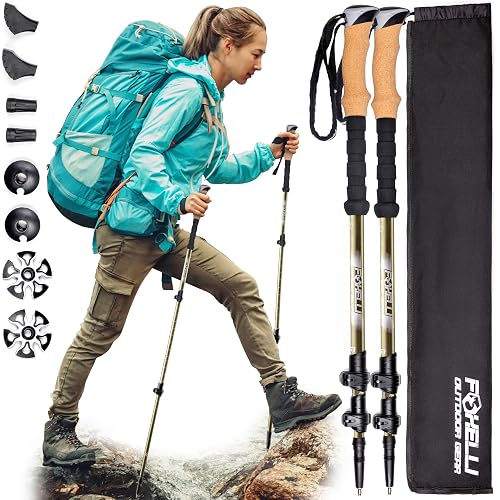
Ultra-Light Carbon Fiber That Makes Hiking Easier & Faster. Designed for hikers who want less fatigue and more miles, these carbon fiber trekking poles deliver exceptional strength at only 7.6 oz p...
The Foxelli carbon fiber poles have cork grips, quick flip locks, and a set of accessories for different surfaces.
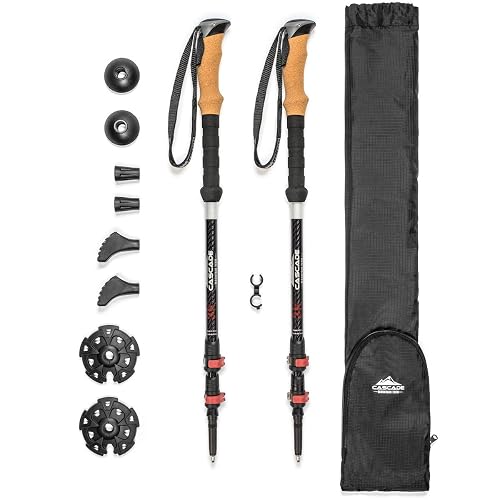
Durable 3K Carbon Fiber - Built with 2x2 twill weaved carbon fiber strong enough to handle pressure from all angles is stronger than normal carbon fiber.
Light Weight & Compact Poles - 8 oz. or 1/2...
The Cascade Mountain Tech carbon fiber pair keeps weight down and uses quick adjustable locks.
Aluminum poles
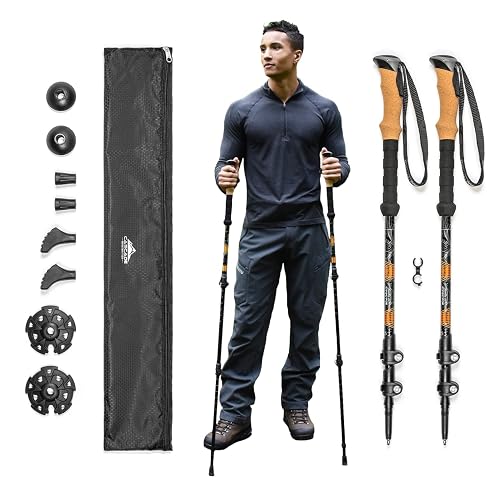
Exceptional Quality and Comfort - Crafted from aircraft-grade 6061 aluminum, each 10-ounce trekking pole is highly durable in all conditions.
Quick Lock Mechanism - Designed with rugged terrain in ...
The Cascade Mountain Tech aluminum pair has an extended down grip and comes with a tip kit, a solid all-around pick.
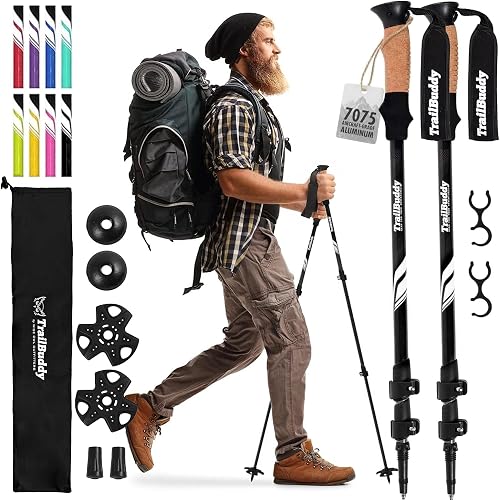
BUILT TO LAST: Whether you're hiking on rugged terrain or snowshoeing on fresh powder, you need hiking gear that can keep up! Trailbuddy trekking poles are built tough enough for the long haul.
PRE...
The TrailBuddy poles use 7075 aluminum and collapse for storage, a simple starting point for new hikers.
The Stansport pair at Target uses fast locks for quick adjustment.
The BN-LINK two-pack has aluminum shafts, EVA grips, and a storage bag.
How to size your poles
Start with the pole tip on the ground next to your foot and your upper arm hanging at your side. Adjust the length until your elbow bends at about 90 degrees, with your forearm roughly level with the ground. That is a good starting point for flat trail.
On long climbs, shorten the poles a few inches so you are not pushing your hands up to shoulder height. On steep descents, lengthen them so you can reach the pole out in front of you and keep your weight balanced. On a side slope, you can make the uphill pole shorter and the downhill pole longer. Adjustable poles make these changes quick, which is a good reason to learn the locks before you go.
Tips, baskets, and caps
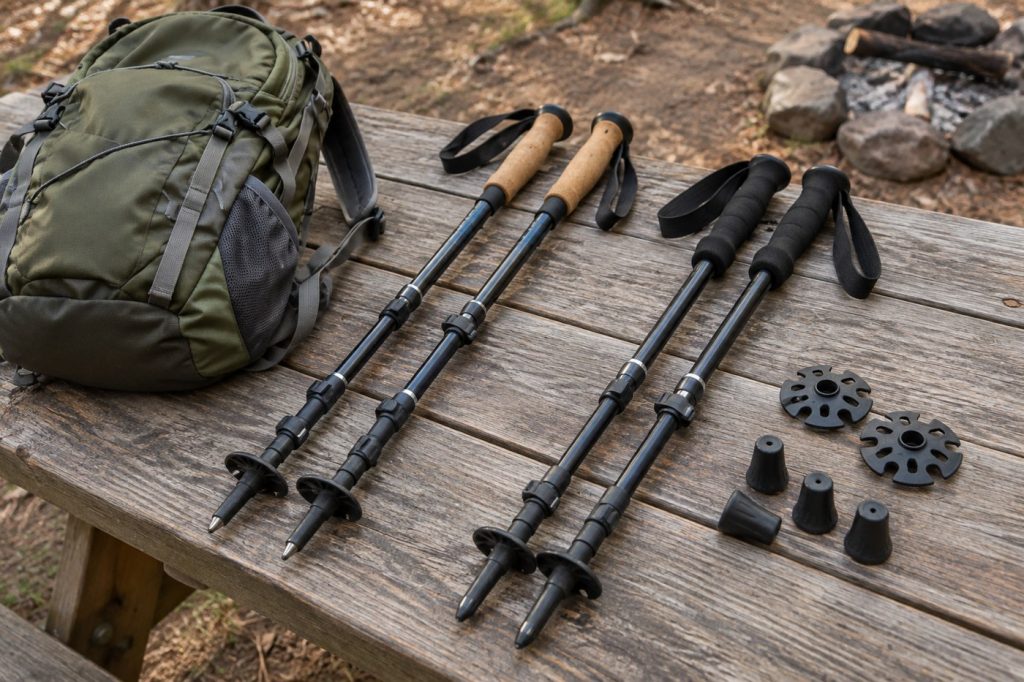
Most poles come with carbide steel tips that bite into dirt, rock, and ice. Rubber tip caps cover those tips on pavement, in town, and on hard rock, and they protect gear in your pack. Small trekking baskets stop the pole from sinking too far into mud or sand, while larger snow baskets help in winter. Rubber caps also cut down on noise and scratches on rock, so it is worth carrying a spare set.
Using poles well
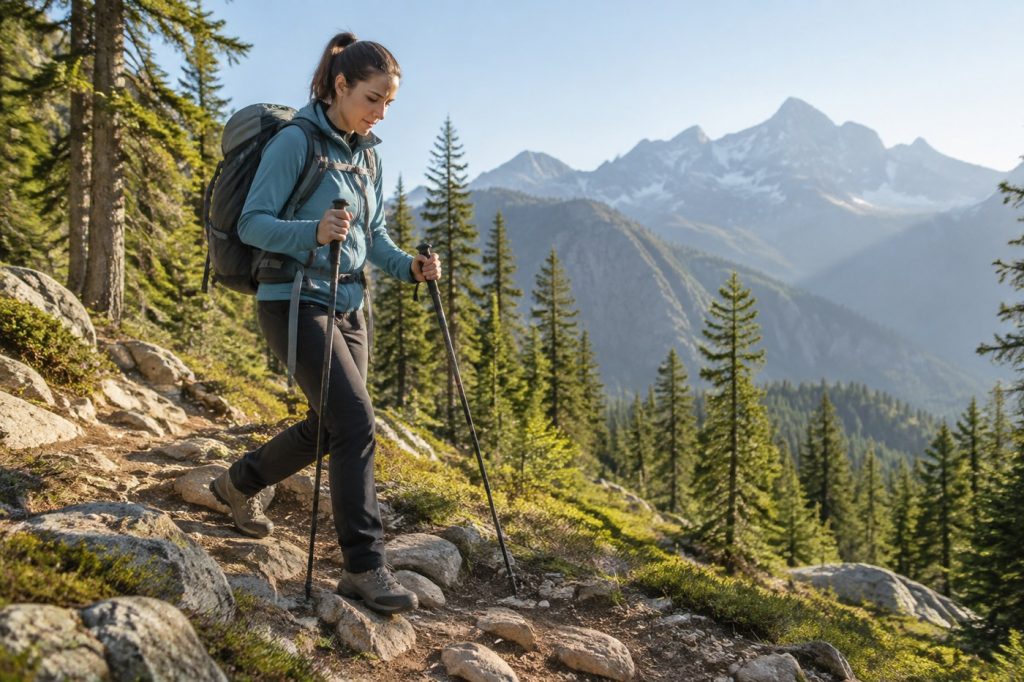
- Plant opposite: On flat ground, move the pole opposite your stepping foot, like swinging your arms when you walk.
- Climb with both: On steep climbs, plant both poles and push down as you step up.
- Descend carefully: Plant the poles ahead of you, keep your knees soft, and take smaller steps.
- Cross streams slowly: Use the poles to test depth and footing before each step.
- Stow them for scrambles: Collapse and strap poles to your pack when you need your hands on rock.
Care and storage
After a wet or muddy hike, pull telescoping sections apart and let them dry fully before you store them. This helps prevent corrosion and sticky locks. Wipe grit off the shafts, check that lever lock screws are snug, and replace worn rubber caps and tips. Store poles out of hot cars for long periods, since heat can soften some grips and straps.
Pack the 10 essentials the National Park Service recommends on every outing, and remember that poles are extra equipment, not a replacement for good shoes, water, and a map.
The short answer
For most hikers, an aluminum pair with lever locks and cork or foam grips is a durable, affordable start. Choose carbon if weight matters most, and folding poles if you need them to pack small. Set the length so your elbow bends at about 90 degrees, shorten for climbs and lengthen for descents, and practice with any new pair before a big hike, as the National Park Service suggests for all gear.
The responses below are not provided, commissioned, reviewed, approved, or otherwise endorsed by any financial entity or advertiser. It is not the advertiser’s responsibility to ensure all posts and/or questions are answered.
Useful tip for wet hikes with telescoping poles: pull the sections apart once you are home and let them dry fully before storing, so the locks do not stick.