
Last Updated on: Apr 20, 2026
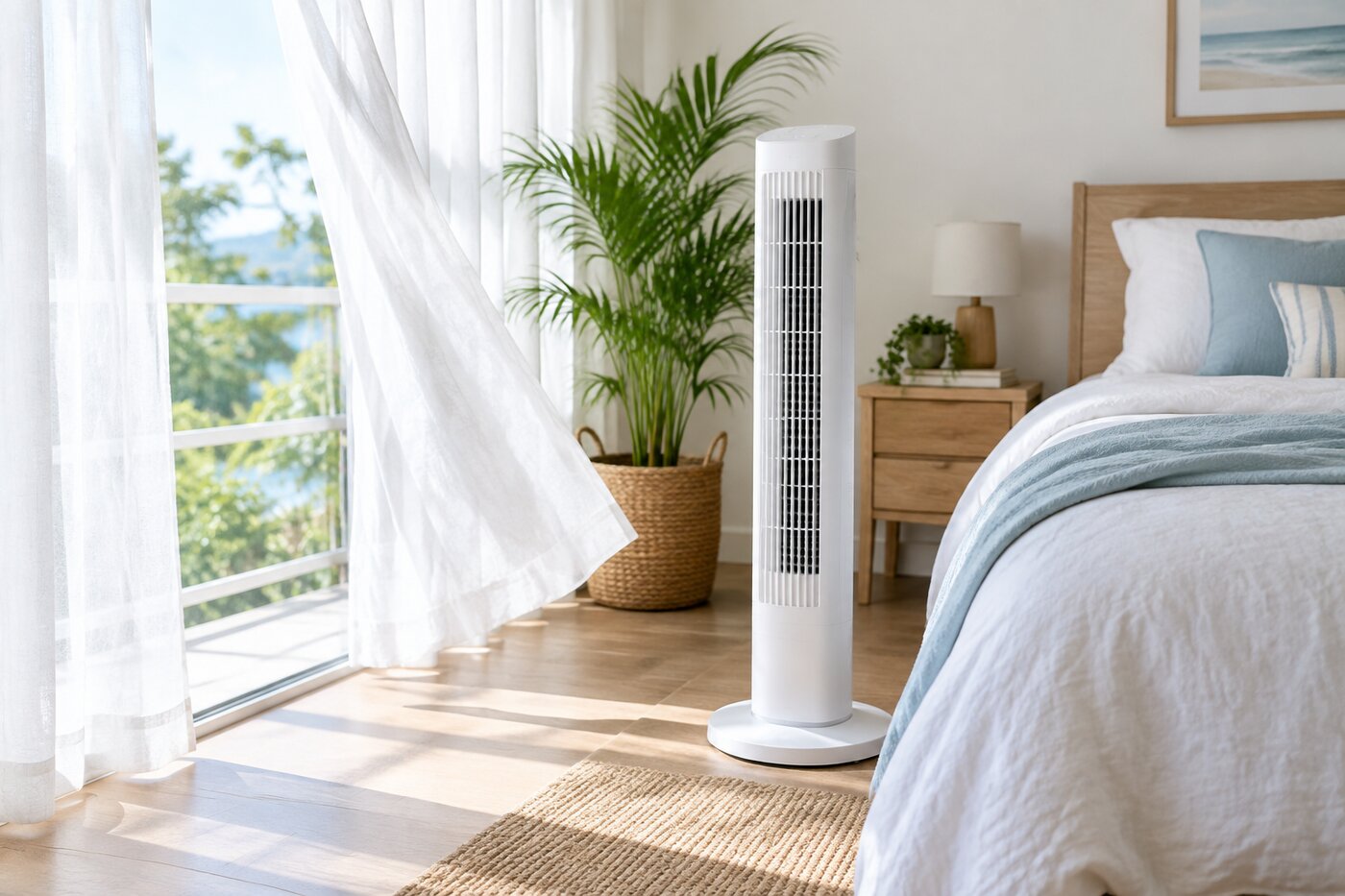
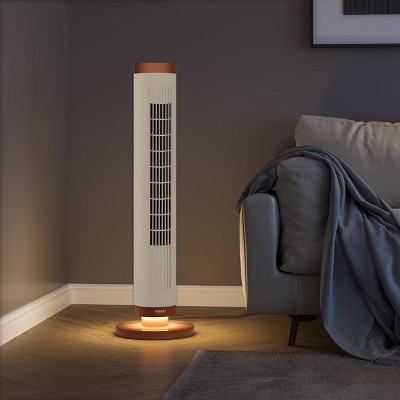
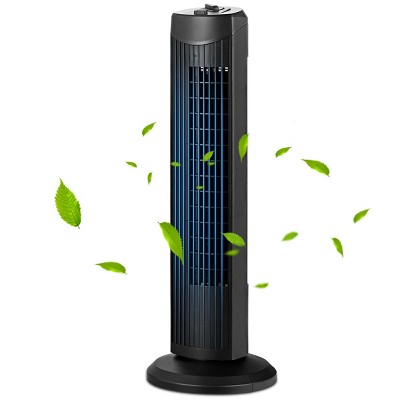
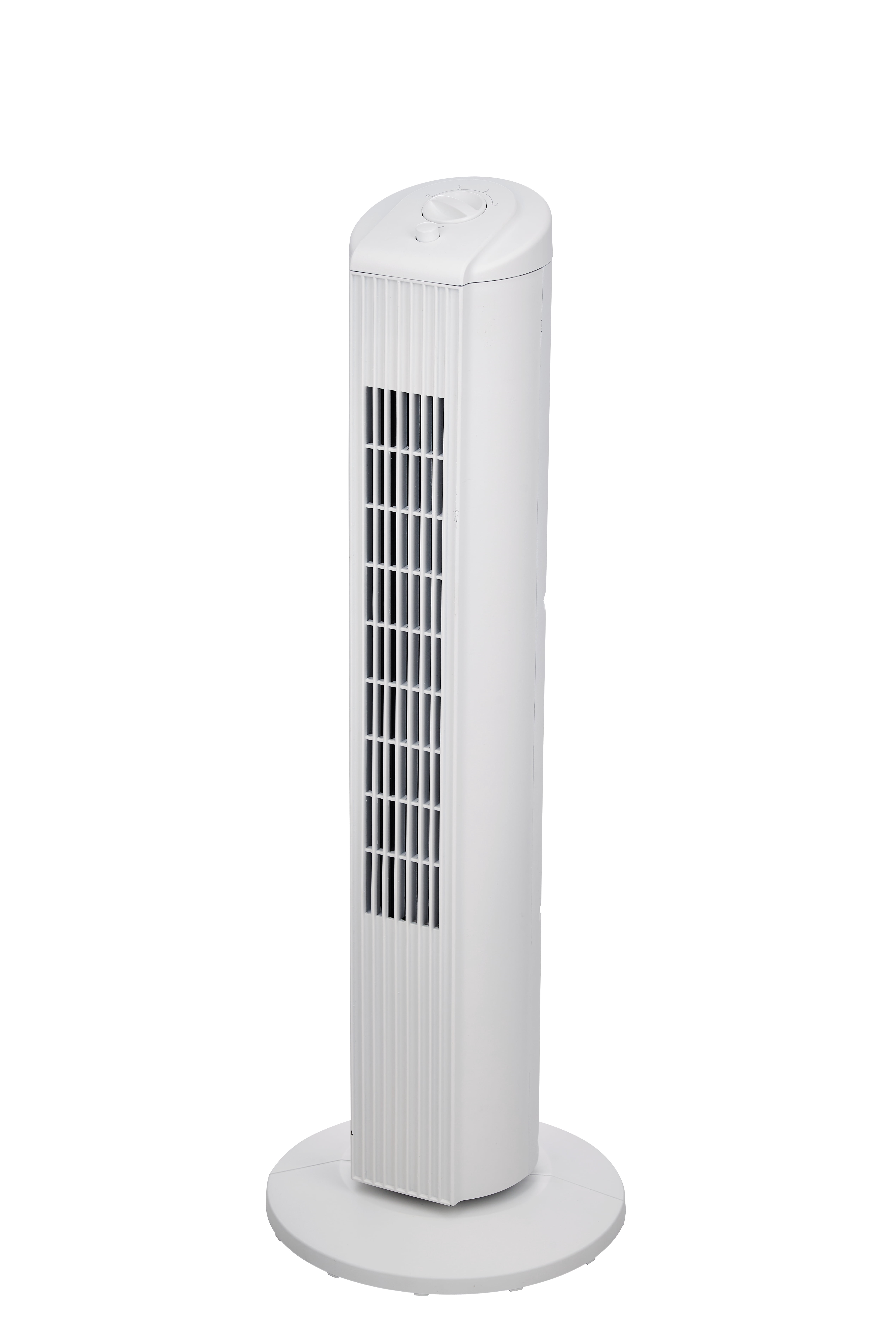
A tower fan is a tall, slim fan that moves air through a vertical grille instead of big exposed blades. It takes up about as much floor space as a small plant, oscillates to spread air across a room, and usually comes with a remote and timer. For bedrooms, home offices, and apartments where a box fan feels clunky, it is often the most practical way to stay comfortable.
What We'll Cover
Tower fans vary a lot in airflow, noise, and features. This guide covers what to compare, how to place a fan for the best effect, and how a fan fits into keeping cooling costs down.
Top Tower Fans
How fans keep you cool
A fan does not lower the temperature of a room. It moves air across your skin, which helps sweat evaporate and makes you feel cooler. The U.S. Department of Energy describes this as a wind chill effect and notes that circulating fans can be used with natural ventilation or air conditioning to improve comfort. Because the effect only works when air is moving over people, it makes sense to turn fans off when you leave the room.
The Department of Energy also notes that using a ceiling fan can let you raise the thermostat by about 4°F without feeling less comfortable. Tower fans work on the same principle at a smaller scale, so pairing one with air conditioning can help you run the AC a little warmer.
Tower fan vs. other fans
- Box fans move a lot of air cheaply but are bulky and louder.
- Pedestal fans push air farther and can tilt, but take up more space and have exposed blade guards.
- Tower fans are slimmer, quieter on low settings, and easier to fit in tight spots. They generally move less air than a large pedestal fan, so they suit bedrooms and offices more than big open rooms.
- Bladeless fans hide the moving parts, which some people prefer around kids and pets.
What to compare
Airflow
Brands describe airflow in different ways, such as air velocity in feet per second or airflow in cubic feet per minute. These figures are not always tested the same way, so compare them within a brand rather than across brands, and use them as a rough guide to power.
Noise
If the fan is for a bedroom, noise matters most. Some models list a decibel rating for their lowest speed. A sleep mode that lowers speed over time and dims the display is useful at night.
Height and oscillation
Taller fans push air higher, which helps if you want to feel it while sitting on a bed or couch. Wider oscillation spreads air across more of the room, while a narrow setting keeps air on you at a desk.
Controls and extras
- Remote control: Adjust without getting up. Look for a place to store it on the fan.
- Timer: Shuts the fan off after you fall asleep.
- Display dimming: A bright display can bother light sleepers.
- Modes: Natural or sleep modes vary the speed for a gentler breeze.
- Smart controls: Some fans connect to an app or voice assistant.
Quiet and powerful picks
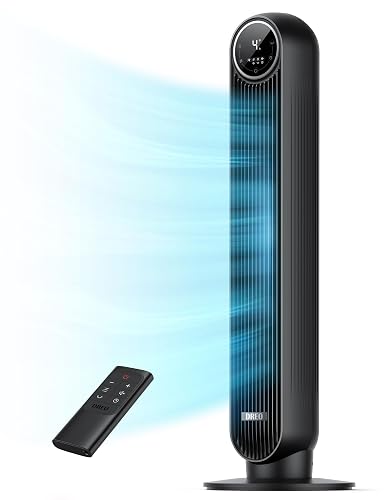
𝐏𝐨𝐰𝐞𝐫𝐟𝐮𝐥 𝐀𝐢𝐫𝐟𝐥𝐨𝐰 𝐰𝐢𝐭𝐡 𝐮𝐩𝐠𝐫𝐚𝐝𝐞𝐝 𝐃𝐂 𝐦𝐨𝐭𝐨𝐫: Thanks to DREO's upgraded brushless DC motor combined, the tower fan achieves faster spin to deliver stronger airflow, with airflow speeds reaching up to 28...
The DREO tower fan is rated at 28 feet per second of air velocity with eight speeds. It suits people who want strong airflow in a slim package.
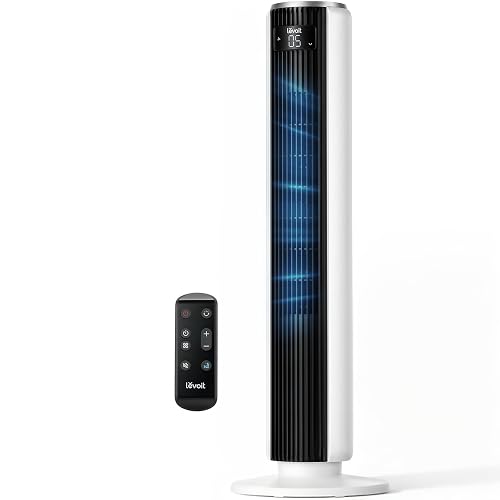
𝗢𝗻𝗲 𝗙𝗮𝗻 𝗳𝗼𝗿 𝗔𝗹𝗹 𝗬𝗼𝘂𝗿 𝗡𝗲𝗲𝗱𝘀: From a gentle breeze to a powerful wind, it adapts to your everyday needs with up to 28 ft/s airflow and a wide oscillation angle to deliver fast, whole-room cooling
𝗤𝘂𝗶...
The Levoit tower fan is also rated at 28 feet per second and lists a 28-decibel rating on its quietest setting, which makes it a good fit for bedrooms.
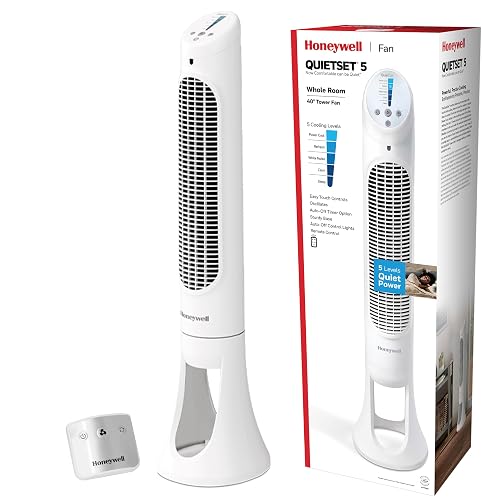
Reduce energy costs: Save on your air conditioning bill this summer when you combine your Honeywell tower fan with your A/C; set your air conditioner at a higher temperature but still feel cool & c...
The Honeywell QuietSet HYF260 is an oscillating tower fan with a remote and several settings geared toward quieter operation.
At Target, the Seville Classics UltraSlimLine has nine speeds, a night light, and a remote in a 37.8-inch-tall frame.
Everyday and budget picks
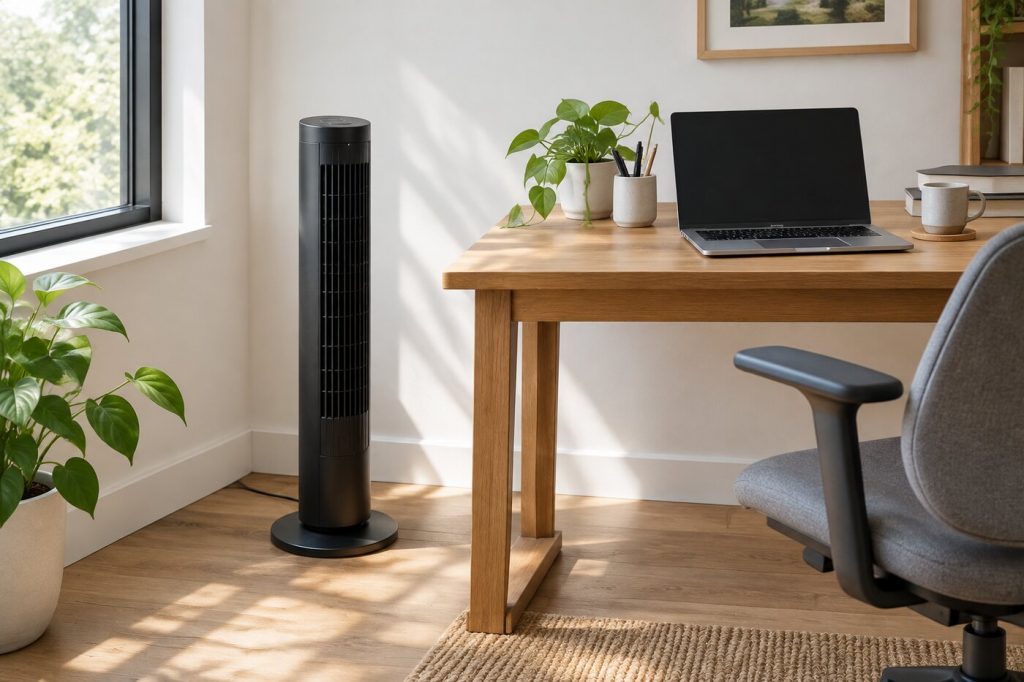
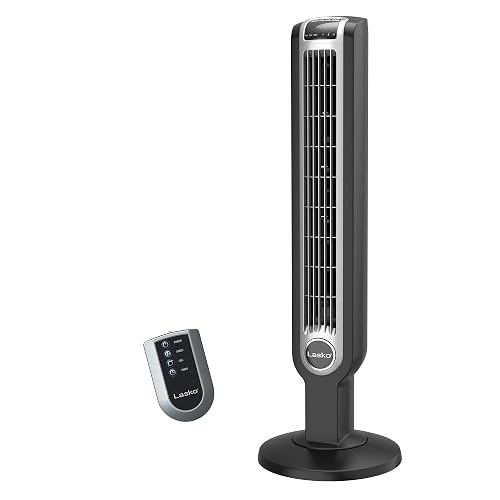
QUIET BEDROOM FAN: Three whisper-quiet fan speeds provide personalized comfort without disrupting work, relaxation, or sleep. This oscillating fan delivers gentle, consistent airflow throughout bed...
The Lasko 2511 stands 36 inches tall with three speeds, a remote, and a timer. It is a simple, familiar design for bedrooms and offices.
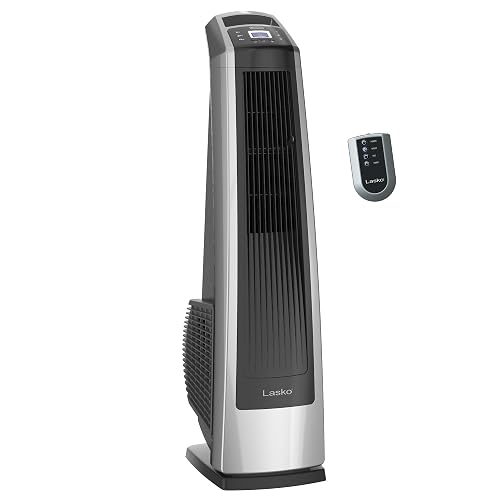
POWER YOU CAN FEEL: Beat the heat where standard fans fall short. Producing up to 509 CFM, this high-velocity oscillating fan has 25% more air velocity than traditional room fans. Ideal for remote ...
The Lasko U35115 is a 35-inch high-velocity tower fan for people who want more airflow in a room that runs warm.
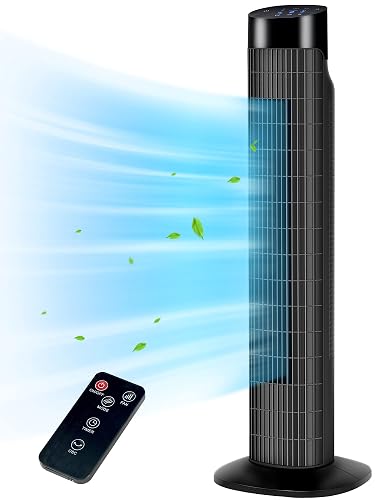
3 Speeds + 3 Modes Cool Air: This oscillating fan offers 3 fan speeds and 3 preset modes (Normal/Natural/Sleep) to meet cooling needs in different scenarios. The Natural mode simulates changing win...
The Uthfy tower fan has 120-degree oscillation, three speeds, three modes, and a 7.5-hour timer.
Target also carries the Costway Fantask, a 28-inch, 35-watt bladeless tower fan with three speeds, sized for desks and small rooms.
The Mainstays 28-inch tower fan keeps things basic with three speeds and oscillation at a low price.
Fan or air conditioner?
A fan and an air conditioner do different jobs. An air conditioner removes heat and humidity from a room, while a fan only moves air around. On mild days, or in dry climates, a fan and an open window may be all you need. On hot, humid days, a fan alone may not keep a room comfortable, but running one alongside the AC spreads cool air more evenly and lets you feel comfortable at a higher thermostat setting. Tower fans also help in rooms that a central system does not reach well, like a bedroom at the end of a hallway or a converted attic.
Energy use
Most tower fans use far less electricity than an air conditioner, so running one for a few hours is inexpensive. The simplest way to keep costs down is to use the timer and turn the fan off when nobody is in the room. Check the wattage on the product label if you want to compare models, and keep in mind that the highest speed uses the most power. Many people find a middle speed is plenty once the fan is aimed well.
Kids and pets
Tower fans are a popular choice in homes with young children and pets because the moving parts sit behind a grille. Still, a tall, narrow fan can tip if it is pulled or bumped, so place it against a wall or behind furniture and keep the cord out of reach. Some models have a child lock on the control panel that keeps small hands from changing settings. Pet hair is also a common reason fans get dusty and noisy, so clean the grille more often if you have a dog or cat that sheds.
Where to put a tower fan
- Point it at people, not the room. Since fans cool by moving air over skin, aim it where you sit or sleep.
- Use windows at night. When outside air is cooler, place a fan near an open window to pull cooler air in, or push warm air out from another window.
- Keep it clear. Leave space around the intake so the fan can draw air freely.
- Avoid tipping. Place tall fans on a level floor away from walkways, and keep cords out of the way.
Cleaning
Tower fans collect dust inside the grille, which reduces airflow and can make them louder. Unplug the fan and use a vacuum brush attachment or compressed air on the grille every few weeks during heavy use. Some models have a removable back panel or filter, so check the manual for cleaning instructions.
Storing a fan for winter
At the end of the season, clean the fan thoroughly before putting it away so dust does not settle into the motor. Wrap the cord loosely, keep the remote with the fan or in a labeled bag, and store it upright in a dry closet. Covering it with a large bag or the original box keeps it clean until the next warm spell, when it will be ready to go.
Buying tips
Think about the room first. For a bedroom, prioritize a low-noise rating, a sleep mode, and a display you can dim. For a home office, a shorter fan with narrower oscillation keeps air where you sit. For a large living room, a tall high-velocity model, or a pedestal fan, will do more. Check the fan's height against your furniture so the airflow reaches you, and read the return policy in case the sound bothers you.
The short answer
For most bedrooms and offices, a tower fan with a remote, a timer, and a quiet low setting is the right choice. Pick a high-velocity model for rooms that run warm and a compact, low-cost fan for desks and small spaces. Aim it at yourself, turn it off when you leave, and pair it with your AC to run the thermostat a little higher.
The responses below are not provided, commissioned, reviewed, approved, or otherwise endorsed by any financial entity or advertiser. It is not the advertiser’s responsibility to ensure all posts and/or questions are answered.
Tip: if your fan starts rattling after a couple of summers, a can of compressed air through the back grille usually fixes it. Dust buildup is almost always the cause.