

Last Updated on: Apr 12, 2026
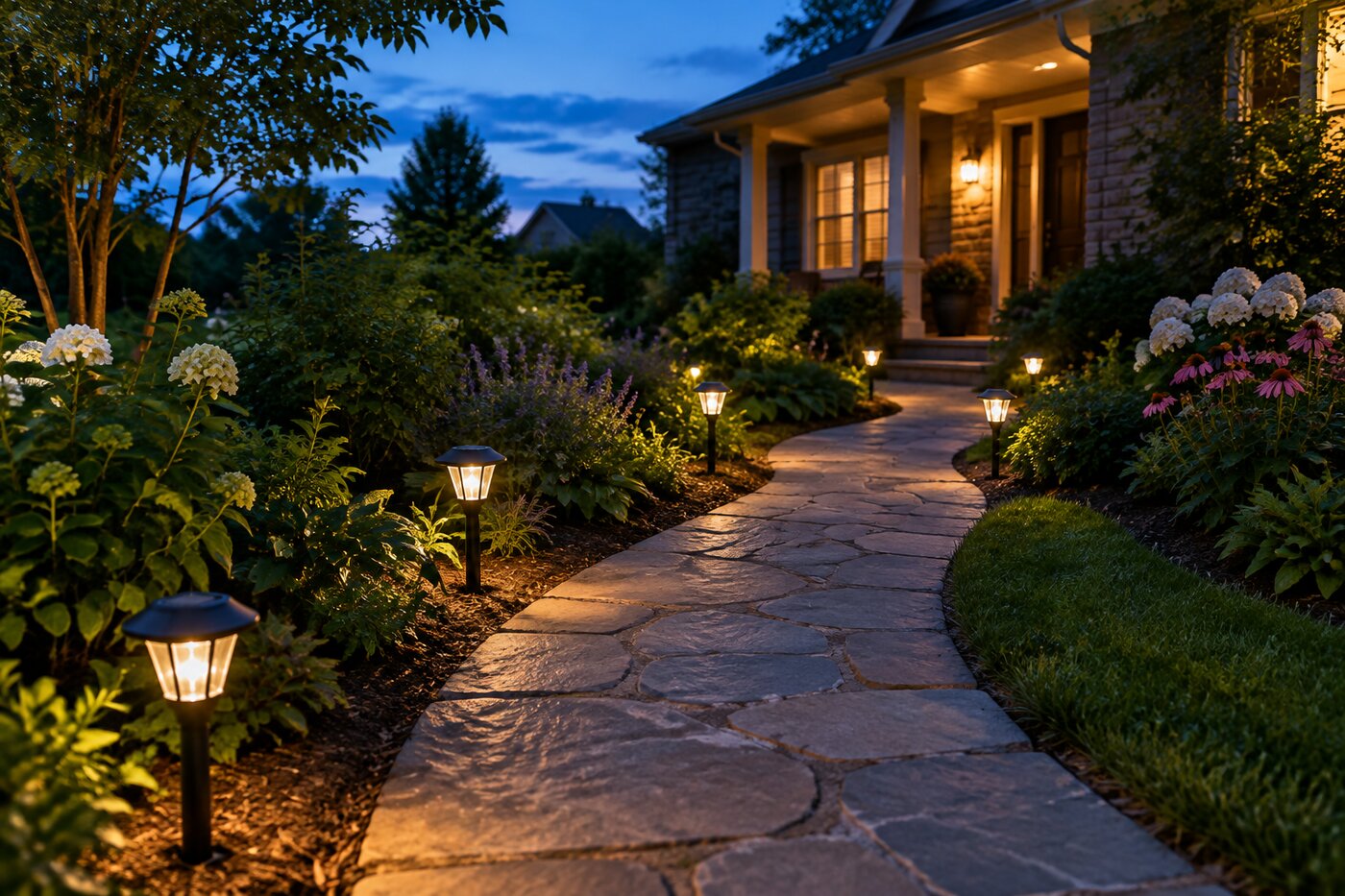
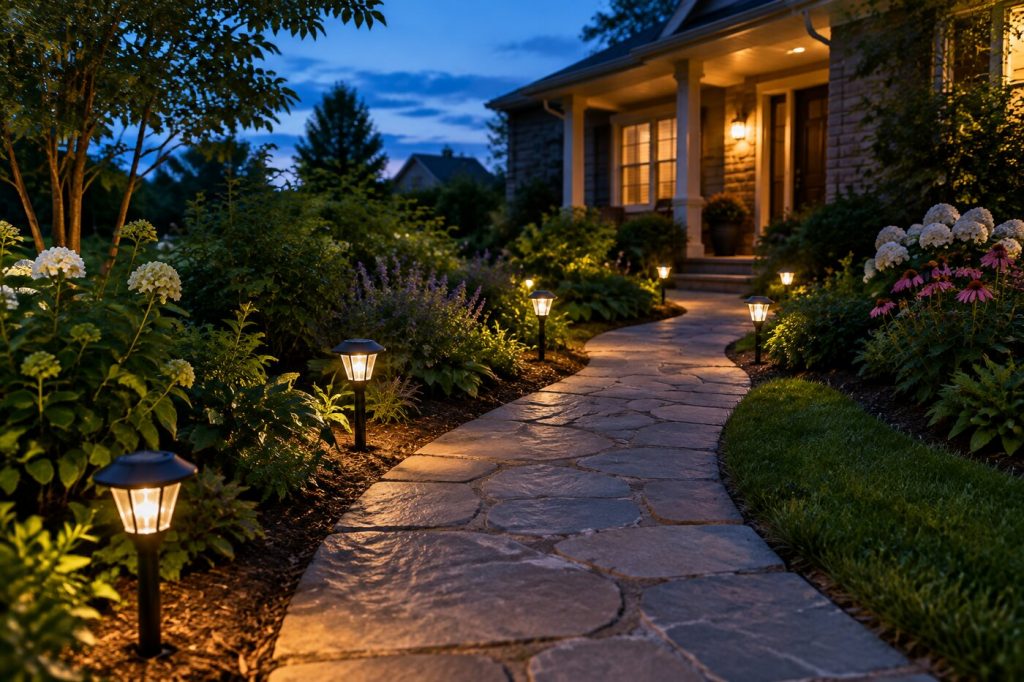
Solar path lights are one of the easiest outdoor upgrades you can make. There is no wiring, no electrician, and no added electric bill. You push the stakes into the ground, and each light charges its battery during the day and turns on by itself at dusk. Lined along a walkway, they make it easier to see where you are going at night and give a yard a warm, finished look.
What We'll Cover
- Top Solar Path Lights
- How solar lights work
- Brightness: what the numbers mean
- Color: warm or cool white
- Build quality
- Path light sets
- Spotlights and in-ground lights
- Budget singles
- Where to put solar path lights
- Installation tips
- Make them last longer
- Troubleshooting
- Design ideas
- Solar vs. low-voltage lighting
- The short answer
They are also easy to buy badly. Cheap lights can be dim, fade out by midnight, or stop working after one season. This guide explains what separates a good set from a disappointing one, how to place them, and what you can do to keep them glowing longer.
Top Solar Path Lights
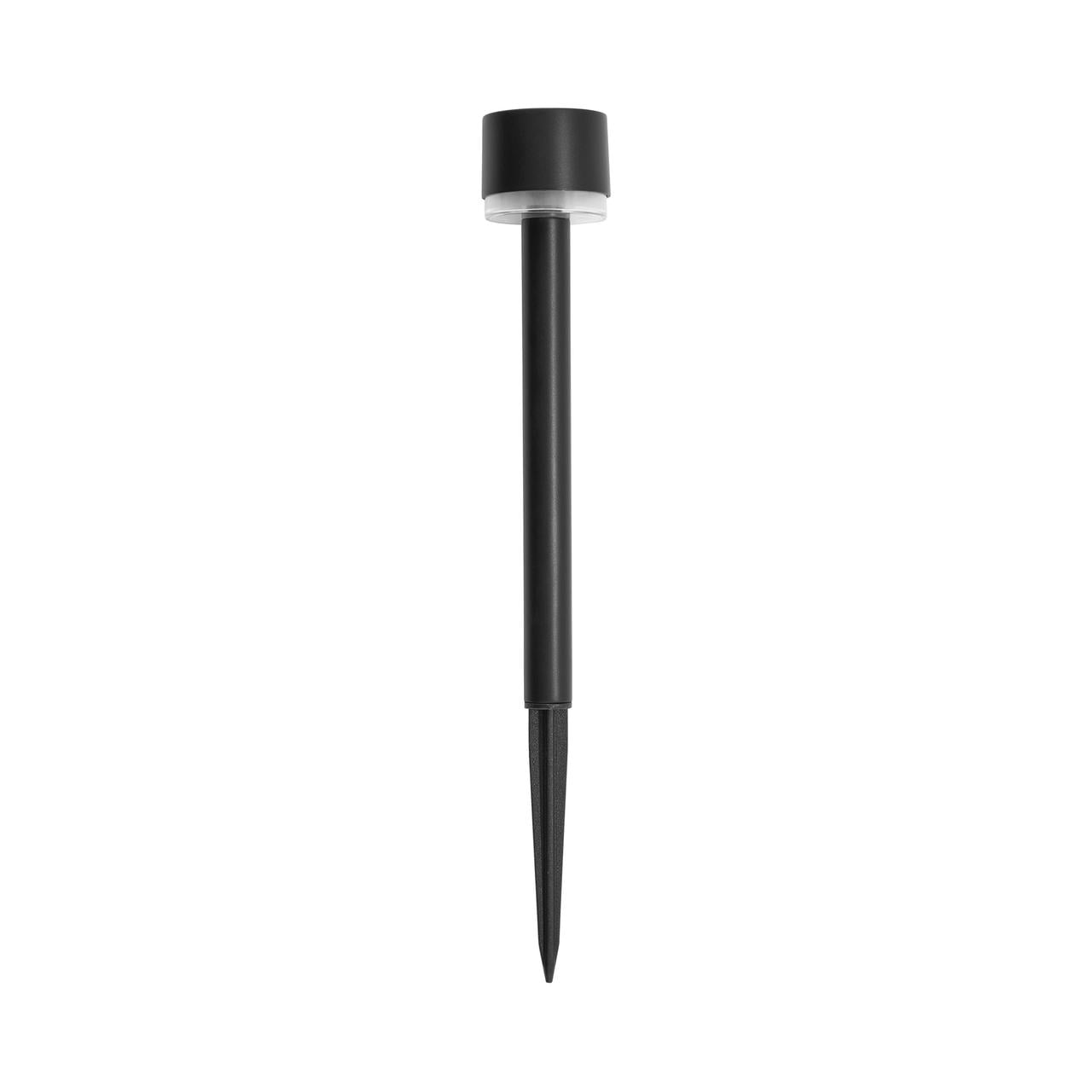
How solar lights work
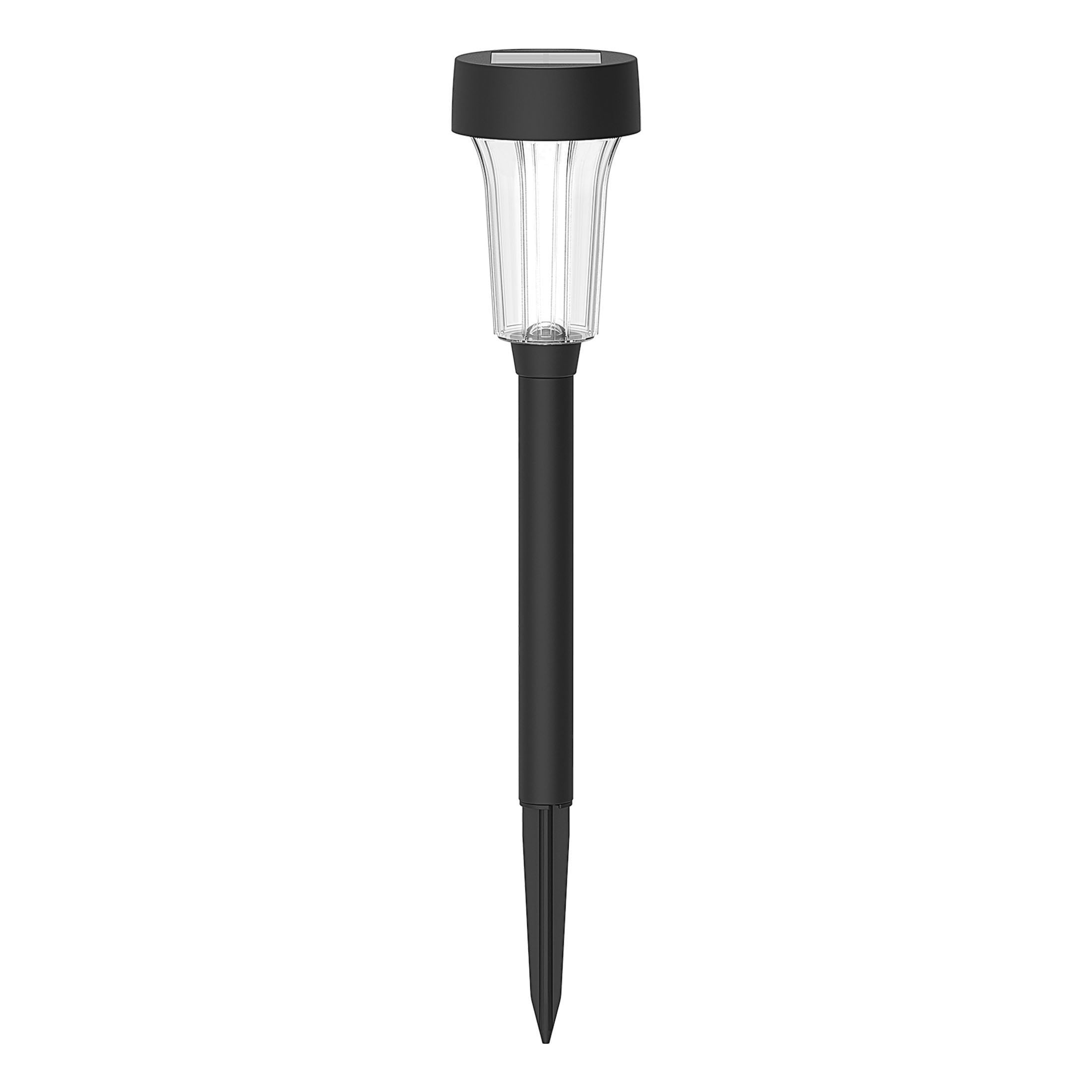
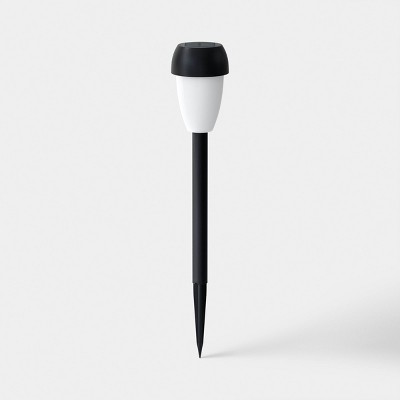
Each light has a small solar panel on top, a rechargeable battery inside, an LED, and a light sensor. During the day, the panel turns sunlight into electricity and charges the battery. When the sensor detects darkness, the light switches on and runs from the stored charge. How long it stays on depends on how much sun the panel received, the size and condition of the battery, and how bright the LED is. A sunny summer day can power a light through the night, while a string of cloudy winter days may leave it dim or dark by late evening.
Brightness: what the numbers mean
Brightness is often listed in lumens. Path lights are meant to mark a route, not flood it with light, so a few lumens to a few dozen lumens is typical. Lower-output lights, in the range of a few lumens, give a soft glow that outlines a path. Brighter lights help on steps or longer driveways. Spotlights, which aim light at a tree or a wall, are usually much brighter than path lights. Keep in mind that brighter lights drain their batteries faster, so a very bright solar light may not last as long into the night.
Color: warm or cool white
Warm white light has a yellowish tone that looks cozy and blends well with plants, wood, and stone. Cool white is bluer and crisper, and it can look brighter at the same output. Most people prefer warm white near the house and along garden paths, and cool white for a modern look or security lighting. Some sets let you switch between the two, and some offer color-changing modes for parties or holidays.
Build quality
- Materials: Stainless steel, aluminum, and glass look better and last longer than thin plastic, though good plastic lights work too.
- Weather rating: An IP65 rating or similar means the light is protected against dust and water jets, which is what you want outdoors.
- Replaceable batteries: Lights with a battery compartment you can open are much easier to keep running for years.
- Stakes: Sturdy stakes are easier to push into firm soil and keep lights standing straight.
Path light sets
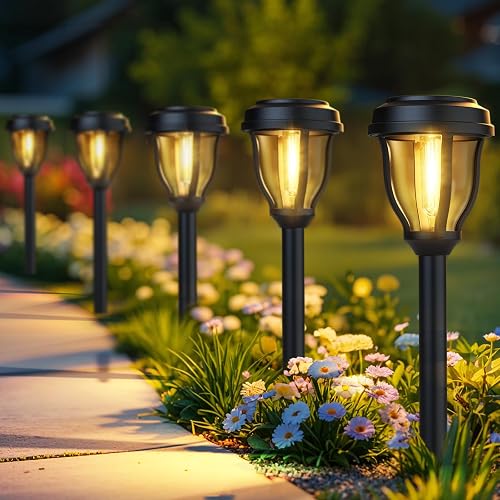
Our Solar Outdoor Lights is the perfect solution for adding beauty and illumination to your garden. Warm white solar lights provide a cozy ambiance and sufficient brightness, illuminate your pathwa...
The DERAYSION 12-pack includes a dozen lights with automatic on and off, enough to line a typical front walk. They are rated as waterproof for outdoor use.
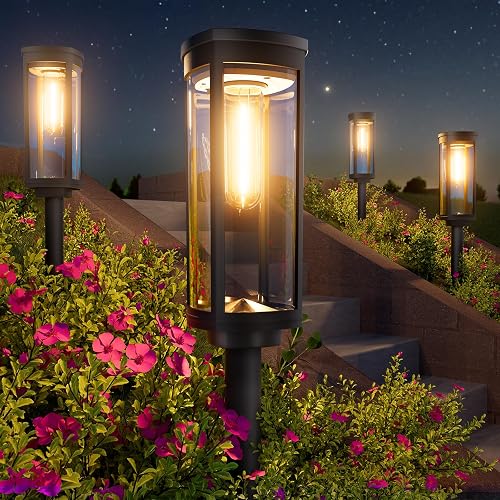
SOLAR WALKWAY LIGHTS OUTDOOR: The clear geometric shade creates a defined pathway glow for everyday landscape placement. The softer tone suits garden paths, patios and entrances.
SOLAR LIGHTS OUTDO...
The BITPOTT eight-pack uses warm white LEDs and carries an IP65 rating, a good match for garden beds near the house.
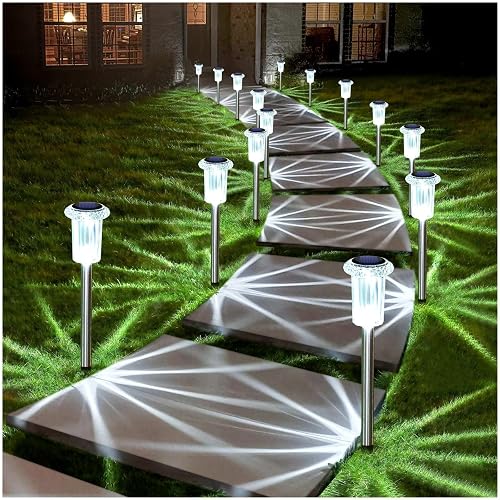
INNOVATIVE DESIGN: Solar pathway lights adopt an integrated lamp head design, using highly transparent acrylic material and surface-cutting technology, making the lamp head present a diamond-like e...
The DenicMic 10-pack uses cool white LEDs for a crisper, modern look along driveways and walkways.
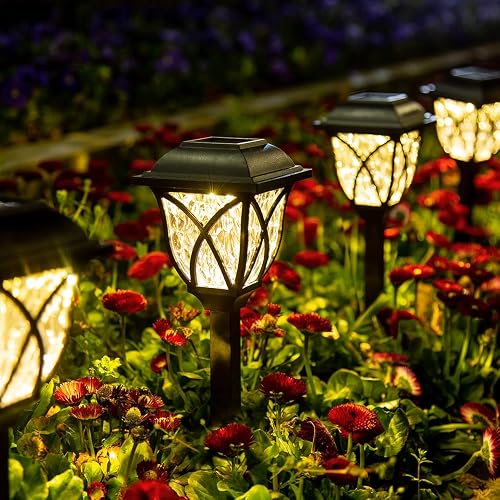
【Unique and Enchanting Design】Solar outdoor walkway lights are designed to provide an attractive pattern, also as a focal attractive in your planter for outdoor plants and lights up your garden at ...
The GIGALUMI six-pack is a smaller set for short paths, flower beds, or filling gaps in an existing layout.
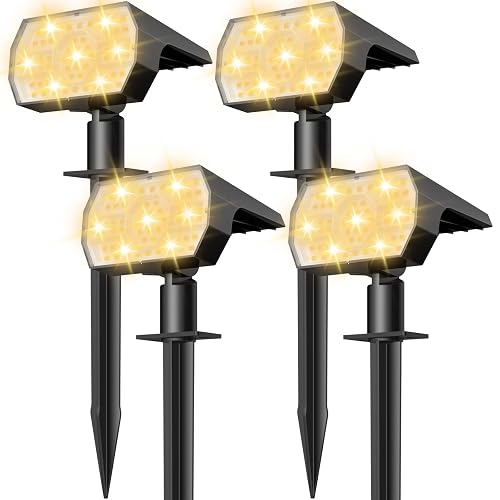
NYMPHY Solar Lights 4 Pack: Equipped with 56 amazing LEDs (market leading). Solar spot outdoor lights will create the perfect lighting accent wherever it is placed. Light up your garden by channeli...
The NYMPHY four-pack uses warm white light, useful as accents around a patio or a small garden.
Spotlights and in-ground lights
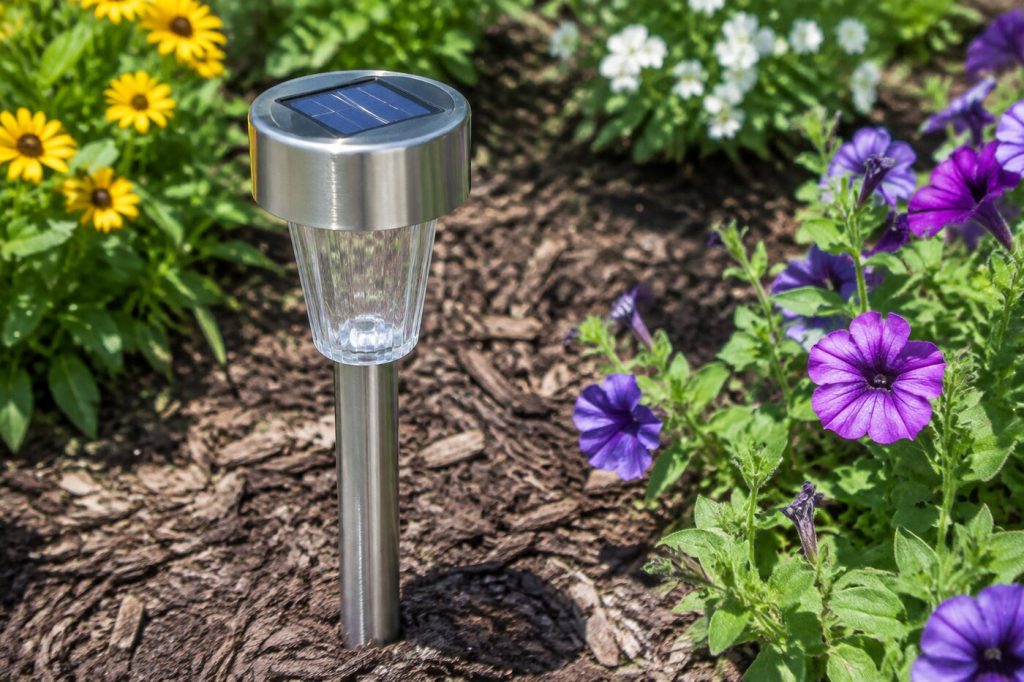
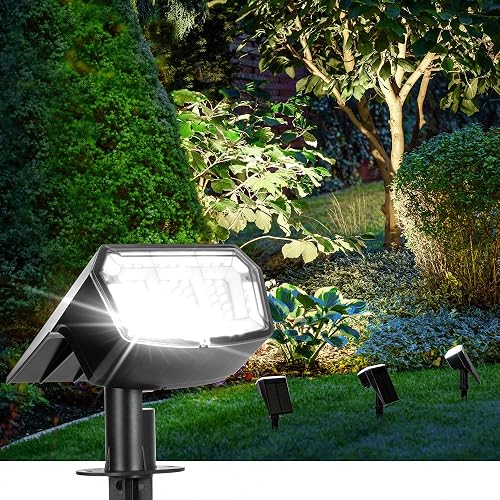
【High Brighteness Solar Lights】: AUDERWIN Solar spotlight equipped 63 high power LEDs, emit 6500k daylight with super bright light. Perfect for patio, front door,backyard, garden, driveway, walkway...
The AUDERWIN four-pack is a set of solar spotlights you can aim at trees, shrubs, a flag, or the front of the house.
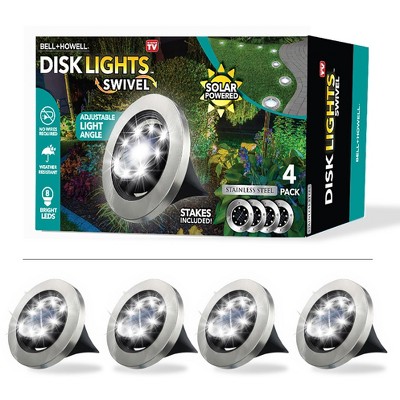
At Target, the Bell and Howell swivel disk lights sit flush in the ground with eight LEDs each and turn on automatically. They work well along lawn edges where people might step or mow.
Budget singles
Target's Room Essentials grade pathway light is a low-cost single light you can use to fill a gap or mark a step.
The Mainstays Classic Flare light at Walmart is rated at 5 lumens with a color-holding LED, a simple single light for accents.
The Mainstays Black Halo column light is rated at 2 lumens, a soft marker light for low-key paths.
Where to put solar path lights
Sunlight is everything. Place each light where its panel gets several hours of direct sun, away from the shade of trees, fences, eaves, and tall plants. A light that sits in shade most of the day will be dim at night no matter how good it is. Also keep lights away from porch lights, streetlights, and motion lights. The sensor can mistake that light for daylight and keep the solar light off.
For spacing, a common approach is to place lights every six to eight feet along a path, alternating sides or staying on one side depending on the look you want. Closer spacing gives a brighter, more continuous line. Wider spacing looks more natural and uses fewer lights. Lay them out on the ground before you push the stakes in, then walk the path at night and adjust.
Installation tips
- Charge first. Many solar lights ship with a switch or a pull tab. Turn them on and leave them in the sun for a full day before judging brightness.
- Pre-dig in hard soil. Use a screwdriver or a small dowel to make a pilot hole so the stake does not bend.
- Keep them level. A tilted panel collects less sun and looks messy.
- Mind the mower. Set lights back from lawn edges, or use in-ground disk lights where a mower passes.
Make them last longer
Wipe the panels with a damp cloth every few weeks. Dust, pollen, bird droppings, and hard water spots all block sunlight and cut charging. In winter, clear snow off the panels after storms. If a light gets dim after a season or two, the battery is the most likely cause. Many solar lights use standard rechargeable batteries that you can replace, so check the type in your light before buying new ones, and use the same type and capacity.
In places with long, dark winters, some people bring solar lights indoors during the darkest months to protect the batteries and fixtures. If you leave them out, expect shorter run times until the days get longer.
Troubleshooting
If a new light will not turn on, check for a power switch on the underside of the panel or a plastic tab over the battery, then leave it in full sun for a day. Test it by covering the panel with your hand in a dim spot; it should light up. If a light stays on during the day, the sensor may be dirty or damaged. If it turns on but fades early, clean the panel, move it to a sunnier spot, or replace the battery. Water inside the fixture usually means a seal has failed, which often calls for a replacement light.
Design ideas
Path lights are only one way to use solar lighting. Spotlights aimed up into a tree create dramatic shadows. A few lights tucked into a flower bed highlight plants at night. Disk lights set into a lawn or between stepping stones mark edges without adding height. For a patio, pair path lights with solar string lights or lanterns. Mixing heights and styles makes a yard look layered and planned rather than lined up like a runway.
Solar vs. low-voltage lighting
Low-voltage landscape lighting is wired to a transformer that plugs into an outdoor outlet. It is brighter and more consistent than solar, and it can be controlled with a timer, but it costs more and takes longer to install. Solar is the easy, low-cost choice for marking paths and adding accents. Many homes use both: low-voltage lights for steps and entryways that need reliable light, and solar lights for garden beds and borders.
The short answer
For most walkways, a set of warm white solar path lights with an IP65 rating and replaceable batteries is the right choice. Place them in full sun, away from other outdoor lights, and space them six to eight feet apart. Clean the panels regularly and replace batteries when the glow fades, and they will keep your path lit for years.
The responses below are not provided, commissioned, reviewed, approved, or otherwise endorsed by any financial entity or advertiser. It is not the advertiser’s responsibility to ensure all posts and/or questions are answered.
Tip: mark where each light goes with a golf tee first and check the spots at a few different times of day. Shade moves more than you would think between spring and summer.