
Last Updated on: May 05, 2026
A working smoke alarm is one of the simplest and cheapest ways to protect a home. It gives early warning of a fire, often before anyone smells smoke, and those extra minutes matter most at night when everyone is asleep. Many homes have alarms that are old, in the wrong spot, or missing batteries, so it is worth checking what you have.
What We'll Cover
- Top Smoke Alarms
- Ionization, photoelectric, or dual-sensor?
- Battery or hardwired?
- Interconnected alarms
- Smoke and carbon monoxide combo alarms
- Extra features
- Battery-powered smoke alarms
- Combo and hardwired alarms
- Where to put smoke alarms
- Testing and maintenance
- Dealing with nuisance alarms
- Renters and landlords
- Make a home fire plan
- Common smoke alarm mistakes
- Questions to ask before you buy
- The short answer
Smoke alarms look alike, but they differ in sensor type, power source, and extra features like voice alerts and carbon monoxide detection. This guide covers how to choose alarms, where to put them, how to keep them working, and what the U.S. Fire Administration recommends, with models from several stores.
Top Smoke Alarms
Ionization, photoelectric, or dual-sensor?
Smoke alarms use two main sensor types. The U.S. Fire Administration explains that ionization and photoelectric alarms detect different types of fires. Because no one can predict what type of fire might start, the USFA recommends that every home and place where people sleep have both ionization and photoelectric smoke alarms, or dual-sensor alarms that contain both types of sensors.
Check the box or listing for the sensor type. Many alarms sold today are photoelectric, and some are dual-sensor. If your home only has one type, adding the other type in key areas is an easy upgrade.
Battery or hardwired?
- Replaceable battery: Runs on a 9-volt or AA battery. Easy to install anywhere, but the battery needs to be changed.
- Sealed 10-year battery: A long-life lithium battery built into the alarm. There is no battery to change, and the whole alarm is replaced when it reaches the end of its life.
- Hardwired: Connected to the home's electrical system, usually with a backup battery. Hardwired alarms are often interconnected, and many new homes are built with them.
The USFA notes that hardwired alarms usually have a backup battery that will need to be replaced once a year. If you are replacing old hardwired alarms, check that the new alarm works with the existing wiring and connector, or hire an electrician.
Interconnected alarms
The USFA recommends choosing interconnected smoke alarms, so that when one sounds, they all sound. This matters in larger or multi-story homes, where an alarm in the basement might not be heard in an upstairs bedroom. Hardwired alarms can be connected through the home's wiring, and some battery alarms connect wirelessly to each other. Interconnected alarms usually need to be the same brand or system.
Smoke and carbon monoxide combo alarms
Carbon monoxide is a gas you cannot see or smell. Combination alarms detect both smoke and carbon monoxide in one unit, which saves space on the ceiling and means fewer devices to test. Homes with gas appliances, a fireplace, or an attached garage should have carbon monoxide alarms. A combo alarm is a simple way to cover both, but check that placement works for both hazards according to the instructions.
Extra features
- Voice alerts: Some alarms announce the danger, such as fire or carbon monoxide, and its location.
- Hush button: Silences nuisance alarms from cooking for a short time.
- LED status light: Shows at a glance that the alarm has power.
- End-of-life warning: Chirps or signals when the alarm needs to be replaced.
- Smart alarms: Send alerts to your phone when you are away.
Battery-powered smoke alarms
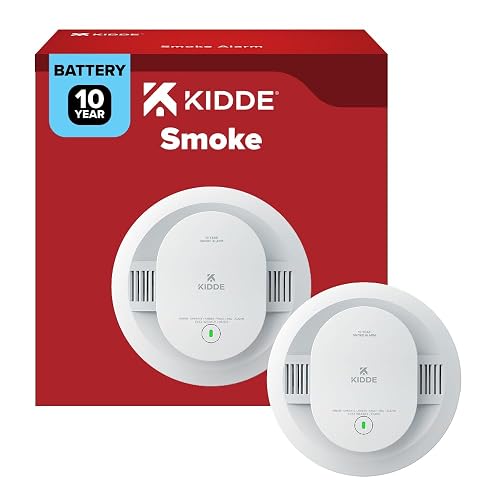
SMOKE DETECTION: Model 20SD10 detects smoke over 25% faster*; sounds a loud 85-decibel alarm with red LED light for clear visual warnings; suitable for homes
10-YEAR BATTERY OPERATION: Built-in 10-...
The Kidde 20SD10 has a 10-year battery, LED status lights, and an 85 dB alarm, a simple choice for most rooms.
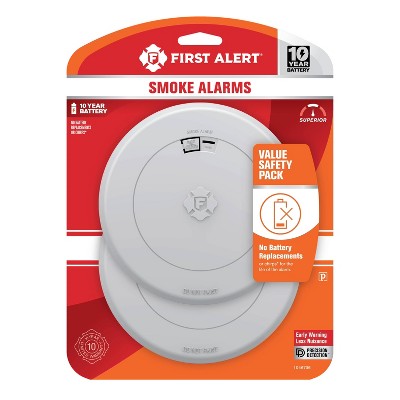
At Target, the First Alert 2-pack uses photoelectric sensors and 10-year batteries in a slim design, a good way to cover several rooms at once.
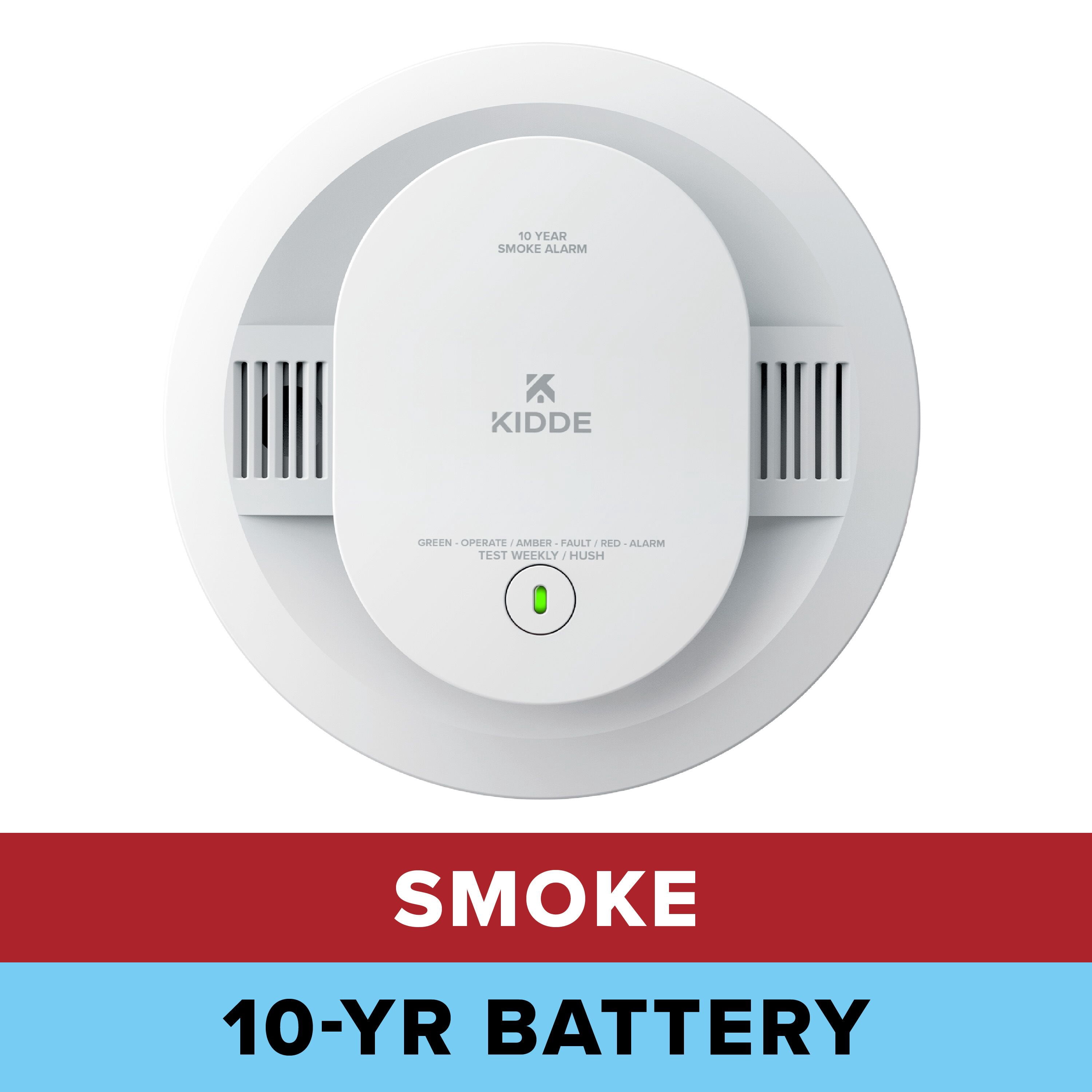
At Walmart, the Kidde 5-inch photoelectric alarm has a sealed 10-year lithium battery, so there is no battery to change.
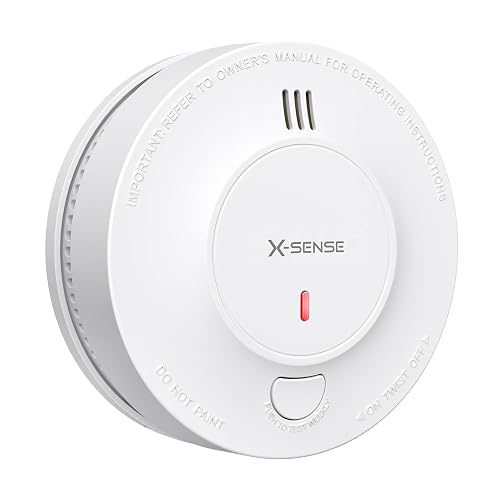
10-YEAR BUILT-IN BATTERY: A sealed lithium battery powers the smoke alarm for up to 10 years, helping reduce battery replacements, low-battery chirps, and routine maintenance across bedrooms, hallw...
The X-Sense SD2J0AX has a 10-year battery and is listed to UL 217, the U.S. standard for smoke alarms, a value option for extra rooms.
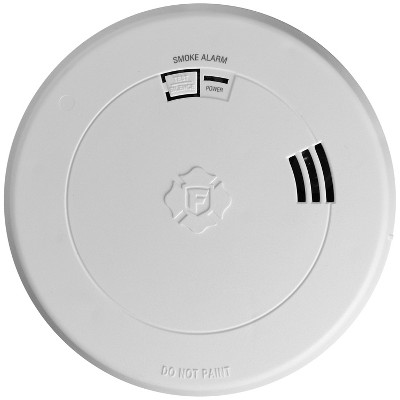
Also at Target, the First Alert SM210V has a 10-year lithium battery and voice alerts, and it needs no wiring.
Combo and hardwired alarms
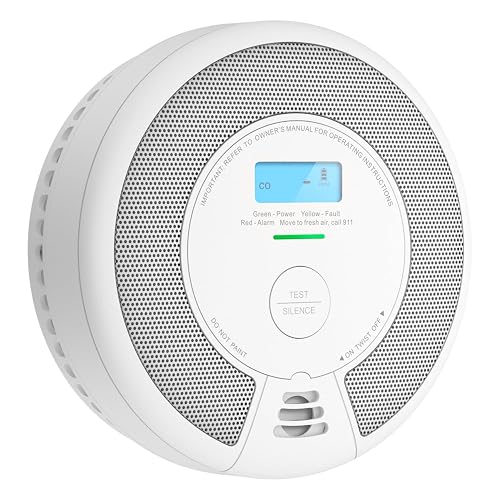
Please Note: The SC07 is a basic standalone unit. It does not support wireless interconnection, Wi-Fi, or base station connection; for wireless interconnection, search for SC07-W
10-Year Protection...
The X-Sense SC07 detects both smoke and carbon monoxide in one battery-powered unit, a good fit for hallways near bedrooms.
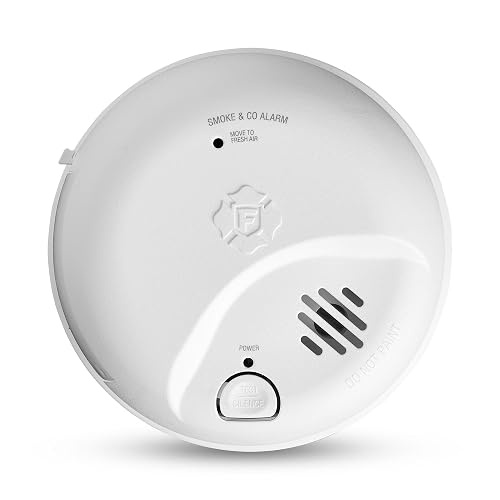
First Alert's Precision Detection advanced sensing technology complies with new industry standards to reduce cooking nuisance alarms and provides early warning in the event of a home fire emergency...
The First Alert battery combination alarm also covers smoke and carbon monoxide, an easy upgrade for homes with gas appliances.
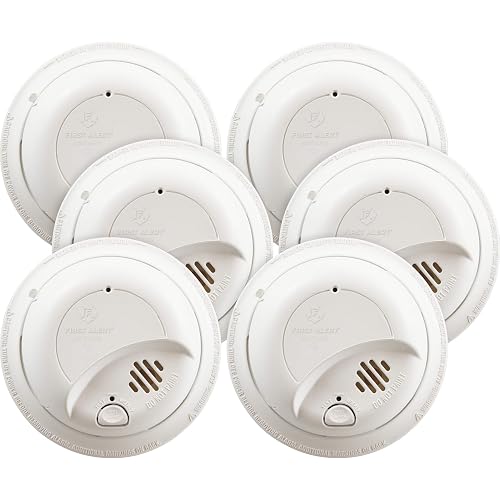
6 pack of hardwired smoke alarms, includes battery backup for power outages
Tamper resistant locking pins, single button silence/test and loud 85Db alarm
120-Volt AC power with 9-volt battery backu...
The First Alert SMI100-AC 6-pack is a hardwired alarm with battery backup, useful when replacing a full set of wired alarms.
Where to put smoke alarms
The USFA recommends installing smoke alarms in every bedroom, outside each separate sleeping area, and on every level of the home, including the basement. It advises putting alarms inside and outside each bedroom and sleeping area, noting that a closed door may slow the spread of smoke, heat, and fire.
- Ceilings or high on walls: Smoke rises, so follow the alarm's instructions for height.
- Away from the kitchen stove: This cuts down on nuisance alarms from cooking.
- Away from bathrooms: Steam from showers can set off some alarms.
- Away from vents and fans: Moving air can blow smoke away from the sensor.
Testing and maintenance

A smoke alarm only works if it has power and is working properly. The USFA says a smoke alarm with a dead or missing battery is the same as having no smoke alarm at all. Its general tips are to test alarms monthly and to replace the batteries at least once a year, following the maker's instructions. Alarms with sealed 10-year batteries do not need battery changes, but they still need monthly tests.
Age matters too. The USFA says smoke alarms need to be replaced 10 years from the manufacture date. Check the date printed on the back of each alarm, and write the replacement year somewhere you will see it. Gently vacuum or dust the alarm now and then so the vents stay clear.
Dealing with nuisance alarms
An alarm that goes off every time someone makes toast is annoying, and it tempts people to take the battery out. Instead of removing power, move the alarm a little farther from the kitchen if the instructions allow it, open a window or turn on the range hood while cooking, and use the hush button to quiet the alarm for a few minutes. A chirp every minute or so usually means a low battery or an alarm that has reached the end of its life. Change the battery or replace the alarm right away rather than ignoring the sound.
Renters and landlords
Rules about who installs and maintains smoke alarms in rentals vary by state and city. Renters should test the alarms when they move in, test them monthly after that, and tell the landlord right away if an alarm is missing or broken.
Make a home fire plan
Alarms work best as part of a plan. Know two ways out of every room, pick a meeting spot outside, and practice with everyone in the home, including children. Make sure everyone knows what the alarm sounds like. Keep a fire extinguisher in the kitchen and know how to use it, but get out and call for help if a fire grows.
Common smoke alarm mistakes
The most common mistake is removing the battery after a cooking false alarm and forgetting to put it back. Using the hush button instead is safer. Other mistakes include keeping alarms past their 10-year life, placing an alarm right next to the stove or bathroom, and having only one alarm in a multi-story home. Finally, many people never test their alarms, so a dead alarm goes unnoticed.
Questions to ask before you buy
- How many levels and bedrooms? Count one for each bedroom, sleeping area, and level.
- Hardwired or battery? Match existing wiring or choose sealed 10-year batteries.
- Do you need CO detection? Gas appliances and attached garages call for it.
- Do you want them to talk to each other? Choose an interconnected system.
The short answer
Put a smoke alarm in every bedroom, outside each sleeping area, and on every level of your home. Cover both ionization and photoelectric sensing, choose interconnected alarms when you can, and add carbon monoxide alarms if you have gas appliances. Test every alarm each month, and replace any alarm that is 10 years past its manufacture date.
The responses below are not provided, commissioned, reviewed, approved, or otherwise endorsed by any financial entity or advertiser. It is not the advertiser’s responsibility to ensure all posts and/or questions are answered.
Just checked the date on the back of ours after reading this. For a two-story house with a finished basement, is a wireless interconnected set enough, or is hardwiring worth it?