
Last Updated on: Apr 21, 2026
A good night's sleep can make or break a camping trip. The right sleeping bag keeps you warm when the temperature drops after sunset, packs down to fit your car or backpack, and feels comfortable enough that you wake up ready for the day. The wrong one leaves you shivering at 3 a.m. or sweating on a warm summer night.
What We'll Cover
- Top Sleeping Bags
- Understanding temperature ratings
- Seasons and ratings
- Shapes: mummy, rectangular, and more
- Down or synthetic fill?
- Size, length, and fit
- Zippers, hoods, and small details
- Everyday and car camping bags
- Lighter bags for backpacking
- Do not forget the sleeping pad
- Staying warm and safe
- Care and storage
- Common mistakes
- Questions to ask before you buy
- The short answer
Sleeping bags differ in temperature rating, shape, insulation, weight, and size. This guide explains how to read a temperature rating, how to choose between down and synthetic fill, which shape fits how you sleep, and how to care for a bag so it lasts, with picks from several stores.
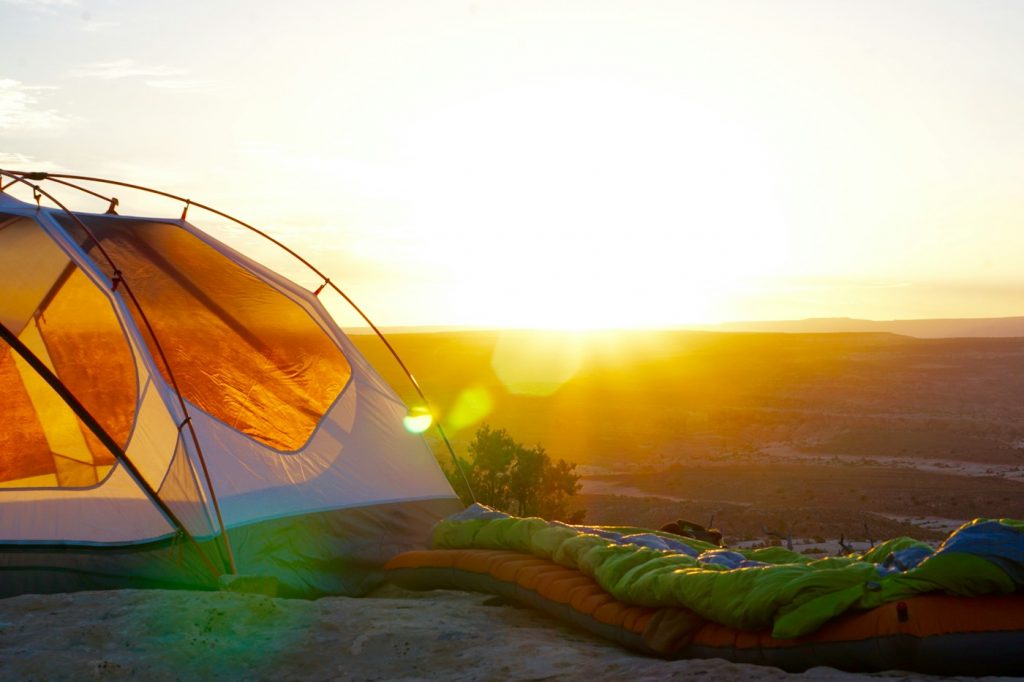
Top Sleeping Bags
Understanding temperature ratings
Most sleeping bags list a temperature rating, such as 20°F or 35°F. Some brands test their bags to a standard and show two or more numbers. A comfort rating is the temperature at which a typical cold sleeper should feel comfortable. A lower limit rating is the temperature at which a typical warm sleeper can sleep for a night curled up. Many bags only show a single number, which is often closer to the lower limit than to true comfort.
A simple rule is to pick a bag rated about 10 to 15 degrees colder than the lowest temperature you expect. If you sleep cold, add a bit more margin. It is easy to open a warm bag on a mild night, but it is hard to get warm in a bag that is not warm enough.
Seasons and ratings
- Summer bags (about 35°F and above): Light and airy for warm nights and car camping in summer.
- Three-season bags (about 15°F to 35°F): The most versatile choice for spring, summer, and fall trips.
- Winter bags (below about 15°F): Heavier and warmer, built for snow camping and high elevations.
Shapes: mummy, rectangular, and more
- Mummy: Tapered at the feet with a snug hood. Mummy bags trap heat well and pack small, which is why backpackers like them, but some people find them tight.
- Rectangular: Roomy and comfortable, easy to unzip into a blanket, and great for car camping and sleepovers. They are bulkier and less warm for their weight.
- Semi-rectangular: A middle ground with more room than a mummy but better warmth than a rectangle.
- Double bags: Sized for two people, a nice option for couples at a campground.
Down or synthetic fill?
Down is very warm for its weight and packs small. It is measured in fill power, and higher numbers mean loftier, warmer down for the same weight. The trade-off is cost and moisture. Wet down loses much of its warmth and dries slowly, though some down is treated to resist water.
Synthetic insulation costs less, still insulates when damp, and dries faster. It is heavier and bulkier than down for the same warmth. For car camping, damp climates, and family trips, synthetic is a practical, budget-friendly choice. For backpacking where every ounce counts, down is often worth the price.
Size, length, and fit
Sleeping bags usually come in regular and long lengths, and some brands offer women's versions that are shorter, a bit wider at the hips, and have extra insulation in the footbox and torso. A bag that is too short compresses the insulation at your head and feet, which leaves cold spots. A bag that is far too long leaves extra air space your body has to heat. Try to pick a length that gives a few inches of room beyond your height so you can stretch out and store a water bottle or clothes at the bottom on cold nights.
Zippers, hoods, and small details
Small features make a big difference at night. A full-length zipper lets you open the bag like a quilt on warm nights. A draft tube, a padded strip behind the zipper, blocks cold air from leaking in. A draft collar around the neck keeps warm air from escaping when you move. A snag guard helps the zipper run smoothly without catching the fabric. An inside pocket is handy for a phone, headlamp, or lip balm. Some rectangular bags can zip together with a second bag to make a double.
Everyday and car camping bags
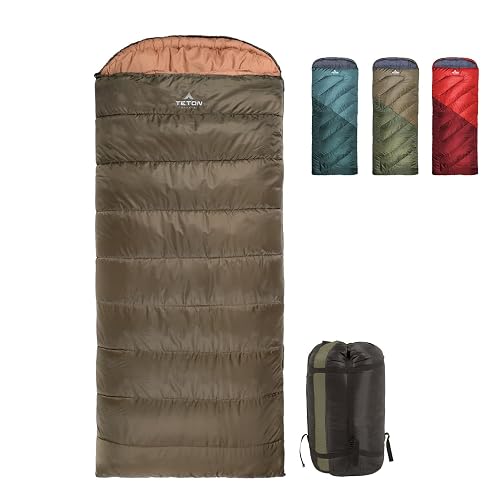
SLEEP COMFORTABLY: You'll forget you're camping with these comfortable sleeping bags! With a soft poly-flannel lining and plenty of room to spread out. The half-circle mummy-style hood keeps you wa...
The TETON Celsius comes in several temperature ratings and includes a travel sack, a popular pick for campground trips.
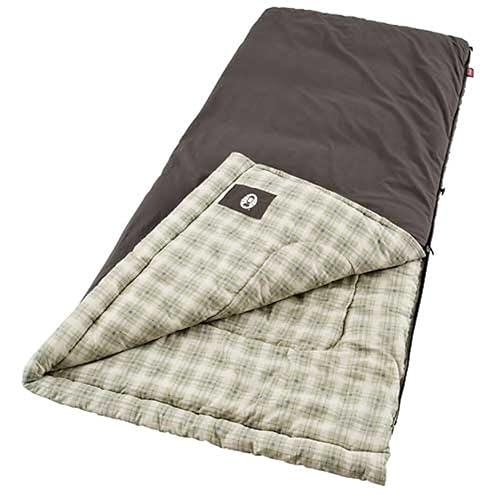
WINTER-READY: This 4-season sleeping bag, the Coleman Big & Tall, serves as a warm sleeping bag with its 40"x84" size. Designed for adults, it accommodates campers up to 6'5".
OPTIMUM INSULATION: A...
The Coleman Heritage Big & Tall is rated to 10°F, has a flannel lining, fits adults up to 6 feet 7 inches tall, and is machine washable.
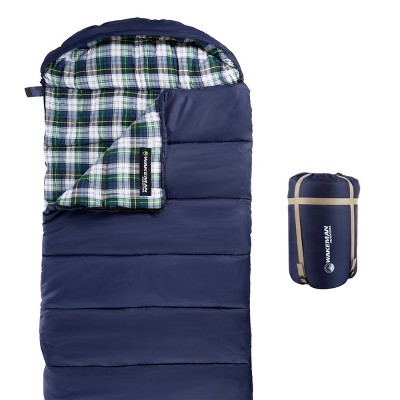
At Target, the Leisure Sports Extra-Large 3-Season sleeping bag uses a roomy envelope style and comes with a carrying bag.
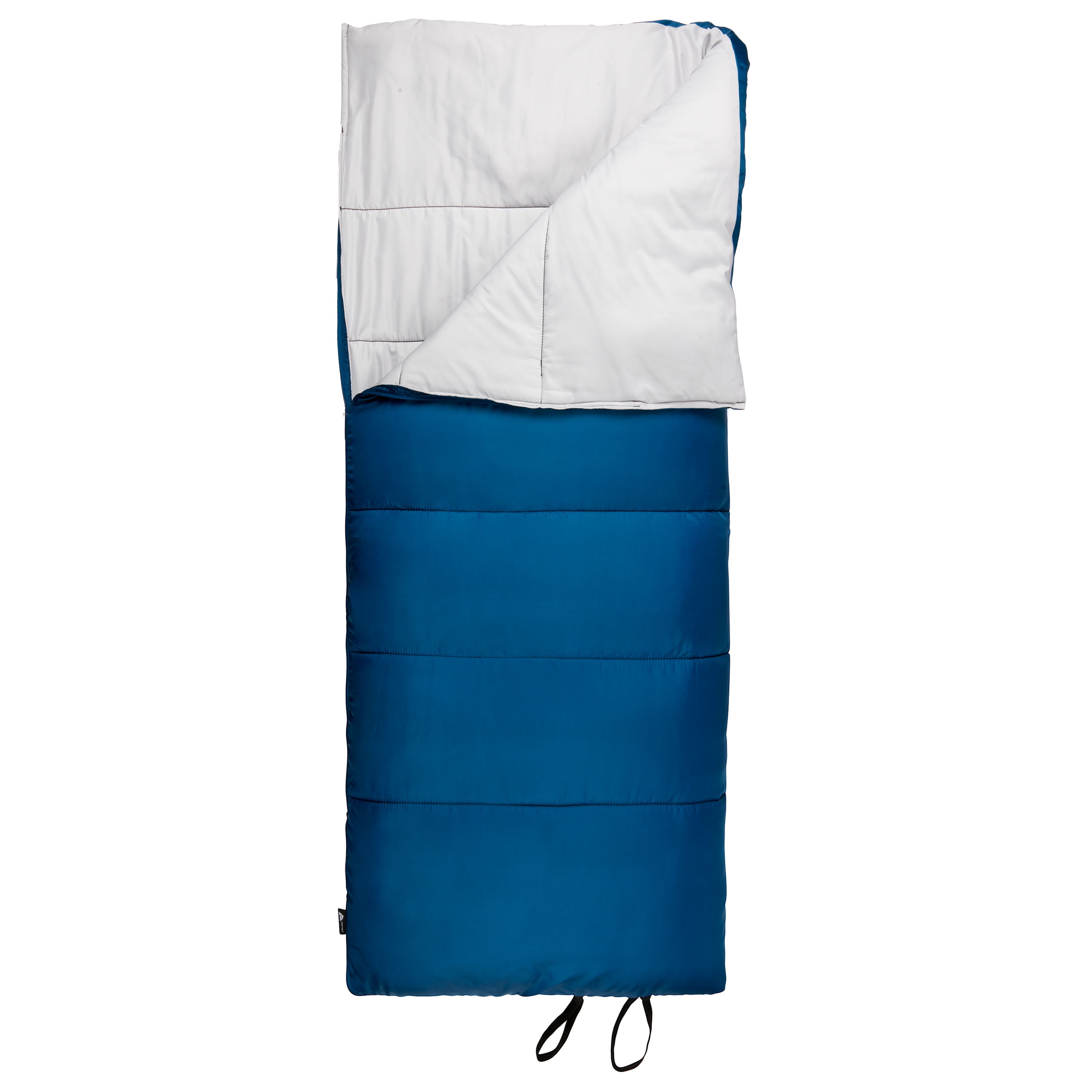
At Walmart, the Ozark Trail 35°F rectangular sleeping bag is made with 47% recycled polyester, a low-cost choice for warm-weather car camping.
Lighter bags for backpacking
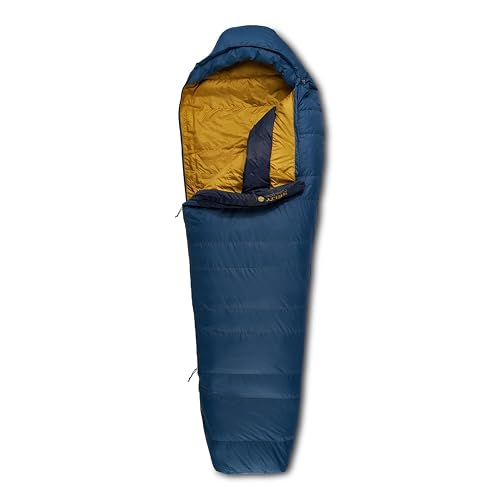
A KELTY CLASSIC: The cosmic 20 has long been a staple of Kelty’s backpacking lineup and a favorite of campers worldwide with 550 FP compressible down, silky soft fabrics, dual direction zippers, th...
The Kelty Cosmic 20 is a down mummy bag with 550 fill power and recycled fabrics, aimed at backpackers who want warmth without much weight.
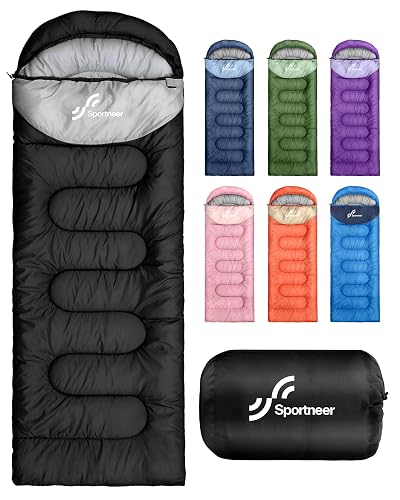
Suitable for 3-4 Seasons: Built from high quality polyester , the sleeping bag is the ideal option for camping as it can be the convenience needed for 3-4 seasons (spring, summer, fall and winter)....
The Sportneer 3-season sleeping bag comes with a compression sack to shrink it down for travel.
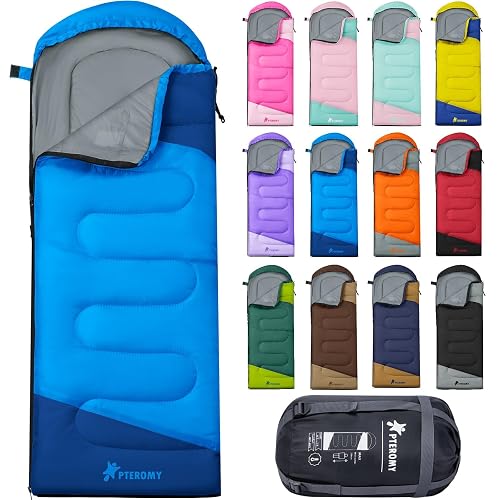
3 Season Comfort Sleeping Bag: Designed for a comfort temperature range of 50℉-80℉ (10℃-27℃) and a recommended limit of 40℉-90℉ (4℃-32℃); It's perfect for spring, summer and fall; This camping slee...
The PTEROMY sleeping bag is lightweight, water resistant, and machine washable.
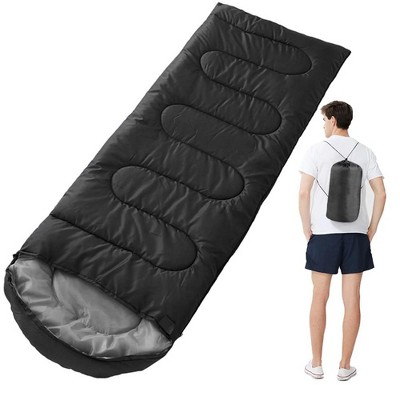
Also at Target, the Kibhous lightweight sleeping bag has a waterproof shell and is sized for adults.
Do not forget the sleeping pad
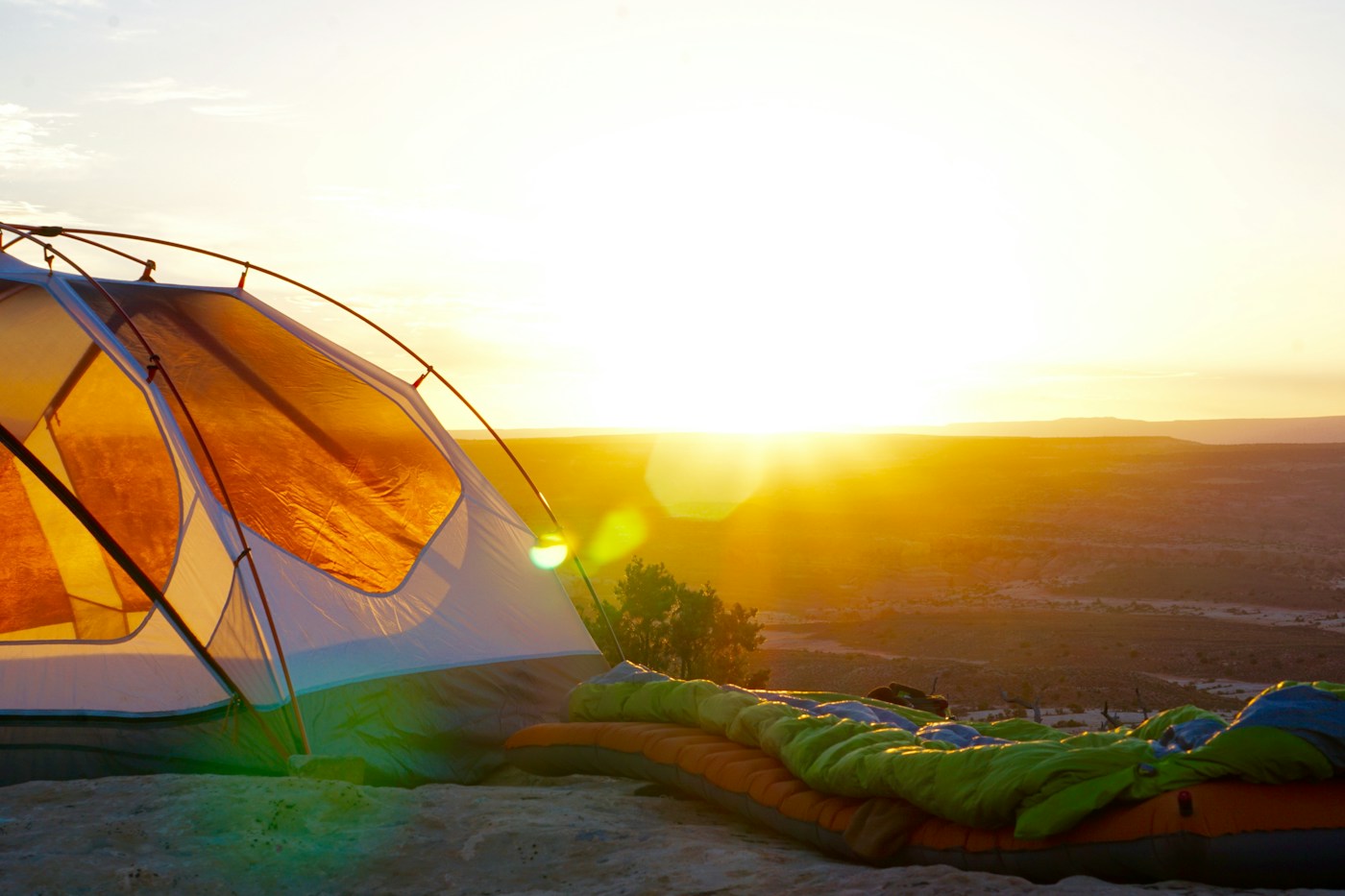
A sleeping bag works by trapping warm air, but the insulation under you gets crushed flat by your body weight. That is why the cold ground can pull heat away even in a warm bag. A sleeping pad adds a layer of insulation between you and the ground. Pads list an R-value, and higher numbers insulate better. For cold nights, a good pad matters as much as the bag itself.
Staying warm and safe
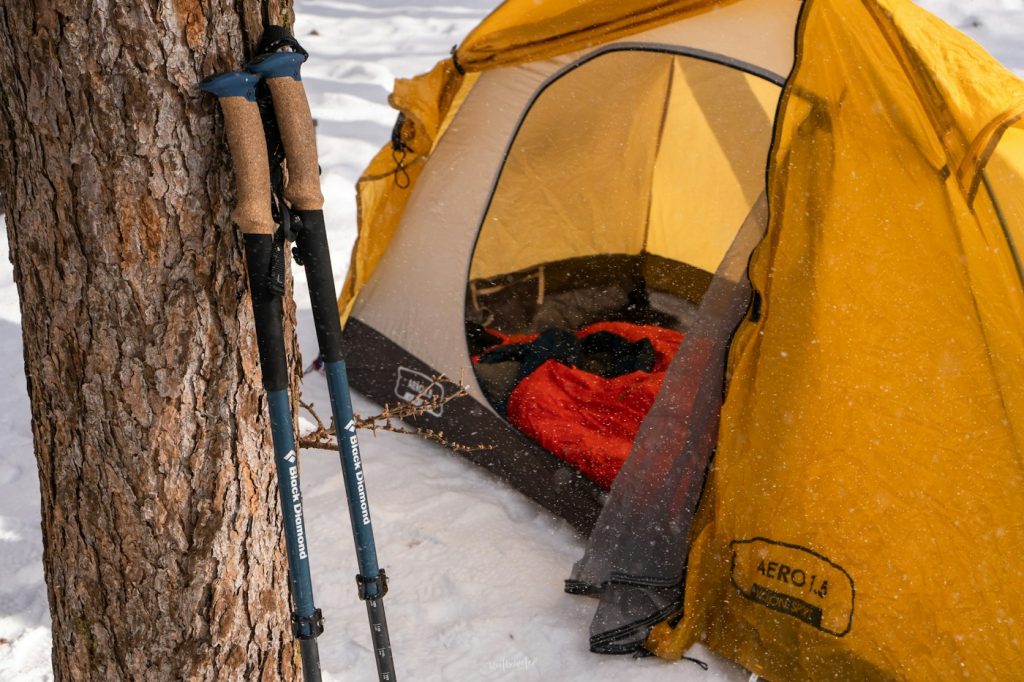
Cold nights can turn dangerous. The National Park Service describes hypothermia as a condition in which you lose body heat faster than you create it. Early symptoms include slurred speech, trembling, exhaustion, stumbling, and poor judgment. To help prevent it, the park service advises putting on warm clothes or rainwear before you get soaked or cold, removing layers before you sweat, eating high-calorie food through the day, staying hydrated, and wrapping sleeping bags and clothing in plastic bags to keep them dry.
- Keep your bag dry: Pack it in a waterproof sack or plastic bag.
- Change into dry clothes: Sleep in dry base layers, not the clothes you hiked in.
- Wear a hat: A warm hat or the bag's hood helps hold in heat.
- Eat a snack: Your body needs fuel to make heat overnight.
- Check the forecast: Plan for the coldest likely temperature, not the average.
Care and storage
Air out your sleeping bag after each trip, then store it loose in a large cotton or mesh storage sack, not in its compression sack. Keeping it squashed for months can damage the insulation and reduce warmth. Spot clean small stains, and wash the whole bag only when needed, following the maker's label. Down bags often need a front-loading washer, a down-specific soap, and a long, low-heat dry with dryer balls to break up clumps.
Common mistakes
The most common mistake is buying a bag based on the rating alone without allowing a margin for cold. Another is skipping a sleeping pad, which leaves you cold no matter how good the bag is. Many campers also store bags compressed or pack them wet, which can lead to mildew and lost loft. Finally, choosing a tight mummy bag when you toss and turn can mean a restless night.
Questions to ask before you buy
- Where and when will you camp? Match the rating to the coldest night.
- Car or backpack? Weight and packed size matter more for backpacking.
- How do you sleep? Side and restless sleepers may want more room.
- How tall are you? Check the bag's length, and look for long or big and tall sizes.
The short answer
For most campers, a three-season synthetic bag rated about 10 to 15 degrees below the coldest expected temperature, paired with an insulated sleeping pad, is the best place to start. Choose down and a mummy shape for backpacking, go rectangular for comfort at the campsite, and keep your bag dry and stored loose between trips.
The responses below are not provided, commissioned, reviewed, approved, or otherwise endorsed by any financial entity or advertiser. It is not the advertiser’s responsibility to ensure all posts and/or questions are answered.
Good reminder about the sleeping pad. For a late-April trip in the mountains where nights might dip into the low 30s, is a 20 degree synthetic bag a reasonable choice, or is down worth the extra cost?