
Last Updated on: Mar 01, 2026
Every time it rains, water rushes off your roof, down the downspout, and away. A rain barrel catches some of that water so you can use it later on flower beds, vegetable gardens, and potted plants. It can trim your water bill in the growing season and reduce runoff from your yard. Setting one up is a weekend project, and choosing the right barrel comes down to size, style, and a few practical features.
What We'll Cover
The numbers add up fast. Virginia Cooperative Extension notes that in a 1-inch rain, a 1,000-square-foot area of roof generates about 600 gallons of water, and that the average rain barrel holds 45 to 60 gallons. That means a single storm can fill a barrel many times over, so planning for overflow is part of any setup.
Top Rain Barrels
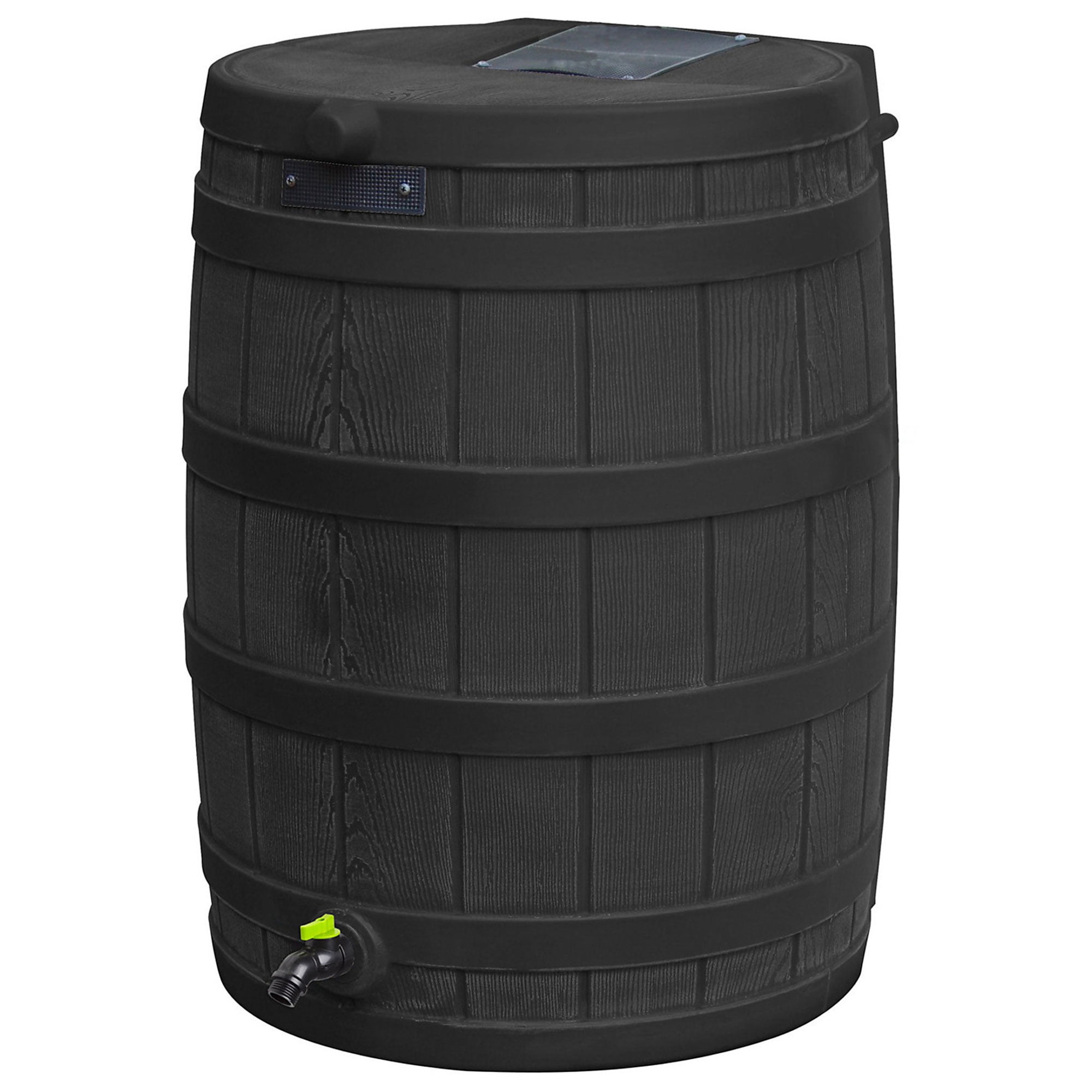
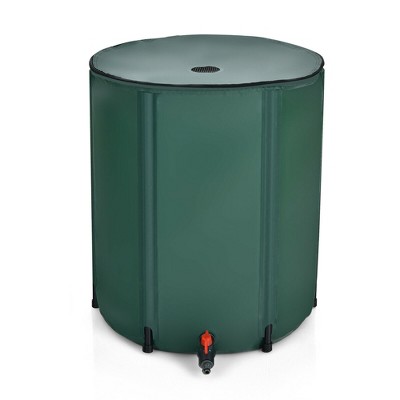
How a rain barrel works
Virginia Cooperative Extension describes three main parts: the inflow, the outflow, and the overflow. Water flows in from the downspout at the top. A spigot near the bottom lets you fill a watering can or connect a hose. An overflow opening near the top lets extra water leave once the barrel is full, and the extension notes that overflow can be sent to another barrel, a rain garden, or lawn and garden areas.
Some setups skip the overflow hole by using a downspout diverter. The diverter sends water into the barrel until it is full, then lets the rest continue down the downspout as usual.
What to look for
- Capacity: Most home barrels hold 45 to 60 gallons. If you have a big garden, you can link two or more barrels.
- Screened top: A fine mesh screen keeps out leaves, debris, and insects.
- Spigot placement and material: A brass spigot set a few inches above the base leaves room for a watering can underneath.
- Flat back: Sits flush against a wall and saves space.
- Overflow port: Lets you control where extra water goes, or connect a second barrel.
- Style: Many barrels mimic wood, stone, or urns so they blend in with the house or garden.
Rigid rain barrels
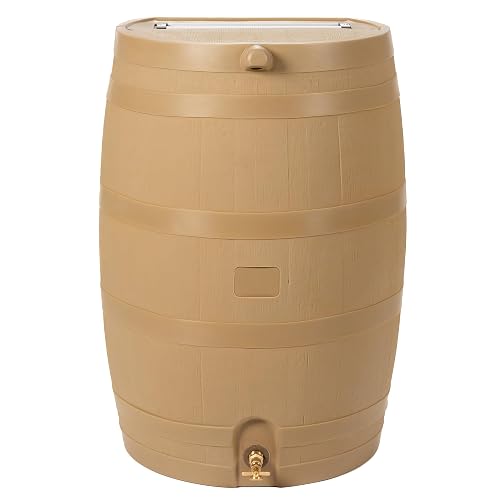
50-Gallon Capacity: Provides ample storage for harvested rainwater, ideal for watering gardens, lawns, and plants.
Durable Construction: Rain Barrel is made from UV-resistant polyethylene to withst...
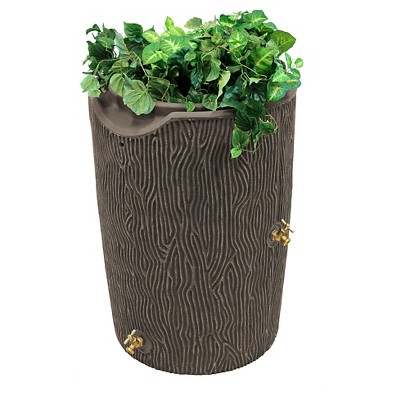
The RTS Home Accents 50-gallon barrel has a brass spigot and an oak-colored finish, a simple, long-standing design.
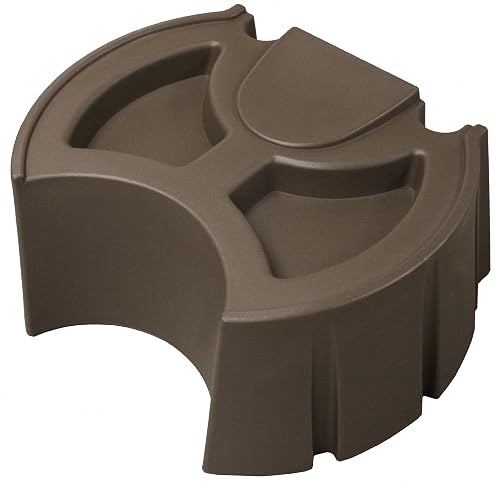
Maximizes Water Use: Elevates rain barrels to improve water pressure and allow full drainage for better water flow
Easy Bucket Access: Raises the spigot high enough for hassle-free bucket and pail ...
The Good Ideas Rain Wizard holds 50 gallons in a classic oak barrel look.
At Target, the Good Ideas Impressions Bark rain saver is a 50-gallon polyethylene barrel with a bark-textured finish, listed as needing no assembly.
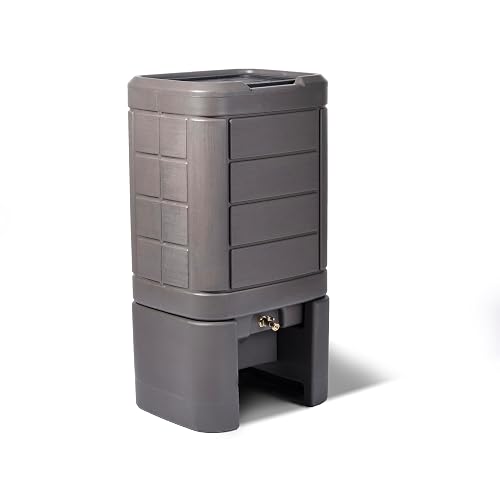
HOLDS 60 GALLONS: Captures ample rainwater to conserve resources and supports a sustainable lifestyle
MESH SCREEN FILTER: Stainless steel screen allows maximum water flow while filtering very fine ...
The Step2 Lakewood holds 60 gallons and comes with a stand, which raises the spigot for easier filling.
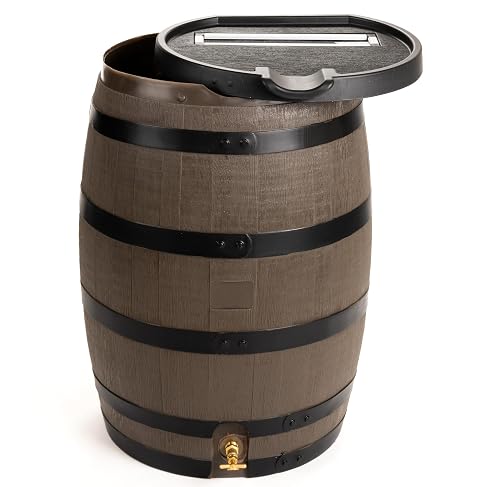
55-Gallon Capacity: Ideal for collecting and storing rainwater for watering gardens, lawns, and outdoor plants.
Woodgrain with Black Stripes Color: Adds a natural, rustic look with stylish black st...
The RTS Home Accents Premium barrel holds 55 gallons, with a removable lid for cleaning and a flat back that sits against the wall.
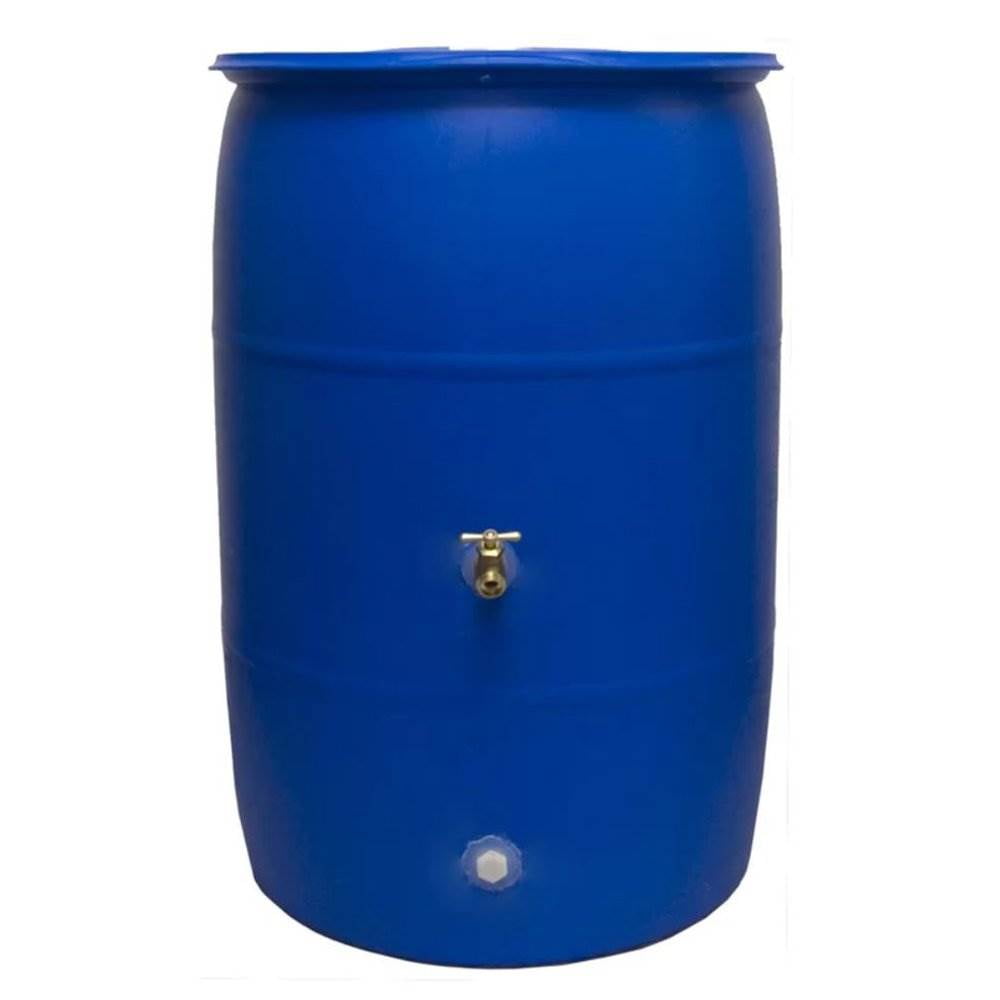
At Walmart, the Good Ideas Big Blue is a 55-gallon utility barrel for people who care more about capacity than looks.
The Good Ideas Rain Wizard Eco holds 50 gallons and is made with recycled materials.
Collapsible barrels and add-ons
The Costway 60-gallon collapsible barrel includes a spigot and filter, and it folds down for storage in the off-season.
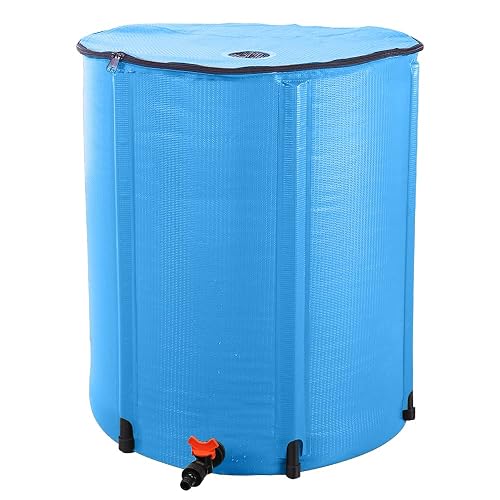
High-Capacity Rain Storage Solution: Designed for efficient rain collection, it's ideal for gardens, lawns, or emergency use. A practical garden water collector that’s both decorative and functiona...
This collapsible rain barrel has two spigots and folds flat when not in use, a budget way to try rain harvesting.
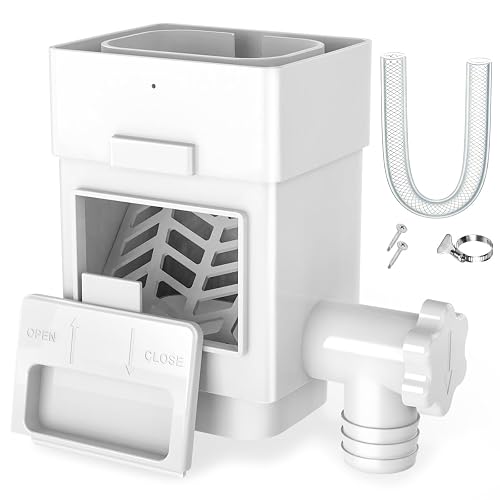
FITS COMMON DOWNSPOUTS: Designed as a downspout diverter for standard 2 x 3 in and 3 x 4 in residential downspouts, connecting roof runoff to your rainwater collection system
COLLECT RAINWATER FROM...
The Anivia diverter kit fits 2 by 3 or 3 by 4 inch downspouts and includes a valve and filter, useful with any barrel.
Setting up your barrel
- Pick a downspout: Choose one near the garden beds you water most.
- Build a level base: Water weighs about 8.3 pounds per gallon, so a full 50-gallon barrel weighs over 400 pounds, so set it on solid, level blocks or a stand.
- Raise it up: A little height adds water pressure and makes room for a watering can under the spigot.
- Connect the downspout: Cut the downspout to feed the barrel, or install a diverter.
- Direct the overflow: Send it away from the house foundation, into a second barrel or a planted area.
Check with your city or county before you install. Rules on rainwater collection vary by area, and some cities or water utilities may offer rebates on rain barrels.
How to use the water
Rain barrel water is great for gardens, lawns, and outdoor plants. Virginia Cooperative Extension says this water is nonpotable, meaning it has not been treated and is not safe to use for cooking, drinking, or bathing. Label your barrel so no one mistakes it for drinking water, and keep lids secure if children are around.
Many gardeners water at the base of plants to keep leaves dry. Some prefer to use barrel water on ornamental plants and apply it to the soil rather than directly on the parts of vegetables you eat; your local extension office can give advice for your area.
Choosing a spot
Where you put the barrel affects how useful it is. A downspout close to your vegetable beds or flower borders saves carrying heavy watering cans across the yard. Look for a spot with firm, level ground that drains well, since the area under the downspout often gets wet. Avoid placing the barrel where overflow would pool against the foundation or run toward a neighbor's yard.
Shade can help too. Barrels in full sun may warm up and grow algae faster, especially darker plastic in hot climates. Opaque barrels block light better than clear or light-colored ones. If the only good downspout is in full sun, plan to use the water often so it does not sit for long.
Think about looks as well as function. A barrel near the front door or patio is on display, so a stone, bark, or planter-top design may be worth the extra cost. A barrel behind the garage can be purely practical.
Mosquitoes and maintenance
Virginia Cooperative Extension warns that water standing for more than seven days can become a place for mosquitoes to breed if precautions are not taken. A tight-fitting lid and a fine screen over any openings help keep them out. Using the water regularly also means it does not sit for long.
- Clean gutters or add gutter screens so leaves and debris do not clog the flow, as the extension recommends.
- Check for leaks around the spigot, overflow, and any pipes.
- Rinse the barrel and screen once or twice a year to clear out sediment.
- Look for cracks and replace worn washers on the spigot.
Winter care
If you live where winter temperatures regularly drop below freezing, Virginia Cooperative Extension advises draining the barrels and leaving the spigots open so water does not freeze inside and crack the barrel. Disconnect the barrel from the downspout and restore the downspout for the season. Collapsible barrels can be folded and stored indoors.
Getting the most from your rain barrel
A single barrel empties quickly in dry weather, so many people link two or three barrels together with a short hose between the overflow ports. You can also connect a soaker hose to the spigot to water a nearby bed slowly, though gravity pressure is low, so it works best over short distances and on beds lower than the barrel.
Pair your barrel with other water-saving habits: mulch garden beds to hold moisture, water in the early morning, and group plants with similar water needs together. Over a season, the water you save adds up, and your plants get rainwater that many gardeners prefer.
Questions to ask before you buy
- How big is my garden? One barrel suits a few beds and pots; larger gardens may need two or more.
- Where will it sit? A flat-back barrel fits tight spots against a wall.
- Do I want it to blend in? Wood-look, stone-look, and planter-top barrels are more decorative.
- Can I store it in winter? A collapsible barrel is easiest to put away.
The short answer
For most homes, a 50 to 60 gallon barrel with a screened top, a brass spigot, and an overflow port is a solid choice. Set it on a sturdy, level base, direct overflow away from the foundation, and use the water for plants only, since extension experts say it is not safe for drinking. Keep it covered against mosquitoes and drain it before freezing weather.
The responses below are not provided, commissioned, reviewed, approved, or otherwise endorsed by any financial entity or advertiser. It is not the advertiser’s responsibility to ensure all posts and/or questions are answered.
Useful tip on raising the barrel for pressure. For anyone linking two barrels: a short length of hose between the overflow ports works well, just keep both on the same level base. Does anyone know if a darker barrel really cuts down on algae compared to a light-colored one?