

Last Updated on: Aug 09, 2026
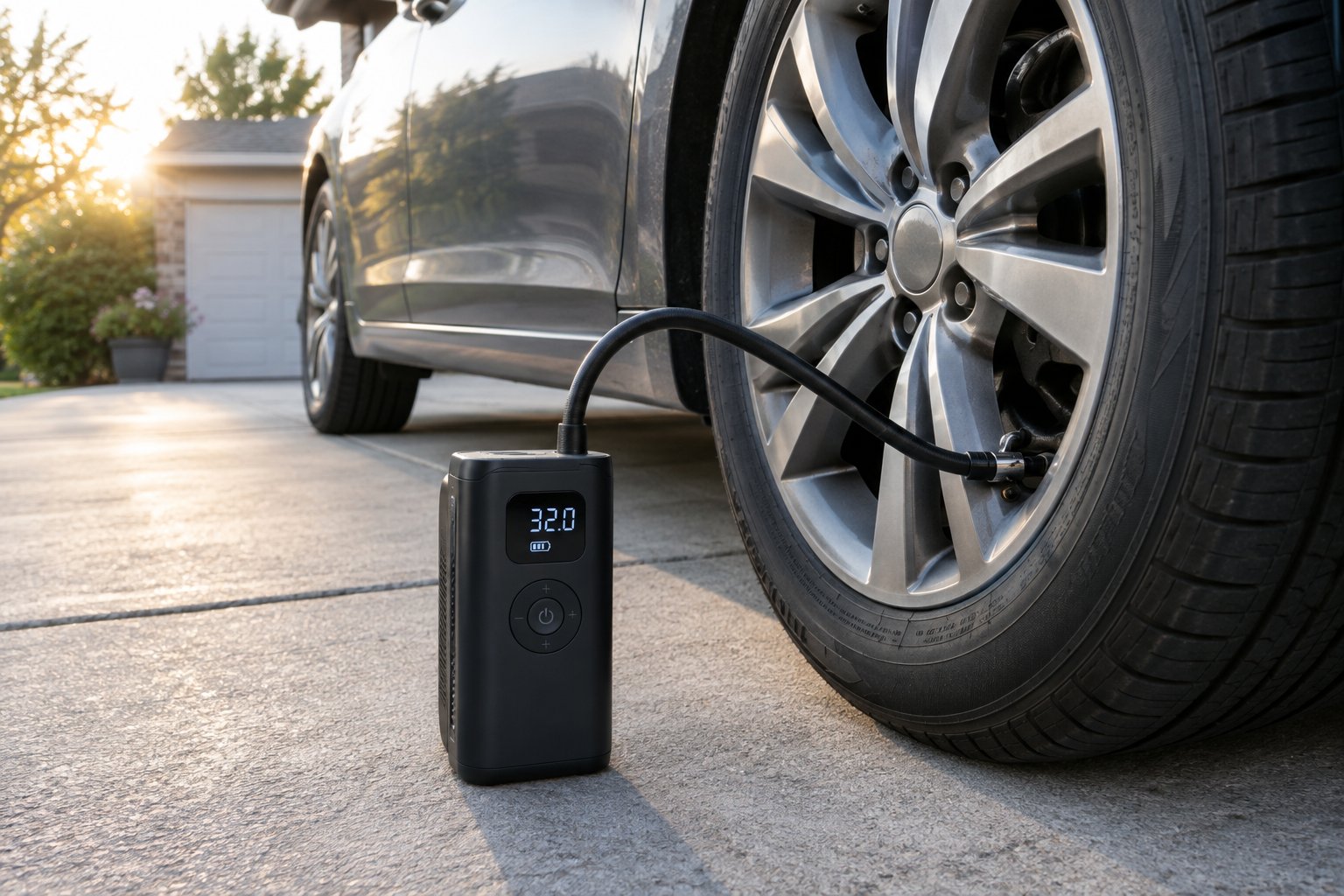
A low tire warning light has a talent for showing up at the worst moment: on a cold morning, halfway to the airport, or on a Sunday when the only gas station air machine is broken or wants quarters you do not have. A portable tire inflator turns that into a five-minute stop in your own driveway.
These little compressors have become one of the most popular car accessories for good reason. They are cheap compared to a tow, small enough for the trunk, and most now shut themselves off at the pressure you set. The main choice is how you power it, and that one decision shapes everything else.
Top Tire Inflators
What We'll Cover
- Top Tire Inflators
- The three kinds, side by side
- First, know your number
- Plug-in inflators: simple and always ready
- Cordless inflators: grab and go
- Dual power: the belt-and-suspenders option
- Features worth paying for
- How to use one without the guesswork
- When an inflator is not enough
- A monthly habit worth keeping
The three kinds, side by side
| Type | Power source | Good at | Watch out for |
|---|---|---|---|
| Plug-in 12V | Car accessory outlet | Unlimited run time, low price | Cord length, engine usually running |
| Cordless | Built-in rechargeable battery | Speed of setup, bikes and balls | Battery must be kept charged |
| Dual power | Battery or 12V, or 12V and 120V | Flexibility, home and car | Bulkier, costs more |
First, know your number
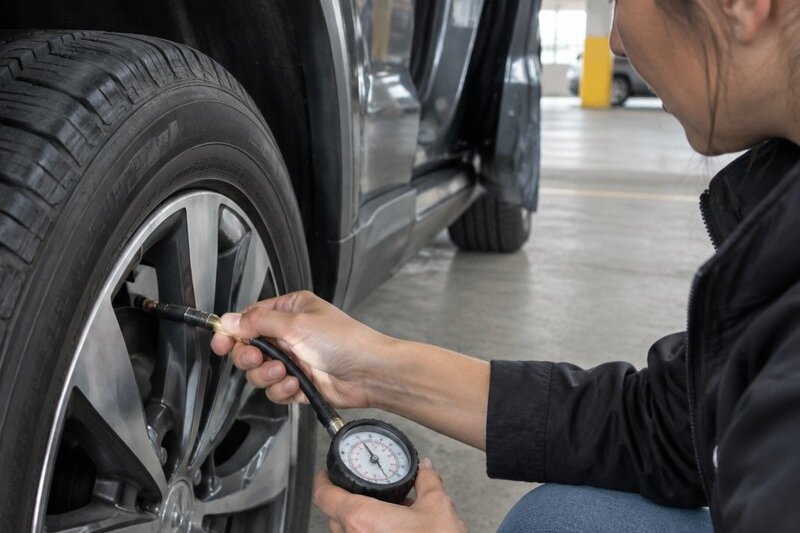
Before buying anything, find your car's recommended tire pressure. It is printed on a sticker inside the driver's door jamb and in the owner's manual. It is not the number molded on the tire sidewall, which is the maximum the tire can safely hold. Many passenger cars fall somewhere between 30 and 36 PSI, and some list different pressures for front and rear.
Check pressure when the tires are cold, before driving or after the car has sat for at least three hours, which is how NHTSA defines cold. Driving warms the air inside and raises the reading by a few PSI, which can trick you into letting air out when you should not. Tires also lose roughly 1 PSI for every 10 degree drop in outside temperature, which is why so many warning lights come on during the first cold snap of fall.
Plug-in inflators: simple and always ready
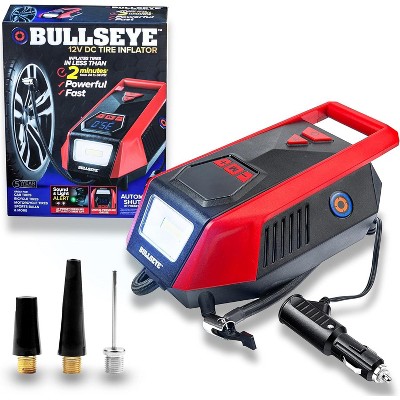
A 12V inflator plugs into the car's accessory outlet, the round socket once used for cigarette lighters. There is no battery to forget about, and it runs as long as you need it. For most drivers who only top off tires, this is the best value.
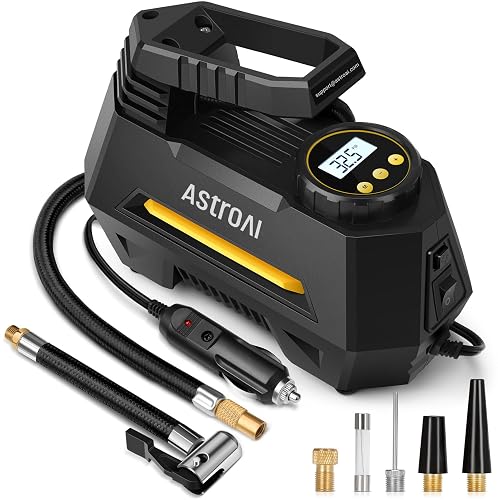
RAPID INFLATION & ROAD-READY PORTABILITY: Powerful 120W motor delivers up to 35L/min airflow—inflates a standard car tire (195/65 R15) from 30 to 36 PSI in under 1 minute under ideal operating cond...
The AstroAI AIRUN H is a longtime best seller in this group. It has a 120W motor, and the company says it can take a standard car tire from 30 to 36 PSI in under a minute in ideal conditions. It weighs about 2.2 pounds, fits in a glove box, and comes with a two-year warranty. Set the target pressure, press start, and it stops on its own.
With any plug-in model, run the engine while inflating if you can. Compressors draw a fair amount of current, and running one on a weak battery with the engine off is a good way to trade one problem for another.
Target carries a corded 12V inflator with a digital gauge and auto shutoff that works the same way, which is handy if you want one today.
Cordless inflators: grab and go
Battery inflators look like a large power bank with a short hose. There is no cord to thread through the window, so you can walk around the car in seconds. They also make it easy to top off bike tires, sports balls, and pool floats away from the car. The catch is that the battery slowly drains in storage, so top it off every couple of months.
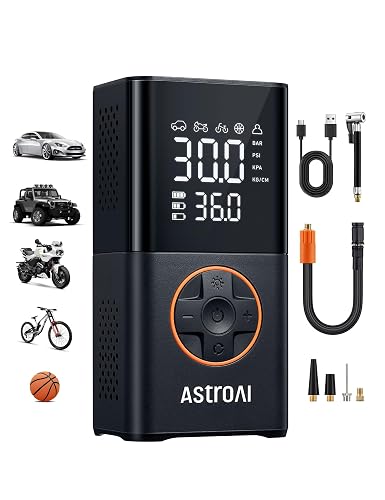
ADVANCED TRUEGAUGE SCREEN: This battery tire inflator includes updated sensor technology, capable of collecting pressure data from tire inflators at a frequency of 200 times per second. Its valid d...
The AstroAI L7 is a compact cordless model rated up to 150 PSI. It has preset modes for cars, motorcycles, bicycles, and balls, plus a custom mode, and it can show pressure in PSI, bar, kPa, or kg/cm2. It is a good fit for a household with a couple of cars and a few bikes, where most jobs are quick top-offs.
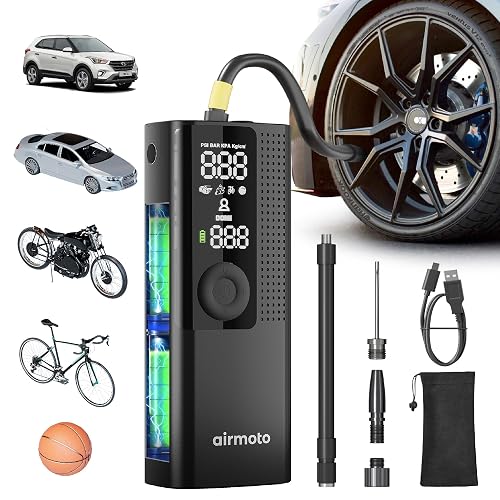
QUICK & ACCURATE: Built with the highest quality materials, Airmoto is a portable tire inflator for car, trucks, SUVs, motorcycles, and bicycles. Quickly inflate your vehicle's tires in just minute...
Airmoto is another popular small cordless unit, rated to 120 PSI. You pick the pressure with plus and minus buttons, attach the hose, and press the center start button. It shuts off when it reaches your number. Its size makes it easy to keep in a glove box or a bike bag.
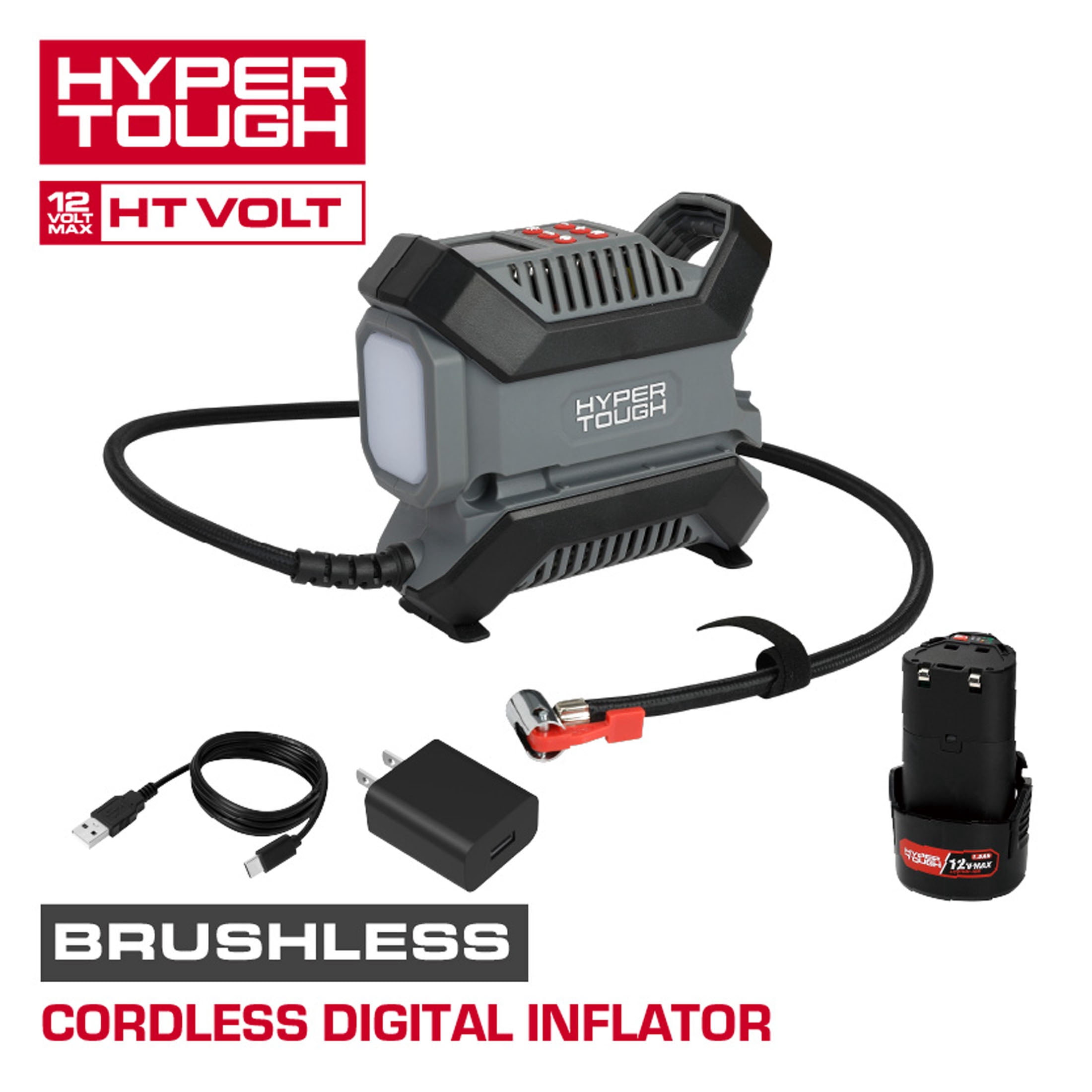
Walmart's Hyper Tough 12V cordless inflator is a budget pick in the same class. It has a brushless motor, a digital gauge, and a 1.5 Ah battery, and it is rated up to 140 PSI. It comes with a charging cable, a hose, and nozzles for bikes and balls, which covers most household jobs.
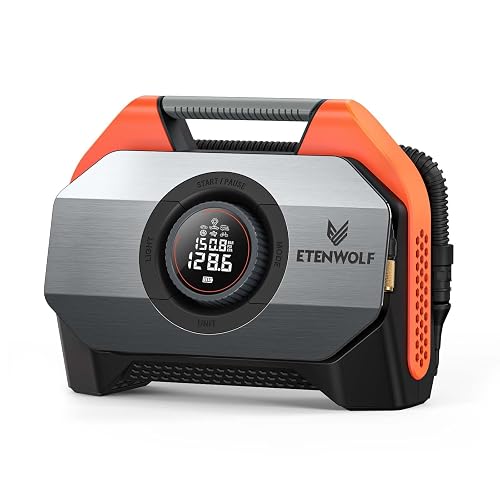
ETENWOLF Vortex S6 cordless air compressor excels at inflating heavy-duty vehicles quickly, such as pickups, trucks, off-road vehicles, not to mention regular cars, bicycles, balls, pool floats, an...
For trucks and larger SUVs, the ETENWOLF Vortex S6 has much more muscle. It has a 19,200 mAh battery and is rated to 160 PSI with gauge accuracy of plus or minus 1 PSI. The maker says it can fill a 31-inch tire from 30 to 35 PSI in about a minute and top off 18 such tires on one charge. It also has a USB-C port that can charge a phone in a pinch.
Dual power: the belt-and-suspenders option
Some inflators can run from either a battery or a 12V cord, or from both a car outlet and a household outlet. They are a little bulkier and cost more, but you are never stuck with a dead battery or a car parked far from an outlet.
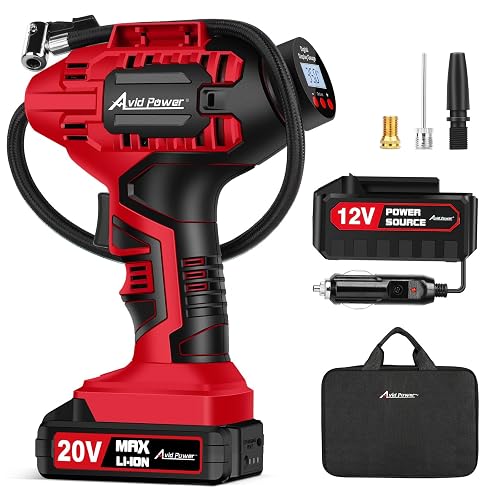
[Auto Shut-off & Fast Inflation] This car air pump ensures a worry-free experience with its auto shut-off feature. Simply set your desired pressure, start inflating, and the car air compressor will...
The Avid Power cordless inflator runs on a 20V rechargeable battery or a 12V adapter with a 9.8-foot cord. It moves about 30 liters of air per minute, and the maker says it can bring a flat 195/60 R14 tire up to 36 PSI in under three minutes. Having the cord as a backup makes it a solid choice for a car that sits unused for weeks.
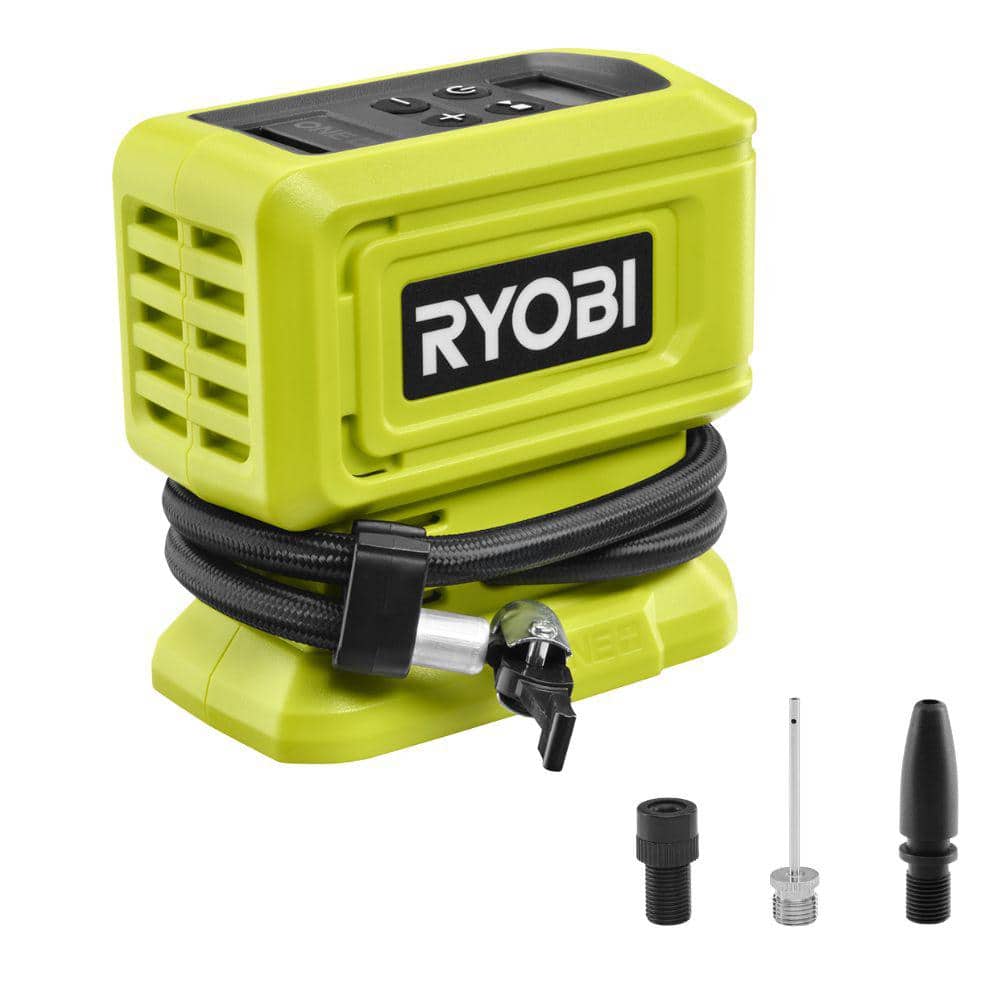
If you already own RYOBI ONE+ tools, Home Depot sells the 18V high-pressure inflator as a bare tool. It fills up to 160 PSI with a digital gauge and auto shutoff, and it runs on any ONE+ battery you already have. Buying it without a battery keeps the cost down, but check that your battery is charged before a trip.
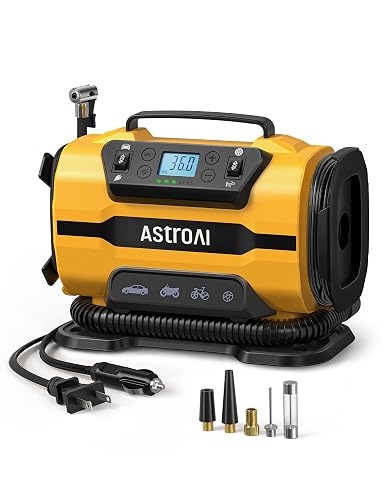
12 V DC/120 V AC Dual Power: The AstroAI Tire Inflator features dual power supplies, compatible with 12 V car cigarette lighters and 120 V household outlets, convenient for both home and travel use...
This AstroAI model takes a different approach. It plugs into either a 12V car outlet or a 120V wall outlet, and it can switch between a high-pressure mode for tires and a high-volume mode for air mattresses and pool toys. It can run for up to 15 minutes at a stretch. It is the one to keep in the garage if you want one tool for the car, the bikes, and the camping gear.
Features worth paying for
Auto shutoff is the big one. Almost every current model has it, but double-check before buying a bargain unit. Without it, you have to watch the gauge and stop by hand, and overinflating is easy while you are crouched by the wheel.
A built-in light is more useful than it sounds. Flat tires do not wait for daylight, and a small LED aimed at the valve stem saves you from holding a phone flashlight in your teeth. Hose length matters too. A longer hose, or a hose that screws on rather than clips, is easier to seal on wheels with deep spokes.
Expect noise. Even small inflators are loud, a bit like a hair dryer with a rattle. That is normal. Heat is normal too, so let the unit rest if the manual says to after a long run, and do not touch the metal fitting right after use.
How to use one without the guesswork
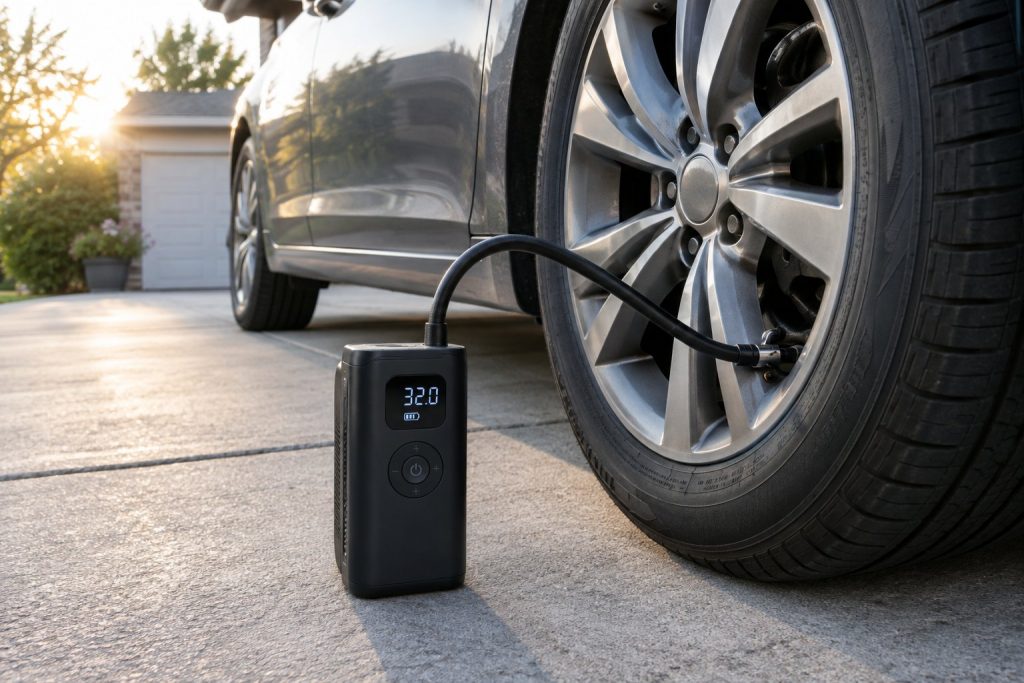
Remove the valve cap and put it somewhere you will not lose it, like your pocket. Screw or clamp the hose onto the valve stem until it seals and the hissing stops. Check the reading on the inflator's screen, set your target pressure, and start it.
Let it run until it shuts off, then remove the hose quickly to avoid losing air. Most people find the built-in gauge close enough, but a simple dial gauge is cheap and makes a good cross-check once in a while. Replace the cap and move on to the next tire. Doing all four while you are at it keeps the car balanced.
When an inflator is not enough
A portable inflator is meant for top-offs and slow leaks, not every problem. If a tire loses pressure again within a day or two, it probably has a puncture or a bad valve, and it needs a repair shop. If a tire is completely flat or damaged on the sidewall, do not drive on it. Put on the spare or call for help.
Also treat the warning light as a real signal. Modern cars have tire pressure monitoring systems that trigger when a tire drops about 25 percent below its recommended pressure. Driving on underinflated tires wears them faster, hurts fuel economy, and makes handling worse, especially in the rain.
A monthly habit worth keeping
Check your tires once a month and before long trips. It takes five minutes with an inflator in the trunk. Pick one that matches how you drive: a plug-in model if you just want peace of mind, a cordless one if you value speed, and a dual-power unit if you want one tool for everything. Any of them beats hunting for a working air machine with the warning light on.
The responses below are not provided, commissioned, reviewed, approved, or otherwise endorsed by any financial entity or advertiser. It is not the advertiser’s responsibility to ensure all posts and/or questions are answered.