
Last Updated on: Sep 23, 2026
Nobody gets excited about buying a mop. Most of us keep the same one until the head falls apart or the smell gets too bad to ignore, then grab whatever is on the shelf. That is a shame, because the right mop makes a dull chore faster and easier, and the wrong one can leave streaks, puddles, or even damage on certain floors.
Today there are more types than the old string mop and bucket: spray mops with refillable bottles, flat microfiber mops with washable pads, spin mops with foot-pedal buckets, sponge mops with built-in wringers, and battery-powered sprayers that use disposable pads. Each one works best for a certain kind of floor and a certain kind of mess. Here is how to sort them out.
Top Mops
What We'll Cover
Start with your floors
Before you look at mops, look down. The floor you have matters more than any feature on the box.
- Sealed hardwood and laminate do not like standing water. Too much moisture can seep into seams and cause swelling or warping over time. A damp, not wet, mop is the goal, which is why spray mops and flat microfiber mops are popular for these floors.
- Tile and sealed stone can take more water and more scrubbing. Grout lines hold dirt, so a mop with some texture or a spin mop that can go over the floor with more water works well.
- Vinyl and linoleum are forgiving and handle most mop types.
- Unsealed, waxed, or oiled wood needs special care. Many mop and cleaner makers say not to use their products on these floors at all, so check the label and the floor maker's instructions first.
If you have a mix of floors, as many homes do, pick a mop that suits the most delicate surface and use it lightly on the tougher ones.
Spray mops
A spray mop has a flat head with a pad and a bottle or cartridge on the handle. You squeeze a trigger to mist the floor just ahead of the pad. Because you control how much liquid goes down, spray mops are one of the best choices for hardwood and laminate.
Some spray mops use their own branded cleaner in a sealed cartridge, while others have a refillable bottle you can fill with the cleaner of your choice. Refillable bottles cost less over time. Washable microfiber pads also save money compared to disposable pads, though disposable pads are handy for quick cleanups and for households that do not want to launder mop heads.
Flat microfiber mops
A flat microfiber mop is a wide, flat head with a pad that attaches with hook-and-loop strips or pockets. You can use it dry to pick up dust and hair, or damp to wash the floor. Microfiber grabs fine dust well and can be machine washed many times.
These mops are light, cover a lot of floor quickly, and slide under furniture easily. Wider heads, around 18 inches, finish large rooms faster, while narrower heads get into tight corners and around toilets more easily. Many people keep a few spare pads so there is always a clean one ready.
Spin mops
Spin mops look like the classic round string mop, but the head is made of microfiber strands, and the bucket has a basket that spins the mop to wring it out. Most use a foot pedal, so your hands stay dry. The more you spin, the drier the mop gets, which lets you control how wet it is for each floor.
They are a good fit for tile, kitchens, and big messes where you want more water and scrubbing than a spray mop gives. The bucket takes up storage space, and you have to change the water when it gets dirty, but the heads are usually easy to replace and machine washable.
Sponge and twist mops
Sponge mops have a thick sponge head and a lever or roller that squeezes it out. Some have a rubber squeegee edge for pushing water off a floor. They are good for textured tile, garages, and bathrooms, and they hold a lot of water. The downside is that sponges can get smelly if they do not dry fully, and they wear out faster than microfiber.
Twist mops wring themselves out when you twist the handle, a middle ground between a sponge mop and a spin mop that does not need a special bucket.
Battery-powered sprayers with disposable pads
Battery-powered spray mops work like manual spray mops, but a button releases the cleaner instead of a trigger pump. They usually use their own cleaner and disposable pads. They are very quick to grab for small spills, and many people like not having to wash a mop head. The ongoing cost of pads and cleaner adds up, though, and some brands say not to use them on unfinished, oiled, or waxed wood or on unsealed tile.
Cleaning basics that help any mop
A mop works better on a floor that has been swept or vacuumed first. Grit left on the floor turns into mud when it gets wet, and it can scratch softer floors as you push it around.
It also helps to know what mopping does and does not do. According to the CDC's page on when and how to clean and disinfect your home, cleaning with water, soap, and scrubbing removes most germs, dirt, and impurities from surfaces. The same page says that sanitizing or disinfecting to reduce the spread of disease at home is likely not needed unless someone in the home is sick.
If you do use bleach, be careful with it. The CDC's guidance on cleaning and disinfecting with bleach says never to mix household bleach, or any disinfectant, with other cleaners or disinfectants, because it can release vapors that may be very dangerous to breathe in. It also advises good ventilation, such as open windows and doors, following the label directions, and checking whether you need gloves or eye protection. For a bleach solution, the CDC lists 5 tablespoons, or 1/3 cup, of bleach per gallon of room-temperature water, or 4 teaspoons per quart. Bleach can damage some floor finishes, so check that your floor can handle it.
Mop care
- Rinse the mop head well after each use and let it dry completely before storing it. A damp mop in a closed closet is where the sour smell comes from.
- Wash microfiber pads and heads without fabric softener, which can coat the fibers and make them less absorbent. Check the care label for water temperature.
- Empty and rinse the bucket after each use so it does not grow mildew.
- Replace heads and pads when they get thin, matted, or stained. Most spin mop and flat mop makers sell refills.
Popular mops worth a look
These picks come from the mop best-seller lists and cover spray mops for hardwood and mixed floors, a spin mop, a microfiber flat mop, a battery-powered sprayer, and a sponge mop.
Spray mop for hardwood floors. A spray mop with a refillable 34-ounce cartridge, a hardwood cleaner concentrate, and a washable microfiber pad. The cleaner is made for unwaxed, unoiled, polyurethane-finished wood and is Safer Choice certified.
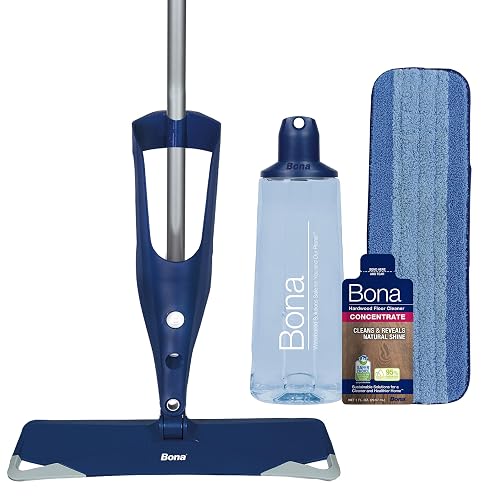
Premium hardwood floor mop: Complete wood floor cleaning system includes a premium spray mop, 1 oz hardwood floor cleaner concentrate pouch, refillable 34 oz cartridge, and an extra-large reusable ...
Spin mop with a clean-water bucket. A spin mop whose bucket keeps clean and dirty water apart, with a foot pedal for wringing and machine-washable microfiber heads. The maker says it is safe on finished hardwood, laminate, tile, and vinyl.
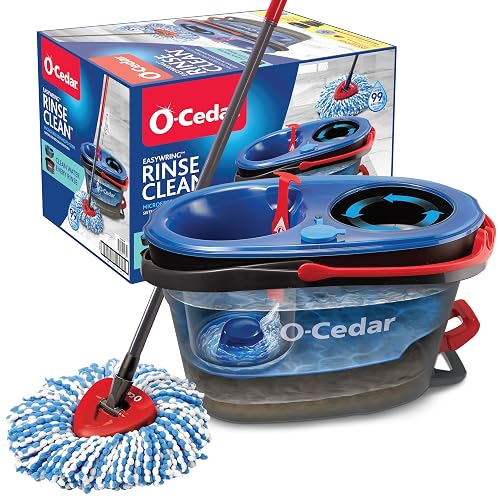
CLEAN WITH CLEAN WATER: The O-Cedar RinseClean Spin Mop lets you clean your floors with clean water from start to finish. Never mop with dirty water again
REMOVES 99% OF BACTERIA WITH JUST WATER: E...
Microfiber flat mop with four pads. A flat mop with a swivel head, a handle that adjusts from about 28 to 52 inches, and four double-sided washable pads for wet or dry mopping.
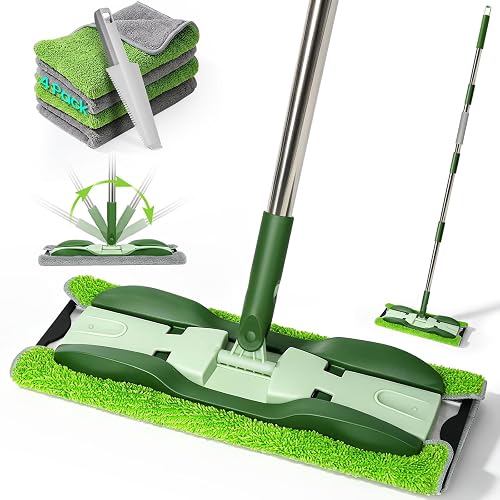
【Innovative Clip-on Design】The floor mop features a clip-on design that securely clips onto the mop pad without falling off. Dust mop can not only work with the provided chenille microfiber pads, i...
Spray mop for mixed floors. A spray mop with a multi-surface cleaner and a washable microfiber pad, made for tile, laminate, and luxury vinyl floors.
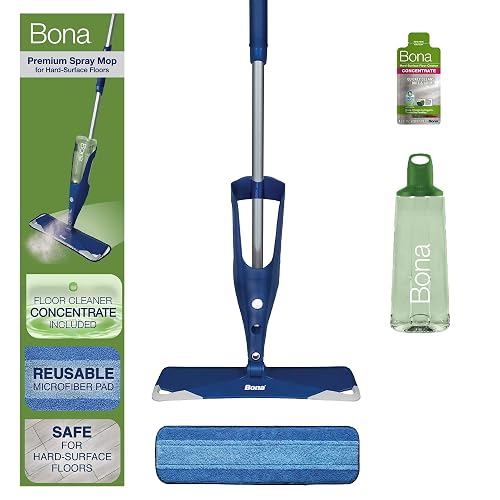
Refillable spray mop kit: Complete floor cleaning supplies set includes a premium spray mop with a precision fine mist spray, 1oz cleaner concentrate pouch, floor cleaner cartridge, and a reusable ...
Battery-powered spray mop kit. A spray mop kit with two mopping pads, a bottle of floor cleaner, and batteries. The maker says it is safe on finished floors but not on unfinished, oiled, or waxed wood or unsealed tile.
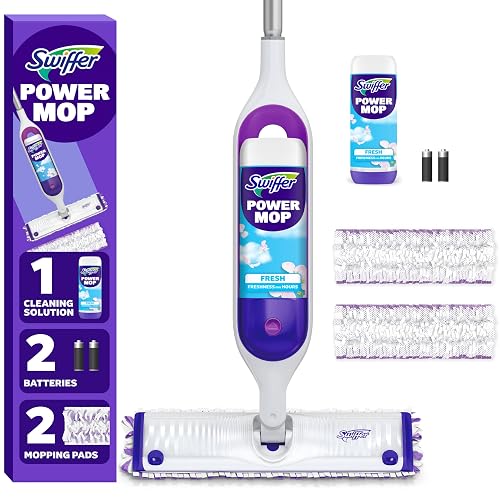
Kit Includes: PowerMop Spray Mop, 2 Mop Pad Refills, 1 Floor Cleaning solution with Fresh Scent, and 2 batteries
TOUGH CLEANING 5X cleaning power* with hundreds of scrubbing strips ABSORB + LOCK to...
Sponge mop with a squeegee. A sponge mop with a honeycomb sponge head, a built-in wringer, an adjustable pole, and a squeegee edge. The box includes two sponge heads.
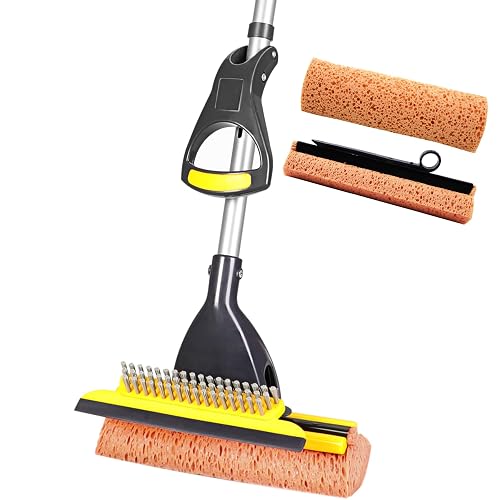
ATTENTION The mop has only 2 sponge heads in total in the box not 3 heads, one is on the mop and the other is in the box. How to install the sponge head: Make the two yellow roller and the black ir...
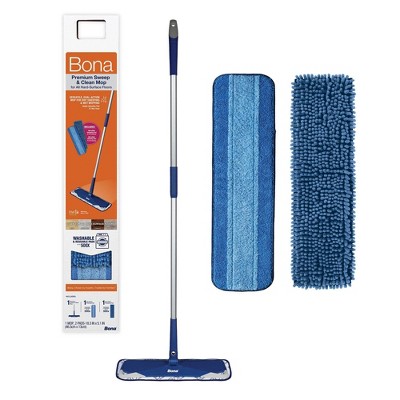
Target sells a Bona starter kit that works for both dry sweeping and damp mopping. It comes with one reusable sweeping pad and one reusable mopping pad, and the aluminum handle adjusts from 34 to 52 inches. It is a good pick if you want one tool for daily dust and weekly wet cleaning.
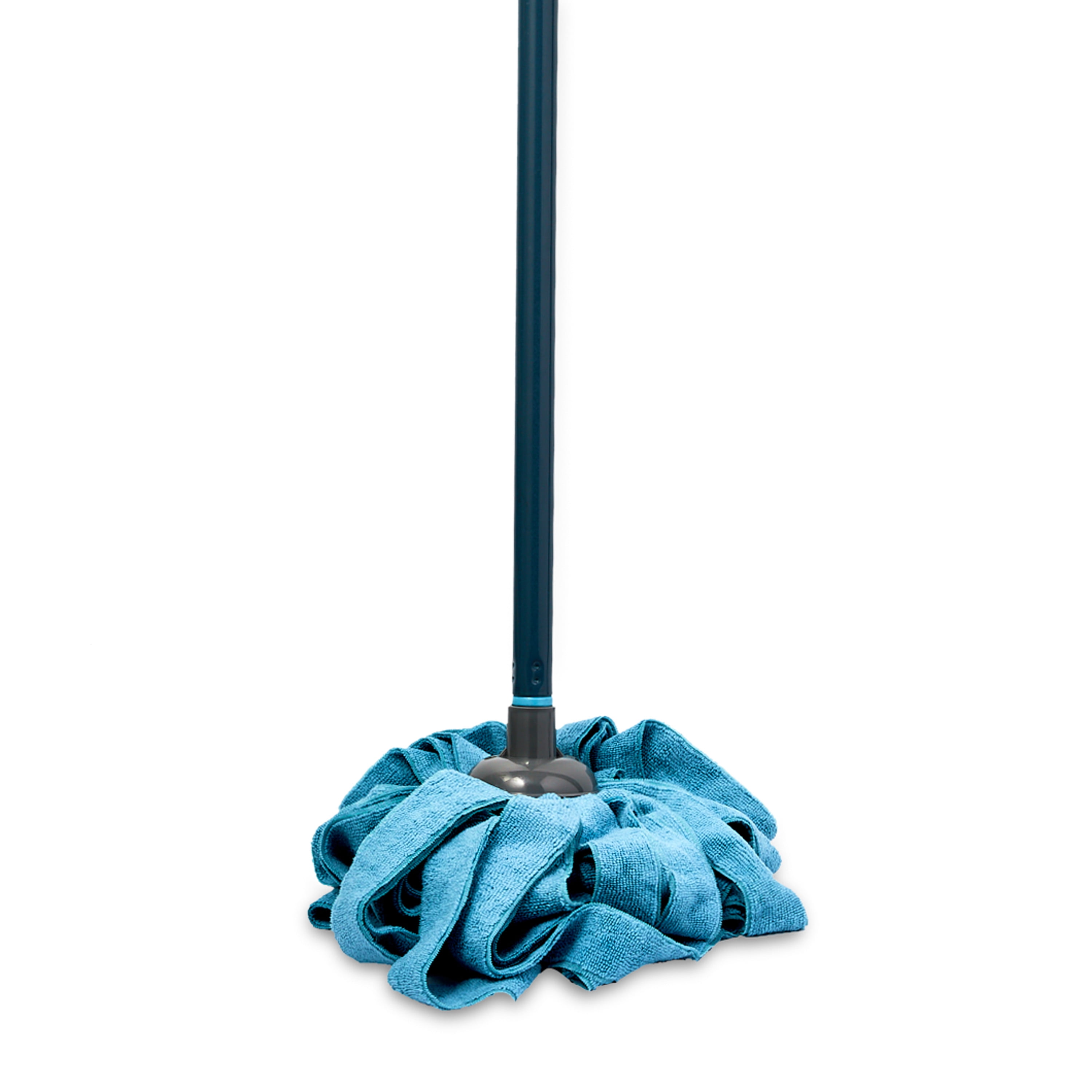
If you just need a basic mop for a small kitchen or bathroom, Walmart's Great Value microfiber cloth mop keeps the cost low. Rinse the cloth well after each use and let it dry fully so it does not start to smell.
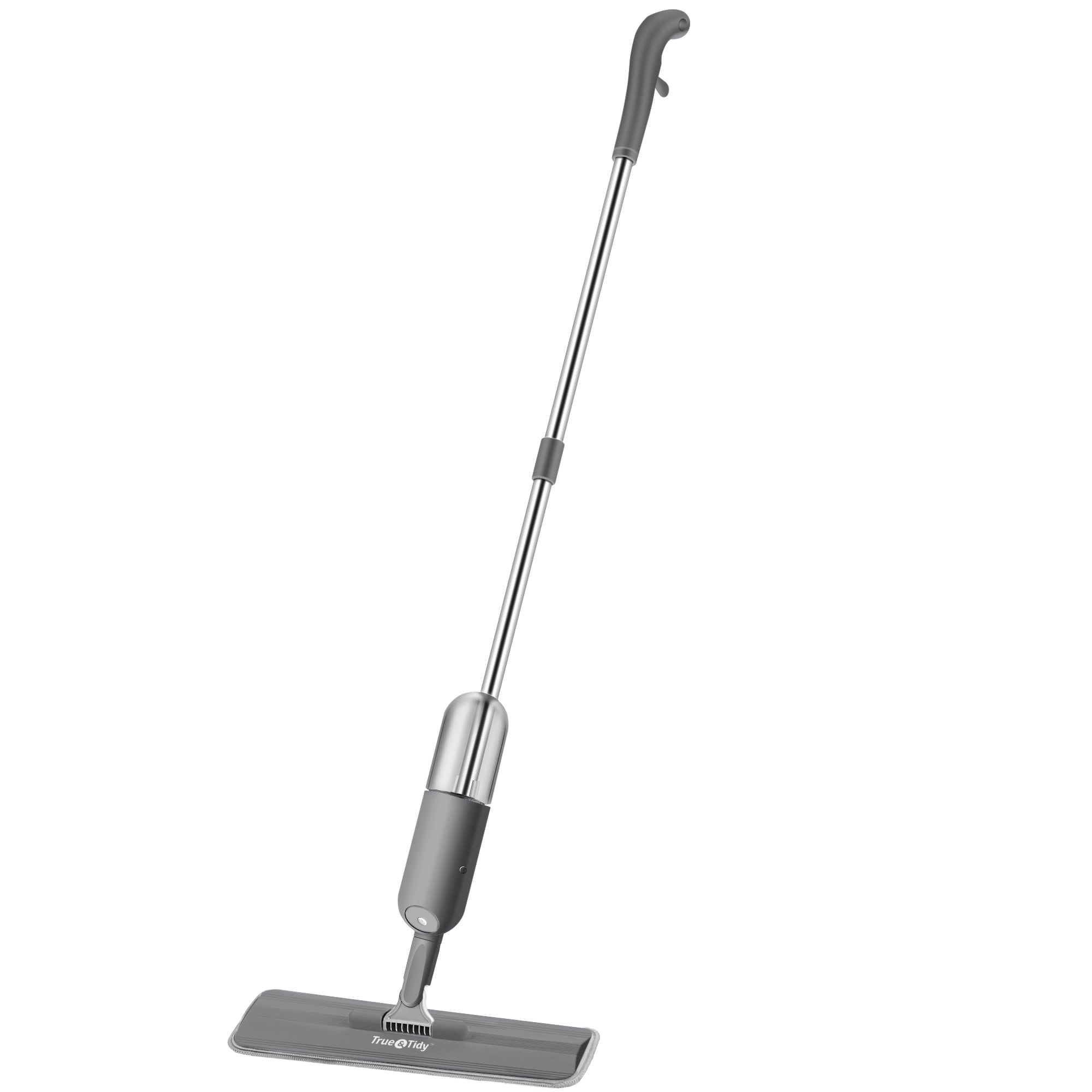
Lowe's carries a True & Tidy spray mop with a refillable 11.8-ounce tank and a single spray nozzle. Because you fill the tank yourself, you can use plain water or a cleaner made for your floor type instead of buying branded refills.
How to choose
If most of your home is sealed hardwood or laminate, start with a spray mop or a flat microfiber mop and keep the floor damp rather than wet. If you have a lot of tile, a busy kitchen, or kids and pets who make big messes, a spin mop gives you more water and more scrubbing. For quick daily spills, a battery-powered sprayer is easy to grab. Whatever you choose, sweep first, keep the mop head clean, and let it dry between uses, and your floors will look better with less effort.
The responses below are not provided, commissioned, reviewed, approved, or otherwise endorsed by any financial entity or advertiser. It is not the advertiser’s responsibility to ensure all posts and/or questions are answered.
Good tip about keeping the floor damp and not wet. I was soaking my laminate and wondering why the edges started to lift.