
Last Updated on: Aug 19, 2026
Soft tires are the most common reason a bike ride feels harder than it should. Tires lose air slowly even when nothing is wrong, and a bike that sat in the garage for a month can be riding on half its proper pressure. Low pressure makes pedaling sluggish, wears tires faster, and raises the chance of a pinch flat when you hit a curb or pothole.
A good pump fixes all of that in a minute or two. The right one depends on where you ride and how much you want to carry. Most riders end up with two: a floor pump at home and a small pump or CO2 inflator for the road.
Top Bike Pumps
What We'll Cover
Know your valve first
Before buying anything, look at the valve on your tube. There are two common types in the U.S.
- Schrader. The same wide valve used on car tires. Common on kids' bikes, cruisers, many hybrids, and mountain bikes. You can fill it at a gas station air hose in a pinch.
- Presta. A thinner valve with a small nut at the tip that you unscrew before pumping. Common on road bikes, gravel bikes, and many higher-end mountain bikes.
Most pumps today work with both, either through a dual head with two holes or a smart head that adjusts on its own. If a pump only fits one type, a small brass adapter can let a Schrader pump fill a Presta valve. Households with several bikes should make sure the pump handles every valve in the garage.
How much air your tires need
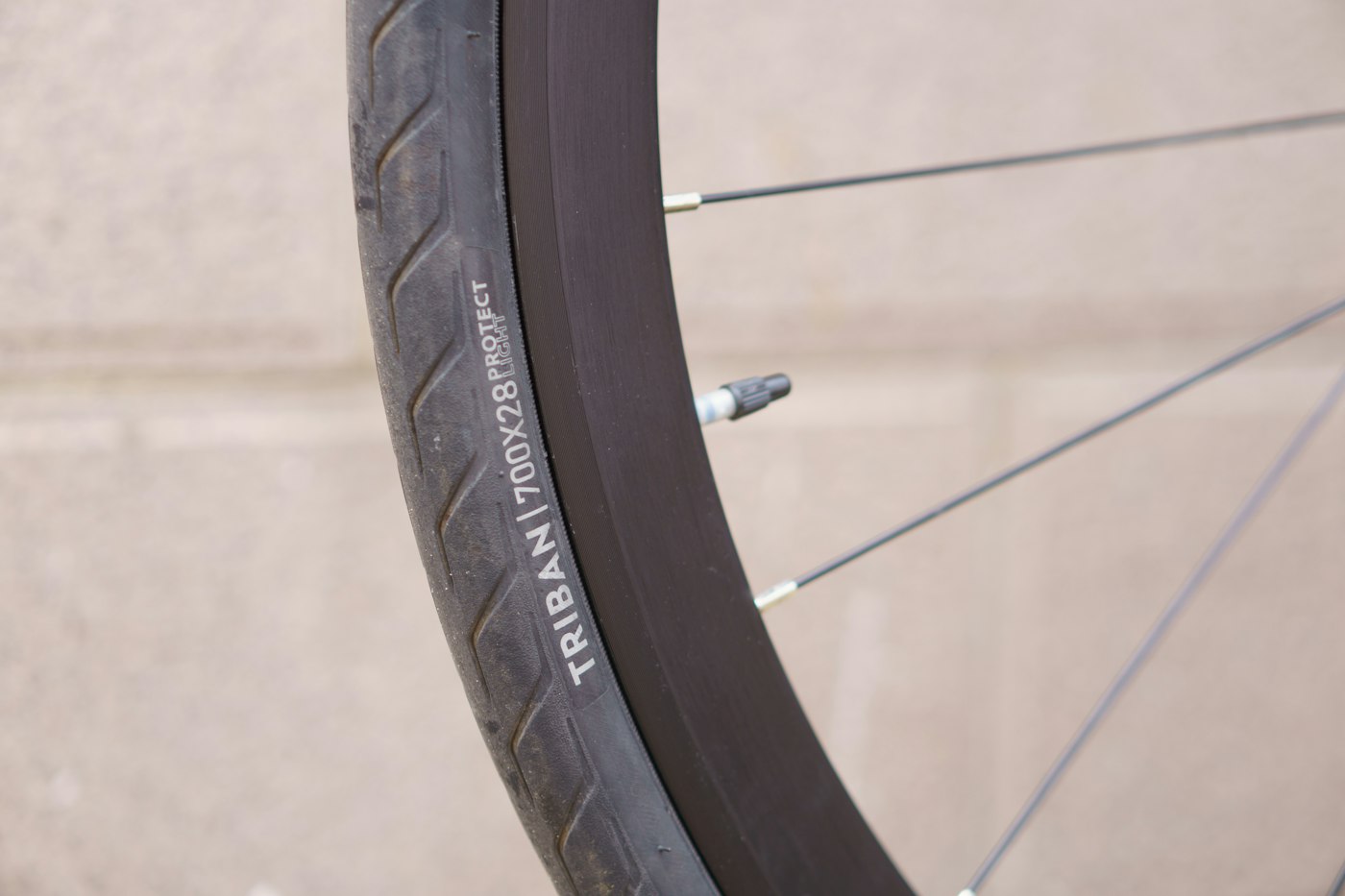
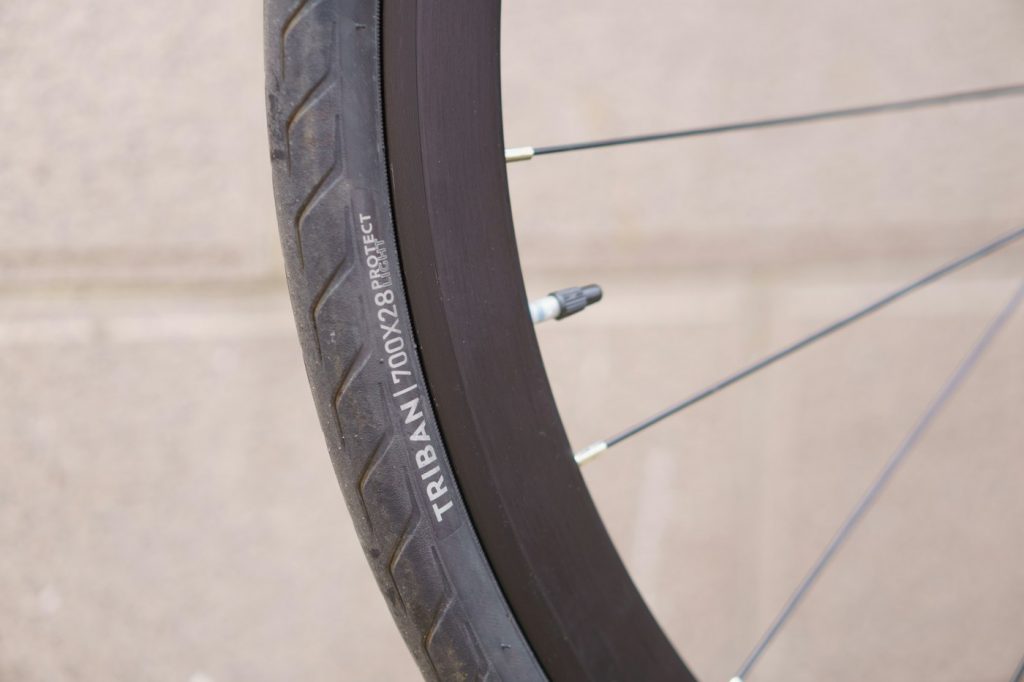
Tire pressure is measured in PSI, pounds per square inch. The recommended range is printed on the sidewall of the tire itself, often as a minimum and maximum. Never go above the maximum listed on the tire or rim.
Within that range, the right number depends on the bike, your weight, and where you ride. Road bike tires often run at much higher pressure than wide mountain bike tires. Heavier riders and smooth pavement call for the higher end. Lighter riders, rough trails, and wet roads often do better toward the lower end, since a slightly softer tire grips better. A pump with a gauge takes the guessing out of it.
Floor pumps
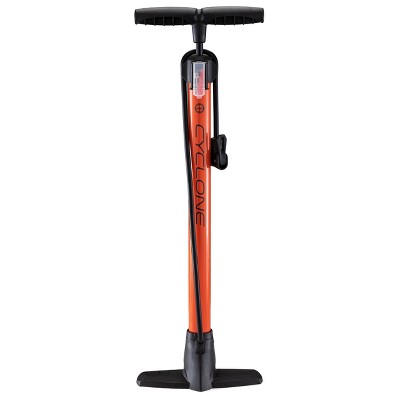
A floor pump stands on the ground, with a tall barrel, a T-shaped handle, and a hose that attaches to the valve. It is the fastest and easiest way to fill tires and the one every rider should own. You pump with your whole body instead of your arms, and you can reach high pressures without much effort.
Look for these features:
- A gauge you can read. Large dials placed near the top of the barrel are easiest to see while pumping.
- A steady base. Wide, flat feet keep the pump from tipping.
- A long hose. Makes it easier to reach the valve without moving the bike around.
- A head that clamps firmly. A lever or twist-lock head that seals well means less air lost when you attach and remove it.
- A comfortable handle. Padded or wide handles are easier on the hands.
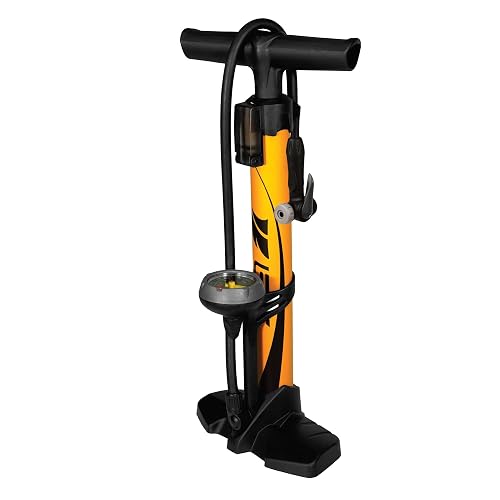
COMFORTABLE HANDLE because of ergonomically designed air pump for bike handle.
160 PSI HIGH PRESSURE Air Pump for balls and bikes, for easy pumping even for high pressures.
EASY TO CARRY: Only 16.2...
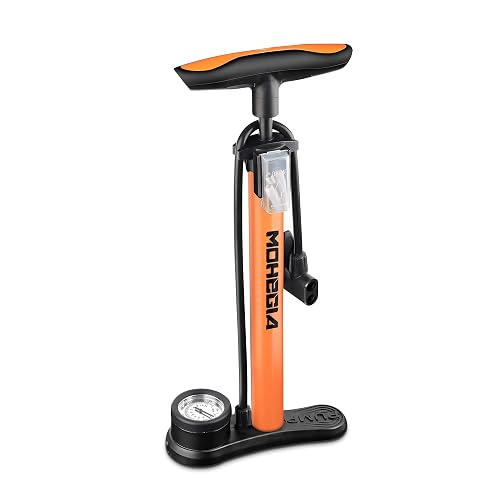
Floor air pump with gauge, max 160 PSI(11 Bar) high pressure capacity.The tire pressure is displayed in real time, and easy to read.
Features dual valves for Presta and Schrader for easy inflation....
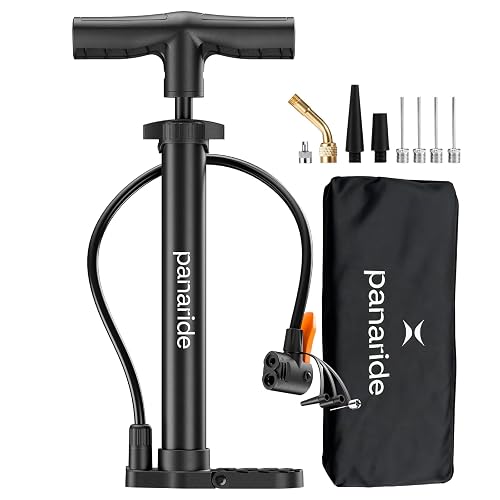
EXCELLENT COMPATIBILITY: Our versatile bike air pump seamlessly accommodates both Presta and Schrader valves, making it a perfect choice for various tasks including bicycles, baby stroller tires sp...
Mini pumps for the road
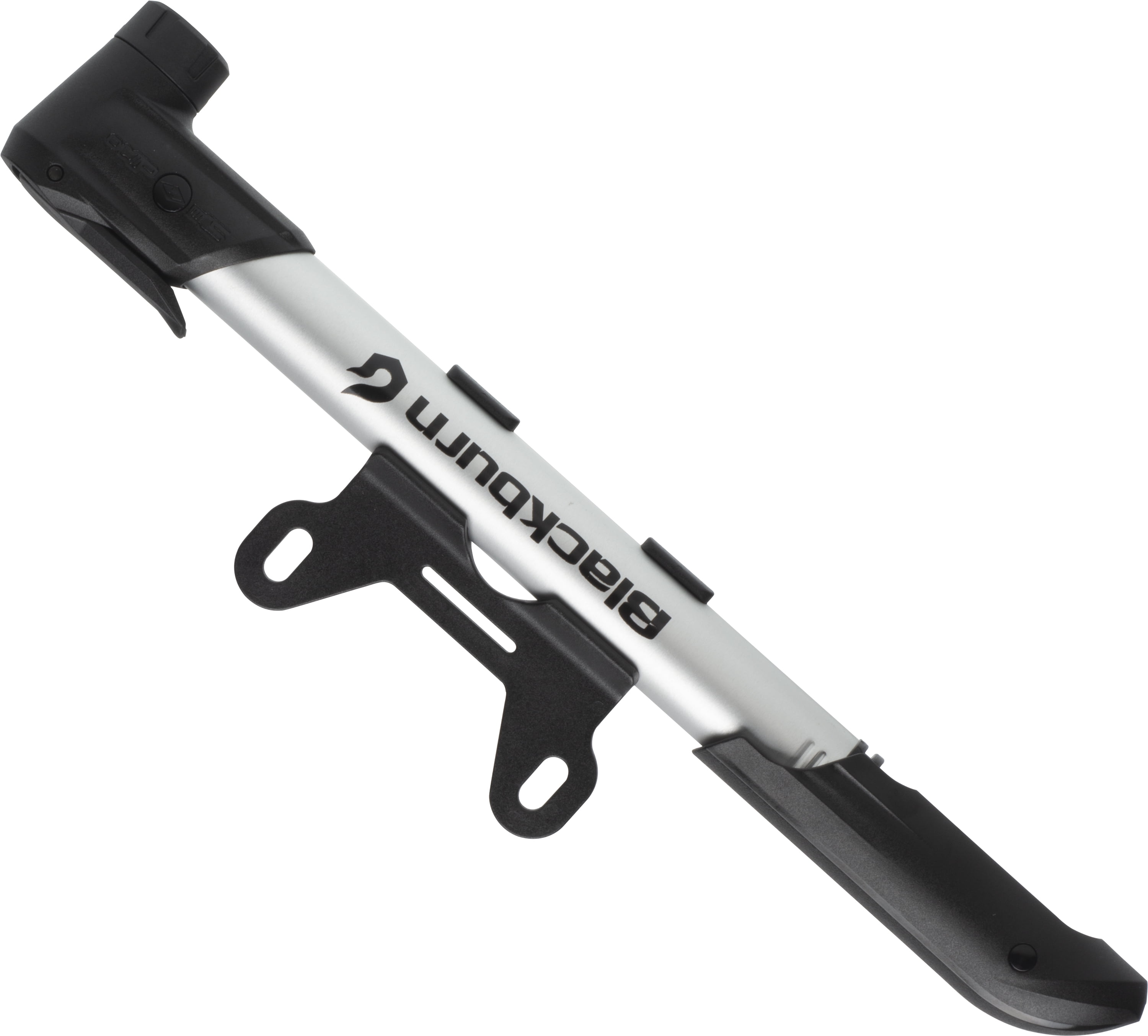
A mini pump is small enough to fit in a jersey pocket, saddle bag, or mount on the frame next to a water bottle cage. It is your backup for a flat tire far from home. Because the barrel is small, it takes many more strokes to fill a tire than a floor pump, and reaching road bike pressures can be tiring. Still, it never runs out.
Some mini pumps include a short hose, which puts less strain on the valve than pressing the pump head directly onto it. A built-in gauge helps, though many small gauges are rough estimates. Frame-mount clips keep the pump out of the way.
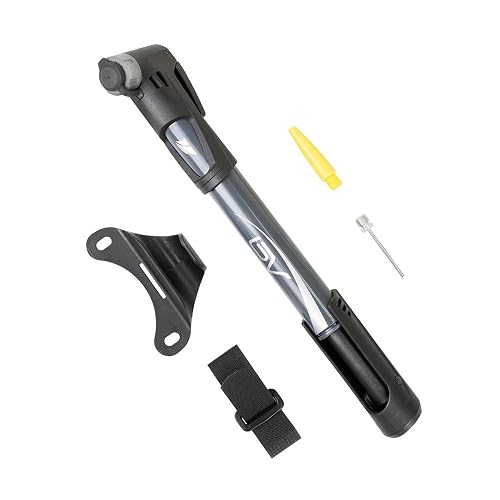
SMART VALVE DESIGN: can be used with both Presta and Schrader
PORTABLE DESIGN: light weight material and portable design to pump your tire anytime and anywhere
120 PSI MAXIMUM with Mounting Bracket...
Electric mini pumps
Rechargeable electric pumps have become very popular. They are about the size of a phone battery pack or smaller, charge over USB, and fill a tire in under a minute with a push of a button. Many let you set a target pressure and stop on their own when they reach it.
The trade-offs are cost, battery life, and noise. A small electric pump may only fill a few tires per charge, so it is not ideal for a long trip without a way to recharge. They also buzz loudly. For commuters and casual riders, though, the convenience is hard to beat, and many can also top up balls and other small inflatables.
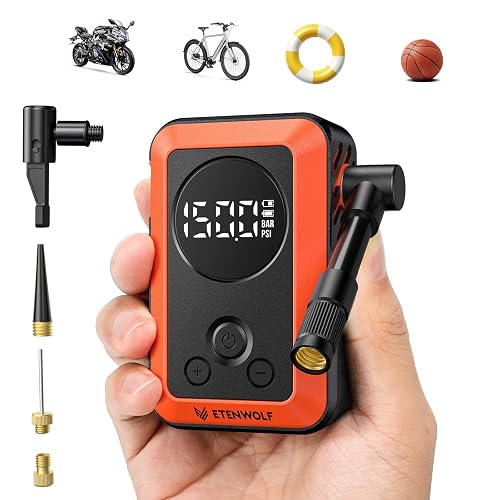
NOTICE: ETENWOLF electric bike pump is compatible with both Presta and Schrader valves for all types of bicycles. The Presta valve adapter is a separate accessory—please attach the Presta air nozzl...
CO2 inflators
CO2 inflators use small cartridges of compressed gas to fill a tire in seconds. They are tiny, light, and popular with road cyclists and racers who want to fix a flat quickly. The inflator head screws onto a cartridge and lets you control how fast the gas flows.
There are a few things to know. Each cartridge is single-use, so carry more than one. The cartridge gets very cold as it empties, so hold it by the inflator or a sleeve and not with bare fingers. CO2 also tends to leak out of tubes faster than air, so many riders let the CO2 out and refill with a regular pump once they get home. Always follow the instructions that come with your inflator and cartridges.
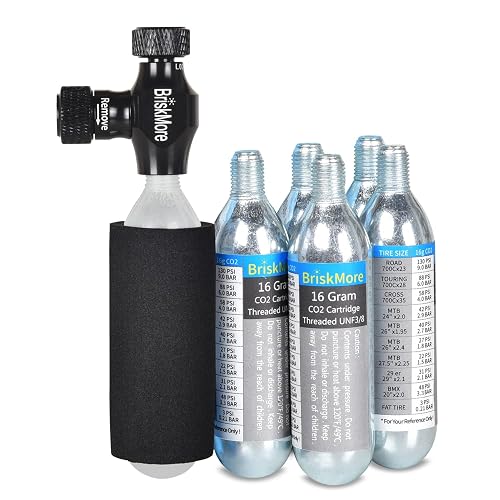
★Classic, Durable, Compact and Lightweight design.BriskMore CO2 Inflator Set has one inflator head, 5 units 16g 3/8 sized threaded CO2 cartridges and insulate sleeve for 16g cartridges only.
★ Fits...
A simple floor pump from a big-box store. Target carries the Schwinn Cyclone, a floor pump with a dual head for Schrader and Presta valves and a maximum of 120 PSI. That covers most kids' bikes, commuters, and mountain bikes, and many road tires too.
A frame pump for the road. Walmart sells a Blackburn frame pump rated up to 120 PSI with an AnyValve head that fits Presta or Schrader valves. It mounts on the frame, so it rides along on every trip.
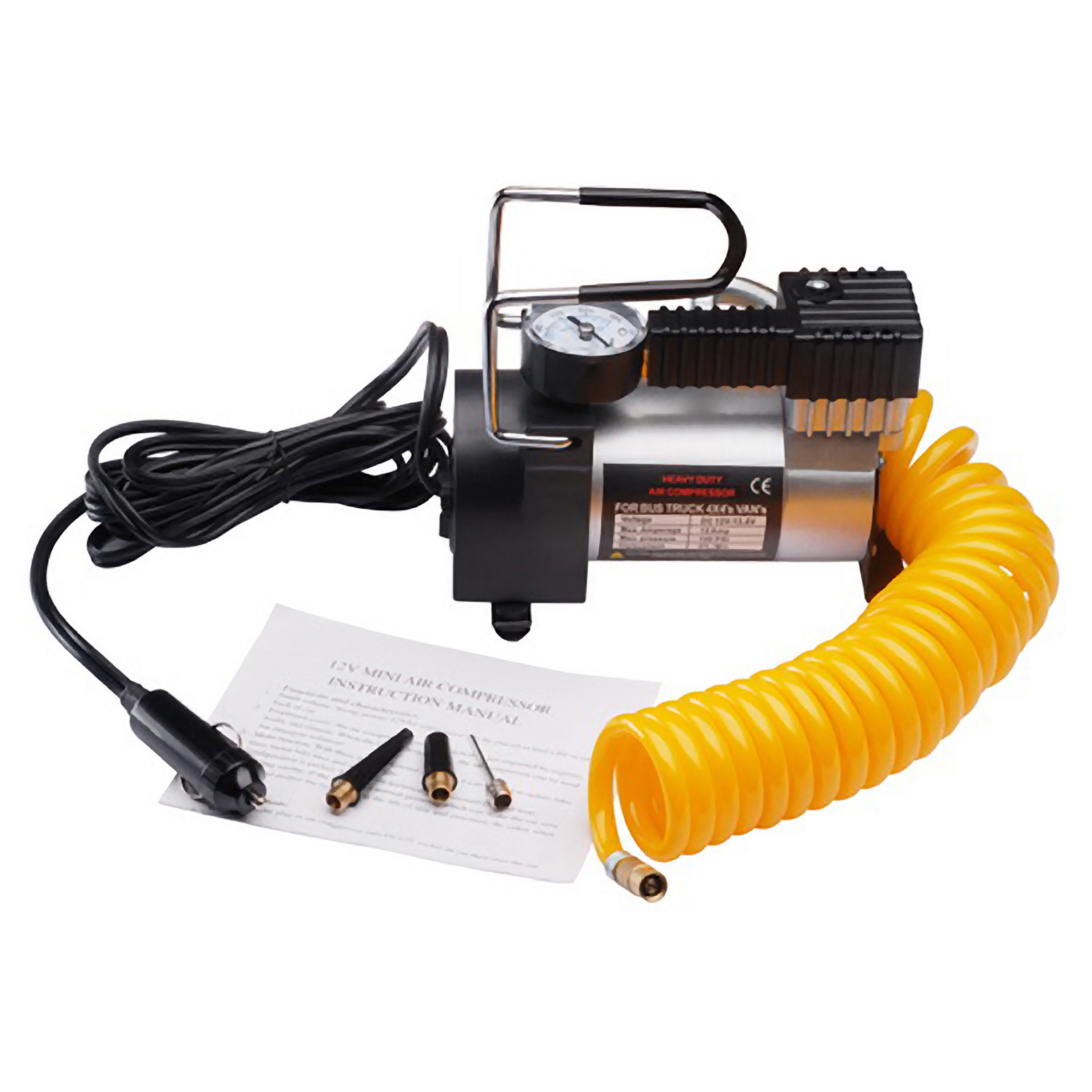
A car-powered option. If you drive to rides, Wayfair carries a RAD Sportz inflator that plugs into a car's 12-volt outlet, fills up to 100 PSI and has an analog gauge. It is too bulky for a jersey pocket, but it can live in the trunk and top up car tires too. Check that it fits your valve type before you rely on it.
How to pump a tire
- Remove the valve cap. For Presta valves, unscrew the small nut at the tip and press it briefly to release a puff of air, which loosens it.
- Press the pump head straight onto the valve and lock it in place.
- Pump to the pressure you want, checking the gauge as you go.
- Remove the pump head quickly and straight off to avoid bending the valve or losing air.
- Tighten the Presta nut and replace the cap.
Checking pressure once a week or before longer rides keeps tires in their best range. Road tires, which run at higher pressure in thin tubes, tend to lose air faster than wide mountain or hybrid tires.
What to carry for a flat
A pump alone will not fix a puncture. For rides beyond walking distance from home, most cyclists carry a small kit: a spare tube in the right size and valve type, two tire levers, a patch kit, and a pump or CO2 inflator. Check the tire size printed on the sidewall, such as 700x28c or 29x2.2, and buy tubes to match.
When you replace a tube on the road, run your fingers carefully around the inside of the tire to find whatever caused the flat, such as a thorn or bit of glass. Otherwise the new tube may go flat right away. Put a little air in the new tube before fitting it, which helps keep it from twisting or getting pinched under the tire.
Looking after your pump
Pumps need very little care. Keep them clean and dry, and store floor pumps upright so the hose does not kink. If the head stops sealing well, many brands sell replacement heads and rubber gaskets. For electric pumps, charge them every few months even when not in use, since batteries left empty for a long time can lose capacity.
A pump for every rider
Families with several bikes should prioritize a sturdy floor pump with a dual or smart head, since it has to handle everything from kids' bikes to road bikes. Commuters may want a small electric pump in the bag. Road cyclists often carry a mini pump plus a CO2 kit for speed. Mountain bikers who run lower pressures may value a floor pump with an easy-to-read gauge at the low end of the dial.
Before you buy
- Match the pump head to every valve type you need to fill.
- Get a floor pump with a clear gauge for home.
- Add a mini pump, electric pump, or CO2 kit for rides away from home.
- Check the maximum pressure the pump can reach against what your tires need.
- Think about where you will store or carry it.
A pump is one of the cheapest upgrades you can make to how your bike rides. Keep the tires at the right pressure and every ride gets a little easier.
The responses below are not provided, commissioned, reviewed, approved, or otherwise endorsed by any financial entity or advertiser. It is not the advertiser’s responsibility to ensure all posts and/or questions are answered.
Tip for Presta valves: unscrew the little tip nut before pressing the pump head on, then snug it back down after. Easy to forget and it looks like the pump isn't working.
Is there any downside to using a pump with a gauge that reads in bar instead of PSI? Trying to figure out if I need to convert every time.