
Last Updated on: Apr 14, 2026
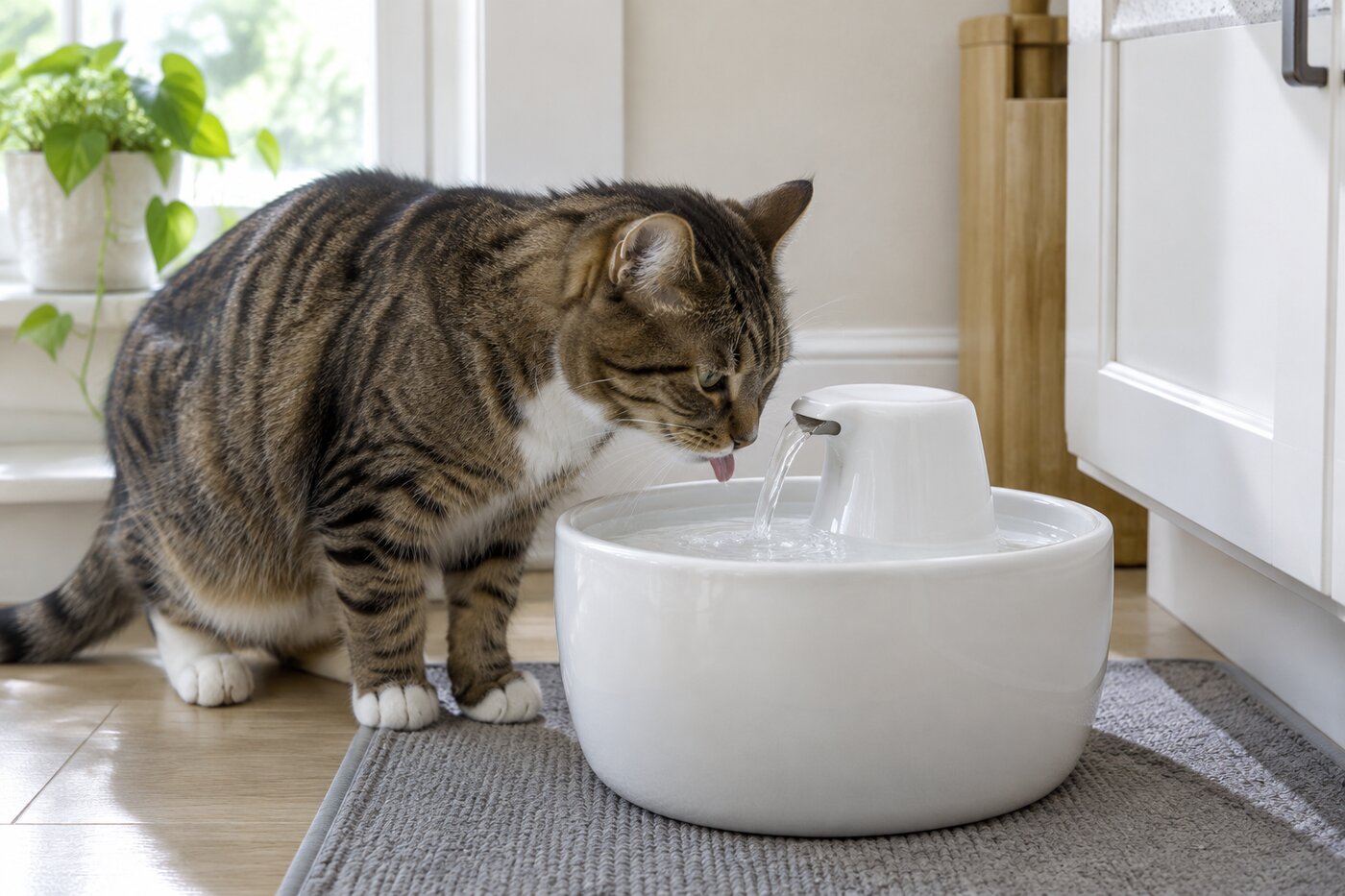
A pet water fountain keeps water moving through a small pump and filter instead of sitting still in a bowl. For many pet owners, the appeal is simple: the water stays fresher between refills, hair and debris get caught in the filter, and the reservoir holds enough water to last through a long workday. Some cats and dogs also seem more interested in running water than in a still bowl.
What We'll Cover
- Top Pet Water Fountains
- How a pet fountain works
- Material: plastic, ceramic, or stainless steel
- Choose the right size
- Noise, flow, and design
- Fountains for cats
- Fountains for dogs and multi-pet homes
- Introducing a fountain to your pet
- Corded, cordless, or smart?
- Travel and power outages
- Cleaning a pet fountain
- Placement and safety
- Filters and running costs
- When to talk to a vet
- The short answer
Fountains come in plastic, ceramic, and stainless steel, and in sizes from a small cat fountain to multi-gallon units for big dogs. They also need regular cleaning to work well. This guide covers how to pick the right one and how to keep it clean.
Top Pet Water Fountains
How a pet fountain works
A small electric pump sits inside the reservoir and pushes water up through a spout, over a surface, or out of a flower-shaped top. The water flows back into the bowl and passes through a filter, usually a mix of foam and activated carbon, before the pump sends it around again. The foam catches hair and food bits, and the carbon helps with taste and odor. Some newer models are cordless, with a battery-powered pump, and some connect to an app that tracks water level or filter life.
Material: plastic, ceramic, or stainless steel
Plastic fountains are the cheapest and lightest, and they come in the widest range of designs. The downside is that plastic can scratch over time, and scratches are harder to clean. Replace a plastic fountain if it gets heavily scratched or cloudy.
Ceramic fountains are heavy, hard to tip over, and easy to clean. Many are dishwasher safe. They cost more and can chip or crack if dropped, so handle them carefully when washing.
Stainless steel fountains are durable, resist scratches, and are easy to clean. They are a common choice for dogs and multi-pet homes. Many have a plastic pump housing or base, so check which parts are steel.
Choose the right size
Match the reservoir to your pets and how often you want to refill. A single cat does fine with a fountain of around 50 to 100 ounces. Multiple cats or a small dog may need 100 ounces or more. Large dogs drink a lot, so big multi-gallon fountains save frequent refills. A larger reservoir still needs regular cleaning, though, so bigger is not an excuse to go longer between washes.
Noise, flow, and design
Most fountains are quiet when the water level is right, but pumps can hum or gurgle when the water runs low. Some pets are nervous around noise, so a quiet pump matters in a small apartment or bedroom. Flow styles vary too. Some fountains have a gentle stream, some a bubbling top, and some a wide, calm surface. Adjustable flow lets you find what your pet prefers.
Think about height and bowl shape as well. Cats often prefer a wide, shallow drinking area where their whiskers do not touch the sides. Large dogs do better with a taller, sturdier fountain they cannot knock over.
Fountains for cats
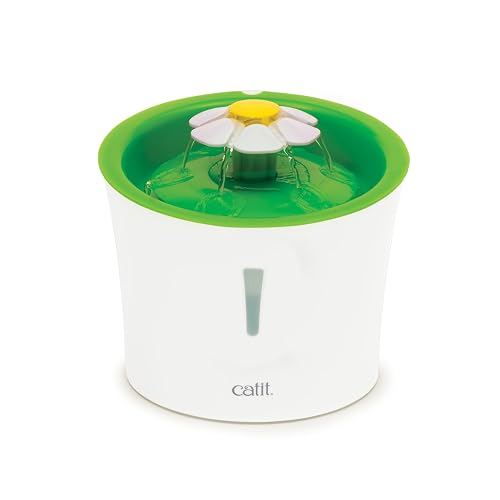
Cat fountain features 3 different water flow settings for picky drinkers and offers maximum oxygenation for fresher, better tasting cat water; the unique design filters water so that it always stay...
The Catit Flower Fountain holds 3 liters and has a flower-shaped top that lets you change how the water flows. It uses a triple action filter.
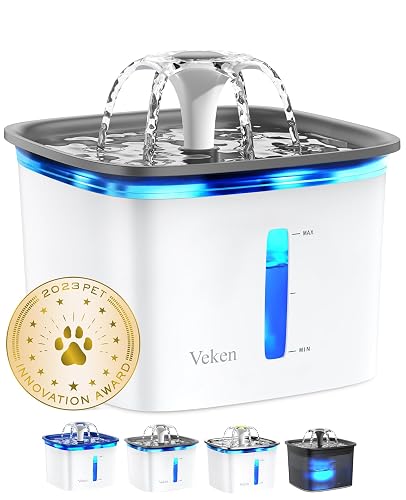
Award-winning product: Veken is proud to be a 2023 Category Winner of the Pet Innovation Awards, an honor given to only the most forward-thinking products within the rapidly expanding Pet industry....
The Veken fountain holds 95 ounces in a simple, classic design that fits most kitchens.
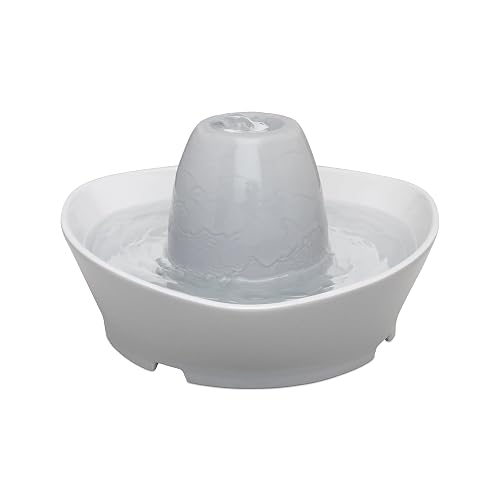
60-OZ WATER CAPACITY: This pet fountain holds the perfect amount of water for cats and small dogs
ENCOURAGES HYDRATION: Bubbling water flow entices pets to drink more and helps support kidney healt...
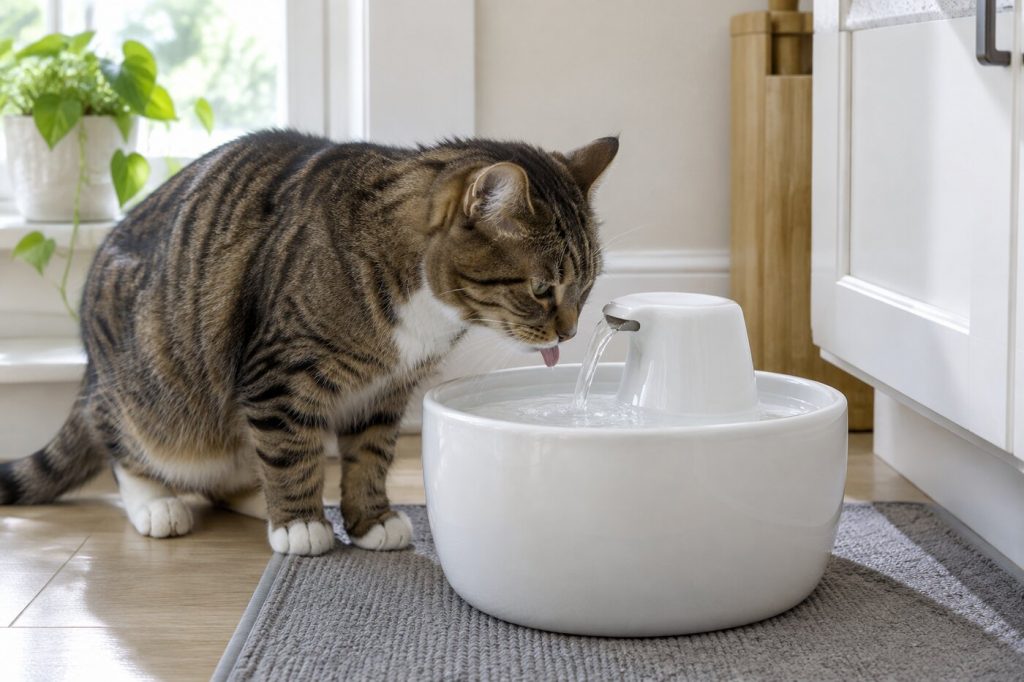
The PetSafe ceramic fountain holds 60 ounces and is designed for a quiet water flow, a good fit for cats and small dogs.
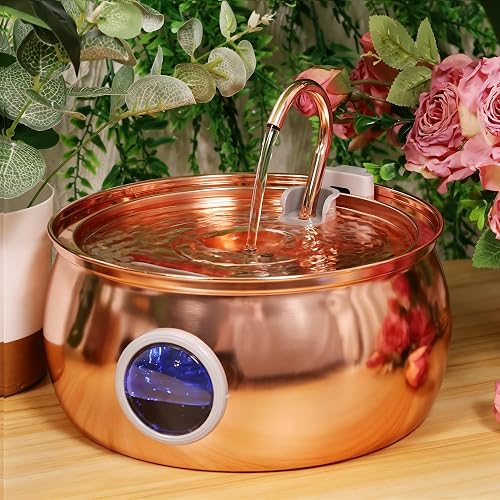
Copper-Plating Water Founatin - Tomxcute cat water fountain features an upgraded stainless steel with copper plating, Bpa-free. It is easier to attract cats to drink water and ensure their daily wa...
The Tomxcute fountain holds 4 liters in a stainless steel body with copper plating, useful for multi-cat homes.
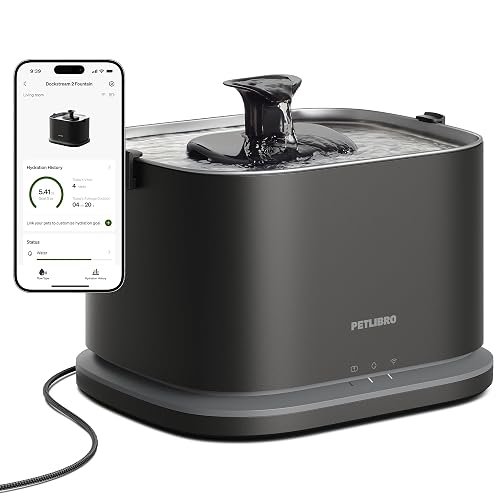
Hydration Data that Goes Deeper: Via Dockstream 2 cat water fountain stainless steel, track your pet's water intake with more precision and accuracy than ever before, cat fountain water bowl with i...
The PETLIBRO Dockstream 2 is a 3-liter fountain with a stainless steel tray and app monitoring over WiFi, which helps busy owners keep an eye on water level and filter changes.
Fountains for dogs and multi-pet homes
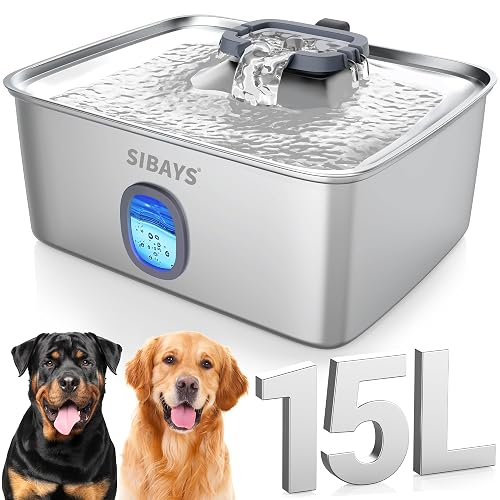
4Gal/15L Extra Large Capacity: Say goodbye to constant refills with our large pet water fountain! Our dog water fountain for large dogs has 4Gal/15L huge capacity, which meets the water needs of mu...
The SIBAYS fountain holds about 4 gallons in a stainless steel body with a water window, sized for large dogs and homes with several pets.
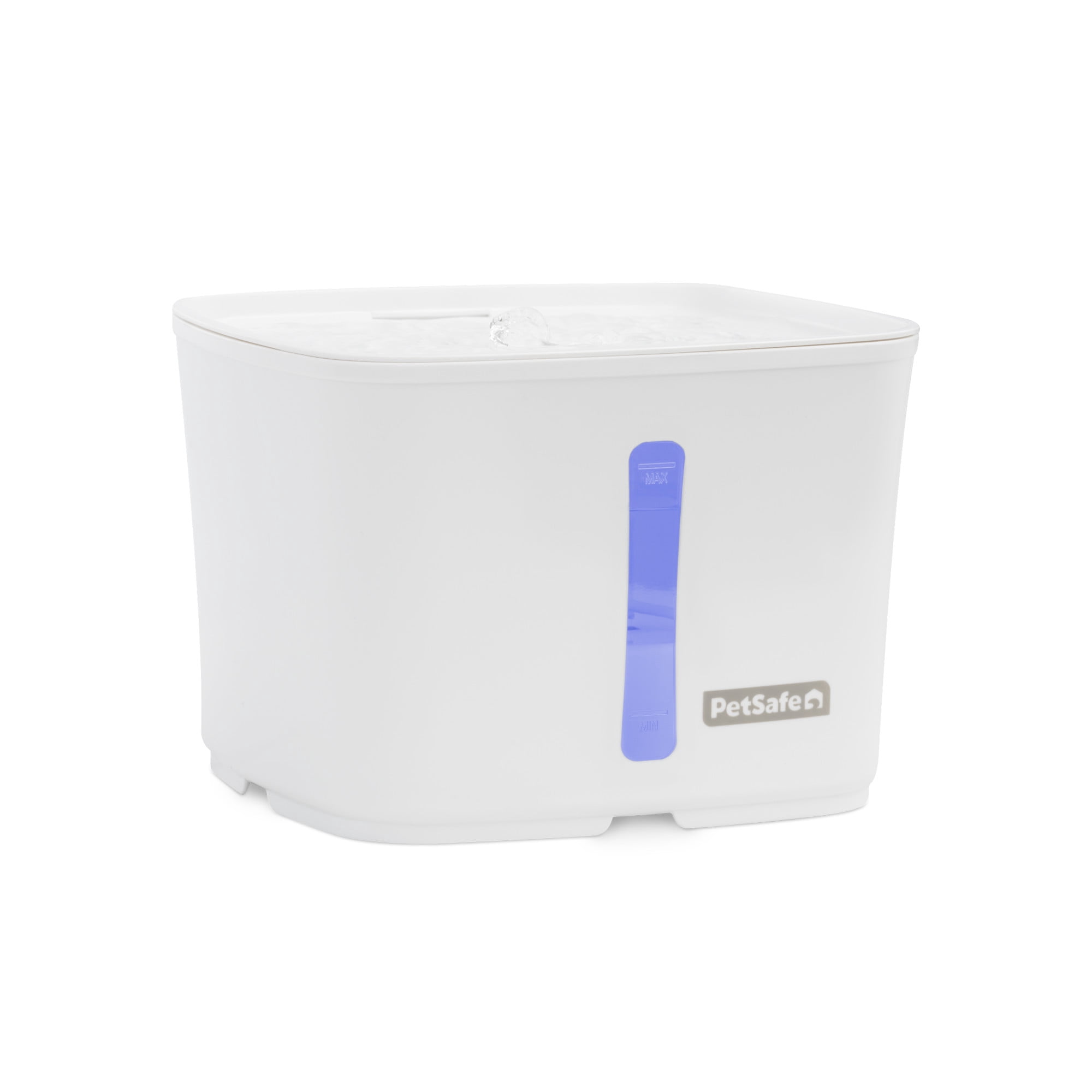
The PetSafe Viva at Walmart holds 64 ounces, has a quiet pump, and is dishwasher safe, making cleanup easy for cats and small dogs.
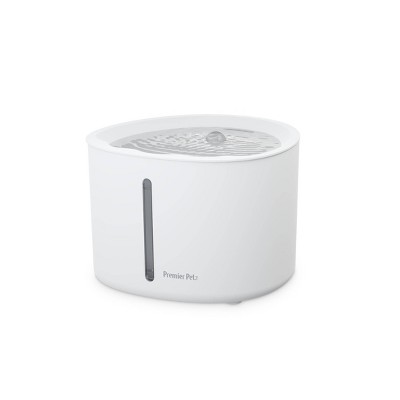
At Target, the Premier Pet 54-ounce fountain is a low-cost automatic fountain for cats and dogs.
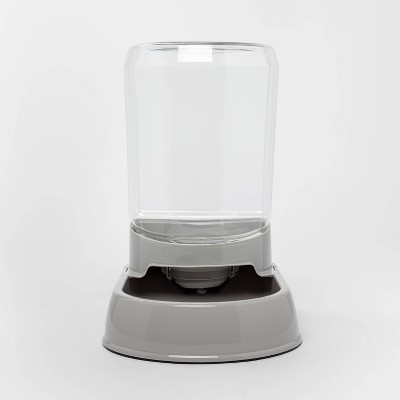
For pets that do not care about moving water, or for places without an outlet, the Boots and Barkley large gravity waterer at Target refills its bowl from a reservoir with no pump or power needed.
Introducing a fountain to your pet
Some pets take to a fountain right away, while others are wary of the new sound and movement. Set it up next to the old water bowl at first, with the flow on a low setting, and leave both out for a few days. Once your pet is drinking from the fountain regularly, you can remove the old bowl. If your pet ignores it after a week or two, try a different flow setting or a spot in a quieter part of the house. Some pets simply prefer a plain bowl, and that is fine as long as the water is kept fresh.
Corded, cordless, or smart?
Most fountains plug into the wall. Cordless models use a rechargeable battery in the pump, which gives you more freedom in where you put the fountain and removes the cord that some pets like to chew. The trade-off is that you need to recharge the battery on a schedule. Smart fountains add features like water-level alerts, filter reminders, or drinking logs in an app. They are handy for busy households but cost more, and the basic job of keeping water clean and moving is the same.
Travel and power outages
A fountain stops circulating if the power goes out or the battery runs down, but the reservoir still holds water, so your pet will not go without. If you travel, a large reservoir helps a pet sitter, but ask them to check the water level and top it up. For longer absences, a gravity waterer as a backup is a simple safeguard.
Cleaning a pet fountain
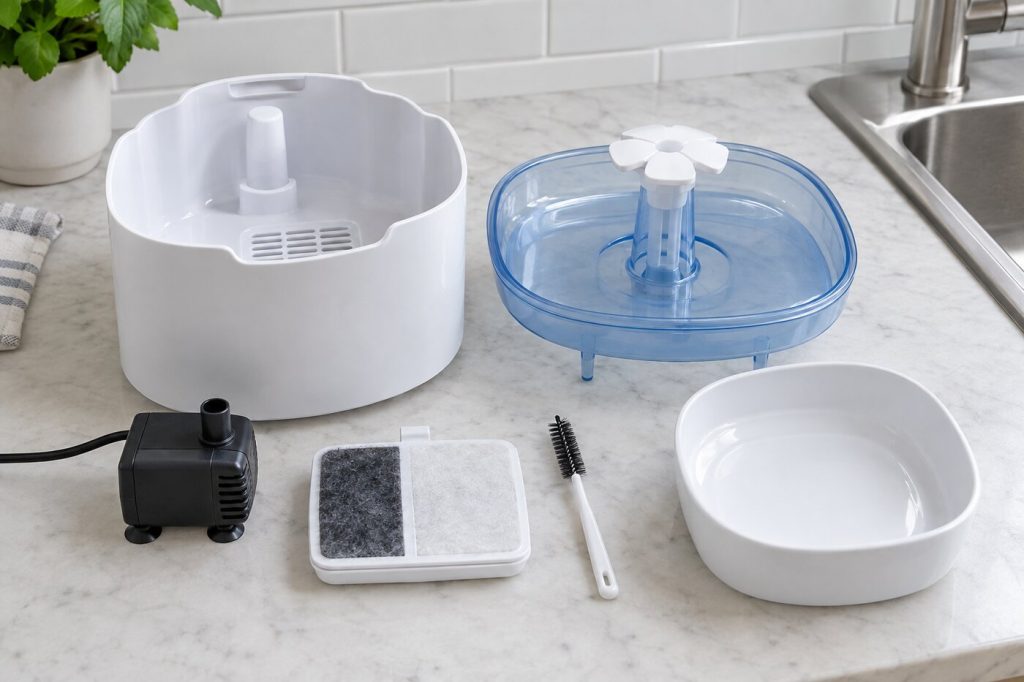
Fountains stay fresh only if you clean them. Water left moving through a dirty fountain can build up slime on the surfaces and inside the pump. Follow the manufacturer's schedule, which often calls for a full cleaning about once a week or more often with multiple pets, and replace filters as recommended.
- Unplug first. Always disconnect power before taking the fountain apart.
- Take it apart. Remove the pump, filter, and any spouts or tops.
- Wash the bowl and parts with warm water and mild soap, then rinse well. Many ceramic and steel bowls are dishwasher safe; check the manual.
- Clean the pump. Open the pump cover and wipe out the impeller with a small brush. Hair and buildup here are the most common cause of noise and weak flow.
- Replace the filter on schedule, and rinse new filters if the instructions say to.
- Refill with fresh water and keep the level above the minimum line so the pump runs quietly.
Placement and safety
Put the fountain on a flat, stable surface away from food bowls and litter boxes, since many pets prefer to drink away from where they eat and go to the bathroom. A mat underneath catches splashes. Route the cord so pets cannot chew it, and use a cord cover if you have a pet that chews. Check the water level daily; a pump that runs dry can overheat or wear out.
Filters and running costs
Replacement filters are an ongoing cost, so check the price and availability of filters before choosing a fountain. Some brands sell multi-packs that bring the cost down. Pumps also wear out over time and are often sold separately. A fountain with easy-to-find parts will be cheaper to keep running for years.
When to talk to a vet
A fountain is a convenience, not a treatment. If your pet suddenly drinks much more or much less than usual, or you notice changes in urination, contact your veterinarian, since changes in drinking can signal health problems that need attention.
The short answer
For most cats, a mid-size fountain around 60 to 100 ounces in ceramic or stainless steel is easy to live with. Large dogs and multi-pet homes need a bigger steel fountain. Choose a model with easy-to-find filters, clean it weekly, and keep the water topped up so the pump stays quiet.
The responses below are not provided, commissioned, reviewed, approved, or otherwise endorsed by any financial entity or advertiser. It is not the advertiser’s responsibility to ensure all posts and/or questions are answered.
How often should the pump itself be replaced? The filters are easy to keep track of but I have no idea how long pumps usually last.