
Last Updated on: Mar 29, 2026
A good pair of kitchen shears is one of the most used tools in many kitchens, even though it rarely gets the attention a chef's knife does. Shears snip herbs straight into a pot, trim fat off meat, cut pizza and flatbread, open stubborn packaging, and break down a whole chicken faster than most people can with a knife. Once you have a pair you like, you reach for them every day.
What We'll Cover
- Top Kitchen Shears
- What kitchen shears are good for
- Types of kitchen shears
- Features that matter
- All-purpose picks
- Specialty picks
- Right-handed, left-handed, and hand size
- How much to spend
- Cleaning shears safely
- Keeping them sharp
- How to spatchcock a chicken with shears
- Safety tips
- The short answer
Not all shears are the same, though. Blade length, handle comfort, whether the blades come apart for cleaning, and how heavy-duty they are all make a difference. This guide covers the main types of kitchen shears, the features that matter, how to clean them safely using guidance from the USDA Food Safety and Inspection Service (FSIS), and how to keep them sharp.
Top Kitchen Shears
What kitchen shears are good for
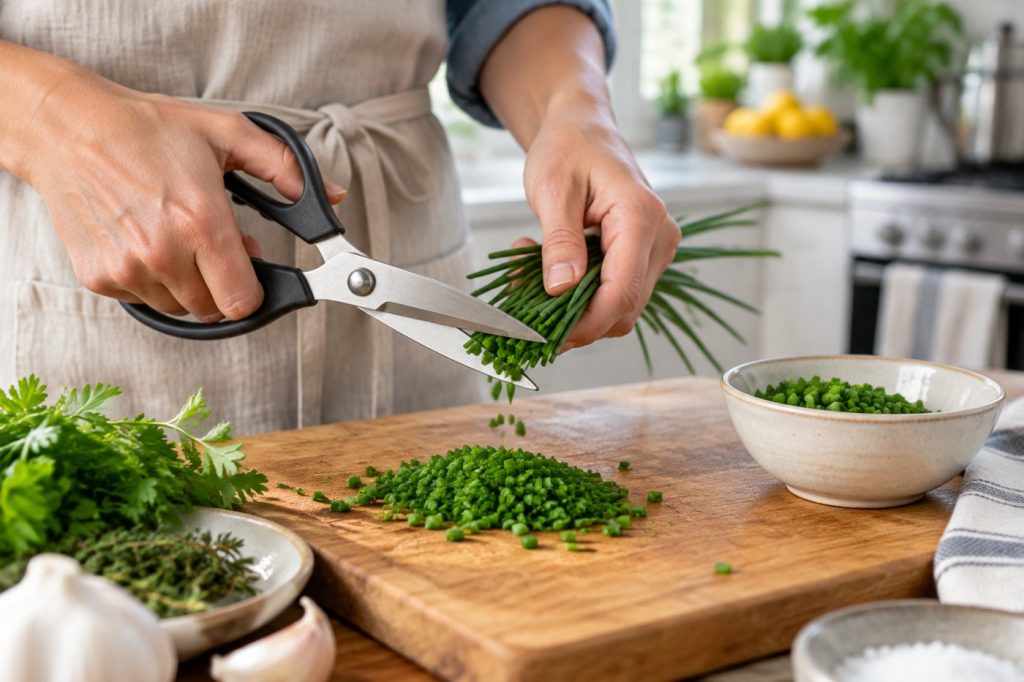
Kitchen shears handle many jobs that are awkward with a knife. They are especially useful when you need to cut something in the air, over a pan, or in a tight space.
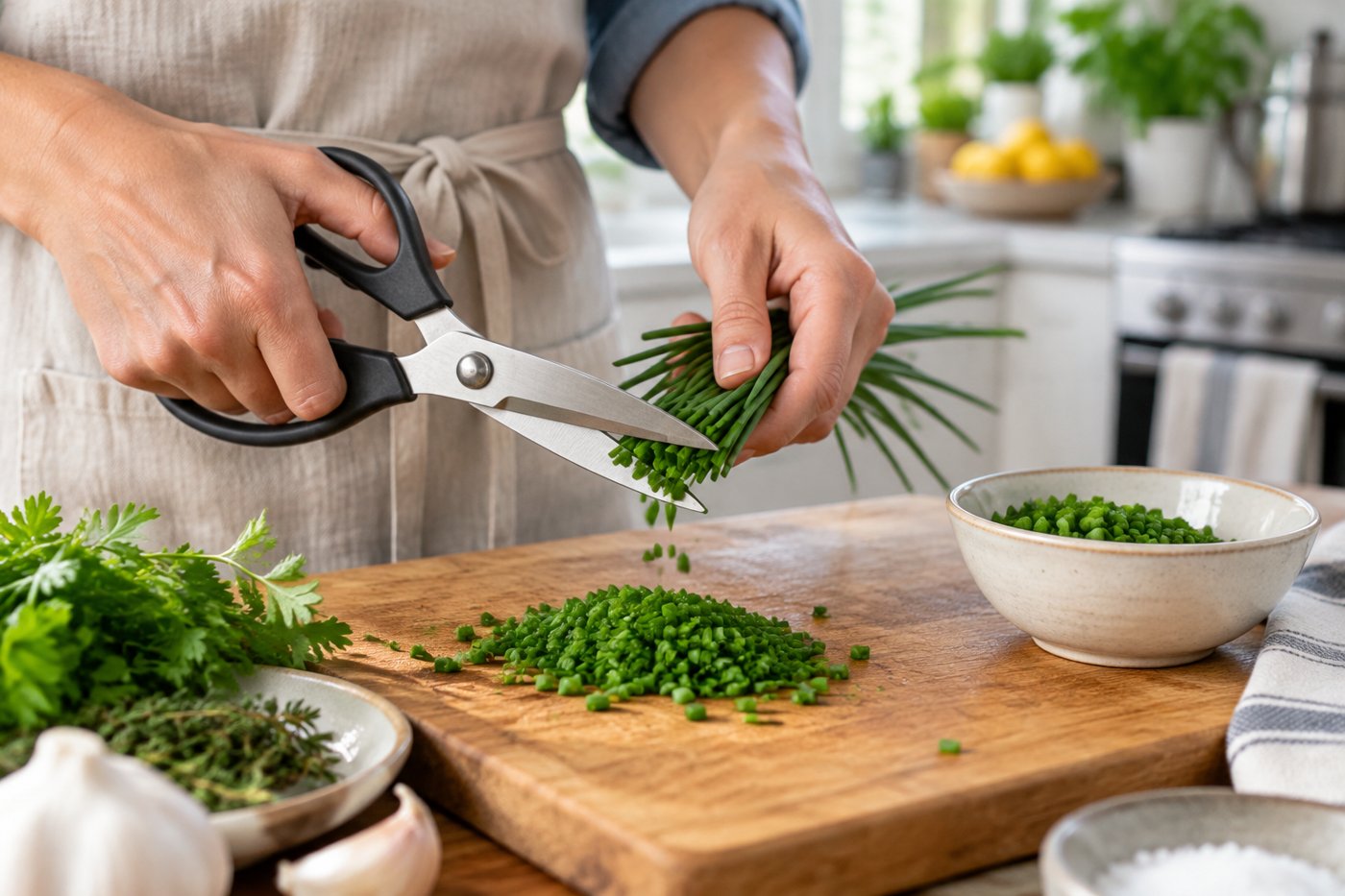
- Herbs and greens: Snip chives, parsley, dill, or scallions right over a dish.
- Meat and poultry: Trim fat, cut chicken into pieces, or remove the backbone to spatchcock a bird.
- Bacon and deli meat: Cut strips straight into a pan.
- Pizza, tortillas, and flatbread: Cut clean slices without dragging toppings.
- Dried fruit and sticky foods: Shears cut dates and dried apricots more easily than a knife.
- Packaging: Open bags, clamshells, and twine-tied roasts.
Many people keep one pair of shears for food and a separate pair of regular scissors for paper and packaging. That keeps the food pair cleaner and sharper.
Types of kitchen shears
All-purpose kitchen shears are the most common. They have straight blades around three to four inches long, often with one serrated edge to grip slippery foods. Many include a notch between the handles for cracking nuts or opening bottle caps. For most kitchens, this is the pair to start with.
Poultry shears are heavier, with curved blades and a spring that pushes the handles open after each cut. The extra force helps with cutting through small bones and joints. They often have a safety latch to keep the blades closed when stored.
Herb scissors have several parallel blades that cut herbs into fine pieces in a few snips. They are handy if you cook with fresh herbs often, but they are a single-purpose tool.
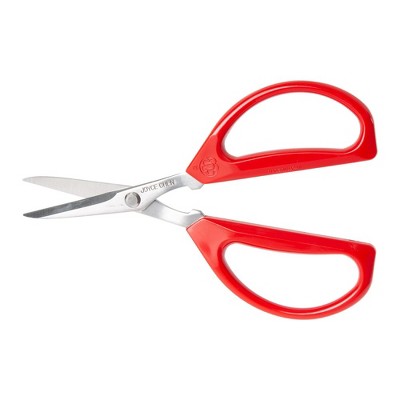
Short-bladed vegetable scissors, like the classic Joyce Chen design, have short, sharp blades and large, looped handles. They are light and precise, good for trimming vegetables, flowers, and small tasks.
Features that matter
- Take-apart blades: Shears that separate into two halves are much easier to clean, since food and bacteria can hide around the pivot.
- Blade material: Stainless steel resists rust. Harder steel holds an edge longer.
- Serrated edge: Micro-serrations on one blade help grip meat and slippery foods so they do not slide out.
- Comfortable handles: Soft, grippy handles with room for your fingers reduce hand fatigue. Check that the handles suit your hand size and whether you are left- or right-handed.
- Sheath or cover: Protects the blades in a drawer and protects your fingers.
- Dishwasher safe: Convenient, though hand washing keeps blades sharper longer.
All-purpose picks
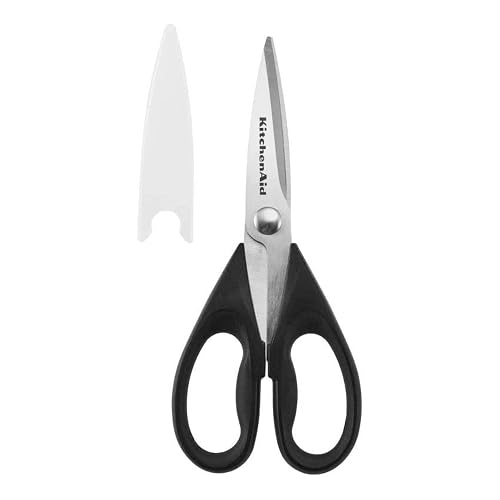
PREMIUM STAINLESS STEEL BLADES: Built to resist rust and maintain sharpness, these stainless steel blades easily cut through everyday kitchen items like vegetables, herbs, meat, and packaging with ...
The KitchenAid all-purpose shears have stainless steel blades, a soft grip, and a protective sheath. They are listed as dishwasher safe.
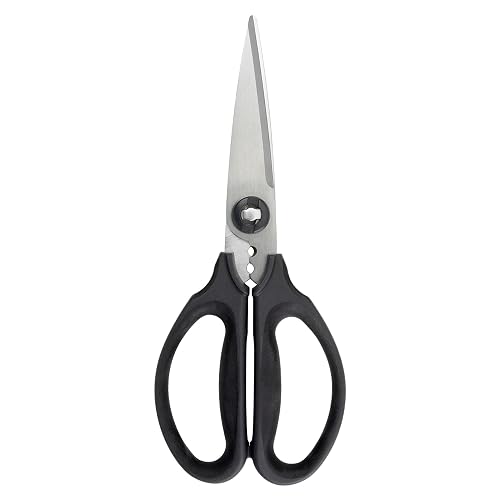
Stainless steel design slices through cardboard, twine, meat, vegetables and more
Micro-serrated blades grip items securely and prevent slipping
Herb stripper effectively removes fresh herbs from t...
The OXO Good Grips shears come apart for cleaning and have cushioned handles plus a built-in herb stripper.
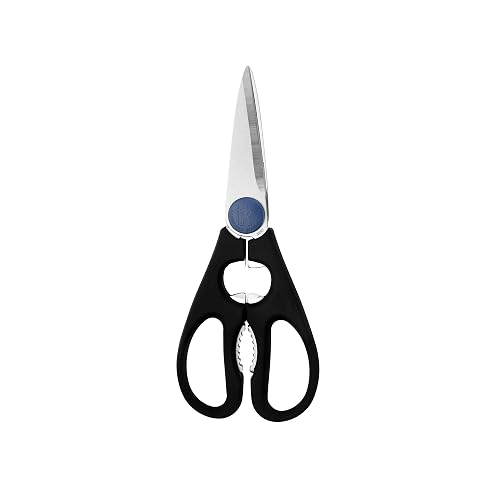
QUALITY MANUFACTURING: High quality corrosion resistant stainless steel
MULTI-PURPOSE: Suitable for most kitchen cutting tasks, can be used as a nutcracker or open screw caps with ease
CUT WITH EAS...
The Henckels shears are made in Japan with stainless steel blades and a take-apart design.
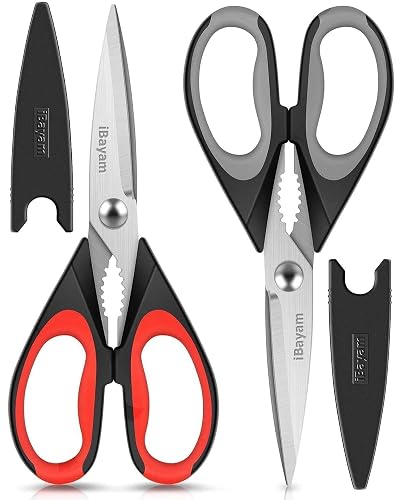
Cook's Tool & Gadget Sets ALL PURPOSE KITCHEN SCISSORS: Heavy duty 8.66" super sharp kitchen shears, Valued 2-Pack, comfort-Grip handles. Great All-purpose scissors for kitchen, household, new home...
The iBayam two-pack gives you two all-purpose shears with sheaths, one for raw meat and one for everything else.
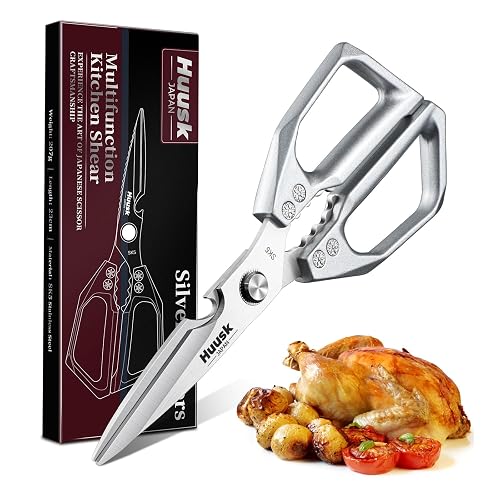
【Heritage Cutting Precision】Experience artisan-grade sharpness with blades honed by Japanese metallurgy masters. Featuring 2.0mm premium SK5 steel construction, HUUSK kitchen shears effortlessly pr...
The Huusk shears use Japanese steel blades in an all-purpose design.
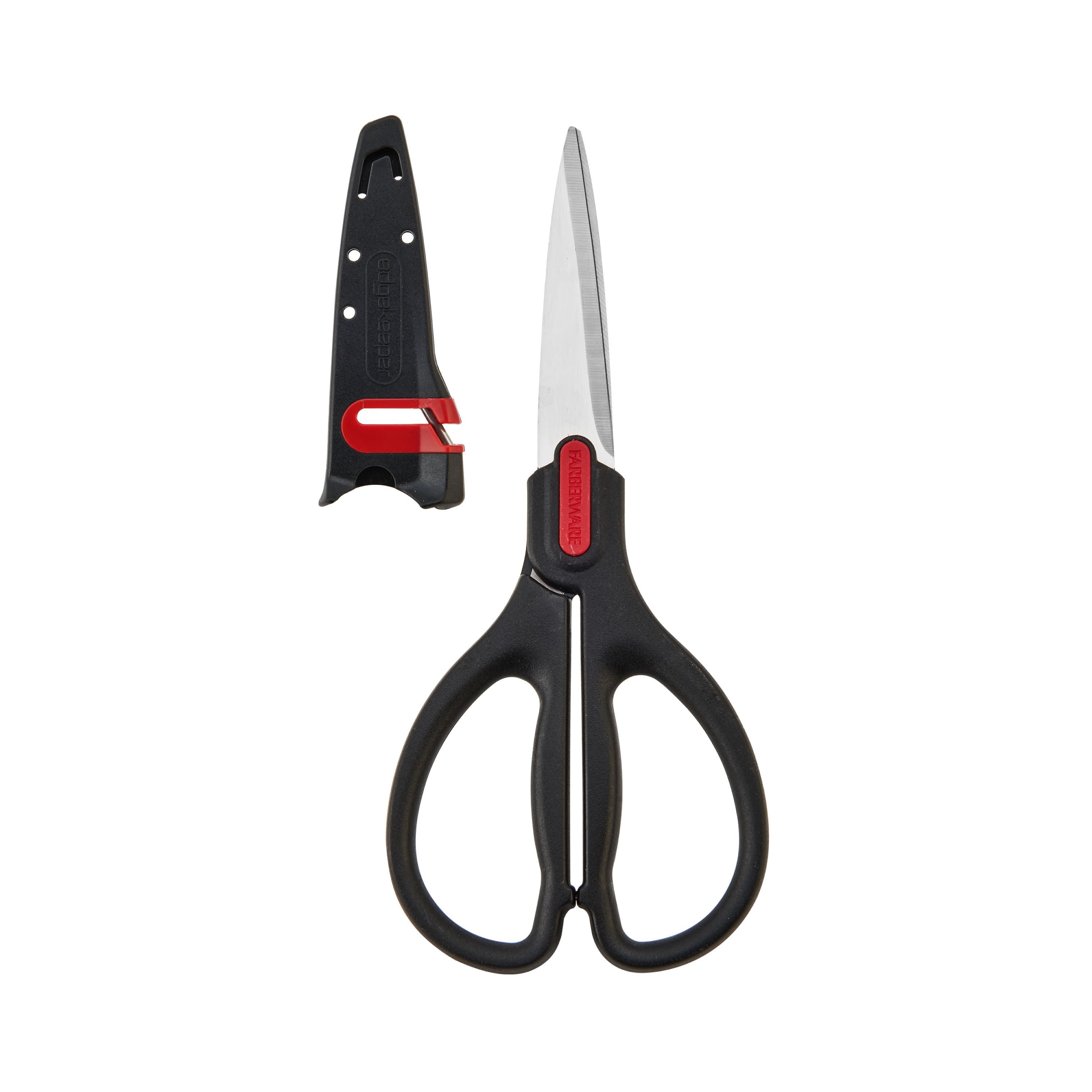
The Farberware Edgekeeper shears at Walmart come with a sheath that has a built-in sharpener, so the blades get a touch-up each time you put them away.
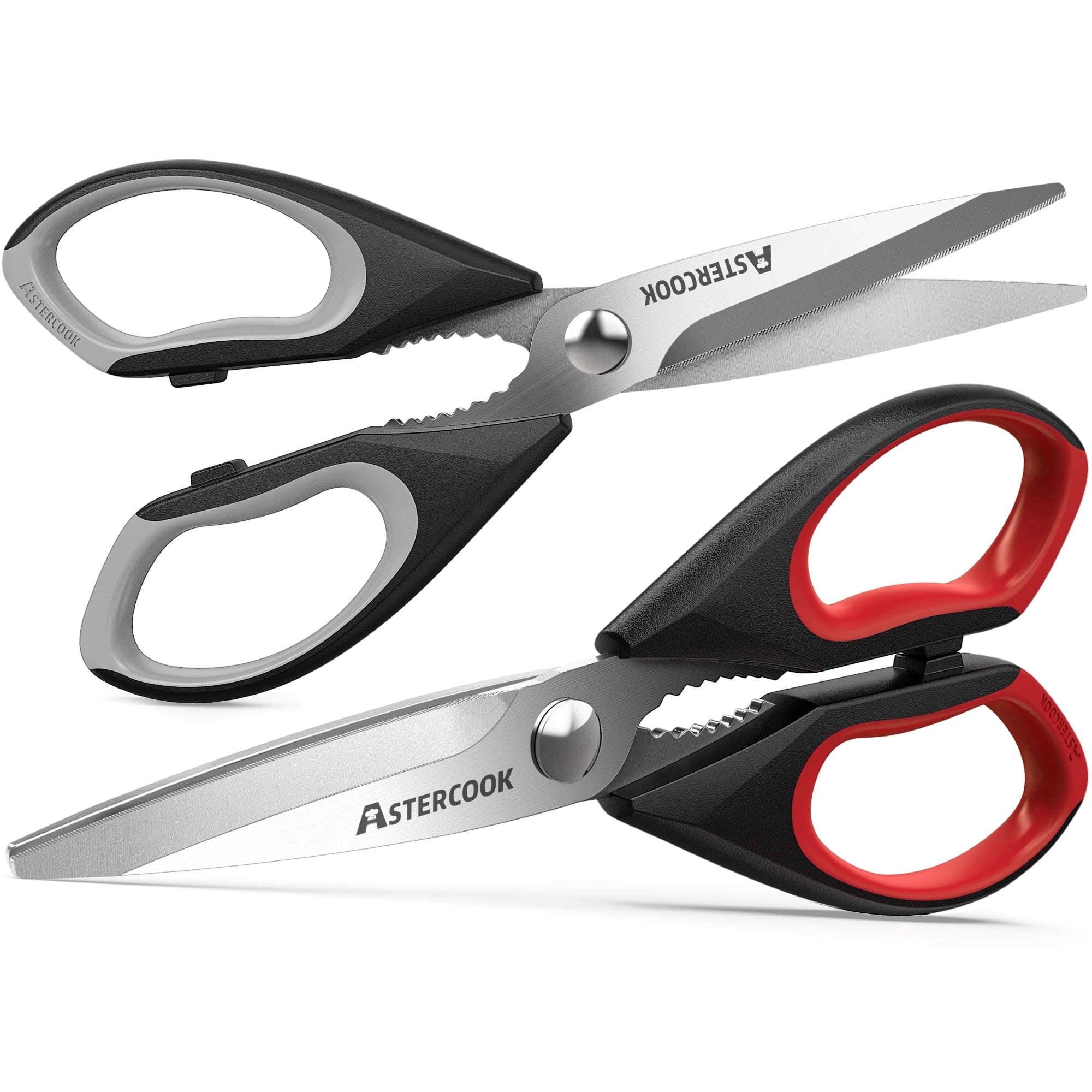
The Astercook two-pack has a serrated blade and ergonomic handles, and is listed as dishwasher safe.
Specialty picks
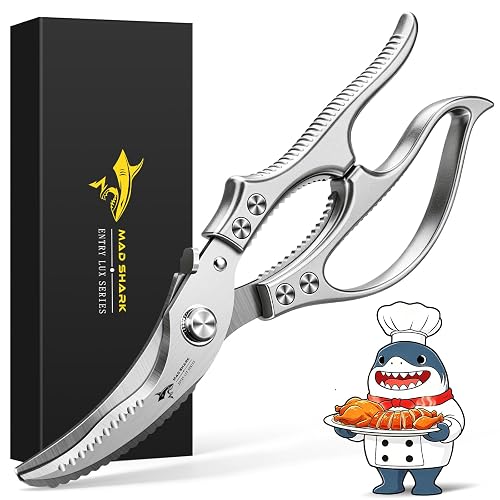
Professional-Grade Durability & Corrosion Resistance: Forged with rust-proof molybdenum-vanadium steel and precision-tempered 3.5mm blades, these poultry shears cut through poultry bones effortless...
The MAD SHARK poultry shears are spring-loaded with curved blades and a safety lock, built for breaking down chicken.
At Target, the Joyce Chen scissors have short, sharp blades and large looped handles for precise work on vegetables and herbs.
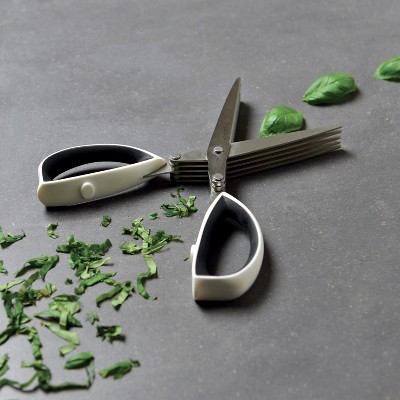
The BergHOFF herb scissors use multiple parallel blades to cut herbs finely in a few snips.
Right-handed, left-handed, and hand size
Most kitchen shears are made for right-handed users. The blades are arranged so the cutting line stays visible and the blades press together when squeezed with the right hand. Left-handed cooks can use them, but the blades may pull apart slightly and the cut can be less clean. If you are left-handed, look for shears labeled ambidextrous or left-handed, or pick a style with symmetrical handles.
Hand size matters too. Large handles give room for several fingers and more cutting force, which helps with meat and poultry. Smaller hands may find very large handles awkward, and a lighter pair with a shorter reach can feel better for everyday snipping. If you can, hold a pair before buying, or look at the handle photos closely to see how much room there is for your fingers.
How much to spend
Good kitchen shears do not have to be expensive. Many solid all-purpose pairs cost about the same as a few cups of coffee, and budget two-packs make it easy to keep one pair for raw meat. Paying more usually gets you harder steel that stays sharp longer, better fit between the blades, and a smoother pivot. Poultry shears and premium take-apart models cost more but can last for years with care.
Cleaning shears safely
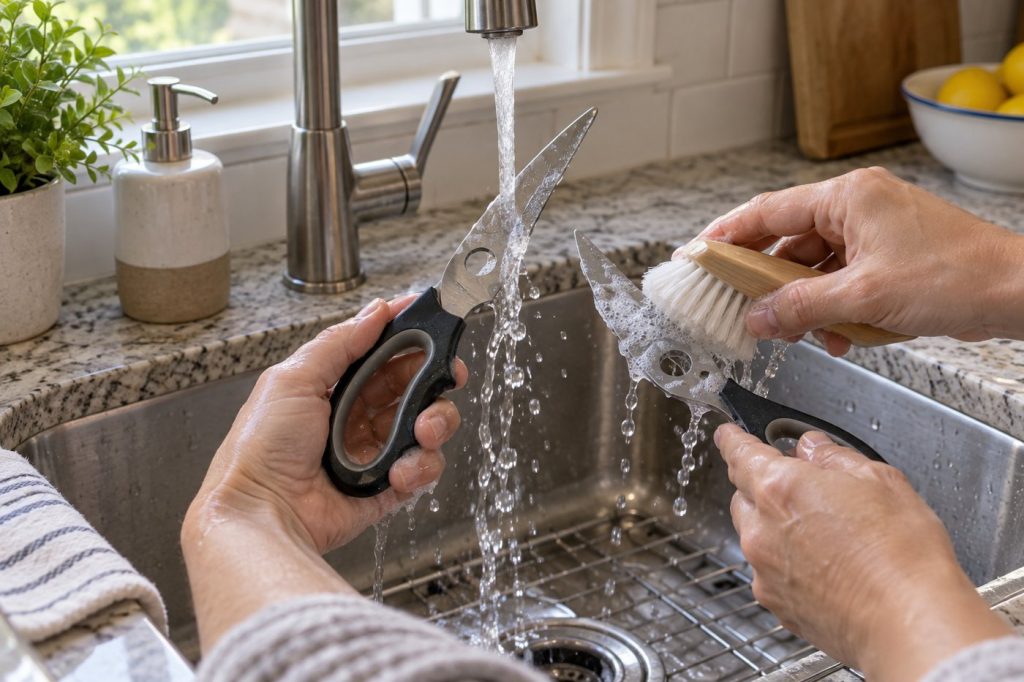
Shears that touch raw meat or poultry need a good wash before they touch anything else. FSIS advises keeping raw meat, poultry, fish, and their juices away from other food, and washing cutting boards, knives, and counter tops with hot, soapy water after cutting raw meat. Treat your shears the same way as a knife.
If your shears come apart, separate the blades and scrub each half, paying attention to the area around the pivot. Rinse and dry them completely before putting them back together, which also helps prevent rust. For shears that do not come apart, open them wide and scrub between the blades with a brush. Many cooks keep a dedicated pair for raw meat to lower the risk of cross-contamination.
Keeping them sharp
Dull shears crush herbs and slip on meat. Hand washing and drying right away helps keep the edges in good shape, since dishwasher detergent and rattling against other items can dull blades. Some sheaths include a small sharpener. Many knife sharpeners also have a slot for scissors, or a local knife sharpening service can restore a good pair.
Avoid using your kitchen shears on paper, cardboard, wire, or plastic ties, which dull the blades quickly. If the pivot gets stiff, a drop of food-safe mineral oil on the joint can help.
How to spatchcock a chicken with shears
Spatchcocking, or butterflying, a chicken means removing the backbone so the bird lies flat. It cooks faster and more evenly. Place the chicken breast side down. Using sturdy shears, cut along one side of the backbone from tail to neck, then along the other side, and remove the backbone. Flip the bird, press firmly on the breastbone to flatten it, and it is ready to season. Save the backbone for stock. Wash your hands, shears, cutting board, and counter with hot, soapy water afterward, as FSIS advises.
Safety tips
- Store them covered or in a knife block slot so you do not reach into a drawer and grab the blade.
- Keep them out of reach of young children.
- Cut away from your body and keep fingers clear of the blades, especially with spring-loaded poultry shears.
- Use the lock on poultry shears when storing them.
The short answer
For most kitchens, a pair of all-purpose shears with take-apart blades, a serrated edge, and comfortable handles covers almost every job. Add poultry shears if you often break down whole chickens, and herb scissors if you cook with a lot of fresh herbs. Wash shears in hot, soapy water after they touch raw meat, dry them well, and keep a separate pair of scissors for paper and packaging.
The responses below are not provided, commissioned, reviewed, approved, or otherwise endorsed by any financial entity or advertiser. It is not the advertiser’s responsibility to ensure all posts and/or questions are answered.
Can the herb scissors with multiple blades handle tougher herbs like rosemary, or are they mostly for soft ones like basil and chives?