
Last Updated on: Mar 25, 2026
The right pot does more for a houseplant than make it look nice on a shelf. It controls how much water stays around the roots, how quickly the soil dries out, and how much room the plant has to grow. A plant in a pot that is too big, too small, or has nowhere for water to go will struggle no matter how much care you give it.
What We'll Cover
This guide covers what to look for in an indoor planter: drainage, size, material, and self-watering designs. It also explains when and how to repot, using guidance from the University of Minnesota Extension, so your plants have a home that works for them.
Top Indoor Planters
Drainage comes first
The University of Minnesota Extension advises potting houseplants in a container with a drainage hole, which lets extra water escape and helps prevent root rot. When water has nowhere to go, it pools at the bottom of the pot, and roots sitting in soggy soil can rot. Overwatering is one of the most common reasons houseplants fail, and a drainage hole is the simplest protection against it.
Pots with drainage holes need a saucer or tray underneath to catch water and protect floors and furniture. Many planters come with a matching saucer. Empty the saucer after watering so the pot is not sitting in standing water.
If you fall in love with a decorative pot that has no hole, use it as a cachepot. Keep the plant in a plain plastic nursery pot with drainage, and set that inside the decorative one. Lift the inner pot out to water it in the sink, let it drain, and then put it back.
Choosing the right size
It is tempting to buy a big pot so a plant has plenty of room to grow, but that often backfires. The University of Minnesota Extension recommends moving plants into a pot no more than 2 to 3 inches larger in diameter than the original. A pot that is much too large holds a lot of wet soil that the roots cannot reach, and that soil stays damp for too long.
- Small plants and succulents: 4 to 6 inch pots.
- Medium plants like pothos, peace lilies, and small snake plants: 6 to 10 inch pots.
- Floor plants like fiddle leaf figs, monsteras, and large snake plants: 12 inches and up.
- New plants: Often best left in their nursery pot for a while, set inside a decorative planter.
Planter materials
Terracotta is unglazed clay. It is porous, so it lets air and moisture pass through the walls, and soil dries out faster. That makes it a great match for succulents, cacti, and people who tend to overwater. It can dry out too quickly for plants that like steady moisture.
Glazed ceramic is heavy, stable, and comes in many colors and finishes. The glaze keeps moisture in, so soil stays damp longer than in terracotta. It is a good all-around choice for most houseplants, as long as it has a drainage hole.
Plastic and resin pots are light, cheap, and hold moisture well. They are easy to move, will not break if dropped, and work well for large plants that would be too heavy in ceramic.
Fiberglass and stone composite planters look like stone or concrete but weigh much less. They are good for large floor plants and can often move between indoors and outdoors.
Self-watering planters
Self-watering planters have a water reservoir at the bottom and a wick or soil column that draws water up to the roots as needed. They are handy for busy people, frequent travelers, and thirsty plants. Many have a water level indicator so you know when to refill.
They are not ideal for every plant. Succulents, cacti, and plants that like to dry out between waterings can stay too wet in a self-watering pot. For those, a terracotta pot with a drainage hole is usually better.
Ceramic pots
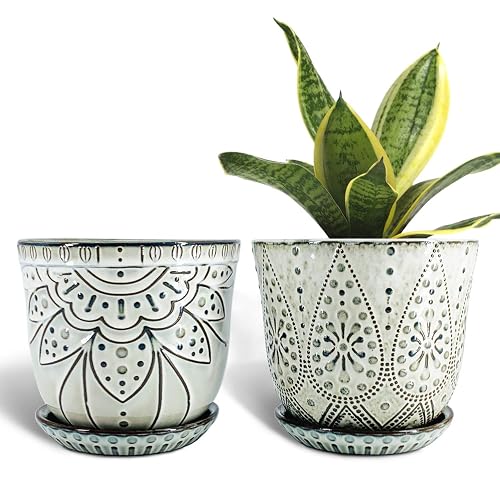
【With Drain Holes and Mesh Pad】:Large drain holes are good for draining, and with leak-proof mesh pads, it keeps soil from running away, suitable for orchids, succulents, cacti, other flowers and g...
The Gepege six-inch ceramic pots come with drainage holes and saucers, a clean, simple choice for medium houseplants.
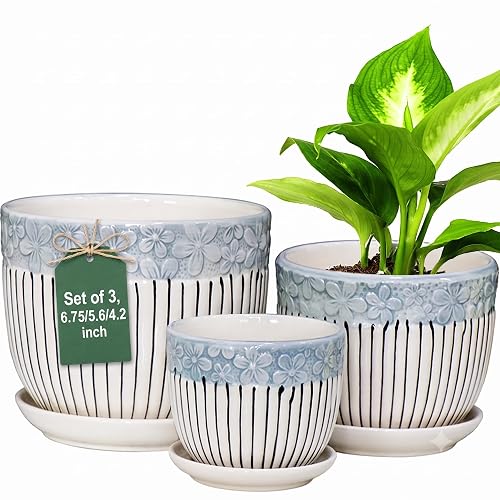
【VERSATILE 3-POT SET 】- Includes large (6.75"D X 5.6"H), medium (5.6"D X 4.6"H), and small (4.2"D X 3.5"H) pots to accommodate various plant sizes, such as orchids, Iilies, bamboo, african violets,...
The Hlukana set of three includes 6.75, 5.6, and 4.2-inch pots with drainage holes and saucers, handy for grouping plants on a shelf.
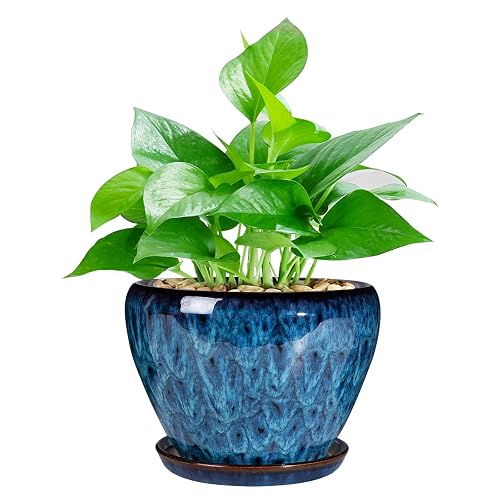
Ceramic Plant Pot: The ceramic pot is high temperature fired stoneware which are durable and lightweight that convenient for you to use
Dimension: 6"(D)*5.6"(H)(Planter)/4.9"(D)*0.6"(H)(Tray)
Drain...
This glazed six-inch planter has a drainage hole and saucer, a good size for a succulent or small herb.
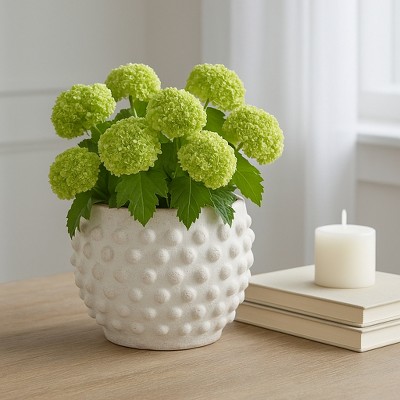
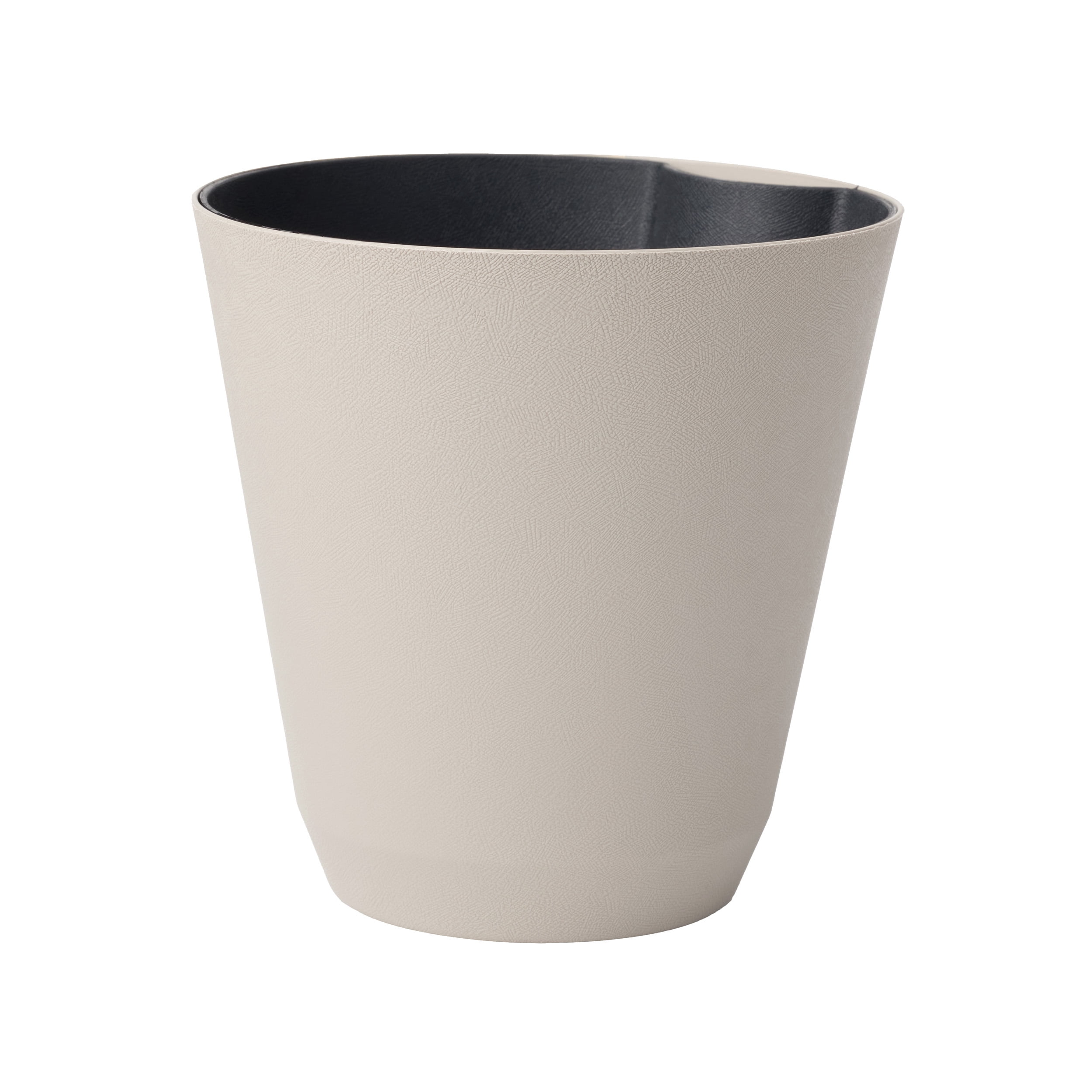
At Target, the Sagebrook Home textured planter comes in several sizes with a white, textured finish.
Self-watering and plastic pots
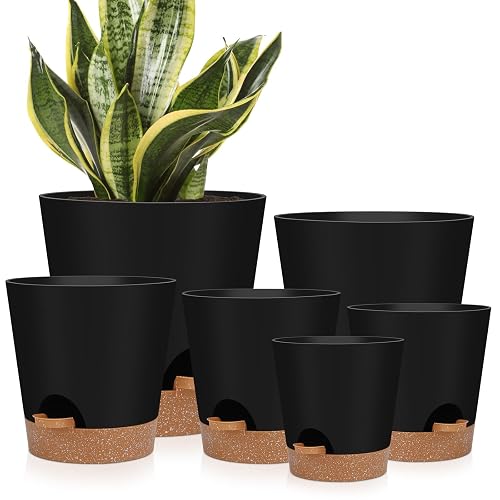
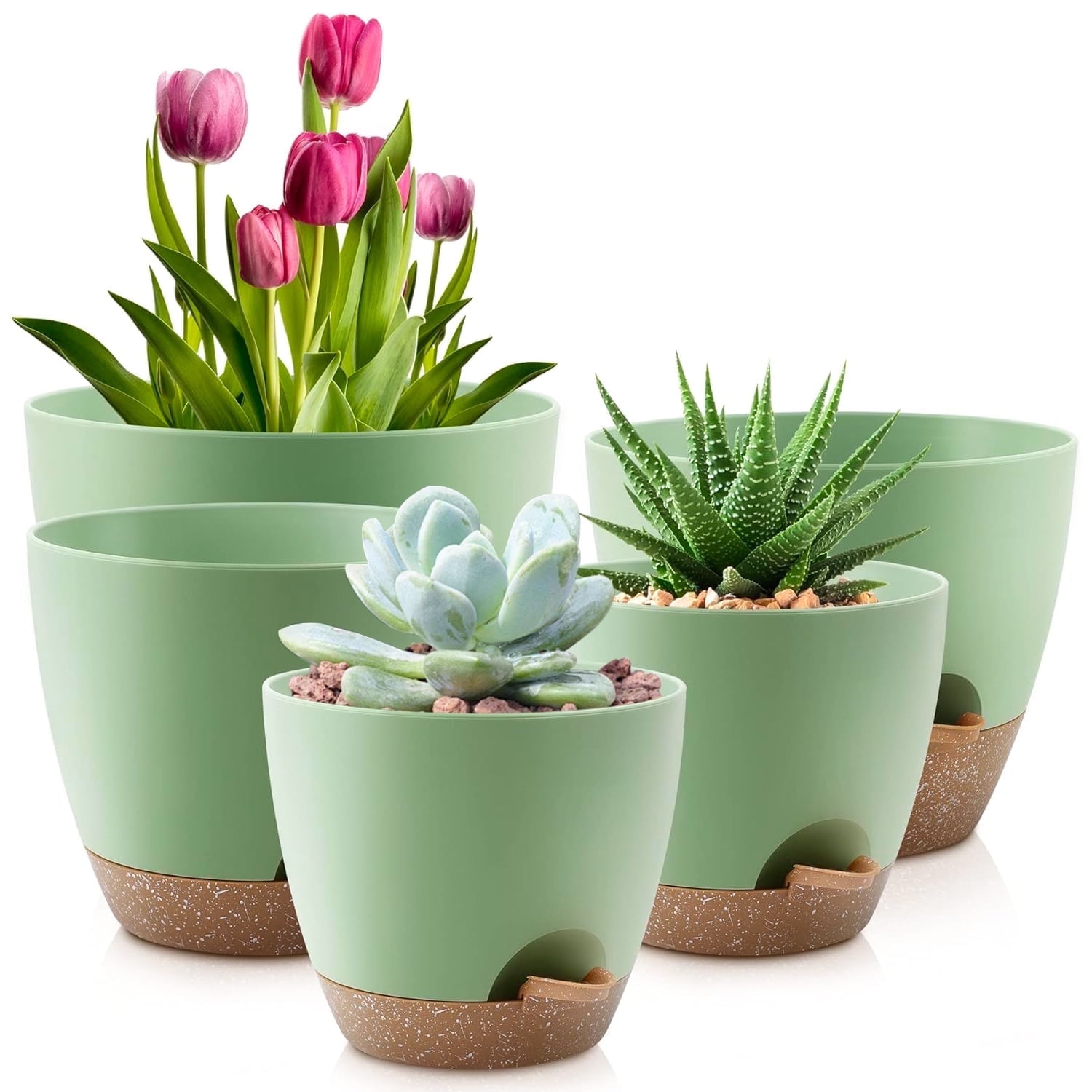
【Practical Size Combo】-These plastic planters indoor combines with 6 different sizes, 8 inch 7inch 6.5 inch 6 inch 5.5 inch 5 inch which are suitable for planting most small and medium-sized home o...
The YNNICO six-pack includes self-watering planters from 5 to 8 inches, enough for a small collection.
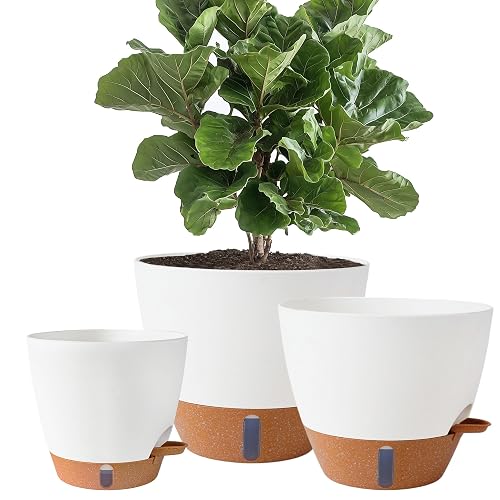
🌿 【Self-Watering Pots with Water Level Indicator】 Designed for busy plant lovers, our 8/10/12 self-watering pots feature a built-in ABSORBENT COTTON WICK SYSTEM that automatically draws water from ...
This set of 8, 10, and 12-inch self-watering pots suits larger plants that drink a lot of water.
The FOUKUS set of five at Walmart has drainage holes and a self-watering design in light plastic.
The Mainstays six-inch resin planter is a simple, low-cost self-watering pot for a single plant.
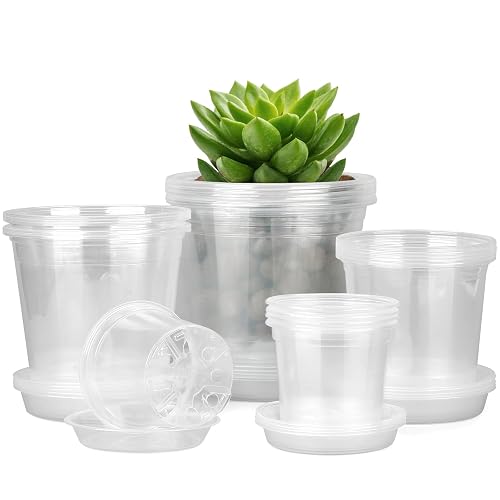
Garden Planting Container: 20 Pack flower pots, including 5 pieces each of 4 inch;5 inch;6 inch and 7 inch clear nursery pots. These pots accommodate different plants, from small succulents to medi...
The FUIJOL 20-pack of clear nursery pots has drainage holes and saucers. The clear walls let you see roots and soil moisture, and they fit inside decorative planters.
Large floor planters
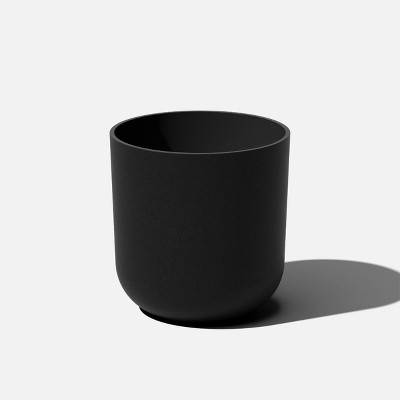
The Veradek Kona planter is a 15-inch plastic-stone pot that works indoors or out, sized for floor plants.
Watering in different pots
The pot you choose changes how often you water. Terracotta pots dry out fastest, so plants in them may need water more often, especially in warm, dry rooms. Glazed ceramic and plastic hold moisture longer, so check before you water. The easiest test is to push a finger an inch or two into the soil; if it feels dry, it is usually time to water. Water slowly until it runs out of the drainage hole, then let the pot drain fully before setting it back on its saucer.
Seasons matter too. Most houseplants grow more slowly in winter and need less water, while spring and summer growth calls for more. Big pots dry more slowly than small ones, so a large floor plant may go longer between waterings than a small plant on a sunny sill.
When to repot
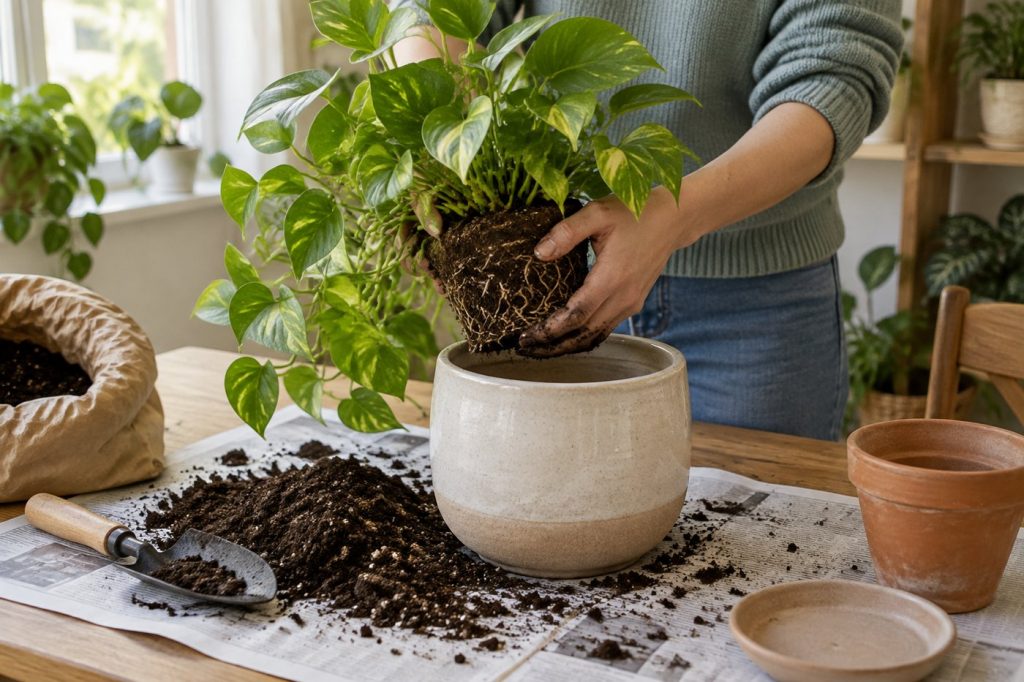
According to the University of Minnesota Extension, houseplants are usually repotted when they are first purchased or when they have outgrown their container, and repotting can happen at any time of year. Signs a plant needs more room include roots circling tightly inside the pot, roots growing out of the drainage hole, and water running straight through the pot without soaking in.
To repot, water the plant a day ahead so the root ball holds together. Gently slide the plant out of its pot, loosen circling roots with your fingers, and set it in the new pot on a layer of fresh potting mix so the top of the root ball sits about an inch below the rim. Fill in around the sides, press lightly, and water well. Use a potting mix made for containers rather than garden soil, which packs down too tightly in a pot.
Style and placement tips
- Group plants in odd numbers and mix pot heights for a natural look.
- Use plant stands to lift small plants closer to the light and add height to a corner.
- Match the pot to the plant's needs first, then pick colors and finishes.
- Put felt pads or cork mats under saucers to protect wood floors and furniture from moisture.
- Rotate plants every few weeks so they grow evenly toward the light.
Planters and pets
If you have cats or dogs, heavy planters are harder to knock over, and a layer of decorative stones on top of the soil can discourage digging. Some common houseplants can be harmful to pets, so check a plant's safety before bringing it home, and keep any plants you are unsure about out of reach.
The short answer
Choose a planter with a drainage hole and a saucer, and size up by no more than 2 to 3 inches when you repot, as the University of Minnesota Extension advises. Use terracotta for succulents and plants that like to dry out, glazed ceramic or plastic for most other houseplants, and self-watering pots for thirsty plants or busy schedules. If you love a pot without a hole, use it as a cover for a plain nursery pot.
The responses below are not provided, commissioned, reviewed, approved, or otherwise endorsed by any financial entity or advertiser. It is not the advertiser’s responsibility to ensure all posts and/or questions are answered.
If a decorative pot has no drainage hole, is it fine to keep the plant in its plastic nursery pot and set that inside? Wondering how much space to leave at the bottom.