
Last Updated on: Sep 12, 2026
Wet lettuce ruins a salad. Dressing slides right off the leaves and pools at the bottom of the bowl, and the whole thing turns limp before it reaches the table. Patting greens dry with towels works, but it takes forever and bruises tender leaves. A salad spinner does the job in about thirty seconds, and once you own one you start using it for far more than lettuce.
They look like a simple kitchen tool, and they are. But the way a spinner turns, how big it is, and what it is made of all change how often it comes out of the cupboard. Here is how to choose one that suits the way you cook.
Top Salad Spinners
What We'll Cover
How a spinner works
Every salad spinner has the same three parts: an outer bowl, a slotted basket that sits inside it, and a lid with a mechanism that spins the basket. When the basket turns quickly, water is flung off the leaves, through the slots, and against the wall of the bowl, where it collects at the bottom. A few quick spins, a pour of the water, and a couple more spins leave greens dry enough to hold dressing.
That basket doubles as a colander, so you can rinse produce right in it. Some bowls have a drain spout or holes in the lid so you can pour water out without taking the whole thing apart, which saves a step each round.
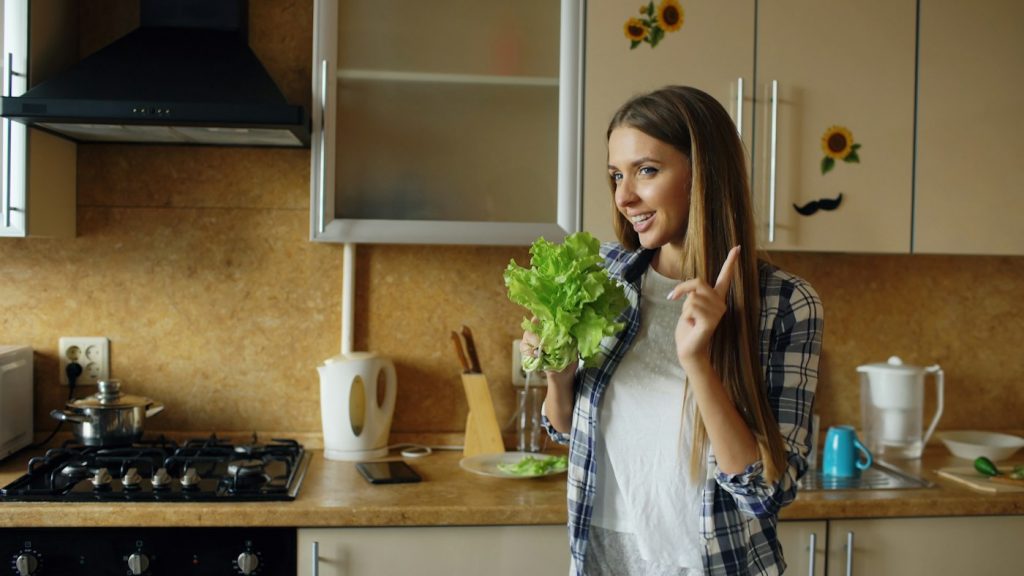
Pump, crank, cord, or motor
The biggest difference between spinners is how you make them turn. Each style has fans, and none is wrong.
Push pump
You press a knob on top of the lid over and over, and the basket speeds up with each press. Pumps are fast and easy to use with one hand while the other holds the bowl steady. Many include a brake button that stops the basket right away, so you do not have to wait for it to wind down. They take up a bit more height in a cabinet because of the knob.
Crank handle
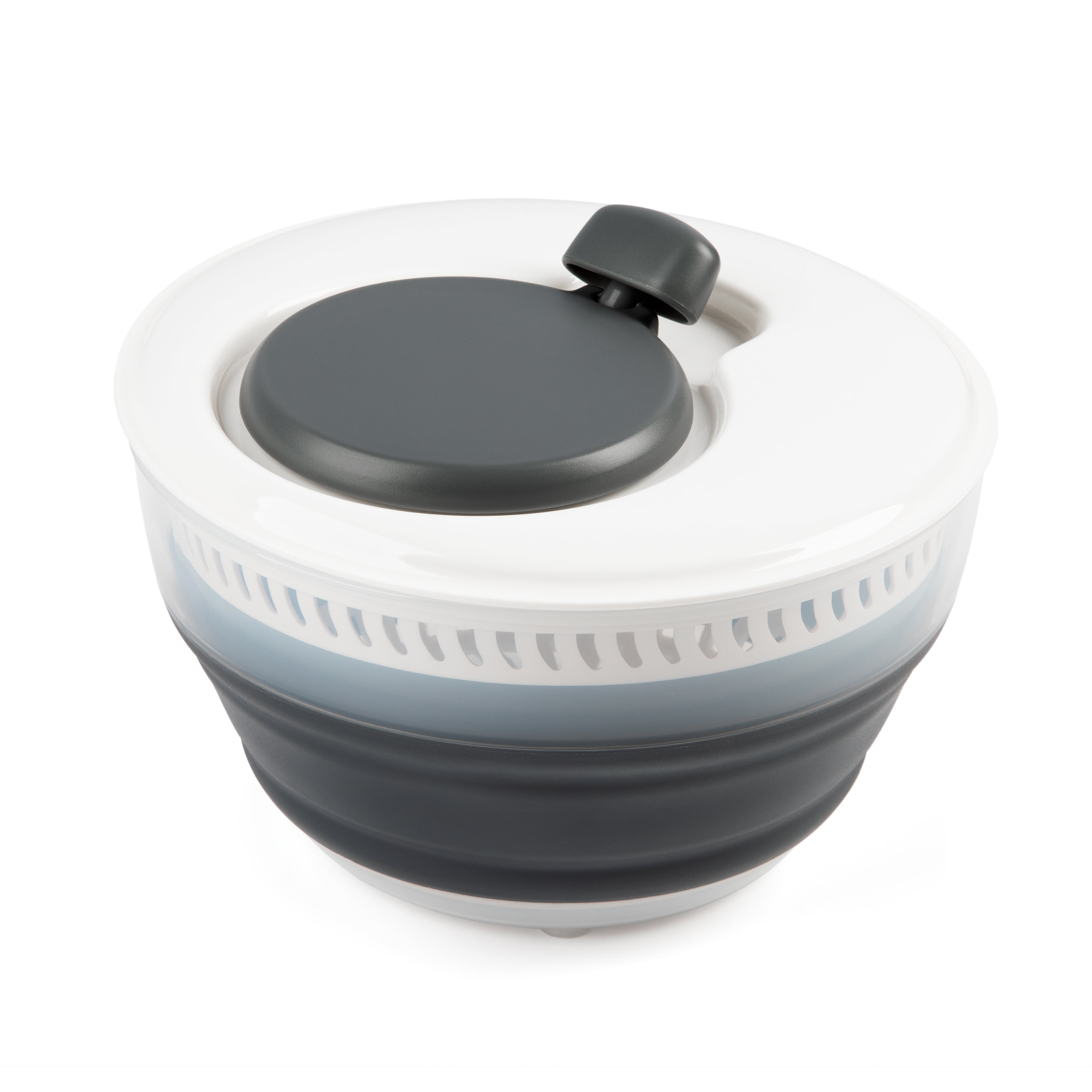
A handle on the lid turns like a hand mixer. Cranks are simple, cheap, and easy to control, and some fold flat for storage. They do need two hands: one to crank and one to hold the lid in place so the bowl does not travel across the counter.
Pull cord
An older design where you pull a cord to spin the basket. Cords are quick but tend to be the first part to wear out, and they have mostly given way to pumps and cranks.
Electric
A small motor, often charged with a USB-C cable, spins the basket at the touch of a button. Electric spinners are handy for anyone with sore hands or wrist trouble, and for people who wash a lot of greens at once. They cost more, and the lid with the motor usually cannot go in the dishwasher.
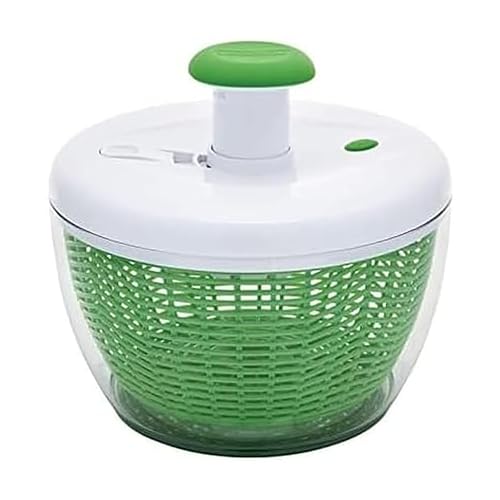
HEALTHY MADE EASY: Our Pro Pump Salad Spinner makes it so easy to prepare nutritious foods every night of the week. This device helps you to clean and serve salad greens and other produce, includin...
Picking a size
Spinner size is usually listed in quarts. It is easy to buy too big, and a huge spinner that does not fit in a cabinet tends to stay in the garage.
- Around 3 quarts. Enough for one or two people, a bunch of herbs, or a handful of berries. Easy to store and quick to wash.
- 4 to 5 quarts. The sweet spot for most households. It holds a large head of lettuce or a family-size salad.
- 6 quarts and up. Good for big families, meal prep, and parties. Also useful for washing a whole bag of spinach or kale in one go.
A tip: do not pack the basket full. Greens dry better when they have room to move, so two half loads beat one crammed load. A smaller spinner used twice often does a better job than a big one stuffed to the top.
How long should you spin? For most lettuce, three or four short rounds of spinning, with the water poured off in between, get the leaves dry enough that dressing clings. Tender greens like butter lettuce and baby spinach need gentler spins, while sturdy kale and romaine can take a hard, fast push. If you still see drops on the leaves, give them one more round rather than one longer spin, since the water in the bottom of the bowl can splash back up.
Noise and effort vary more than you might expect. Pumps with a good brake are quiet and quick. Cheap cranks can rattle, and electric models hum like a small blender. If you often cook early in the morning or late at night, it is worth reading a few reviews about how loud a model is before you buy it.
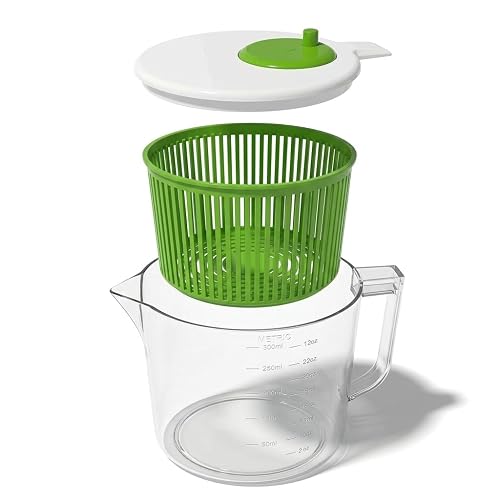
COMPACT SALAD SPINNER, BIG PERFORMANCE — Small salad spinner packs full-size drying power in a space-saving design. One-hand pump spins lettuce, herbs & greens dry in seconds. Best rated by thousan...
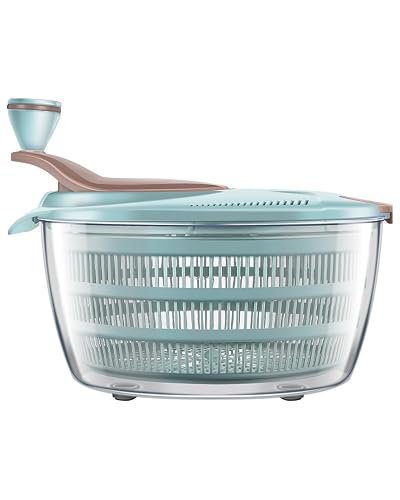
Effortless Salad Preparation: Simply place your lettuce in the Brigii Salad Spinner, turn the handle to spin the veggies in the basket and drain quickly, yielding crisp, dry greens.
Versatile Kitch...
Plastic or stainless steel
Most spinners use a clear or colored plastic bowl, which keeps them light and lets you see how much water has collected. Look for bowls labeled BPA-free if that matters to you.
Stainless steel bowls have become popular. They do not stain or pick up smells, they feel sturdier, and they look good enough to set on the table as a serving bowl. Some come with a separate storage lid, so washed greens can go straight into the fridge in the same bowl. The trade-off is that you cannot see through the sides, and steel models tend to cost a little more.
Either way, check which parts are dishwasher safe. Bowls and baskets usually are. Lids with pumps, gears, or motors often need to be washed by hand, because water can get trapped inside the mechanism.
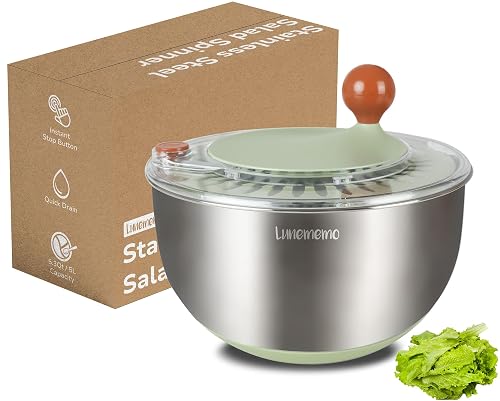
LARGE PREMIUM STAINLESS STEEL BOWL: The salad spinner features a large, practical 5.3 quart 304 stainless steel bowl, ensures durability and a sleek appearance.
NON-SLIP BASE: The non-slip base kee...
Washing produce the right way
A spinner makes it easy to wash greens well, but the method still matters. The FDA recommends washing your hands with soap and warm water for 20 seconds before and after handling fresh produce, then rinsing the produce itself under plain running water. There is no need for soap or a special produce wash, and the agency advises against using soap, detergent, or bleach on fruits and vegetables.
For leafy greens, the FDA also suggests removing the outer leaves of heads like lettuce and cabbage. After rinsing, drying with a clean cloth or paper towel can help reduce bacteria that may still be on the surface, which is exactly the step a spinner speeds up. You can read the full guidance on the FDA's tips for cleaning fruits and vegetables.
If your greens are very sandy, such as leeks or garden spinach, fill the bowl with cold water, swish the leaves around in the basket, and lift the basket out so the grit stays behind. Pour out the water, rinse, and repeat until no sand is left in the bottom. Then spin dry.
More than salad
Once you have a spinner, you will find other jobs for it:
- Drying fresh herbs like parsley, cilantro, and basil before chopping, so they do not turn to paste.
- Rinsing and drying berries gently. Spin slowly so soft fruit does not bruise.
- Draining beans, chickpeas, or pasta when you need them dry for a salad.
- Pulling extra water out of shredded zucchini or potatoes for fritters and hash browns.
- Washing a small batch of delicate items, like a swimsuit or hand-washed socks, then spinning out the water. Keep a separate spinner for this.
Some spinners come with extra pieces, such as slicing blades or a separate strainer insert. These can be handy if you have limited space for other tools, but they also add parts to clean and store.
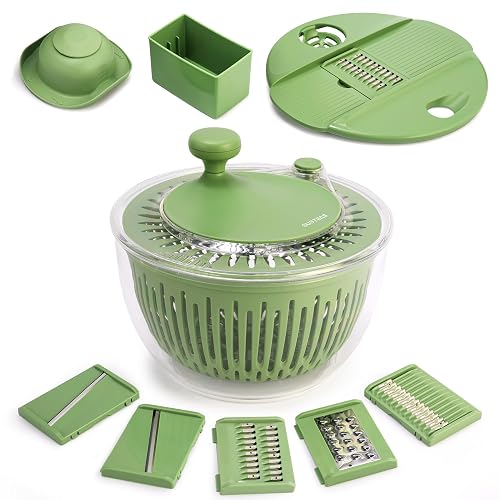
Versatile Kitchen Gadget: This 3-in-1 salad greens and vegetable cleaning spinner is a triple threat—washing, drying, and chopping all in one device. Equipped with 5 different blades, it effortless...
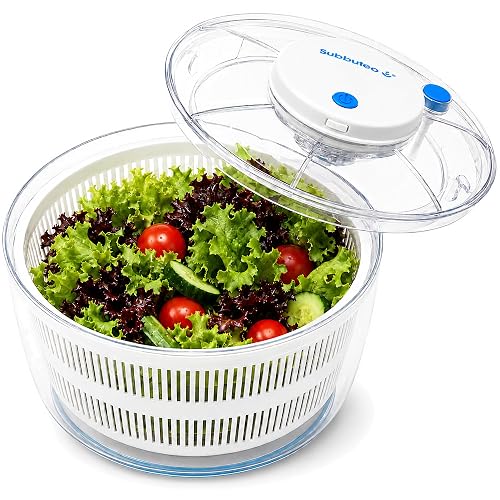
DRY GREENS IN SECONDS:This automatic salad spinner runs at 600 revolutions per minute for a 20s cycle, removing surface water from freshly rinsed greens, herbs, and berries without repeated hand pu...
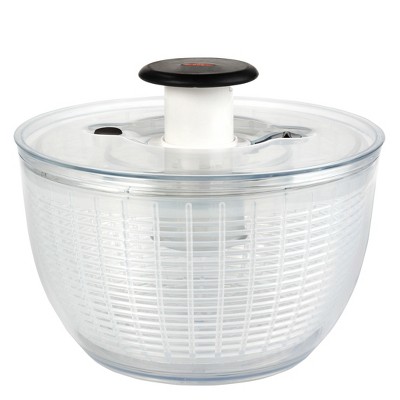
A pump model many cooks start with. The OXO Salad Spinner at Target uses a one-hand pump on the lid, a brake button to stop the basket, and a non-slip ring on the base so the bowl stays put on the counter. The bowl is clear, so you can see when it is time to pour off the water.
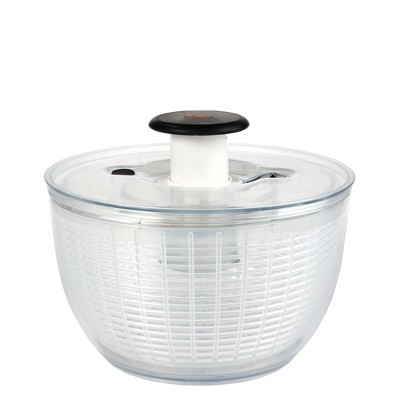
For herbs and small batches. OXO also makes a Little Salad and Herb Spinner, listed at Target with a 2.9 quart capacity. That size is right for a bunch of cilantro or a side salad for two, and it takes up far less shelf space than a full-size bowl.
If cabinet space is tight. The Prep Solutions collapsible spinner holds 3 quarts and folds down flat when you are done, with a simple crank handle on the lid. Collapsible bowls are a good fit for small kitchens, RVs, and dorm rooms.
Storing greens after spinning
Dry greens last longer in the fridge than wet ones, since extra moisture speeds up wilting and spoilage. After spinning, many cooks line a container with a paper towel, add the greens loosely, and cover them. A spinner with a storage lid works the same way. Check the towel every day or two and swap it if it gets damp.
Things to check before you buy
- A non-slip base so the bowl stays put while spinning.
- A brake button if you use a pump, so you are not waiting for it to stop.
- A lid that comes apart for cleaning, or at least rinses clean easily.
- A size that fits both your fridge and your cabinet.
- A drain spout or holes in the lid if you wash greens in several rounds.
A good spinner is one of those small kitchen tools that quietly changes how you eat. When washing and drying greens takes a minute instead of ten, a weeknight salad becomes easy, and the greens you buy are more likely to get eaten before they go bad.
The responses below are not provided, commissioned, reviewed, approved, or otherwise endorsed by any financial entity or advertiser. It is not the advertiser’s responsibility to ensure all posts and/or questions are answered.
Do the stainless bowls get scratched if you use them as a serving bowl with metal tongs?
Tip for anyone with a crank model: put a damp dish towel under the bowl and it stops sliding around the counter.