
Last Updated on: Sep 07, 2026
Most homes have a smoke alarm. Far fewer have a fire extinguisher, and many that do have one buried under the sink, years past its prime, or the wrong type for the kitchen. A small extinguisher is cheap, and in the first seconds of a small fire, it can keep a pan flare-up or a smoldering wastebasket from becoming something much worse.
It is also a tool with clear limits. This guide explains the ratings on the label, what size to buy, where to keep it, how to use it, and when not to use it at all, followed by several extinguishers from current best-seller lists.
Top Home Fire Extinguishers
What We'll Cover
Escape comes first
The National Fire Protection Association is direct about priorities: because fire grows and spreads so quickly, the first priority for residents is to get out safely. It describes extinguishers as one part of a fire response plan, with safe escape as the main part, and says every household should have a home fire escape plan and working smoke alarms.
The U.S. Fire Administration offers a short checklist before anyone reaches for an extinguisher. Has someone called the fire department? Are you physically able to use it? Is the fire small and contained to a single object or surface, like a pan or a wastebasket? Do you have a clear escape route? The USFA says to use an extinguisher only when every answer is yes. Otherwise, alert others, leave, and call 911 from a mobile or a neighbor's phone. The USFA also says young children and older adults should not use fire extinguishers.
Reading the label
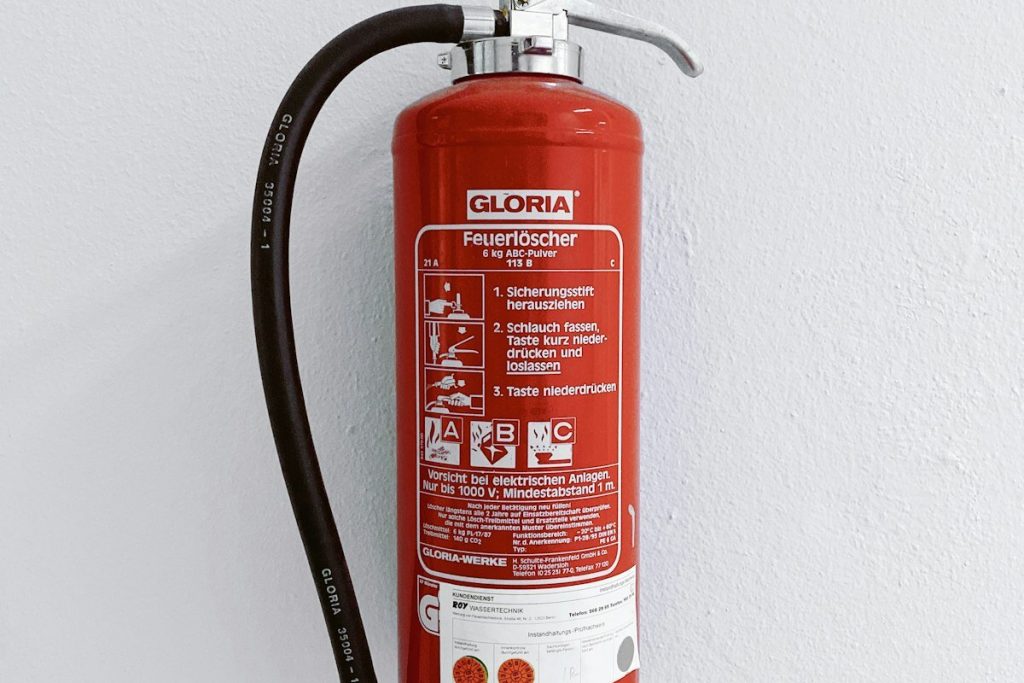
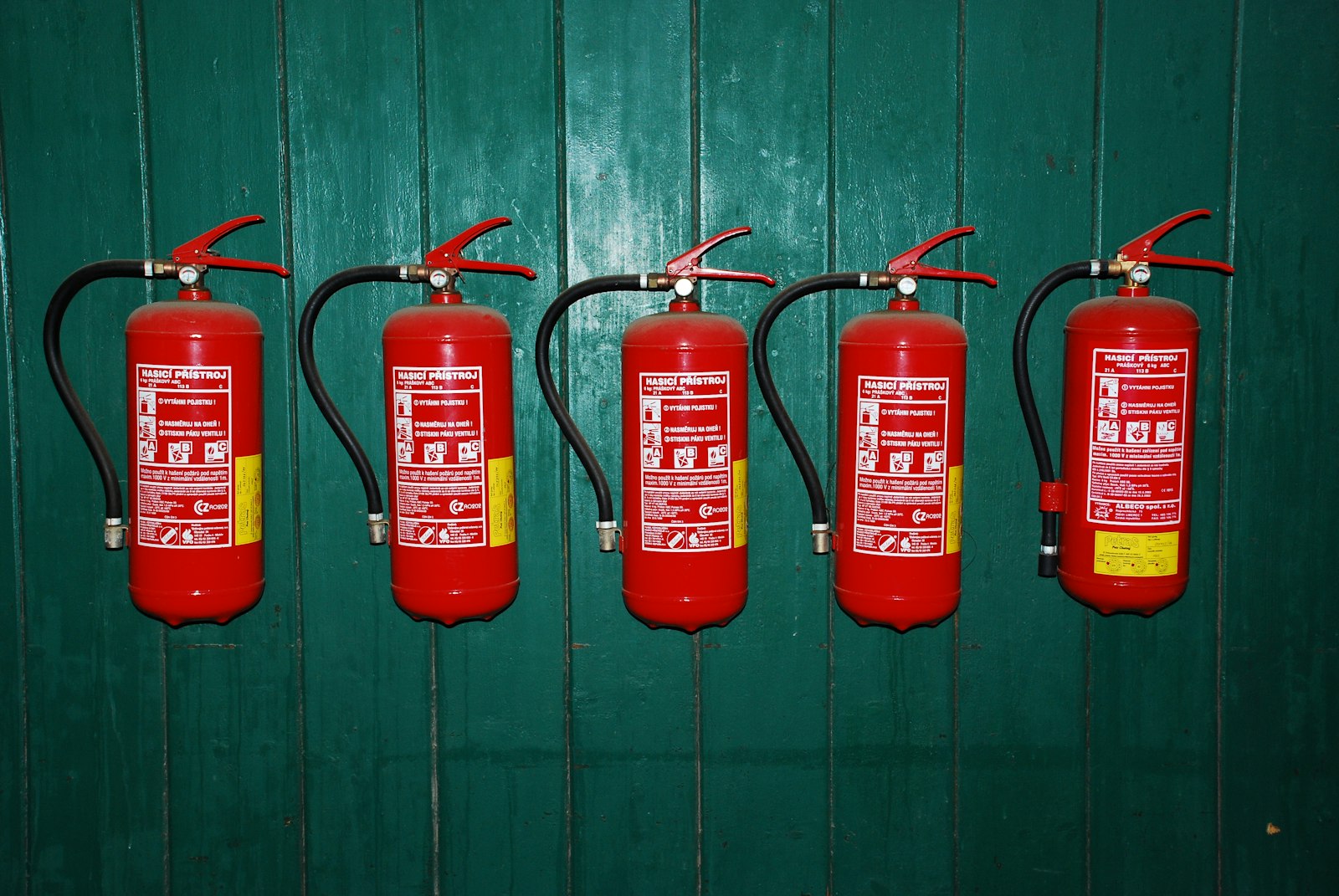
Extinguishers are rated by the kinds of fire they can fight. According to the USFA, Class A covers ordinary materials like cloth, wood, and paper. Class B covers flammable liquids like grease, gasoline, oil, and oil-based paints. Class C is for fires involving electrical equipment that is plugged in, using an agent that does not conduct electricity. Class D is for flammable metals, and Class K is for cooking oils and fats and is often found in commercial kitchens.
For homes, the key word is multipurpose. The USFA notes that extinguishers labeled A-B-C can be used on most types of home fires, and that most home improvement stores carry them. The NFPA likewise recommends a multipurpose extinguisher for the home, large enough to put out a small fire but not so heavy that it is hard to handle, and one that carries the label of an independent testing laboratory.
The numbers matter too. The USFA explains that the number before the A is a multiple of 1.25 gallons of water, and the number before the B relates to the area in square feet of fire it can handle. So a 2-A:10-B:C unit has more Class A capacity than a 1-A:10-B:C unit, and a 3-A:40-B:C unit is bigger still.
How many, and where to put them
The NFPA advises installing extinguishers close to an exit, so that when you use one your back is to a clear way out. A good starting point is one multipurpose extinguisher on each level of the home, with extra coverage in the places where fires tend to start: the kitchen, the garage or workshop, and near a fireplace or wood stove.
Mount it where adults can reach it quickly, not in the back of a cabinet or behind the trash can. The USFA's maintenance tips start with easy access, making sure nothing blocks or limits your ability to reach it. In the kitchen, keep it near the exit from the room rather than right next to the stove, so you do not have to reach over flames to grab it.
If you keep one in the car, secure it with a bracket so it does not roll around, and choose a model rated for vehicle fires.
How to use one: PASS
Both the USFA and the NFPA teach the same four steps, remembered by the word PASS:
Pull the pin. Hold the extinguisher with the nozzle pointing away from you and release the locking mechanism.
Aim low. Point the extinguisher at the base of the fire, not the flames.
Squeeze the lever slowly and evenly.
Sweep the nozzle from side to side.
Most home extinguishers empty in a matter of seconds, so there is no time to read instructions during a fire. The NFPA suggests reading them when you buy the extinguisher, and notes that local fire departments often offer hands-on training. If the room fills with smoke, the NFPA says to leave immediately.
Extinguishers worth a look
These picks draw on current best-seller lists and the shelves of major home and hardware retailers. Ratings and specs are from the makers.
Reliable Fire Protection: Stop basic home fires involving trash, wood, paper, liquids, gases, and electrical equipment
All-Metal Construction: Made with robust materials for long-lasting durability...
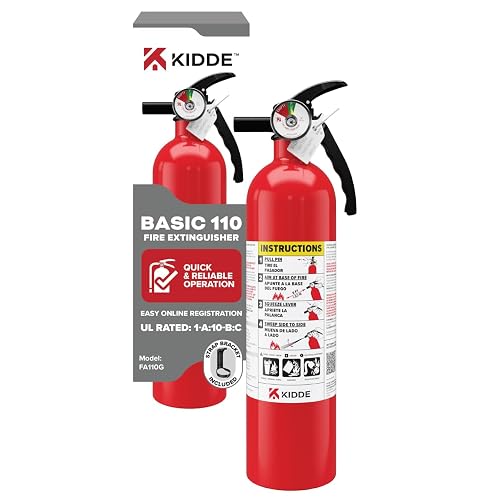
Kidde's Basic 110 is the category's top seller. It is UL listed and rated 1-A:10-B:C, with 2.5 pounds of agent, an aluminum cylinder, and a pressure indicator that shows green when charged. It is a single-use residential unit.
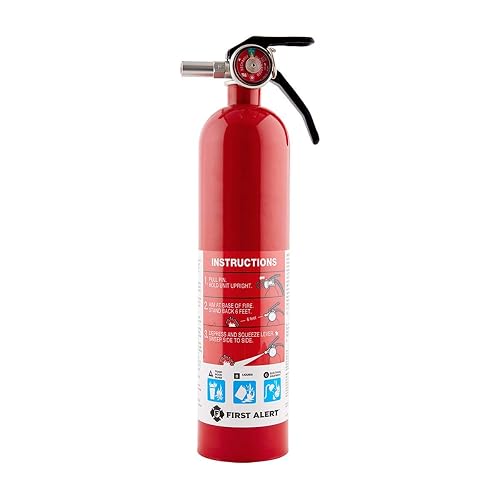
First Alert's HOME1 FE1A10GR Fire Extinguisher is UL rated 1-A: 10-B:C; it features durable all-metal construction with a commercial-grade metal valve and trigger to meet demanding needs
Multipurpo...
First Alert's HOME1 is also rated 1-A:10-B:C, but with an all-metal valve and trigger. It can be recharged by a certified professional after use, and it has a color-coded metal gauge.
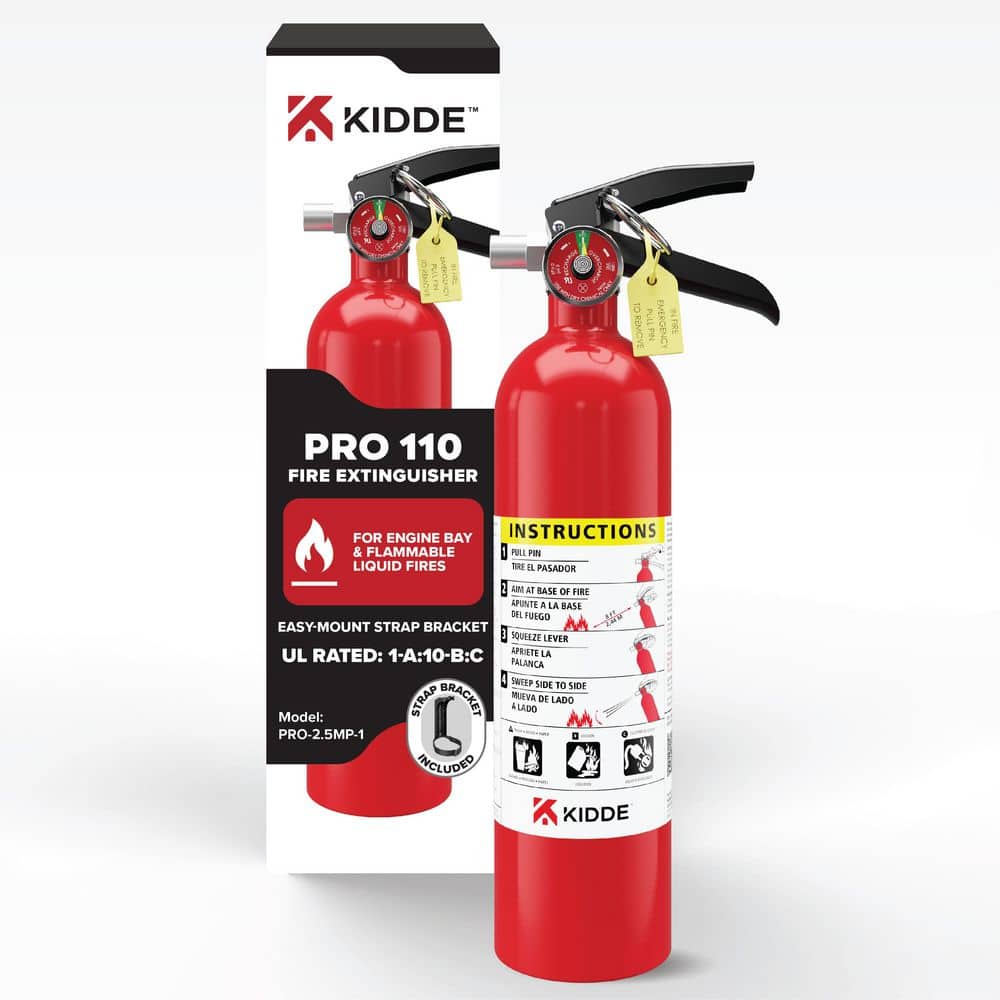
Home Depot carries Kidde's Pro 110, another 1-A:10-B:C unit with 2.5 pounds of agent. The difference is that it is rechargeable, so after a use it can be serviced and refilled instead of thrown out, which suits people who would rather maintain one unit for years.
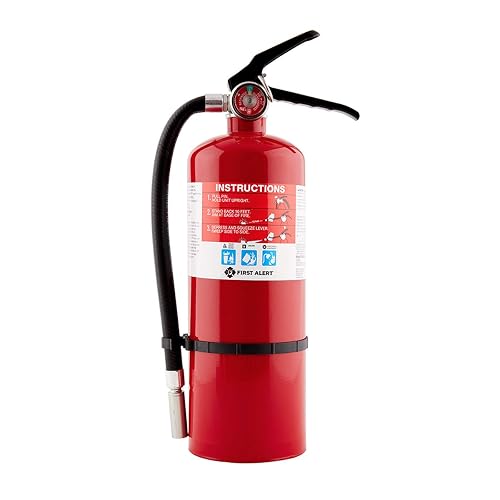
The First Alert HOME2PRO Fire Extinguisher is UL rated 2-A: 10-B:C and meets minimum 2-A: 10-B:C code requirements; It features durable all-metal construction with a commercial-grade metal valve an...
For a bigger step up, First Alert's HOME2PRO is rated 2-A:10-B:C and uses a monoammonium phosphate agent. The maker says it meets minimum 2-A:10-B:C code requirements, and it includes a wall hook and a corrosion-resistant gauge. It is rechargeable by professionals.
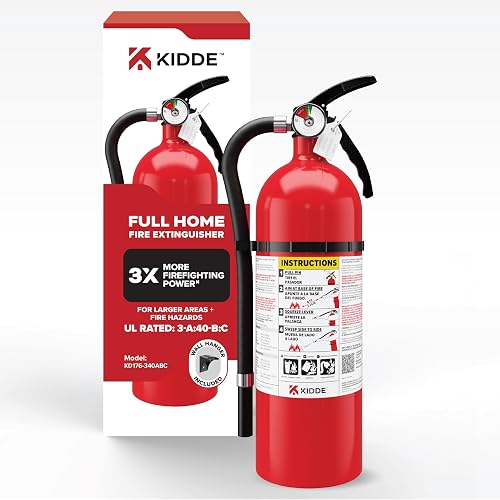
Reliable Fire Protection: Stop basic home fires involving trash, wood, paper, liquids, gases, and electrical equipment
3X More Firefighting Power: Combat common household fires with a 12-year servi...
Kidde's Full Home extinguisher is rated 3-A:40-B:C, with 5.5 pounds of agent. The maker lists a discharge time of 13 to 15 seconds and a range of 12 to 18 feet. It is a single-use residential unit, and larger than most people keep under the sink, so it suits a garage or main hallway.
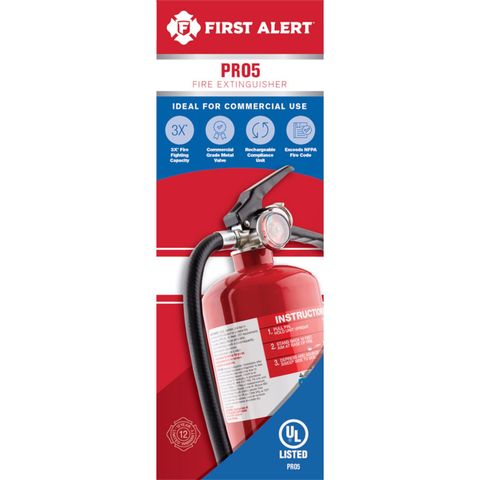
Ace Hardware stocks First Alert's Pro Series 5-pound extinguisher, which is also UL listed at 3-A:40-B:C. It has a metal valve and trigger and lists OSHA and U.S. Coast Guard approval, so it is a fit for a workshop, garage, or boat as well as the house.
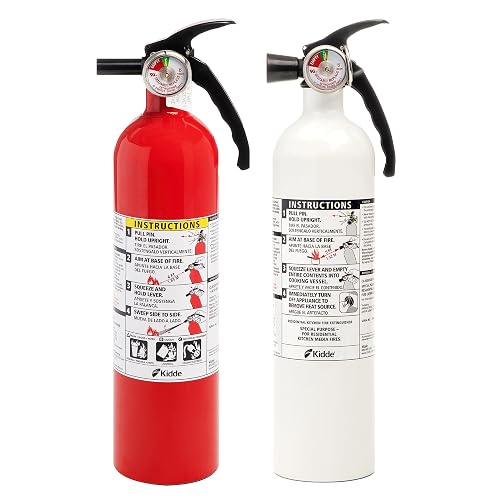
Value pack includes 2 fire extinguishers use to fight basic fires common to the home involving trash, wood, paper (Class A), cooking grease, liquids and gases (Class B), electrical equipment (Class...
Kidde's Kitchen and Home set pairs a standard 1-A:10-B:C unit with a white kitchen extinguisher that has a flared nozzle, which the maker says reduces oil splashing on grease fires.
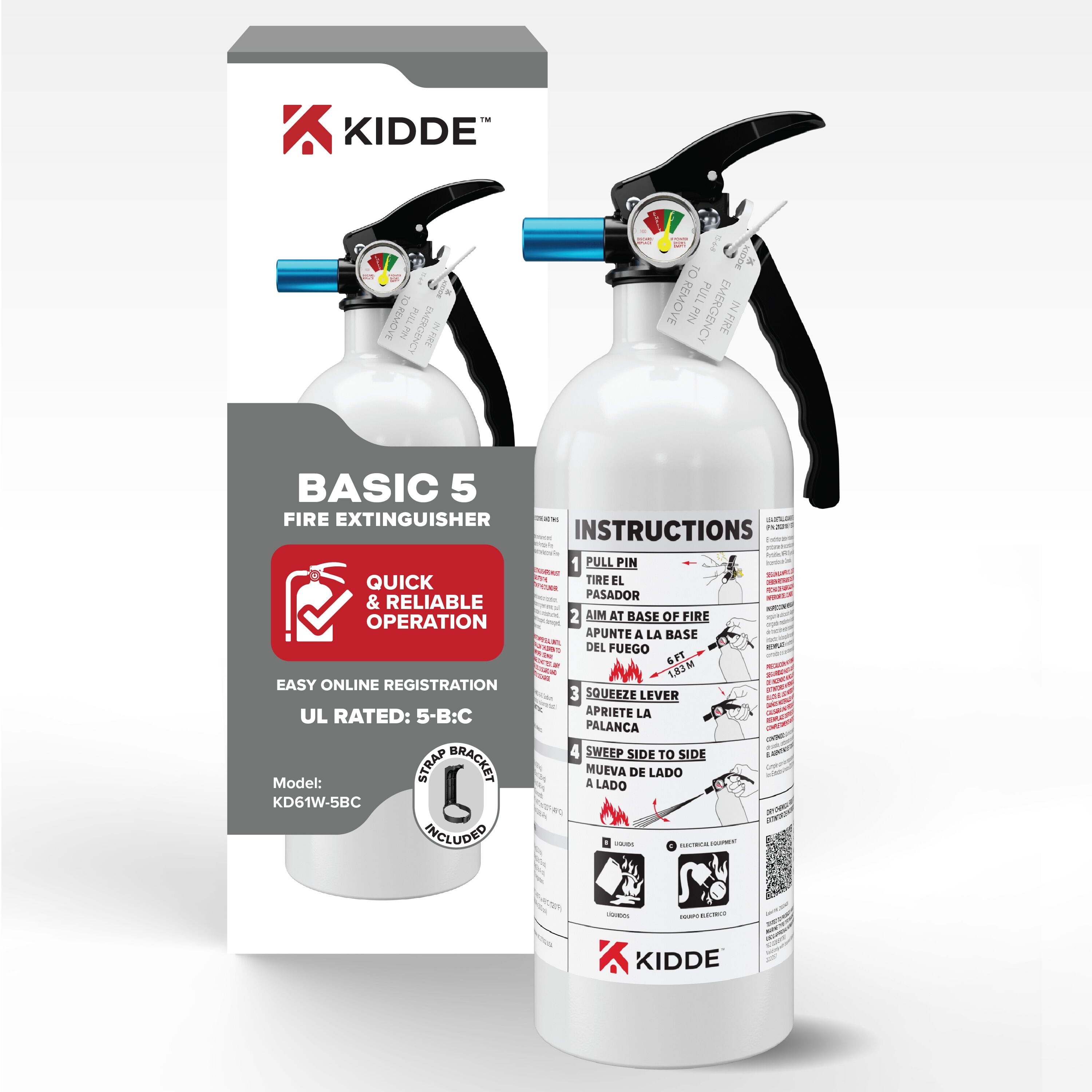
If you want a small unit just for flammable liquids and electrical fires, Walmart sells Kidde's 5-B:C basic extinguisher. It is aluminum with a metal valve, a pressure gauge, and a strap bracket, and the maker lists 8 to 12 seconds of discharge at 6 to 8 feet. It is single use and should be replaced after any use or once it is over 12 years old. Because it has no A rating, keep it as a backup to a multipurpose unit, not a replacement for one.
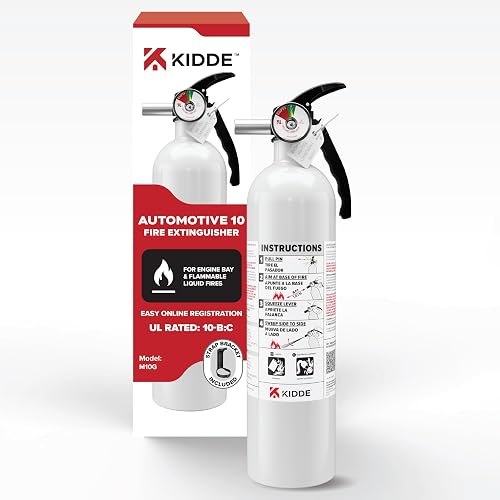
Combats Vehicle Fires: Use to fight basic fires common to your cars & trucks: flammable liquids and gases (Class B) & electrical equipment (Class C)
All-Metal Construction: Durable valve assembly, ...
For vehicles, Kidde's Auto 10 is rated 10-B:C for flammable liquids and electrical fires. The maker lists a discharge time of 8 to 12 seconds, a range of 6 to 8 feet, and an included strap bracket.
Keeping it ready
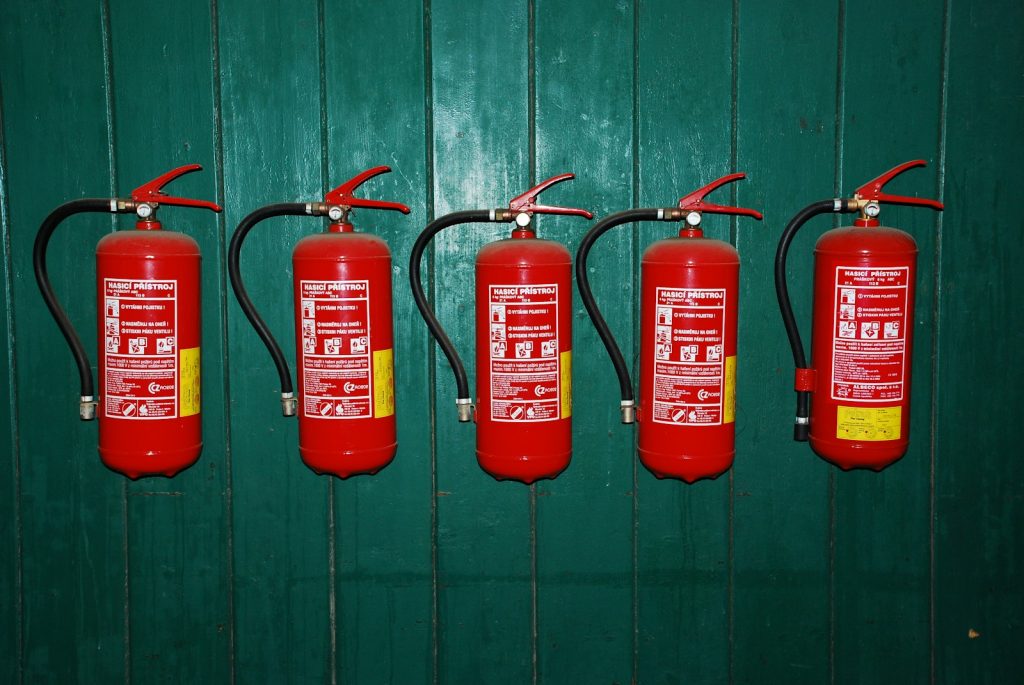
The USFA recommends checking extinguishers regularly for a few things: easy access, the right pressure level on the gauge, working parts with no damage, dents, or rust on the can, hose, or nozzle, and general cleanliness. A quick look once a month takes seconds.
Once you use a single-use extinguisher, even briefly, replace it. Rechargeable models need to be refilled by a professional after any use. If a gauge sits outside the green or a unit is damaged, replace or service it.
Talk it through with everyone in the house, too. Show each adult where the extinguishers are, walk through the PASS steps together, and agree on when to use one and when to simply leave. Pair that with your escape plan: two ways out of each room if possible, and a meeting spot outside. A plan everyone has heard once is far more useful in a real emergency than an extinguisher only one person knows how to use.
Which one to choose
For most homes, start with a UL-listed multipurpose extinguisher rated at least 1-A:10-B:C on each level, mounted near an exit. Add a larger 2-A or 3-A unit for the garage or a main hallway, and a kitchen unit if you cook often. Keep a vehicle-rated model in the car. Then do the part that matters most: make a home escape plan, test your smoke alarms, and remember that getting out always comes before fighting a fire.
The responses below are not provided, commissioned, reviewed, approved, or otherwise endorsed by any financial entity or advertiser. It is not the advertiser’s responsibility to ensure all posts and/or questions are answered.