

Last Updated on: Sep 23, 2026
It starts with one or two tiny flies hovering over the fruit bowl. A few days later there are a dozen, drifting up every time you reach for a banana, circling the trash can, and landing on the rim of your wine glass. Fruit flies are harmless in the sense that they do not bite, but they are hard to ignore, and they multiply fast.
What We'll Cover
The good news is that they are not hard to beat once you know where they come from. Traps help a lot, but they work best as part of a plan. This guide covers why fruit flies show up, how to find the source, and which kind of trap fits your kitchen.

Top Fruit Fly Traps
Why fruit flies suddenly appear
Fruit flies, also called vinegar flies, are tiny, about a tenth of an inch long, light brown, with red eyes. According to Michigan State University Extension, they are drawn to fermenting fruit and sweet liquids like juice and unwashed soda and beer cans. Sometimes they come home with produce that already has eggs inside.
MSU also notes that flies of all kinds peak in late summer and fall, when there is plenty of decaying fruit outdoors. Fruit flies are small enough to slip through some window screens, so an open window near a fruit bowl can be an open invitation.
The reason a few flies turn into a swarm so quickly is their life cycle. MSU Extension explains that after eggs are laid in overripe or rotting produce, larvae hatch within a few days and can become adults in as little as seven to 10 days. Ripe tomatoes, in particular, can become a breeding spot in just a few days.
What they actually eat
It helps to know what fruit flies need. UC IPM explains that the common vinegar fly larvae feed in damaged or fermenting, overripe fruit, and that most species do not feed in undamaged fruit. In other words, a bowl of firm, fresh apples is not the problem. The bruised one, the split grape, or the banana that turned brown last week is. That is why cleaning up and eating or chilling ripe produce does more than any spray. Take away the soft, fermenting food and the flies have nowhere to lay eggs.
Step one: find and remove the source
This is the part most people skip, and it is the most important. The adults you see may have already laid eggs, so killing them alone will not end the problem. MSU Extension says the best way to keep numbers down is to get rid of the food sources where eggs and larvae grow, along with regular cleaning.
Walk through your kitchen with fresh eyes and check these spots:
- Fruit bowls and counters. Eat, refrigerate, or throw out anything ripe or damaged. One soft peach at the bottom of the bowl can keep a whole population going.
- Potato and onion bins. Look for anything starting to rot or leak.
- The trash and recycling. Rinse cans and bottles before they go in the bin, and for a bad outbreak, take the kitchen trash out every evening.
- Hidden spills. Juice, wine, or beer that dripped under the fridge or a cabinet can be enough to feed a colony.
- Drains and garbage disposals. Fruit flies can breed in the slimy film inside drains.
If you are not sure whether a drain is the source, MSU suggests a simple test: cover it overnight with a plastic food storage bag and check in the morning for flies trapped underneath. If you find some, clean the drain as well as you can and pour boiling water down it.
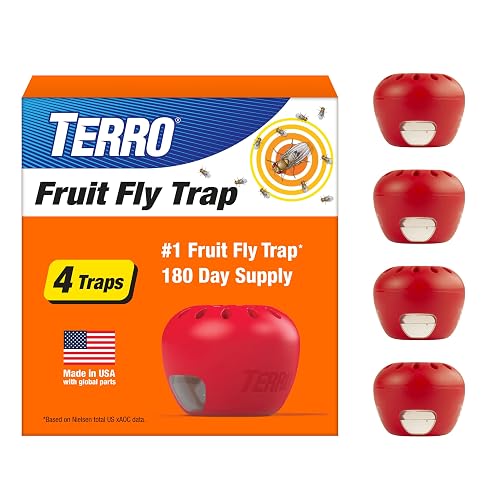
COMPREHENSIVE COVERAGE: 4-pack of TERRO fruit fly traps for indoors with 180 days of lure supply provides comprehensive pest control coverage for your home's fruit fly infestations
FAST-ACTING CONT...
Step two: set traps
Once you have cut off the food supply, traps catch the adults that are left before they can lay more eggs. MSU Extension recommends using traps together with the cleaning steps above, not instead of them. The University of California's IPM program makes the same point in its fruit fly guidance: sanitation comes first, and traps help reduce numbers but will not provide complete control.
There are a few main trap styles, and each has its place.
Bait traps
Bait traps use a liquid lure that smells like fermenting fruit. Flies crawl in through small holes and cannot find their way back out. They are small, quiet, and easy to hide next to a fruit bowl or sink. Many use a plastic apple shape or a small bottle with a funnel top. Most need the lure topped up or replaced every few weeks, so check how long a refill lasts before you buy.
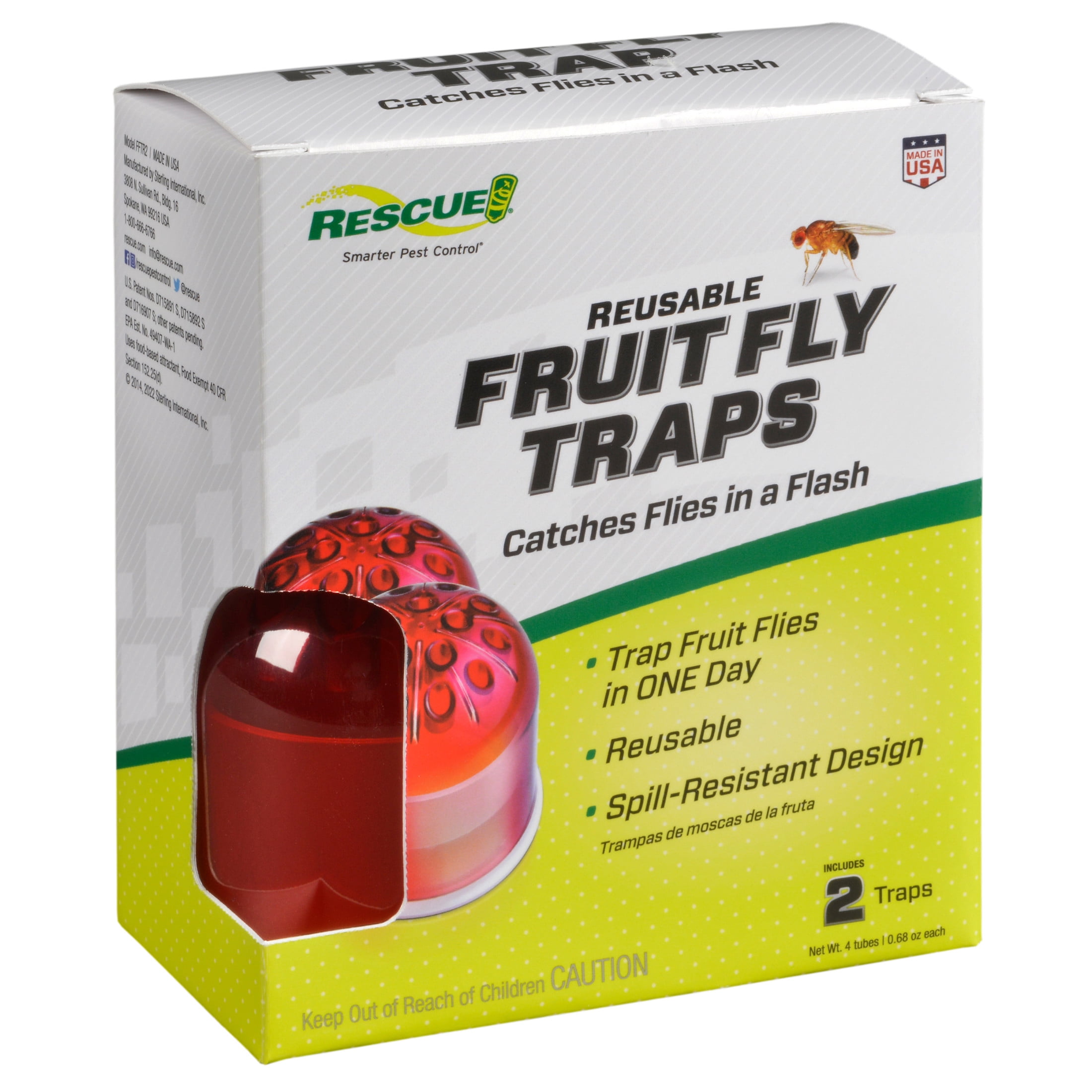
Walmart carries the RESCUE! reusable fruit fly trap in a two-pack with liquid lure. When the lure runs out you refill it, so the trap itself does not end up in the trash.
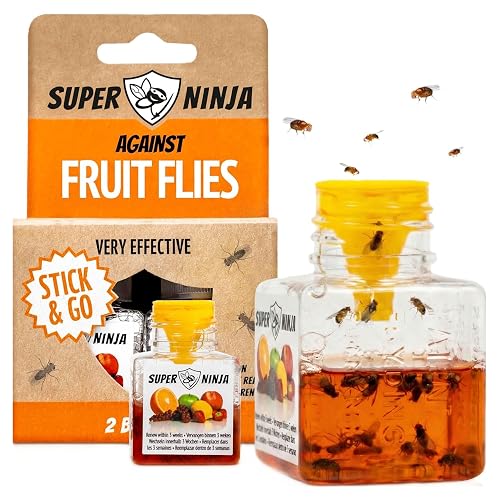
Effective Fruit Fly Traps: Stops fruit flies indoors wherever they gather: kitchen counters, trash bins, and fruit bowls. Follow our steps to see results from this fruit fly killer within 24 hours,...
Sticky traps
Sticky traps are cards or clear strips coated with glue. Some stick to windows, where flies tend to gather in daylight, and others are bright yellow cards you can stand in a plant pot or hang near a trouble spot. They do not need power and are cheap to replace. The downside is that a card full of bugs is not pretty, so they are better for out-of-the-way places than the middle of the counter.
If the tiny flies you see are hanging around houseplants rather than fruit, you may be dealing with fungus gnats, which breed in damp potting soil. Yellow sticky cards pushed into the soil are a common way to catch them, and letting the top of the soil dry out between waterings helps too.
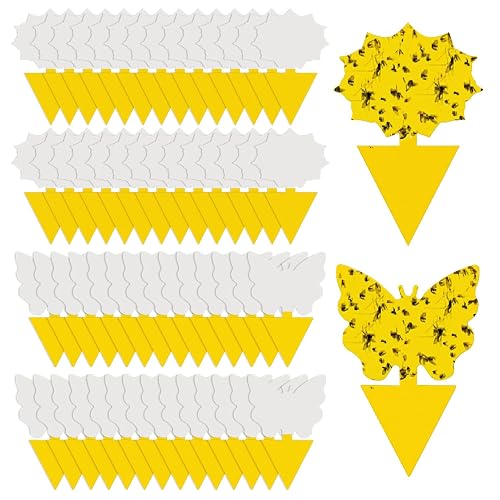
[Great Value And Support] Includes 58 high-quality traps (ice cream shape) for economical pest control, backed by 24/7 U.S. customer service and a satisfaction guarantee with return or refund avail...
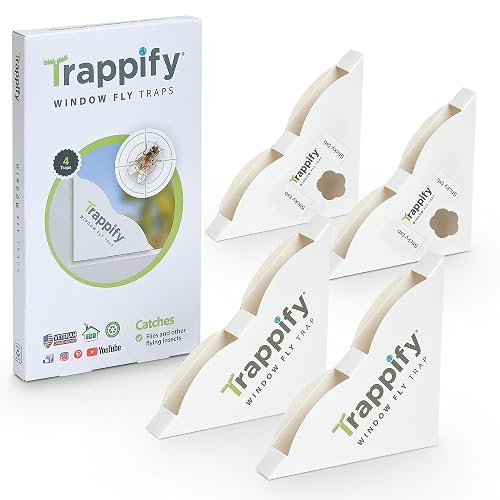
WORKS ON FRUIT FLIES, GNATS & MORE: Yes, it works on gnats — this fly trap indoor doubles as gnat traps for house indoor, a fruit fly trap, and a flying insect trap for houseflies, fully disposable...
Plug-in light traps
Plug-in traps sit in a wall outlet and use a small light, often blue or ultraviolet, to draw flying insects onto a replaceable glue card. They are quiet and work day and night, and they catch gnats and moths as well as fruit flies. They cost more up front and need refill cards, but many people like that they look tidy and do not use sprays. They work best in dim rooms or at night, when the light stands out.
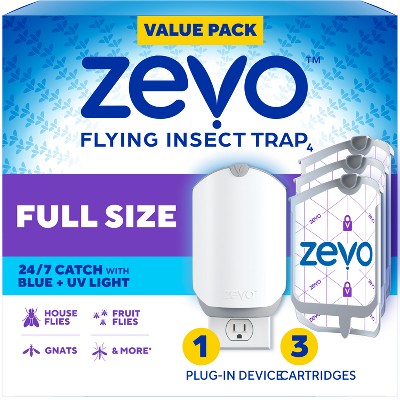
At Target, the Zevo starter kit uses blue and UV light to draw flies onto a sticky cartridge. It comes with one plug-in device and three refills, and a pull tab lets you swap the cartridge without touching the bugs.
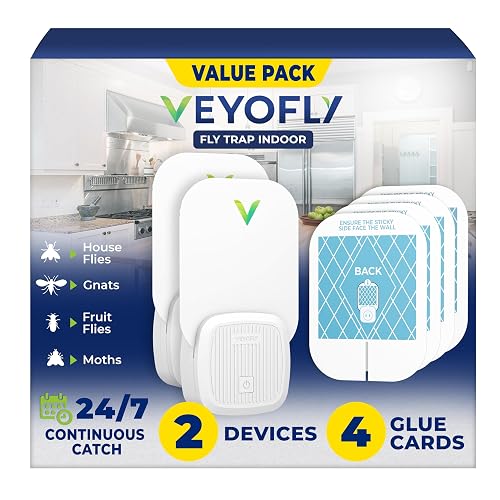
Multi-Insect Capture: Uses blue-violet light to attract mosquitoes, gnats, fruit flies, moths, and other flying insects, helping keep indoor spaces more comfortable for everyday home use.
Glue Card...
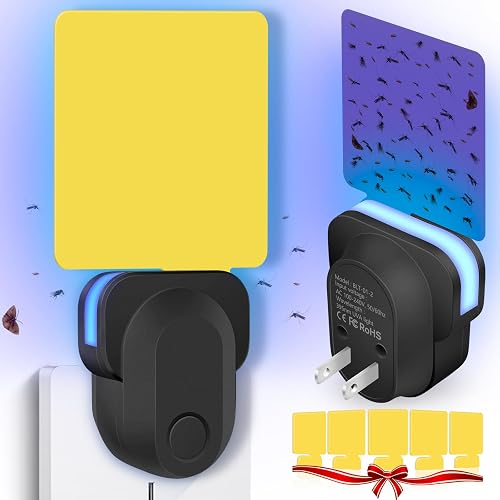
Effective UV Light Insect Trap - Our upgraded UV light insect trap uses phototaxis to attract flying insects such as flies, gnats, and moths. The UV light draws insects in, where they become stuck ...
Homemade traps that work
If you want to try something tonight with what you already have, MSU Extension describes two simple designs.
- Paper cone trap: put a little juice or a piece of rotting fruit in a small jar and set a paper cone on top with the narrow end pointing down. Flies go in and cannot get out. A kitchen funnel in a tall wine glass with a splash of wine works the same way. Empty and refresh it every day.
- Vinegar and soap trap: fill a few small glasses about two-thirds full with apple cider vinegar, add a drop or two of dish soap, and swirl. Stretch plastic wrap tight over the top, hold it with a rubber band, and poke about a dozen holes with a toothpick. The soap breaks the surface tension so flies that land in the vinegar sink.
Homemade traps are a good first step and cost almost nothing. Store-bought traps are more convenient, less messy, and easier to leave out for weeks.
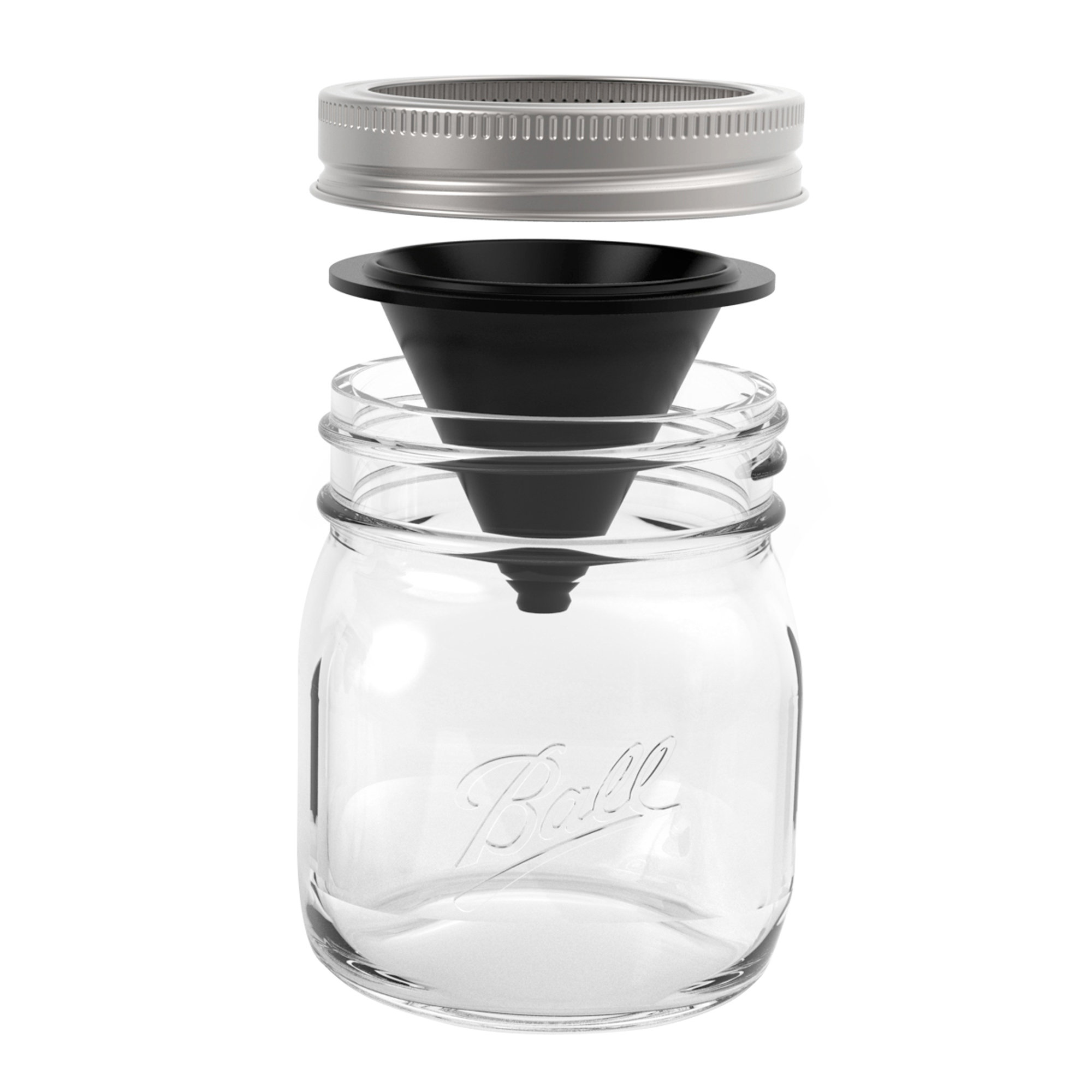
If you like the homemade route but want less mess, Wayfair sells a Jarware fruit fly trap set. The insert slips over the mouth of a mason jar under the lid, so you can add vinegar or fruit and reuse it again and again.
Where to put traps
Place traps where you actually see flies: next to the fruit bowl, near the sink and trash can, and by windows. Several small traps spread around a kitchen usually work better than one big trap in a corner. Keep bait traps away from other food so they are not competing with a sweeter smell, and move them if they have not caught much after a day or two.
Keeping them from coming back
- Store ripe fruit in the fridge, especially in late summer and fall.
- Check new produce for soft spots or damage, since flies can arrive with fruit that already has eggs inside.
- Rinse cans and bottles before recycling.
- Wipe up spills right away, including the sticky ring under a juice bottle.
- Clean the sink drain and disposal regularly.
- Keep a small trap out during peak season to catch the first few before they breed.
The bottom line
Fruit flies are a sign that something in the kitchen is fermenting. Find it and get rid of it first, then use traps to mop up the adults that are left. A simple bait trap by the fruit bowl handles most kitchens, sticky cards are cheap and useful for windows and houseplants, and plug-in light traps are a tidy choice for ongoing gnat problems. With the source gone and a few traps in place, most outbreaks fade within a week or two.
The responses below are not provided, commissioned, reviewed, approved, or otherwise endorsed by any financial entity or advertiser. It is not the advertiser’s responsibility to ensure all posts and/or questions are answered.