
Last Updated on: Sep 14, 2026
A cheap garden hose seems fine until the first time it kinks behind a shrub, leaks at the spigot, or cracks after one winter in the sun. Then you are back at the store, buying the same kind of hose again. The better approach is to match the hose to your yard: how far you need to reach, how you store it, and how much abuse it takes.
There are four main types of garden hose today, each with real trade-offs. This guide explains them, covers length, diameter, and fittings, and walks through a handful of hoses from current best-seller lists.
Top Garden Hoses
What We'll Cover
The four main types
Rubber and hybrid polymer
Classic rubber hoses are tough and handle hot water and sun well, but they are heavy. Hybrid polymer hoses aim for the same toughness at a lower weight. The best ones stay flexible in cold weather and lay flat without the coiled memory that makes older hoses twist and kink.
Vinyl
Basic vinyl hoses are the lightest and cheapest, but they tend to kink, crack in the sun, and stiffen in the cold. They are fine for occasional light use, like a short hose on a balcony.
Expandable
Expandable hoses have a latex inner tube inside a fabric sleeve. When the water is on, they stretch to about three times their resting length, and when it is off, they shrink back. They are very light and easy to store, but they need to be drained after each use, and they can wear out faster than solid hoses if dragged over rough ground or left under pressure.
Metal
Stainless steel hoses use a metal outer layer over a flexible inner tube. They resist punctures from thorns and pets, will not rot, and are surprisingly light, but they cost more and can get hot to the touch in direct sun.
Getting the length right
Measure from your spigot to the farthest spot you need to water, then add a little extra for going around corners and garden beds. A hose that is too short is frustrating, but one that is much too long is heavier, harder to store, and loses some pressure over its length.
Common lengths are 25, 50, 75, and 100 feet. For many yards, 50 feet is the sweet spot. If you have spigots on more than one side of the house, two shorter hoses often work better than one long one. A short leader hose, just a few feet long, is useful for connecting a hose reel to the spigot so the reel can sit where you want it.
Diameter and fittings
Most garden hoses are 1/2, 5/8, or 3/4 inch in diameter. A 5/8-inch hose is the standard choice for homes, balancing water flow with weight. A 3/4-inch hose moves more water, which helps with sprinklers on long runs, but it is heavier.
Fittings matter more than most people think. Brass and anodized aluminum fittings hold up far better than plastic, which can crack or strip. Look for a good rubber washer or O-ring inside the female end, since that small part is what keeps the connection from dripping at the spigot. If you plan to fill a pet's water bowl or a kiddie pool, check whether the hose is labeled as safe for drinking water.
Watering smarter
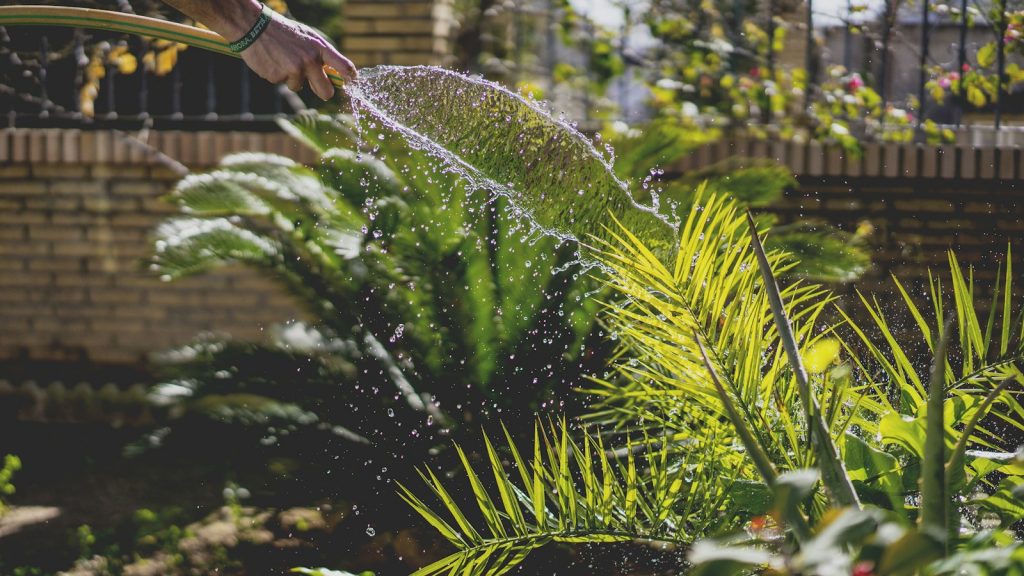
A good hose is also a chance to use less water. The EPA's WaterSense program notes that residential outdoor water use in the United States accounts for nearly 8 billion gallons of water each day, mainly for landscape irrigation, and that the average household uses more water outdoors than for showering and washing clothes combined. WaterSense encourages homeowners to learn when and how much to water to avoid wasteful runoff.
A spray nozzle with a shut-off lets you stop the flow between plants instead of letting it run on the lawn. Watering at the base of plants rather than the leaves puts the water where the roots are, and many gardeners find early mornings work best, when it is cooler and calmer. Fix leaky connections, too: a slow drip at the spigot adds up over a summer.
Do not forget the nozzle
Many hoses come with a basic sprayer, but a better nozzle is one of the cheapest upgrades you can make. Pistol-grip nozzles with several patterns cover most jobs, from a gentle shower for seedlings to a strong jet for rinsing a patio. Look for a metal body, a comfortable trigger or thumb control, and a lock that holds the flow on so your hand does not tire. A fan or wand-style nozzle is easier on delicate flowers and hanging baskets. Whatever you choose, a nozzle with a shut-off lets you walk between plants without leaving the water running.
Hoses worth a look
These picks draw on current best-seller lists and a few home and garden retailers. Specs are from the makers.
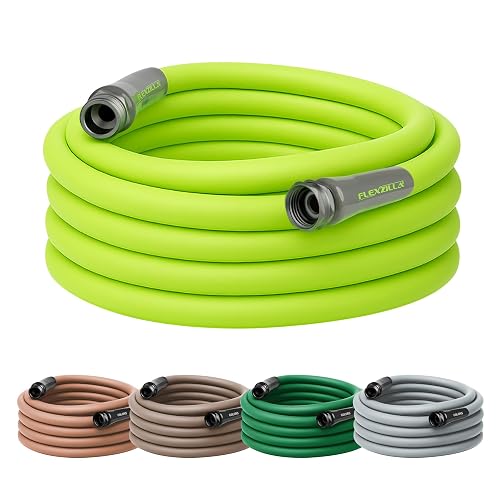
AWARD-WINNING: HGTV, USA Today and Best Reviews voted Best Overall Garden Hose
EXTREMELY DURABLE - Abrasion-resistant outer cover and crush-resistant anodized aircraft aluminum fittings
PREMIUM HYB...
Flexzilla is the category's top seller. This 5/8-inch, 50-foot hose uses a hybrid polymer that the maker says will not kink under pressure and lays flat with no memory. It has crush-resistant anodized aluminum fittings and an abrasion-resistant cover, and the maker notes it is made in the USA.
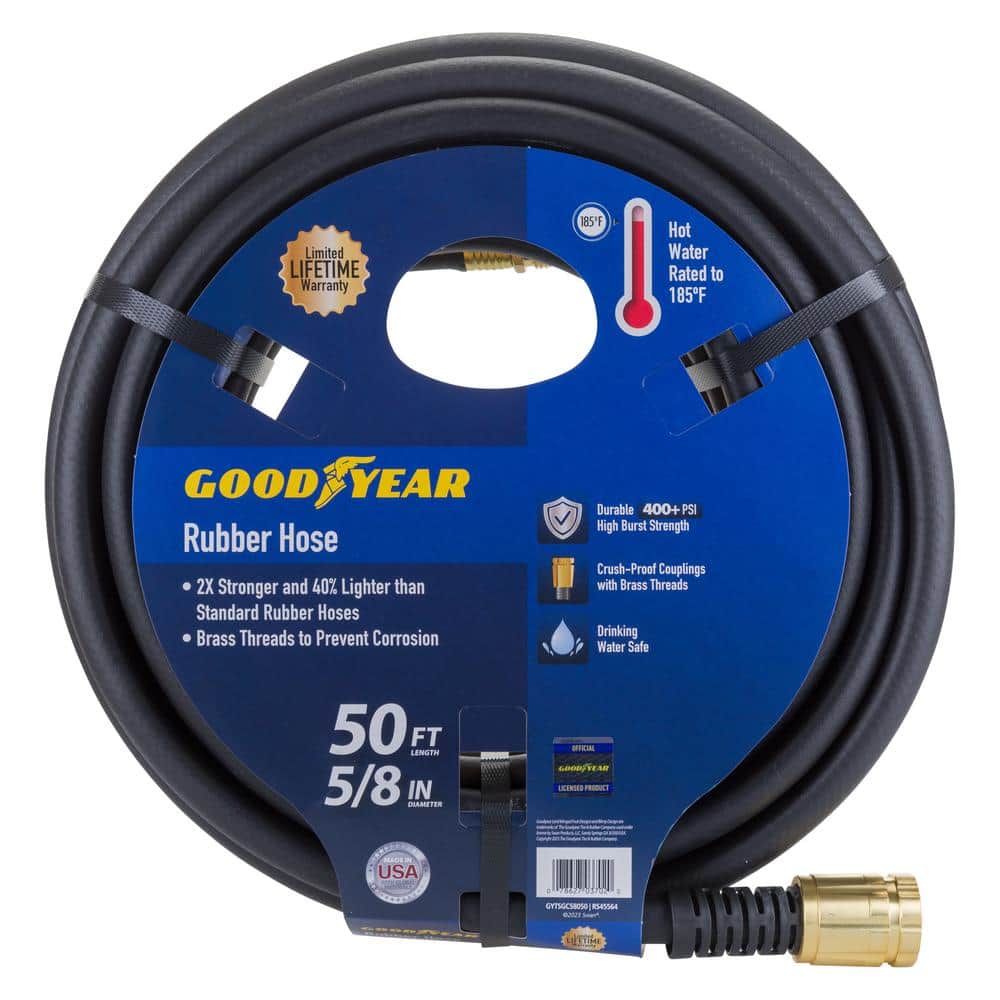
If you prefer rubber, Home Depot carries Goodyear's MAXLite 5/8-inch, 50-foot premium duty hose. The listing gives a burst strength of more than 400 psi, a hot water rating up to 185°F, and crush-proof brass couplings that resist corrosion. Rubber is usually heavier than hybrid polymer, but it holds up well to sun and rough use.
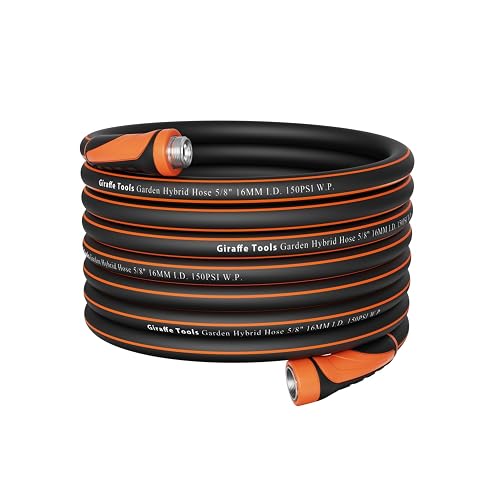
Ultra-Lightweight & All-Weather Flexibility: Experience unmatched portability with our ultra-lightweight hose, designed for effortless handling. Its all-weather flexibility ensures reliable perform...
Giraffe Tools' 100-foot hybrid hose is another popular choice for bigger yards. The maker describes a three-layer construction that resists UV, corrosion, and abrasion and stays flexible from freezing winters to hot summers. A swivel handle helps prevent tangles.
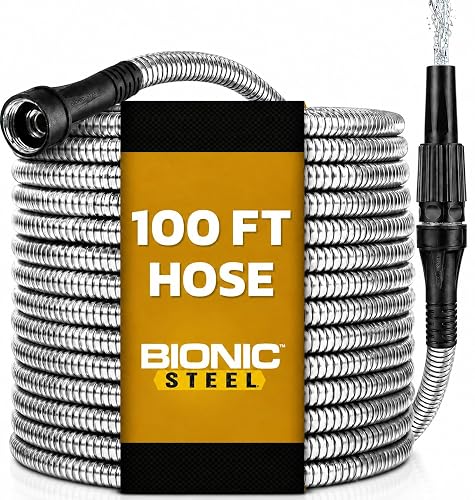
RUST-PROOF 304 STAINLESS STEEL HOSE THAT OUTLASTS RUBBER: Built from commercial-grade 304 stainless steel, this metal garden hose never rusts, cracks, or rots like ordinary hoses — so you replace i...
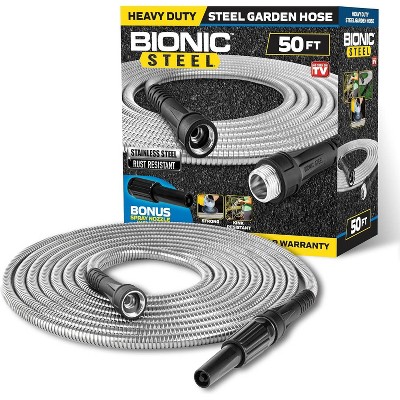
BIONIC STEEL's 100-foot hose uses a 304 stainless steel outer layer and comes with a sprayer nozzle. The maker says it will not rust, crack, or rot, lays flat without kinking, and weighs under 3 pounds.
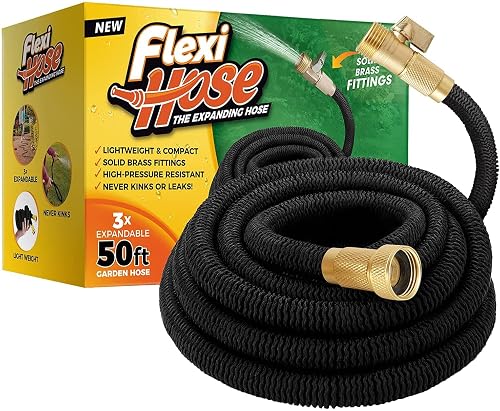
The Flexi Hose expandable garden hose automatically expands up to 50 feet - 3 times its original length - with standard pressure when water is turned on and shortens to its length when the water is...
Flexi Hose's 50-foot expandable hose stretches to full length with normal water pressure and shrinks back when the water is off. It has solid 3/4-inch brass connectors and a 3750D fabric outer layer over four layers of latex.
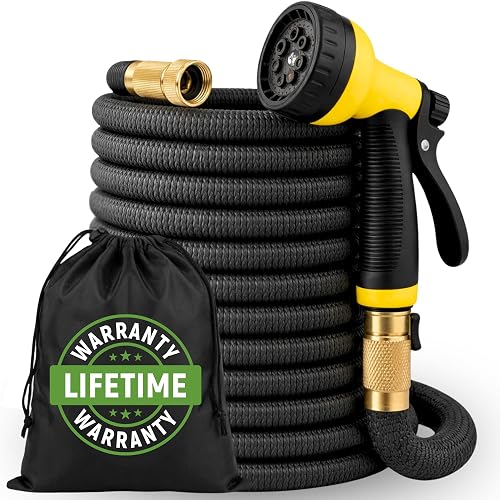
Durable Brass Connectors Reduce Leaks & Improve Longevity - Solid 3/4” brass fittings and a reinforced on/off valve resist cracking and loosening. Paired with a 4-layer latex core, this hose is bui...
For a longer expandable option, J&B's XpandaHose reaches 100 feet. It uses solid 3/4-inch brass fittings, a reinforced on/off valve, and a 3750D fabric cover, and the maker backs it with a lifetime warranty.
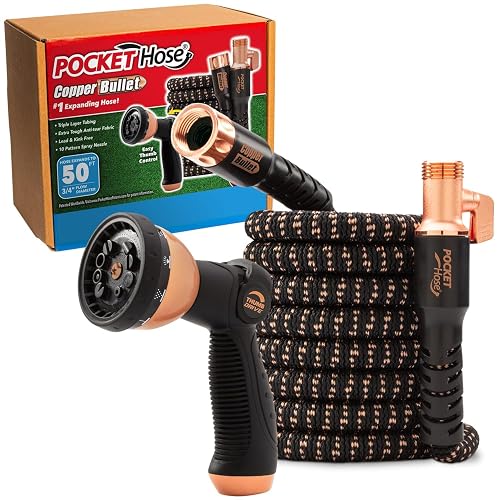
ORIGINAL HOSE THAT GROWS: the original “Hose That Grows” is so innovative it’s been awarded over 126 worldwide patents (Expands under water pressure)
Pocket Hose's Copper Bullet is a 50-foot expandable hose that comes with a 10-pattern nozzle. It is designed to grow under water pressure and shrink when off, which makes it easy to store in a small bin.
At Target, BIONIC STEEL's 50-foot hose has a stainless steel outer layer, aluminum fittings, and an included nozzle with jet, mist, and spray settings, for smaller yards that still need a tough hose.
Storing and caring for your hose
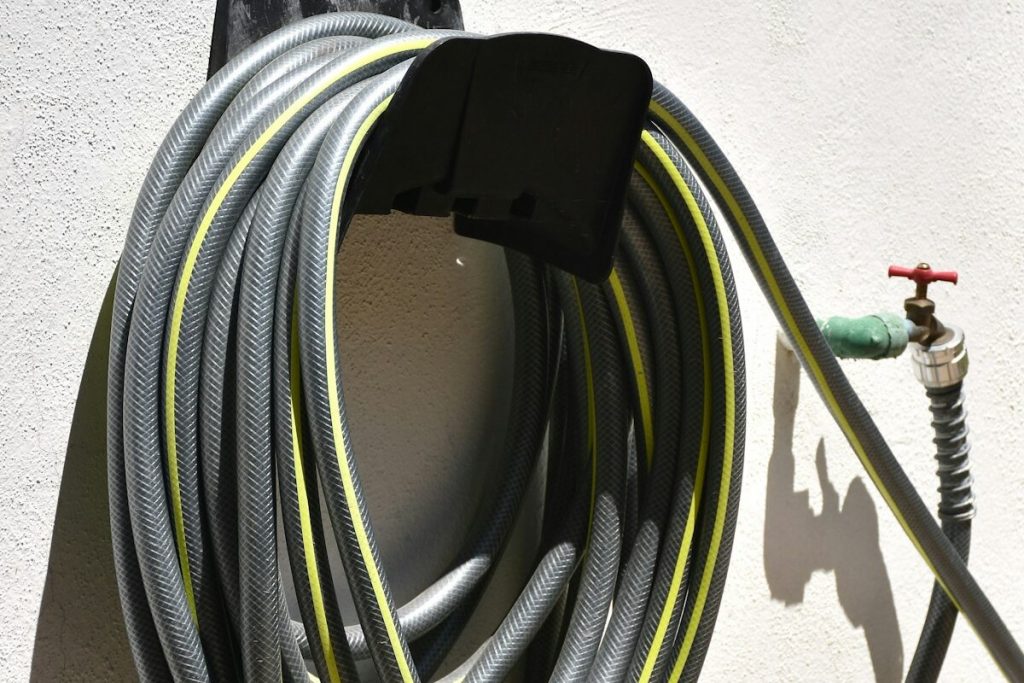
How you store a hose matters as much as what you buy. A wall hanger or reel keeps it off the ground, where it would get stepped on, run over by the mower, or baked in the sun. Coil it loosely, without sharp bends.
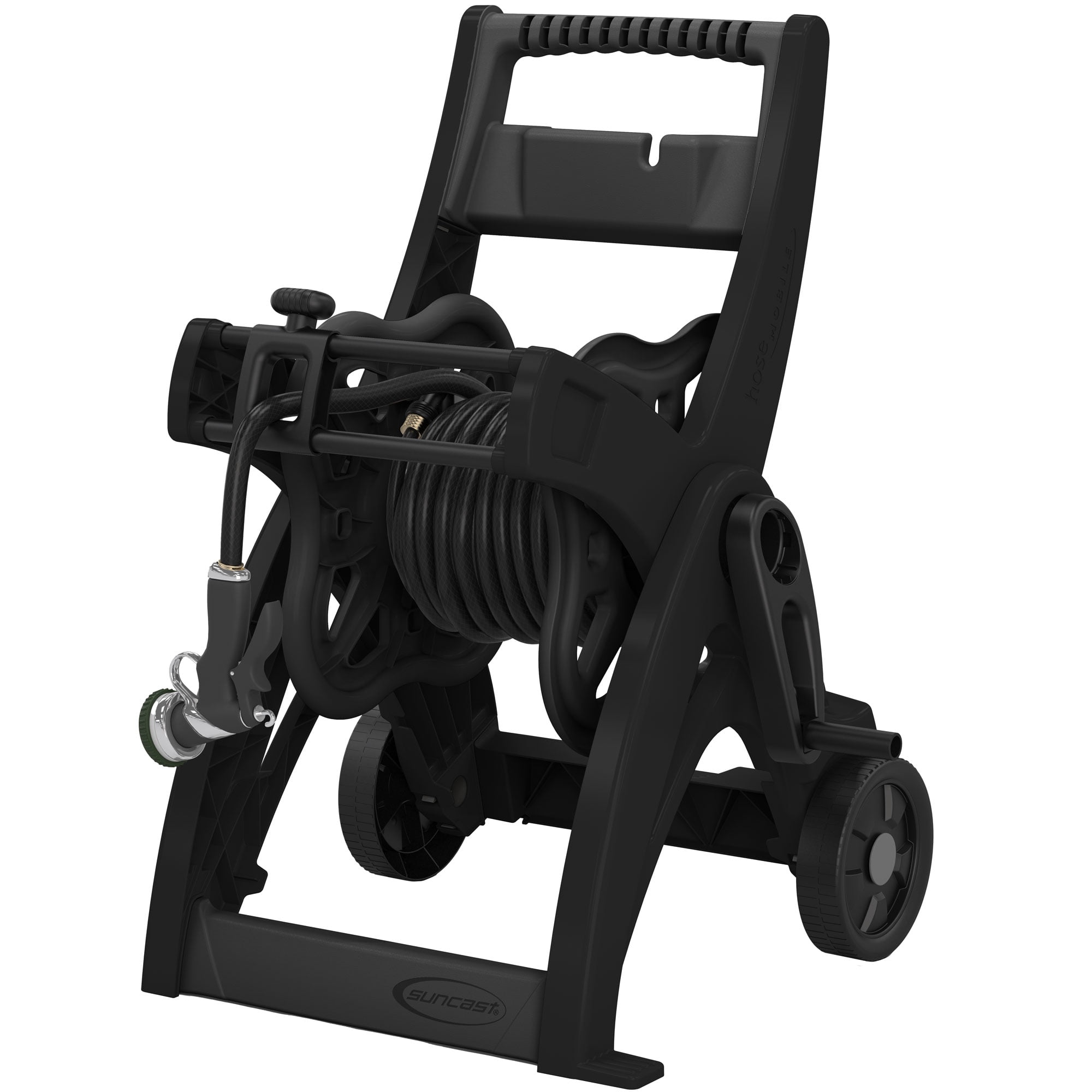
For a longer hose that has to move around the yard, a cart makes storage easy. Walmart sells Suncast's Hosemobile, a resin reel cart that holds up to 175 feet of 5/8-inch vinyl hose. It rolls on two 7-inch wheels, has a slide guide for even winding, needs no assembly, and comes with a leader hose to connect it to the spigot.
Drain expandable hoses after every use and keep them out of direct sun when you are done. For any hose, turn off the water at the spigot and release the pressure at the nozzle rather than leaving the line pressurized all day.
Before the first hard freeze, disconnect the hose, drain it completely, and store it in a garage or shed. Water left inside can freeze, split the hose, and damage the spigot. Replace worn washers each spring to keep connections tight.
Which one to choose
For most homes, a 50-foot, 5/8-inch hybrid hose with metal fittings is the easy all-around choice. Pick an expandable hose if storage space is tight and you will drain it after use. Go with stainless steel if pets, thorns, or rough ground keep destroying your hoses. Measure your yard, pair the hose with a good nozzle and a hanger or reel, and it should last many seasons.
The responses below are not provided, commissioned, reviewed, approved, or otherwise endorsed by any financial entity or advertiser. It is not the advertiser’s responsibility to ensure all posts and/or questions are answered.
Quick tip on winter storage: disconnect the hose from the spigot before the first freeze. Water left in the faucet and hose can freeze and crack the fitting.