
Last Updated on: Apr 23, 2026
Spring is when driveways, patios, decks, and cars show every bit of winter grime. An electric pressure washer blasts away dirt, mildew, and caked-on mud in a fraction of the time a scrub brush and garden hose would take. Electric models are quieter and lighter than gas machines, start with the push of a button, and need almost no upkeep, which makes them the practical choice for most homeowners.
What We'll Cover
- Top Electric Pressure Washers
- PSI and GPM: what the numbers mean
- Electric or gas?
- How much power do you need?
- Nozzles and what they do
- Everyday and compact pressure washers
- Bigger jobs and extra features
- Features worth paying for
- Safety first
- Surfaces to be careful with
- Care and storage
- Common mistakes
- Questions to ask before you buy
- The short answer
This guide explains what PSI and GPM mean, which nozzles to use on which surfaces, what features are worth paying for, and how to use a pressure washer safely, with models from several stores.
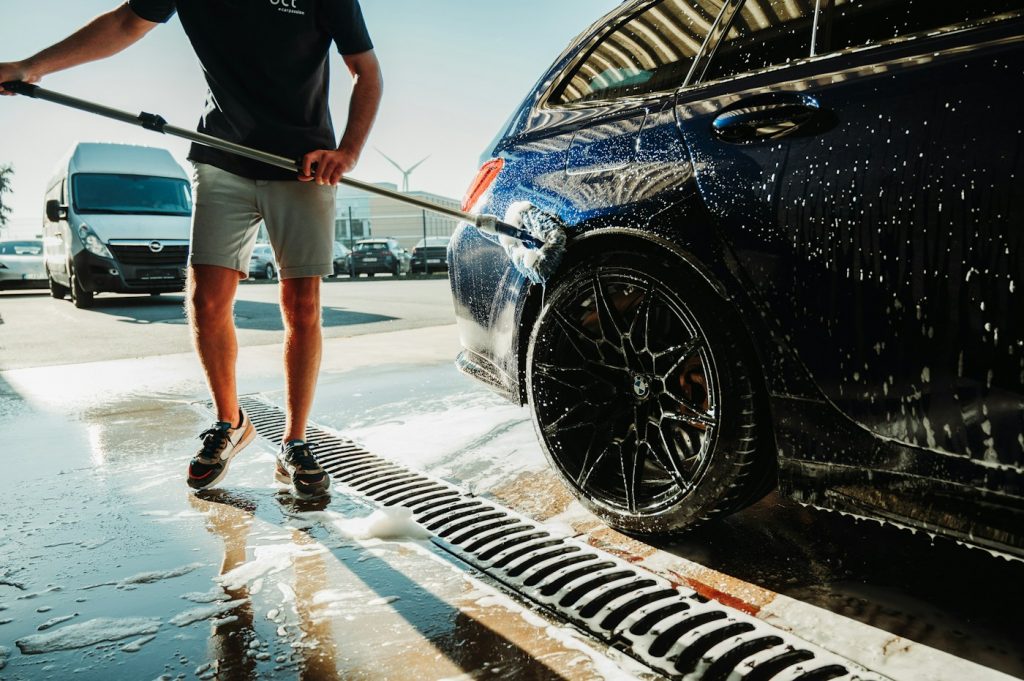
Top Electric Pressure Washers
PSI and GPM: what the numbers mean
Pressure washers list two main numbers. PSI, or pounds per square inch, is the force of the water. GPM, or gallons per minute, is how much water flows through. PSI loosens stuck-on dirt, while GPM rinses it away. A machine with high PSI but low GPM can clean well but slowly. Some brands multiply the two into a single cleaning units figure, which is a handy way to compare models.
Many listings show a max PSI, a peak number that the machine may reach only briefly. Some brands also list a rated PSI tested under an industry standard, which is often lower and more realistic. When comparing, try to compare rated numbers with rated numbers, not a max figure from one brand with a rated figure from another.
Electric or gas?
Gas pressure washers usually deliver more pressure and flow and do not need an outlet, which is why contractors and owners of large properties often choose them. They are also louder, heavier, and need oil changes, fuel, and winter prep. The CDC warns that gasoline engines can cause carbon monoxide poisoning and should never run in an enclosed space or less than 20 feet from any window, door, or vent. For typical home cleaning, an electric model avoids those issues and is easier to store in a garage or shed.
How much power do you need?
- Up to about 1,800 PSI: Cars, patio furniture, grills, bikes, and small patios.
- About 1,800 to 2,500 PSI: Most home jobs, including decks, fences, siding, and concrete walkways.
- Above 2,500 PSI: Large driveways and stubborn stains, but more power means more care is needed on soft surfaces.
More pressure is not always better. Too much force can etch wood, strip paint, damage siding, and force water past window seals. For most homes, a mid-range electric washer with a good set of nozzles covers nearly every job.
Nozzles and what they do
Most pressure washers use color-coded quick-connect nozzles. The smaller the angle, the narrower and stronger the spray.
- Red (0 degree): A pinpoint jet for small, tough spots on hard surfaces. Use it with great care, as it can damage surfaces and cause injury.
- Yellow (15 degree): Strips heavy dirt from concrete and prepares surfaces for painting.
- Green (25 degree): A good general cleaning nozzle for decks, patios, fences, and outdoor furniture.
- White (40 degree): A wide, gentle spray for cars, windows, and siding.
- Black (soap): A low-pressure nozzle for applying detergent.
Some machines use a single adjustable nozzle or a turbo nozzle that spins a narrow jet for faster cleaning on concrete. A foam cannon is a popular add-on for washing cars.
Everyday and compact pressure washers
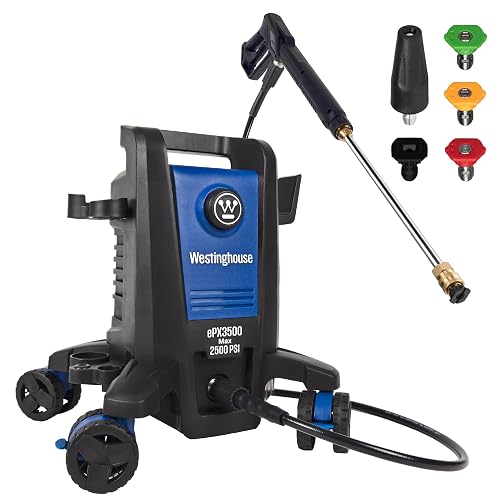
Delivers 2500 max PSI and 1.76 max GPM (at lowest pressure), and 2000 rated PSI and 1.2 rated GPM of water flow; Pro-style steel extendable 17.5” wand with quick-connect nozzles (0°, 15°, 25°, turb...
The Westinghouse ePX3500 lists up to 2500 max PSI and 1.76 max GPM, with an onboard soap tank, a steel wand, and a five-nozzle set.
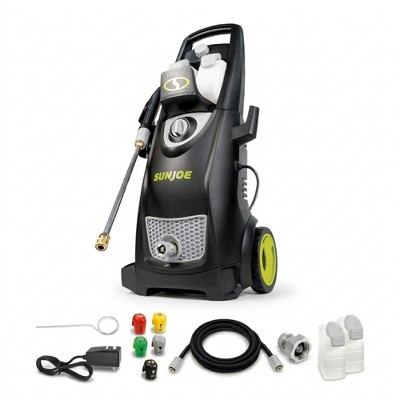
At Target, the Sun Joe SPX3000 lists 2500 max PSI (2030 PSI PWMA rated), with wheels, an extension wand, and a set of hose nozzles.
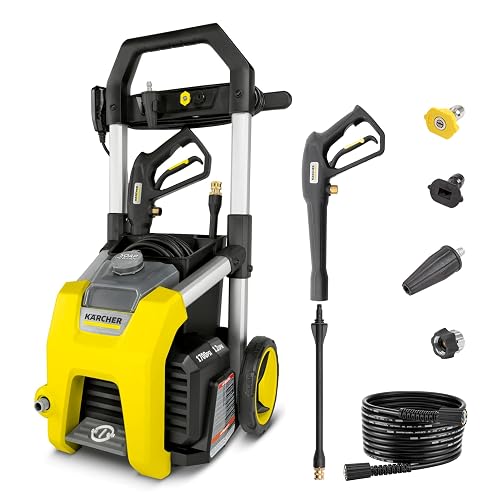
POWERFUL & CETA CERTIFIED: 1700 PSI TruPressure and 1.2 GPM for effective cleaning of various surfaces. Independently tested and CETA certified for proven performance you can trust.
VERSATILE CLEAN...
The Kärcher K1700 is a compact option with three spray nozzles and a detergent tank, suited to cars, driveways, siding, and patios.
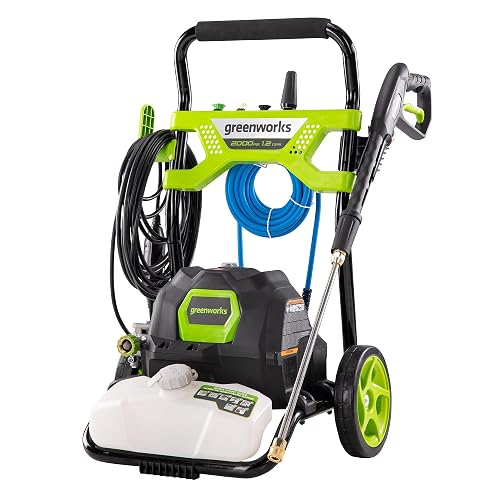
PERFORMANCE TESTED : rated in accordance with PWMA standards
2000 PSI : 1.2 GPM for efficient cleaning of residential areas
Ideal for medium duty projects including but not limited to cleaning pati...
The Greenworks 2000 PSI model lists 1.2 GPM, a simple pick for cars, patio furniture, and smaller patios.
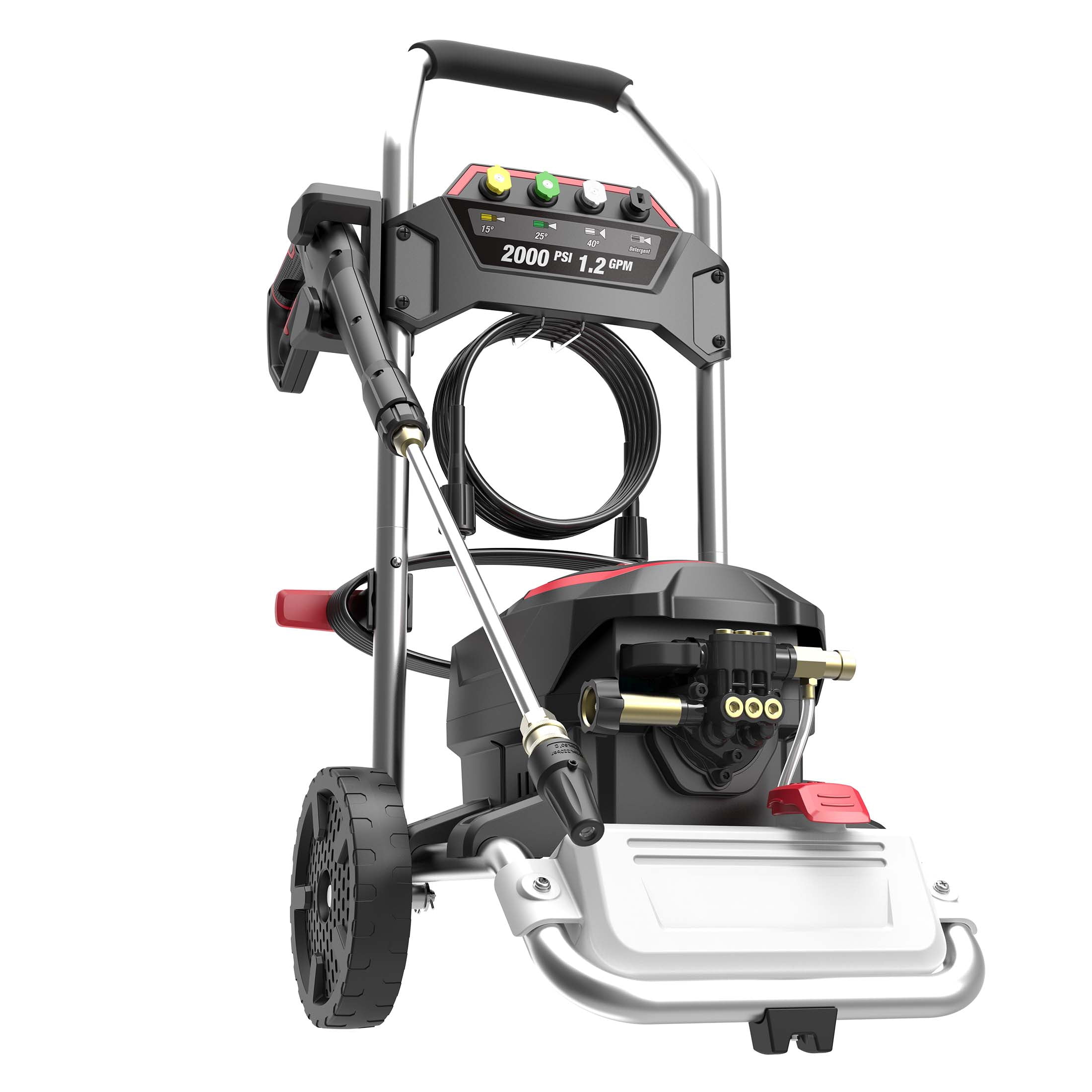
At Walmart, the Hyper Tough 2000 PSI electric pressure washer lists 1.2 GPM on a standard 120V outlet, a low-cost starter machine.
Bigger jobs and extra features
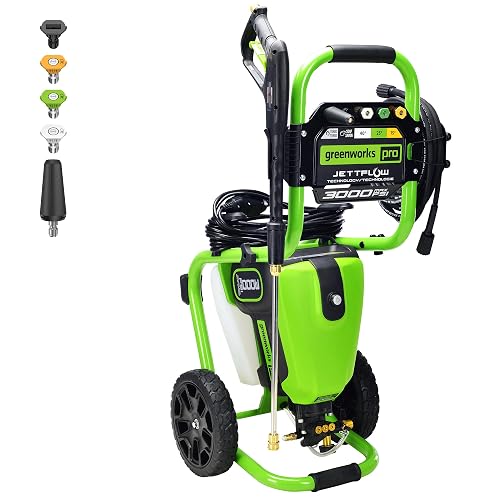
TRUBRUSHLESS MOTOR : Powerful 14 Amp TruBrushless motor generates 3000 PSI and 2.0 GPM for maximum cleaning power.Cleaning Units 3300 C.U. Maximum Inlet Water Temperature 104°F (40°C).Frequency : 6...
The Greenworks 3000 PSI model uses a brushless motor and lists up to 2.0 GPM, aimed at larger driveways and heavier cleaning.
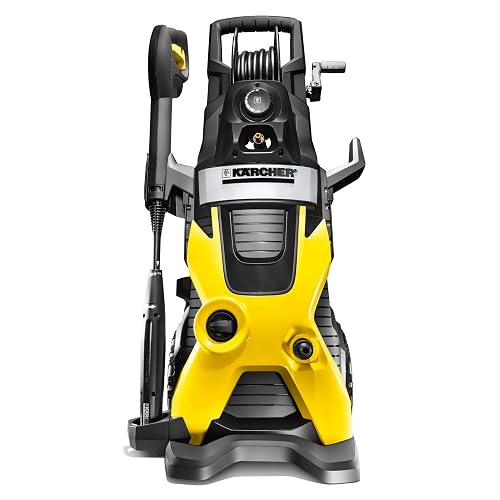
Powerful Performance: The K 5 pressure washer lasts longer than universal motors and delivers exceptional cleaning results! Water-Cooled brushless induction-motor and non-corrosive N-COR pump.
Pres...
The Kärcher K 5 Premium lists 1.4 GPM and includes a hose reel, which keeps the high-pressure hose tidy between uses.
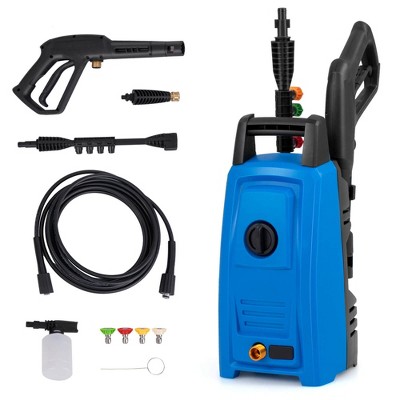
Also at Target, the Costway Ironmax pressure washer rolls on wheels and comes with five quick-connect nozzles, a soap bottle, and a spray gun.
Features worth paying for
- Wheels and a handle: Make moving around the house much easier.
- Onboard detergent tank: Saves fiddling with a separate bottle.
- Hose reel: Keeps the hose from kinking and tangling.
- Long hose and cord: Give you reach without moving the machine as often.
- Total stop system: Shuts off the motor when you release the trigger, which saves wear and cuts noise.
Safety first
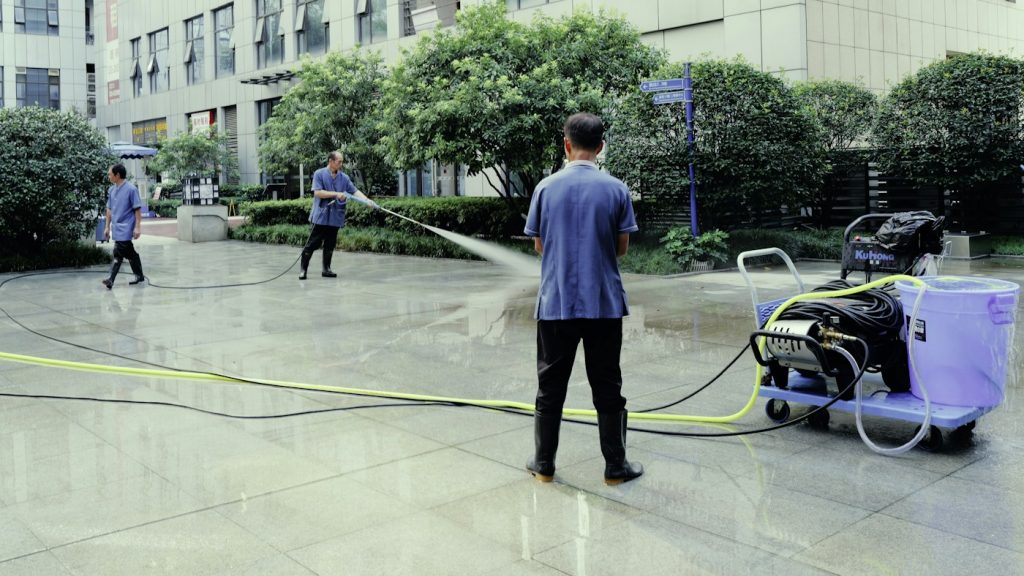
A pressure washer is a power tool, not a garden hose. The CDC warns that the strong spray can cause serious wounds that may first look minor, and that delaying treatment raises the risk of infection, disability, or amputation. The spray can also throw objects that hit people nearby, and electric shock can happen if safety instructions are not followed.
The CDC's safety tips include:
- Test the GFCI: Always test the ground fault circuit interrupter before using a pressure washer.
- Use proper grounding: Plug a properly grounded pressure washer into a properly grounded outlet, and never remove the grounding prong.
- Use the right extension cord: If you need one, use a heavy-duty cord rated for wet locations and keep connections out of standing water.
- Wear rubber-soled shoes: They give some insulation while you work.
- Never aim it at people: Never point a pressure washer at yourself or others, and never use the spray to push objects.
- Keep kids away: Never let children operate a pressure washer, and keep them at a safe distance.
The CDC also advises that anyone with a high-pressure spray wound get medical attention as soon as possible, even if it looks small. Safety glasses, closed shoes, and long pants are good habits too, and always read the owner's manual for your machine.
Surfaces to be careful with
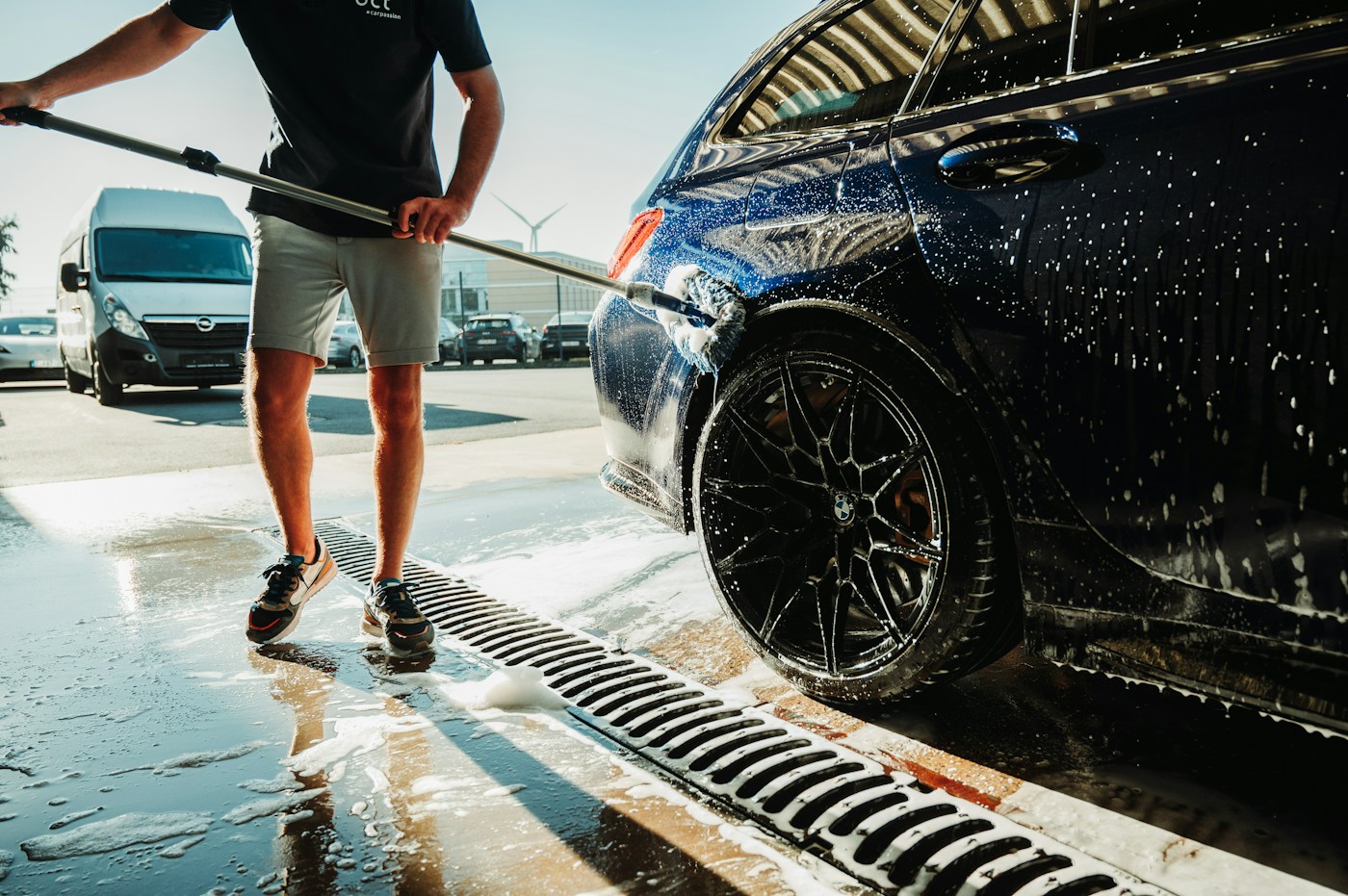
Start with the widest nozzle and hold the wand a few feet away, then move closer only as needed. Test a hidden spot first. Soft woods, painted surfaces, vinyl siding, window screens, and older mortar can be damaged by a narrow, strong spray. Never spray upward under siding or at windows, electrical outlets, light fixtures, or vents. For cars, use the white nozzle or a foam cannon and keep a safe distance from paint, trim, and tires.
Care and storage
After each use, turn off the machine, unplug it, and squeeze the trigger to release pressure left in the hose. Drain water from the pump and hose before storing. If the machine will sit in a cold garage over winter, follow the manual's advice on protecting the pump from freezing. Check the inlet filter screen for grit now and then, and store nozzles in their holder so they do not get lost.
Common mistakes
The most common mistake is using the red zero-degree nozzle on everything, which can gouge wood and concrete. Another is holding the wand too close. Many people also run a pressure washer without the water fully on, which can damage the pump; always turn on the water supply and let it flow before starting the motor. Finally, using the wrong detergent can harm plants and the machine, so choose one made for pressure washers.
Questions to ask before you buy
- What will you clean most? Cars and furniture need less power than driveways.
- Where will you store it? Compact models fit small spaces.
- How far is the outlet? Check hose and cord length.
- Do you want soap? Look for an onboard tank or foam cannon.
The short answer
For most homes, an electric pressure washer in the 1,800 to 2,500 PSI range with a set of quick-connect nozzles handles cars, patios, decks, and walkways. Start with a wide nozzle, keep a safe distance, test the GFCI, and never point the spray at anyone.
The responses below are not provided, commissioned, reviewed, approved, or otherwise endorsed by any financial entity or advertiser. It is not the advertiser’s responsibility to ensure all posts and/or questions are answered.
The nozzle color breakdown is handy. For an older wood deck that has some gray weathering, would the green 25 degree nozzle be a safe place to start, or is the white one better?