
Last Updated on: May 24, 2026
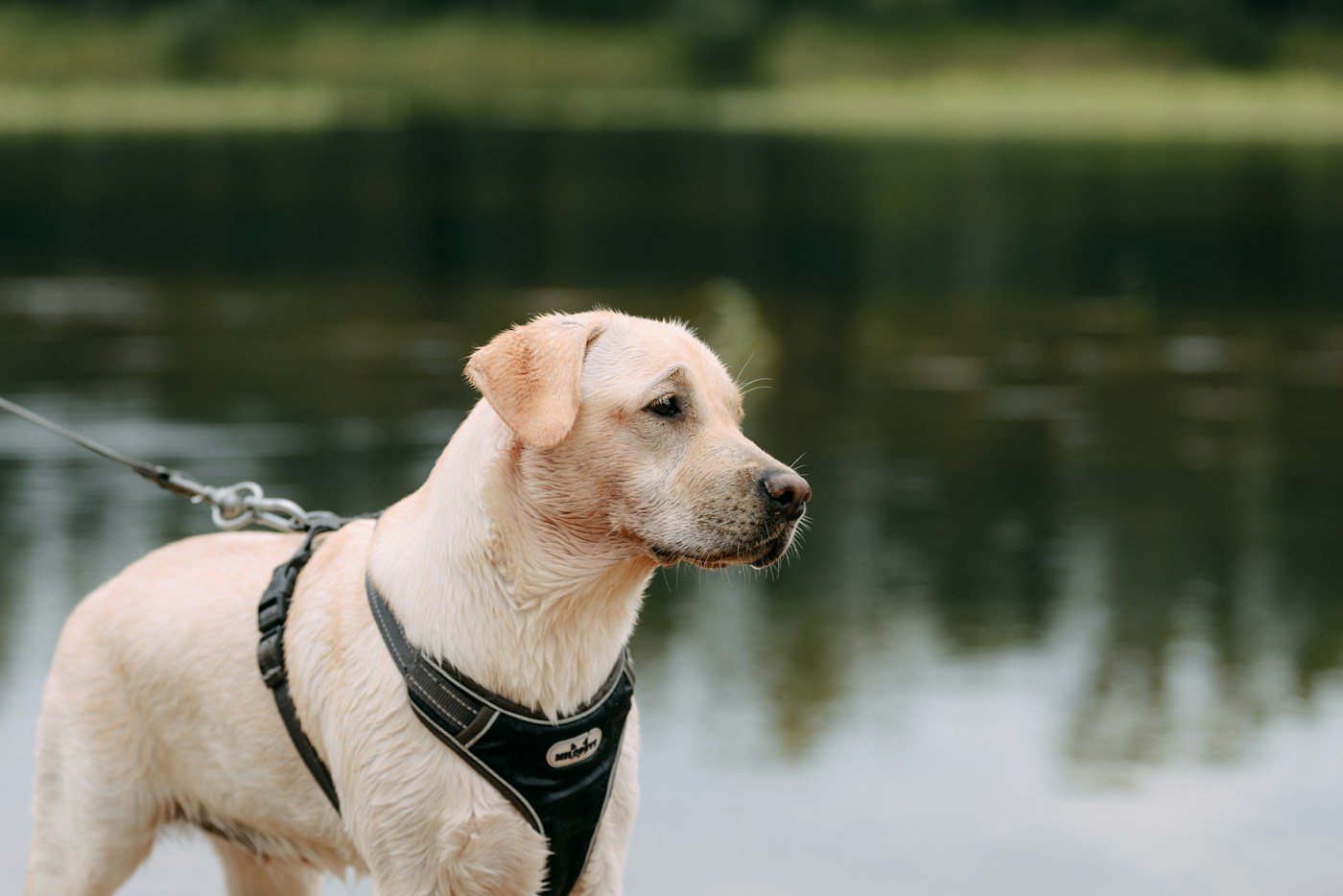
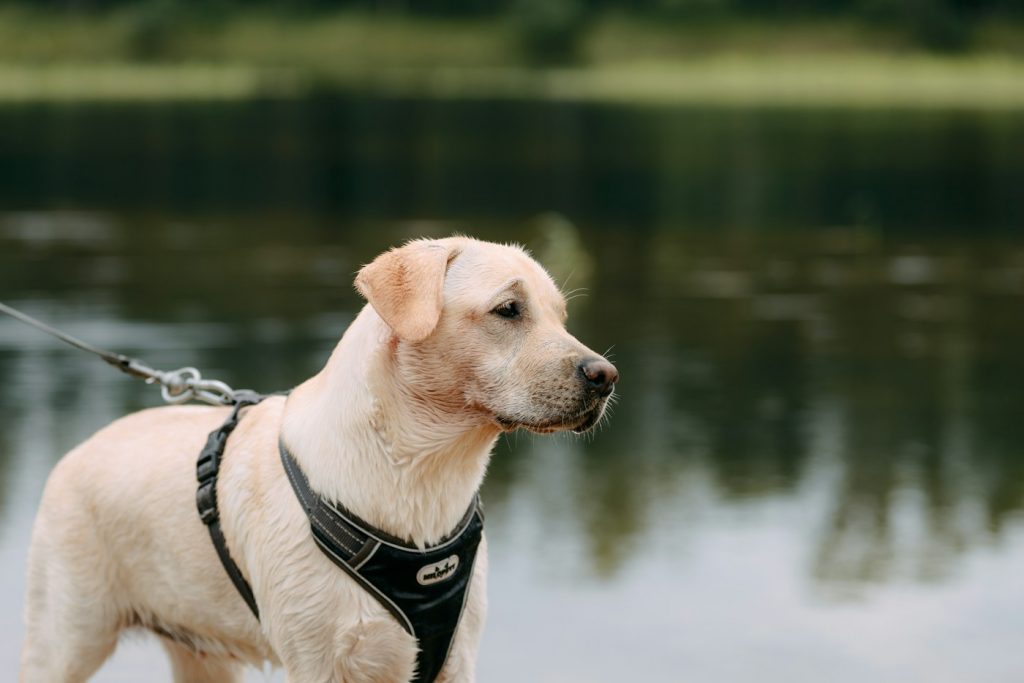
A harness wraps around a dog's chest and shoulders instead of its neck. When the dog pulls or lunges, the pressure spreads across the body rather than landing on the throat. That makes a harness a popular choice for puppies, small dogs, strong pullers, and dogs that ride in the car or go on long hikes.
What We'll Cover
- Top Dog Harnesses
- Harness or collar?
- Types of dog harnesses
- Back-clip harnesses
- Front-clip (no-pull) harnesses
- Dual-clip harnesses
- Step-in harnesses
- Vest harnesses
- How to measure your dog
- Checking the fit
- Features worth paying for
- No-pull and front-clip harnesses
- Everyday and small-dog harnesses
- Training tips for harness walks
- Care and safety
- Car travel
- The short answer
Harnesses come in a lot of styles, though, and the wrong one can rub, slip off, or even make pulling worse. This guide covers the main types, how to measure and fit a harness, and what to look for in straps, buckles, and padding, followed by a range of harnesses from different stores.
Top Dog Harnesses
Harness or collar?
A flat collar is still handy for holding ID tags and a license, and many dogs walk well on one. A harness is a good idea when a dog pulls hard, has a small or delicate neck, or has breathing or airway problems.
The Cornell University College of Veterinary Medicine notes that tracheal collapse, a disease that weakens the cartilage rings of the windpipe and causes a harsh, honking cough, is common in toy and small breeds such as Yorkshire Terriers, Pomeranians, and Toy Poodles. Cornell lists pressure on the neck among the things that can make the coughing worse, and it names switching from neck collars to harnesses as one of the lifestyle changes for affected dogs. If your dog coughs often on walks, talk to your veterinarian.
Types of dog harnesses
Back-clip harnesses
The leash attaches to a ring on the dog's back, between the shoulder blades. Back-clip harnesses are easy to put on and comfortable for dogs that already walk calmly. They do little to stop pulling, and some dogs lean into them even more, a bit like a sled dog.
Front-clip (no-pull) harnesses
The leash clips to a ring on the chest. When the dog pulls forward, the leash gently turns the dog's body to the side, which takes away some of the payoff for pulling. These harnesses are a common tool for leash training. The chest strap should sit on the breastbone and not slide down toward the front legs, where it can limit movement.
Dual-clip harnesses
Many harnesses offer both a front and a back ring. You can use the front ring while working on loose-leash walking and switch to the back ring once your dog walks nicely. Some owners use a double-ended leash that clips to both rings for extra control.
Step-in harnesses
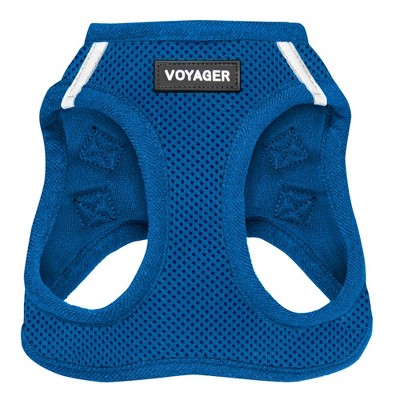
The dog steps into two leg loops and the harness buckles on top of the back. This style is handy for dogs that do not like having something pulled over their heads, and it is common in small sizes.
Vest harnesses
Vest harnesses have a wider panel of padded fabric or mesh across the chest and back. They spread pressure over a larger area and often feel secure for small or nervous dogs. On hot days, choose breathable mesh.
How to measure your dog
- Chest girth: Wrap a soft tape measure around the widest part of the rib cage, just behind the front legs. This is the most important number.
- Neck: Measure around the base of the neck, where a collar would sit, for harnesses with an adjustable neck loop.
- Weight: Many size charts list a weight range as well; use it as a check, not the main guide.
- Between sizes: Look at how much each strap adjusts. A harness with more adjustment points is easier to fit on an unusual body shape.
Checking the fit
Once the harness is on, you should be able to slide two fingers under any strap. If you can fit your whole hand, it is too loose, and the dog may back out of it. If you struggle to fit two fingers, it is too tight and may rub.
- Shoulders: Straps should not sit across the point of the shoulder or block the front legs from swinging freely.
- Armpits: Look for rubbing, red skin, or hair loss behind the front legs, especially after the first few walks.
- Chest ring: On a front-clip harness, the ring should rest in the middle of the chest, not off to one side.
- Backing out: Gently pull the harness forward over the head. If it slips off easily, tighten the straps.
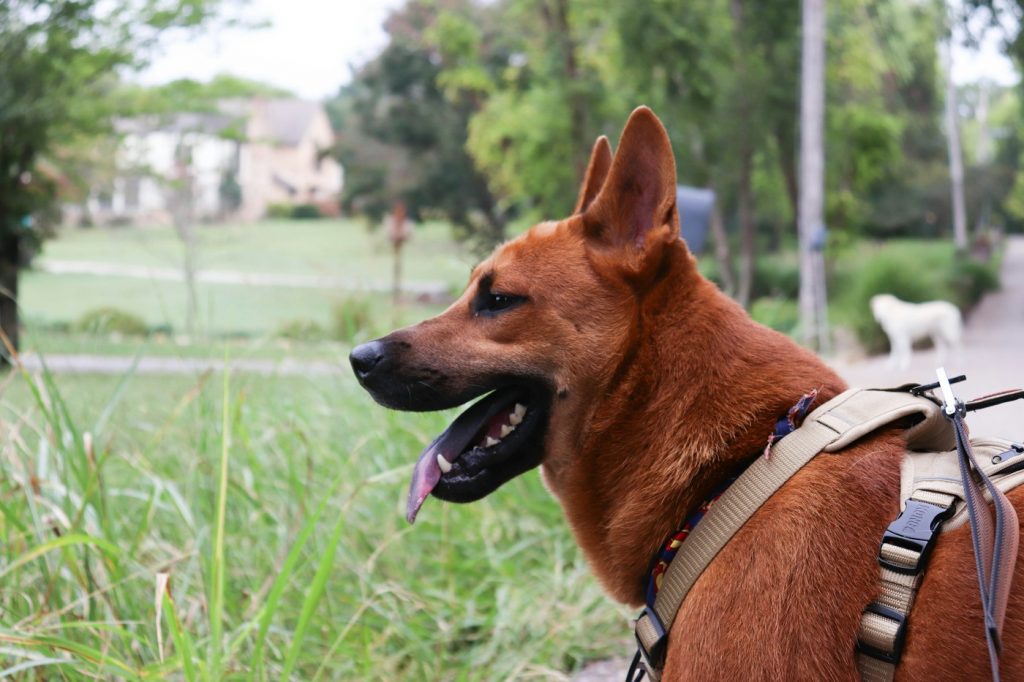
Recheck the fit every so often. Puppies grow quickly, and adult dogs gain or lose weight, and a thick winter coat can change the fit too.
Features worth paying for
- Adjustment points: Four or five adjustable straps give a better fit than one or two.
- Buckles: Sturdy side-release buckles should click firmly and not pop open under pressure.
- Metal leash rings: Welded metal rings hold up better than plastic ones.
- Padding: Soft padding under the chest and belly straps helps prevent rubbing.
- Reflective trim: Useful for early-morning and evening walks.
- Top handle: Helps you steady a dog on stairs, trails, or when getting in and out of the car.
No-pull and front-clip harnesses
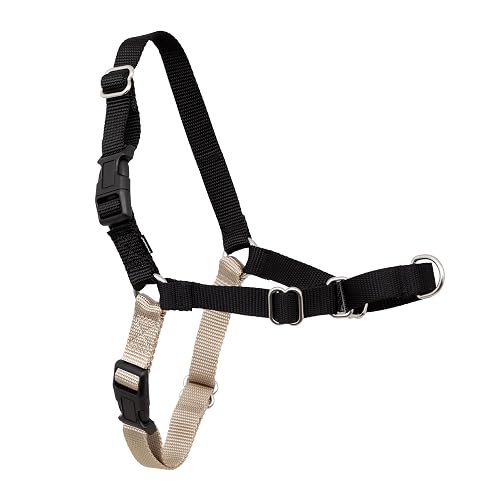
Helps Stop Pulling: Patented Martingale loop design puts gradual pressure on your dog’s shoulders to safely and effectively stop pulling; a front leash attachment helps you guide your dog
Legacy Of...
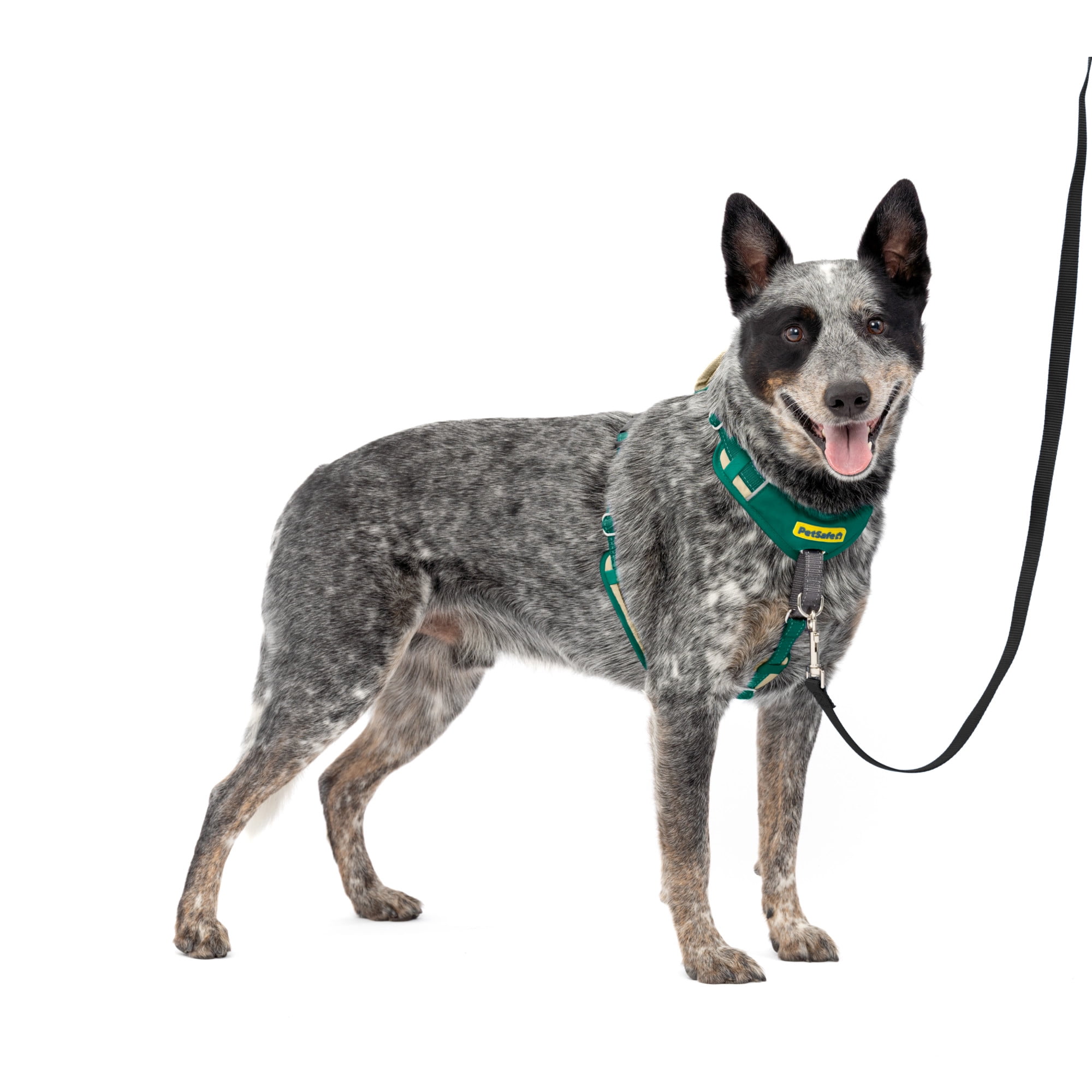
The PetSafe Easy Walk harness has a chest-mounted leash ring designed to steer your dog to the side when it pulls. It is a simple, lightweight option for leash training.
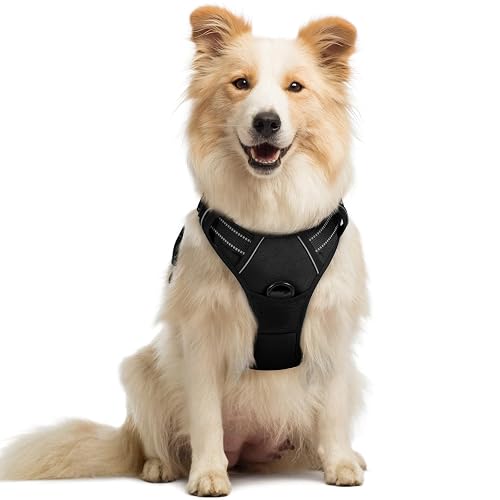
Medium Dog Harness - Recommended Breeds: Medium Dogs, such as Bulldog, Shiba Inu, Border Collie, Chow Chow, Schnauzer Standard, etc. Please measure the size carefully before purchasing this present...
The rabbitgoo harness has two leash clips, one on the chest and one on the back, so you can switch between training and relaxed walks.
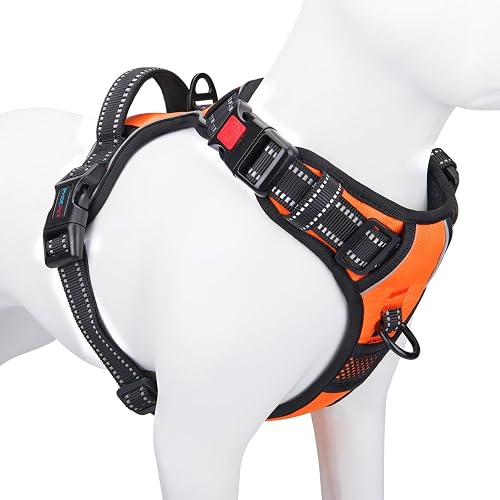
[UPDATED VESION, EASY TO PUT ON & TAKE OFF] This dog harness has 3 buckles( One is on the neck with Lockable, two are on the chest), NO NEED go through dog’s head. This will let your dog loves to w...
The PHOEPET harness pairs a front clip with reflective trim and a handle on top, useful for walks around dawn or dusk.
At Walmart, the PetSafe Easy Walk Comfort harness has five adjustment points and a front clip, which helps when your dog is between sizes.
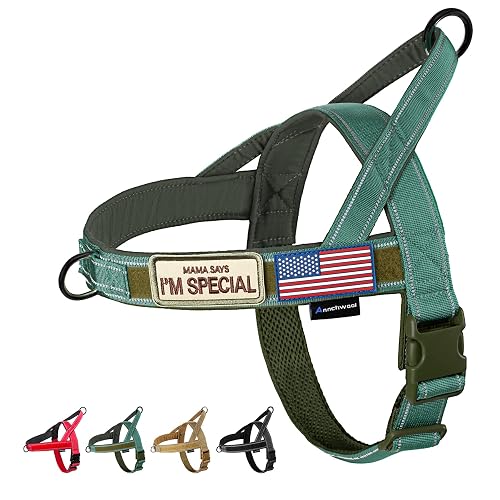
[Premium No Pull Dog Harness] The wider soft padded inner is comfortable and friendly for dog's neck without dog's fur hurting. The back strap and chest strap inner is made of soft and breathable m...
The Annchwool harness has a padded handle, reflective strips, and quick-fit buckles for easier on and off.
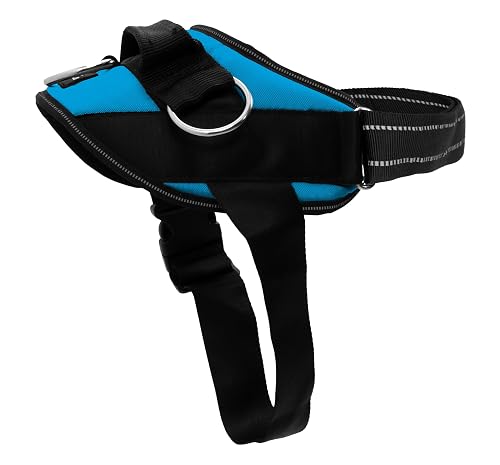
3 RING NO PULL TECHNOLOGY: Helping to eliminate harmful choking and discourage pulling while walking. This gives owners 3 different leash attachment points as well, allowing you to find what option...
The ShawnCo Essential harness is a vest-style design with a no-pull clip, a budget-friendly pick for daily walks.
Everyday and small-dog harnesses
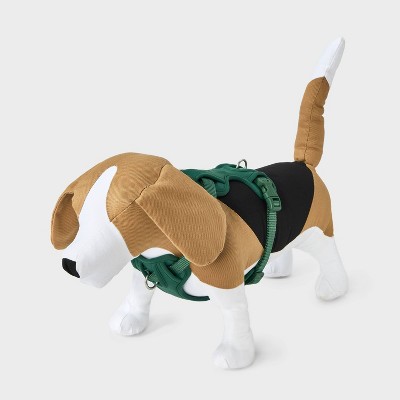
At Target, the Voyager Step-In Air harness uses breathable mesh and a step-in design made for small and medium dogs.
The Boots & Barkley Core harness is a simple everyday harness, a good basic choice for calm walkers.
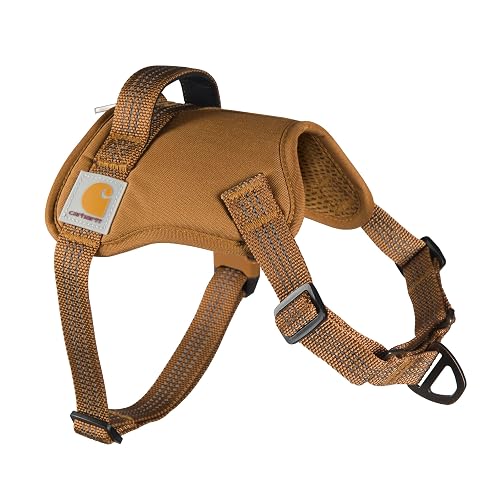
No Pull Dog Harness: Whether you're working on training or need a day-to-day harness for handling your dog, our walking harness provides increased control while allowing your dog a full range of mo...
The Carhartt no-pull harness is made from heavy nylon duck fabric, a tough option for dogs that spend time on trails and in the yard.
Training tips for harness walks
- Introduce it slowly: Let your dog sniff the harness, reward calm behavior, and put it on for short periods indoors before the first walk.
- Reward a loose leash: Treats and praise when the leash is slack teach more than constant tugging.
- Stop when they pull: Standing still until the leash loosens teaches that pulling does not get them anywhere.
- Keep sessions short: A few minutes of focused practice works better than one long, frustrating walk.
A harness is a tool, not a fix on its own. For strong pullers or reactive dogs, a certified trainer can help build good leash habits.
Care and safety
- Take it off at home: Harnesses can catch on crates, furniture, and fences. Remove it when your dog is unsupervised.
- Wash it: Most fabric harnesses can be hand washed with mild soap. Let them dry fully before use.
- Inspect it: Check for frayed stitching, cracked buckles, and worn webbing, and replace the harness when you see damage.
- Keep ID on: If your dog wears a harness without a collar, make sure it carries an ID tag.
Car travel
An ordinary walking harness is not the same as a crash-tested car harness. If you want to buckle your dog in the car, look for a harness made and tested for vehicle use, and follow its instructions for the seat belt connection.
The short answer
For most dogs, a well-fitted dual-clip or front-clip harness is a good everyday choice. It gives you control when your dog pulls and moves pressure off the neck. Measure the chest, check the two-finger rule, and watch for rubbing after the first few walks. For small dogs or dogs with breathing trouble, a step-in or vest harness can be gentler, and your veterinarian can help you decide.
The responses below are not provided, commissioned, reviewed, approved, or otherwise endorsed by any financial entity or advertiser. It is not the advertiser’s responsibility to ensure all posts and/or questions are answered.
Good point about checking the fit again when the winter coat comes in. Does anyone know if the two-finger rule still applies for really small dogs, or should it be a bit snugger?