
Last Updated on: Sep 25, 2026
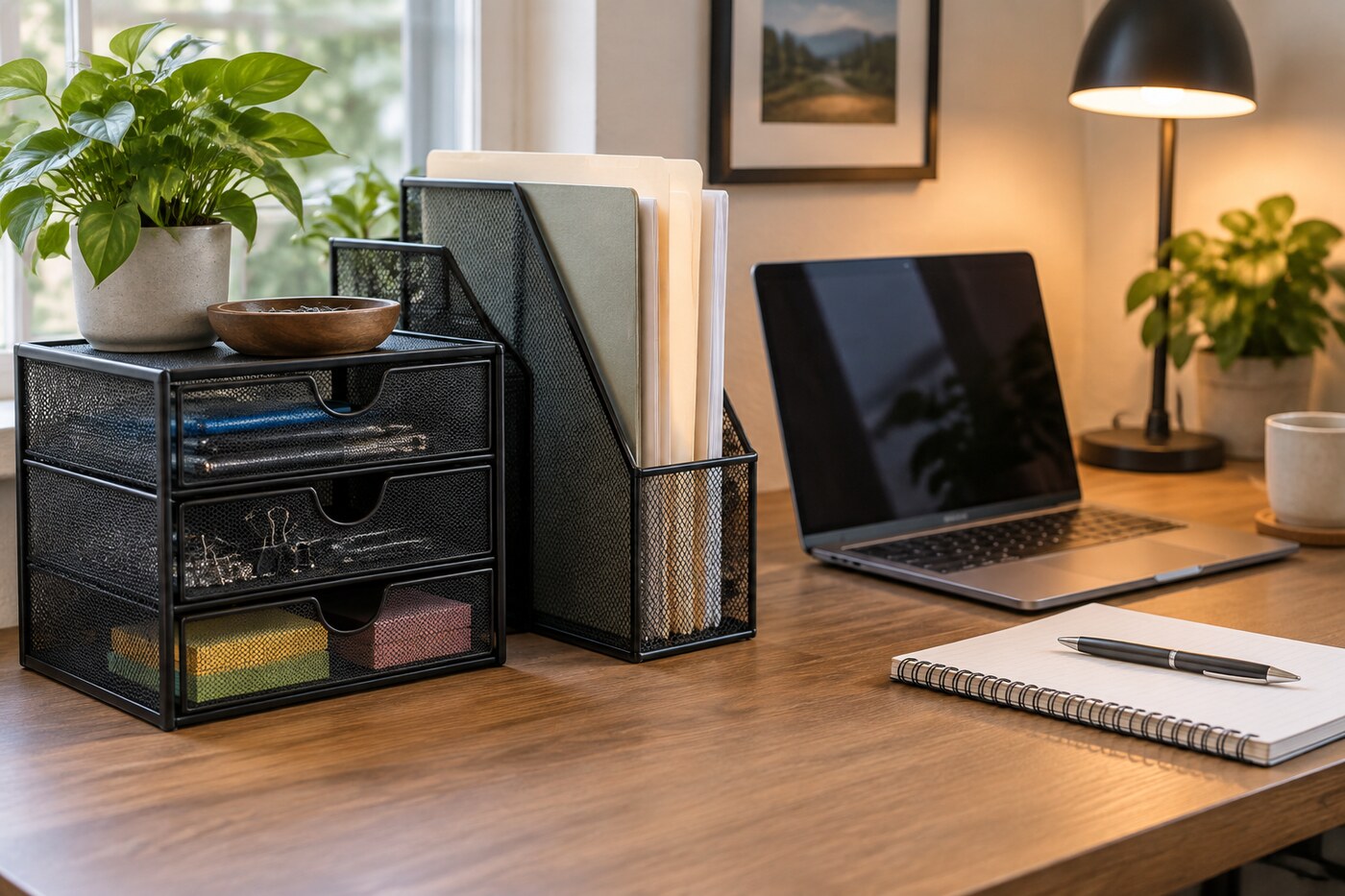
A desk organizer should make daily work easier, not turn every pencil and piece of mail into an elaborate filing system. Start by looking at what collects on the desktop now. Loose pens, full-size papers, cables, sticky notes, and keys each need a different kind of space. The best choice for a person handling paper invoices may be a poor choice for someone who works almost entirely on a laptop. These eight current retailer listings cover small drawers, paper sorters, and a tray that goes inside a desk drawer.
What We'll Cover
Clear the surface first and sort items by how often you use them. Keep daily tools within reach, move occasional tools into a drawer, and recycle paper you no longer need. Measure the area available beside your monitor or keyboard before selecting a unit. A storage tower that consumes the only open writing area may create more friction than it removes.
Top Desk Organizers
Choose the job before the shape
A tray with broad shelves helps sort letter-size paper, mail, or notebooks. Small drawers hold clips and charging adapters, but full sheets may curl if squeezed into them. A pen caddy keeps writing tools visible; it will not manage a growing stack of receipts. List the categories you want to store and compare their dimensions with the compartment openings, not merely the organizer’s overall width.
Desktop organizers can have open compartments, closed drawers, vertical slots, or a mix. Open storage makes it easy to grab something, but it also exposes visual clutter. Drawers hide items yet may slow retrieval if there are too many tiny compartments. A vertical file holder makes current papers easy to see, while a horizontal tray can separate incoming and outgoing work. The right layout is one you can keep using on a busy day.
- Paper: Check letter-size clearance and whether a tray can be lifted without bending documents.
- Small supplies: Favor shallow drawers that do not swallow clips and USB adapters.
- Pens and tools: Keep tall items upright where they do not block the screen.
- Rarely used items: Move them out of prime desktop space.
Measure the true working footprint
Measure the width, depth, and height of the available surface. A tall unit may fit on the desk but block part of the monitor, a lamp, or the view out of a window. A deep unit can push the keyboard forward and reduce room for a notebook. Include the space needed to pull a drawer fully open; a cabinet immediately behind the organizer can make the last drawer unusable.
If you plan to put an organizer under a shelf, compare the assembled height with the vertical opening. If you are buying an expandable drawer tray, measure the drawer’s inside dimensions and the path it follows as it closes. A tray that fits the opening at the front can snag on rails, screws, or a narrowing rear wall. Leave a little tolerance instead of buying exactly to the stated opening dimensions.
A lightweight mesh unit can slide on a smooth desk when you tug a stiff drawer. Look for a stable base, protected feet, and a practical center of gravity. Avoid loading a tall paper stack above the weight the maker states. For shared desks, place common supplies where everyone can reach them without leaning across someone else’s work area.
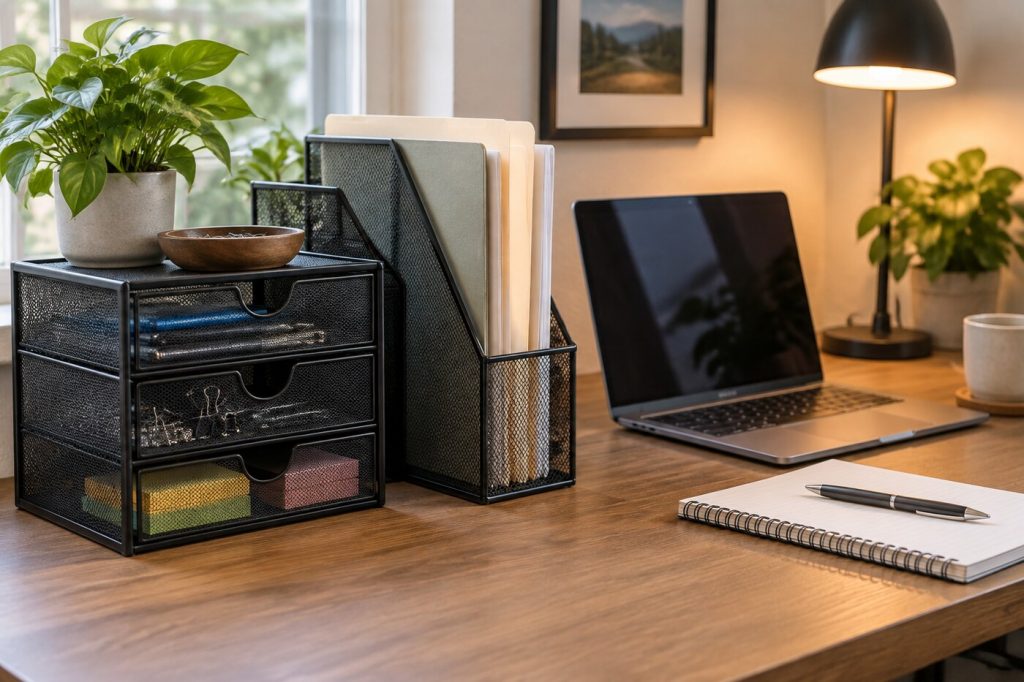
Materials and everyday care
Metal mesh is airy and makes contents easy to see, but thin edges or rough welds can catch paper or hands. Plastic drawers are often easy to wipe down, though small runners may feel less solid under a heavy load. Wood or bamboo can soften the look of a room, but it may take more care around spills. Materials alone do not prove quality; inspect the fit of drawers, corners, and hardware when it arrives.
Consider whether you will move the organizer for cleaning. A full paper tower is more awkward to lift than a small desktop caddy. Dust can gather in open mesh and narrow corners. If you store pens with leaking ink or art materials, a removable tray or wipeable liner can make cleanup easier. Paper and electronics should stay away from drinks, window condensation, and leaking plant saucers.
Compare eight retailer listings
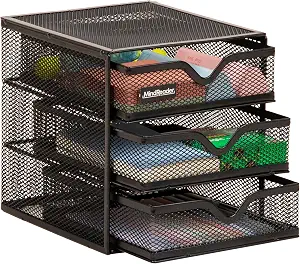
Compact Accessory Organizer: Three pull-out drawers organize paper clips, binder clips, sticky notes, pens, and other small office and desk supplies
Not for Letter-Size Paper: Compact drawers are d...
Mind Reader’s compact three-drawer organizer is designed for small office supplies. Check the internal drawer size before expecting it to hold a full notebook or file folder.
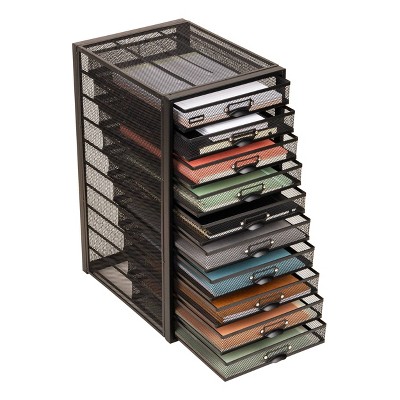
Target’s Mind Reader metal mesh unit has ten drawers and a tall footprint. It can separate many categories, but measure its 21.25-inch listed height against shelves and monitor sightlines.
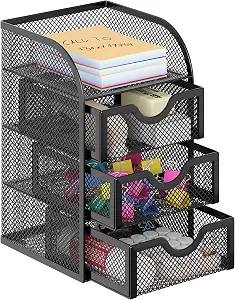
Popular design metal desk organizer with 3 drawer
Holds your post-it notes, paper clips and staple puller which small easy to lost
Made of sturdy mesh metal and will not crack, chip or break if dro...
EasyPAG combines three drawers with a stationery caddy. It is a better match for pens, clips, and small notes than for a large volume of loose letter-size documents.
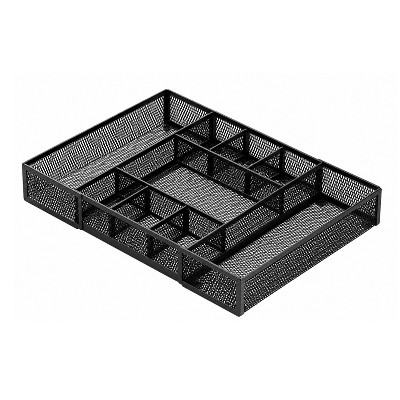
The Home Collection expandable mesh tray at Target is designed for a drawer rather than the desktop. Check the interior width, depth, and divider placement for the actual drawer before ordering.
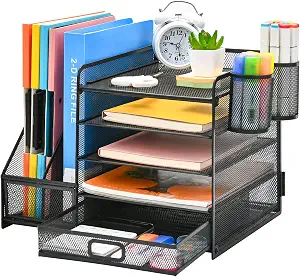
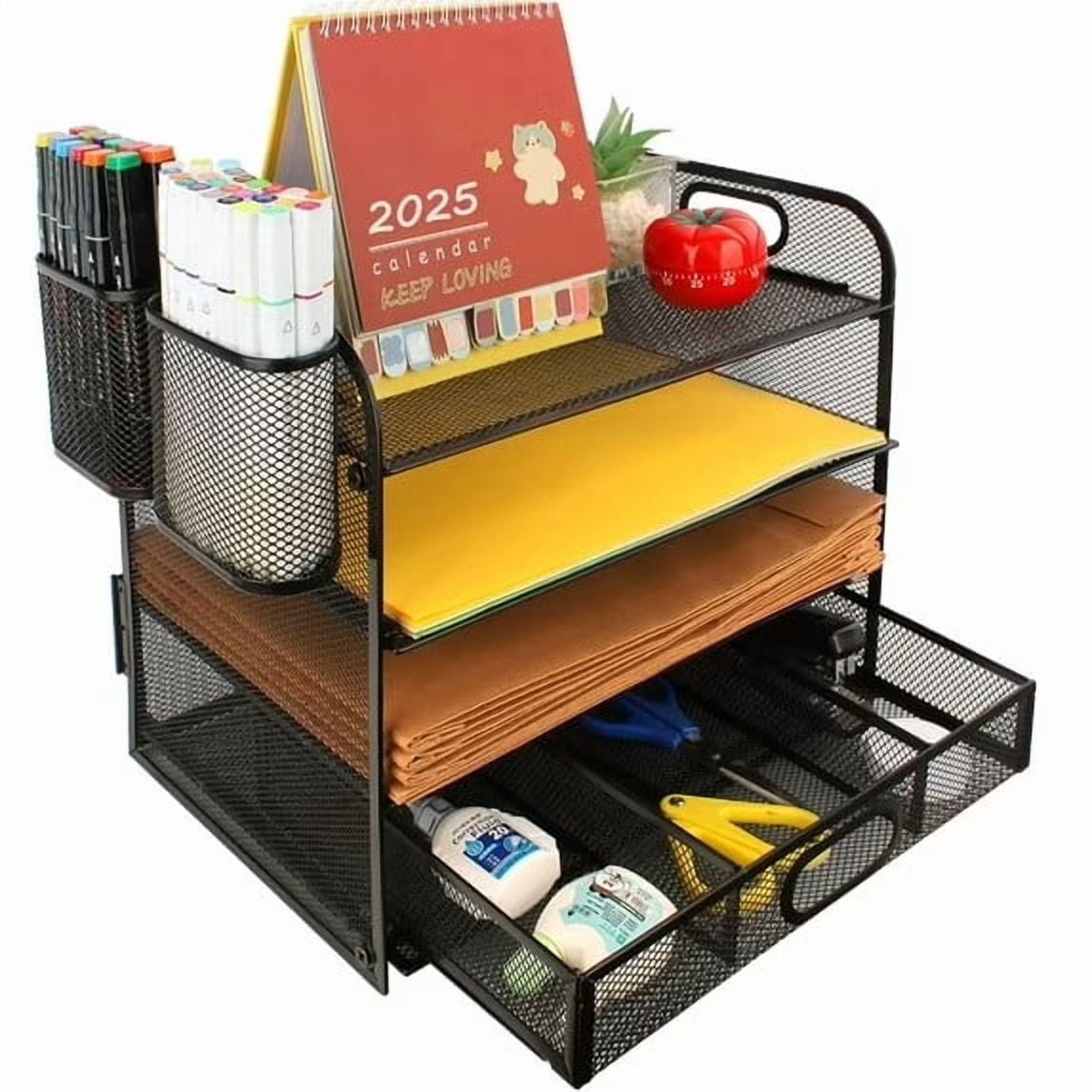
【Ideal Desk Organizer】Marbrasse newly releases the desk file organizer! The humanized office organization owns 5 sliding trays + 2 Magazine Holders + 2 Hanging Pencil Holders + 1 sliding drawer whi...
Marbrasse offers a five-tier paper organizer with a magazine slot, small drawer, and pen holders. That mixed layout can separate active documents from supplies; verify assembly and overall width.
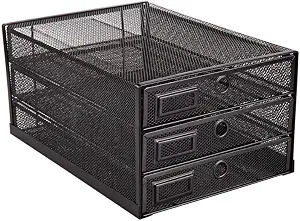
Mesh metal desk organizer with 3 pulling-out drawers which are large enough to hold A4 size papers / letters;
Dimensions: 14 x 10 x 7 inches / 35.5 x 25.1 x 17.4 cm; Measurements of one drawer: 14 ...
Annova’s three-tier mesh sliding-drawer sorter is aimed at paper and mail. Confirm drawer clearance, especially if it will sit under a shelf or be pressed against a wall.
Walmart lists the PHANCIR four-tier metal document organizer. Compare current seller details and exact usable shelf dimensions with the volume and size of your paper.
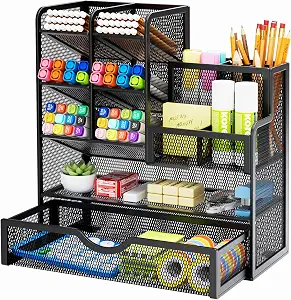
【ENOUGH CAPACITY】: This desk organizer set of 6 tilt compartments, 4 flat bottom compartments slots, 1 tray compartment, and 1 drawer, to store a wide variety of items. Multifunction help you arran...
The Marbrasse mesh pen holder offers upright compartments and a small drawer. It may be enough for a mostly paperless desk, without bringing a full-size file tower into the workspace.
A practical setup that lasts
Give each section a simple role: incoming, active, outgoing, or supplies. Do not create a category for every possible project before you need it. When the incoming tray is full, sort it before adding another stack. Keep private documents in an appropriate secure place instead of treating an open desk caddy as locked storage. A clear desk is useful only if you can still find what you need.
Try the organizer in its intended spot with your real items before throwing out the packaging. Open every drawer, reach for a pen, and pull a sheet of paper from the lowest tier. If the layout repeatedly forces you to move the entire unit, another form may be better. An organizer is a small purchase, but replacing a poorly fitting one wastes both desk space and time.
Questions before checkout
- Which items actually live on this desk every day?
- Will full-size papers fit without folding or curling?
- Is there enough clearance to open each drawer and work beside the unit?
- Would a drawer tray free more workspace than a desktop tower?
- Can you wipe or move the organizer without scattering its contents?
There is also a difference between collecting and organizing. A large tray can quickly become a pile when all categories share one flat surface. If your work generates forms, separate papers by the next action: read, respond, file, or discard. A vertical holder is useful for folders that you access frequently, but it should not replace a deliberate filing place for records that must be kept. The label can be written on a folder rather than on the organizer itself, so rearranging the unit does not become a new project.
If several people use the same table, decide which compartments are shared and which are personal before buying a unit with many small drawers. Shared scissors, pens, and tape should be easy to identify and return. Personal documents may be better kept elsewhere. A crowded desk often reflects a decision bottleneck rather than a shortage of furniture, so try one week with temporary boxes or paper trays to learn what belongs close at hand. Then buy for the real pattern instead of a showroom arrangement.
Pick the smallest setup that gives your daily work a reliable home. If the organizer itself becomes another place to drop things without a plan, revisit the categories rather than automatically buying more compartments. A few reachable, well-sized spaces beat a crowded tower of empty options.
Stock photo: desk with books and papers, Unsplash.
The responses below are not provided, commissioned, reviewed, approved, or otherwise endorsed by any financial entity or advertiser. It is not the advertiser’s responsibility to ensure all posts and/or questions are answered.