
Last Updated on: Mar 05, 2026
A cutting board gets used almost every time you cook, yet many kitchens run on one old, warped board that slides around the counter. A good board protects your knives, stays put while you chop, and is easy to keep clean. Picking one comes down to material, size, and how you plan to use it, along with a few food safety basics that matter more than most people realize.
What We'll Cover
- Top Cutting Boards
- Board materials compared
- Size and features
- Wood and bamboo boards
- Plastic boards
- Food safety basics
- Setting up a safe prep station
- Serving boards and charcuterie
- Caring for wood and bamboo
- How many boards do you need?
- Protecting your knives
- Questions to ask before you buy
- The short answer
The USDA Food Safety and Inspection Service (FSIS) says consumers may choose either wood or a nonporous surface such as plastic, marble, glass, or pyroceramic, and notes that nonporous surfaces are easier to clean than wood. It also suggests using one board for fresh produce and bread and a separate one for raw meat, poultry, and seafood, so bacteria from raw foods do not reach foods that will not be cooked. That is a strong case for owning at least two boards.
Top Cutting Boards
Board materials compared
Hardwood (maple, walnut, cherry): Wood boards are gentle on knife edges and look good on the counter. They need hand washing and regular oiling to keep from drying out and cracking. End-grain boards, where the wood fibers face up, are the most knife-friendly but cost more.
Bamboo: FSIS notes that bamboo boards are harder and less porous than hardwoods, absorb very little moisture, and resist scarring from knives. Bamboo is also light and affordable. Its hardness can dull knives a little faster than softer woods.
Acacia: A dense hardwood with bold grain. It holds up well to moisture and makes an attractive serving board as well as a prep board.
Plastic (polypropylene or polyethylene): Light, cheap, and nonporous. Many are dishwasher-safe, which makes them a good fit for raw meat. They scar over time, and deep grooves are hard to clean.
Glass, marble, and titanium: These are hard and easy to wipe off, but they are rough on knife edges and can be slippery. Many cooks save them for serving or pastry rather than daily chopping.
Size and features
- Size: A board around 12 by 18 inches gives room to chop and push food aside. Smaller boards are handy for a quick lemon or garlic clove.
- Thickness: Thicker boards resist warping and feel steadier, but they are heavier to lift and wash.
- Juice groove: A channel around the edge catches liquid from meat, tomatoes, and fruit.
- Non-slip feet or edges: Keep the board from sliding. If yours lacks them, a damp towel underneath works.
- Reversible: Two usable sides can double the board's life or let you keep one side for strong flavors like onion.
Wood and bamboo boards
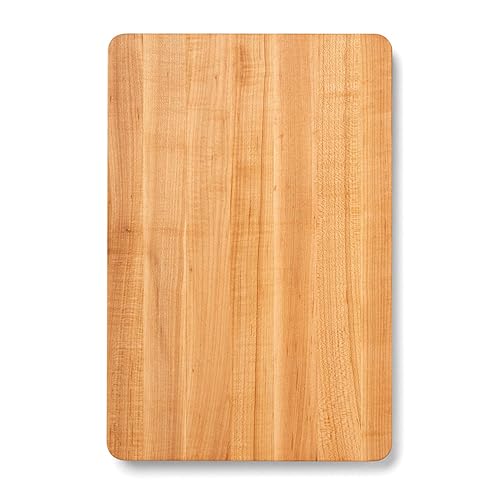
Food preparation accessory helps you prepare ingredients efficiently, perfect for chopping meats, fruits, and veggies
Offers ample space for chopping essential ingredients measuring 16 inches long,...
The John Boos Chop-N-Slice maple board is a classic solid wood board for everyday prep.
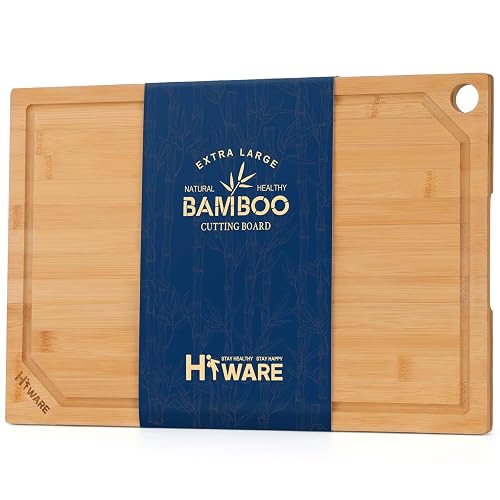
100% Premium Natural Bamboo: This cutting board is crafted from sustainable bamboo, showcasing the natural grain and beauty of the material. The surface has been carefully polished and conditioned ...
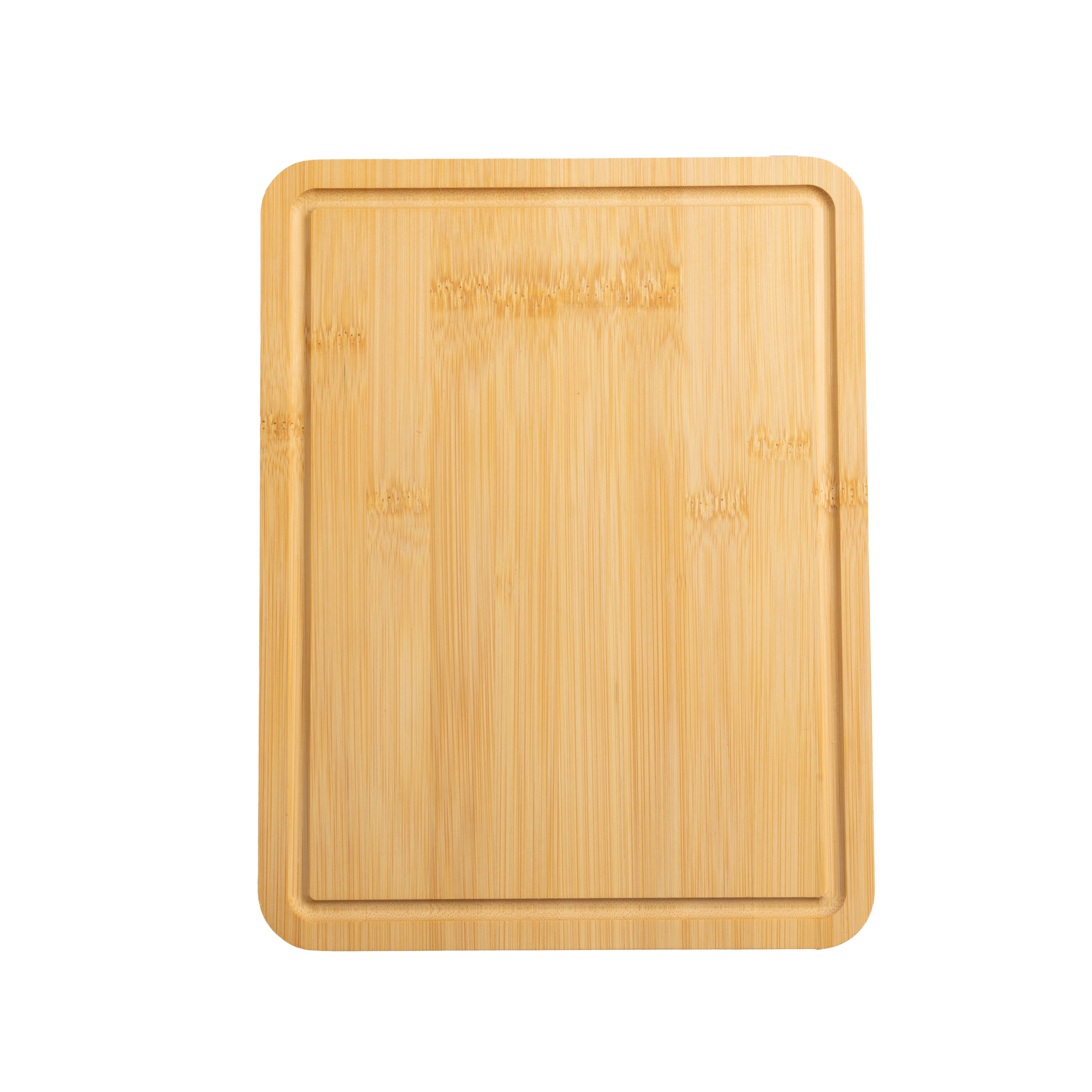
The Hiware bamboo board is 18 by 12 inches with a juice groove, and it comes pre-oiled.
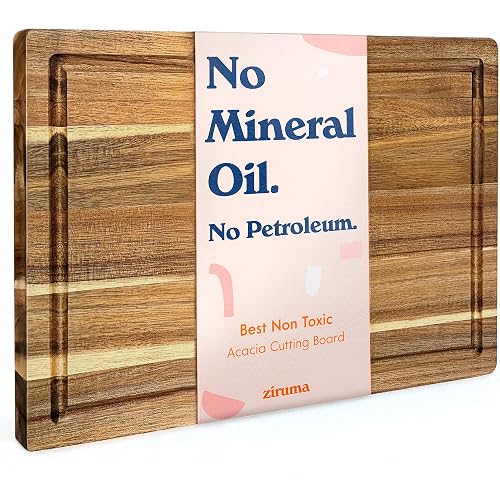
𝗙𝗶𝗻𝗶𝘀𝗵𝗲𝗱 𝘄𝗶𝘁𝗵 𝗕𝗲𝗲𝘀𝘄𝗮𝘅 𝗮𝗻𝗱 𝗡𝗮𝘁𝘂𝗿𝗮𝗹 𝗢𝗶𝗹𝘀 – 𝗡𝗼 𝗠𝗶𝗻𝗲𝗿𝗮𝗹 𝗢𝗶𝗹 𝗼𝗿 𝗣𝗙𝗔𝗦: Unlike standard cutting boards, ours is conditioned with a clean blend of unbleached beeswax, flaxseed oil, and lemon oil—never 𝗽𝗲𝘁𝗿...
This 16 by 11 inch acacia board is a good-looking choice for both prep and serving.

100% BAMBOO: Kikcoin bamboo wooden cutting boards for kitchen preserves the original bamboo grain and texture.The surface is carefully polished and coated with food-grade oil, ensuring a smooth, bu...
The Kikcoin 17 by 11 inch bamboo board is an extra-large, budget-friendly prep surface.
At Walmart, the Mainstays 8.5 by 11 inch bamboo board has a juice groove and non-slip feet, handy for small jobs.
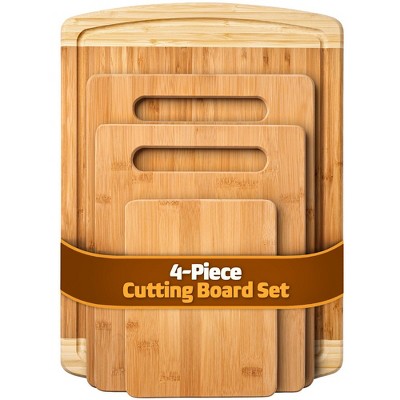
At Target, the Bambusi set gives you four bamboo boards with juice grooves, so you can keep separate boards for different foods.
Plastic boards
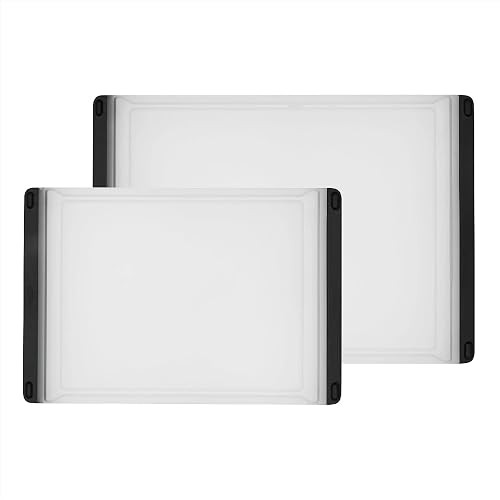
Versatile 2-piece set: Includes one 7.25 x 10.75 inch Prep Board and one 9 x 12.9 inch Everyday Cutting Board, perfect for slicing, dicing and daily kitchen prep
Hygienic and knife-friendly: Double...
The OXO Good Grips two-piece set gives you two double-sided plastic boards, a simple way to keep raw meat apart from produce.
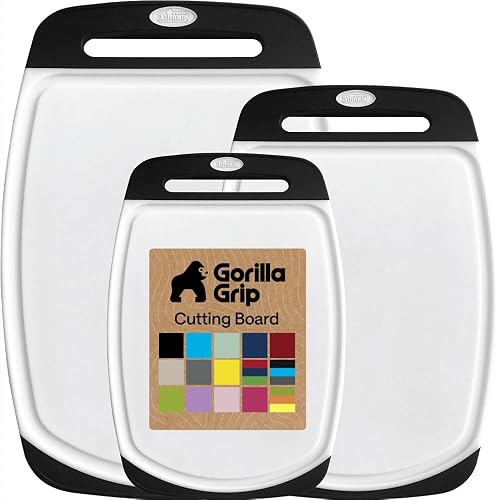
ULTRA DURABLE STRENGTH: 3rd Party Tested for durability, thick cutting boards have a nonporous surface that won’t splinter or peel, unlike wood cutting boards or a bamboo cutting board; deep groove...
The Gorilla Grip set includes three reversible, BPA-free boards in different sizes.
The Figmint 9 by 13 inch board is made of recycled poly, reversible, and dishwasher-safe.
The Mainstays non-slip poly board is an inexpensive board to set aside just for raw meat.
Food safety basics
FSIS's Meat and Poultry Hotline recommends washing all cutting boards with hot, soapy water after each use, then rinsing with clear water and letting them air dry or patting them dry with clean paper towels. It notes that nonporous acrylic, plastic, or glass boards and solid wood boards can go in a dishwasher, but laminated boards may crack and split.
To sanitize, FSIS says both wood and plastic boards can be treated with a solution of 1 tablespoon of unscented liquid chlorine bleach per gallon of water. Flood the surface, let it stand for several minutes, then rinse with clear water and air dry or pat dry.
- Use one board for produce and bread and a separate board for raw meat, poultry, and seafood.
- Color-coded or clearly different boards make it easy to keep them straight.
- Wash boards right after cutting raw meat rather than leaving them in the sink.
- Replace boards that are worn or have hard-to-clean grooves. FSIS says all plastic and wooden boards wear out over time and should be discarded once they are excessively worn.
Setting up a safe prep station
Where and how you use the board matters too. Place it on a flat, dry counter with enough room around it for a bowl of scraps and a plate for finished food. Keep raw meat and its juices on its own board and away from salad ingredients, bread, and anything that will be eaten raw. When you finish with raw meat, move that board, the knife, and any tools straight to the sink before starting on other foods.
It helps to plan the order of your prep. Chop vegetables and herbs first, then move on to raw meat, so you are not switching back and forth. Wash your hands with soap and water after handling raw meat, poultry, or seafood, and wipe the counter around the board as well.
Serving boards and charcuterie
Many wood and acacia boards pull double duty as serving boards for cheese, bread, and fruit. If you plan to serve on a board, keep it separate from the one you use for raw meat, and give it a quick wash and dry before guests arrive. A board with a juice groove keeps drips from fruit or sliced meats off the table, and handles make it easier to carry.
Caring for wood and bamboo
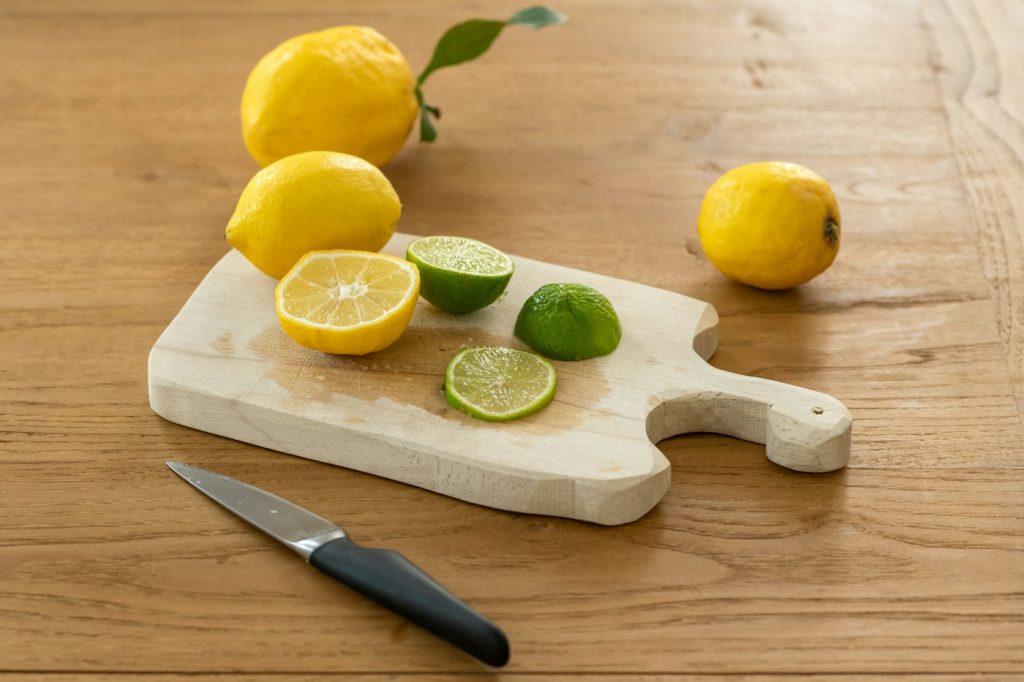
Wood and bamboo last longer with a little care. Wash them by hand and dry them standing on edge so air reaches both sides. Do not let them soak in water, which can cause warping and cracks. FSIS suggests rubbing bamboo with mineral oil to help it keep moisture, and the same food-grade mineral oil works for hardwood boards. Oil them when they start to look dry or pale, often every few weeks with regular use.
To freshen a wood board, some cooks scrub it with coarse salt and half a lemon, then rinse and dry. Light scratches can be sanded out with fine sandpaper, followed by a fresh coat of oil.
How many boards do you need?
Most home cooks do well with two to three boards: a large wood or bamboo board for vegetables, fruit, and bread, a plastic board for raw meat, poultry, and seafood, and a small board for quick jobs. Households that cook a lot, or that want to keep strong flavors apart, may add one more.
Protecting your knives
The board you pick affects how long your knives stay sharp. Wood and plastic are gentler on edges than glass, marble, stone, or metal. A sharp knife on a steady board is also safer, since it is less likely to slip. Hone your knives often and keep them on a board that gives slightly under the blade.
Questions to ask before you buy
- What will I cut most? Raw meat favors a dishwasher-safe plastic board; vegetables and bread suit wood or bamboo.
- How much counter space do I have? A board that fits your counter and sink is easier to use and clean.
- Will I hand wash? If not, choose plastic or a board labeled dishwasher-safe.
- Do I want it to double for serving? Acacia and maple look good on the table.
The short answer
Pair a large wood or bamboo board for everyday prep with a separate plastic board for raw meat, poultry, and seafood, as FSIS suggests. Wash boards with hot, soapy water after each use, sanitize when needed with the diluted bleach solution FSIS describes, oil wood and bamboo now and then, and replace any board that becomes deeply grooved.
The responses below are not provided, commissioned, reviewed, approved, or otherwise endorsed by any financial entity or advertiser. It is not the advertiser’s responsibility to ensure all posts and/or questions are answered.
Question on oiling: how often should a new maple board get mineral oil in the first month? Tip for others - a strip of shelf liner under a plastic board keeps it from sliding if it doesn't have grippy feet.