

Last Updated on: Sep 25, 2026
A curtain rod is a small purchase with an outsized effect on a room. The wrong length leaves the window cramped; the wrong brackets let fabric rub against the trim; and a rod chosen for appearance alone can sag under a heavy panel. Start with the window, the curtains you already own or plan to buy, and the surface that will support the rod. The eight retailer listings below cover standard adjustable rods, a tension design, a frame-mounted set, and different end treatments.
What We'll Cover
Measure before matching finishes. A product range such as 48 to 84 inches describes the rod’s adjustment, not necessarily the widest window it will cover comfortably once curtains stack at either side. Decide where the brackets will go, whether a center support is necessary, and how far the fabric should extend beyond the glass. A photo of a neatly dressed window cannot settle the wall construction in your own room.
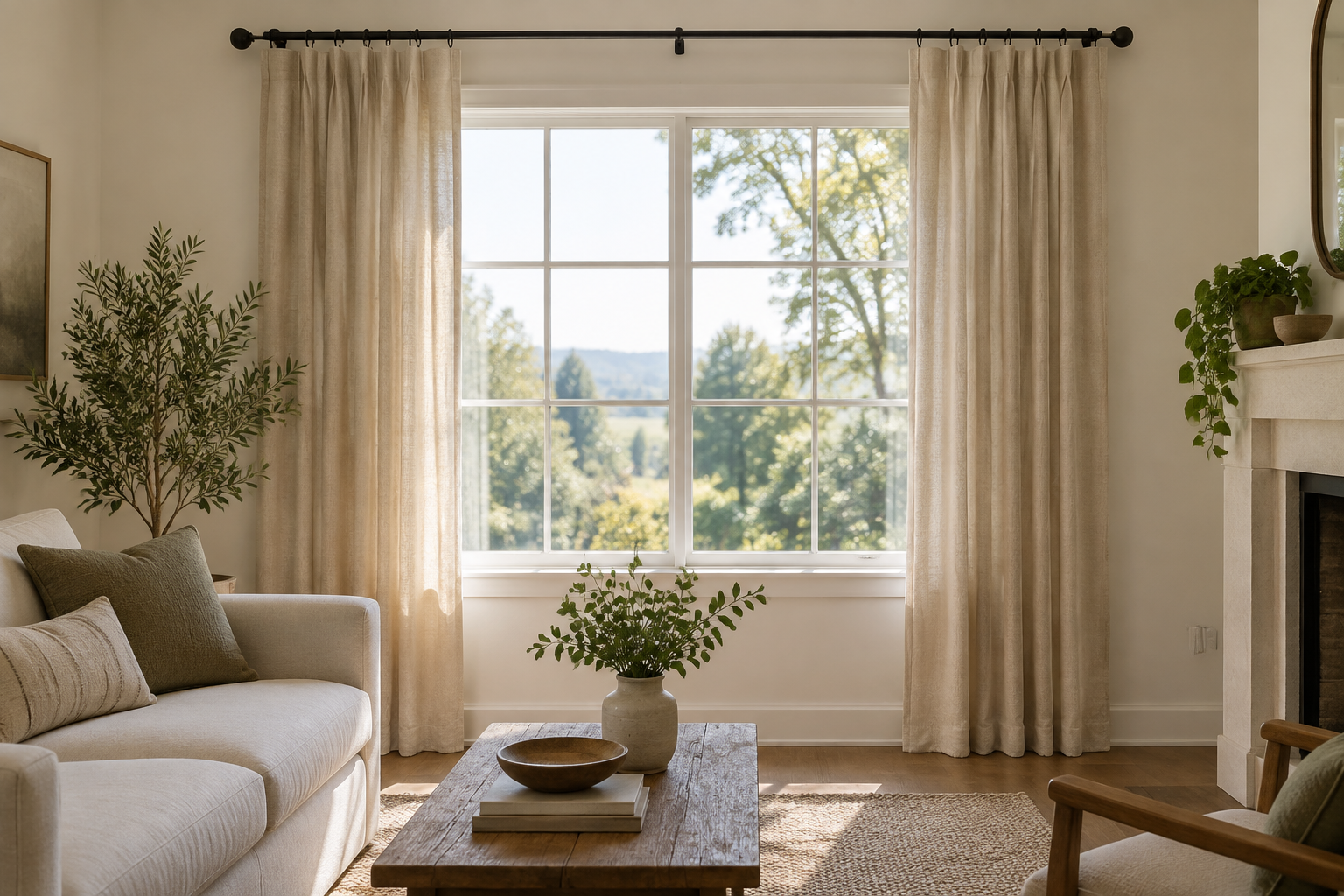
Top Curtain Rods
Measure the window and the final span
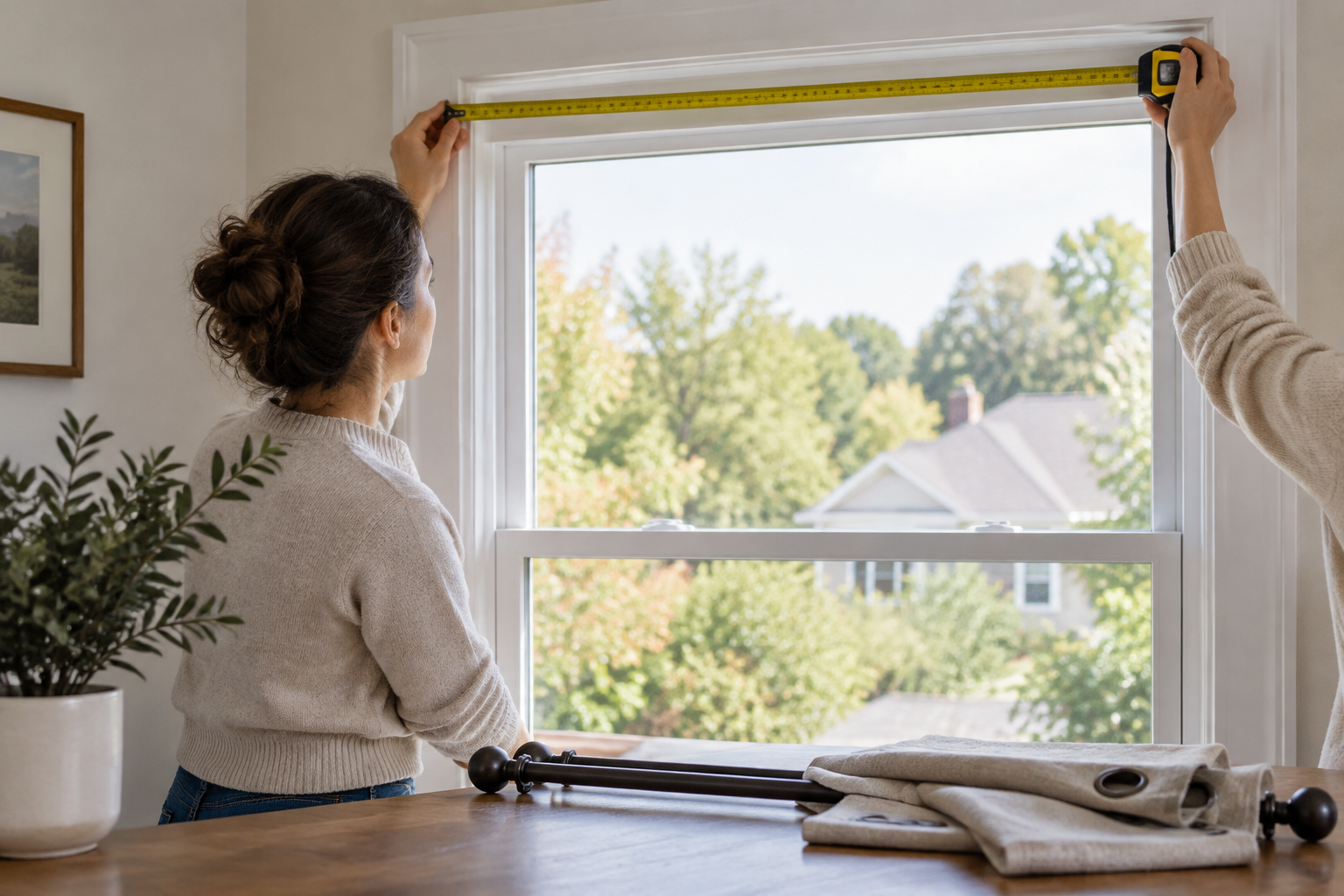
Record the outside width of the window trim, then sketch the full area the rod will cover. Many people want the panels to park beyond the glass when open, preserving daylight. The needed extra distance depends on how wide the panels are, how they fold, and whether the space beside the frame is blocked by a corner or cabinet. Measure that available side space rather than applying one universal extension rule.
For a rod with decorative finials, check whether the stated length includes or excludes the ends. The usable section for rings or a rod pocket can be shorter than the overall length. A telescoping rod also has an overlap between its sections; check its supported adjustment range and avoid stretching it beyond the manufacturer’s guidance. If a window is near the rod’s maximum length, see whether a longer model with adequate overlap and a center support is available.
- Measure the trim from outside edge to outside edge.
- Add the actual space needed for the curtain stack on both sides.
- Confirm the usable rod length, not just the finial-to-finial span.
- Check that brackets and any center support fit the wall or frame.
Height is another choice. Mounting above the frame can create a taller visual line, but the panel length then needs to reach the intended floor or sill position. Measure from the proposed rod location to that ending point before buying curtains and hardware separately. A radiator, baseboard heater, furniture edge, or operable window handle may dictate a different height or projection. Keep fabric clear of heat sources under the appliance maker’s instructions.
Choose the right mounting method
Conventional wall-mounted brackets usually need suitable fasteners for the wall. A screw that holds in a stud, solid masonry, or a hollow wall is not interchangeable. Follow the rod maker’s instructions and use anchors appropriate to the actual surface and expected load. If you cannot identify the structure or there may be electrical or plumbing lines behind the chosen drilling point, pause and get qualified help. Do not rely on a decorative cover to hide a loose fastening.
A frame-mounted set attaches at or near the window frame rather than projecting from the wall. That may suit a narrow space, but only if the frame’s construction and the maker’s directions permit it. Avoid driving a screw through a window component without understanding what is behind it. In a rental, ask which holes are permitted and what repair will be expected. “Easy install” describes a product approach, not permission to skip its instructions.
Tension rods press between two opposing surfaces. Their success depends on the surface, the span, the maker’s installation method, and the weight of the fabric. They are not an automatic substitute for a bracketed rod with heavy drapes. Check whether the surface can safely bear pressure without damage and test the installed rod according to its instructions. Do not place fragile or valuable items directly below a rod whose hold is uncertain.
Diameter, support, and curtain weight
Compare the rod diameter with the curtain heading. Grommets and rings need enough room to glide; a narrow pocket may not fit a thick rod. The load comes from both curtain panels together, rings, clips, and any liner, not just one piece of fabric. Seek a stated weight rating and check how it changes over longer spans or when a center bracket is installed. Marketing terms such as heavy duty do not replace a numeric limit from the actual seller or manufacturer.
A center bracket can reduce sag across a wide opening, but it may prevent a continuous ring from sliding past the middle. Plan where each panel will rest when closed. If you want one panel to travel across the whole window, look for a compatible support arrangement instead of assuming standard rings can cross a bracket. For pinch-pleat drapes, check the hooks and rings; for rod-pocket panels, consider how easily they will slide when opened daily.
Projection matters as much as width. Brackets need to hold the fabric far enough from the wall or trim that it can move and hang without snagging. Layered sheers and room-darkening curtains may need a double rod or separate tracks rather than crowding both layers onto one bar. Check the depth of a window crank or handle. A rod mounted too close to the glass can interfere with ventilation, cleaning, or window access.
Finials, wraps, and room style
A ball, square, or minimal end cap changes the look, but also takes up space beside the window. Measure the clearance to a nearby wall before choosing a large finial. In a narrow corner, a compact cap or wraparound end may fit better. A wraparound rod turns the curtain toward the wall; it can help cover side gaps, but the result depends on the panel width and hanging method. It does not turn thin fabric into blackout fabric.
Matte black can make a clear line against light walls, while bronze or nickel may blend with existing hardware. Match the finish to the room if that is important to you, but prioritize the right size and mounting method. A decorative rod will not look polished if the brackets sit unevenly or the panels scrape the sill. If the seller offers several lengths under one listing, verify that the exact selected size, finish, and included parts match the product photo.
Eight listings to compare
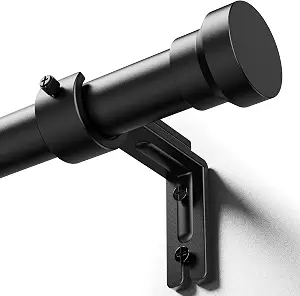
Adjustable length: 32-84" curtain rod fits windows 24 to 76 inches wide. Its telescoping rod extends up to 9", and the adjustable thickened brackets allow the gap between the rod and wall to be adj...
YaFex lists a black one-inch rod with a 32-to-84-inch adjustment range. It is a useful example for a middle-size window, but verify the selected length and bracket count against your own span.
The Room Essentials Twist and Shout is a no-drill tension style listed for 48 to 84 inches. Check the opposing surfaces, curtain weight, and installation instructions before choosing it over a mounted rod.
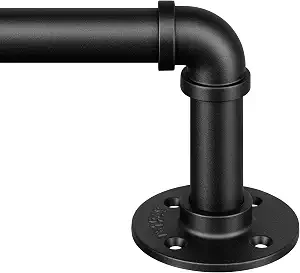
HEAVY DUTY METAL CONSTRUCTION: Crafted from high-strength metal, this black curtain rod features a 1 inch diameter pole and 0.8 mm thick wall construction for enhanced durability and stability. The...
Zeerobee’s black industrial-style rod lists a 48-to-86-inch range and a wraparound form. Check the return toward the wall, usable fabric span, and how its sections connect.
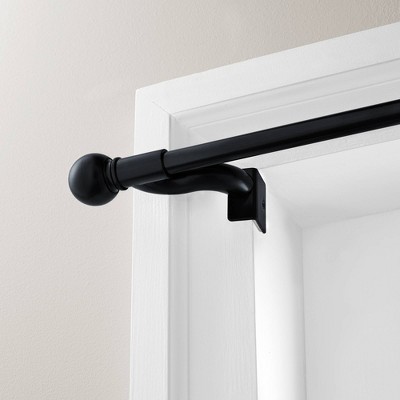
Target’s Easy Hang frame-mount set lists a 48-to-84-inch adjustment. Verify the window frame’s suitability and included mounting pieces for the exact selected product.
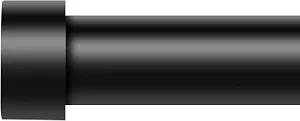
【 HEAVY DUTY CURTAIN ROD】Real heavy duty curtain rods, can hold up to 30 pounds. To work better with heavy curtains, in choosing materials for making curtain rods, we made the following three choic...
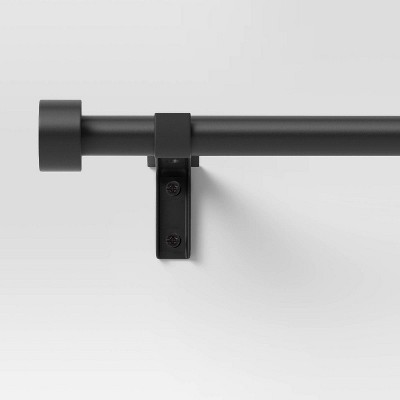
VOIIY uses a black one-inch tube and restrained end caps. Compare the clearance around the window and the selected size rather than shopping by the photograph alone.
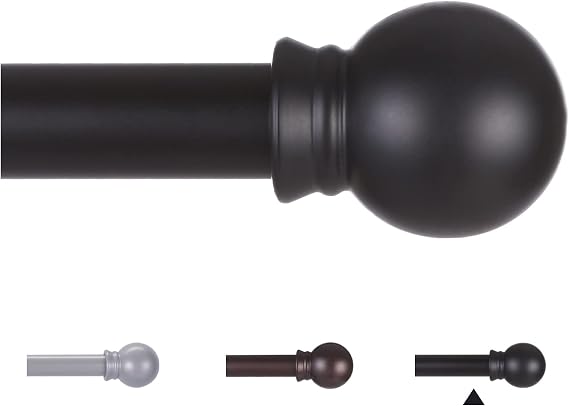
5/8 inch curtain rods for windows, adjustable size by splicing. The connection of the curtain rods is optimized for lengthening, which gives it a maximum weight capacity of 25 lbs, suitable for lig...
Thestoa lists a slimmer five-eighths-inch matte black rod. Confirm that your curtain heading fits and that the supported weight suits the panel pair.
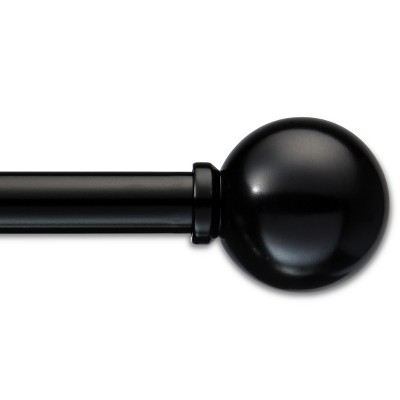
The Room Essentials cafe rod at Target has a black ball-end design and a listed 48-to-84-inch range. A cafe style can suit lighter panels, subject to the actual product rating.
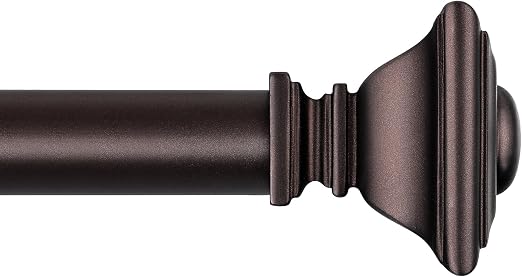
Heavy Duty:BRIOFOX curtain rods is 1 inch diameter, 0.8mm thickness,surface treated with high temperature color-fixing process, no fading, delicate texture, wear-resisting.Curtain rod tube max load...
BRIOFOX lists a bronze one-inch rod with square finials. Check the total end-to-end width if the window sits close to a wall or adjacent cabinet.
Install and test the complete setup
Before drilling or fastening, mark both sides at the same height and check them with a level. Open and close the window and consider whether the panels can move freely. Follow the maker’s spacing, fastener, and center-support instructions, then fit the complete curtain pair and open and close it several times. Watch for bracket movement, telescoping joints that twist, and rings that snag. A rod that looks straight while empty may behave differently under fabric.
After installation, revisit the fastenings if a bracket shifts or the rod begins to bow. Do not leave a visibly loose rod above a seating or sleeping area. In a household with children, follow the curtain and shade makers’ child-safety directions for any cords or loops, keeping them away from reach. A simple rod does not eliminate hazards from the window covering attached to it.
Questions before checkout
- What is the required fabric span after accounting for side stacking?
- Does the chosen length include finials, and is there enough overlap?
- What surface will hold the brackets or tension ends?
- Will the exact rod and support layout carry both panels?
- Do the rod diameter, projection, and hardware fit the curtain heading?
The best rod for a window is one that fits its real dimensions, lets the fabric work as intended, and stays secure on the available mounting surface. Settle those points before choosing the finish. They make the difference between a curtain that opens smoothly every day and a decorative bar that only looked right in a listing.
The responses below are not provided, commissioned, reviewed, approved, or otherwise endorsed by any financial entity or advertiser. It is not the advertiser’s responsibility to ensure all posts and/or questions are answered.