
Last Updated on: Sep 25, 2026
A convertible car seat is a long-term purchase, but its value comes from fitting the child, the vehicle, and the adult who installs it. A seat with more modes is not automatically a better choice than one that fits securely today. Before comparing fabric colors or cup holders, check the child-size limits for every mode and whether the manufacturer permits the installation you need in your vehicle.
What We'll Cover
The eight retailer listings below cover traditional convertible seats, slim models, an all-in-one option, and a rotating design. Product names can hide different generations and limits. Confirm the exact model and manual on the retailer page before buying, and follow the seat and vehicle instructions rather than using a product photo as installation advice.
Top Convertible Car Seats
Fit the child first
The National Highway Traffic Safety Administration offers a Car Seat Finder based on a child’s age, height, and weight. These are more useful decision inputs than a broad marketing age range. Convertible seats typically begin rear-facing and later permit forward-facing use, while some all-in-one models add a booster mode. Check the minimum and maximum height and weight for each mode, as well as the rules for harness position and head clearance.
NHTSA recommends keeping a child rear-facing until the top height or weight limit allowed by the seat manufacturer, then moving to the next appropriate stage. A child who has outgrown an infant carrier may still fit rear-facing in a convertible seat. Do not turn a child forward just because a product description calls a model suitable for toddlers. Follow the current label, manual, and child’s measurements.
Fit the vehicle and the family routine
A bulky seat can crowd the front passenger or make it hard to buckle a second child restraint. Check front-to-back space at the approved recline angle, especially in a smaller car. Measure the rear bench if you need two or three seats side by side, but a claimed slim width does not guarantee that a particular combination can be installed securely.
A rotating seat may make daily loading easier when a door opening is tight, but its base and shell need room to rotate. Ask how the model behaves in rear-facing and forward-facing modes, which positions rotate, and whether rotation is available when the seat is installed using your vehicle’s approved method. Do not choose a rotating seat solely from a video without confirming its manual.
Installation methods are not interchangeable shortcuts
Seat belts and lower anchors are two installation methods. Which one is permitted, and whether they may be combined, depends on the car seat and vehicle manuals. A seat can have lower-anchor weight limits that change as the child grows. Learn the lock-off, belt routing, or lower-anchor method for the specific seat instead of assuming that a familiar-looking clip works the same on every model.
NHTSA’s rear-facing convertible-seat installation guidance says a properly installed seat should not move more than one inch side to side or front to back when tested at the belt path. This is a check at the belt path, not by tugging the top of the shell. Correct recline, harness adjustment, and tight installation all matter. A certified Child Passenger Safety Technician can help inspect your setup, often at no cost.
Harness and day-to-day use
- Harness height: Set the straps according to the manufacturer’s directions for the current rear- or forward-facing mode.
- Chest clip: Position and use it as the manual shows, not by copying a retailer photograph.
- Snug fit: Avoid bulky coats under the harness; dress in thin layers and place a blanket over the secured harness when needed.
- Recline: Use the built-in indicator and the permitted vehicle-seat position.
- Accessories: Use only items approved by the seat maker; extra inserts or strap covers can affect fit.
A seat that is easy to adjust is more likely to be used correctly as the child grows. Look at the headrest mechanism, harness release, and how to clean the cover. If multiple caregivers use the same seat, everyone should know how to check the harness and install it, not just the person who made the purchase.
Amazon picks
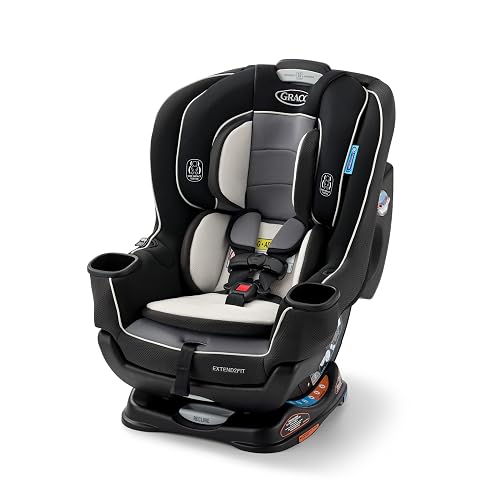
Convertible car seat grows with your child from rear-facing harness (4-50 lb) to forward-facing harness (26.5-65 lb)
Extend2Fit 4-position adjustable extension panel provides up to 5" additional le...
Graco Extend2Fit 2-in-1 is a rear- and forward-facing option. Check the current Gotham listing for the specific rear-facing limits and vehicle fit.
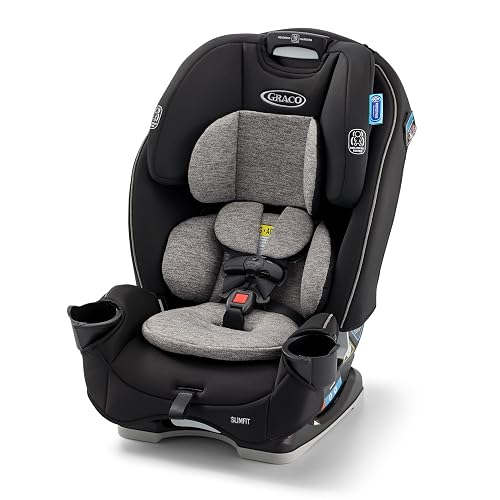
3-in-1 car seat grows with your child from rear-facing harness (5-40 lb) to forward-facing harness (26.5-65 lb) to highback booster (40-100 lb)
Slim design with dual integrated cup holders that rot...
Graco SlimFit 3-in-1 is shaped for a narrower installation. Test actual side-by-side fit against the other restraints in your car.
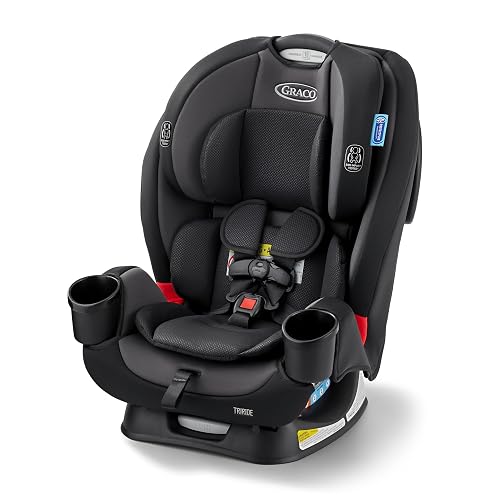
3-in-1 car seat grows with your child from rear-facing harness (5-40 lb) to forward-facing harness (26.5-65 lb) to highback booster (40-100 lb)
Graco ProtectPlus Engineered: a combination of the mo...
Graco TriRide 3-in-1 covers multiple stages. Compare the child-size range and installation details for the Kipling model.
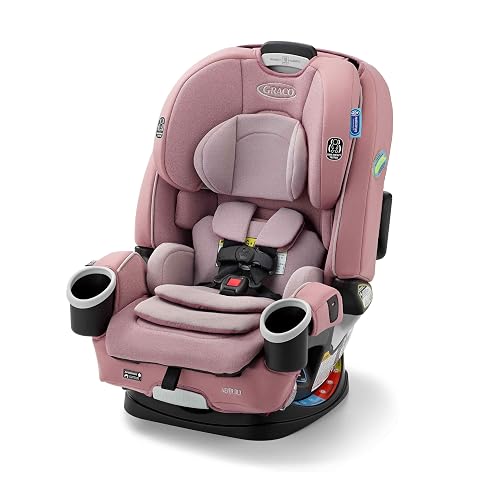
4-in-1 car seat gives you 10 years of use: seamlessly transforms from rear-facing harness (4-40 lb), to forward-facing harness (26.5-65 lb), to highback booster (40-100 lb), to backless booster (40...
Graco 4Ever DLX 4-in-1 is designed for several modes. More modes do not remove the need to verify each transition against the manual.
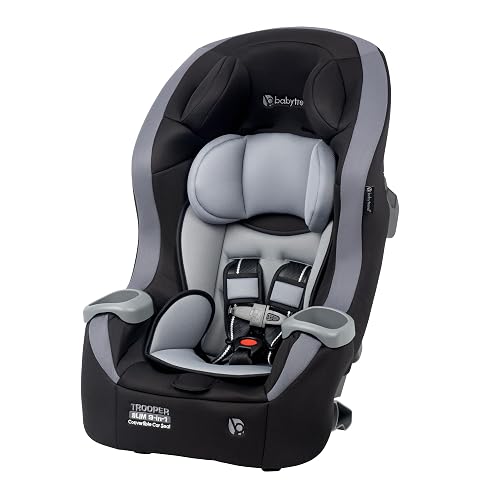
Slim-profile design helps maximize back-seat space for compact vehicles and multi-seat installations
3-in-1 convertible system supports key growth stages, transitioning from rear-facing to forward-...
Baby Trend Trooper Slim 3-in-1 is a compact option. Confirm its mode limits and read the manufacturer’s instructions before relying on a three-across claim.
Target and Walmart options
Target lists Graco Extend2Fit 3-in-1 in Cullen. It has an additional stage compared with the 2-in-1 listing, but the specific child limits and features need to be checked on this exact model.
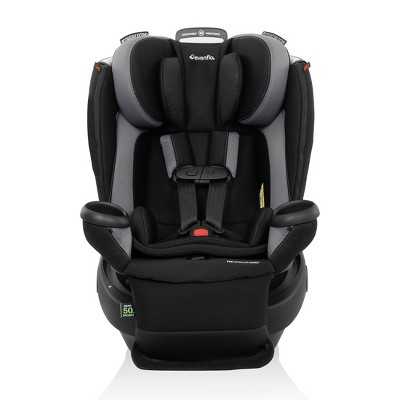
Target lists Evenflo Revolve360 Extend in Revere Gray. Check how the rotating base installs and whether its operating modes fit your vehicle and routine.
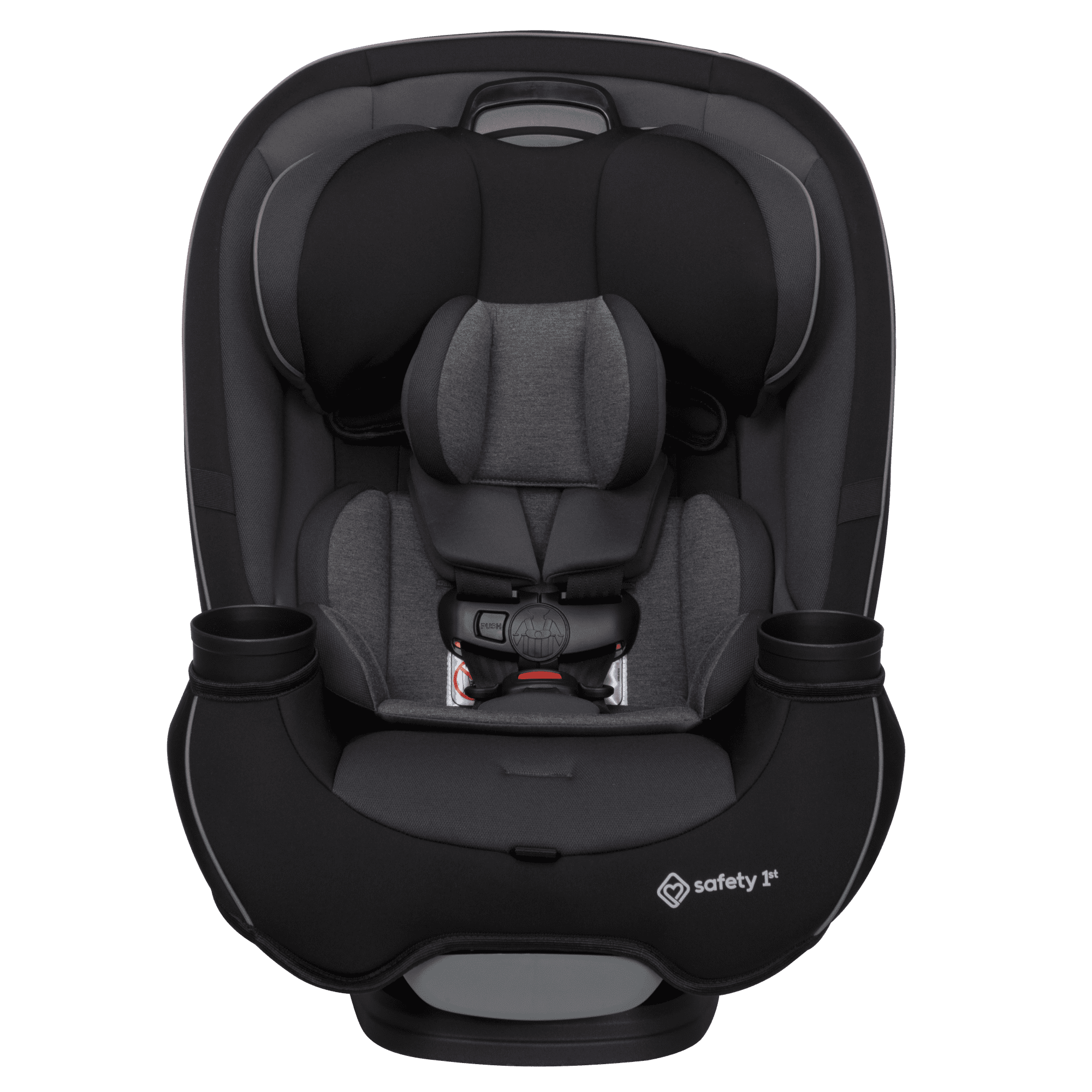
Walmart lists Safety 1st Grow and Go All-in-One Slim in Black Phantom. Verify its seller and the child-size limits for the mode you need now.
New, used, recall, and lifespan checks
For a new seat, keep the manual, register the product, and check the manufacturer label and NHTSA recall information. A used seat requires more homework: you need to know its full history, expiration date, missing parts, and whether it was involved in a crash. If you cannot verify those facts, do not assume a clean-looking cover means it is safe.
Car-seat rules and manufacturer directions change. Do not infer a universal expiration period from a retailer review; use the date and instructions for the exact model. After a crash, follow the manufacturer and NHTSA replacement guidance. Keep the seat’s model number and date of manufacture accessible for questions or recalls.
Care and cleaning
Children spill snacks and drinks. Check whether the cover can be removed and washed according to the manual, and whether replacement covers or buckles are available. Never wash harness webbing or soak buckles unless the manufacturer expressly permits it. Improvised cleaning can change how a component works. A cup holder is useful, but it is less important than a secure installation and correctly tightened harness.
If the seat moves between vehicles, practice installing it in each one rather than assuming it fits identically. Save a copy of the manual for the caregivers who will use it. Travel and rideshare use may call for a different setup, and airline use requires checking the model’s aircraft approval and the airline’s rules.
Questions before checkout
- What are the child’s current height and weight, and which direction is appropriate?
- Does the seat fit securely at the permitted angle in your specific vehicle?
- Can you install it using an approved method without exceeding anchor limits?
- Do all caregivers understand the harness and mode changes?
- What is the return policy if a home vehicle-fit test fails?
Also consider how the seat will be used over the next year, not only at checkout. A higher rear-facing limit can be useful if the child will reach the current seat’s limit soon, but an impressive limit is not a reason to skip checking fit in the car. Keep enough room for the adult in the front seat to ride comfortably without pressing on the child restraint, and repeat the installation check after the seat has been moved or adjusted.
Choose the seat that fits a child now, installs securely in the car, and can be used correctly on every trip. The longest advertised lifespan or largest number of modes means little if the restraint is difficult to fit and adjust. When uncertain, get hands-on help from a certified technician before relying on a new setup.
Safety sources: NHTSA, Car Seat Finder; NHTSA, How to Install a Convertible Car Seat Rear-Facing.
The responses below are not provided, commissioned, reviewed, approved, or otherwise endorsed by any financial entity or advertiser. It is not the advertiser’s responsibility to ensure all posts and/or questions are answered.