
Last Updated on: Sep 23, 2026
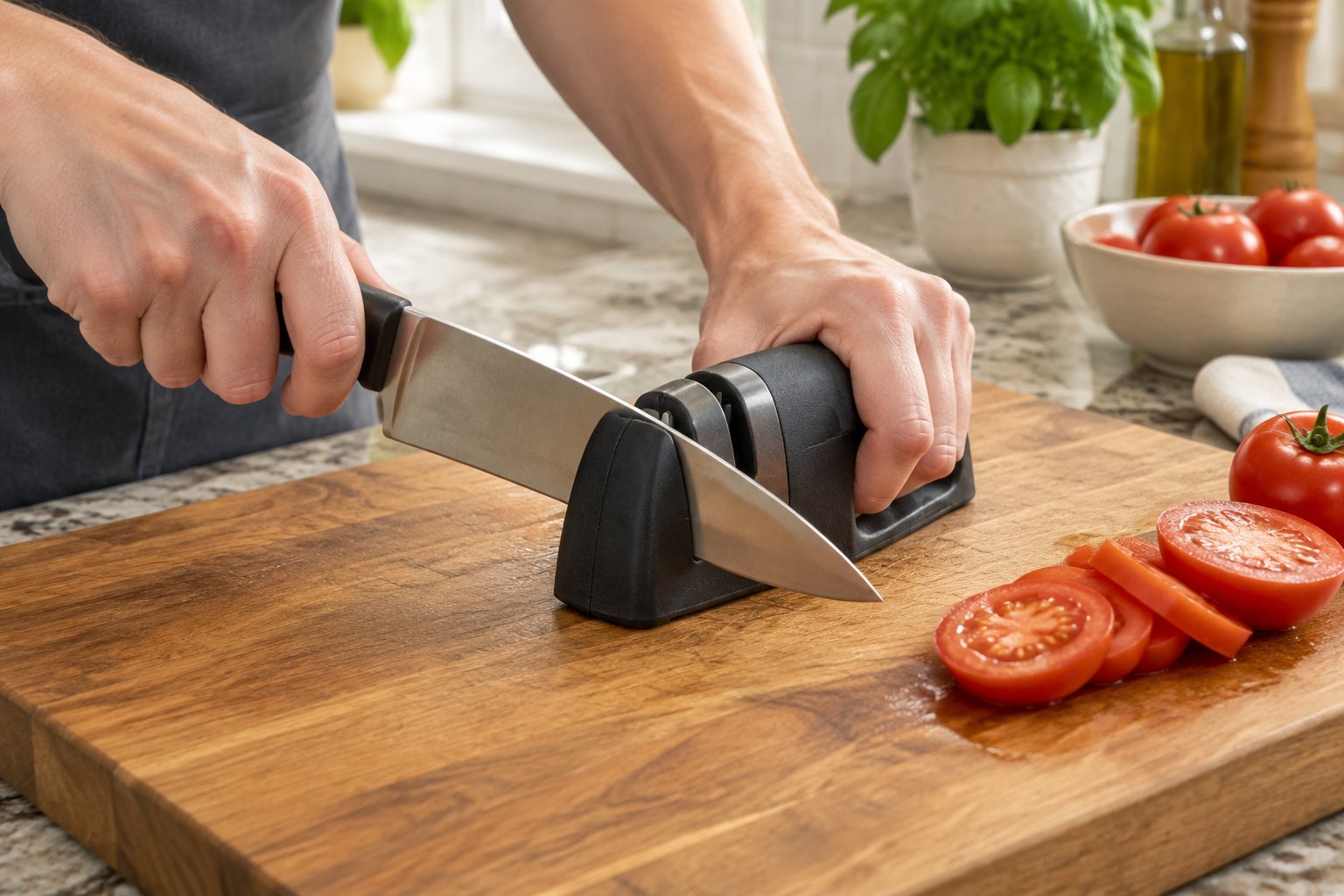
A dull knife is more dangerous than a sharp one. That line gets repeated in every cooking class because it is true. A sharp blade bites into a tomato skin or an onion and goes where you aim it. A dull one slips, and you push harder to make up for it, which is exactly how cuts happen. Dull knives also crush herbs, tear bread, and make simple prep feel like a chore.
What We'll Cover
- Top Knife Sharpeners
- Honing and sharpening are not the same thing
- The main types of sharpeners
- Pull-through sharpeners for quick results
- Honing rods for daily upkeep
- Rolling sharpeners and guided systems
- Electric sharpeners
- Match the angle to your knives
- Habits that keep knives sharp longer
- What to look for when you buy
- Stay safe while sharpening
Most home kitchens have at least one knife that needs help, and the fix costs less than a new knife. The trick is understanding the difference between honing and sharpening, and picking a tool that matches how much effort you want to put in.
Top Knife Sharpeners
Honing and sharpening are not the same thing
A knife edge is a very thin strip of metal. With use, that strip bends and rolls to one side. It is still there, just out of line, and the knife feels dull. Honing pushes the edge back into line. It removes little or no metal and takes a few seconds. Many cooks hone before each use or every few uses.
Sharpening actually grinds away metal to create a new edge. You need it when honing no longer brings the knife back, usually every few months for a home cook, depending on how often you cook and what you cut on. Glass and stone cutting boards dull knives much faster than wood or plastic.
A simple test tells you which one you need. Try slicing a sheet of printer paper held in the air. If the knife glides through, you are fine. If it catches in spots, honing may be enough. If it tears or folds the paper, it is time to sharpen.
The main types of sharpeners
| Type | Skill needed | Speed | Best for |
|---|---|---|---|
| Honing rod | Some practice | Seconds | Keeping a good edge in line |
| Pull-through | Very little | Under a minute | Quick fixes, busy kitchens |
| Rolling sharpener | Little | A few minutes | Even angle without a big machine |
| Guided angle system | Moderate | 10 to 20 minutes | Best edge, many knife types |
| Electric | Very little | A few minutes | Many knives, fast results |
Pull-through sharpeners for quick results
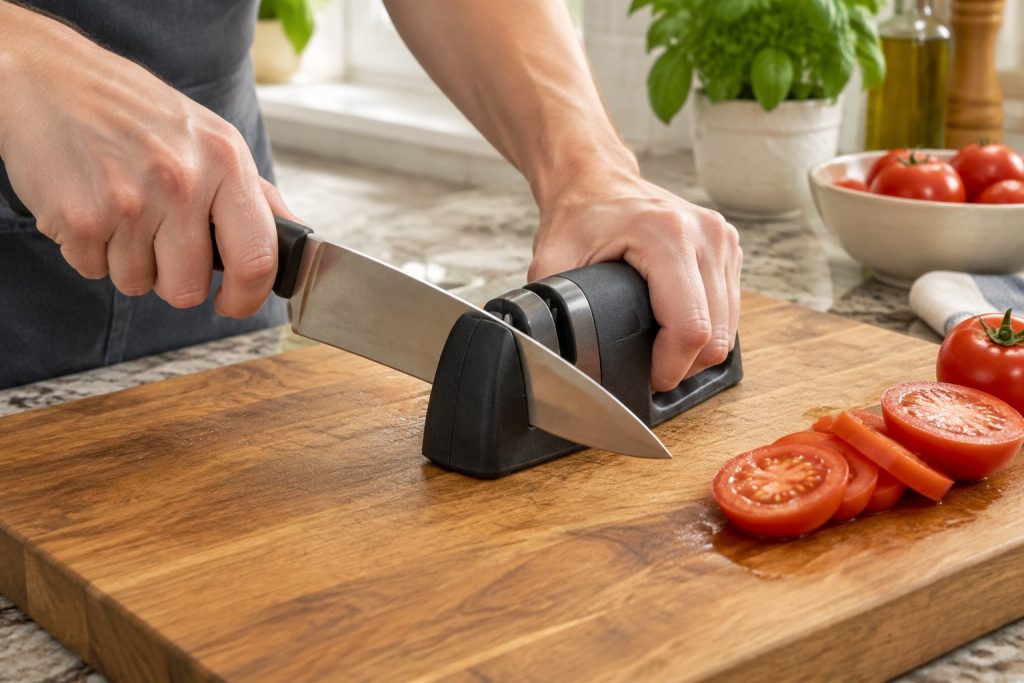
Pull-through sharpeners have preset slots with hard carbide or ceramic surfaces. You draw the knife through a few times and the angle is set for you. They are the easiest place to start, and they fix most dull kitchen knives in under a minute. The trade-off is that they remove more metal than slower methods, so use the coarse slot only when you need it.
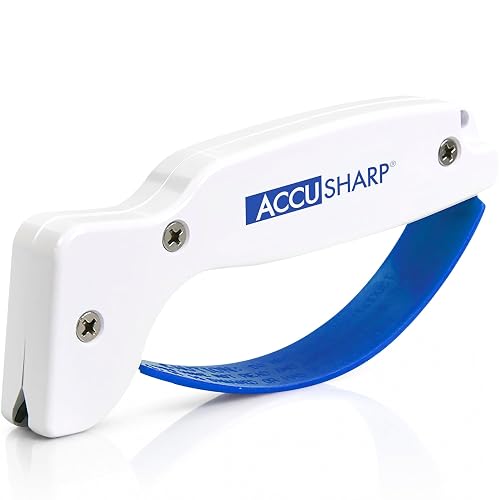
EASY TO USE KNIFE SHARPENER: This is the perfect knife sharpener for chef’s knives, paring knives, serrated knives, filet knives, cleavers – you name it. If you own a knife, you need this sharpener...
AccuSharp is a longtime best seller with a simple design. It has a comfortable handle, and you draw it along the blade rather than pulling the knife through a slot. The company says most blades sharpen in about ten seconds. It works on chef's knives, paring knives, fillet knives, cleavers, and serrated blades, and it is small enough to toss in a drawer or a camping kit.
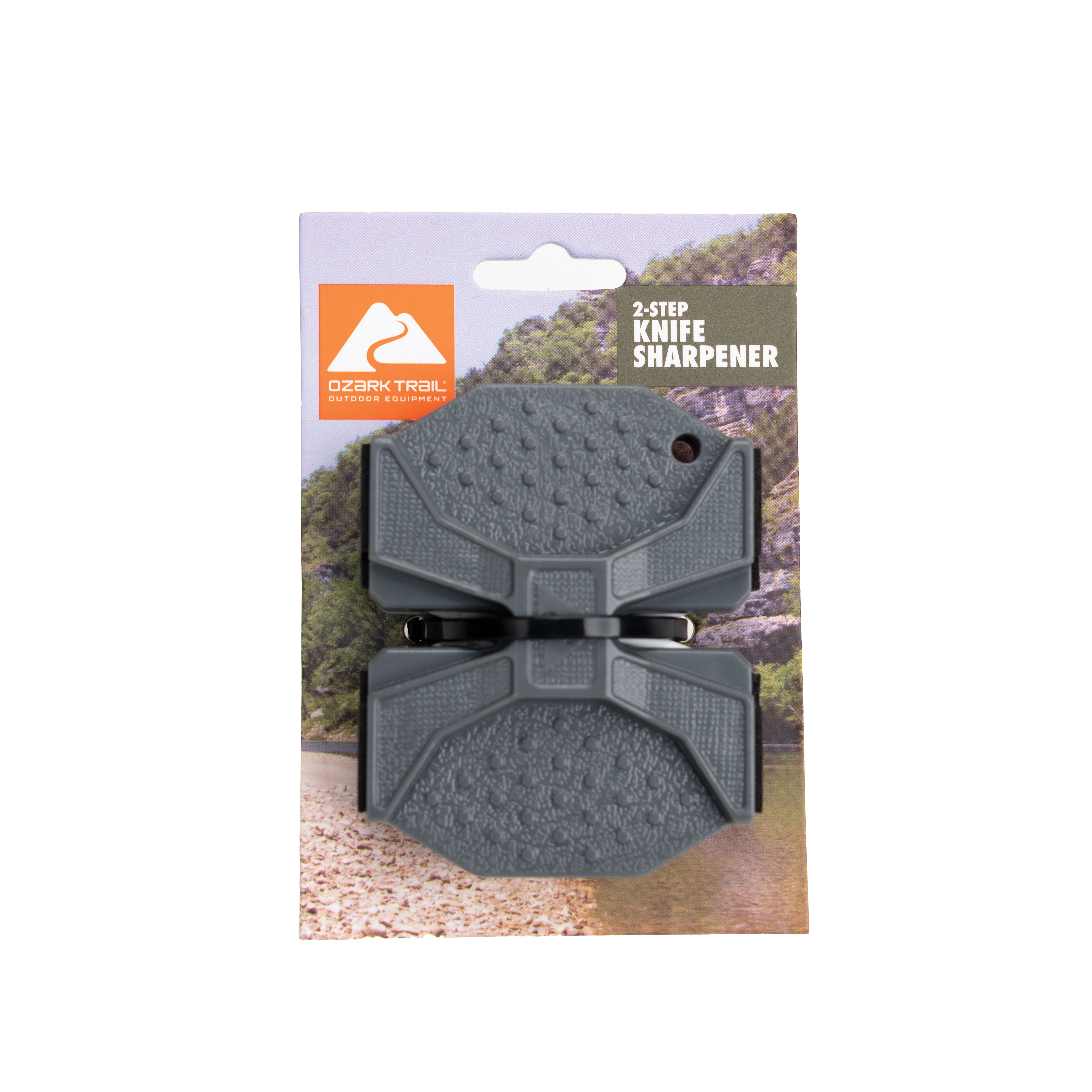
Walmart's Ozark Trail 2-in-1 sharpener is another low-cost handheld option. It has a 1,000-grit slot for dull edges and a 1,500-grit slot for touch-ups, and it is small enough for a kitchen drawer or a tackle box. It is made for straight-edge knives, not serrated ones.
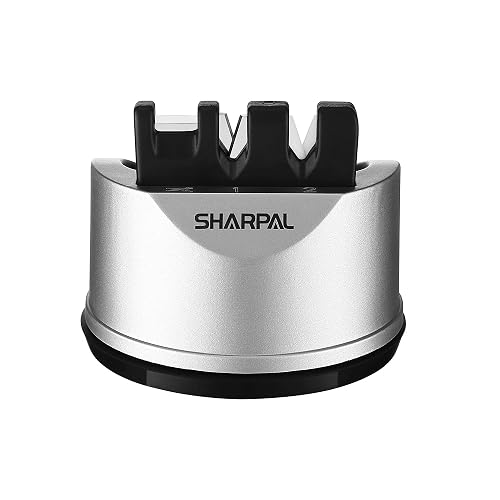
3-Stage Sharpening Tool: Designed for versatility, it features tungsten carbide blades for quick edge setting, ceramic blades for precision honing, and a specialized tungsten carbide blade for shar...
The SHARPAL 191H has three stages: tungsten carbide for setting a new edge, ceramic for finer honing, and a separate carbide slot for scissors. Its suction base holds it firmly to the counter, which keeps your free hand away from the blade. It is a good pick for a household that also wants to keep kitchen shears in shape.
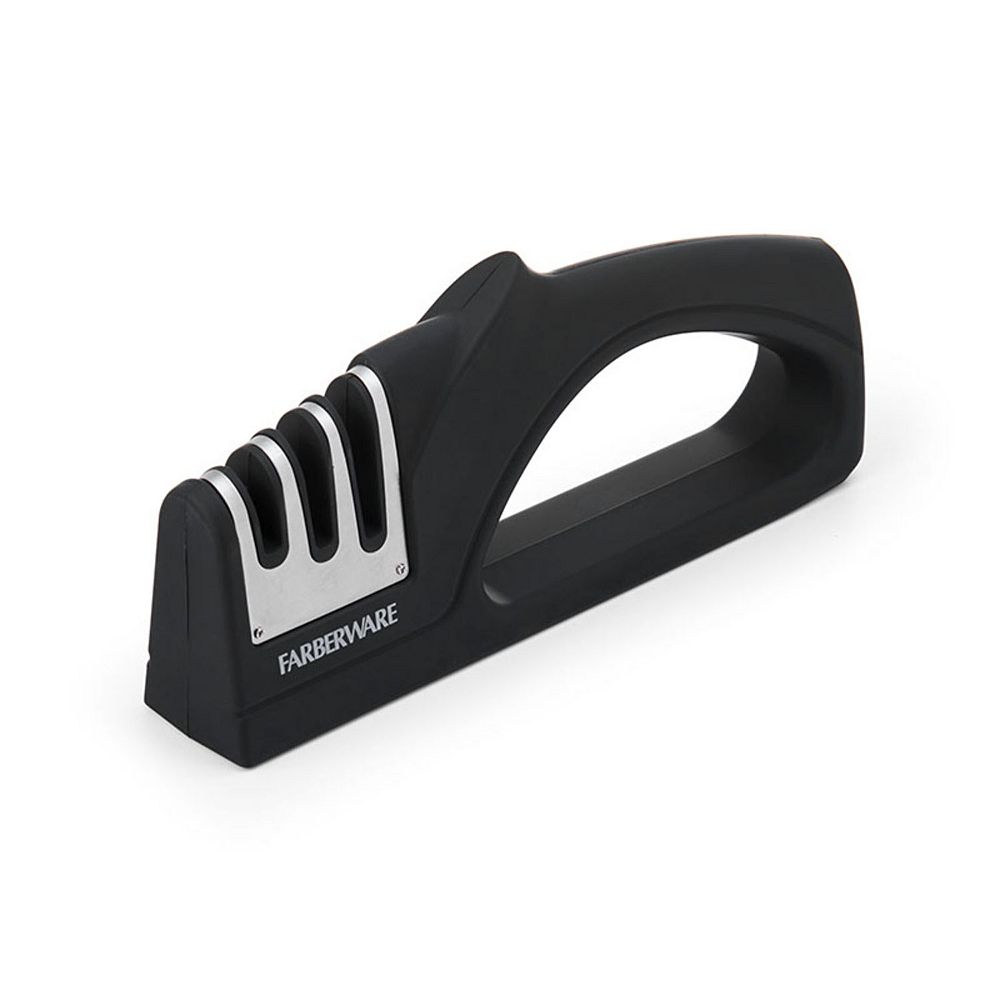
Kohl's carries the Farberware Edgekeeper, a three-stage tabletop sharpener with diamond-coated, tungsten, and ceramic rods. It sits flat on the counter and also handles scissors, which makes it an easy pick for a first sharpener.
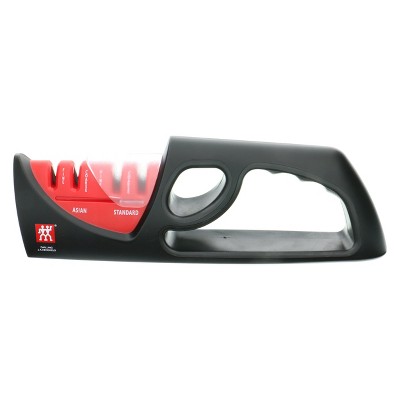
Target stocks a four-stage pull-through sharpener from ZWILLING, a longtime German knife maker, if you want something from the same brand as your knife block.
Honing rods for daily upkeep
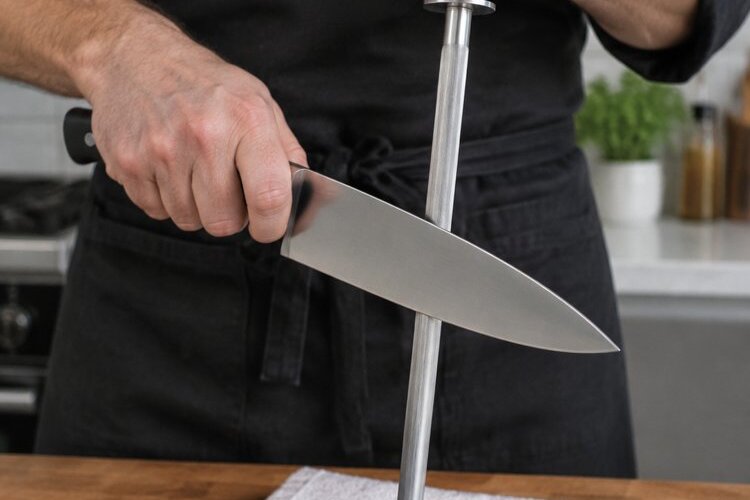
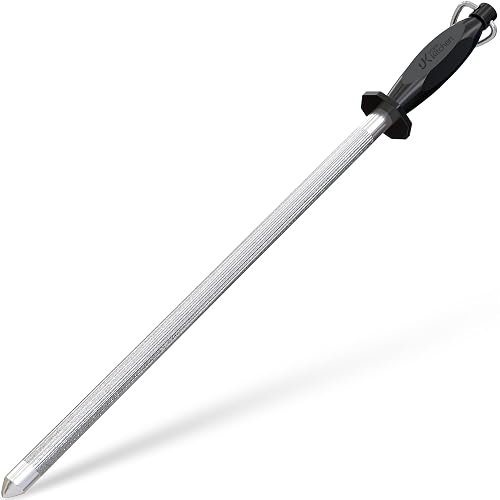
Premium Steel Construction - The steel rod is made of carbon steel and plated with nickel-chrome; the fine surface of the steel rod prevents the cutting edge from damage when sharpening.
Versatile ...
A honing rod keeps a good knife feeling sharp between real sharpenings. This 12-inch Utopia Kitchen rod is carbon steel plated with nickel-chrome, and it works on kitchen, household, and pocket knives. The long rod gives you room to draw a full chef's knife along it.
The safest way to use one is to hold the rod upright with the tip resting on a folded towel on the counter. Place the heel of the blade against the top of the rod at a slight angle, around 15 to 20 degrees, then draw the knife down and toward you so the whole edge passes along the rod. Alternate sides, and do five or six passes per side. Slow and even beats fast and flashy.
Rolling sharpeners and guided systems
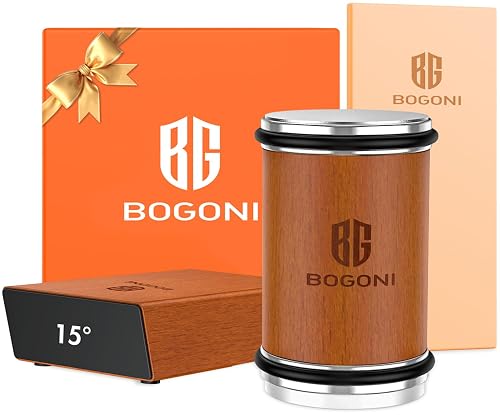
【Effortless Sharpness, Fast and Effective】The BOGONI Rolling Knife Sharpener is a true game-changer. No special skills required—anyone can achieve a razor-sharp edge in just minutes, making both sh...
Rolling sharpeners are a newer idea. A magnetic block holds the knife at a fixed angle, and you roll a disc along the edge. The BOGONI kit comes with a 400-grit diamond disc for reshaping and a 3000-grit ceramic disc for fine polishing. It feels closer to using a stone, without needing to hold the angle yourself.
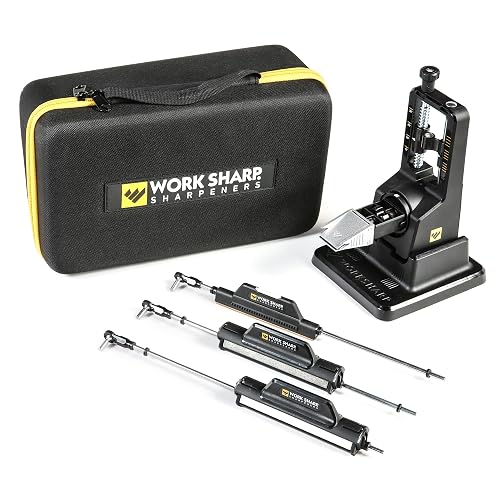
PERFECT FOR HOME COOKS, HUNTERS & KNIFE ENTHUSIASTS - Delivers razor-sharp, professional-quality edges on kitchen knives, hunting blades, and EDC pocket knives. Get barbershop-sharp results at home...
For people who want the best possible edge, the Work Sharp Precision Adjust Elite clamps the knife and guides the abrasive at a set angle from 15 to 30 degrees. You can use 15 degrees for Japanese-style knives, 20 for Western kitchen knives, and higher angles for hunting blades. It takes longer than a pull-through, but it removes less metal and gives you more control.
Electric sharpeners
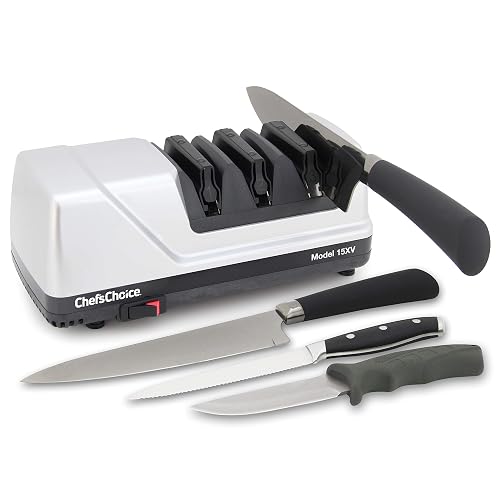
CONVERT YOUR KNIVES: Ideal for converting traditional 20-degree factory edges of household knives into high performance Trizor XV 15-degree edges
DIAMONDS: Advanced stropping stage and 100 percent ...
Electric sharpeners do most of the work for you. The Chef'sChoice 15XV uses diamond abrasives and spring guides that hold the blade at the right angle. It is built to convert standard 20-degree factory edges into sharper 15-degree edges and handles both straight and serrated blades. It is a good fit for someone with a full block of knives who wants them all sharp in one sitting. Just go lightly, since electric models remove metal quickly.
Match the angle to your knives
Most Western kitchen knives, the kind in a typical block set, come with an edge around 20 degrees per side. Many Japanese knives use a thinner edge closer to 15 degrees. A thinner angle cuts more easily but wears faster. If you are not sure, check the maker's website or the paperwork that came with the knife. Using a 20-degree sharpener on a 15-degree knife will not ruin it, but it will change how it cuts.
Serrated knives are trickier. The scalloped edge does not fit in most standard slots. Look for a sharpener with a serrated setting, or use a thin tapered rod on each scallop. Serrated bread knives stay sharp for a long time, so this is rarely urgent.
Habits that keep knives sharp longer
Cut on wood or plastic boards, never on glass, stone, or ceramic plates. Wash knives by hand and dry them right away, since the dishwasher can knock edges against other items and dull them. Store knives in a block, on a magnetic strip, or with blade guards, not loose in a drawer where they bang together.
Hone often and sharpen rarely. A few strokes on a rod before you cook will keep a good knife performing for months between sharpenings. When you do sharpen, start with the finest setting and move to coarser only if needed.
What to look for when you buy
Start with how you cook. If you make dinner most nights with one or two favorite knives, a honing rod plus a simple pull-through or rolling sharpener will cover almost everything. If you own a full set, or you like to keep hunting and pocket knives in shape too, a guided system or an electric model saves time over the long run.
Check which angles the tool supports and whether it handles serrated blades. Look for a stable base or a good grip, since a sharpener that slides around is a safety problem. Replaceable abrasives are a plus, because carbide and diamond surfaces do wear out after years of use. Finally, read the care notes from your knife maker. Some makers of high-end knives void the warranty if you use an electric sharpener, so it is worth a quick look first.
Stay safe while sharpening
Work slowly, keep your fingers behind the edge, and always draw the blade away from your body. Wipe off metal filings with a damp paper towel before using the knife on food. Keep sharpeners out of reach of children, and store your freshly sharpened knives with the edge covered. If you are sharpening a valuable knife for the first time, practice on an inexpensive one first.
Once you get used to a sharp knife, you will not want to go back. Cooking gets faster, cuts get cleaner, and the sticky onion skins that used to slip under the blade become a non-issue.
The responses below are not provided, commissioned, reviewed, approved, or otherwise endorsed by any financial entity or advertiser. It is not the advertiser’s responsibility to ensure all posts and/or questions are answered.
The honing vs sharpening part cleared up a lot for me. I had been using my rod like it was a sharpener for years.