
Last Updated on: Aug 16, 2026
A headlamp is the kind of gear you forget about until the power goes out, the car gets a flat on a dark road, or you are digging through a tent at midnight looking for your shoes. Then it becomes the most useful thing you own. It puts light exactly where you are looking and leaves both hands free, which a flashlight or a phone simply cannot do.
What We'll Cover
- Top Headlamps
- Start with what you will use it for
- Lumens, beam, and why brighter is not always better
- Red light and night vision
- Batteries: rechargeable, disposable, or both
- Comfort is where cheap and good split apart
- Buttons, modes, and lockout
- Weather and water resistance
- Multipacks and lamps for kids
- Quick checklist before you buy
- Keeping one where you need it
The problem is that nearly every headlamp on the shelf now claims huge lumen numbers, a dozen modes, and weeks of battery life. Some of those claims matter, and some are noise. This guide sorts out what actually makes a headlamp pleasant to use, so you can pick one for camping, running, home repairs, or the emergency drawer without paying for features you will never touch.
Top Headlamps
Start with what you will use it for
Before looking at specs, picture the last few times you needed light and could not get it. That tells you more than any box.
- Around the house and car. A light, simple lamp with a low setting for reading labels and a brighter one for looking under a sink or hood. Easy buttons matter more than raw power.
- Camping. A comfortable band, a red light for the tent, and enough battery for a weekend without a charger.
- Running and walking. Low weight, a band that does not bounce, and a beam wide enough to show the ground in front of your feet.
- Hiking and backpacking. A mix of flood and spot beams, decent water resistance, and a battery plan that works far from an outlet.
- Kids. Simple controls, a soft band, and a modest brightness that will not dazzle a sibling across the room.
Most people land in two or three of these groups, which is why multipacks and mid-range lamps sell so well. You do not need an expedition light to find the fuse box.
Lumens, beam, and why brighter is not always better
Lumens measure the total light a lamp puts out. It is the headline number on every package, and it keeps climbing. But lumens alone do not tell you how useful the light is. A lamp rated at 1,000 lumens on its top setting might only hold that for a minute or two before stepping down to protect the battery and keep the lamp from getting hot.
For most tasks, a lot less light is plenty. Reading a map or cooking at camp needs only a small amount. Walking a trail usually feels comfortable somewhere in the low hundreds. The highest settings are great for scanning a campsite or spotting a trail marker, but you will spend most of your time on low and medium, and those modes decide how long the batteries really last.
Beam shape matters as much as brightness. A flood beam spreads light wide and close, which is ideal for tasks right in front of you. A spot beam throws a narrow cone farther down the trail. Many lamps offer both, and some, often sold as wide-beam or 230-degree lamps, use a long strip of LEDs across the band to light your whole field of view. Those feel natural for walking and working because there is no bright circle with darkness around it.
Many makers test their lights against the ANSI FL1 standard, which sets common rules for measuring output, beam distance, and runtime. When a box lists those figures in the same format, you can compare two lamps more fairly. Just remember that runtime is usually measured until the light drops to a small fraction of its starting output, not until it goes fully dark.
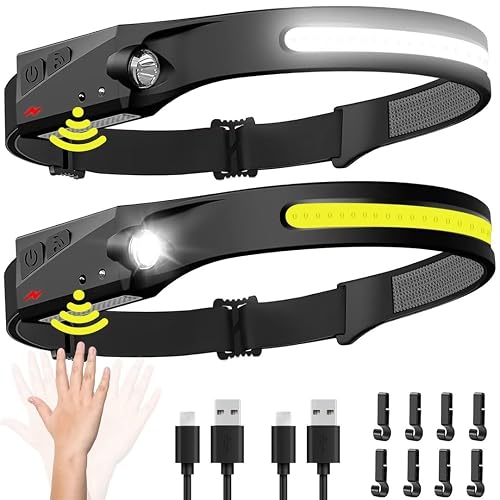
230° WIDE BEAM HEADLIGHT & SPOTLIGHT - The new 230° wide beam headlight allows you to illuminate the viewing area without moving your head. Unlike traditional headlights, it has a better view, and ...
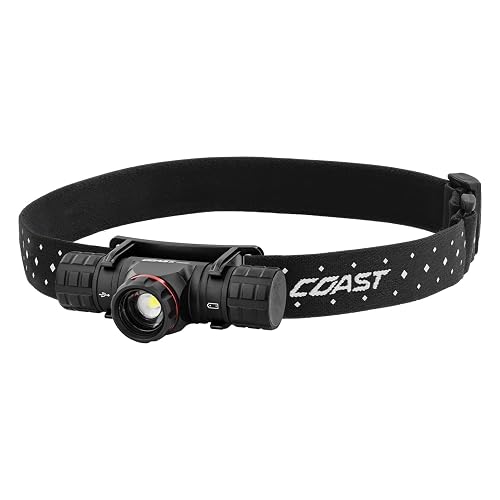
PURE BEAM FOCUSING OPTIC WITH TURBO MODE: Pack two powerful beams into one and seamlessly TWIST FOCUS system—with no halos or hot spots—between short and long-range viewing. COAST’s patented focusi...
Red light and night vision
A red mode is one of the most useful features on any headlamp, and it is easy to overlook. Red light is gentler on your night vision than white light, so your eyes adjust back to the dark faster when you switch it off. It is also far less likely to wake someone sleeping next to you in a tent or blind a friend when you turn to talk.
Look for a lamp where you can get to red without cycling through the full white brightness first. Some lamps have a separate button or a long press for red, which saves you from flashing everyone in camp each time you check the time. Green modes do a similar job and are popular with anglers and hunters.
Batteries: rechargeable, disposable, or both
This is the choice that most shapes how you will live with a headlamp.
Built-in rechargeable
Most new lamps charge over USB-C, the same cable as many phones. They are cheap to run and easy to top up from a power bank or car charger. The catch is that when the battery is empty, you have to wait for it to charge. For a camping trip longer than the battery lasts, bring a small power bank.
AAA and AA batteries
Disposable batteries are easy to find in any store and last for years in a drawer, which makes these lamps a smart pick for an emergency kit. You can swap a fresh set in seconds. The running cost is higher, and lithium AAA cells tend to perform better in the cold than alkaline ones.
Dual power
Some lamps take either a rechargeable pack or standard batteries. This is the most flexible option for long trips and for anyone who wants the lamp to work even after sitting forgotten in a garage for a year.
Whatever you choose, check the lamp before every trip and store spares with it. A lamp that lives in an emergency kit should be tested a couple of times a year, and it helps to keep disposable batteries out of the lamp during storage so they cannot leak inside it. If you use rechargeable lamps, follow the maker's charging instructions and use a reliable cable and plug.
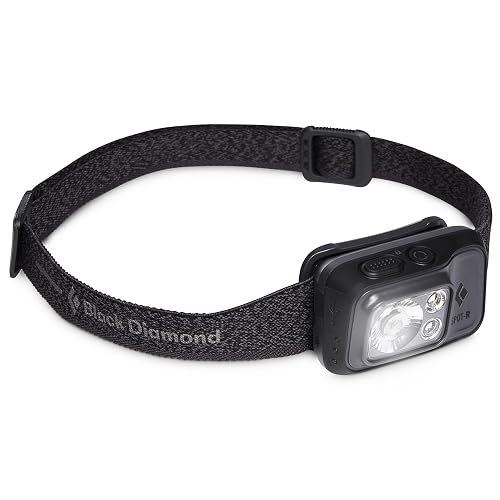
POWERFUL LIGHT OUTPUT: Delivers up to 400 lumens of brightness for reliable visibility as a headlight/headlamp for hiking gear, camping gear, night running gear, and emergency use. The powerful bea...

Comfort is where cheap and good split apart
A headlamp that feels fine for five minutes can give you a headache after an hour. The band should be wide, soft, and easy to adjust with one hand. Lamps with a top strap stay put better during running or with heavier battery packs, while lighter lamps are comfortable with a single band.
Weight balance matters too. Some bigger lamps put the battery at the back of the head, which spreads the load and keeps the light from tipping forward. Check that the lamp head tilts down easily and holds its angle. You want the beam pointed at the ground a few steps ahead, not straight out at eye level.
If you wear a hat or a helmet, see whether the band fits over it. Many lamps come with clips for hard hats or bike helmets, and some can be removed from the band and used as a small flashlight or clipped to a pocket.
Buttons, modes, and lockout
More modes are not always better. What you want is a lamp that turns on in a useful mode, usually low or the last setting you used, rather than blasting full power into your eyes. Two buttons, one for white and one for red, are easy to learn in the dark. A single button that cycles through eight modes is fine once you learn it, but it can be frustrating at first.
A lockout feature keeps the lamp from switching on in your pack and draining the battery. Some lamps use a long press to lock, others a twist of the lamp head. Motion sensors, which let you wave a hand in front of the lamp to turn it on or off, are handy when your hands are dirty or you are wearing gloves.
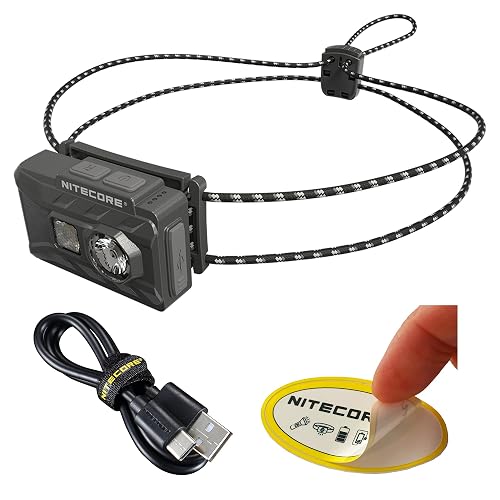
ULTRA-LIGHT & POWERFUL - Weighs just 1.34 oz yet delivers up to 360 lumens with a beam distance of 119 yards, perfect for all-day wear without strain.
3 LIGHT MODES + SAFETY FEATURES - Main white L...
Weather and water resistance
Most headlamps list an IP rating that describes how well they keep out dust and water. It is worth a quick look before you buy.
- IPX4. Handles splashes and rain from any direction. Fine for most camping and home use.
- IPX5 and IPX6. Stands up to heavier spray and downpours. A good choice for wet climates and trail running.
- IPX7 and IPX8. Rated for brief or longer submersion, useful if you fish, paddle, or tend to drop things in streams.
- IP6X. When the first number is 6, the lamp is sealed against dust, which helps on dry trails and job sites.
Cold weather is harder on batteries than on the lamp itself. In winter, keep a spare set in an inside pocket and expect shorter runtimes than the box lists.
Multipacks and lamps for kids
Families often buy headlamps in packs of four or five. They are handy for camping, sleepovers, power outages, and scouts, and it means everyone can have their own. Multipack lamps are usually lighter and less bright, which is fine for kids and for tasks around camp.
For younger children, a lamp with a soft band and simple controls is best. Teach them not to shine the light in anyone's face, and keep an eye on small batteries. Button and coin batteries in particular can be very dangerous if swallowed, so store spares out of reach.
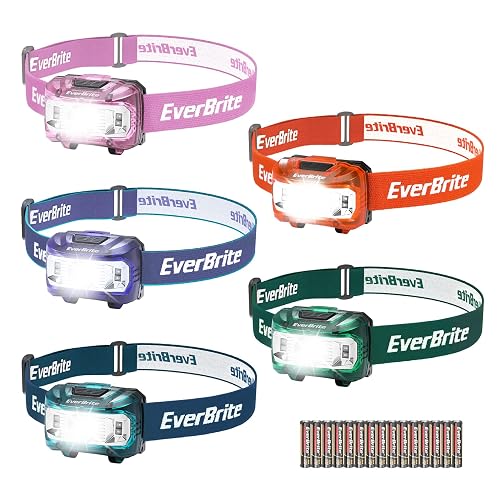
5 Lighting Modes and 3 Light Colors: This LED headlamp has 5 versatile lighting modes—High White, Medium White, Red, Red Flashing, and Green—you can choose the right mode according to your current ...
Quick checklist before you buy
- Starts in low or last-used mode, not full power.
- Red light you can reach without flashing white first.
- A battery type that fits how and where you will use it.
- A soft band that adjusts with one hand and does not bounce.
- A lamp head that tilts down and holds its angle.
- A lockout so it cannot turn on in your bag.
- An IP rating that matches your weather.
If you tick most of those boxes, the exact lumen number will not make much difference. A comfortable lamp with a sensible low mode and a battery you trust will get used far more than the brightest light on the shelf.
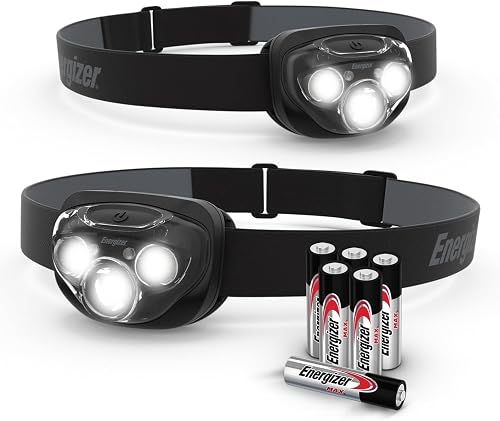
[Headlamp LED Light]: Two (2) Energizer Vision HD + LED Headlamp offers a hands-free, bright LED light with a long runtime for extended use
[Indoor and Outdoor Light]: Use this LED light as an emer...
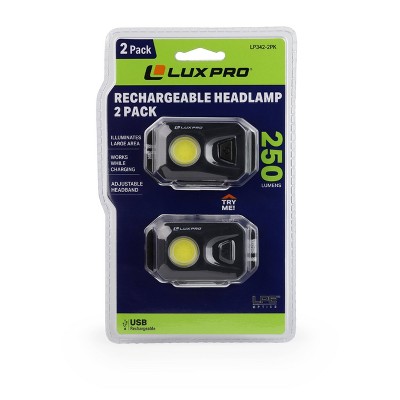
Two rechargeable lamps for the price of one good one. Target's LUXPRO two-pack gives you a pair of lightweight lamps rated up to 250 lumens, and they keep working while plugged in. Keep one in the car and one in the kitchen drawer.
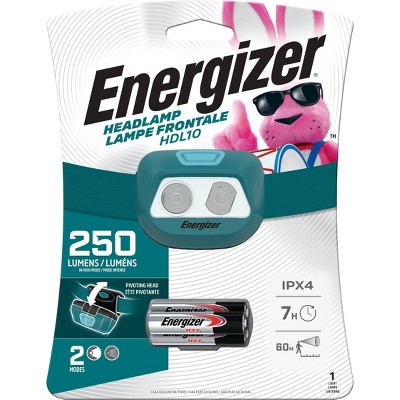
Simple AAA lamp for the emergency kit. The Energizer HDL10, also at Target, runs on three AAA batteries (included) and is rated at 250 lumens with up to 7 hours on high. It is IPX4 water resistant, which is what most people need for rain and splashes.
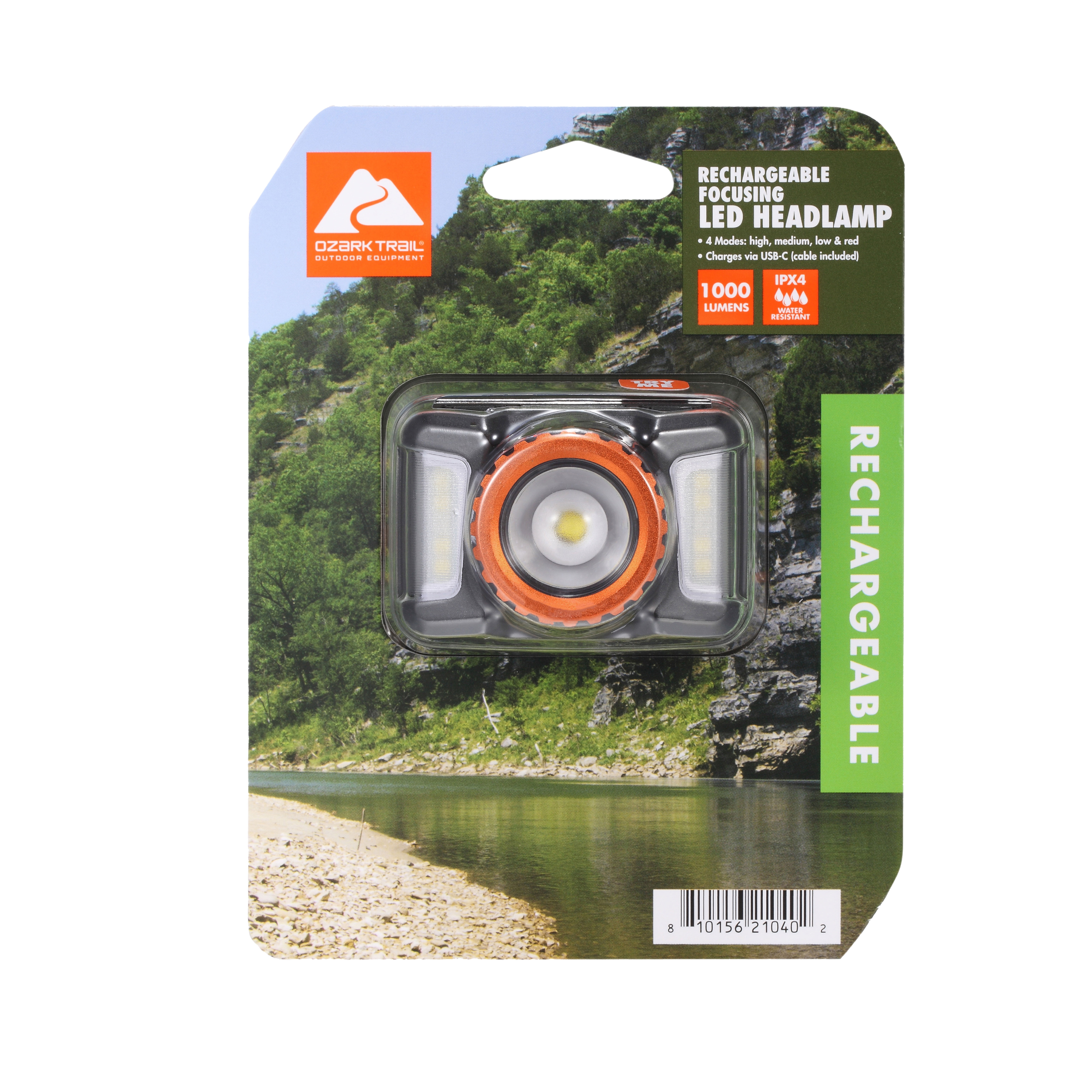
Bright focusing lamp with three levels. The Ozark Trail focusing headlamp steps between 1000, 500, and 200 lumens, with up to 6 hours of runtime on low, and charges over USB. It suits yard work and car trouble at night more than long hikes.
Keeping one where you need it
The best headlamp is the one that is close by when the lights go out. Many people end up with more than one: a small lamp in the car, another in the kitchen drawer, and a better one packed with camping gear. That way, you are never hunting for a light in the dark. Put a note on your calendar to check the batteries when the clocks change, and your lamps will be ready when you need them.
The responses below are not provided, commissioned, reviewed, approved, or otherwise endorsed by any financial entity or advertiser. It is not the advertiser’s responsibility to ensure all posts and/or questions are answered.
Tip: take the batteries out of AAA lamps before storing them for the winter. Leaky batteries ruin the contacts.
Is a red light mode worth having if you mostly use a headlamp around the house during power outages?