
Last Updated on: Sep 04, 2026
Ask ten people how much flour is in a cup and you will get ten answers. Scoop straight from the bag and pack it down, and a cup can weigh a lot more than if you spoon it in lightly and level it off. That gap is the reason a cake comes out dense one week and fine the next, even when you followed the same recipe.
A digital kitchen scale fixes that. It costs about as much as a nice spatula, takes up less room than a cutting board, and makes cooking faster once you get used to it. You measure straight into the bowl, there are fewer cups and spoons to wash, and the results come out the same every time.
Top Kitchen Scales
What We'll Cover
Who actually needs one
Bakers get the most out of a scale, because baking depends on ratios. Bread, pastry, and macarons are much more forgiving when the flour, water, and sugar are weighed. Many newer cookbooks and baking sites list grams first for that reason.
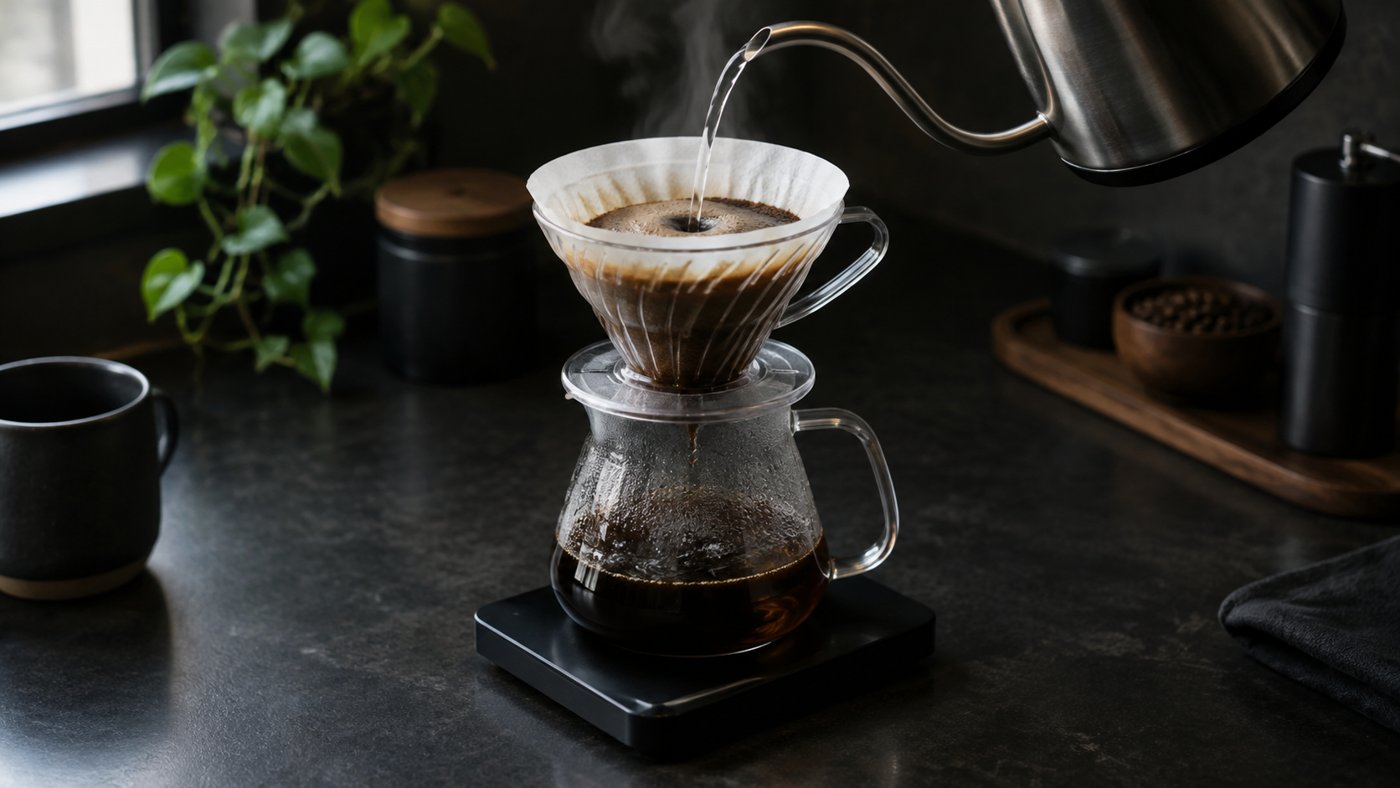
Coffee drinkers are the second big group. The difference between a bright cup and a bitter one often comes down to the ratio of coffee to water, and a scale makes it easy to repeat the cup you liked.
People tracking portions for health or fitness goals also use scales every day. Weighing a serving of rice, pasta, or chicken is far more accurate than guessing by eye. And anyone who cooks from European or Asian recipes will find that most of them are written in grams anyway.
The features that matter
Most kitchen scales look alike, but a few details make a real difference day to day.
Tare button. This resets the display to zero with a bowl on it, so you only weigh what you add. Every decent scale has one, and you will use it constantly. It also lets you add ingredients one after another in the same bowl, zeroing between each.
Capacity. Around 11 pounds (5 kg) covers most home cooking. If you bake big batches of bread, weigh a whole turkey, or use a heavy Dutch oven as your bowl, look for 22 pounds or more.
Precision. Standard scales read in 1 gram steps, which is fine for flour and sugar. Coffee, yeast, salt, and spices benefit from 0.1 gram steps. Very small amounts, like a pinch of saffron, call for a pocket scale that reads to 0.01 gram.
Display placement. A wide bowl or a sheet pan can cover a small screen. Some scales put the display on a pull-out panel or extend it past the platform so you can still read it.
Power. Battery models are cheap and easy. Rechargeable models skip battery runs, but need a cable now and then. Check how quickly the auto shut-off kicks in, since a scale that turns off mid-recipe loses your tare.
Everyday scales for most kitchens
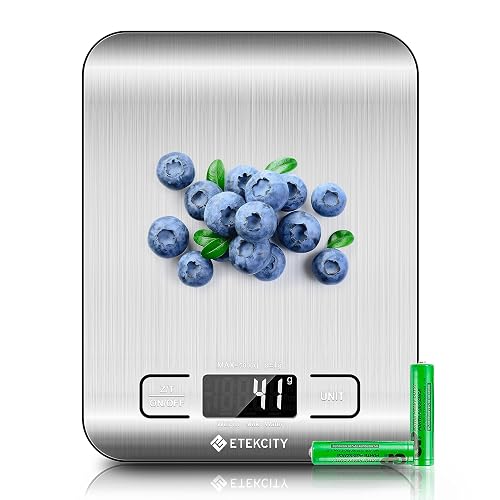
𝗘𝗳𝗳𝗼𝗿𝘁𝗹𝗲𝘀𝘀 𝗪𝗲𝗶𝗴𝗵𝗶𝗻𝗴: Supports 5 units (oz/lb:oz/fl'oz/g/mL), tare function, and includes 2 AAA batteries for hassle-free operation
𝗣𝗿𝗲𝗰𝗶𝘀𝗲 𝗥𝗲𝘀𝘂𝗹𝘁𝘀: Accurately weighs up to 11 lb/5 kg with 1 g incre...
The Etekcity scale sits near the top of the best-seller charts for good reason. It weighs up to 11 pounds in 1 gram steps, has a tare function, and switches between five units, including milliliters for water and milk. The stainless steel top wipes clean, the backlit screen is easy to read, and it comes with batteries so it works out of the box.
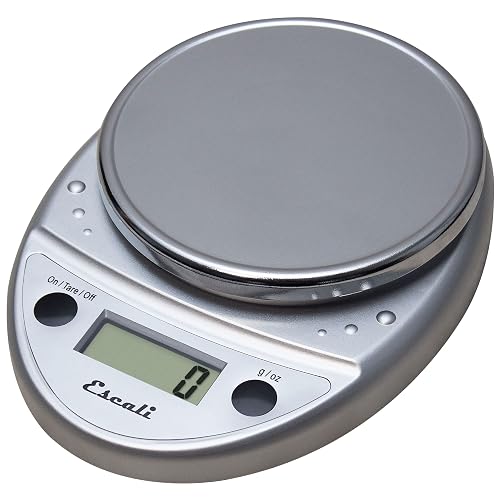
The Escali Primo Digital Food Scale is multifunctional and feature an easy to use two-button operation; Sealed control panel and rounded design make this digital kitchen scale easy to keep clean an...
The Escali Primo is a long-running favorite among home bakers. It keeps things simple with two buttons, and its display and controls are sealed under a protective shield, so a splash of batter will not get inside. It handles up to 11 pounds in 1 gram increments and shuts itself off after four minutes of inactivity to save the battery.
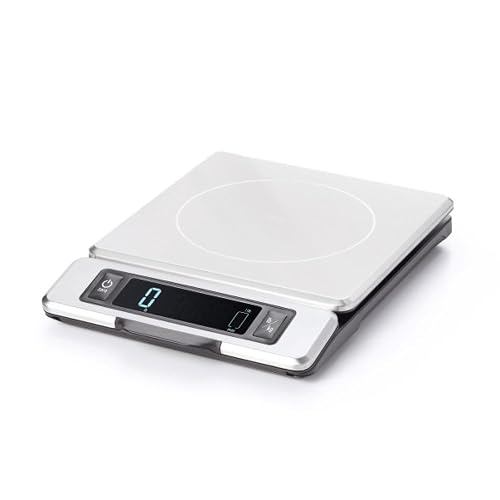
Stainless Steel is Smudge and fingerprint-resistant
Zero function for taring the scale before weighing additional ingredients
Digital screen with large, easy-to-read numbers
Removable platform for ...
OXO's 11 pound scale solves the most common complaint about kitchen scales: not being able to see the numbers under a big bowl. Its display pulls out from the base. The platform also lifts off for cleaning, and the stainless steel resists fingerprints.
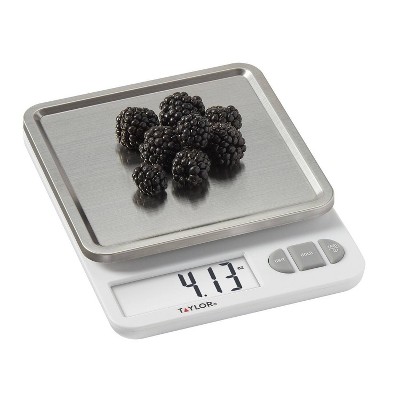
If you are already picking up groceries, Target carries a Taylor 11 pound scale with a removable tray and a stainless steel platform, which covers the same everyday jobs.
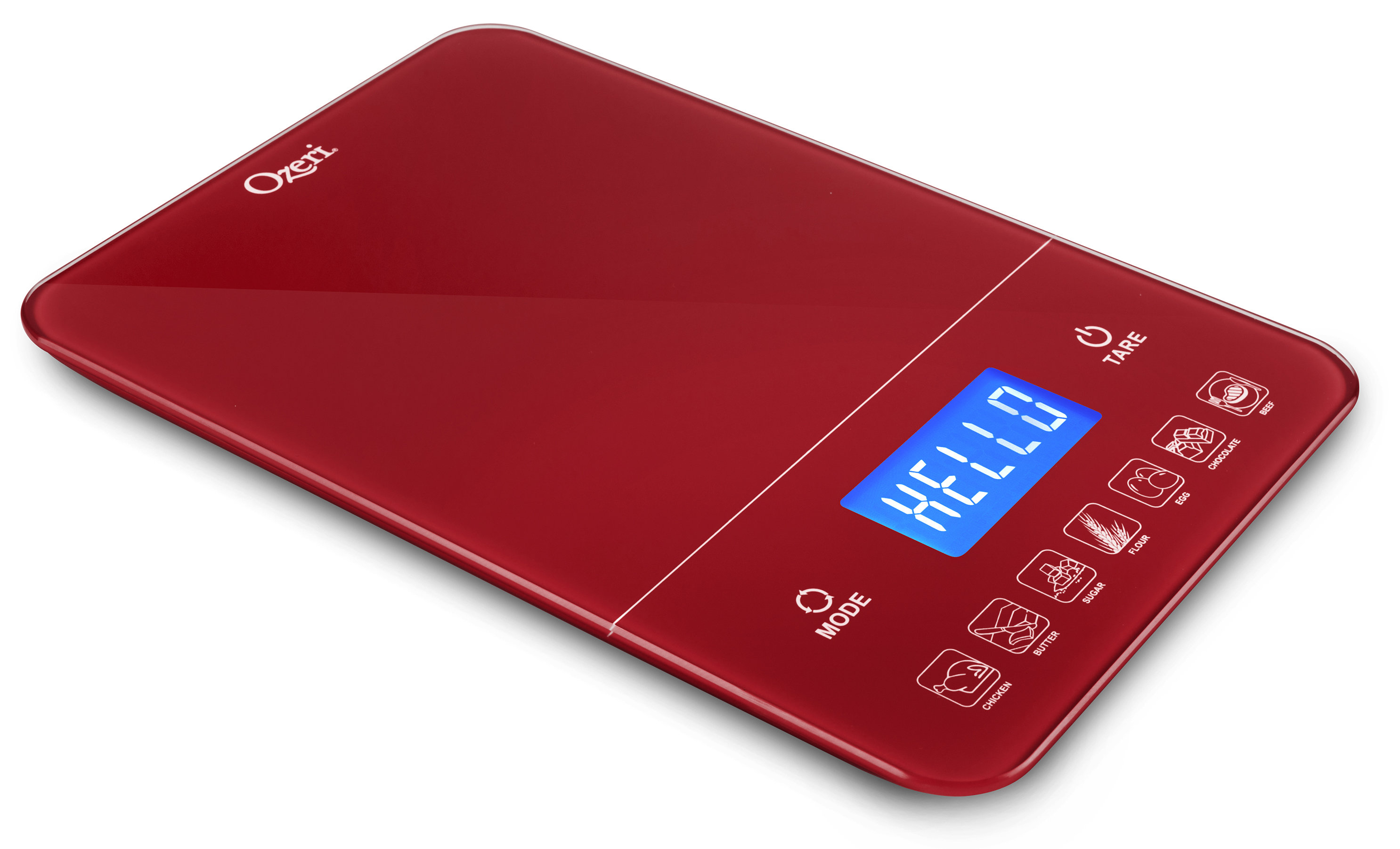
Wayfair sells the Ozeri Touch III, a flat tempered glass scale that weighs up to 22 pounds. It has touch-sensitive unit and tare buttons and a built-in calorie counter for a handful of common foods. The glass top is easy to wipe, though it shows fingerprints more than brushed steel.
For big batches and serious baking
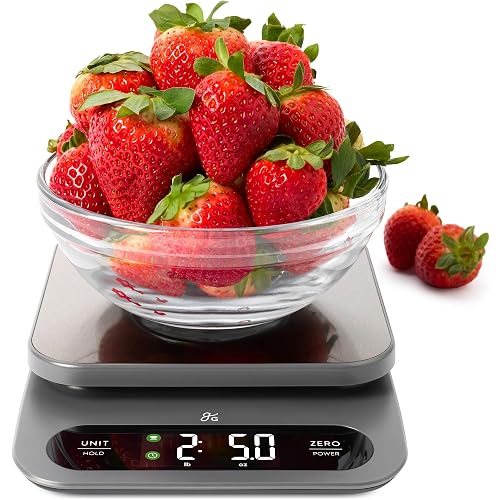
𝗕𝘂𝗶𝗹𝘁 𝗳𝗼𝗿 𝗕𝘂𝗹𝗸 𝗖𝗼𝗼𝗸𝗶𝗻𝗴 & 𝗣𝗿𝗲𝗽: This high-capacity kitchen scale weighs up to 22 lb (10 kg) with 1 g precision, ready for meal prep, holiday baking, sourdough, or grilling. Not for laboratory or mic...
The Greater Goods scale doubles the usual capacity to 22 pounds, still in 1 gram steps. It is aimed at meal prep, holiday baking, sourdough, and anyone who weighs food in a heavy pot. The display extends beyond the platform so large bowls do not block it, and a HOLD button keeps the reading on screen for up to five minutes.
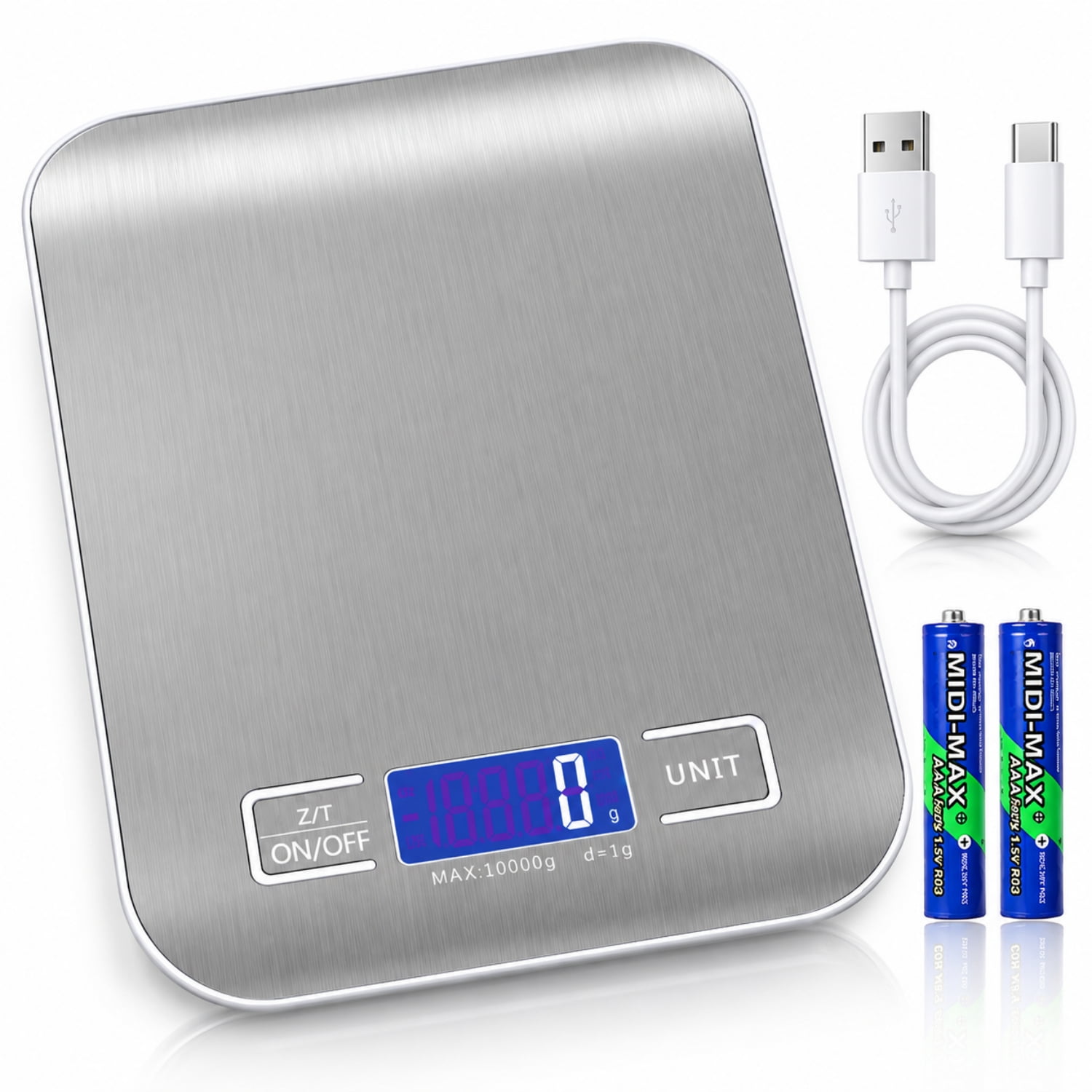
Another 22 pound option is the QOPR stainless steel scale at Walmart. It weighs in 1 gram steps and switches between grams, kilograms, pounds, ounces, and milliliters. It has a built-in rechargeable battery that charges over USB, with space for two AAA batteries as a backup.
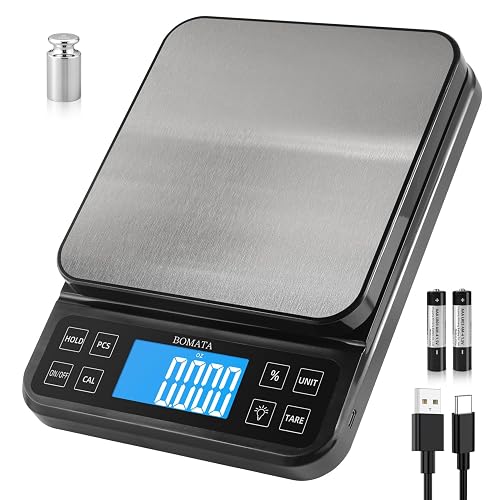
[ Large Size, HOLD Function ] The size of weighing platform : 7.2x7.2 inches, more convenient to weigh large-sized items. With the HOLD function, it can be measured even if the size exceeds the wei...
BOMATA's bakery scale is built for people who bake by ratio. It reads to 0.1 gram, has a wide 7.2 inch platform, and includes a percentage mode that works out ingredient amounts for you, which is handy for baker's percentages in bread recipes. It charges over USB-C and also runs while plugged in.
How bakers use a scale
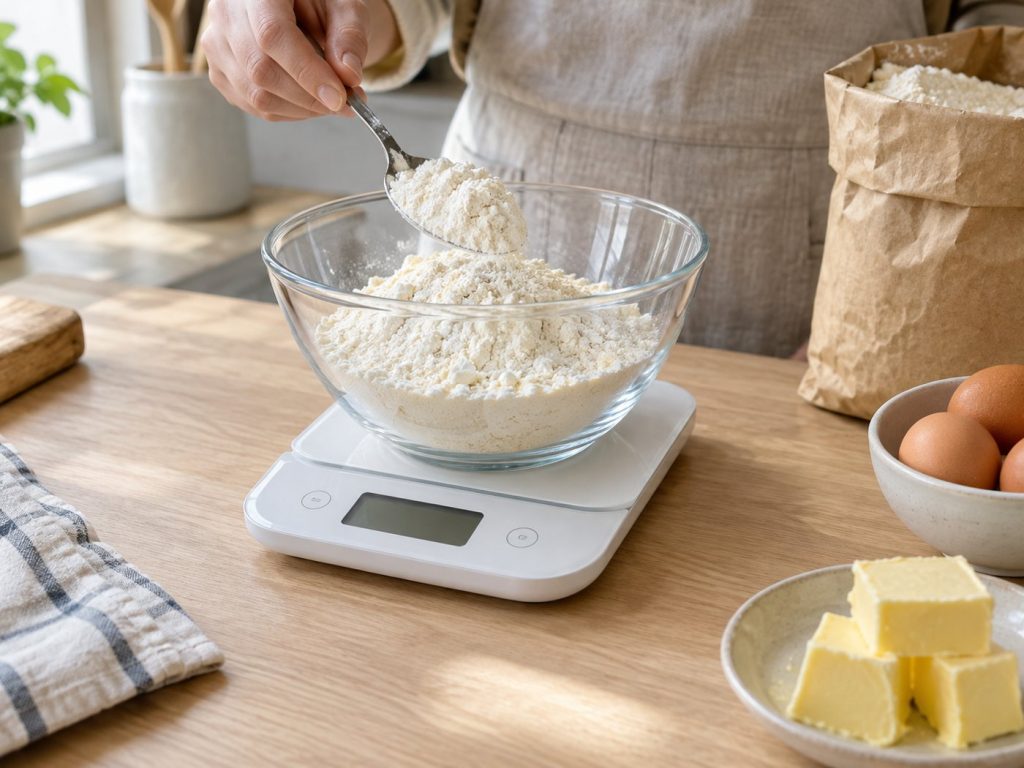
Once you have a scale, the method is simple. Put your mixing bowl on the platform and press tare. Add the flour until the number matches the recipe. Press tare again, then add the sugar. Keep going, zeroing after each ingredient. There is nothing to level off and no measuring cups to wash.
For bread, bakers often think in percentages. Flour is always 100 percent, and every other ingredient is written as a share of the flour. A dough with 70 percent water uses 700 grams of water for 1,000 grams of flour. A scale with a percentage mode does that math for you, but any scale makes it easy to scale a recipe up or down.
If your favorite recipe is still written in cups, weigh it once. Measure the way you always do, then write the grams in the margin. The next time, weigh straight to those numbers and you will get the same result every time.
Small scales for coffee and tiny amounts
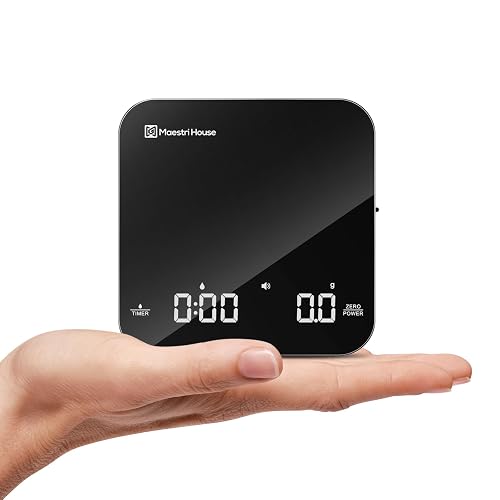
【Ultra Small, Yet Professional】The Espresso Scale is small enough to fit in your palm. It measures 4.13*4.13*0.78 inches and weighs just 0.75 pounds. The coffee scale can work on most espresso mach...
Espresso and pour-over fans often want a separate small scale with a timer. The Maestri House S2 is about four inches square, reads to 0.1 gram from 0.5 to 2,000 grams, and fits on most espresso machine drip trays. The timer helps you track a pour or a shot so you can repeat a recipe you liked.
A simple coffee ratio to start with
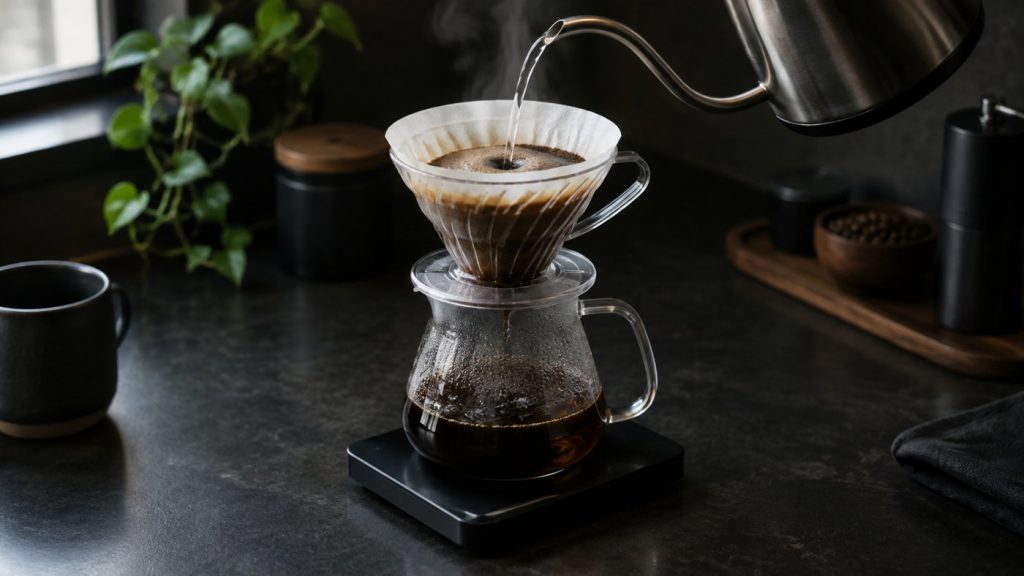
A common starting point is about 1 gram of coffee for every 15 to 17 grams of water for drip or pour-over. With a scale under your dripper, that is easy to follow: weigh 20 grams of ground coffee, tare, then pour until the scale reads about 320 grams. If the cup tastes weak, use a little more coffee next time. If it tastes harsh, use a little less. Change one thing at a time so you know what made the difference.
Keep it accurate
Scales are simple, but a few habits keep them reading true. Always set the scale on a flat, hard surface, since a towel or a wobbly board can throw readings off. Do not store heavy pans on top of it, which can strain the sensor over time. Wipe it with a damp cloth rather than running it under the tap, unless the maker says it is waterproof.
Replace batteries as soon as the display dims or readings start to drift. Low batteries are the most common reason a scale seems inaccurate. If yours has a calibration mode, a known weight such as an unopened bag of sugar or a calibration weight can confirm it is still on target.
Which one to choose
For most home cooks, an everyday 11 pound scale with a tare button is all you need. If you bake bread often or cook in big pots, go for 22 pounds and a display that stays visible under large bowls. Coffee lovers should add a small scale with a timer, and anyone who works with tiny amounts will be glad to have a pocket scale in the drawer. Whichever you pick, the first week of weighing instead of scooping is usually enough to make it a habit.
The responses below are not provided, commissioned, reviewed, approved, or otherwise endorsed by any financial entity or advertiser. It is not the advertiser’s responsibility to ensure all posts and/or questions are answered.
Does anyone know if it is worth checking a kitchen scale's accuracy now and then? What is a simple way to do that at home without calibration weights?