
Last Updated on: Aug 16, 2026
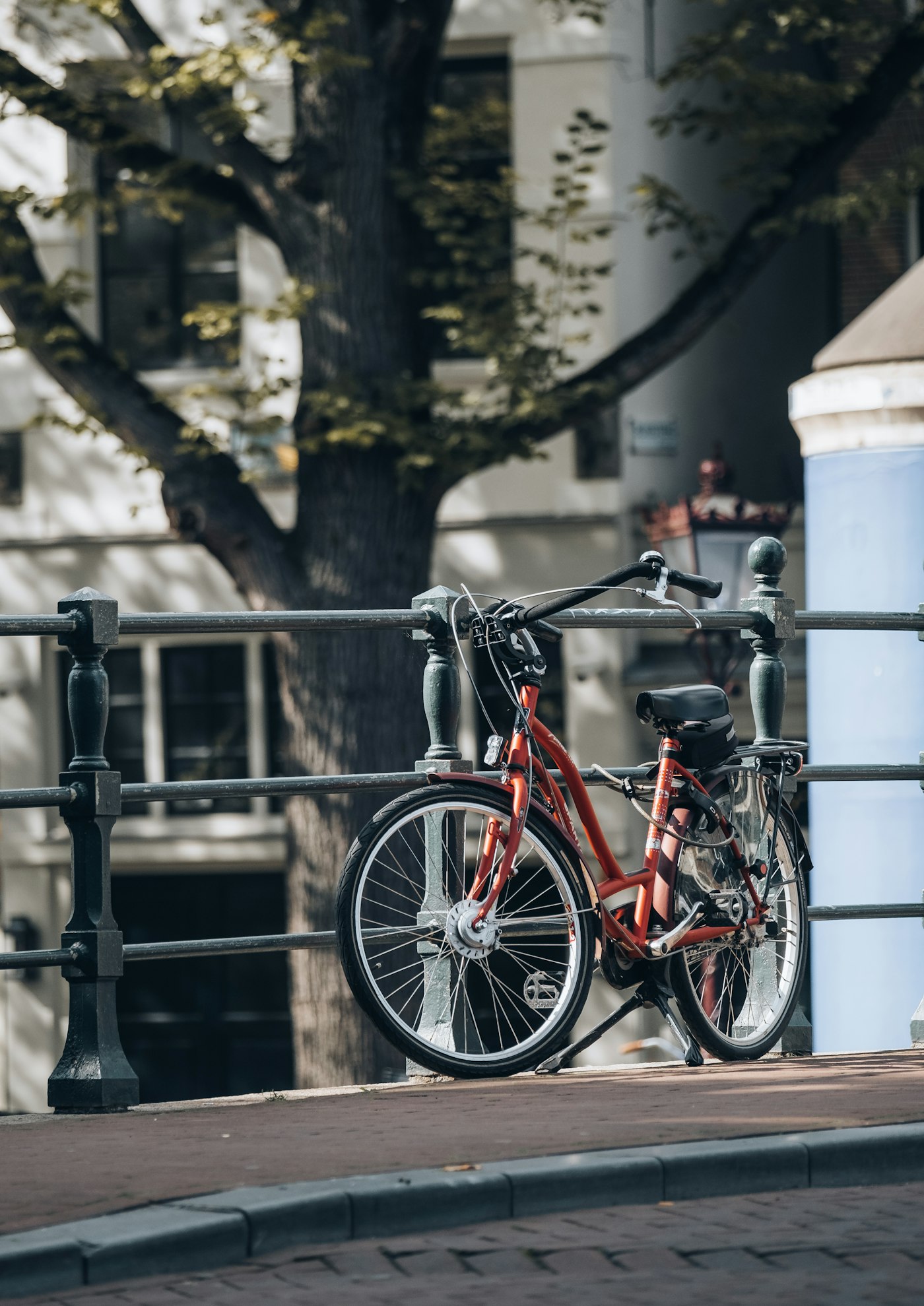
Most people buy a bike lock the same way: they grab whatever is near the register when they pick up the bike, and they never think about it again until the day they walk out and find a cut cable on the ground. A lock is not exciting gear. But it is the one piece of kit that decides whether you still own a bike at the end of the day.
The good news is that picking the right lock is not hard once you know what you are trading off. Every lock sits somewhere between three things: how hard it is to break, how much it weighs, and how easy it is to use in the spots where you actually park. This guide walks through the main lock types, what the numbers on the box mean, how to lock up so the lock can do its job, and a set of popular locks at different price points.
Top Bike Locks
What We'll Cover
Start with where you park
Before you look at a single lock, think about the places your bike sits alone. A bike that lives in a locked garage and only gets left outside a coffee shop for ten minutes on a Sunday has very different needs from a bike that sits on a city rack outside an office for nine hours a day, five days a week.
Time and exposure matter more than almost anything else. A thief with a pair of small cable cutters can get through a thin cable in seconds. A thick hardened U-lock forces them to bring bigger, louder tools and spend more time in the open. Most thieves look for the easiest bike on the rack, so your goal is simple: make yours slower and more annoying to take than the one next to it.
A rough way to sort yourself:
- Short stops in low-risk areas: a light U-lock or a folding lock is plenty, and a cable alone may do for very quick stops where you can see the bike.
- Daily commuting and all-day parking: a hardened U-lock of 13mm or thicker, or a heavy folding lock, plus a cable for the front wheel.
- Overnight outside, or an expensive bike or e-bike: the thickest U-lock you are willing to carry, often paired with a second lock of a different type.
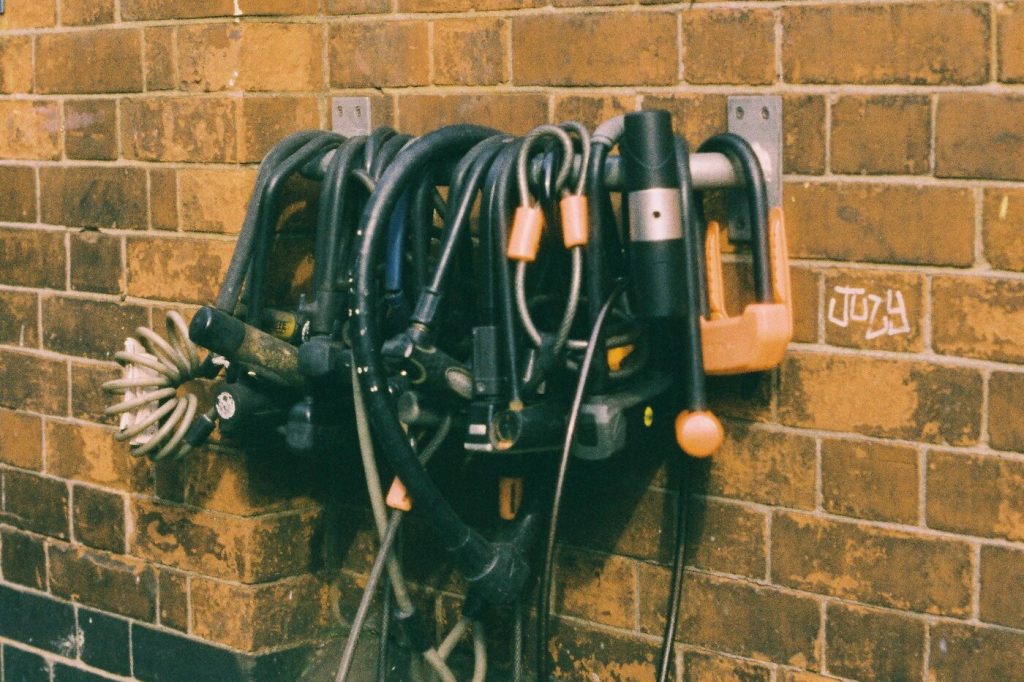
The main types of bike lock
U-locks
A U-lock, sometimes called a D-lock, is a hardened steel shackle that drops into a crossbar. It is the default choice for most riders because it gives the most security for the weight. The shackle is too thick for small cutters, and a good one resists prying and twisting. The main downside is shape: the U only fits around objects that are narrow enough, so a thick tree or a wide post may not work.
Shackle thickness is the first thing to check. Budget U-locks often use 10mm to 12mm steel. Better locks move to 13mm, 14mm, or more. Each step up takes more effort to cut. Size matters too. A smaller U leaves less room for a thief to fit a jack or a bar inside it, which is why many riders pick a compact or mini size for the city and accept that it will not reach around every rack.
Cable locks
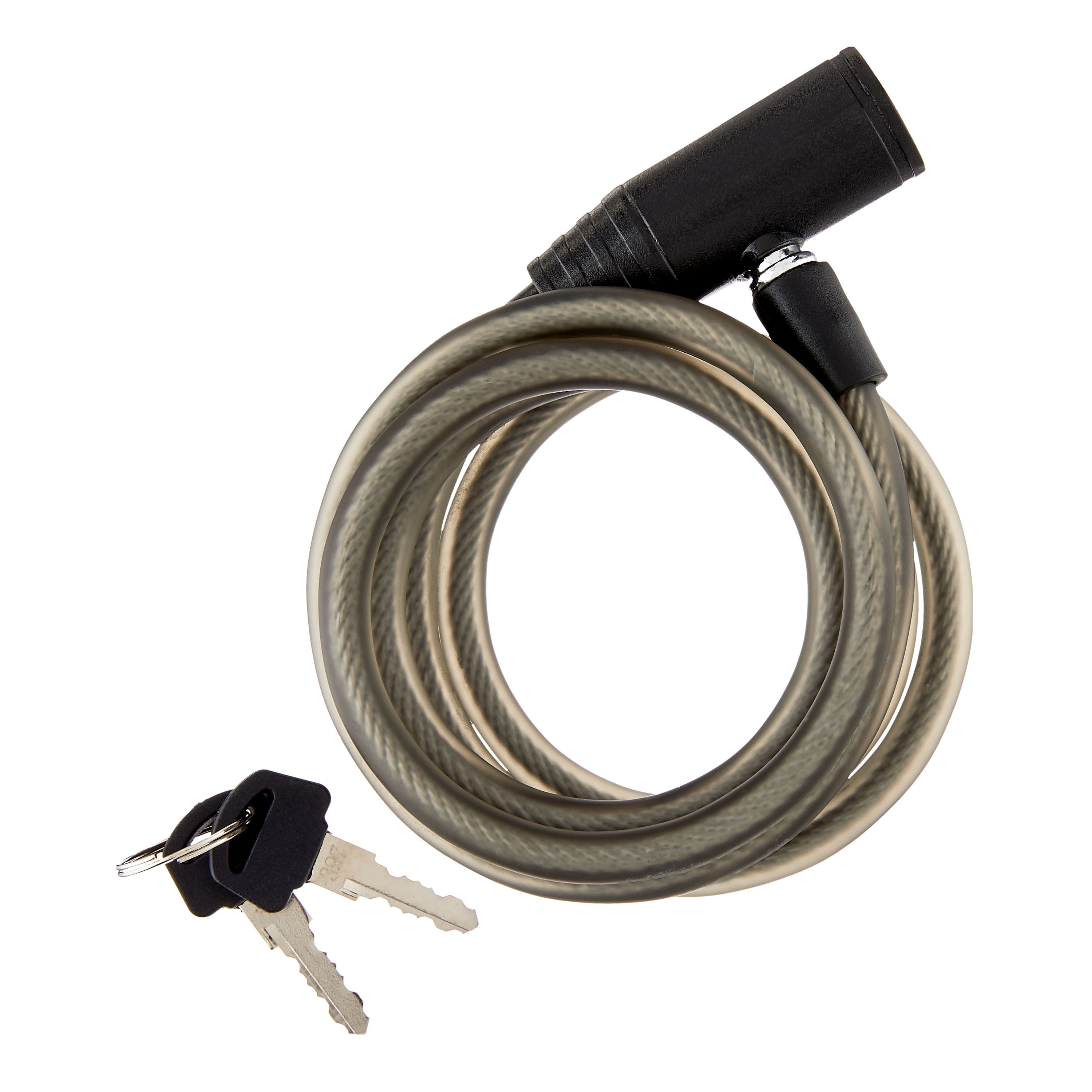
A cable lock is a length of braided steel with a lock head, usually with a key or a combination. Cables are light, flexible, and wrap around almost anything. They are also the easiest type to cut. On their own they are best for low-risk, short stops, or for keeping honest people honest. Their real value is as a second lock: loop a cable through the front wheel and back to a U-lock so the quick-release wheel does not walk off.
Chain locks
A chain lock is a length of linked steel, usually wrapped in fabric to protect the frame. Chains are flexible like a cable but much harder to cut when the links are thick. The trade-off is weight. A serious chain can weigh several pounds, and it has to ride in a bag or around your waist. Thin, light chains, like the ones sold for a few bikes on a porch, sit closer to a cable in security.
Folding locks
A folding lock is a set of flat steel bars joined by rivets. It folds into a compact block that mounts on the frame and opens into a loop that is larger than most U-locks. That makes it easier to lock to odd-shaped posts and fences. Good folding locks are a real middle ground: more reach than a U-lock and more security than a cable, at a weight in between. The rivets are the weak point on cheap models, so it pays to buy from a brand that makes the plates and rivets from hardened steel.
Keys or combination
Keyed locks are usually more secure at the same price because the cylinder is harder to pick or manipulate than a cheap dial. Many good keyed locks also come with more than one key and a way to register the key number so you can order a replacement. Keep the key card somewhere safe at home, not on the same ring as the keys.
Combination locks are handy for shared bikes, family bikes, or anyone who knows they will lose a key. A four- or five-digit resettable dial is fine for a light second lock. Set a code that is not a birthday or a run of the same number, and spin the dials fully after you lock up so the code is not sitting there in plain view.
What the numbers on the box mean
Many brands print their own security rating on the package, often a number from 1 to 10 or 1 to 15. These scales are useful for comparing locks within one brand, but a 7 from one company does not match a 7 from another. Independent testing programs, such as Sold Secure in the UK and ART in the Netherlands, test locks against set attack methods and publish their grades, which makes it easier to compare across brands when a lock carries one.
Beyond the rating, look at three things:
- Shackle or chain thickness in millimeters. Thicker hardened steel takes bigger tools.
- Double locking on U-locks, where the shackle is held at both ends. A thief who cuts one side still has to cut the other.
- Mount and carry. A lock you leave at home protects nothing. Check that the bracket fits your frame tube, or plan to carry it in a bag.
How to lock up so the lock actually works
A great lock used badly is not much better than a cheap one. The way you lock up matters as much as what you buy.
- Lock the frame, not just a wheel. Pass the lock through the frame, ideally the rear triangle or the main tube, and around the fixed object. A lock through only the front wheel leaves you with a wheel and nothing else.
- Choose what you lock to. Use a proper bike rack, a thick metal post, or a railing that is bolted down. Check that the post cannot be lifted off, and avoid thin wood, chain-link fence, or anything a thief could cut through more easily than your lock.
- Fill the space. Position the U so there is as little empty room inside it as possible. Less space means less room for a jack or a bar.
- Keep the lock off the ground. A lock resting on the pavement is easier to smash or lever against the ground.
- Secure the extras. Use a cable or a second lock for the front wheel, and think about the seat if it has a quick-release clamp.
- Park where people can see. A busy, well-lit spot with foot traffic is harder to work in than a quiet corner.
It also helps to write down your bike's serial number, usually stamped under the bottom bracket where the pedals attach, and keep a clear photo of the bike. If the worst happens, that is what police and bike registries ask for.
E-bikes and expensive bikes
An e-bike or a high-end road or mountain bike is a bigger target and costs much more to replace, so it is worth doubling up. A common setup is a thick U-lock through the frame plus a folding lock or chain of a different type through the rear wheel. Two different locks mean a thief needs two different tools. Take the battery and any display with you when the design allows it, since those are expensive to replace on their own.
Check that your lock can reach around the frame of an e-bike, too. Some have very thick down tubes that do not fit inside a compact U-lock, which pushes owners toward a larger U, a long folding lock, or a chain.
Bike locks worth a look
These are popular locks across the main types, from a basic cable to heavy U-locks. Prices and ratings change often, so check the current listing before you buy.
Keyed U-lock from a hardware staple. A 7-1/4-inch U-lock with a hardened steel body built to resist cutting, sawing, and prying, a disc key cylinder, and a shackle that locks at both ends. It ships with a frame bracket and two keys. It is a no-fuss choice for everyday city parking and a sturdy primary lock at a modest price.
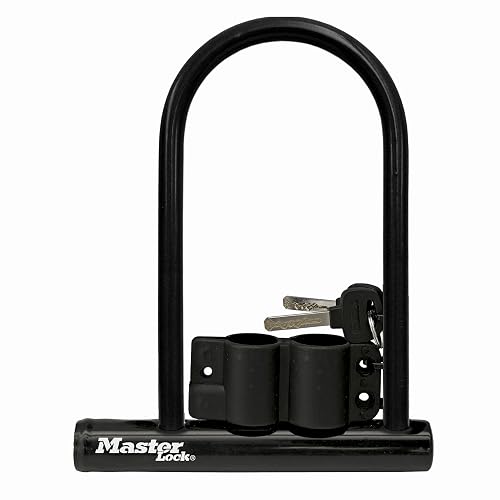
HEAVY DUTY BIKE U-LOCK: Master Lock 8320D keyed bike lock helps secure bicycles in busy urban areas; Ideal as a bicycle U-lock and anti-theft bike lock for everyday outdoor security
HARDENED STEEL ...
Budget U-lock and cable combo. This set pairs a compact 17mm-thick lock body with a 5-foot steel cable and a bracket that fits most frame tubes. Use the U on the frame and run the cable through the front wheel. It is a good start for a new rider on a tight budget.
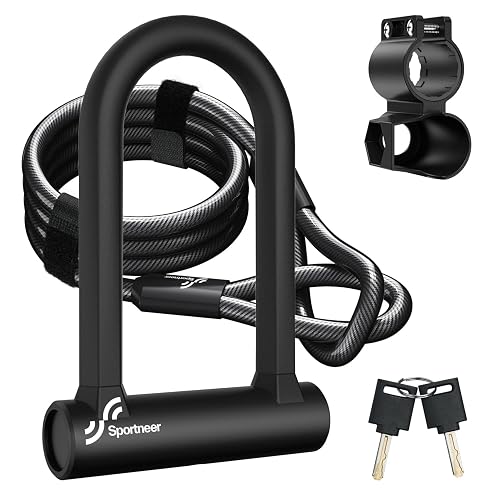
Portable & Rugged: The Sportneer bike u lock is both portable and heavy-duty. It measures 7.76x5.02inches, with a thickness of 0.67inches/17mm, and weights 1.64lbs. Plus, its unique polygonal lock ...
Resettable chain lock. A fabric-covered chain with a five-digit combination, about 3.2 feet long. It is long enough to loop two bikes together or wrap a tree or gate, and works well as a second lock or for short stops.
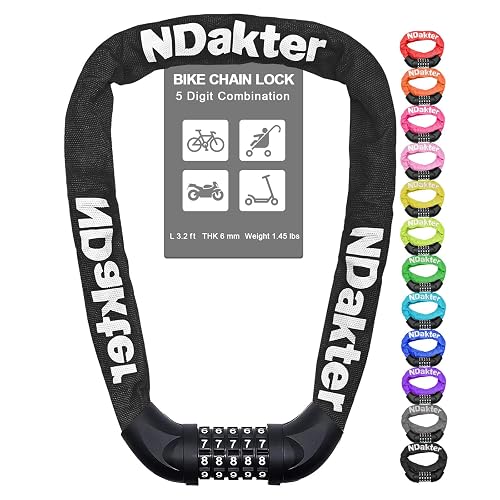
SECURE & RESETTABLE: 5-digit resettable combination bike chain lock, much safer than other 4 digit locks. Easy to set your own personalized number combination.
STURDY & DURABLE: It's hard to break ...
Classic 6-foot cable. A braided steel cable with a vinyl coat and a four-digit set-your-own code. It is best as a secondary lock for the front wheel or for gear like scooters and grills, not as the only lock on a bike left for hours.
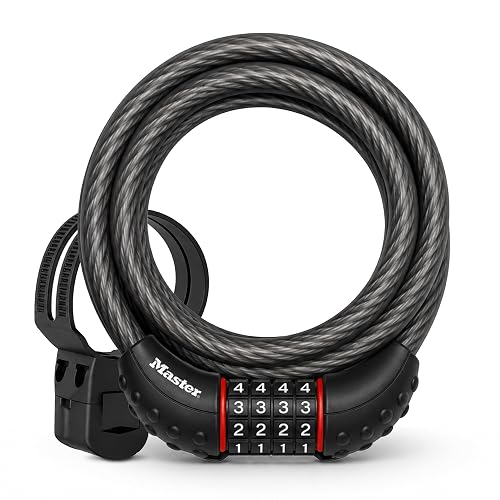
VERSATILE BIKE LOCK: Master Lock 8122D outdoor bike cable lock with combination helps secure bicycles, e-bikes, scooters and other outdoor equipment; Ideal as a bicycle lock and basic theft deterre...
Mid-range U-lock with a bracket. This lock uses a 12mm shackle made of hardened steel, a pass-through shackle design that resists twisting, and a soft cover on the body to protect paint. The included bracket fits frame tubes of about 24mm to 35mm. It is a solid everyday lock for moderate-risk areas.
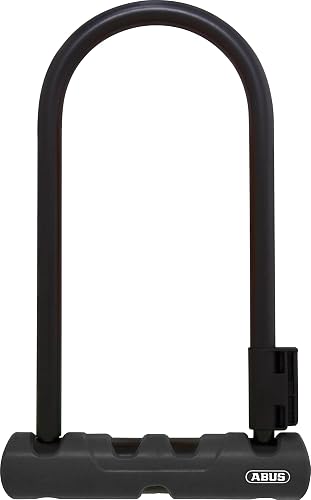
To avoid becoming a victim of bike theft, every cyclist should have a sturdy bicycle lock as standard equipment.
Innovative soft touch housing cover prevents damage to paint
Shackle, body, and supp...
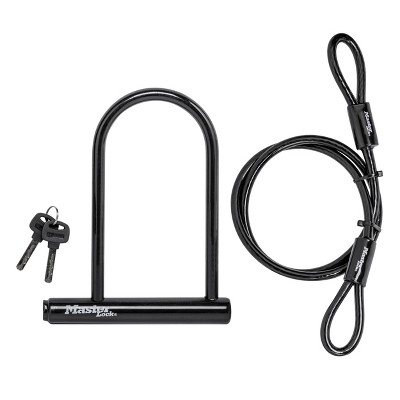
U-lock and cable in one box. At Target, Master Lock sells a 7.25-inch U-lock packaged with a looped-end cable. It covers the standard commuter setup in one purchase: the U goes through the frame and rack, and the cable threads through the front wheel and back onto the shackle.
Light keyed cable. The Concord 8mm key cable is a thin, light option you can toss in a bag. It is a fit for a quick stop in a low-risk spot or as a way to secure a front wheel and seat, but an 8mm cable should not be the only lock on a bike you leave for hours.
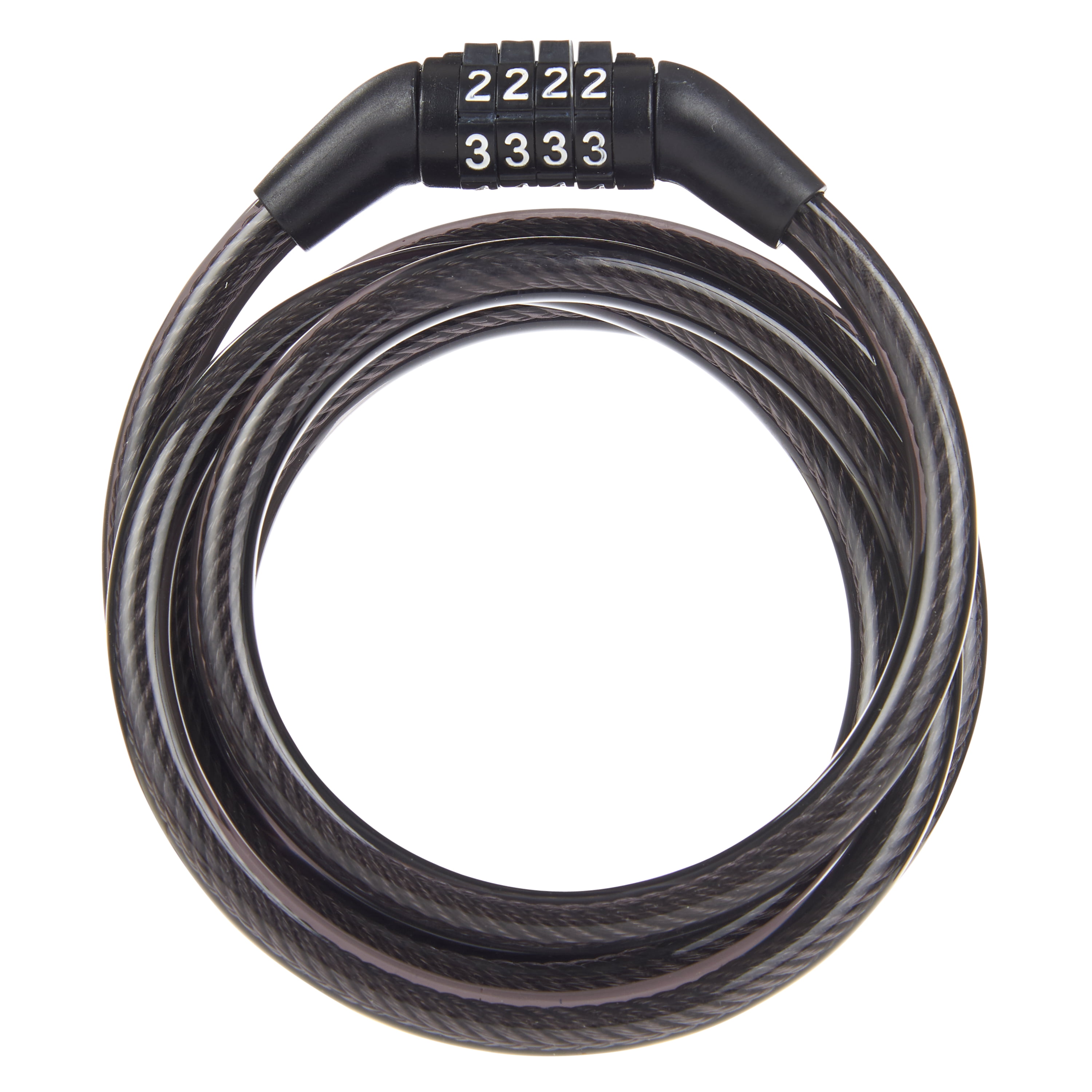
Cheap combination cable. The Brinks covered cable is 5/16 inch thick and 5 feet long with a combination lock, so there is no key to lose. Treat it like any light cable: good for the front wheel, a helmet, or a kid's bike in the garage, not as a main lock on a city street.
Which lock to choose
If you only buy one lock, make it a hardened U-lock of 13mm or thicker in a size that fits the racks you use most. Add a cable for the front wheel, and you have covered the setup most commuters need. If your racks are wide or you keep running into posts that a U will not reach around, a well-made folding lock is the better fit.
For an e-bike or a bike you would hate to lose, carry two locks of different types and lock up in busy, bright places. Keep your key number and serial number on file. None of it guarantees a bike will never be stolen, but it makes yours the harder choice, and in most cases that is enough.
The responses below are not provided, commissioned, reviewed, approved, or otherwise endorsed by any financial entity or advertiser. It is not the advertiser’s responsibility to ensure all posts and/or questions are answered.
Worth adding: write down the key number that comes with a U-lock. Some brands can replace a lost key if you have it, which beats cutting your own lock.