

Last Updated on: Mar 15, 2026
A packable hammock is one of the easiest ways to make a campsite, a picnic, or a day hike more comfortable. Modern camping hammocks are made of light parachute-style nylon, stuff into a pouch the size of a grapefruit, and hang between two trees in a few minutes with webbing straps. Some people use them for an afternoon nap; others sleep in them all night instead of a tent.
What We'll Cover
- Top Camping Hammocks
- Single or double
- Weight capacity
- Fabric
- Straps and suspension
- Bug nets and rain tarps
- Everyday camping hammocks
- Lightweight and travel hammocks
- Extra-large and bug-net hammocks
- How to hang a hammock
- What to pack with your hammock
- Hammocks for kids and families
- Choosing a site
- Comfort tips
- Care and storage
- The short answer
This guide covers how to choose a camping hammock, what to look for in straps and weight ratings, and how to hang one safely and gently on trees, using guidance from the Leave No Trace Center for Outdoor Ethics.
Top Camping Hammocks
Single or double
Single hammocks are narrower, lighter, and pack smaller. They suit backpackers and anyone who wants to save weight. Double hammocks are wider, and most people find them more comfortable even when using them alone, because the extra fabric lets you lie at an angle and flatter. Two adults can sit in a double, but sleeping two people in one hammock is rarely comfortable for long.
Length matters too. Taller people should look for a longer hammock so they can lie on a diagonal without their feet hitting the fabric edge. Check the listed dimensions before buying.
Weight capacity
Every hammock lists a maximum load. Many camping hammocks are rated from around 300 to 500 pounds. Choose a rating well above the weight you plan to put in it, especially if two people will sit together or kids will climb in. Remember that the straps, carabiners, and knots all need to handle the load too, and that dropping into a hammock puts more force on it than lowering in slowly.
Fabric
Most camping hammocks use nylon taffeta, often called parachute nylon. It is light, strong, dries quickly, and packs small. Thicker fabrics feel sturdier and resist snags better; thinner fabrics save weight. Cotton and rope hammocks are comfortable for a backyard, but they are heavy, slow to dry, and not a good choice for camping.
Straps and suspension
The way you hang a hammock matters as much as the hammock itself. Leave No Trace recommends using straps that are 1 inch or wider. Wide webbing spreads the load over more bark and limits damage to the tree, while thin rope or cord can dig into the bark and girdle the tree over time.
- Webbing straps with loops: The most common setup. Clip the hammock's carabiner into any loop to adjust length quickly.
- Carabiners: Look for sturdy, load-rated carabiners rather than small keychain-style clips.
- Strap length: Longer straps let you reach trees that are farther apart.
- Tree protection: Wrap the strap flat around the trunk without twisting, so it sits evenly on the bark.
Bug nets and rain tarps
A built-in or add-on bug net keeps mosquitoes and other insects off you, which is a big help at dusk and in wet areas. For overnight trips, a rain tarp hung on a ridgeline above the hammock keeps you dry and blocks wind. In cool weather, an underquilt or sleeping pad helps, since air moving under the hammock can make you cold even on mild nights.
Everyday camping hammocks
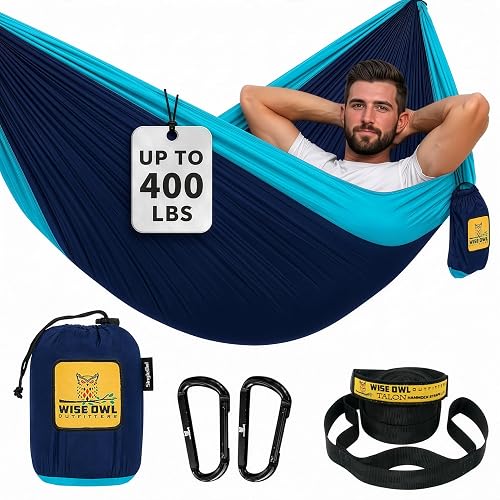
Relax Anywhere Outdoors – Whether lounging under the stars, by the fire, or on a hiking trip, our camping hammocks for adults offer cozy support for camping adventures, beach trips, or relaxing in ...
The Wise Owl Outfitters hammock comes in single or double sizes, includes tree straps, and is rated up to 500 pounds.
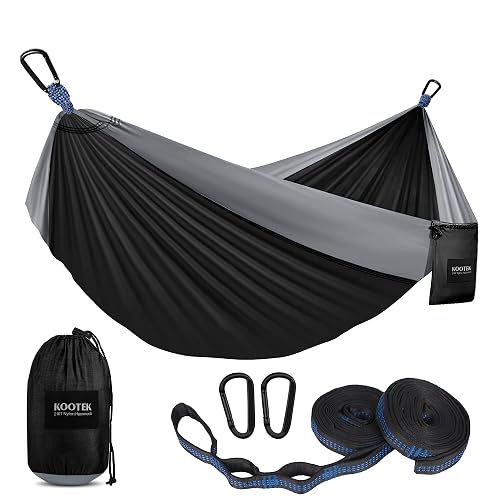
Perfect Camping Gear: Looking to elevate your outdoor experience and escape the hustle and bustle of everyday life? Look no further than our camping hammock, an essential item in camping gear must-...
The Kootek double hammock is rated up to 500 pounds, with room to lie at a comfortable angle.
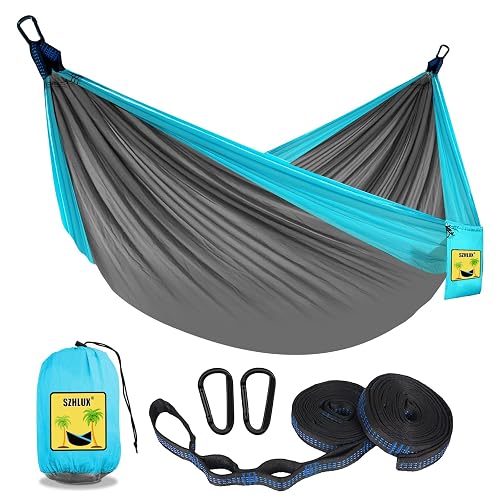
Adjustable Tree-friendly Straps: Each strap 10 feet long with 18+1 loops,Makes setting up a breeze. so you can adjust it to the perfect height. No need to tie any knots and not damaging the trees.
...
The SZHLUX hammock includes two tree straps and an attached carry bag, and comes in single or double sizes.
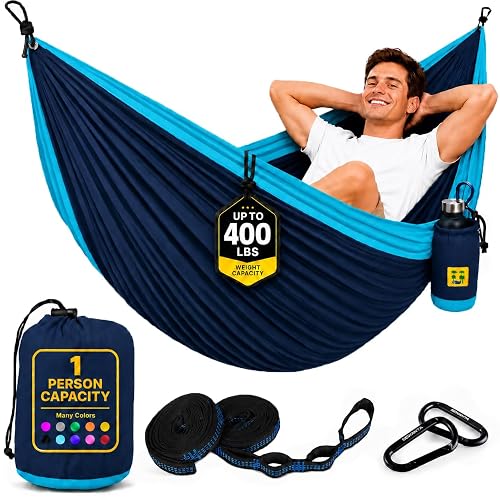
COMFY HAMMOCK - Sit back and relax by the campfire, enjoy a cozy camping chat, or use this tree hammock as a lightweight alternative to a sleeping tent, gazing up at the stars through the night.
DO...
This Durable Hammock model is rated to 400 pounds and comes with tree straps and an attached bag in several sizes.
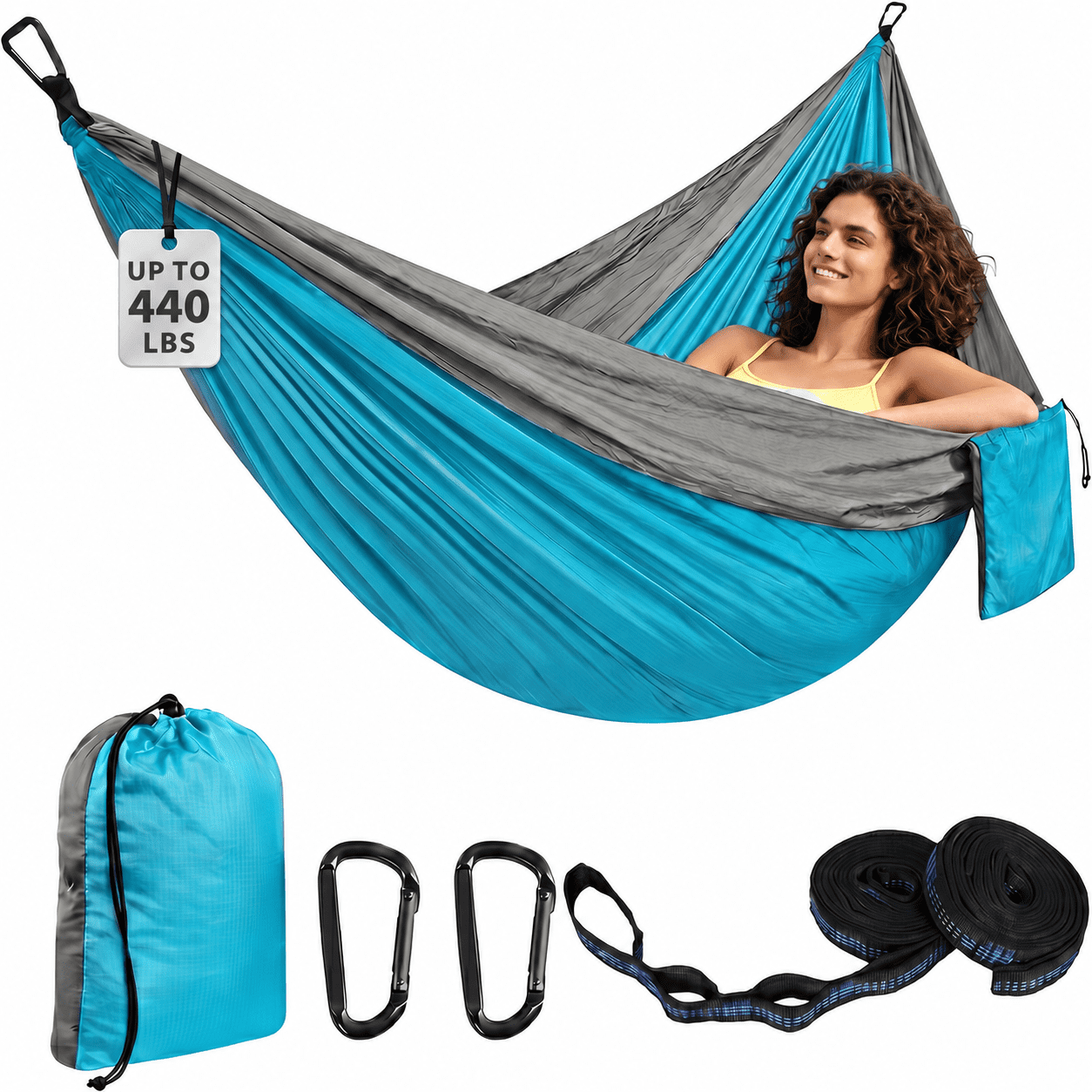
At Walmart, the KOYMISKU hammock is rated to 440 pounds and includes tree straps and a carry bag.
Lightweight and travel hammocks
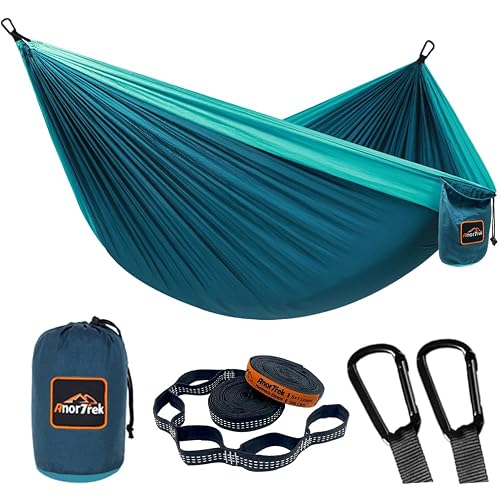
Soft material & Support 500 pounds - Our hammocks are made of new high quality 210T parachute nylon fabric, it is very comfortable and durable. The camping hammocks provide relaxing support up to 5...
The AnorTrek hammock uses parachute nylon and includes two tree straps, a light choice for backpacking.
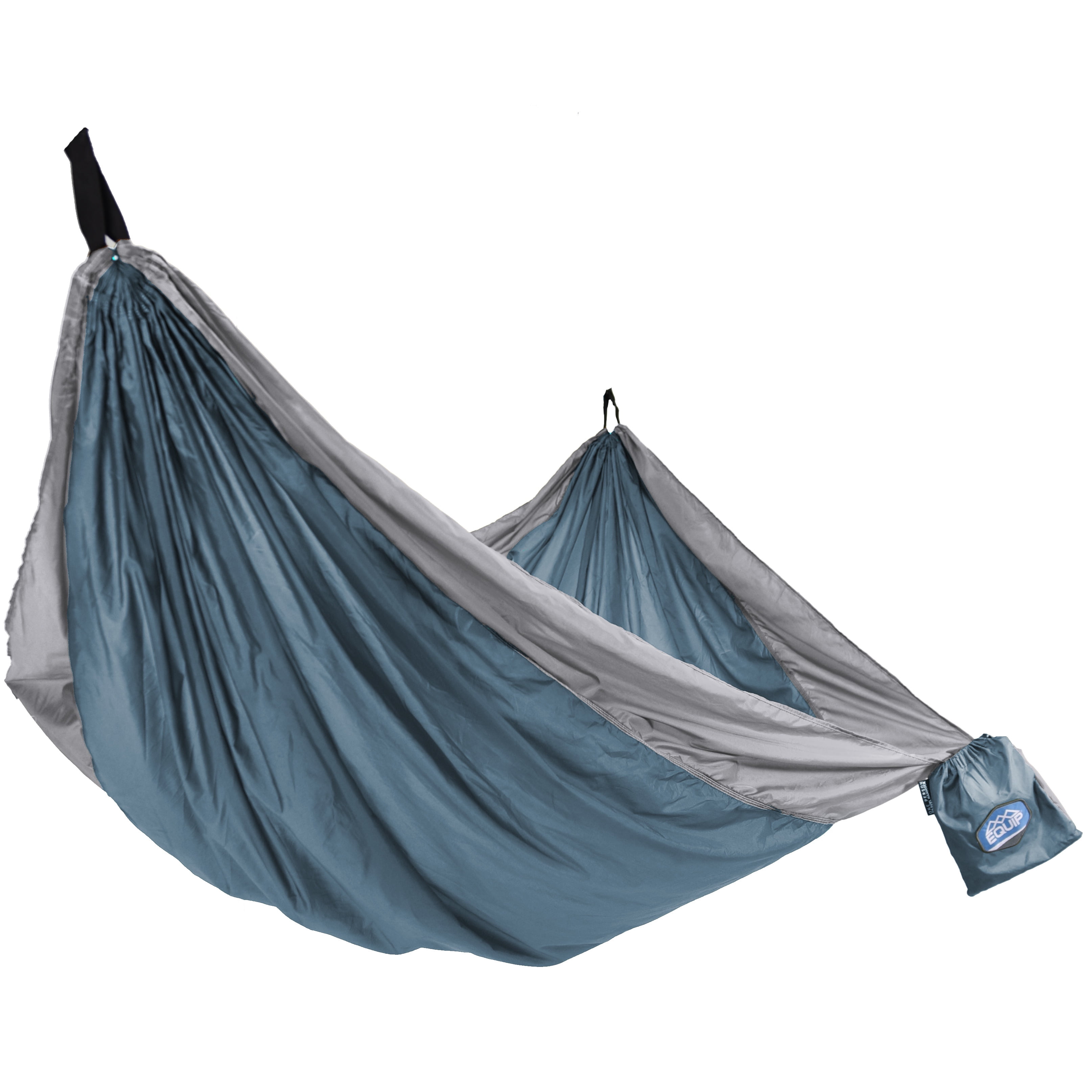
The Equip 1P travel hammock is a simple one-person option at a low price.
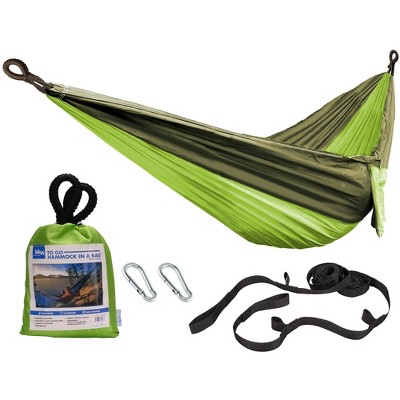
At Target, the Bliss Hammocks Hammock in a Bag comes with carabiner hooks and tree straps and packs down for the park or backyard.
Extra-large and bug-net hammocks
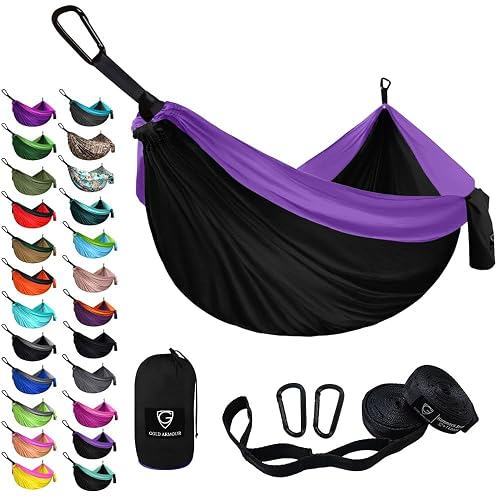
✔ Comfortable Extra Large Double Hammock - This extra large double hammock comfortably supports up to 500 lbs and comfortably fits 2 people. Luxuriously sized, measuring 125 in x 79 in (10.4 ft x 6...
The Gold Armour XL double gives extra room for tall people or anyone who likes more fabric to spread out.
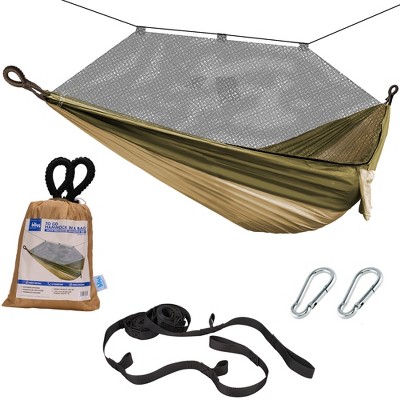
The Bliss Hammocks model with a mosquito net adds bug protection for evenings and overnight use.
How to hang a hammock
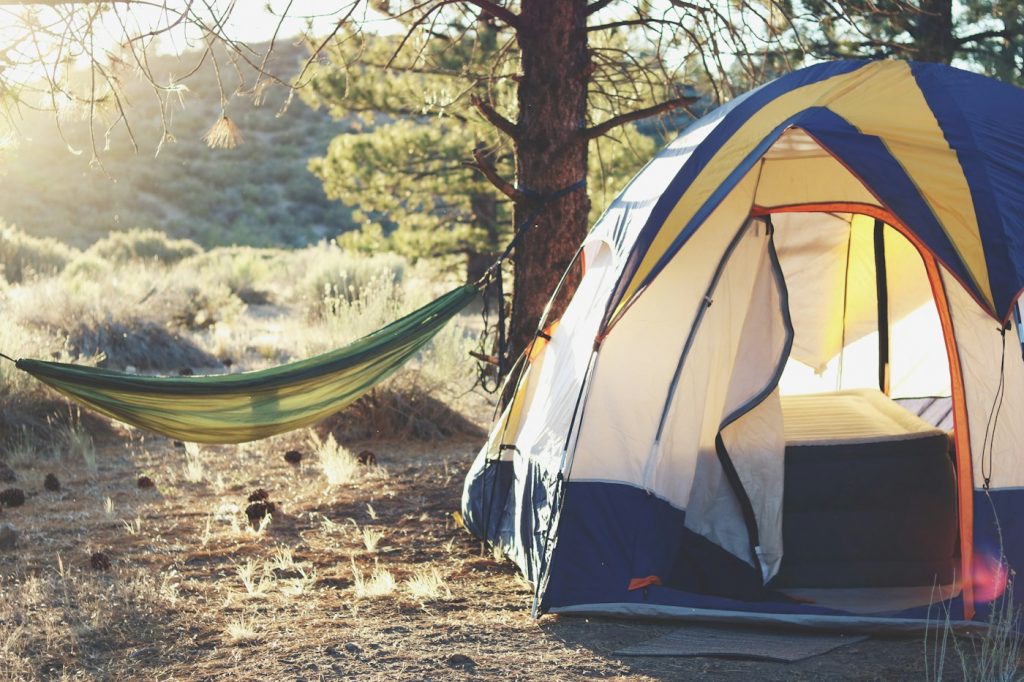
- Pick healthy trees: Leave No Trace advises setting up on live, sturdy trees and never on dead trees or branches, which can fall.
- Use the thick part of the trunk: Leave No Trace recommends attaching to the thickest part of the tree trunk.
- Mind the distance: Trees about 12 to 15 feet apart work for many camping hammocks; check your hammock's instructions.
- Hang with some sag: A hammock pulled tight like a banner is uncomfortable and puts more strain on the straps and trees. A gentle curve, with the straps angled down rather than flat, is more comfortable. Many hammock makers list a suggested strap angle in their instructions.
- Keep it low: Hang the hammock at about chair height, so you can sit down easily and are not high off the ground if something slips.
- Test it: Press down firmly on the hammock before you get in, then sit in the middle before lying back.
What to pack with your hammock
- Straps and carabiners: Double-check they are in the bag before you leave.
- A small stuff sack or pouch: Many hammocks have one built in.
- Bug net or bug spray: Useful near water and at dusk.
- Tarp and cord: For shade, rain, and overnight trips.
- Pad, underquilt, or warm layer: Hammocks can feel cold underneath, even on mild nights.
- A headlamp: Setting up and climbing in after dark is much easier with light.
Hammocks for kids and families
Kids love hammocks, but they tend to swing hard, climb in from odd angles, and pile in together. Keep the hammock low, stay within the weight rating, and set a simple rule about how many kids can be in at once. Supervise younger children, keep hammocks away from edges, rocks, and fire rings, and take it down or tie it up when no one is using it, so a child does not get tangled in it alone.
A hammock is also a great first piece of gear for a family that is new to camping. It gives kids a place to read and rest at the campsite, and it packs small enough to bring on day trips to a park or lake.
Choosing a site
Leave No Trace notes that good campsites are found, not made. In the backcountry, set up at least 200 feet from water, trails, and other campsites, and use established sites when you can. Look up before you hang: avoid dead limbs overhead, and never hang from a power pole, fence, railing, or other structure that is not built for the load. Some parks limit or ban hammocks on certain trees or in certain areas, so check the rules where you are going.
Comfort tips
Lie on a diagonal across the hammock instead of straight down the middle. This flattens the fabric and keeps your back straighter. A small pillow or rolled jacket under your knees helps too. On cool nights, bring a pad or underquilt, since hammocks let cold air reach your back.
Care and storage
Shake out leaves and dirt after each use. If the hammock gets wet, hang it to dry fully before packing it away, which prevents mildew and odors. Most nylon hammocks can be hand washed in cold water with mild soap; check the maker's care label. Inspect straps, stitching, and carabiners before each trip, and replace anything frayed or bent.
The short answer
For most campers, a double parachute nylon hammock with a weight rating well above what you need, plus webbing straps 1 inch or wider, is the easiest place to start. Add a bug net or tarp for overnight trips. Follow Leave No Trace guidance: hang on healthy trees at the thickest part of the trunk, and camp at least 200 feet from water and trails in the backcountry.
The responses below are not provided, commissioned, reviewed, approved, or otherwise endorsed by any financial entity or advertiser. It is not the advertiser’s responsibility to ensure all posts and/or questions are answered.
Helpful that you mentioned lying on a diagonal. For a first overnight trip, is a sleeping pad inside the hammock enough in cool weather, or is an underquilt worth it?