
Last Updated on: May 02, 2026
Ask anyone who takes coffee seriously what upgrade makes the biggest difference, and most will say the grinder, not the coffee maker. Freshly ground beans taste brighter and fuller than pre-ground coffee, and an even grind makes every brewing method more forgiving. A burr grinder is how you get both.
What We'll Cover
- Top Burr Coffee Grinders
- Burr vs. blade grinders
- Conical vs. flat burrs
- Match the grind to your brewer
- Everyday electric grinders
- For pour-over and espresso
- Manual grinders
- Hopper or single-dose?
- Fixing coffee that tastes off
- Features worth paying for
- How much coffee to grind
- Cleaning and care
- Buying tips
- The short answer
Burr grinders range from simple hand cranks to espresso-ready machines with dozens of settings. The right one depends on how you brew, how much you make, and how much counter space and noise you can live with. Here is what to look for and which grinders fit each kind of coffee drinker.
Top Burr Coffee Grinders
Burr vs. blade grinders
Blade grinders chop beans with a spinning blade, like a small blender. They leave a mix of dust and chunks, and the longer they run, the finer and less even the result. That mix brews unevenly: the fine bits over-extract and taste bitter while the big pieces under-extract and taste sour.
Burr grinders crush beans between two ridged surfaces set a fixed distance apart. Every particle has to pass through the same gap, so the grounds come out far more even. You choose the size by adjusting the gap, and you get the same result each morning.
Conical vs. flat burrs
Conical burrs use a cone-shaped burr inside a ring. They are common in home grinders, tend to run quieter, and hold less leftover coffee. Flat burrs use two parallel discs. They are often praised for a very uniform grind, especially for pour-over, and are common in higher-end grinders. Both work well. At home, how well the grinder is built and how easily you can adjust it matter more than the burr shape.
Match the grind to your brewer
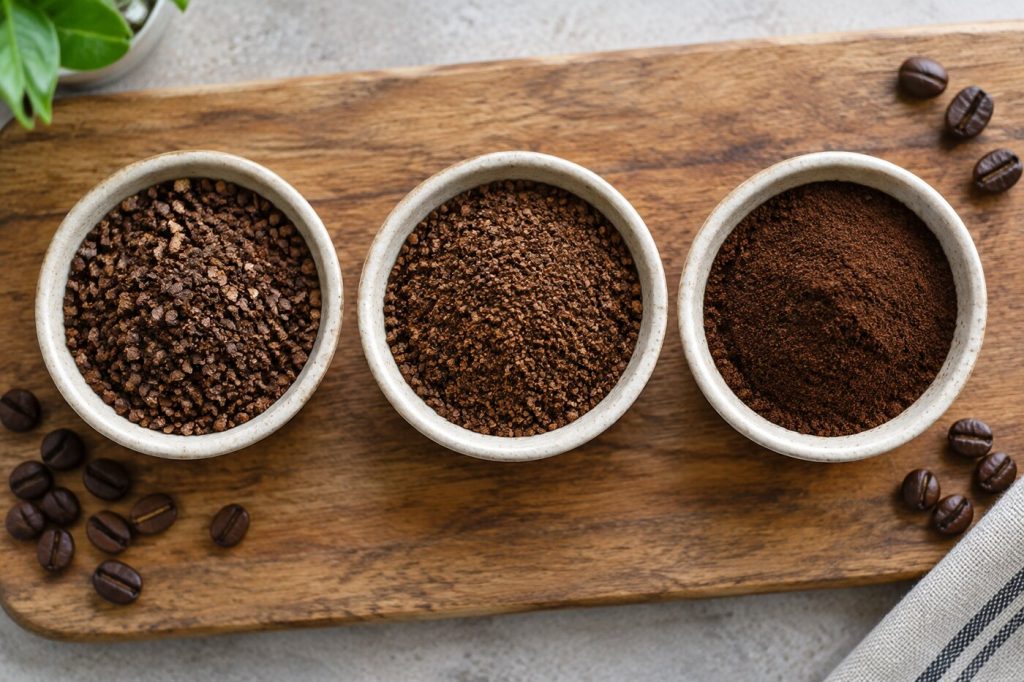
- French press and cold brew: coarse, like rough sea salt.
- Drip coffee makers: medium, like sand.
- Pour-over: medium-fine, adjusted to taste and brew time.
- Moka pot: fine, a little coarser than espresso.
- Espresso: very fine, and adjusted in small steps.
If you only brew drip or French press, almost any burr grinder will do. Espresso is the demanding one. It needs very fine grounds and tiny adjustments between settings, so choose a grinder that says it is built for espresso if that is how you brew.
Everyday electric grinders
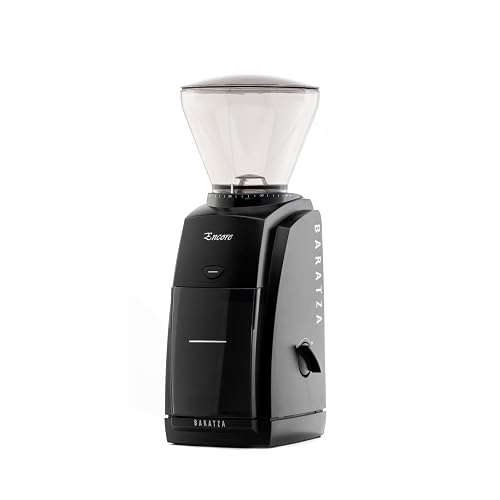
Specialty Coffee Association Award Winning Grinders - Baratza grinders are preferred by coffee professionals and backed by Baratza’s world class support.
Go-To Entry Level Grinder - Baratza’s best-...
The Baratza Encore is a long-running favorite among entry-level burr grinders. It has conical burrs and simple controls, and it does its best work in the drip and pour-over range. It is the grinder to start with if you are moving up from a blade grinder.
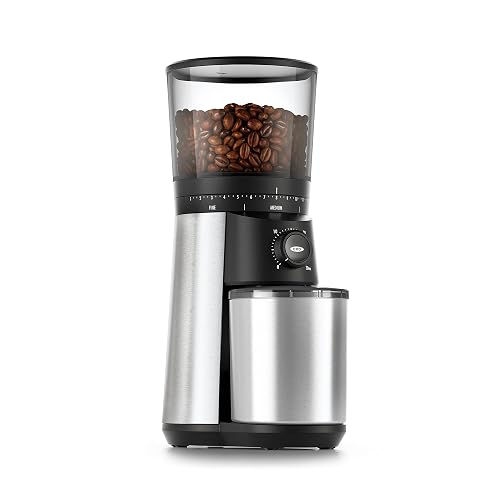
40mm stainless steel conical burrs: Precision grinding system produces uniform coffee grounds to ensure even extraction for rich, balanced flavor in every cup.
15 grind settings (plus 43 micro-adju...
The OXO Brew conical burr grinder has a 12-ounce bean hopper, so it suits households that brew a full pot every morning. It is easy to set and use.
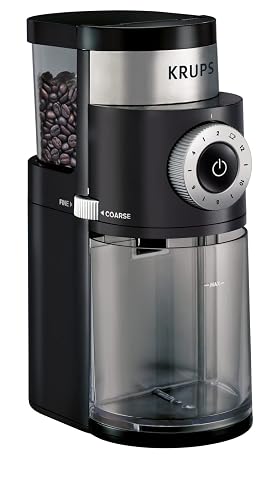
12 CUSTOM SETTINGS: The adjustable coffee grinder allows you to choose from coarse to fine for brewing styles like drip coffee, French press, and cold brew. For best results with espresso, use the ...
The KRUPS Precision grinder is a budget electric option with 12 settings, 8 ounces of capacity, and an auto-stop feature. It covers French press through drip for most home brewers.
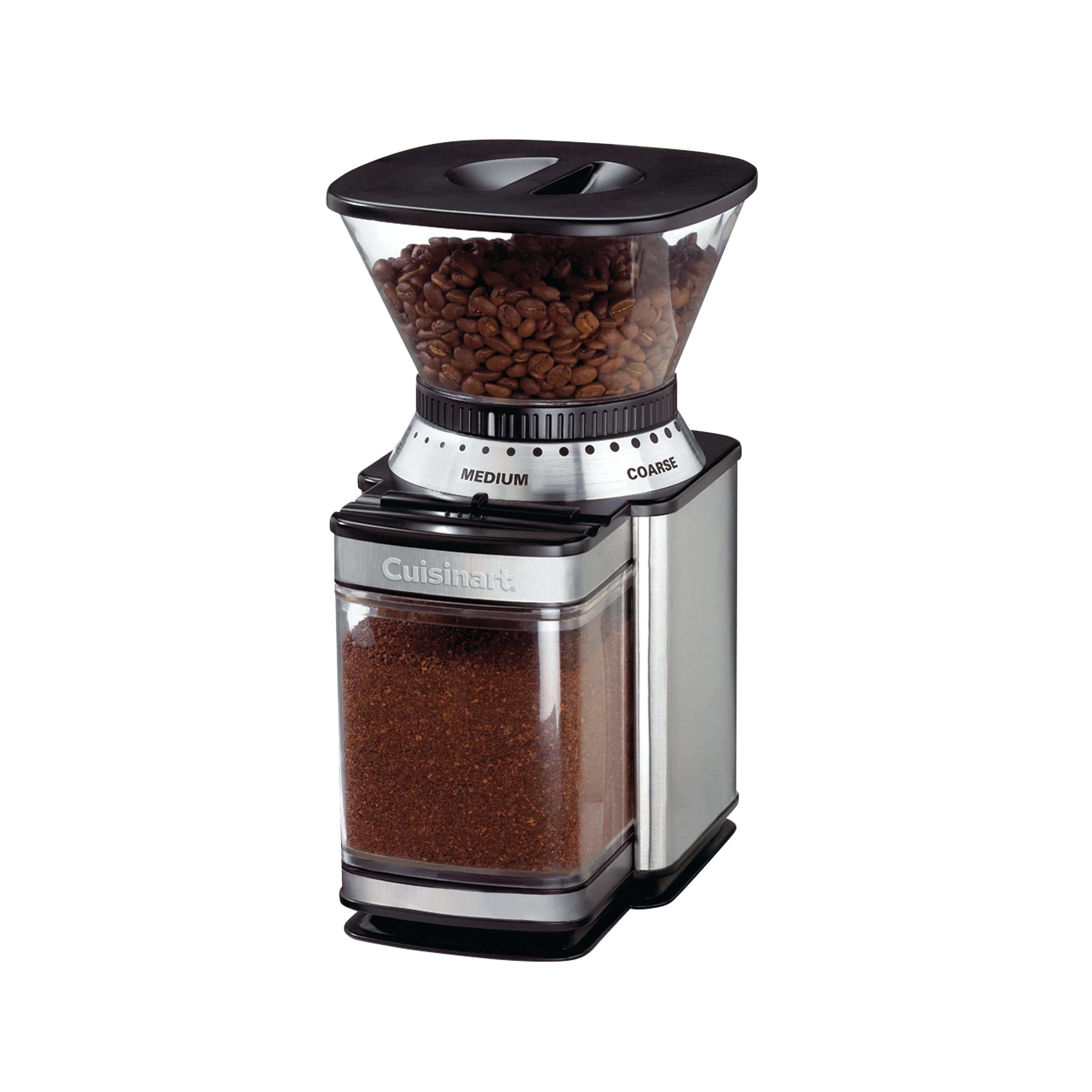
The Cuisinart Supreme Grind is another low-cost electric burr grinder that can grind enough for up to 32 cups at once. It is a practical step up from a blade grinder when price is the main concern.
For pour-over and espresso
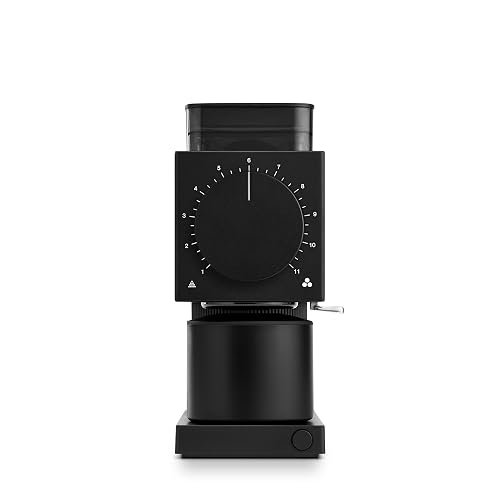
BUILT FOR BREWED COFFEE – With 31 grind settings optimized for pour-over, drip coffee, French press, and cold brew, Ode Gen 2 lets you dial in your favorite brewing methods with precision. Designed...
The Fellow Ode Gen 2 uses 64mm flat burrs and a single-dose design, which means you weigh out just the beans for one brew. It is aimed at pour-over and filter coffee lovers who care about a clean, even grind.
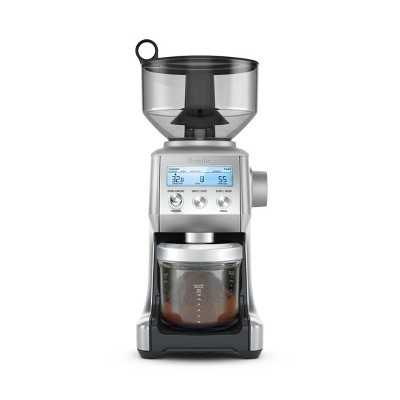
At Target, the Breville Smart Grinder Pro offers 60 grind settings and is designed to go fine enough for espresso. If you own an espresso machine or plan to buy one, it is the pick here.
Manual grinders
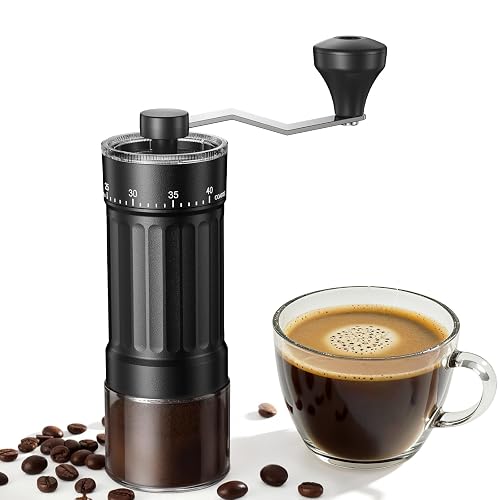
40 EXTERNAL ADJUSTABLE GRIND SETTINGS - Unlike traditional grinders with internal adjustments, our manual coffee grinder offers 40 precise external settings. The easy-to-use adjustment ring lets yo...
The CEVING Mini is a hand grinder with 40 adjustable settings. Manual grinders are quiet, need no outlet, and take little space, but grinding for a full pot takes a few minutes of cranking.
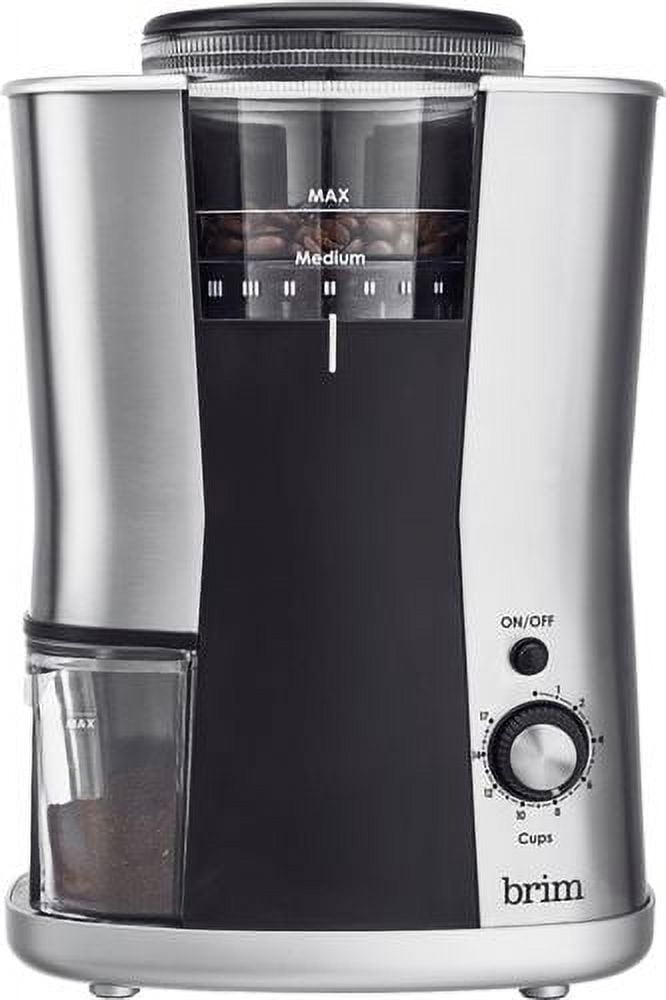
The BRIM stainless steel manual grinder uses conical burrs and a hand crank. It is a good fit for camping, travel, or a small kitchen.
Hopper or single-dose?
Most grinders have a hopper on top that holds a supply of beans. You set the grind, press a button or set a timer, and the grinder measures out roughly what you need. Hoppers are convenient if one person drinks the same coffee every day, but beans that sit in a clear hopper for a week lose freshness, and switching to a different coffee means grinding through what is left.
Single-dose grinders are built to grind exactly the beans you put in, one brew at a time. You weigh your beans, drop them in, and grind them all. It takes a few more seconds each morning, but it keeps beans fresher and makes it easy to switch between coffees, such as a light roast for pour-over and decaf in the afternoon.
Fixing coffee that tastes off
A grinder gives you a simple way to fix coffee that does not taste right. If your coffee tastes sour, thin, or weak, the grounds are probably too coarse, so water passes through too quickly. Go one or two steps finer. If it tastes bitter, harsh, or dry, the grounds are probably too fine, or the brew ran too long. Go one or two steps coarser. Change one thing at a time, and give each change a couple of brews before you judge it.
If you change the grind and nothing seems to help, look at the beans. Coffee that was roasted many weeks ago tastes flat no matter how it is ground. Buying smaller bags more often, and checking for a roast date on the bag, usually fixes that.
Features worth paying for
- Step size: more settings and smaller steps between them matter for espresso and fine-tuning pour-over.
- Retention: some coffee always stays inside. Low-retention grinders waste less and keep yesterday's grounds out of today's cup.
- Static: grounds can cling to the bin and fly around. Some grinders have anti-static features; a tiny drop of water on the beans also helps.
- Noise: lower-speed grinders are usually quieter, which matters in the early morning.
- Easy cleaning: removable burrs make cleaning much simpler.
How much coffee to grind
A common starting point is about 1 to 2 tablespoons of ground coffee per 6 ounces of water, adjusted to taste. A kitchen scale makes this easier and more consistent. Grind just before brewing: ground coffee loses aroma quickly, so grinding a week's worth at once gives up most of the benefit of owning a grinder.
Cleaning and care
Coffee oils build up on the burrs over time and can make coffee taste stale. Brush out the burrs and chute every week or two, and give the grinder a deeper clean every month or so following the maker's directions. Do not wash burrs in water unless the manual says so, since many are steel parts that can rust. Some owners use grinder cleaning tablets made from grains, which absorb oils as they pass through. Keep beans in an airtight container away from light and heat, and only fill the hopper with what you will use in a few days.
Finally, give a new grinder a few days of use before judging it. Burrs can take a little time to settle, and it usually takes a handful of brews to find the setting that suits your beans and brewer.
Buying tips
Set your budget by how you brew. For drip and French press, a basic electric burr grinder is plenty. For pour-over, spend a little more for better consistency. For espresso, buy a grinder built for it, since it will matter more than the espresso machine itself. If you are short on counter space or like to travel, a manual grinder is a low-cost way to start.
The short answer
Any burr grinder is a big step up from pre-ground coffee or a blade grinder. Pick an electric conical model for everyday drip and pour-over, a flat-burr single-dose grinder if pour-over is your passion, an espresso-capable grinder if you pull shots, and a manual grinder for travel or tight spaces. Grind right before you brew, and your usual beans will taste noticeably better.
The responses below are not provided, commissioned, reviewed, approved, or otherwise endorsed by any financial entity or advertiser. It is not the advertiser’s responsibility to ensure all posts and/or questions are answered.
For anyone switching from a blade grinder: weigh your beans for a week before changing anything else. It makes it much easier to tell whether a grind change actually helped.