
Last Updated on: Apr 19, 2026
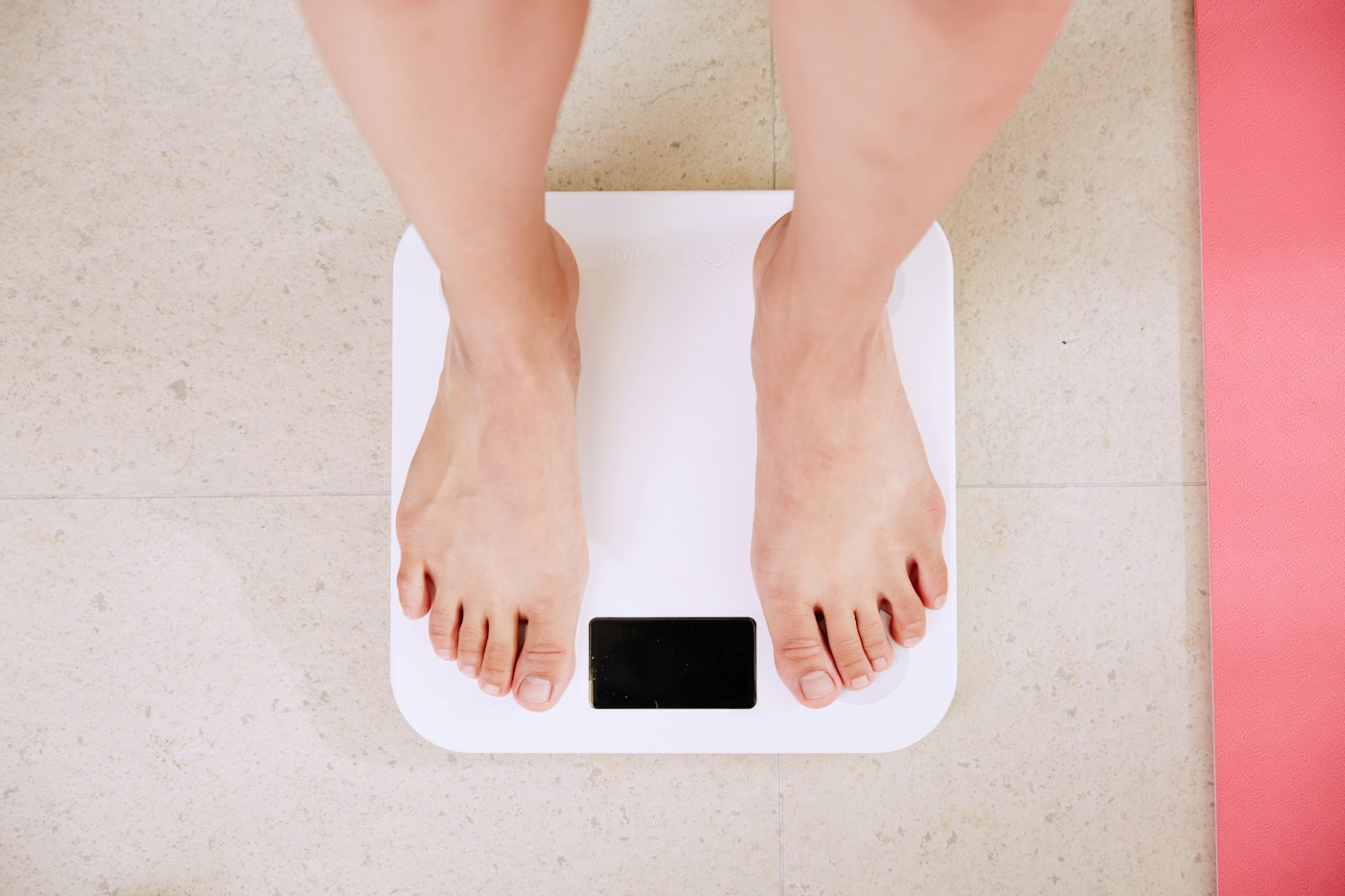
A bathroom scale is one of the simplest health tools you can keep at home. Whether you want to keep an eye on your weight, track progress toward a fitness goal, or share numbers with your doctor, a reliable scale gives you a quick, private check-in. Today's options range from basic digital scales to smart scales that sync with your phone and estimate body fat.
What We'll Cover
- Top Bathroom Scales
- Types of bathroom scales
- What to look for
- Smart scales and body composition
- Everyday digital scales
- High-capacity and smart scales
- Getting consistent readings
- Using your scale in a healthy way
- Beyond the number
- Scales for different needs
- Care and calibration
- Common mistakes
- Questions to ask before you buy
- The short answer
This guide explains the main types of bathroom scales, what features matter, how to get consistent readings, and how to use the numbers in a healthy way, with scales from several stores.
Top Bathroom Scales
Types of bathroom scales
- Digital scales: The most common type. They show your weight on a screen and are easy to read. Most run on batteries and turn on when you step on.
- Smart scales: Connect to a phone app by Bluetooth or Wi-Fi, save your readings automatically, and often support several users.
- Body composition scales: Send a tiny electrical signal through your feet to estimate body fat, water, and muscle. Many smart scales include this feature.
- Analog scales: Use a spring and dial. They need no batteries but are harder to read precisely.
What to look for
- Capacity: Most scales hold 330 to 400 pounds, and some heavy-duty models go higher. Choose one with room to spare.
- Platform size: A wider platform is more stable and comfortable, especially for larger feet.
- Display: Large, backlit numbers are easier to read, especially for people with low vision or when the room is dim.
- Increments: Scales show weight in steps such as 0.2, 0.1, or 0.05 pounds. Finer steps are nice, but consistency matters more.
- Units: Most let you switch between pounds, kilograms, and sometimes stones.
- Power: Check the battery type, and look for auto-off to save power.
Smart scales and body composition
Smart scales make tracking easy because each weigh-in is saved to an app without writing anything down. Many also share data with fitness apps. Body composition numbers are estimates, not medical measurements. They can shift with how much water you drank, when you last ate, or whether your feet are dry. They are most useful for spotting trends over weeks, not for single readings.
Many makers advise that people with pacemakers or other implanted medical devices, and people who are pregnant, should not use the body composition feature. Read the manual and talk to your doctor if you are unsure. Most smart scales let you turn that feature off and weigh yourself normally.
Everyday digital scales
𝑹𝒆𝒍𝒊𝒂𝒃𝒍𝒆 𝑷𝒓𝒆𝒄𝒊𝒔𝒊𝒐𝒏: With professional expertise refined over 10 years, our brand design ensures accuracy and reliability through high-precision sensor technology
𝑬𝒂𝒔𝒚 𝒕𝒐 𝑼𝒔𝒆: The scale is equipped ...
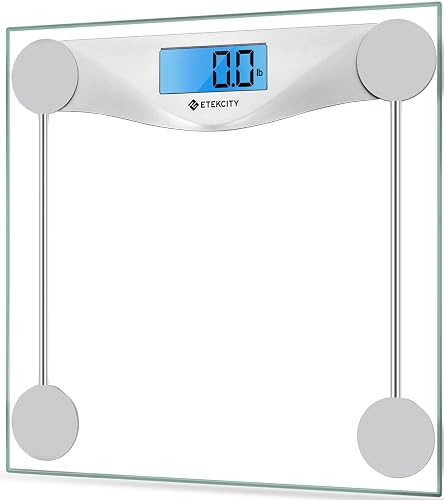
The Etekcity digital body weight scale has a 6mm tempered glass platform and a 400 lb capacity, a simple, popular pick for daily weigh-ins.
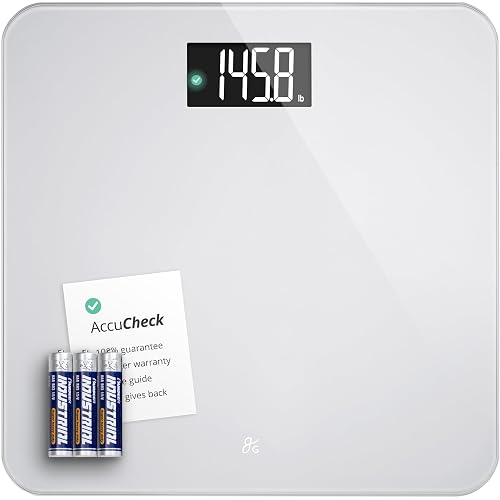
Double-Check Tech: Moving or storing a bathroom scale can sometimes affect accuracy. That's why we created AccuCheck, our exclusive technology that automatically recalibrates the scale and verifies...
The Greater Goods AccuCheck digital scale has a clean pearl gray design with an easy-to-read display.
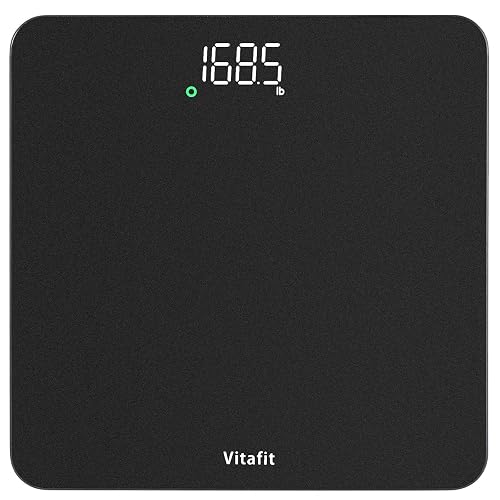
DURABLE ACCURACY CHOICE - Our owned professional factory has been focusing on high quality scales SINCE 2001, we make the digital scale for body weight with best-in-class technology and expertise, ...
The Vitafit bathroom scale shows weight in 0.1 lb steps and holds up to 400 lb.
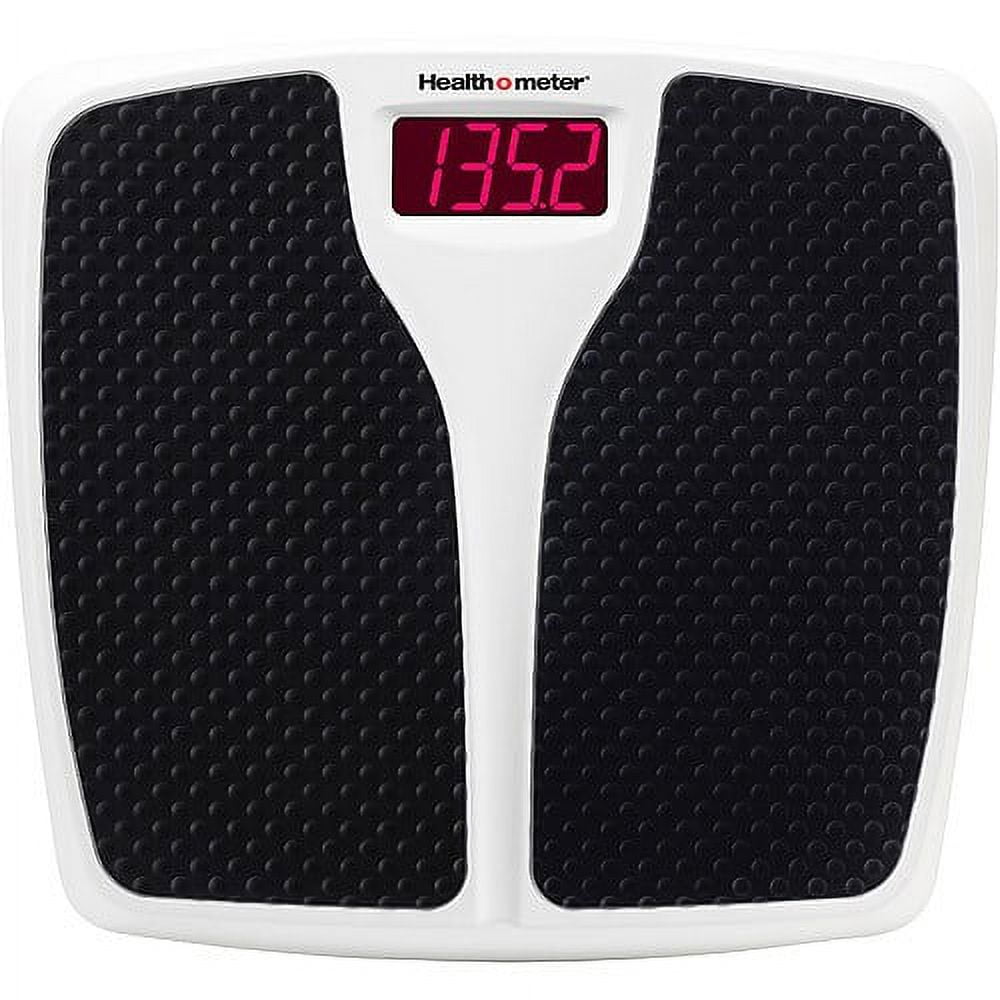
At Walmart, the Health o meter split mat digital scale has a 400 lb capacity and an LED display from a long-running scale brand.
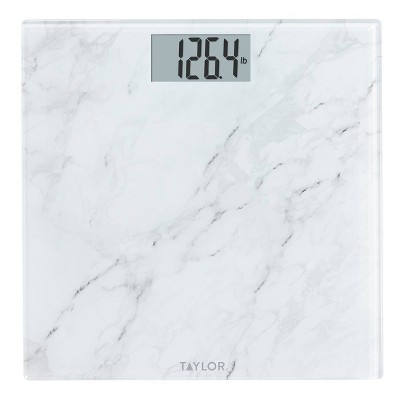
At Target, the Taylor digital glass bathroom scale adds a white marble design for a bathroom that looks as good as it works.
High-capacity and smart scales
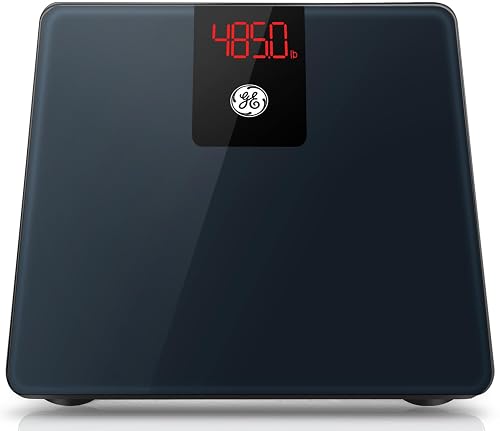
Up to 500lb Capacity: 4 high-precision sensors accurately provide your weight metrics down to 0.1lb/0.05kg increment with an extra high 500lbs / 226.8kg capacity. It can easily weigh light items fr...
The GE bathroom scale is a heavy-duty model with a 500 lb capacity.
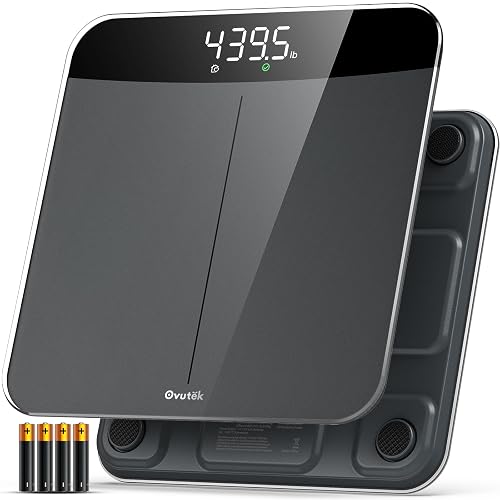
Professional Accuracy: With 15 years experience, 20,000+ times reliablility test and advanced patented SaluOptim Tech, this weight scale ensures exceptional precision for your health and fitness
Op...
The Ovutek digital scale holds up to 450 lb and shows weight in 0.05 lb steps.
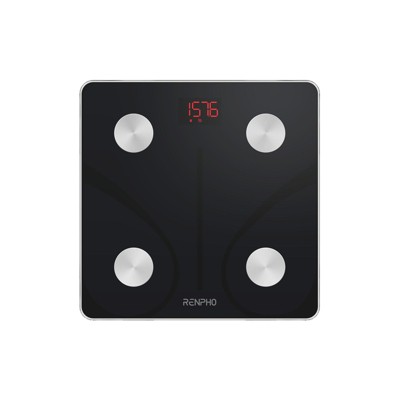
Also at Target, the RENPHO Elis 1 is a smart body scale that syncs readings to a phone app.
Getting consistent readings
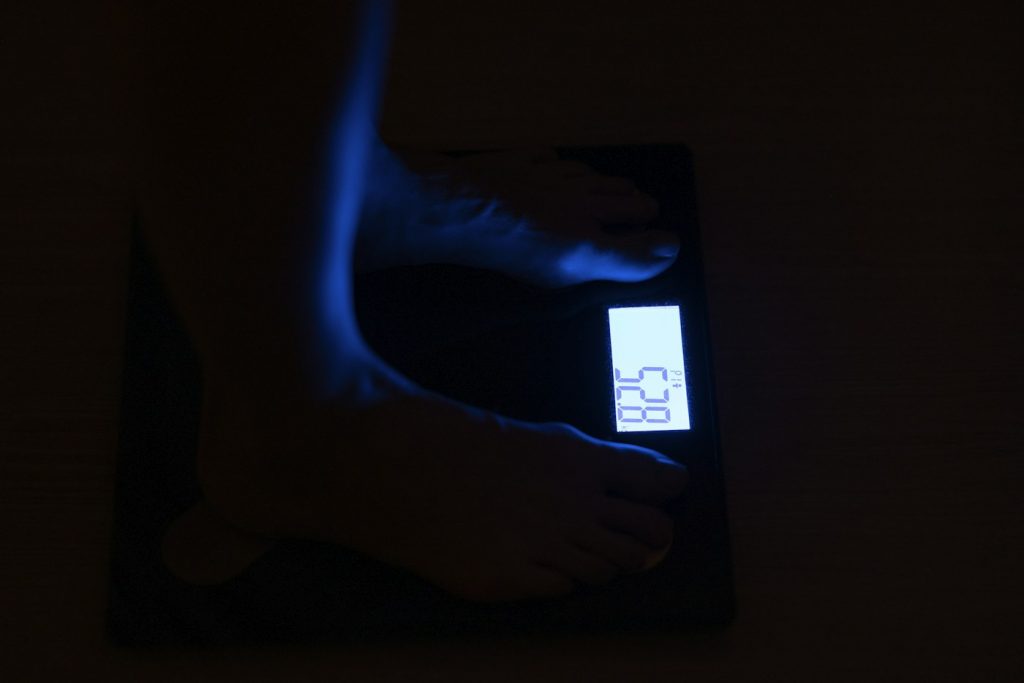
Your weight naturally goes up and down through the day by a few pounds, mostly from food, drinks, and water. To get numbers you can compare, keep your routine the same each time.
- Same time: Weigh yourself at the same time of day, such as first thing in the morning after using the bathroom.
- Same clothes: Wear the same thing, or nothing, each time.
- Hard, flat floor: Place the scale on tile or wood, not carpet, which can throw off readings.
- Same spot: Moving the scale around can change results slightly.
- Stand still: Stand centered with your weight even on both feet.
Using your scale in a healthy way
A scale is a tool for noticing trends, not a judgment. The CDC notes that monitoring can help people maintain their health and weight, and that it can include recording your weight once a week, along with tracking activity and how many fruits and vegetables you eat. The CDC also points out that tracking can reveal patterns, such as weight creeping up during busy work weeks, that signal it may be time to try different habits.
Weekly checks are enough for many people. If weighing yourself makes you anxious or stressed, it is fine to weigh less often or to focus on other signs of health, such as energy, sleep, and how your clothes fit. If you have questions about a healthy weight for you, or notice sudden weight changes you cannot explain, talk to your health care provider.
Beyond the number
Weight is only one part of the picture. The CDC's tips for keeping weight off include following a healthy and realistic eating pattern, keeping eating habits consistent through weekends and vacations, and being physically active. The CDC notes that people who maintain weight loss typically get 60 to 90 minutes of moderate-intensity activity most days, which does not have to happen all at once; a few short, brisk walks can add up. Some people may need to talk with their health care provider before starting that level of activity. Support from a friend or partner can also help people stay on track.
Scales for different needs
Some features make a scale easier for certain people to use. Older adults and anyone with balance concerns may want a wide, non-slip platform and a low profile that is easy to step onto. People with low vision can look for extra-large, high-contrast numbers or a talking scale that reads the weight aloud. Families who share a scale may prefer a smart model that recognizes each user and keeps their data separate. If you travel often, a slim, light scale is easy to store and move. Glass-top scales look sleek but can be slippery with wet feet, so step on with dry feet or choose a textured surface if the scale sits near the shower.
Care and calibration
Wipe your scale with a soft, damp cloth and dry it, and avoid soaking it or using harsh cleaners on the display. Replace the batteries when the screen dims or readings seem off. Many digital scales calibrate themselves when you tap them to turn on and let them read zero before stepping on. If you move the scale, you may need to do this again. To check consistency, weigh a known object such as an unopened bag of flour a few times and see whether the numbers match.
Common mistakes
The most common mistake is placing the scale on carpet or an uneven floor, which can make readings jump around. Another is weighing yourself several times a day and worrying about normal changes. Many people also compare readings between two different scales, which can differ slightly. Pick one scale and stick with it. Finally, treating body fat estimates as exact can cause needless worry; watch the trend instead.
Questions to ask before you buy
- Do you want an app? Smart scales save readings for you.
- How many people will use it? Look for multi-user support.
- What capacity do you need? Pick one with room to spare.
- Can you read the display? Choose large, backlit numbers if needed.
The short answer
For most people, a simple digital scale with a wide, stable platform and a clear display is all that is needed. Choose a smart scale if you want automatic tracking. Weigh yourself at the same time on a hard floor, focus on trends, and talk to your doctor about what healthy looks like for you.
The responses below are not provided, commissioned, reviewed, approved, or otherwise endorsed by any financial entity or advertiser. It is not the advertiser’s responsibility to ensure all posts and/or questions are answered.
The tip about keeping the scale off the carpet makes sense. Is it better to leave it in one spot all the time, or is it fine to slide it under the vanity between uses?