
Last Updated on: Sep 25, 2026
A bath rug has a simple job: give wet feet a comfortable place to land without becoming a tripping hazard or a damp patch on the floor. Product photos make every rug look soft and neatly proportioned, but the right choice depends on your bathroom layout, floor surface, laundry routine, and the actual size of the shower or tub exit. These eight current retailer listings cover compact, plush, cotton-feel, cushioned, and colorblock options. Compare the exact version before buying because size, backing, and care can vary by color or model.
What We'll Cover
First stand where you normally step out of the tub or shower. Notice whether a door swings over that space, whether a toilet or vanity crowds it, and where water is likely to land. Measure that patch of floor. A larger rug is not automatically safer if its edge curls under a cabinet door or blocks a narrow walking route. A smaller one may be easier to wash and dry, but it needs to cover the landing spot you actually use.
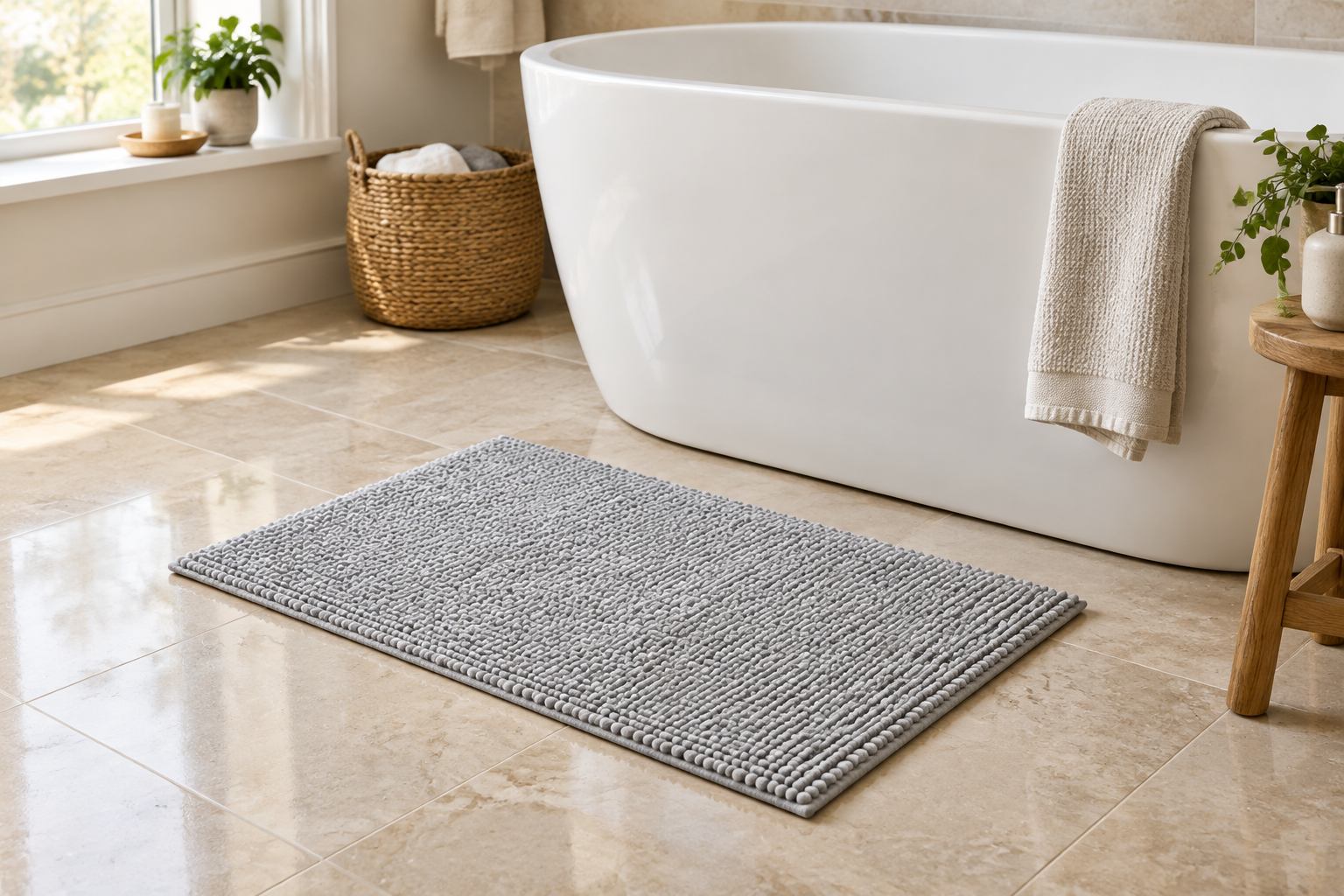
Top Bath Rugs
Measure the landing zone, not just the bathroom
Bath-rug labels often list dimensions such as 16 by 24, 20 by 30, or 24 by 17 inches. Place painter’s tape on the floor to mark the listed rectangle. Step out of the tub as you normally would and see whether both feet land on the taped area. If several people use the bathroom, their paths may differ. Account for a bath or shower door opening outward, a low cabinet door, a hamper, and the walking path toward the sink.
Measure the floor between fixtures rather than estimating from a staged photograph. A thick rug may fit in a clear floor plan yet catch under a door with little bottom clearance. Check the listed pile height and overall thickness if a door needs to pass above it. Round corners and soft edges can make a small room feel less crowded, but they do not replace a stable, flat placement. Leave enough exposed floor to clean and let moisture escape.
- Tape out the exact listed footprint.
- Open every nearby door across that footprint.
- Stand on the marked area after the usual bath or shower exit.
- Leave clear access to cabinets, toilet, and floor vents.
A bath rug for a double vanity may need a longer runner shape, while one outside a shower stall can be compact. Decide which job is primary. A decorative rug placed far from the tub may not catch water, and a highly absorbent mat beside a vanity may be wasted if the wet-foot landing spot remains bare. If the room is tiny, two small rugs can create more edges to trip on than one properly placed mat. Keep the layout simple.
Pile, fibers, and drying
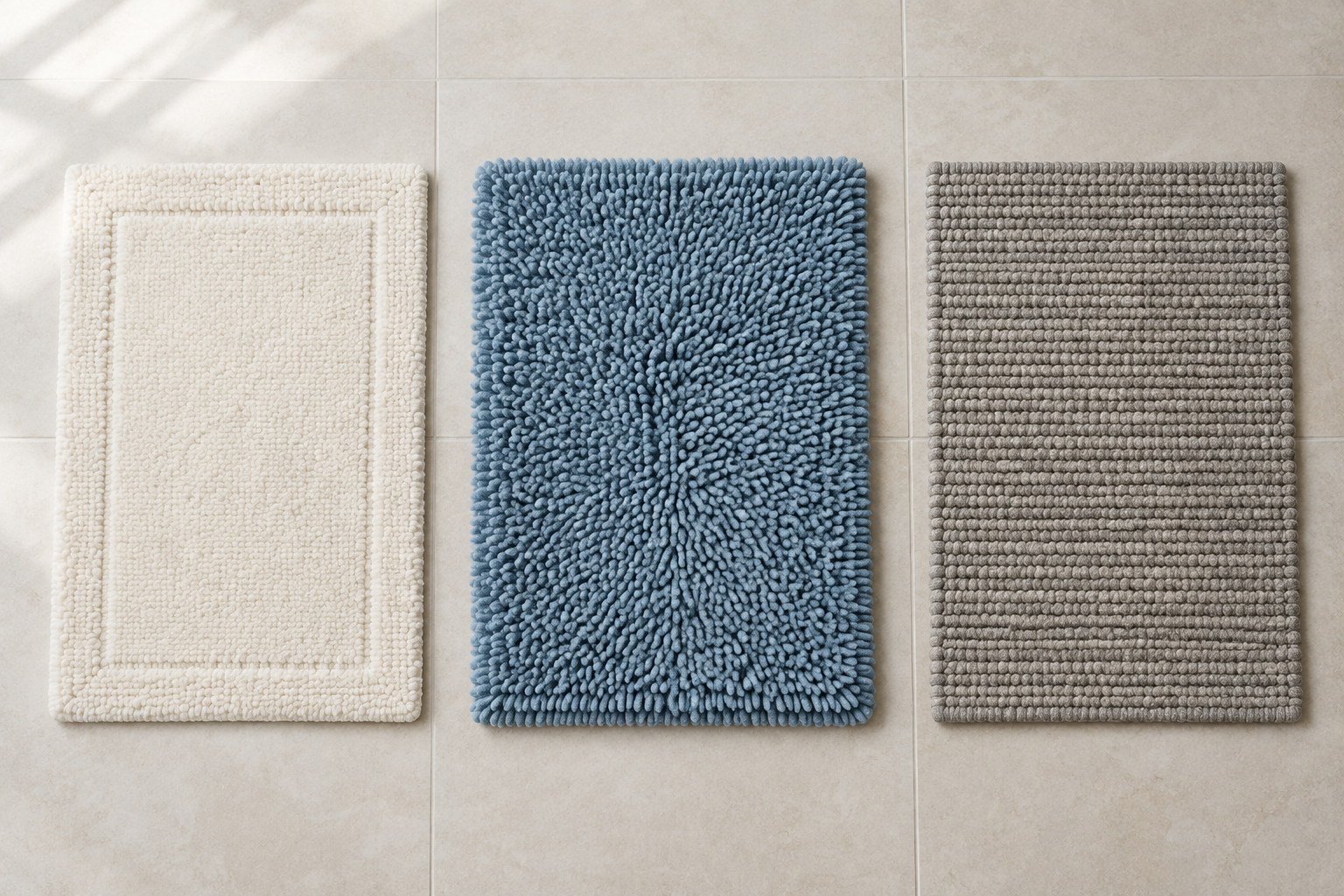
Chenille and plush microfiber can feel soft under bare feet. Their longer pile may hide small bits of lint or hair, so consider how often you will shake out and wash the rug. A lower profile or woven cotton surface may be easier to sweep around and may sit flatter under a door, although it may not have the same cushioned feel. Memory foam adds a padded step but can feel different as it compresses, and the care directions for the foam core deserve a close look.
Absorbent claims are hard to compare across listings because makers rarely use one shared test. A thick-looking pile does not guarantee that the backing or core will dry promptly between uses. Think about ventilation and traffic. In a bathroom used by several people in quick succession, a rug can stay damp longer than it does in a lightly used guest bath. Hang it to dry when practical and do not leave a wet rug pressed against a floor that needs to stay dry.
Read the exact care label for both rug and backing. Some products are machine washable, but washing temperature, dryer setting, and frequency vary. A backing that begins peeling after rough laundering can lose its grip. Keep a second rug if the first one must dry overnight. White and pale colors show stains sooner; dark colors can show lint or toothpaste marks. Choose a color you will actually keep clean rather than the one that looks best in a styled listing.
Backing and floor compatibility
A non-skid or non-slip label is a starting point, not a promise that a rug cannot move. The floor material, water on the tile, cleaning residue, worn backing, and the way a person steps all affect grip. Check the manufacturer’s directions for the exact backing and floor. Some backing materials may be unsuitable for certain finishes or radiant-heated floors. If you are unsure about a delicate surface, ask the floor maker before leaving a rubberized backing in place for months.
Lay the rug flat on a clean, dry floor and press its corners down. Test whether it slides under ordinary foot pressure without deliberately pushing it as hard as possible. If it curls, bunches, or rides up at the edge, stop using that placement. Do not put it over an already slippery wet patch. Wipe up standing water and address the source of a leak or recurring puddle; a rug should not serve as a cover for a maintenance problem.
For a household with limited mobility, balance, or vision, even a low bath rug can be a trip risk. The National Institute on Aging advises against small throw rugs and calls for nonskid surfaces where floors may get wet. Its room-by-room fall-prevention guidance is at https://www.nia.nih.gov/health/falls-and-falls-prevention/preventing-falls-home-room-room . Ask a qualified clinician or accessibility specialist for advice on the specific bathroom rather than relying on a product’s safety marketing. Keep grab bars and appropriate floor treatment separate from the rug decision. If the rug is used, its edges must remain visible and flat, and the path from shower to sink should be clear.
Eight retailer listings to compare
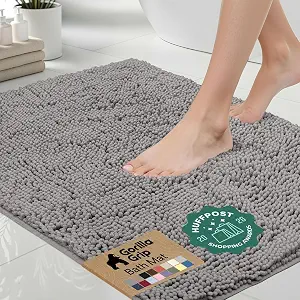
AWARD WINNING: Winner of the 2026 HuffPost Shopping Awards recognizing excellence in the home category and problem solving products
SOFT AND THICK CHENILLE: pamper your feet with the softest, cozie...
Gorilla Grip lists a compact 24-by-17 chenille rug in gray. Check its current backing and care directions for your floor and laundry setup.
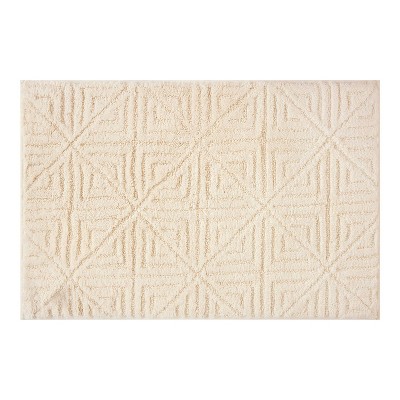
The Threshold lattice-square rug at Target is a 20-by-30 non-skid option. Look at its height and edge profile if a bathroom door swings nearby.
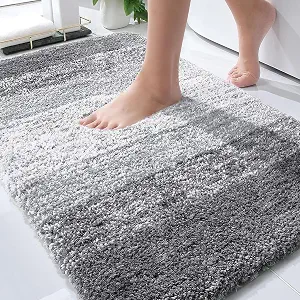
OEKO-TEX Certified Microfiber Comfort — Step out of the shower onto OLANLY’s 100% microfiber bath mat, featuring nearly 1 inch of dense, plush pile to cushion your feet with cozy everyday softness....
OLANLY lists a 30-by-20 microfiber rug with a plush surface. It gives more landing area, but measure the space between fixtures first.
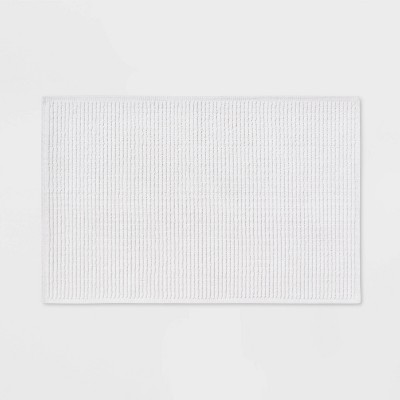
Threshold’s Performance Plus solid-white 20-by-30 rug has a cotton woven feel. Check the exact listing for backing and care; a white rug may need frequent washing.
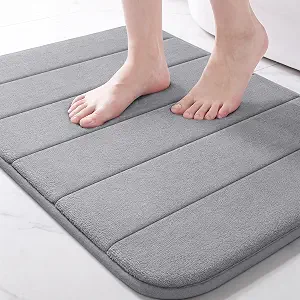
【Cloud-Like 5X Softness: Memory Foam Supreme Comfort】Made with premium memory foam that’s 5x softer than ordinary bathroom mat, providing a cushiony feel underfoot. The luxurious material gently co...
Yimobra’s gray memory-foam bath mat is a cushioned alternative. Check the foam and backing care instructions before assuming it dries like a thin cotton rug.
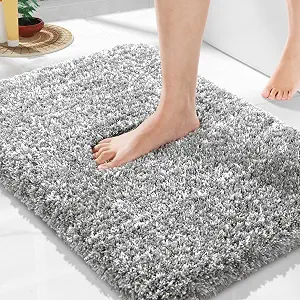
[ MULTIPLE MACHINE WASHES WITHOUT CLUMPING OR TANGLING ] Our fluffy bathroom rug can maintains its pristine shape and texture even after numerous machine washes. Unlike other bath mats on the marke...
The Yimobra 24-by-17 plush model has a light gray and white look. Compare its actual pile and thickness with the door clearance in your bathroom.
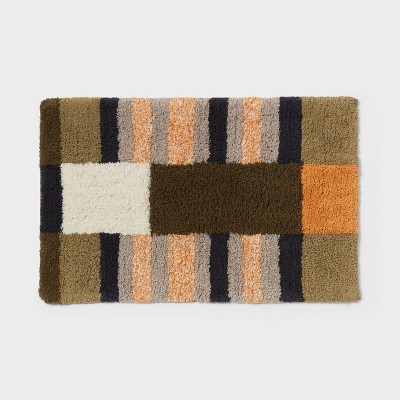
Threshold’s modern colorblock tufted rug is listed at 20 by 30. It can add color near a plain vanity, but the location still needs to catch wet feet and remain flat.
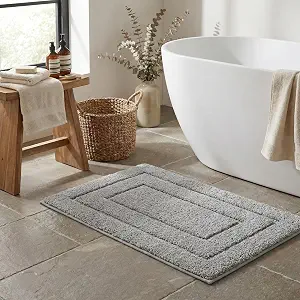
Ultra Absorbent - With its thick, plush, high-density microfiber, the bathroom mat is super absorbent and can quickly absorb water and moisture to keep your floors clean and dry. In just a few seco...
Granny Says lists a 16-by-24 gray microfiber rug for a narrow landing spot. Tape that footprint on the floor before choosing it for a full-size bathtub.
Care after the first week
A new rug should settle flat. Check its edge and backing after the first washes; replace or relocate it if corners curl or the backing loses grip. Shake out lint before washing when the maker allows it, follow the care label, and let the rug dry completely before returning it to the floor. Clean underneath it as well. Moisture trapped between rug and flooring is easy to miss until a mark or odor develops.
Avoid overloading a washer with a large water-heavy rug. If the label calls for a gentle cycle or air drying, do not assume a hot tumble will save time without changing the backing or fibers. Keep laundry products appropriate for the material. A mat that takes a long time to dry may be better rotated with a spare than left damp in a room with poor airflow.
Questions before checkout
- Where do wet feet actually land?
- Will the listed footprint and thickness clear doors and fixtures?
- What backing is used, and is it suitable for this floor?
- How will the rug be washed and dried?
- Does a plush, low-profile, cotton-feel, or cushioned texture suit the routine?
Choose a bath rug as part of the bathroom, not as an isolated fabric swatch. Measure the landing area, keep doorways and walking paths clear, inspect the exact backing and wash label, and plan how it will dry. Softness is useful only when the rug stays flat, clean, and in the place people actually step.
The responses below are not provided, commissioned, reviewed, approved, or otherwise endorsed by any financial entity or advertiser. It is not the advertiser’s responsibility to ensure all posts and/or questions are answered.