
Last Updated on: Aug 04, 2026
Many parents buy one brand of baby bottle before the birth, open the pack at 3 a.m. a few weeks later, and learn that their baby has opinions. Some babies take any bottle without fuss. Others gulp, sputter, pull off, or refuse the nipple outright. It is common enough that many experienced parents suggest buying a single bottle from two or three brands first, then stocking up on the one that works.
The good news is that the differences between bottles come down to a handful of design choices. Once you know what they are, the wall of options at the store gets much smaller.
Top Baby Bottles
What We'll Cover
Vents and anti-colic systems
When a baby drinks, a vacuum builds inside the bottle. If air cannot get back in, the nipple collapses and the baby has to break the seal, which often means swallowing air. Anti-colic bottles solve this in different ways: an internal vent tube, a valve in the nipple, a vented base, or a collapsible silicone pouch.
Several brands point to clinical studies behind their vent systems. No design guarantees a calm baby, though, and gas and fussiness have many causes. Think of venting as one tool that helps many babies feed more comfortably, not a cure for colic. If your baby cries for hours most days, talk to your pediatrician.
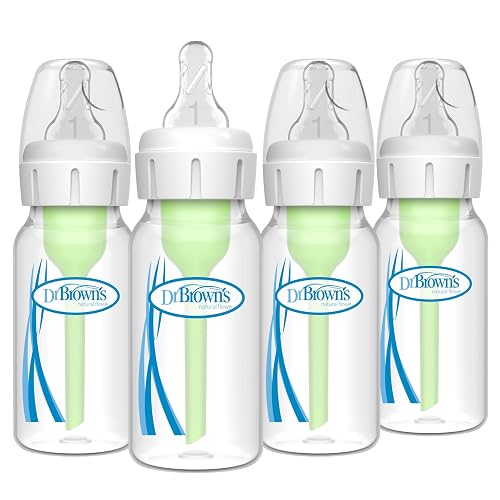
ANTI-COLIC BABY BOTTLE. Dr. Brown's anti-colic internal vent system is clinically proven to reduce colic and helps reduce spit-up, burping, and gas.
AIR-FREE FEEDING & CONSISTENT FLOW. The silicone...
Dr. Brown's Options+ is the bottle most people picture when they hear anti-colic. An internal vent system routes air away from the milk, creating vacuum-free feeding and a steady flow. Dr. Brown's says the system is clinically proven to reduce colic and helps cut spit-up, burping, and gas. The trade-off is extra parts to wash. You can remove the vent later once your baby feeds well, which turns it into a simpler bottle.
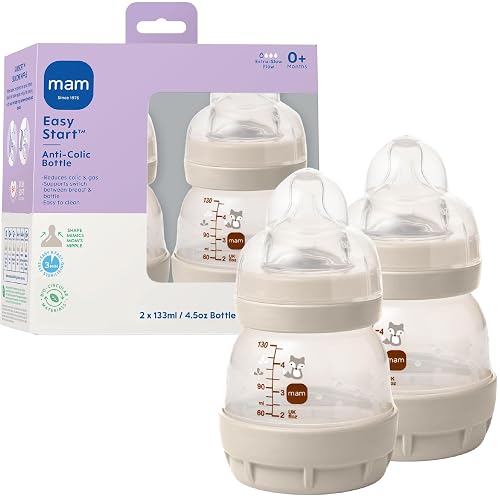
LESS GAS, LESS FUSSINESS: The vented base releases air out of the bottle while the Anti-Colic nipple lets air flow in so the baby feeds at its own pace. Together they cut swallowed air and bubbles,...
MAM Easy Start Anti-Colic+ vents through the base instead of a tube, so there are fewer pieces inside the bottle. The nipple has a textured, breast-like shape that MAM developed with ultrasound studies of nursing infants. It is a good option for parents who want venting without the brush-and-tube routine.
Nipple shape and flow

Nipples come in narrow, standard shapes and wide, breast-like shapes. Babies who also breastfeed often do better with a wide, gently sloped nipple that encourages a deep latch. Babies who are exclusively bottle-fed may not care much either way.
Flow rate matters more than most parents realize. Nipples are sold by flow level, usually starting with a slow or newborn flow. Too fast, and a baby coughs, dribbles milk, or finishes in a few minutes and then spits up. Too slow, and a baby gets frustrated and tired before finishing. Start slow and move up only when your baby seems to be working hard, taking a long time, or collapsing the nipple. Age ranges on the box are guides, not rules.
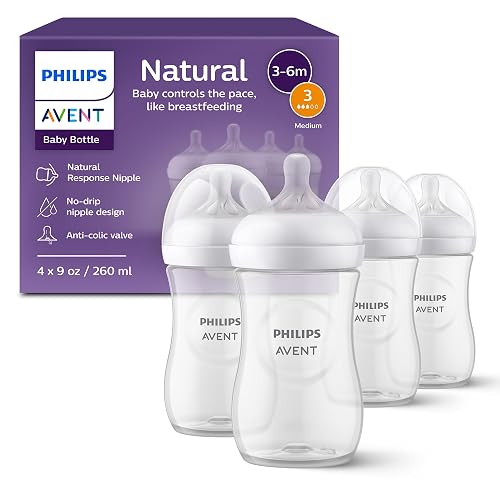
Natural Feeding Rhythm: Baby controls the pace of milk flow just like breastfeeding, supporting a familiar rhythm; #1 Pediatrician recommended natural baby bottle¹
Active Drinking Flow: Unique open...
The Philips Avent Natural bottle uses a soft, wide nipple that releases milk only when the baby actively sucks. When the baby pauses to swallow and breathe, the flow stops. It is a popular choice for families combining breast and bottle, and this 9-ounce pack comes with medium flow nipples, so check the flow level before using it with a newborn.
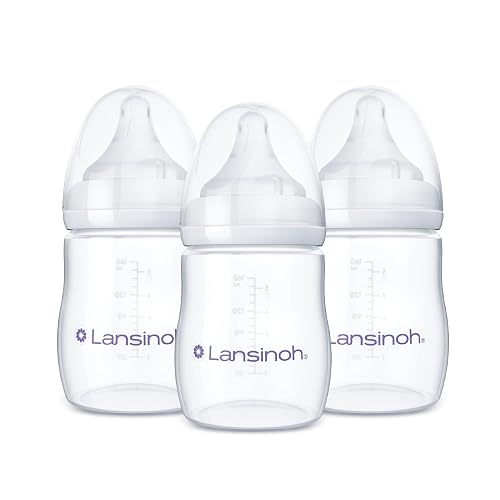
EASILY ACCEPTED BY BABY - Our BPA-free plastic bottles are newborn essentials that feature ultra-soft and strong silicone nipples with a wide, gentle slope that molds to baby’s mouth, ensuring a se...
Lansinoh, a brand best known for breastfeeding products, makes an anti-colic bottle with a wide, gently sloped silicone nipple and an air vent in the nipple itself. Its strong but flexible tip stretches as the baby feeds, which supports a more natural sucking pattern. The 5-ounce size is right for the early weeks.
Plastic, glass, or silicone?
Most bottles sold in the US are BPA-free plastic. They are light, cheap, and hard to break, which is why they remain the default. Glass bottles do not scratch or hold smells, and some parents prefer them for peace of mind, though they are heavier and can break. Silicone bottles are soft, squeezable, and nearly unbreakable, and some babies like the feel.
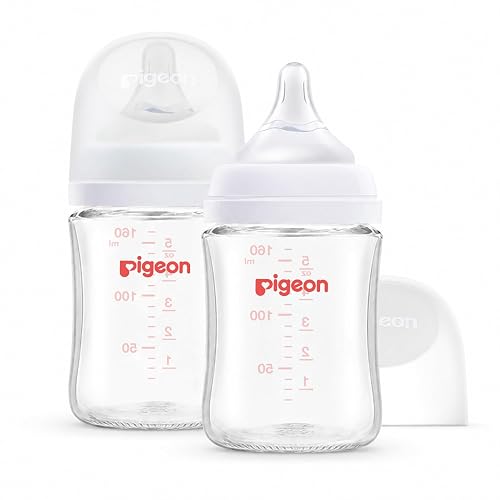
RESEARCH ON BABY'S SUCKING BEHAVIOR: It is based on research on the 3 natural movements that a baby does while feeding in Japan.
SOFT AND FLEXIBLE SILICONE NIPPLE: For seamless switch between breas...
Pigeon's wide-neck glass bottles are a favorite among parents who want glass. The borosilicate glass handles temperature changes well, and the soft silicone nipple has a latch-on line that guides the baby's mouth to the right position. The wide neck is easy to fill and clean.
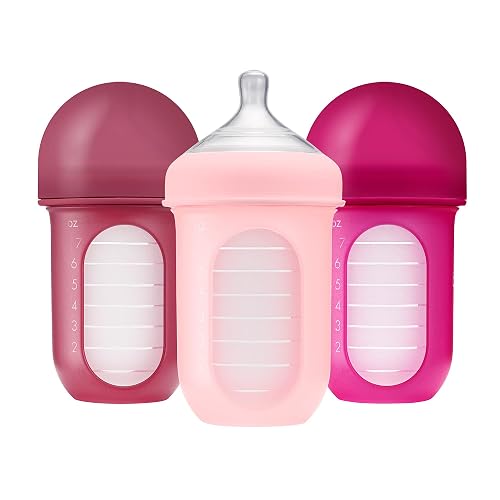
Reduce Colic Symptoms: The clever design of Boon bottles features air-free feeding that prevents gas and spit up with a pouch that collapses as baby drinks; no need for complicated vents or valves
...
Boon Nursh takes a different approach. Milk sits in a silicone pouch that collapses as the baby drinks, so there is no air in contact with the milk and no vents or valves to clean. The only parts that touch milk are food-safe silicone, and the pouches are dishwasher safe. It is a smart pick for babies who fight vented bottles.
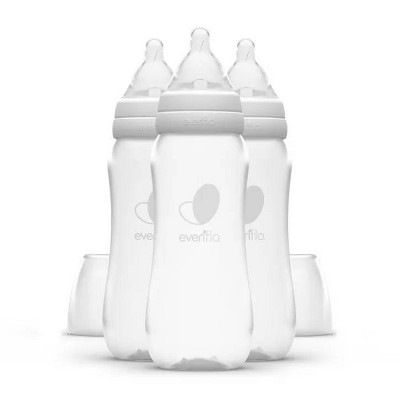
If you want to test one more design before committing, Target carries Evenflo's Balance anti-colic bottles, which pair a vented nipple with a standard neck.
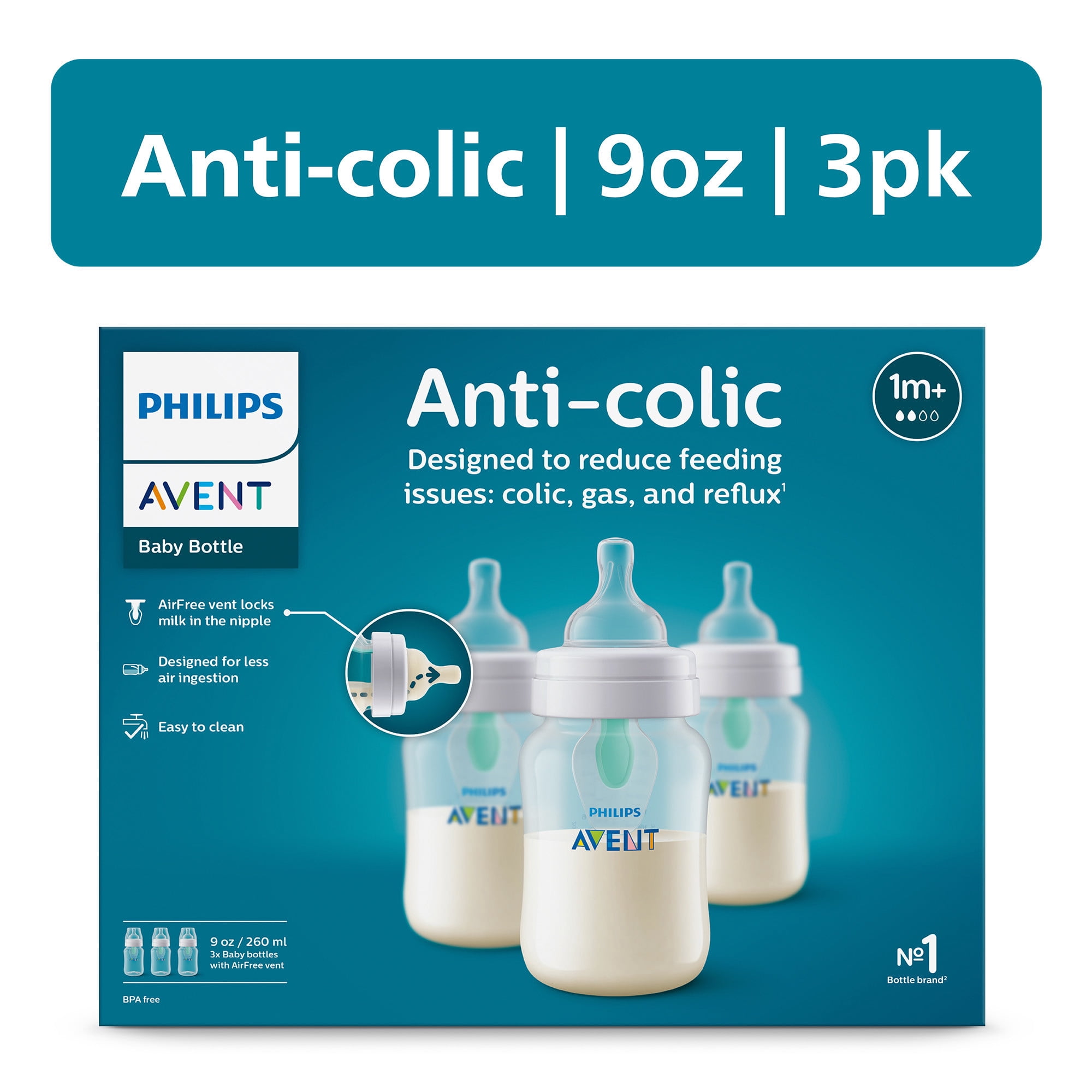
Walmart carries the Philips Avent Anti-colic bottle with the AirFree vent, a separate line from the Avent Natural above, sold as a three-pack of 9-ounce bottles. The vent is its own piece that fits into the bottle, so there is one more part to wash, but it gives you another anti-colic design to try within the same brand.
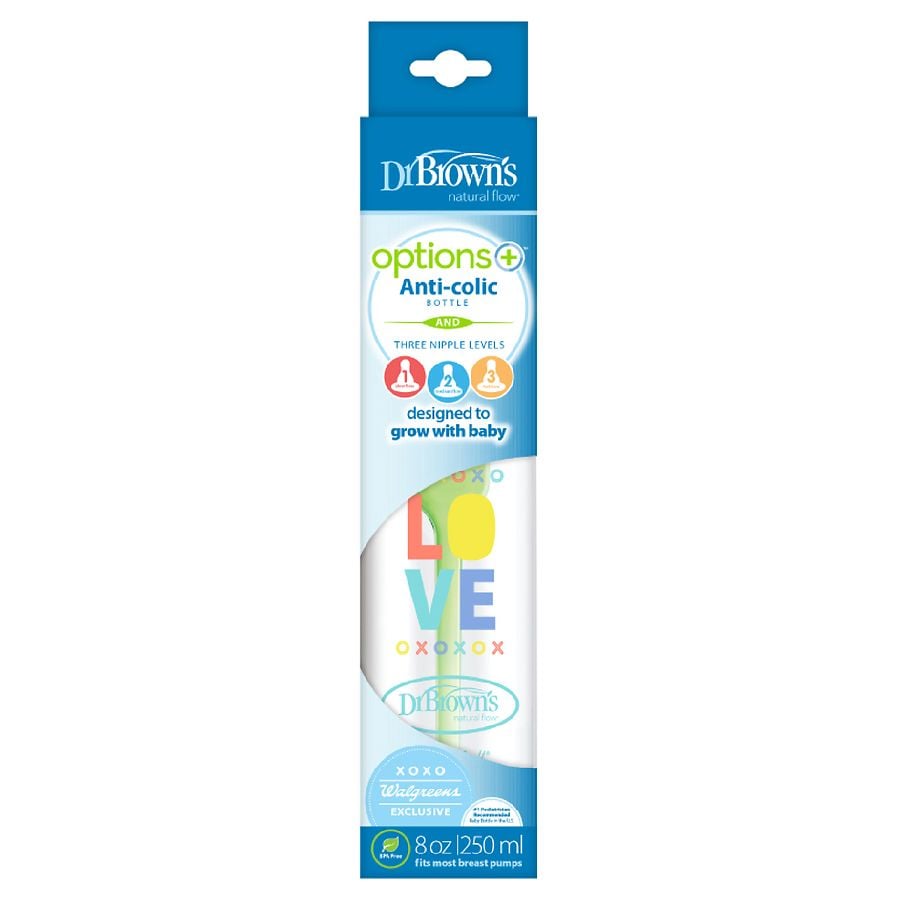
If you are still figuring out the right flow, Walgreens sells a single 8-ounce Dr. Brown's Options+ bottle packaged with level 1, 2, and 3 nipples. Buying one bottle with several flow levels is a low-cost way to see which one your baby handles best before you buy a full set.
Signs a bottle is not working
Some fussing is normal, especially in the first weeks while everyone is learning. But a few patterns suggest the bottle or the flow may be wrong. Milk pouring out of the corners of the mouth, frequent coughing or choking, or a feed that is over in two or three minutes usually means the flow is too fast. Clicking sounds, a flattened nipple, or long feeds where the baby seems exhausted often point to a flow that is too slow or a poor latch.
Give any new bottle a few days before you give up on it, unless your baby is clearly upset. Change one thing at a time, either the nipple flow or the bottle design, so you can tell what made the difference. If feeding problems continue or your baby is not gaining weight, check in with your pediatrician or a lactation consultant.
Bottles on the go
For outings, a couple of extra bottles with travel caps and pre-measured formula in a divided container make life easier. Leak-proof lids matter more than any other feature in a diaper bag. Pack a small bottle brush and a zip bag for used bottles so you can wash them when you get home.
How many bottles do you need?
For a baby who drinks only from bottles, six to ten is a common starting range, enough for a full day without washing between every feed. For a baby who mostly breastfeeds and takes an occasional bottle, two to four is often plenty. Buy small 4 or 5 ounce bottles first. Most babies move to larger bottles around three or four months, and you can buy those once you know which brand your baby likes.
Paced feeding: a habit that helps any bottle
Hold your baby fairly upright and keep the bottle closer to horizontal than vertical, tipping it just enough to fill the nipple. That lets the baby control the pace and take breaks. Pause every few minutes to burp. This approach, often called paced feeding, can reduce gulping and spit-up no matter which bottle you use. It also helps babies who switch between breast and bottle.
Watch your baby rather than the ounce marks. Turning away, slowing down, or relaxing their hands are all signs they may be done. Babies' appetites change from day to day.
Cleaning and sanitizing
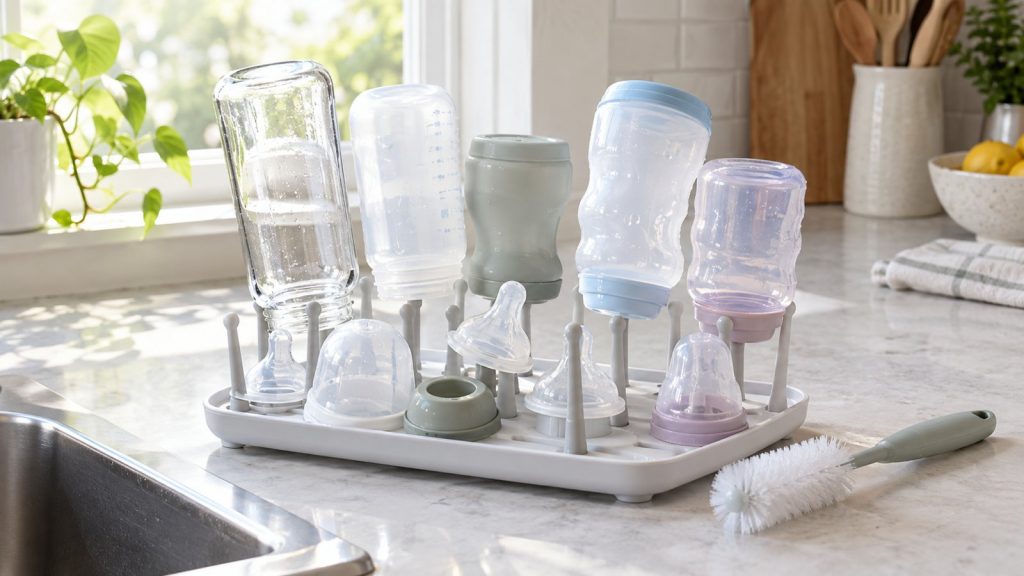
Take bottles apart and wash every piece after each feed, including vents and valves, with hot soapy water and a bottle brush, or in the dishwasher if the maker allows it. The CDC recommends sanitizing feeding items at least once a day for babies younger than two months, babies born prematurely, and babies with weakened immune systems. Boiling, steam sanitizers, and dishwasher sanitize cycles all work. For older, healthy babies, daily sanitizing may be less necessary if items are cleaned carefully.
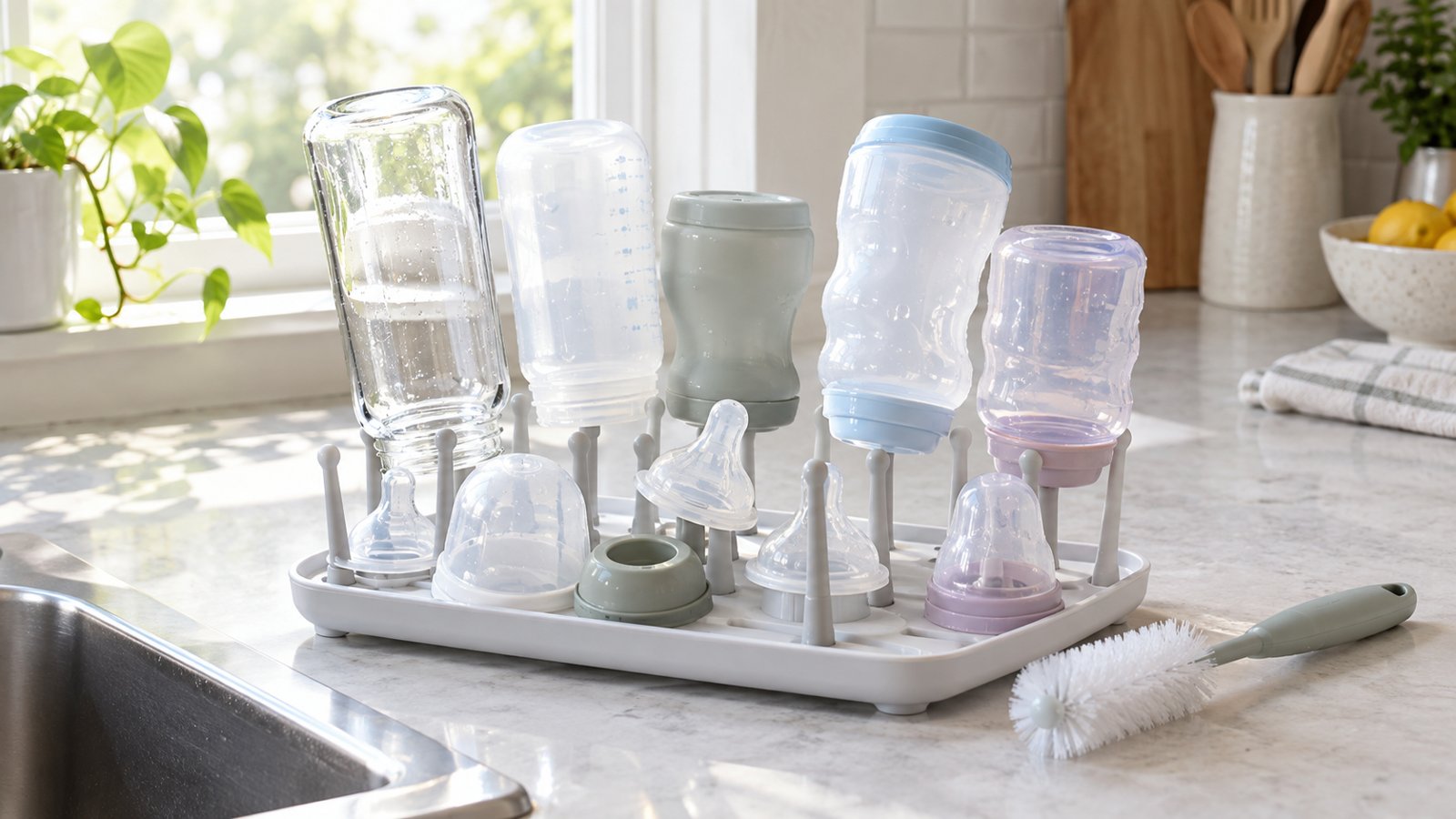
Let parts air dry fully on a clean rack or towel. Do not dry them with a dish towel, which can transfer germs. Check nipples often and replace them if they look thin, sticky, cracked, or torn, since damaged nipples can tear during a feed.
A simple plan
- Buy one bottle each from two or three designs before stocking up.
- Start with slow or newborn flow nipples.
- Try paced feeding for a week before judging a bottle.
- Wash every part after each use and sanitize daily in the early months.
- Once you find a winner, buy enough for a full day plus a spare.
Every baby is different, and the bottle that worked for a friend's baby may not work for yours. A little trial and error in the first weeks saves money and a lot of late-night frustration.
The responses below are not provided, commissioned, reviewed, approved, or otherwise endorsed by any financial entity or advertiser. It is not the advertiser’s responsibility to ensure all posts and/or questions are answered.
Question on the flow levels: is there a sign to watch for that means it's time to move up a nipple size, or do you just go by the age on the package?