
Last Updated on: Sep 24, 2026
Most people who buy a water flosser already know they should floss more. The machine is supposed to close that gap. Whether it does depends less on pressure numbers and more on something duller: where it lives, how often it needs refilling, and whether using it feels like a chore at 11 p.m.
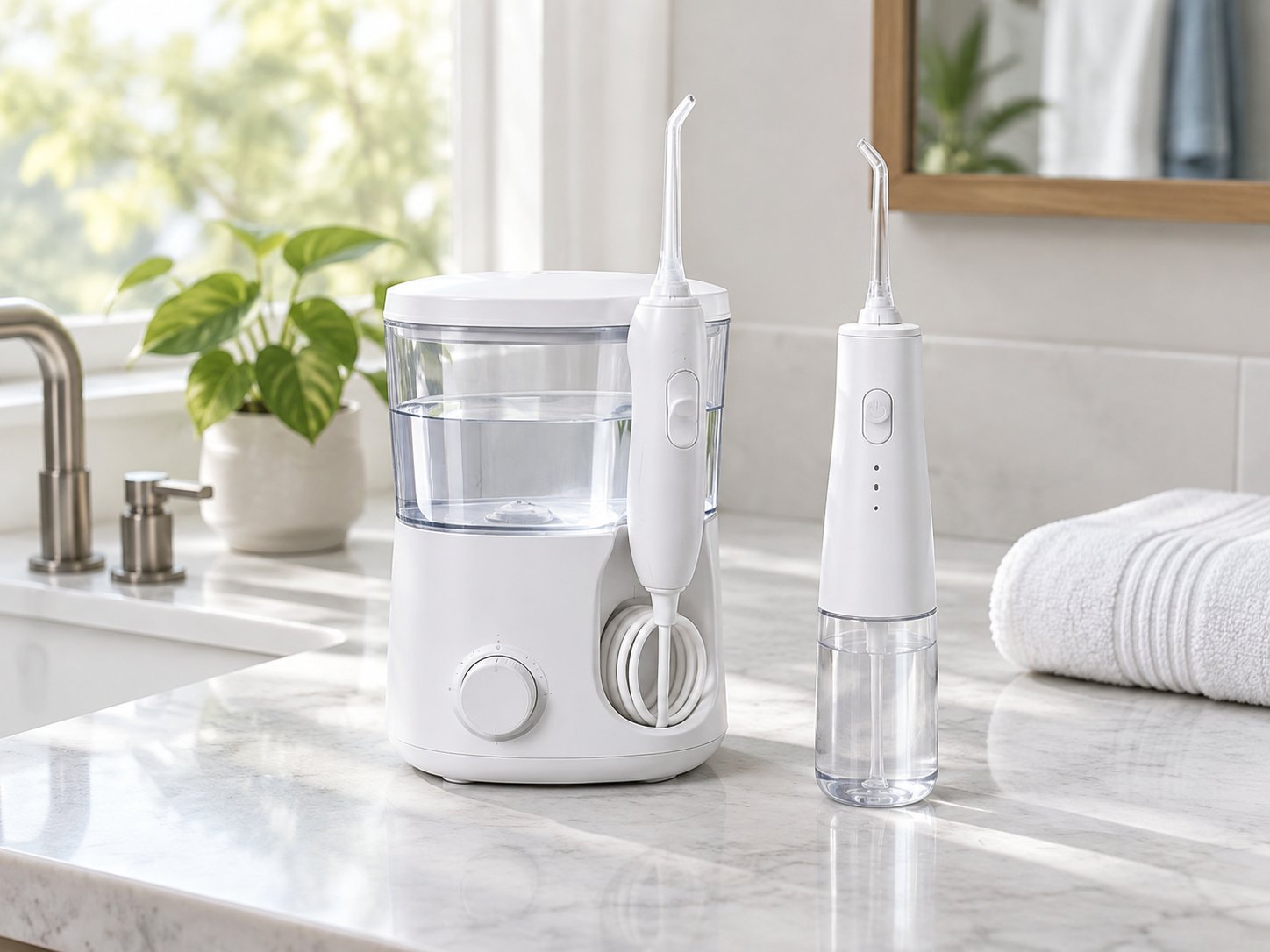
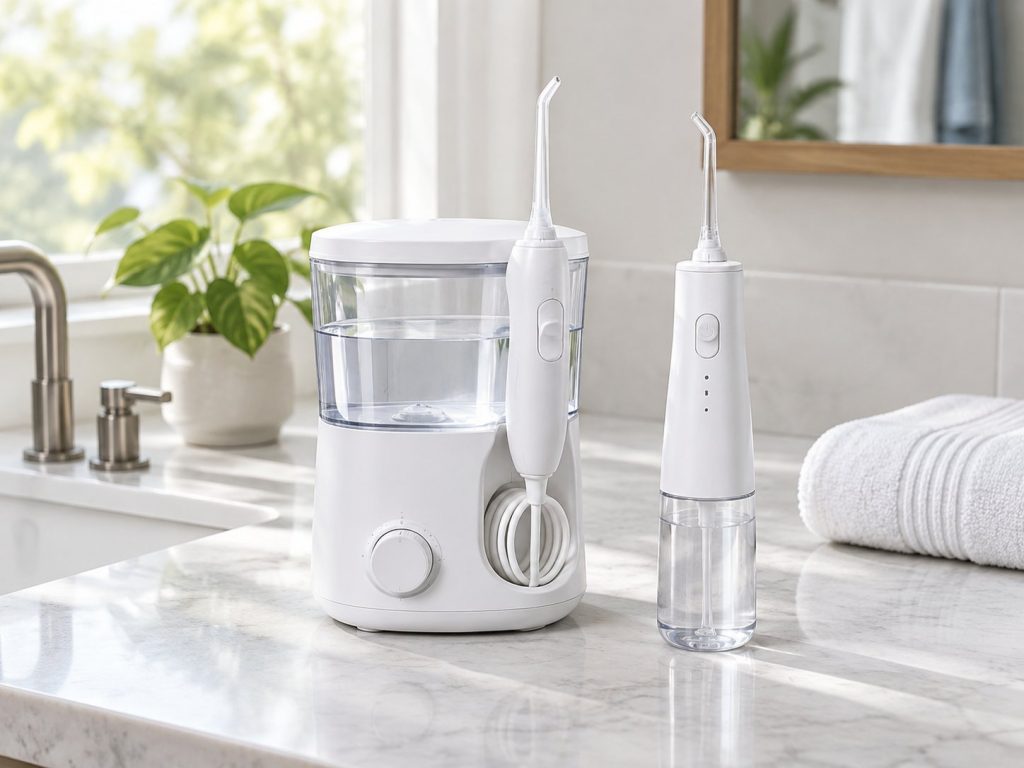
The two main styles solve different problems. A countertop unit plugs into the wall and holds a large tank, so one fill covers a full session with steady pressure. A cordless unit charges like a toothbrush and fits in a drawer or bag, but carries far less water. Neither is better in the abstract. The right one is the one that matches your bathroom and your habits.
Top Water Flossers
What We'll Cover
What actually changes between the two styles
Water capacity
Tank size decides whether you finish in one go. Countertop reservoirs commonly hold enough for 90 seconds or more of continuous use, which is about what a full-mouth pass takes when you are unhurried. Most cordless tanks run out partway through, so expect to refill once, especially while learning. That refill is small, but it is the kind of friction that makes people quietly stop.
Pressure range and settings
Countertop models usually offer more pressure steps. That matters for two groups: beginners with sensitive gums who need a very gentle start, and people with braces, bridges, or implants who want a stronger stream later. Cordless units tend to offer two to five settings. For most healthy mouths, the middle settings do the job, and the extra range is insurance rather than a daily need.
Footprint and power
A countertop unit needs an outlet near the sink and a few inches of permanent counter space. In a shared or small bathroom, that can be a deal-breaker. A cordless flosser needs only a charging spot, and many last weeks between charges. If your counter is already crowded, that alone may decide it.
Countertop picks for a permanent spot
If you have the outlet and the space, a countertop unit is the easiest way to build a consistent habit. You fill it, run it, and the pressure stays even from the first tooth to the last.
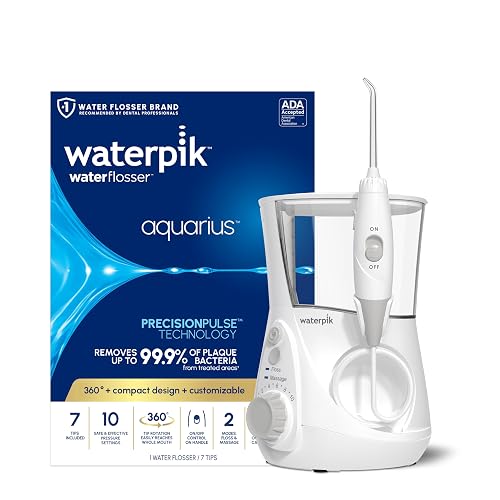
ADVANCED WATER FLOSSING: Aquarius is a fully featured water flosser featuring enhanced pressure with 10 settings for a custom clean, massage mode for gum stimulation, plus a built-in timer/pacer pa...
The Waterpik Aquarius is one of the best-known countertop models and a steady best seller. It has 10 pressure settings, a massage mode, and seven tips, including ones meant for braces and implants. A built-in timer pauses at 30 seconds and one minute, which helps you pace a session instead of guessing. The reservoir covers a full clean without refilling.
The downside is noise and bulk. It is louder than a toothbrush and needs a dedicated spot. If both of those are fine, it is the safest choice in this guide.
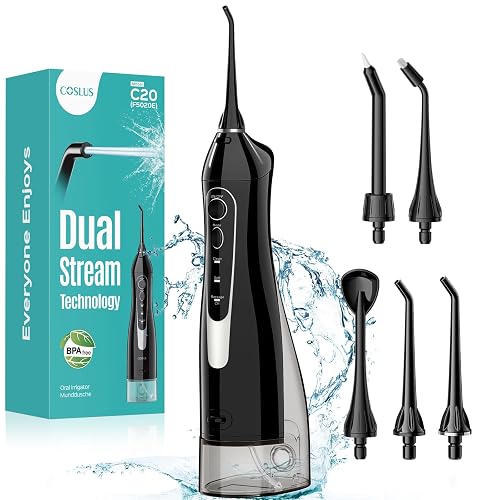
ADA Scientific Council Accepted: Healthier gums in 15 days. Instantly removes food debris and dental plaque between teeth, helps prevent and reduce gingivitis and bleeding gums, and delivers visibl...
The COSLUS C20 is a lower-cost alternative that carries the ADA Seal of Acceptance, which means the council reviewed its safety and effectiveness data. It has a 300 ml tank and several modes. It is a sensible pick if you want the countertop routine without paying for a big-name unit, and it holds up well as a second flosser for a guest bathroom.
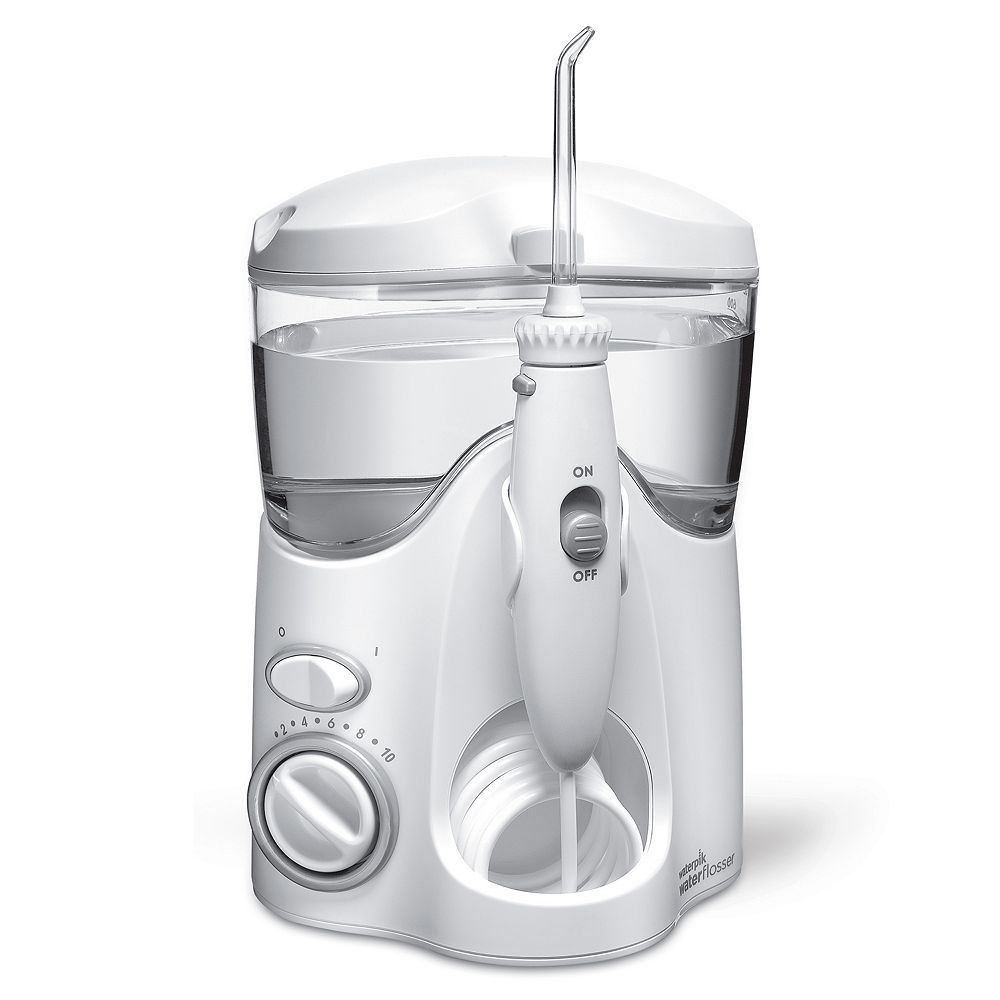
Kohl's carries the Waterpik Ultra, a slightly more compact countertop model. It has 10 pressure settings, a 22-ounce covered reservoir with tip storage in the lid, a pause button on the handle, and six tips. Like the Aquarius, it carries the ADA Seal of Acceptance.
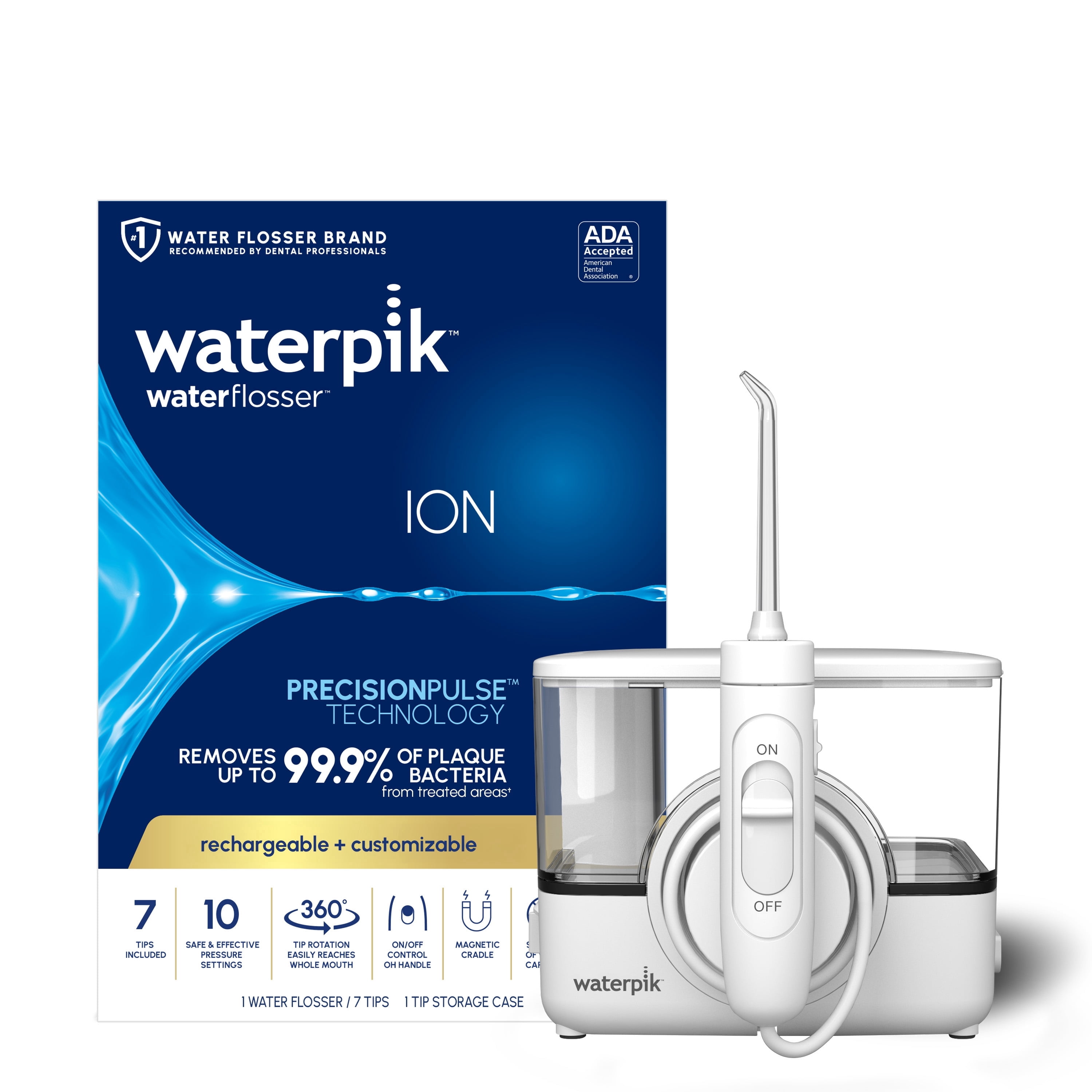
If you like the countertop routine but have no outlet by the sink, Walmart sells the Waterpik ION, a rechargeable countertop unit. It keeps 10 pressure settings and a 20-ounce reservoir, but it is about 30 percent smaller than a plug-in model, and Waterpik says a charge lasts up to four weeks. It sits on a magnetic cradle and comes with seven tips.
Cordless picks for small bathrooms and showers
Cordless flossers trade tank size for freedom. You can use one over the sink, in the shower, or in a hotel room, and put it away when you are done. For many people that flexibility is what turns flossing from a plan into a habit.
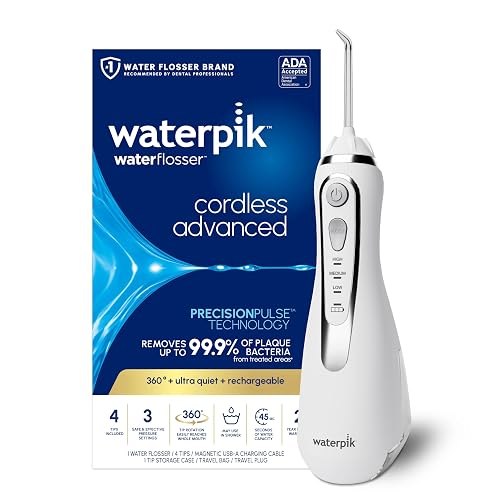
ADVANCED CORDLESS WATER FLOSSER: Waterpik Cordless Advanced features a 360 degree rotating tip for easy reach, even back teeth. Convenient rechargeable design with up to 4 weeks of use per charge, ...
The Waterpik Cordless Advanced is the balanced option. It has three pressure settings, a tip that rotates 360 degrees for back teeth, and a magnetic charger. Waterpik rates it for up to four weeks per charge, and it works on global voltage, so it can travel without an adapter. It is the cordless model to choose if you want to use it every day at home, not only on trips.
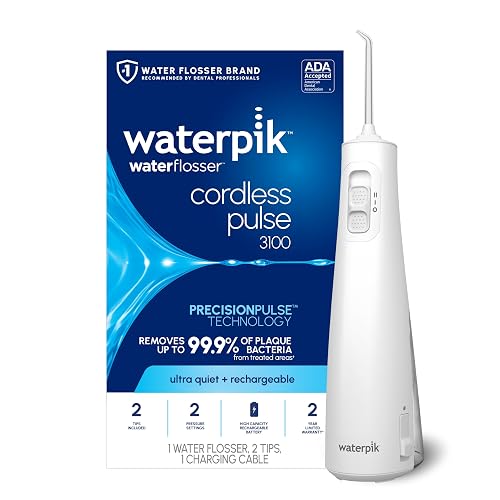
RECHARGEABLE WATER FLOSSER: Waterpik Cordless Pulse is a great choice for portable water flossing. It includes 2 Waterpik flossing tips, a rechargeable battery, and can be used in the shower
EASY T...
The Waterpik Cordless Pulse 3100 is a simpler, cheaper step in. It has two settings and two tips, a non-slip grip, and is built to be used in the shower, which removes the splash problem entirely. It suits someone trying water flossing for the first time who does not want to commit to a larger unit.
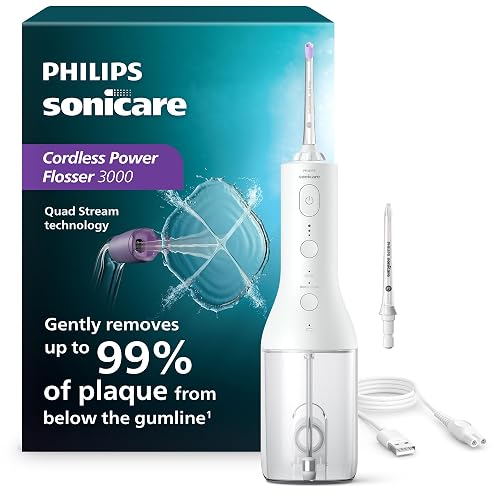
Achieve healthier teeth and gums: Philips Sonicare cordless water flosser is up to 150% more effective than floss in improving gum health²; it also removes up to 99% of plaque from below the gumlin...
The Philips Sonicare Cordless Power Flosser 3000 takes a different approach to the tip. Instead of one narrow jet, it uses an X-shaped nozzle that spreads four streams at once, so each pass covers a little more surface. People who find a single jet too sharp often like this feel better. It comes with two nozzles and charges like a Sonicare toothbrush.
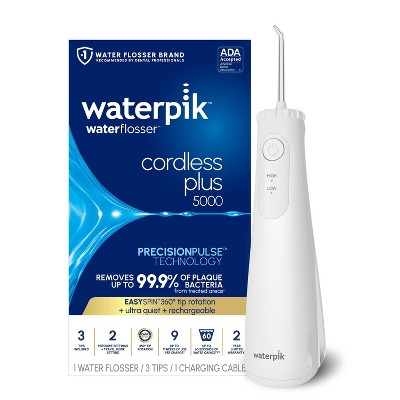
If you already shop at Target, the Waterpik Cordless Plus 5000 is worth a look. It sits in the middle of Waterpik's cordless range and is often easy to pick up the same day, which is handy when a replacement is needed quickly. Check the tip count and pressure settings on the listing before buying, since cordless versions are updated often.
If you travel often
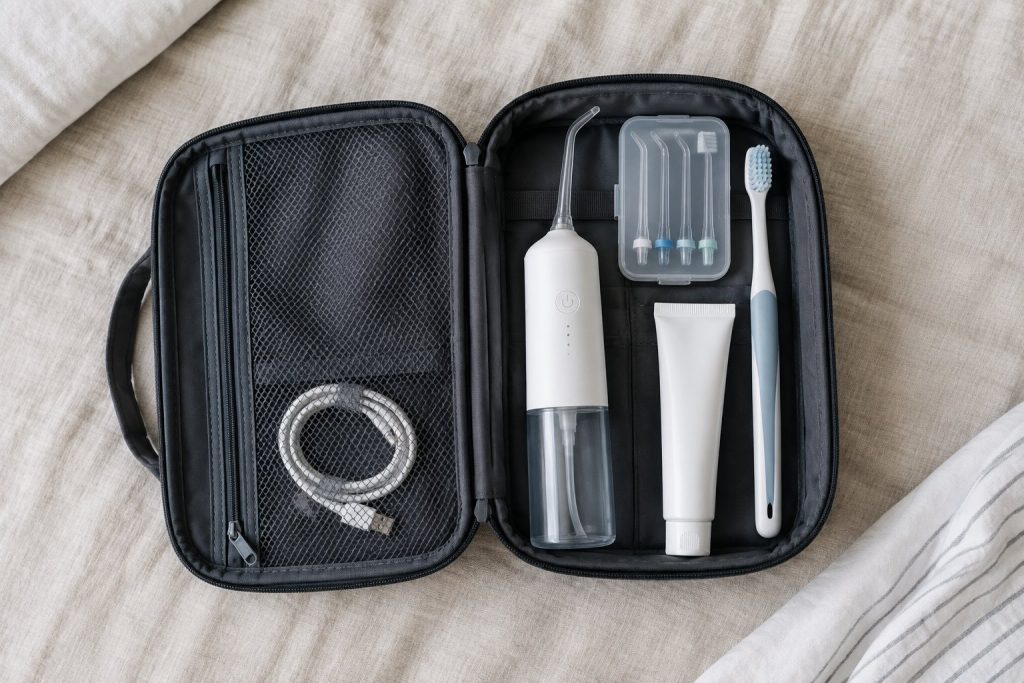
For frequent travelers, the real question is how small you can go before the flosser stops being useful. Full-size cordless models fit in most toiletry bags. Mini models go further and fit in a pocket, at the cost of an even smaller tank.
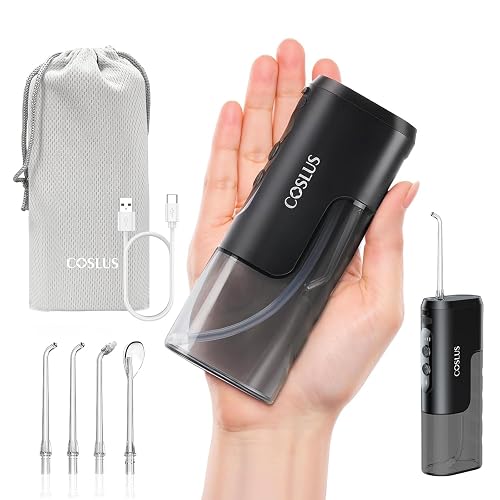
Easy-go, Mini Ultra-Portable Design for Frequent Travelers: Weight comparable to common smartphones. COSLUS T40 cordless travel water flosser pick has a compact countertop size design and space-sav...
The COSLUS T40 is built for that job. It is about the size and weight of a phone, charges over USB, and slips into a carry-on without taking over the bag. It is not the model to use as your only flosser at home, but as a travel companion it makes skipping the routine on the road much harder to justify.
Wherever you go, pack a spare tip in a small case and empty the tank before closing the bag. Standing water left in a sealed pouch is the fastest way to end up with a musty flosser.
Getting used to it without the mess
- Start on the lowest setting for the first week, then step up once your gums stop feeling tender.
- Lean over the sink and close your lips around the tip, just enough to keep water from spraying.
- Aim at the gumline, not straight at the tooth, and pause briefly between each tooth.
- Use lukewarm water. Cold water is uncomfortable on sensitive teeth.
- Empty the tank and let it air-dry after each use to keep it fresh.
Some bleeding in the first week or two is common when gums are not used to cleaning between teeth. If it continues past that point, or if you have gum disease, implants, or other dental work, ask your dentist which setting and tip to use. A water flosser supports brushing and regular dental visits. It does not replace them.
Care and replacement costs
The price on the box is not the full cost. Tips wear out and should be replaced every three to six months, depending on the brand. Before buying, check how easy replacement tips are to find and what a multi-pack costs. The big brands are easy to restock almost anywhere. Smaller brands can be cheaper up front but harder to match later.
Countertop units also benefit from an occasional clean of the reservoir and hose. A monthly rinse with a little white vinegar in warm water, followed by a plain-water run, clears most mineral build-up in hard-water areas. Cordless units need the same attention on a smaller scale, mostly around the tank seal and charging port.
Which one to buy
Choose a countertop model if you have an outlet by the sink, floss at home almost every day, or have braces or dental work that benefit from more pressure control. Choose a cordless model if counter space is tight, you like to floss in the shower, or you travel often. And if you are not sure you will stick with it, start with a simple cordless unit. It costs less, takes up no counter space, and tells you quickly whether the habit will last.
Whatever you pick, put it where you will see it. A flosser in a drawer is easy to forget. One next to your toothbrush tends to get used.
The responses below are not provided, commissioned, reviewed, approved, or otherwise endorsed by any financial entity or advertiser. It is not the advertiser’s responsibility to ensure all posts and/or questions are answered.
Tip from the setup section that is easy to miss: fill the tank with lukewarm water, not cold. It makes the first few sessions a lot more comfortable.
Does anyone know if the rechargeable countertop style needs the battery replaced eventually, or is it sealed in? Wondering how long they tend to last before that becomes an issue.