
Last Updated on: Sep 23, 2026
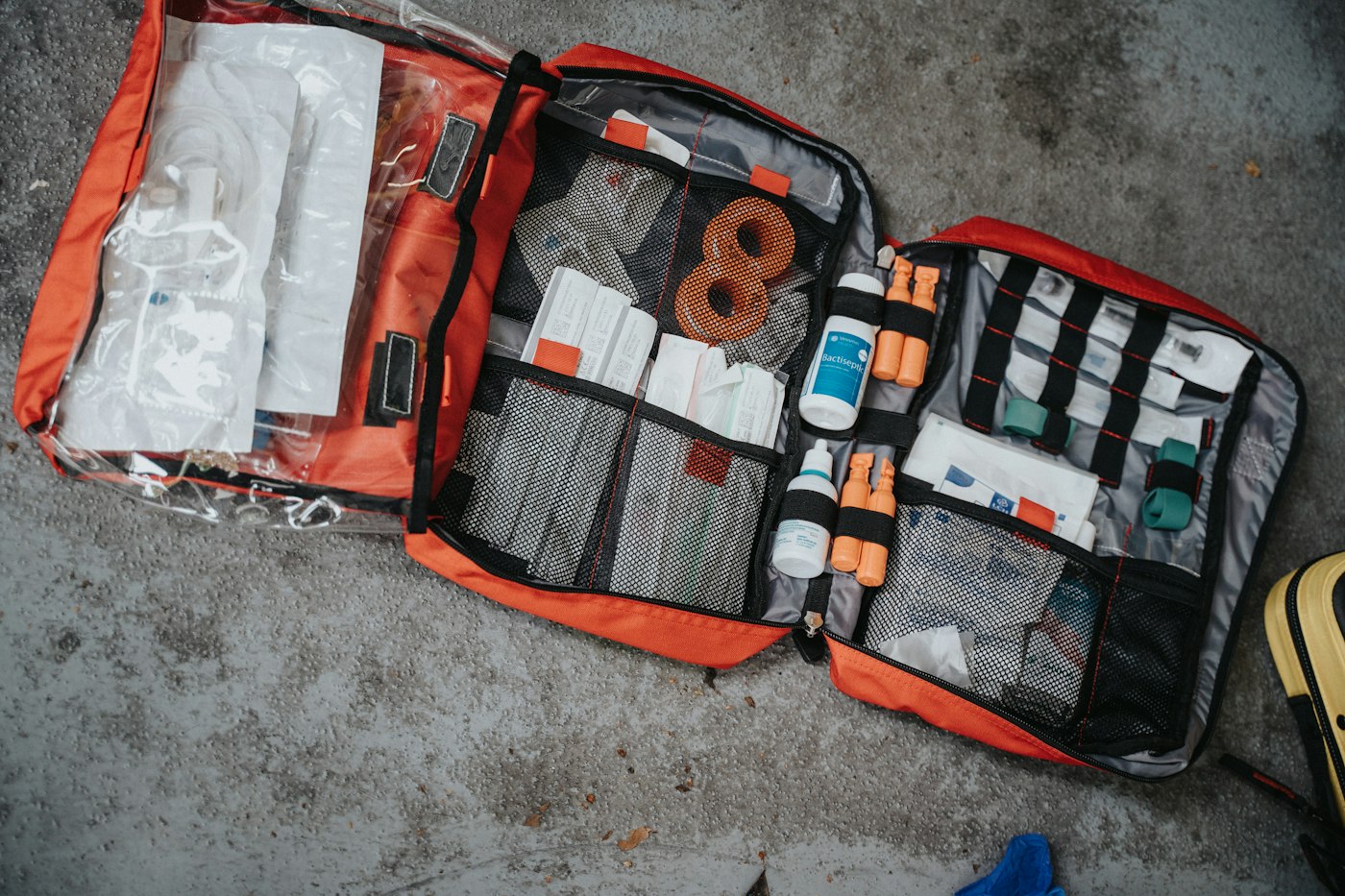
Most households own a first aid kit. Far fewer own one that is stocked, easy to find, and useful when someone actually gets hurt. The kit bought years ago often has half its bandages gone, an ointment tube that expired, and no gloves. Minor injuries are common at home, on the road, and outdoors, and a well-kept kit lets you clean and cover a cut, cool a burn, or wrap a sprain without a trip to the store.
This guide covers what a good kit should contain, how to choose between a ready-made kit and building your own, where to keep kits, and how to keep them current. It finishes with a range of popular kits from current best-seller lists.
Top First Aid Kits
What We'll Cover
What a home kit should contain
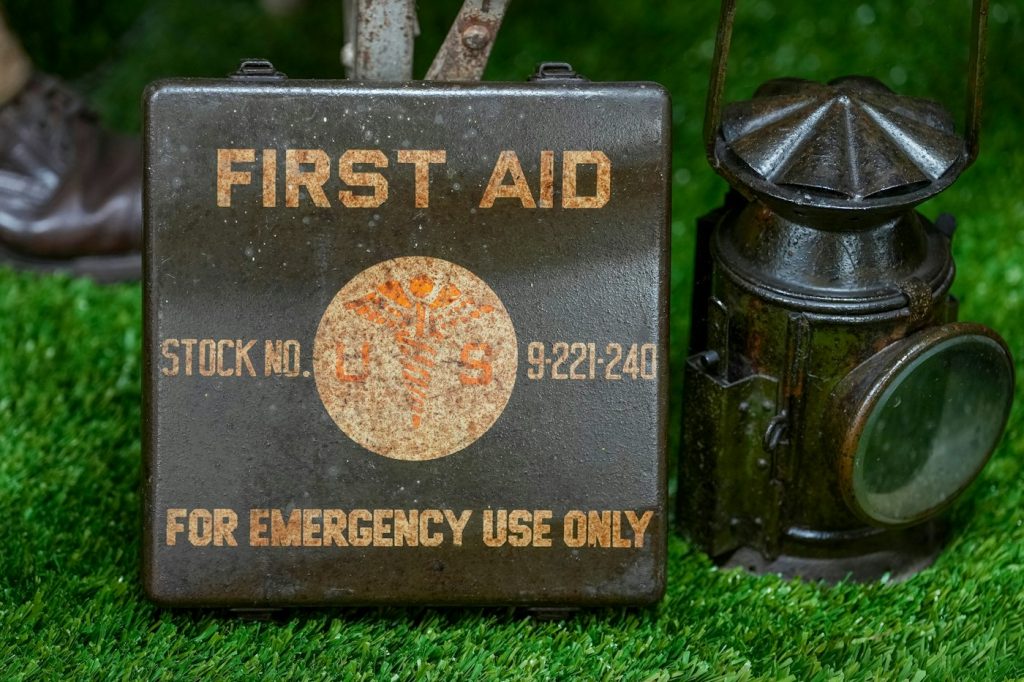
The American Red Cross publishes a list of what it recommends every first aid kit for a family of four should include. It is a useful benchmark to hold any kit up against. The list includes:
- 2 absorbent compress dressings, 5 by 9 inches
- 25 adhesive bandages in assorted sizes
- 1 roll of adhesive cloth tape
- 5 antibiotic ointment packets and 5 antiseptic wipe packets
- 2 packets of aspirin, 81 mg each
- 1 emergency blanket and 1 breathing barrier with a one-way valve
- 1 instant cold compress
- 2 pairs of nonlatex gloves
- 2 hydrocortisone ointment packets
- Gauze roll bandages, sterile gauze pads, and 2 triangular bandages
- An oral thermometer that is non-mercury and non-glass
- Tweezers and emergency first aid instructions
The Red Cross also advises adding personal items such as medications and emergency phone numbers, along with anything your health care provider suggests. If anyone in your home has a serious allergy, asthma, or diabetes, the supplies they rely on belong in or next to the kit. Ask a doctor or pharmacist before giving any medicine from the kit, especially to children.
Ready-made or build your own
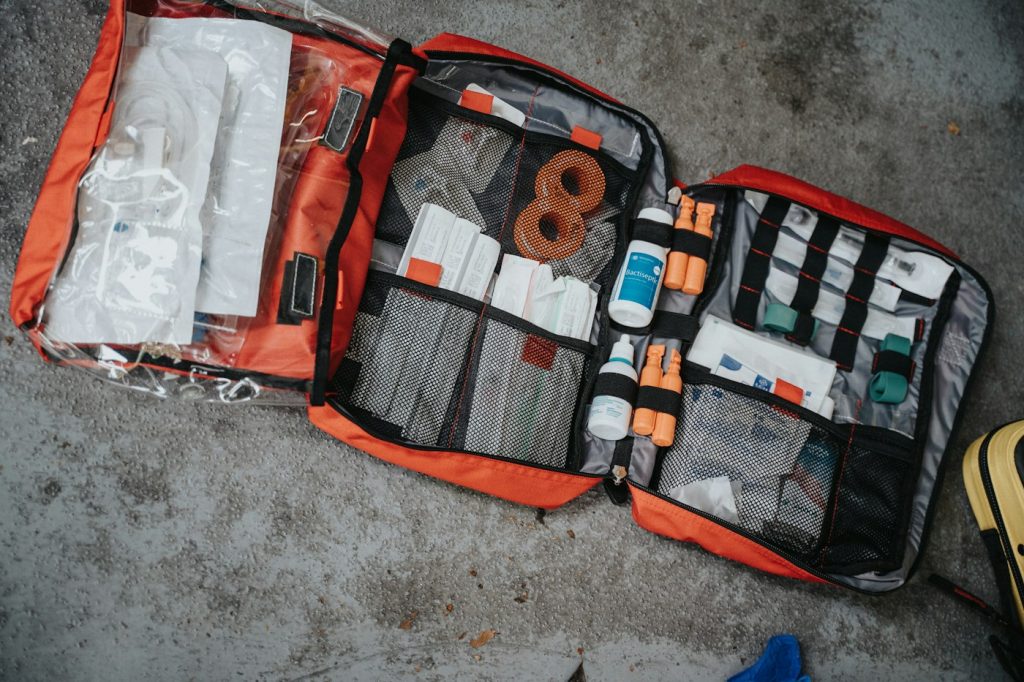
A ready-made kit is the fastest way to get covered. Most are organized into labeled pockets, and the piece count on the box sounds impressive. Be aware that a big number is often mostly small adhesive bandages. A 300-piece kit may include fewer useful items, like large gauze pads or a cold pack, than a smaller kit with better contents. Read the full contents list, not just the headline number.
Building your own lets you choose better quality items and skip what you will never use. A good middle path is to buy a solid ready-made kit and then top it up with the items on the Red Cross list that it lacks, plus your family's own medications.
One kit is not enough
Think in terms of places, not just one box. A main kit at home should be in a spot everyone knows, such as a hall closet or kitchen cabinet, not buried in a bathroom where humidity can spoil supplies. A second kit belongs in each car. A small pouch fits in a backpack, diaper bag, or gym bag.
The federal government's Ready.gov emergency kit list includes a first aid kit as a basic item, along with prescription medications, non-prescription medications like pain relievers and antacids, and prescription eyeglasses and contact lens solution. If you are putting together an emergency supply kit for storms or power outages, the first aid kit is one piece of it, not a replacement for it.
Kits for the car, travel, and the outdoors
Car kits face heat and cold, so check them more often, since some items break down in extreme temperatures. A hard, water-resistant case helps. An emergency blanket and a flashlight are worth adding if the kit does not have them.
For hiking and camping, weight and water resistance matter. Look for a compact pouch, and add blister care, an elastic wrap for sprains, and any medicine you might need far from a pharmacy. For travel, a small kit with bandages, pain relievers, and your personal medications covers most needs, and it should go in your carry-on, not checked luggage.
Homes with babies and young kids
Families with small children tend to use their kit more than anyone. Scraped knees, splinters, and bumped heads are part of the routine. Fun-print bandages make a real difference to a crying four-year-old, so keep a box of them on top. A child-safe thermometer, a cold pack, and any fever medicine your pediatrician recommends, with the right dosing tool, are worth keeping in the same place. Store medicines out of reach and out of sight, even when they sit inside the kit, since a zippered bag is no barrier for a curious toddler.
What you can usually skip
Many large kits pad their count with items most people never touch, such as tiny finger splints, dozens of cotton swabs, or single-use items you do not know how to use. Tourniquets and trauma supplies show up in some kits as well. They can save lives, but only in trained hands, so if you want them, pair them with a proper class. It is better to own a kit with fewer, larger, higher quality items that you understand than a big box full of filler.
Workplace kits
Kits sold for businesses are often labeled as OSHA or ANSI compliant and sized by the number of people they serve. They make sense for an office, workshop, or job site, and they also work well as a large home kit. The labels refer to the contents meeting a set standard, so compare the actual list if you are buying for home.
Keeping your kit ready
The Red Cross recommends checking your kit regularly, checking expiration dates, and replacing any used or out-of-date contents. A simple habit is to check every kit twice a year when the clocks change. Restock right after you use something, not later. Keep the first aid instructions in the kit, and consider a first aid and CPR class so that you know how to use what is inside.
First aid kits worth a look
These picks come from current best-seller lists and top search results for first aid kits. Piece counts and features are from the makers.
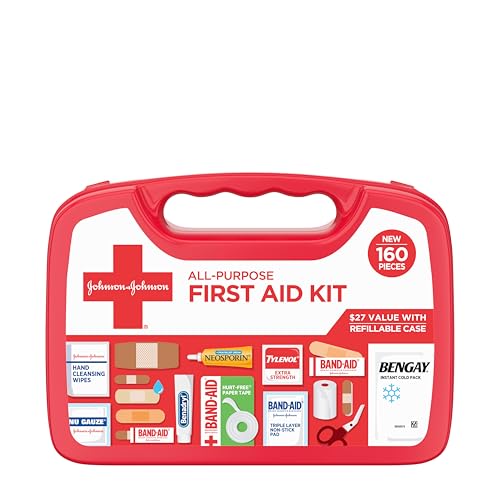
Be prepared for anything: All-Purpose Portable Compact First Aid Kit by BAND-AID Brand delivers an assortment of 160 pieces of first aid supplies to provide protection and wound care treatment for ...
Band-Aid Brand's all-purpose kit is a best seller with 160 pieces for minor cuts, scrapes, burns, and aches, in a durable plastic case that you can refill.
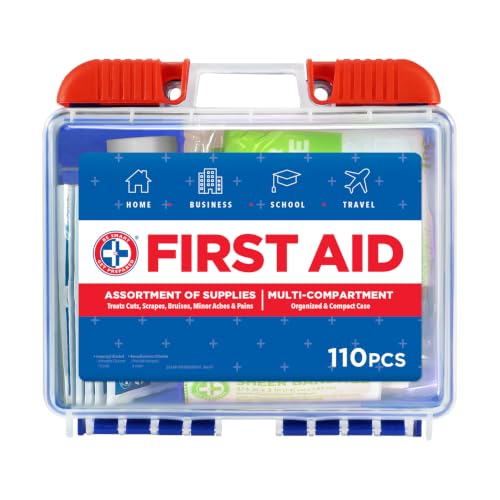
Manufactured by the #1 leading manufacturer of First Aid Kits in the USA. 100 pieces of comprehensive first aid treatment products.
This Kit meets United States FDA Regulatory Standards as a Medica...
Be Smart Get Prepared's 110-piece kit uses a hard, impact-resistant case with organized compartments and slide latches. The maker says it meets FDA regulatory standards as a medical device.
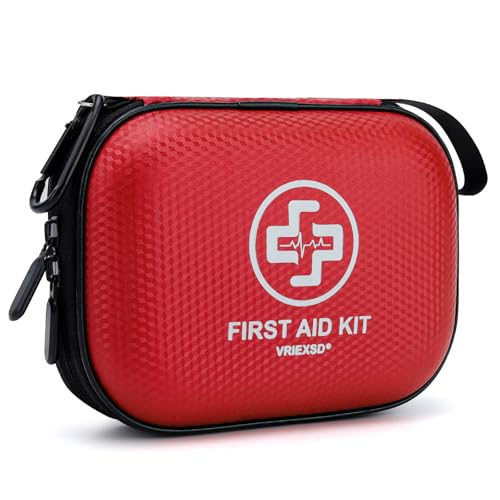
ESSENTIALS FOR EMERGENCIES: Be prepared for unexpected situations with this first aid kit featuring 150+ essential supplies. It includes a variety of bandages, gloves, povidone-iodine prep pads, me...
This mini kit packs 150 pieces into a small waterproof EVA case, 6.4 by 4.9 by 2.7 inches, with a carabiner for clipping to a backpack. Contents include gloves, iodine prep pads, and metal tweezers.
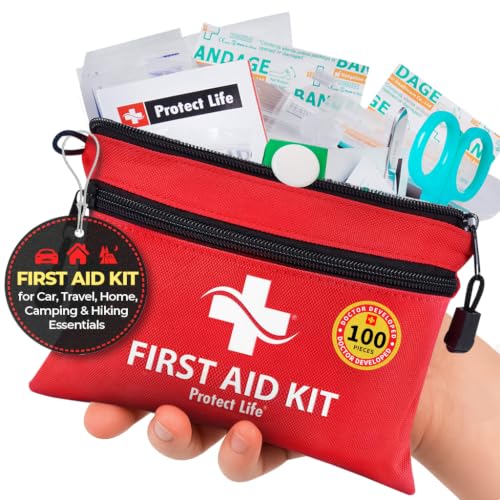
COMPLETE 100-PIECE EMERGENCY KIT: Stay prepared for cuts, scrapes, burns, sprains, and outdoor emergencies with essential medical supplies packed into one compact first aid kit for home, travel, ca...
Protect Life's 100-piece kit comes in a waterproof hard case sized for a glove box and includes a thermal emergency blanket, gauze, antiseptic wipes, gloves, and scissors.
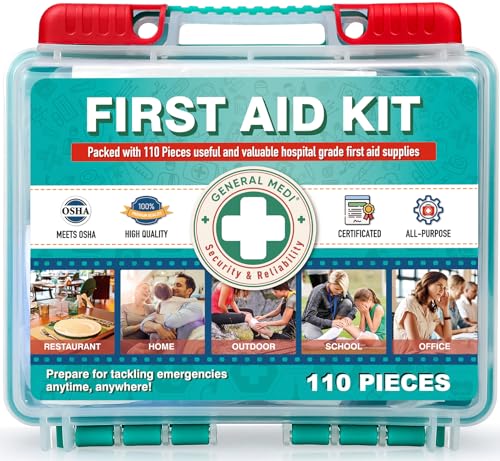
SECURITY & RELIABILITY - Manufactured from the high quality approved facility exceeding safety standards for emergency first aid, for adults and kids. All of our first aid products carry certificat...
General Medi's 110-piece hard case kit is another compact choice for home, office, or car, with a full contents list on the listing so you can compare it with the Red Cross list.
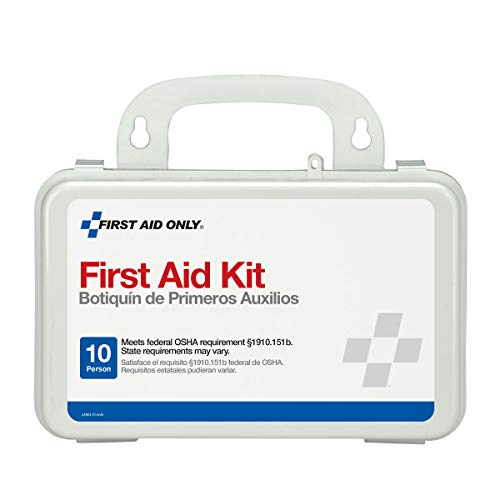
Comprehensive Emergency Kit: Includes adhesive fabric and plastic bandages, antibiotic ointments, BZK antiseptic towelettes, burn cream packets, gauze roll and pads, gloves, scissors, tweezers, and...
First Aid Only's 57-piece kit is sized for 10 people and includes burn cream, antibiotic ointment, antiseptic towelettes, gauze, gloves, scissors, and tweezers in a compartment case.
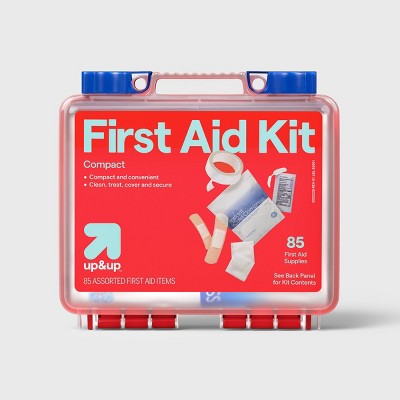
At Target, up&up's 85-piece kit is a budget option with bandages, butterfly closures, alcohol prep pads, antibiotic ointment, and hand cleansing wipes.
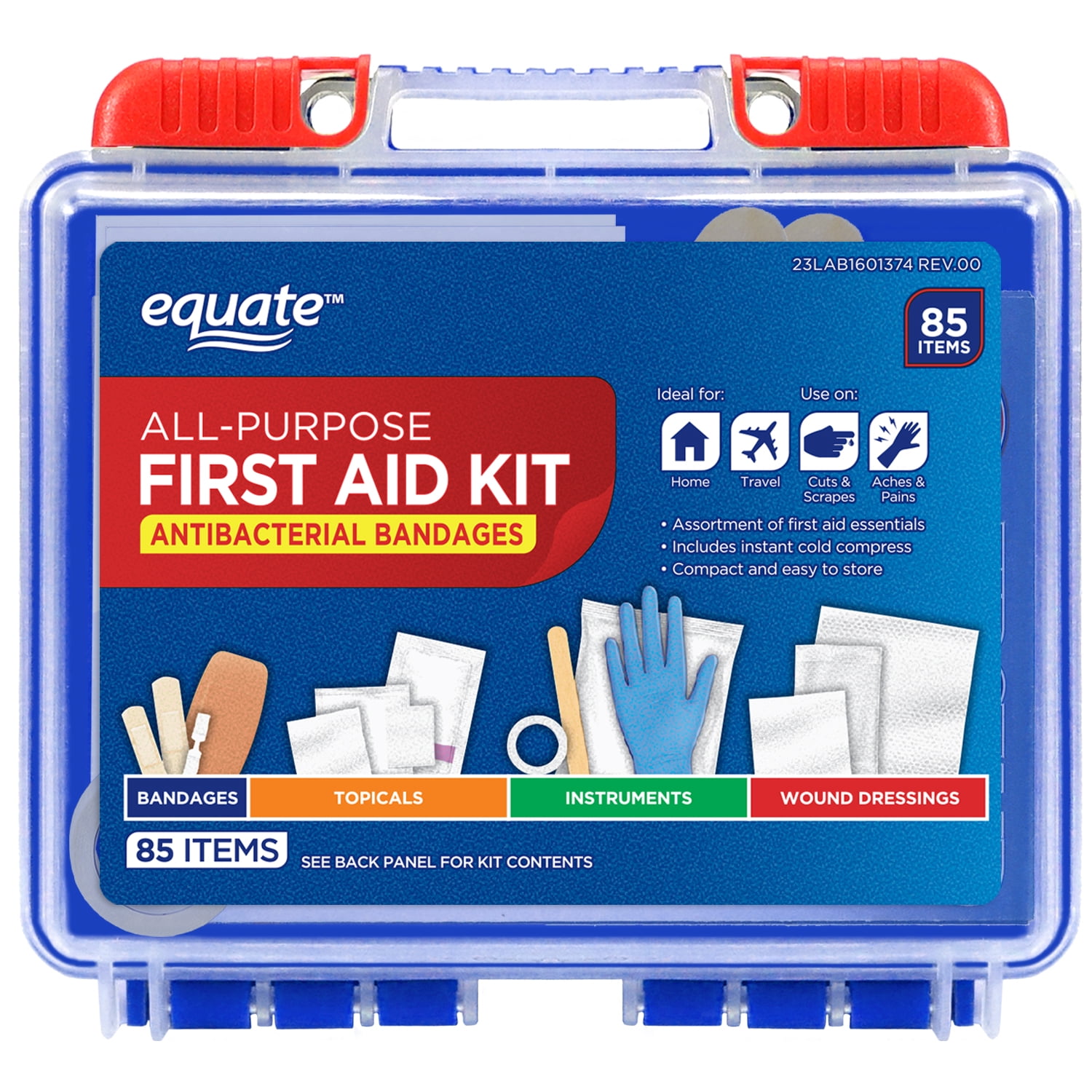
Walmart's Equate On-the-Go kit holds 85 pieces in a small case that fits a school bag, desk drawer, or glove box. It is a low-cost way to put a second kit where you actually spend time.
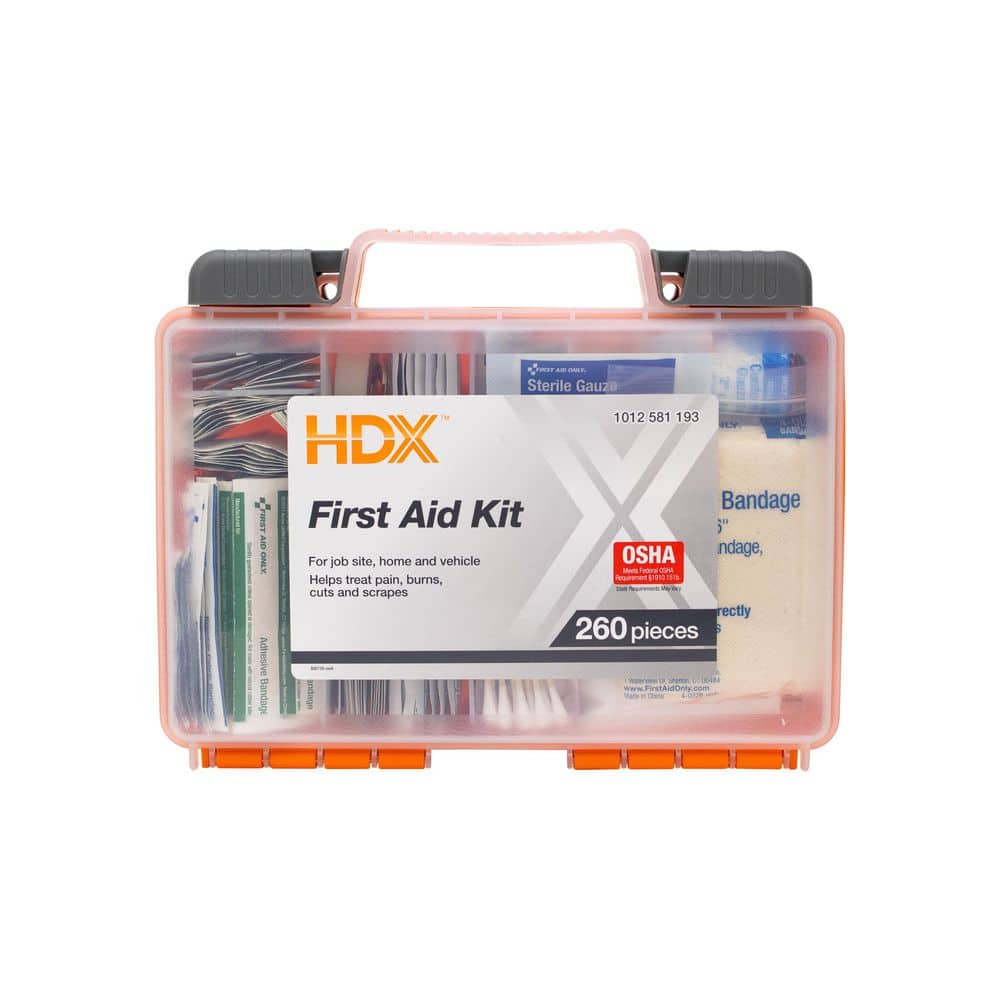
For a large household, workshop, or small business, Home Depot's HDX 260-piece kit is OSHA rated and carries far more supplies than a typical home kit. Keep it where projects happen, since cuts and scrapes are common with tools.
Which one to choose
For most homes, a mid-size kit of 100 to 160 pieces from a known maker is a solid base. Add the Red Cross items it lacks, such as a cold pack, large dressings, and an emergency blanket, along with your family's medications and emergency phone numbers. Put a compact hard-case kit in each car and a small pouch in your daily bag. Then set a reminder to check them twice a year, so the kit is ready when you need it.
A first aid kit handles the small stuff. For anything serious, such as heavy bleeding, trouble breathing, chest pain, or a possible broken bone, call 911 first. The kit is there to help until help arrives, and to save you a trip for the everyday scrapes in between.
The responses below are not provided, commissioned, reviewed, approved, or otherwise endorsed by any financial entity or advertiser. It is not the advertiser’s responsibility to ensure all posts and/or questions are answered.
The upkeep section got me to finally open our kit. Half the bandages had lost their stick and the pain reliever expired last year. Setting a reminder to check it every spring now.