
Last Updated on: Sep 23, 2026
Did I take it this morning? Almost everyone who takes a daily pill has stood in the kitchen and wondered. With one medicine, it is a small worry. With a blood pressure pill, a cholesterol pill, a vitamin D, and a fish oil, some twice a day, it becomes a real problem. Missed doses and double doses are both easy to make, and neither is good.
What We'll Cover
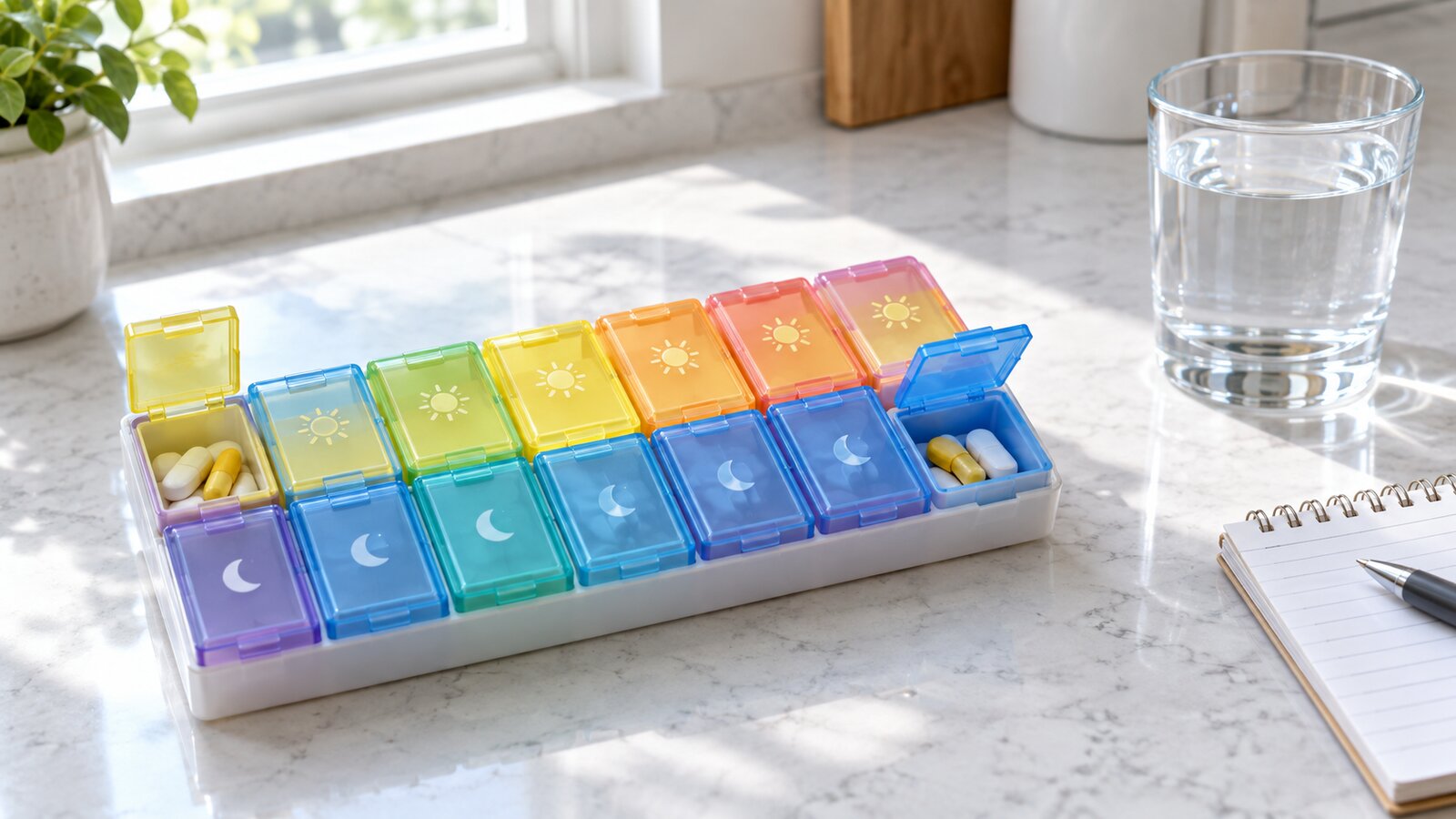
A pill organizer is the simplest fix. You sort a week of pills once, and after that, one look at the box tells you whether today's dose is done. They are cheap, they need no batteries or apps, and there is a design for nearly every routine: once a day, morning and night, four times a day, or a small case for a trip.
Here is how to choose one, how to use it safely, and a handful of popular options to consider.
Top Pill Organizers
Why a routine helps
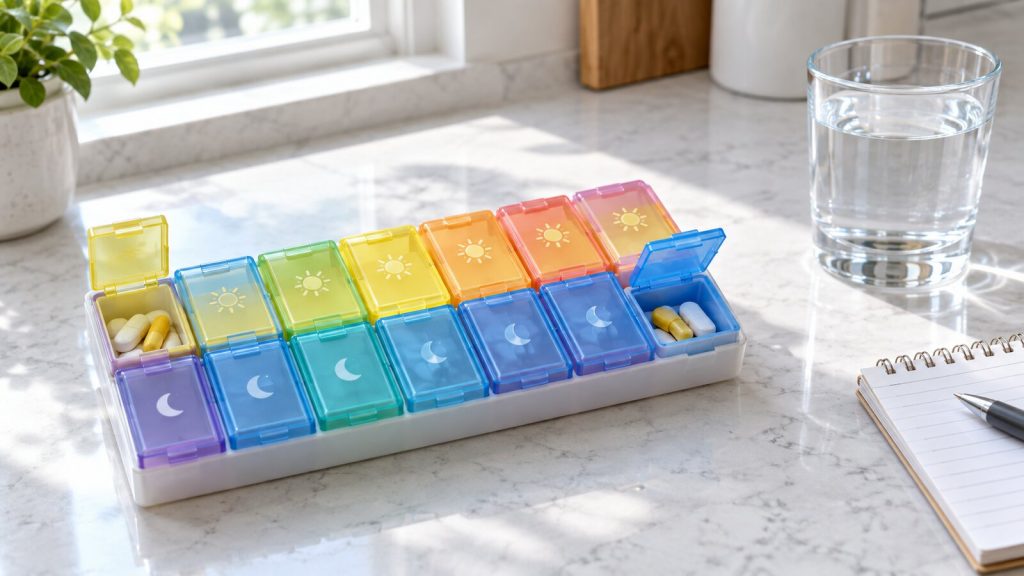
Taking medicine on schedule sounds simple, but it gets harder as the list grows. The National Institute on Aging notes that older adults often have several health conditions and may take many medicines, which puts them at greater risk for side effects. The FDA says that if you have trouble remembering how and when to take your medicine, you should talk with your pharmacist or another professional, who may have suggestions and tools to help you take the right medicine, at the right dose, at the right time.
A pill organizer is one of those tools. It does not replace your pharmacist's advice, but it makes a routine visible. An empty compartment means done. A full one means not yet.
Before you fill one: a few safety points
Ask about each medicine. Most pills are fine in an organizer for a week, but some should stay in their original packaging to protect them from light or moisture. Ask your pharmacist before moving a medicine out of its bottle or blister pack. NIA also advises not to chew, break, or crush tablets without first asking whether that changes how the drug works, so do not split pills to fit a small compartment without checking.
Keep it away from children. Most organizers are not child-resistant. The FDA says to keep all medicines up and away from children, who are especially at risk of accidental poisoning and may take a medicine because it looks like candy. Store the organizer somewhere high and out of sight, especially when grandchildren visit.
Keep a medication list. Once pills are out of their bottles, the label is gone. The FDA recommends writing down all medicines you take, including over-the-counter drugs, vitamins, and supplements, with the name, the amount, and when you take it. For prescriptions, note who prescribed it and why. Keep one copy at home and one with you, in your wallet, purse, or phone.
Keep the bottles. Hold on to the original containers so you can refill the organizer each week and check the label if you are not sure what a pill is.
What to look for
- Number of daily slots. Match the organizer to your schedule. Once a day, AM and PM, or three to four times a day.
- Compartment size. Large supplements and fish oil capsules take up far more space than small tablets. Check the stated capacity.
- Easy opening. Push-button lids or lids that open wide are easier for people with arthritis or limited hand strength.
- Clear labels. Large, bold letters for days and times help, especially early in the morning.
- Removable daily boxes. Some organizers let you pop out one day, which is handy for work or an evening out.
- Moisture protection. Sealed lids help in steamy bathrooms and humid climates.
Weekly organizers for home
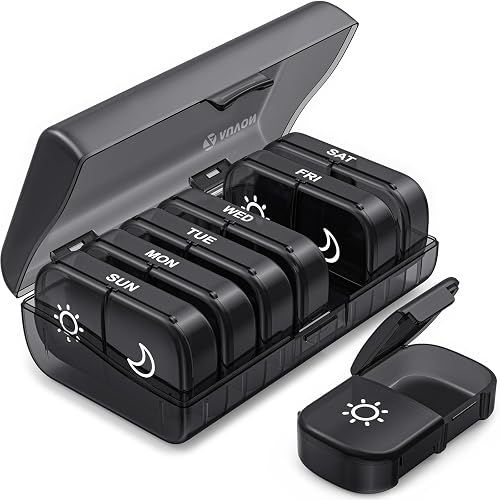
Easy to Fill: AUVON AM PM pill organizer 7 day is designed to open on the same side and the lid stays open at 180°, so it is easier and more efficient to fill and retrieve your pills
Large storage:...
AUVON's weekly organizer is the top seller in its category. It has seven daily boxes, each split into day and night. All the lids open on the same side and stay open at 180 degrees, so filling it is quick. A single compartment holds about 8 fish oil softgels or 16 capsules, and the maker says the shell and hinges are reinforced for 10,000 uses.
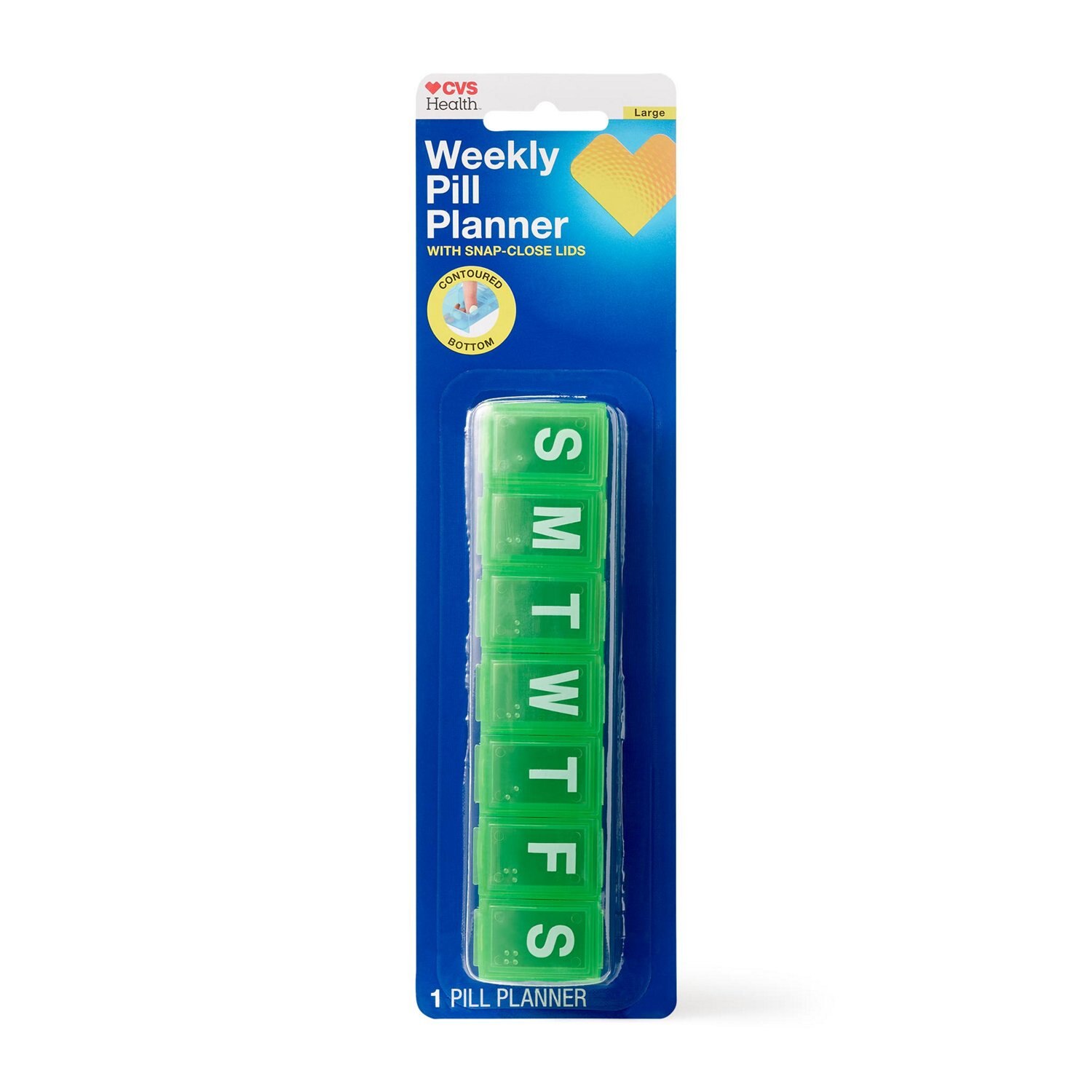
If you take everything once a day, you may not need more than a simple seven-slot box. CVS sells its own large weekly pill planner with seven medium compartments and snap-close lids marked with the initial of each day and in braille. You open each lid by pushing up on a tab.
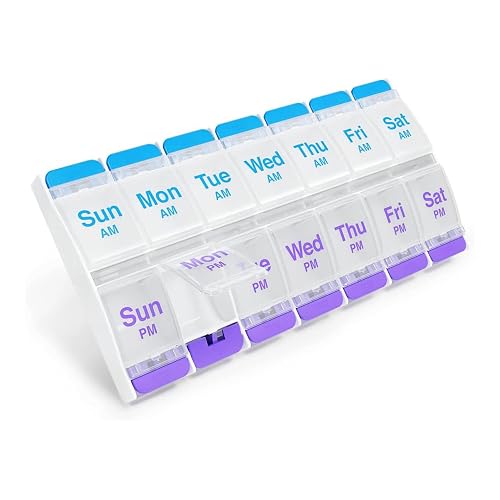
AWARD-WINNING DESIGN: Recipient of the Arthritis Foundation Ease-of-Use Commendation for its effortless, push-button opening—perfect for individuals with arthritis or limited dexterity, making medi...
Ezy Dose's X-Large AM/PM organizer is built for people who find small lids hard to open. It won an Arthritis Foundation Ease-of-Use Commendation for its push-button opening. Silicone feet grip the counter so you can open it with one hand, and each oversized compartment holds up to 35 aspirin-size tablets.
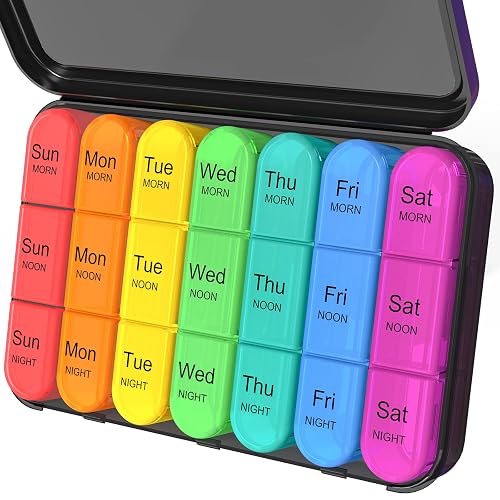
Carry More but Portable - Overall 8''x 5''x 1.4'' and 4.8" x 1.2" x 1'' for each compartment, pill box 3 times a day is with enough storage for your medicine and very portable while traveling. You ...
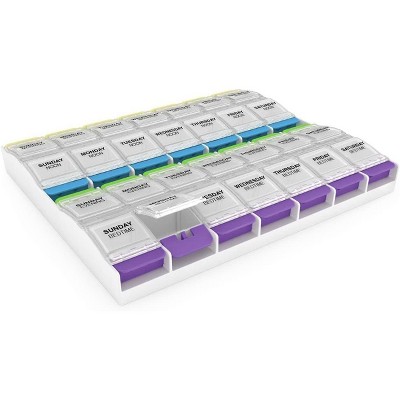
If you take pills three times a day, Daviky's organizer has morning, noon, and evening slots for each day. It measures about 8 by 5 by 1.4 inches, and each daily case comes out on its own, so you can carry just one day with you.
At Target, the Ezy Dose 2XL organizer handles four doses a day with the same push-button design. The maker says each compartment holds up to 30 aspirin-size pills.
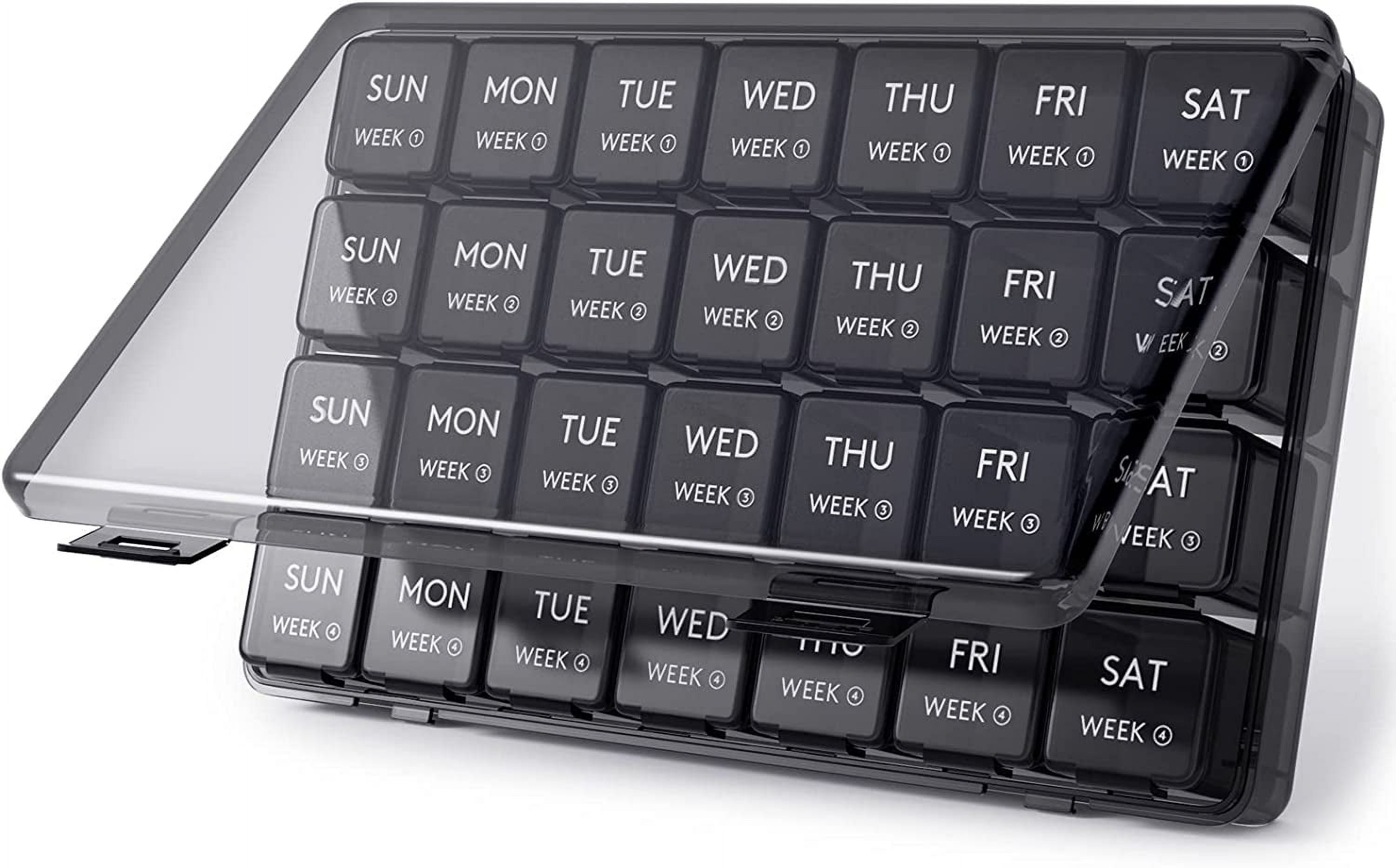
For people who like to fill a whole month at once, Walmart carries Lifewit's 28-day organizer. It is four separate weekly boxes, one slot per day, that sit together in one case, so you can take a single week with you. Each compartment holds about 9 fish oil capsules or 15 to 20 small pills, and the whole set measures about 9.3 by 5.9 by 1.5 inches. Monthly filling saves time, but ask your pharmacist first whether each medicine is fine outside its bottle for that long.
Cases for travel and daily carry
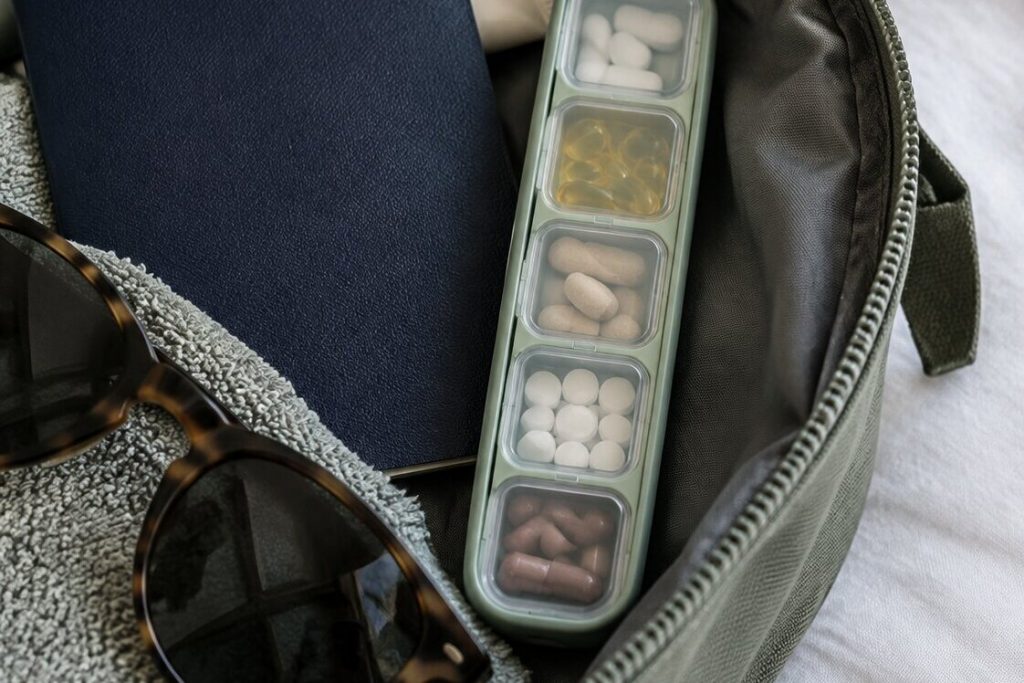
A weekly box is too bulky for a purse or a carry-on. A small travel case keeps a day or two of pills with you, and many hold a full week in a slim shape.
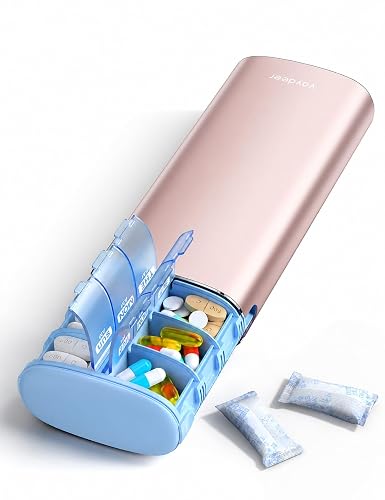
【Twice-a-Day Pill Organizer】 Designed with 14 compartments for 7 days, 2 times a day. The organizer measures 6.69 x 2.83 x 1.46 in, with each compartment measuring approximately 1.10 x 0.72 x 1.25 ...
Vaydeer's metal travel organizer holds a week of pills twice a day in 14 compartments, each with its own lid. It measures about 6.7 by 2.8 by 1.5 inches and includes a built-in chamber for a drying agent to help keep moisture out. Each compartment holds about 6 fish oil softgels, 8 capsules, or 10 small vitamin tablets.
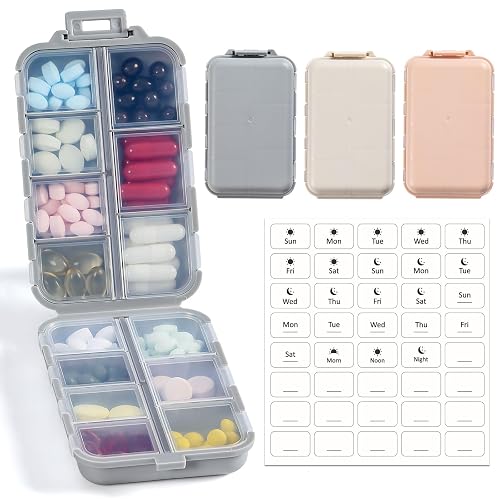
NOTE: Please refer to the Overall Size & Compartment size before ordering. Overall Size: 4.7"L x 2.9"W x 1.25"H. Large Compartment Size: 1.4"L x 1.2"W x 0.6"D. Small Compartment Size: 1.05"L x 1.2"...
This three-pack of foldable 14-compartment cases comes with 120 small blank labels. You can write the name of a medicine or the dose on each one, which helps if you are carrying pills away from their bottles. Each case is about 4.7 by 2.9 by 1.25 inches.
For daily supplements
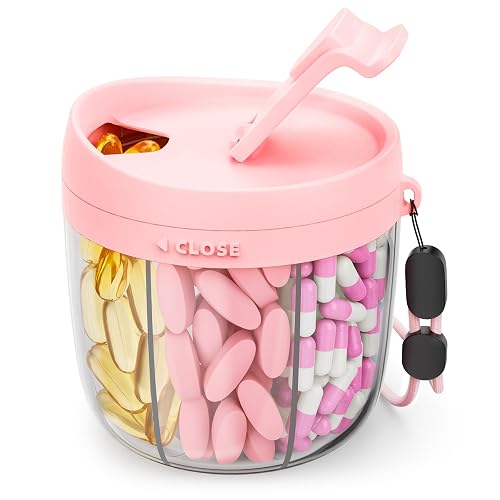
Keep 7 Supplements in 1 Pill Holder: The pill organizer, designed with 7 compartments, holds 7 types of supplements, such as vitamins and calcium tablets, saving space and providing a more convenie...
If your daily routine is mostly vitamins and supplements, the AMOOS dispenser takes a different approach. Instead of sorting by day, it holds up to seven different supplements, one per slot, in a round container with a swivel lid. Each slot holds up to 18 fish oil capsules. It saves counter space compared with a row of bottles, though it does not show whether you have taken today's dose.
Making the habit stick
Pick one fill day. Sunday evening works for many people. Sit down with your bottles and your medication list, and fill the whole week at once.
Keep the organizer where you will see it at dose time, such as next to the coffee maker or your toothbrush, but out of reach of children and pets.
If you care for someone else, fill their organizer together, or check it once a day. A glance at the right compartment is a quick way to catch a missed dose.
Bring your medication list, or the bottles themselves, to every appointment. The FDA recommends showing your list to all your health care providers, including physical therapists and dentists.
Keeping the organizer clean
Pill organizers pick up dust, powder from tablets, and the occasional sticky softgel. Once a month, empty it on refill day and wash it with warm, soapy water. Rinse it well, then let it dry completely before you add pills again, since moisture can make some tablets crumble or stick together. If the lids stop closing firmly or a hinge cracks, replace the organizer. They are cheap, and a lid that pops open in a bag can mix up a whole week of doses.
Also recheck the organizer any time a prescription changes. When a doctor stops a medicine, changes a dose, or adds a new one, update your medication list first, then empty and refill the organizer from the bottles so the old routine does not carry over.
Which one to choose
For most people, a weekly organizer with AM and PM slots covers the routine. If your hands are stiff, choose push-button lids. If you take pills three or four times a day, get a box with that many slots. Add a small travel case for work or trips, and keep a current medication list with you. And before moving any medicine out of its bottle, ask your pharmacist whether it should stay in its original package.
The responses below are not provided, commissioned, reviewed, approved, or otherwise endorsed by any financial entity or advertiser. It is not the advertiser’s responsibility to ensure all posts and/or questions are answered.