
Last Updated on: Sep 24, 2026
A jump rope is about as simple as exercise gear gets. It costs little, fits in a coat pocket, and works in a garage, a driveway, a hotel room with high ceilings, or a park. A few minutes of skipping gets your heart rate up fast, and it builds timing and footwork along the way.
But walk into the fitness aisle and you will find thin speed cables, beaded ropes, heavy weighted ropes, and plain vinyl cords, all with different handles and price tags. The right one depends on what you want from it and where you plan to jump. This guide explains the main rope types, how to size a rope, how to start without sore shins, and a handful of popular ropes worth considering.
Top Jump Ropes
What We'll Cover
How jumping rope fits into your week
The Centers for Disease Control and Prevention says adults need at least 150 minutes of moderate-intensity physical activity a week, or 75 minutes of vigorous-intensity activity, or an equal mix of the two. It also recommends muscle-strengthening activity on at least 2 days a week that works all major muscle groups.
The CDC points out that you do not have to do it all at once. You can spread activity across the week in smaller chunks, and some activity is better than none. That is where a jump rope shines. A few short rounds between other tasks, or a ten-minute session before work, adds up. Depending on your pace, jumping rope can be a moderate or a vigorous workout, so it is easy to scale as you get fitter.
If you have a heart condition, joint problems, or another health concern, or you have not exercised in a long time, it makes sense to check with your doctor before starting a high-impact activity like jumping rope.
Types of jump rope
PVC or vinyl ropes
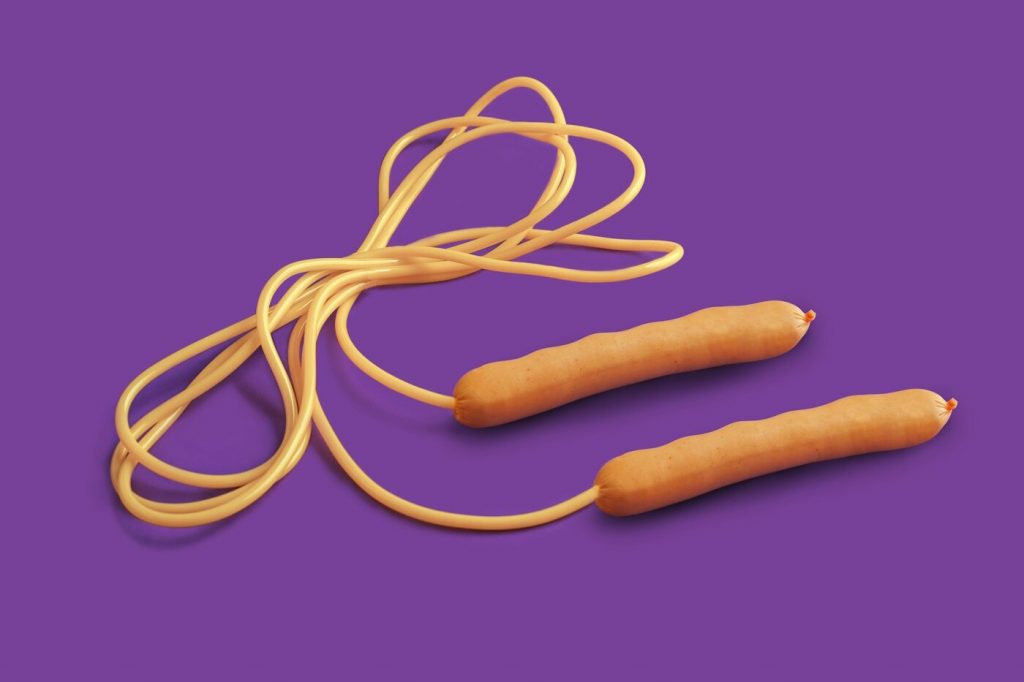
A plain PVC rope is the best place for most beginners to start. The cord is a bit thicker and slower than a steel cable, which makes it easier to time your jumps and feel the rope go around. It also stings less when you miss, which you will. PVC ropes are cheap, durable on most surfaces, and good for basic bounce steps, alternating feet, and simple tricks.
Steel speed cables
Speed ropes use a thin steel cable, usually coated in plastic, with ball bearings in the handles so the cable spins smoothly. They are fast and light, which makes them the tool of choice for double unders, where the rope passes under your feet twice per jump. That speed also makes them less forgiving when you are learning, and a coated cable can wear out quickly on rough concrete.
Beaded ropes
Beaded ropes have plastic segments strung along a cord. They are heavier and slower than PVC, hold their shape well, and do not tangle easily. They are popular for freestyle tricks and for outdoor use, since the beads handle rough ground well. They are loud on hard floors, though, and hurt more if they catch you.
Weighted ropes
Weighted ropes either use a heavier cord or add weight inside the handles. The extra load makes your shoulders and arms work harder and slows the rope down, which some beginners find helps with timing. They are not for speed work. Think of them as a way to add some upper-body effort to a cardio session.
How to size a jump rope
A rope that is too long hits the floor far in front of you and slows you down. One that is too short catches your feet. The classic test is simple. Stand on the middle of the rope with one foot and pull the handles straight up along your body. For beginners, the tops of the handles should reach around your armpits. As you get more skilled, many jumpers go shorter, with the handles closer to the bottom of the chest.
Most adult ropes come around 9 to 10 feet long and are adjustable. Some use a clamp or screw in the handle, others let you slide the cord and trim the extra with scissors. Size it before your first workout, and do not cut too much at once. You can always shorten a rope, but you cannot make it longer again.
Where to jump and what to wear
Surface matters more than most people think. A wooden floor, a rubber gym floor, or a jump mat gives a little under your feet and is kind to your joints. Concrete and asphalt are hard on shins and wear out coated cables fast. Carpet can catch the rope. If you must jump on concrete, a cheap rubber mat makes a big difference.
Wear supportive athletic shoes with some cushioning in the forefoot, since you land on the balls of your feet. Check the space around you too. You need room overhead and to the sides so the rope does not clip a light fixture, a car, or a wall.
Starting without sore shins
- Start short. Try 30 seconds of jumping followed by 30 seconds of rest, repeated five to ten times. Add time as it gets easier.
- Stay low. You only need to clear the rope by about an inch. High jumps waste energy and pound your legs.
- Land softly on the balls of your feet with knees slightly bent. Keep your heels just off the ground.
- Turn from the wrists. Keep your elbows close to your sides and let your wrists do the work, not your whole arm.
- Build up over weeks. Your calves and shins need time to adjust. If something hurts beyond normal muscle soreness, take a break.
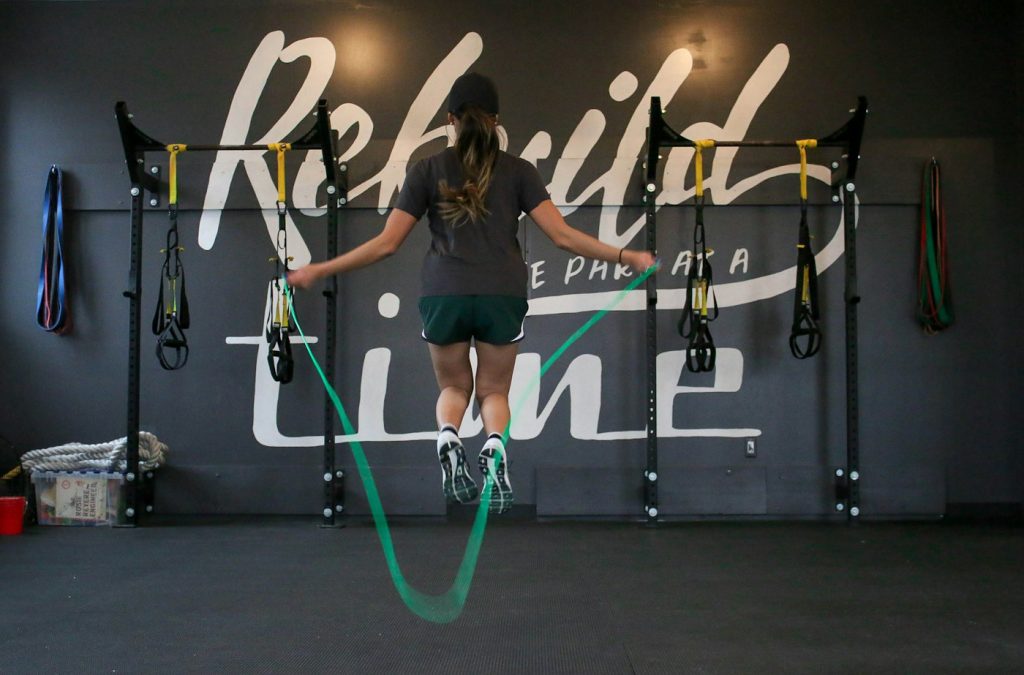
Once basic bounces feel easy, try alternating feet like a light jog in place, then side-to-side hops, then crossing the rope in front of you. Many people mix jump rope into a circuit with bodyweight moves like squats, push-ups, and lunges, which also helps with the muscle-strengthening part of the CDC guidelines.
Caring for your rope
A little care keeps a rope turning smoothly for years. Hang it up or coil it loosely instead of stuffing it in a bag, since sharp kinks in a cable or PVC cord make it spin unevenly. Wipe sweat off the handles after use. Check coated steel cables now and then for fraying, especially near the handles, and replace a cable once the coating wears through. Most speed ropes sell spare cables, which is cheaper than a whole new rope.
Jump ropes worth a look
These popular ropes cover beginners, speed work, freestyle, and weighted training. Check the current listing for colors and price.
Screw-free steel speed rope. A steel wire speed rope with dual bearings and a self-locking length adjuster that sets anywhere from 8 to 12 feet without cutting. That makes it easy to share with a partner or a teen who needs a different length.
[Simple Operation] Our designed the speed rope to self-locking and screw-free professional adjustable steel wire jump rope, the length of adjustment is very convenient, the adjustable length is 8'-...
Beginner-friendly 5mm PVC rope. A 10-foot adjustable rope with a 5mm PVC cord and shatterproof, non-slip handles. The cord is thick enough to time easily, and it is sold for both adults and kids, which makes it a good first rope for the whole family.
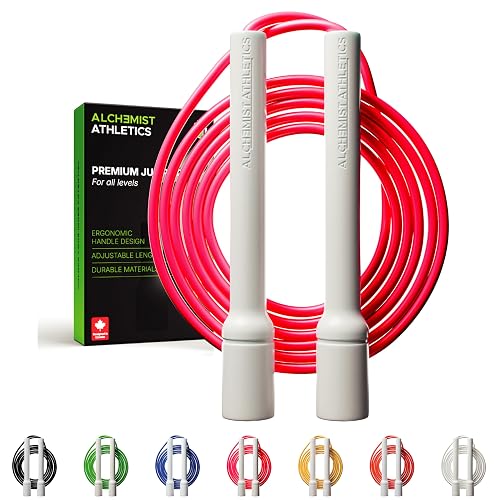
Built for Speed, Control & Precision – The V-15 speed jump rope is designed for fast, smooth rotations, making it ideal for double unders, boxing drills, cardio training and footwork. Great for beg...
Aluminum-handle speed rope. A steel-coated, adjustable speed rope with light aluminum handles and 360-degree swivel ball bearings. It is light and quick, so it suits jumpers working on speed. Some buyers find the slim handles a little small for larger hands.
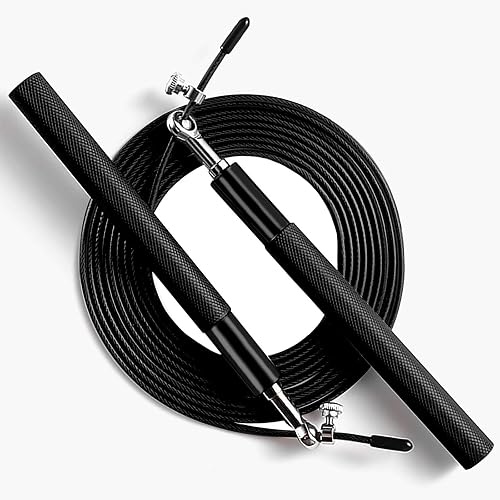
1. Aluminum Alloy & Light-weighted Handle, Anti Skipping ,easy for children to carry: The metal-textured handles provide comfortable grip. Light-weighted design makes it easier to hold even during ...
Weighted-handle cable rope. A 10-foot adjustable cable rope with a third of a pound of weight in each handle, foam grips, and a ball-bearing mechanism. It adds arm and shoulder effort to a cardio session.
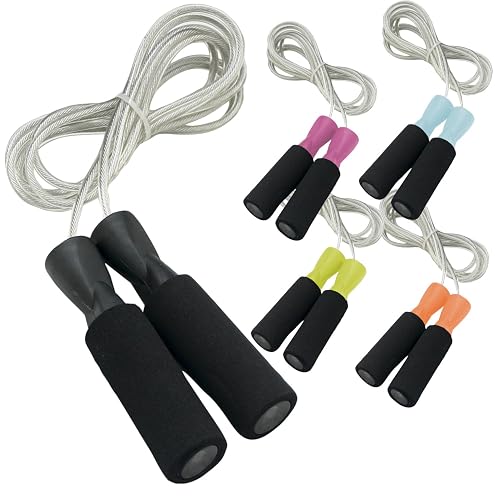
High speed cable jump rope
Weighted handles with 1/3 lb weight in each handle
Foam covered grips for added comfort
Ball bearing mechanism in handle for high speed smooth and even rotation of the ro...
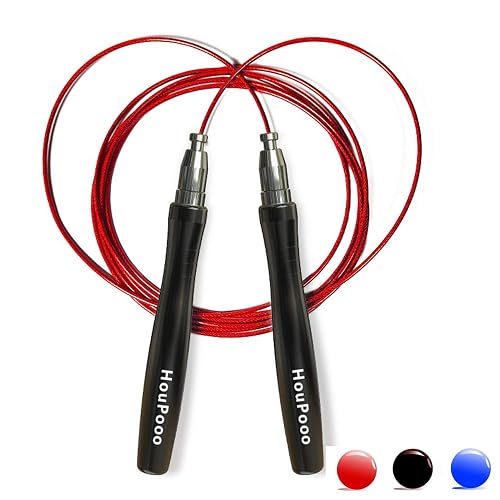
Budget coated-steel rope. A black and red rope with a steel wire core in a wear-resistant PVC coating and ball bearings in each handle. It is adjustable and resists tangling, a simple step up for someone ready to move past a basic vinyl cord.
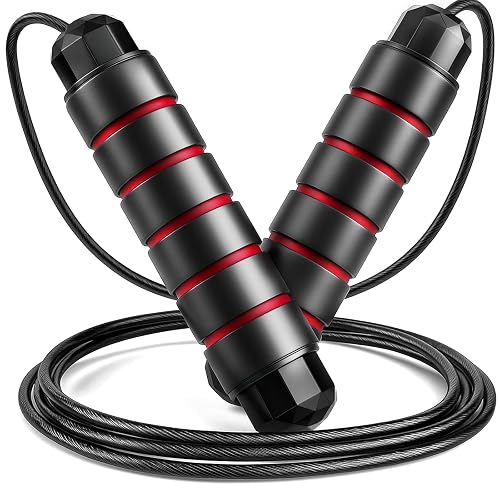
Durable Steel Wire Rope with PVC Coating:Built to last, this jump rope features a strong steel wire core wrapped in a wear-resistant PVC coating. It’s designed to handle high-speed rotation while r...
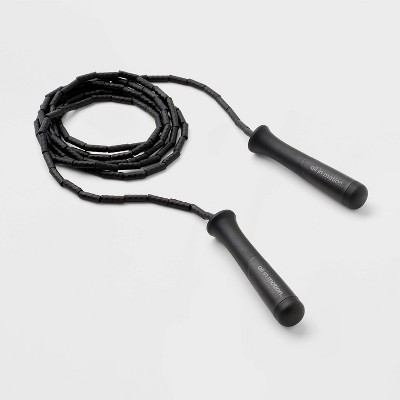
Segmented beaded rope. Target's All In Motion segmented rope is a 9-foot beaded style made of rubber and plastic. The segments give the rope some weight and a steady arc, which helps when you are learning freestyle tricks or jumping outdoors on a driveway.
Budget weighted rope. Walmart's Athletic Works weighted jump rope adjusts up to 9 feet, so it suits most adults once it is sized. It is a low-cost way to try a heavier rope before spending more on a weighted cable.
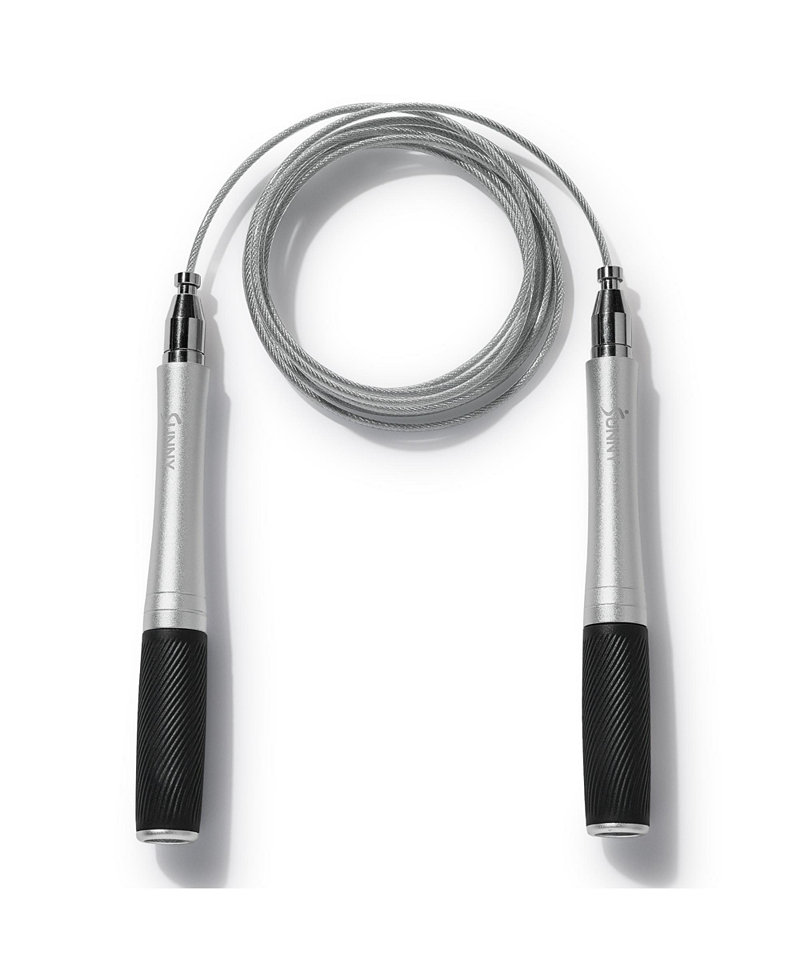
Cut-to-fit wire speed rope. The Sunny Health & Fitness speed rope, sold through Macy's, starts with a 118-inch wire cable that you shorten to your height, and the handles use double ball bearings. Measure twice before you trim, since a cut cable cannot be made longer.
Which rope to choose
If you are new to jumping, start with a PVC rope around 5mm thick. It is forgiving and cheap, and it teaches good timing. If you already jump regularly and want double unders, move up to a coated steel speed rope with bearings. For extra arm work, add a weighted rope as a second tool, not a replacement.
Whatever you pick, size it right, jump on a forgiving surface, and build up slowly. A few minutes at a time, spread across the week, is a simple way to move more and hit those weekly activity targets.
The responses below are not provided, commissioned, reviewed, approved, or otherwise endorsed by any financial entity or advertiser. It is not the advertiser’s responsibility to ensure all posts and/or questions are answered.
Tip for apartment jumpers: a cheap rubber stall mat from a farm supply store works as a jump mat and cuts the noise a lot.
Does the armpit sizing trick work for a weighted rope too, or should those be a bit longer?