
Last Updated on: Sep 23, 2026
Blood pressure readings at the doctor's office are a single snapshot, taken after a drive, a wait, and sometimes a bit of nerves. A monitor at home fills in the rest of the picture. It shows how your numbers look on an ordinary Tuesday morning, after a new medication, or over a few weeks of changes to your routine, and it gives your doctor far more to work with than one reading a year.
What We'll Cover
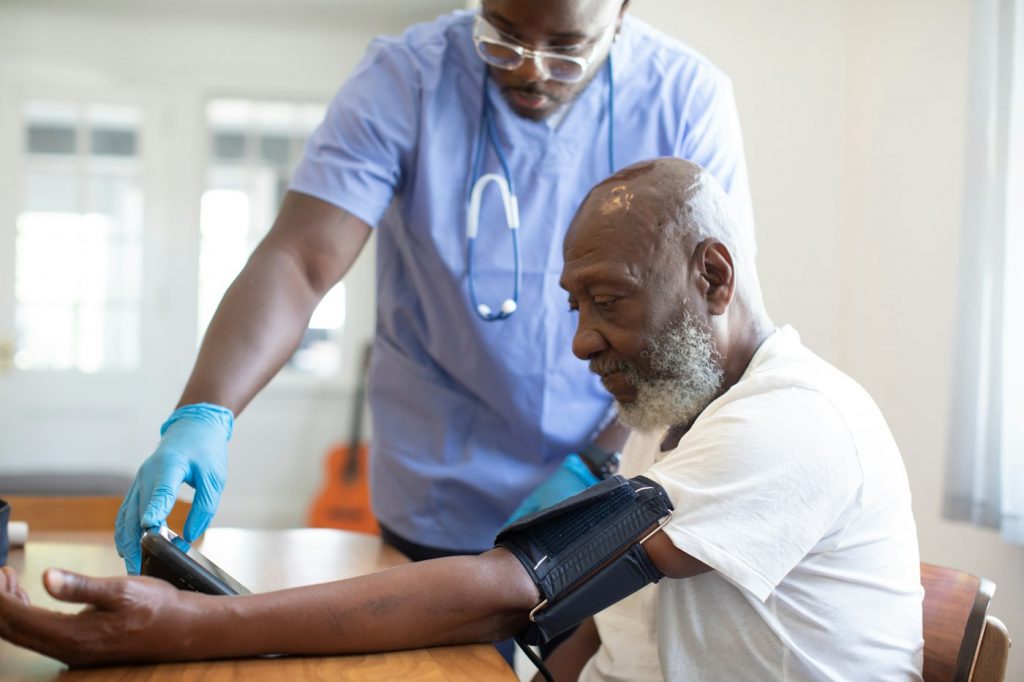
Home monitors are easy to find and not expensive, but they are not all equal. The shape of the cuff, how well it fits your arm, and whether the device has been tested for accuracy matter much more than a big screen or an app. This guide covers what to look for and how to take a reading you can trust. It is not medical advice, so talk with your health care professional about whether home monitoring is right for you and how often to check.
Top Home Blood Pressure Monitors
Who benefits from checking at home
The American Heart Association recommends home monitoring for everyone with high blood pressure, so their health care professional can see whether treatment is working. The AHA also notes that home readings can help confirm a diagnosis of high blood pressure in the first place.
Beyond that, many people like having a monitor at home to keep an eye on a family history, to track changes during a new exercise plan, or to help an older parent. If you are buying for a senior, for someone who is pregnant, or for a child, the AHA says to make sure the device has been validated for that group specifically.
Upper arm, not wrist
This is the most important choice, and it is simple. The AHA recommends an automatic, cuff-style monitor that goes on the upper arm. It says wrist and finger monitors are not recommended because they give less reliable readings.
Wrist monitors are popular because they are small and easy to put on, and you will see plenty of them on best-seller lists. But for readings you plan to share with a doctor, an upper arm model is the one to buy. Every monitor in this guide uses an upper arm cuff.
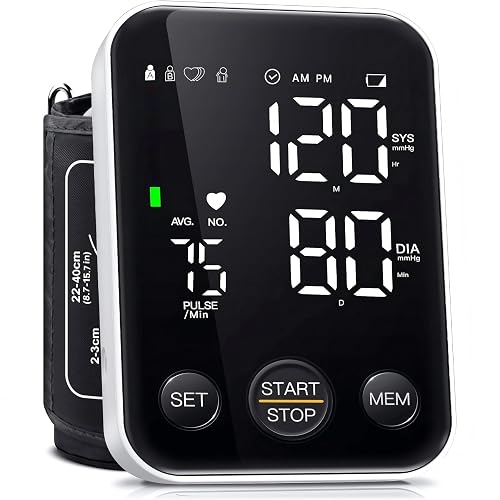
One-Button Design: This Oklar blood pressure monitor features a one-button operation, making measurement easy and convenient; with just a touch, you can quickly take a measurement and get an accura...
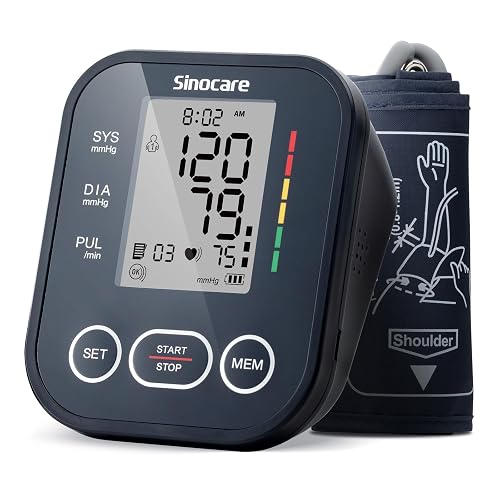
✅ Easy to Use – One-button operation makes checking your blood pressure simple and hassle-free—no setup or calibration required. All your readings are clearly displayed on a large 3.6-inch screen.
...
Get the cuff size right
A cuff that is the wrong size gives the wrong numbers. According to the AHA, a cuff that is too small can overestimate your blood pressure. Research the AHA reported in 2024 found that more than 17 million U.S. adults may not get accurate home readings because the cuffs that come with popular over-the-counter monitors are too small or too large for their arm.
Before you buy, measure around the middle of your upper arm with a soft tape measure. Then check the cuff range on the box. Many standard cuffs cover about 8.7 to 16.5 inches, which fits a lot of adults, but not everyone. People with larger arms may need an extra-large cuff, and people with very slim arms may need a small one. Some brands sell replacement cuffs in other sizes that work with their own monitors.
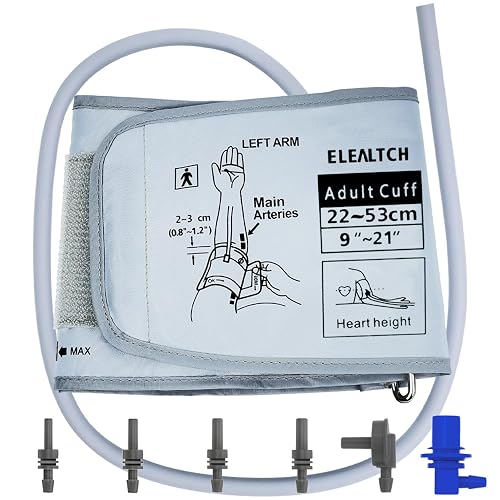
【Adult Extra Large Cuff】Our blood pressure monitor cuff suit adult big arm 9-21 inches (22-53 cm) in circumference. The replacement cuff is easy to self-adjust to improve accuracy
【Compatibility De...
Look for a validated device
Validation means a monitor has been independently tested against a standard for accuracy. The AHA suggests choosing a validated monitor and points to validatebp.org, a free list of devices that have been checked. If you are unsure, a pharmacist or your health care professional can help.
You will also see "FDA cleared" on many boxes. Clearance and validation are not the same thing, so it is worth looking up the exact model on the validated device list rather than relying on packaging alone.
Features that are actually useful
- Memory for readings. Many monitors store dozens or hundreds of results, often for two users. This makes it easy to bring a full record to an appointment.
- Averaging. Some monitors average your last few readings, which smooths out a single odd result.
- A large, backlit screen. Easier to read for people with vision trouble or in a dim room.
- Talking function. Reads results aloud, which helps people with low vision.
- App sync. Sends readings to your phone so you can share them or spot trends. Handy, but not required.
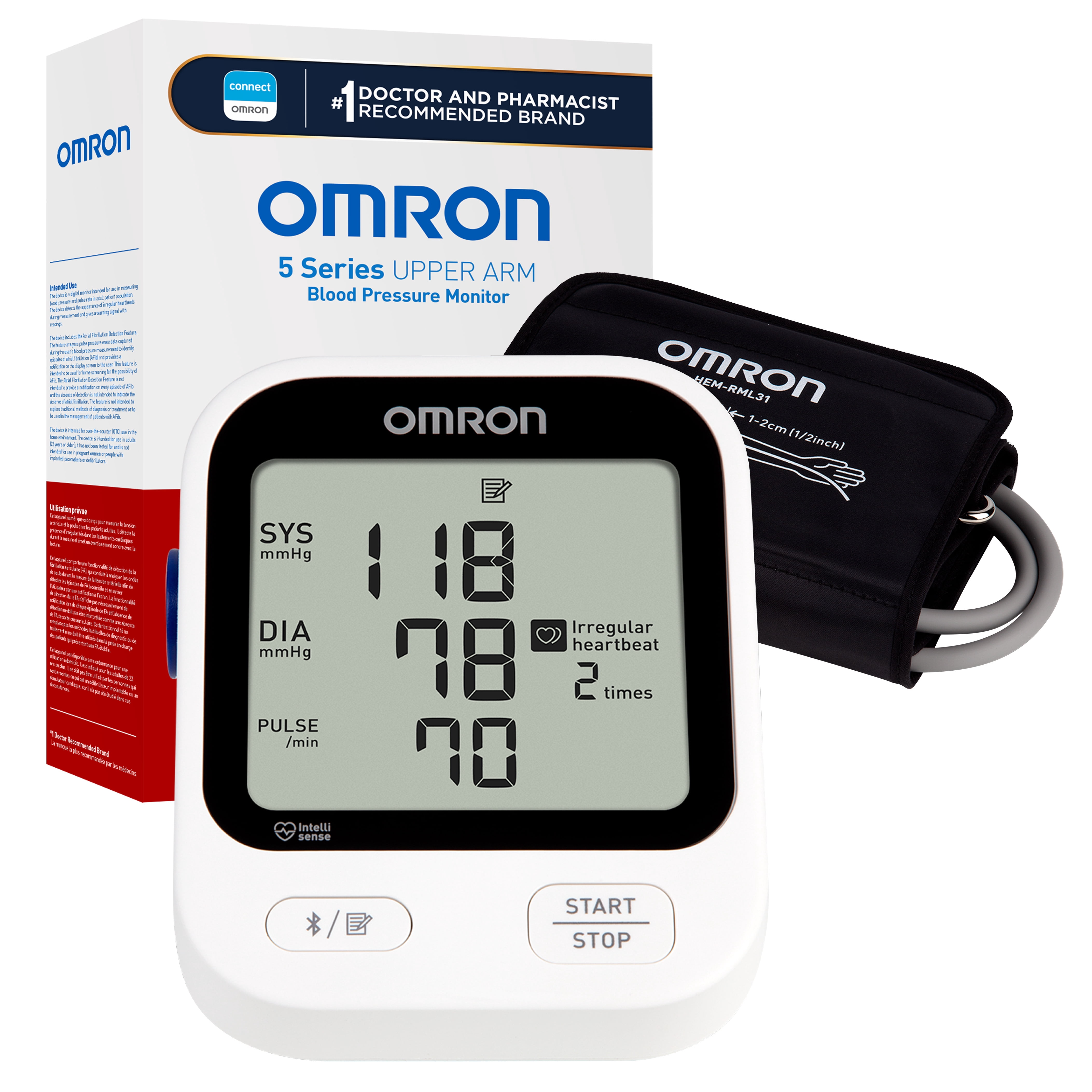
- Irregular heartbeat indicator. Many monitors flag an irregular rhythm during a reading. It is not a diagnosis, but it is worth mentioning to your doctor if it shows up often.
Power matters a little too. Some monitors run on AA or AAA batteries, others charge over USB, and some can plug into the wall. For a device you use daily, rechargeable or plug-in models save on batteries.
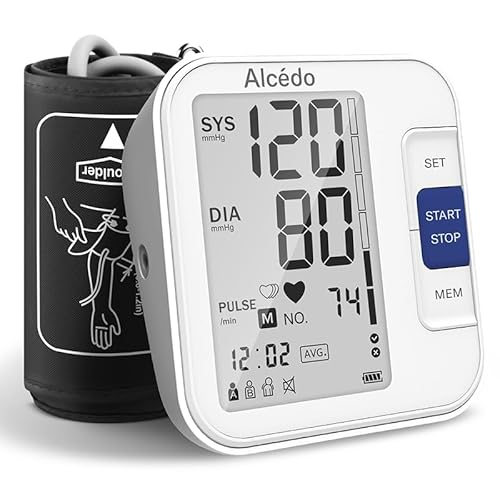
Easy To Read – The LCD Display with clear number values appear during measurements for convenient reading; Live-voice broadcast of blood pressure levels with adjustable volume setting provide a sim...
How to take an accurate reading
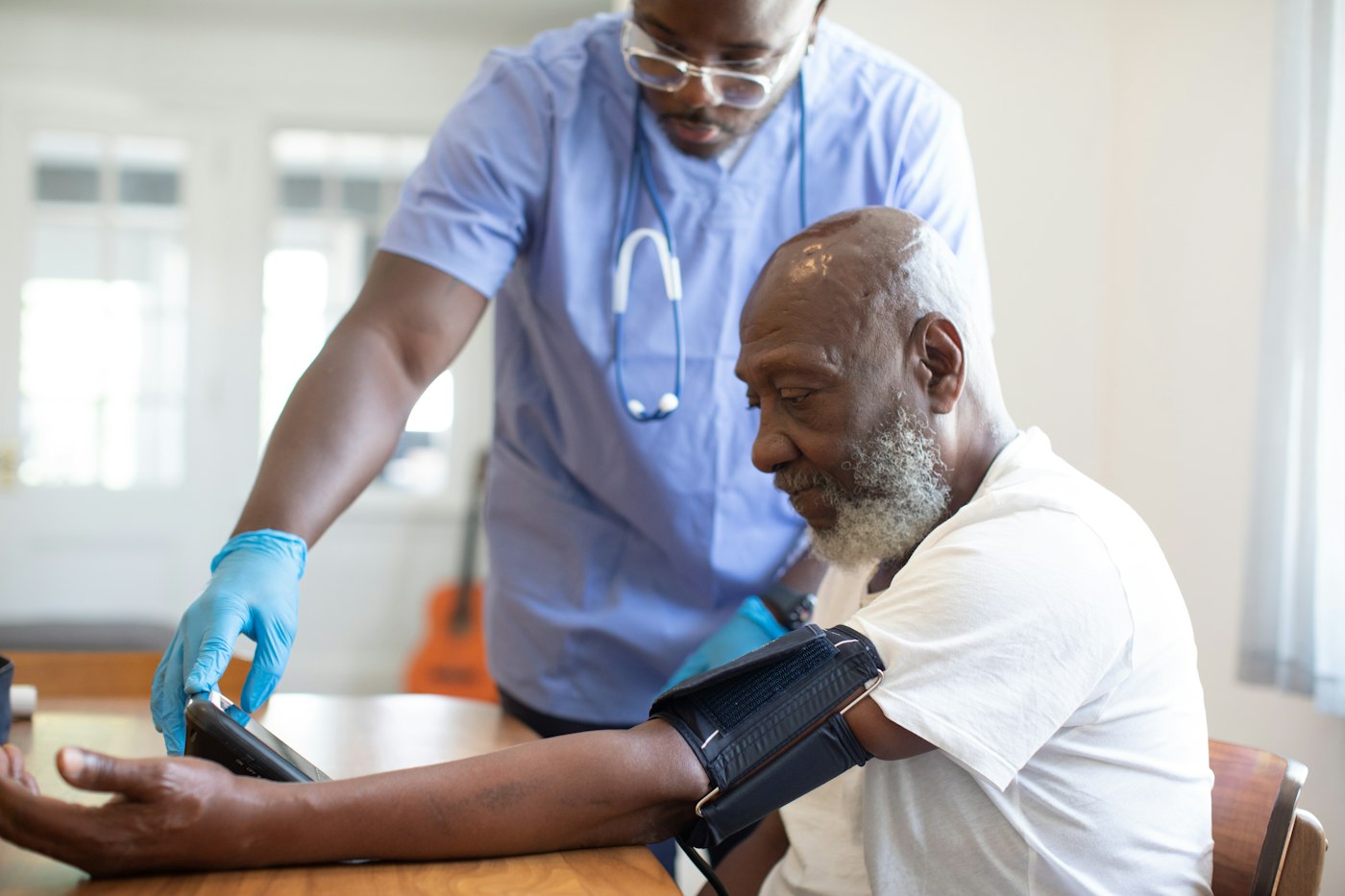
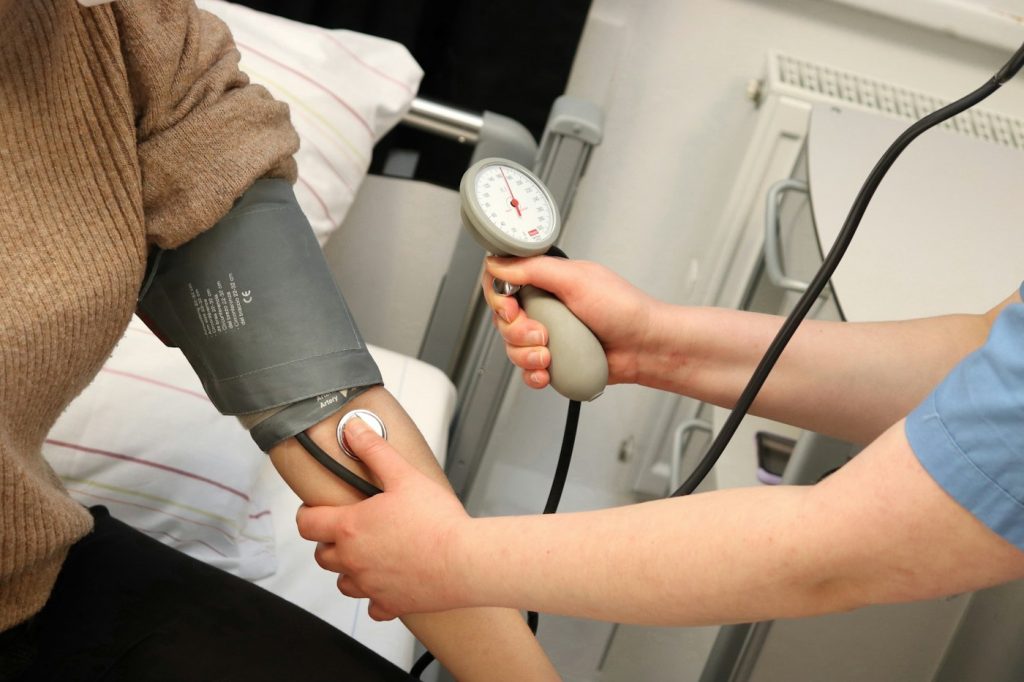
The best monitor still gives poor results if the reading is rushed. The AHA's home monitoring steps boil down to a short routine:
- Plan ahead. Avoid smoking, caffeine, and exercise for 30 minutes before you measure, and empty your bladder.
- Bare arm. Take off clothing over the arm you are using. Do not measure over a sleeve.
- Rest first. Sit quietly for at least five minutes before you start. No talking or phone use.
- Sit correctly. Rest your arm on a flat surface so the middle of the cuff is at heart level. A pillow under the arm can help.
- Place the cuff right. The bottom of the cuff should sit just above the bend of the elbow.
- Take two readings. Each time, take two readings one minute apart and write down both.
- Same time each day. Measure at about the same time daily, and ask your health care professional how often to check.
The AHA says you can use either arm, since there is usually not a big difference between them. It also suggests bringing your monitor to an appointment once a year, or as the maker directs, so your care team can compare it with their equipment and make sure you are using it correctly.
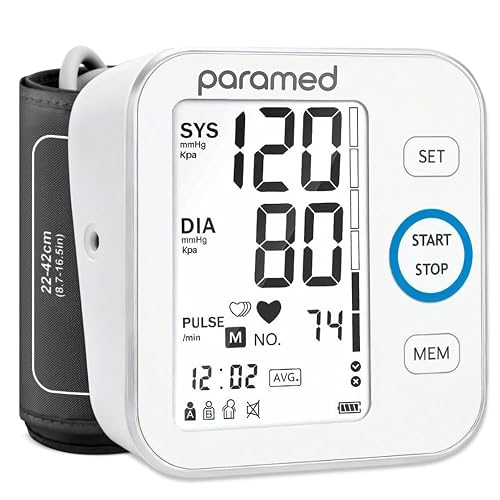
Large lcd and buttons: Large, easy to read LCD screen with the clear, oversized numbers and big buttons for effortless operation - perfect for all ages
Self-checking universal cuff: Self-check feat...
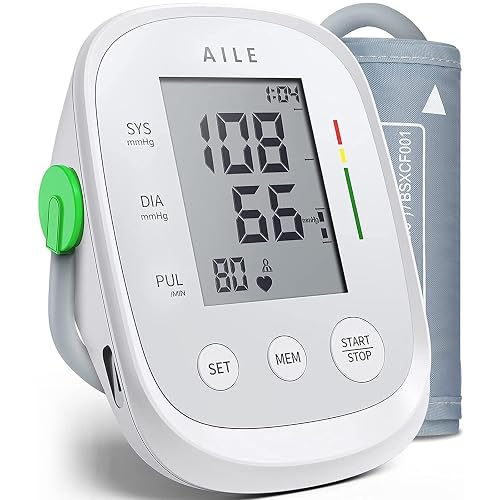
[AUTOMATIC UPPER ARM MEASUREMENT] This automatic upper arm blood pressure monitor completes each measurement on its own and displays systolic pressure, diastolic pressure, and pulse on one screen.
...
Target carries the Omron Series 3, a one-button upper arm monitor that syncs with a free phone app so you can track readings and share them with your doctor. Omron describes it as clinically validated, and you can confirm the exact model on the validated device list before you buy.
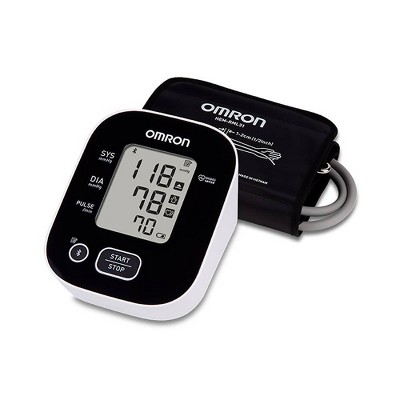
Walmart sells the Omron 5 Series, an upper arm model that adds an irregular heartbeat alert and an indicator that flags readings in the elevated range. Like any flag on a home monitor, treat it as a reason to talk with your care team, not as a diagnosis.
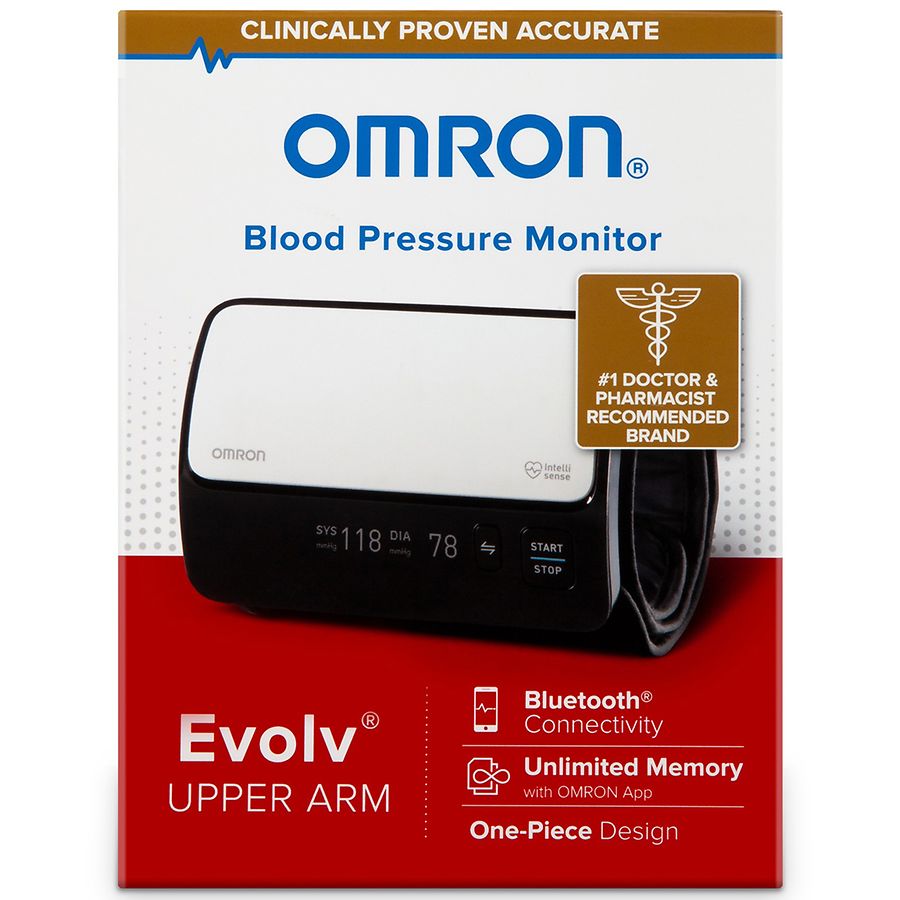
Walgreens carries the Omron Evolv, a one-piece monitor with no tube between the cuff and the screen. Its pre-formed cuff fits upper arms about 9 to 17 inches around, and the compact shape makes it easy to pack for travel.
What to do with the numbers
One high reading is not a reason to panic. The AHA says that if you get a reading higher than normal, take it again and write down both results. Readings can go up with stress, a full bladder, or a cup of coffee you forgot about.
There is one exception. The AHA says that if your readings are suddenly higher than 180/120 mm Hg, wait at least one minute and test again. If they are still that high, contact your health care professional right away. If a very high reading comes with symptoms such as chest pain, shortness of breath, back pain, numbness, weakness, a change in vision, or trouble speaking, call 911.
Most of the value of a home monitor comes from the pattern over time, not any single number. A simple log, whether in the monitor's memory, an app, or a printed tracker like the one the AHA offers, gives your doctor a clear view of how things are going between visits. You can read the full guidance on the American Heart Association's home monitoring page.
Sharing a monitor at home
Many households buy one monitor for two people, such as a couple or a parent and adult child. Two-user memory keeps each person's readings separate, but only if everyone remembers to pick the right user before pressing start. A small label on each user button helps. If two people have very different arm sizes, one cuff may not fit both, so check both measurements before you buy rather than after.
Look after the cuff, too. Store it loosely rolled rather than folded tight, keep the tubing free of kinks, and wipe it with a slightly damp cloth instead of putting it in water. A cracked tube or a cuff that no longer closes firmly can throw off readings, and most makers sell replacements.
Before you buy
- Upper arm cuff, not wrist or finger.
- A cuff range that matches your measured arm size.
- A model listed as validated, especially for seniors, pregnancy, or children.
- Enough memory for your routine, and two-user storage if you share it.
- A screen you can read easily.
Get those basics right and nearly any monitor on the shelf will do the job. The rest is habit: the same chair, the same time, and a few quiet minutes before you press start.
The responses below are not provided, commissioned, reviewed, approved, or otherwise endorsed by any financial entity or advertiser. It is not the advertiser’s responsibility to ensure all posts and/or questions are answered.
Sitting quietly for five minutes first makes a bigger difference than I expected. I used to test right after walking the dog and wondered why it was all over the place.
Taking my monitor to my checkup was a good tip. The nurse compared it with theirs and showed me I had been putting the cuff on too low.
The cuff size part hit home. My arm is almost 17 inches and the cuff that came with my first monitor was always reading high. Got a bigger cuff and my numbers finally matched what the doctor's office gets.