
Last Updated on: Jul 27, 2026
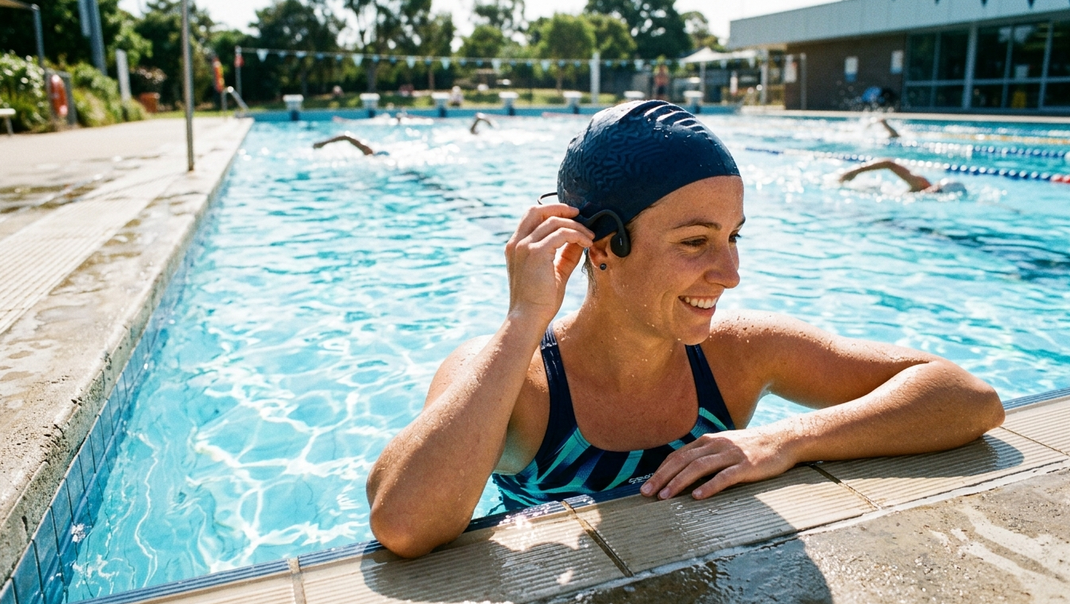
Swimming laps can feel repetitive, especially during long endurance sessions. Music, podcasts, or guided workouts can make pool time more enjoyable, but ordinary wireless earbuds usually stop working as soon as your head goes underwater.
What We'll Cover
- Why Regular Waterproof Earbuds Are Not Enough
- Bone Conduction or Waterproof Earbuds?
- Three Models Worth Comparing
- How to Choose the Best Headphones for Swimmers and Water Workouts
- Choose Enough Storage for Your Listening Habits
- Check How Music Gets Onto the Device
- Prioritize Buttons Over Touch Panels
- Pool Swimming Versus Open-Water Training
- Frequently Asked Questions
- Can Bluetooth headphones work while swimming?
- Are IPX7 headphones safe for lap swimming?
- Do bone-conduction headphones sound good underwater?
- Can I listen to a streaming service underwater?
- Will swimming headphones stay on during flip turns?
- Make Your Final Choice Based on Where You Train
The problem is not simply waterproofing. Standard Bluetooth connections depend on radio signals that water quickly weakens, making stable underwater streaming difficult. Research into underwater radio-frequency transmission shows that signal loss becomes especially high around the 2.4 GHz frequency used by Bluetooth.
The best headphones for swimmers and water workouts solve this problem with built-in music storage, secure designs, and waterproof construction. This guide explains which features matter, which claims to question, and how to choose a model that fits your training routine.
Why Regular Waterproof Earbuds Are Not Enough
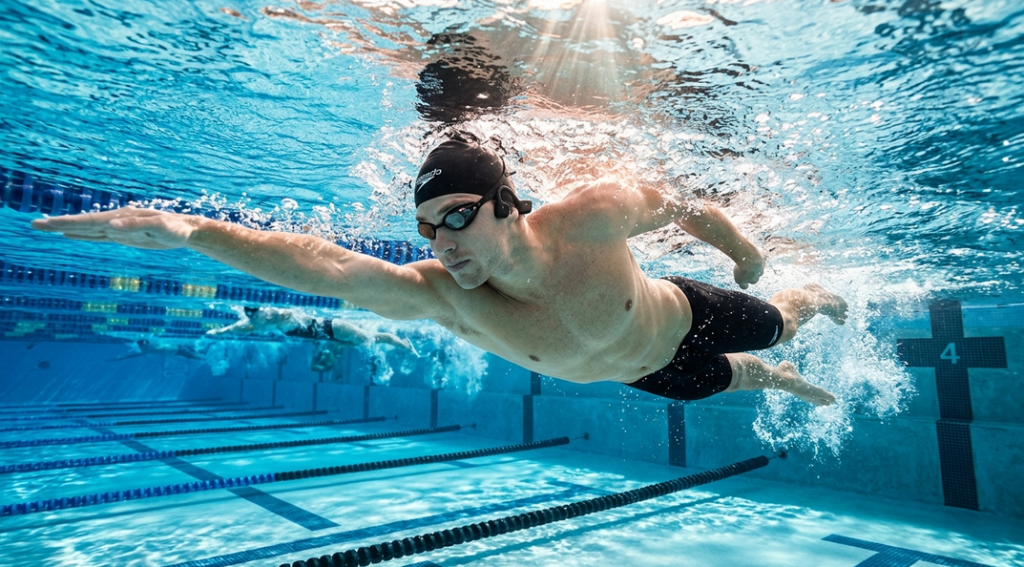
A water-resistant earbud may survive sweat, rain, or an accidental splash. That does not mean you can wear it while swimming.
Most running earbuds carry ratings such as IPX4, IPX5, or IPX7. These ratings may cover sweat, jets of water, or short periods of immersion, but swimming creates repeated pressure, movement, and longer exposure.
Look for headphones that are specifically approved for swimming. Strong candidates commonly use an IP68, IPX8, or similar high-level waterproof rating, along with sealed charging contacts and physical buttons.
Built-in storage is just as important. Once you submerge your phone and headphones on opposite sides of the waterline, Bluetooth audio may cut out almost immediately. A local MP3 mode plays files directly from the headphones instead.
Bone Conduction or Waterproof Earbuds?
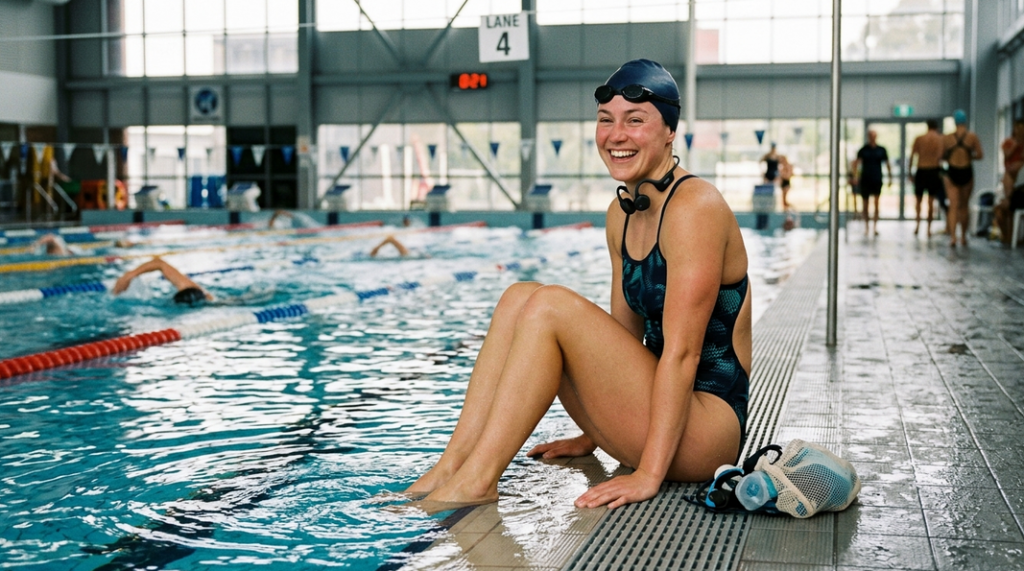
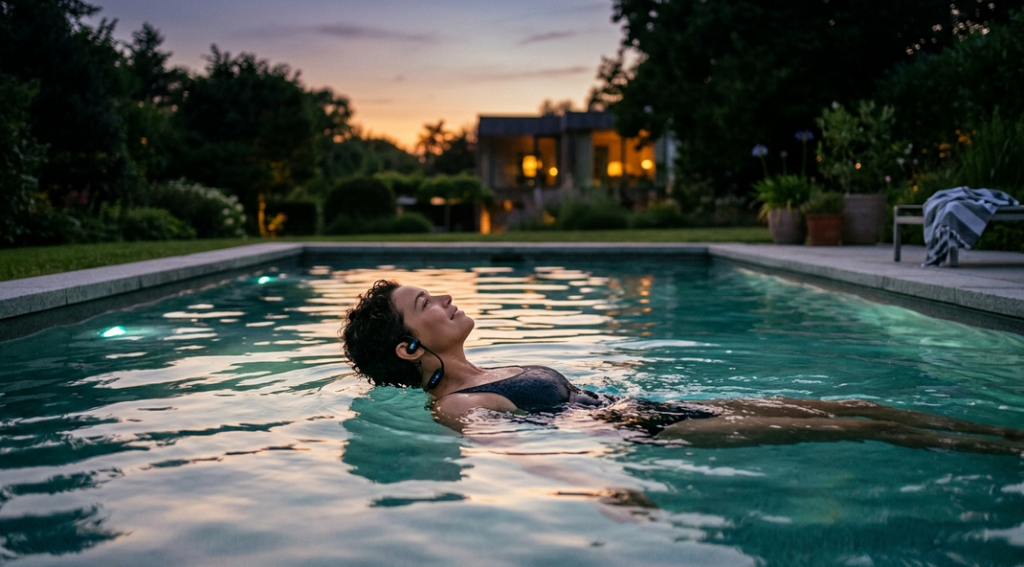
Bone-conduction headphones rest near your cheekbones instead of blocking your ear canals. Vibrations carry audio toward your inner ear while leaving your ears open.
This design has several advantages in the pool:
- There are no ear tips to loosen during a flip turn.
- The frame can sit beneath a swim cap or around goggle straps.
- Sound often becomes clearer when you use swimming earplugs.
- Physical controls are easier to operate with wet hands.
Waterproof earbuds can offer deeper bass, but their fit is more personal. Water entering the ear canal can break the seal and make the sound uneven.
For regular lap swimming, bone conduction is usually the more dependable choice. Earbuds may still work well for aqua aerobics, paddleboarding, kayaking, or workouts where your head remains mostly above water.
Three Models Worth Comparing
The following listings were available when researched. Prices can change, so check the product page before ordering. Product names, specifications, availability, and displayed prices were verified through their current listings.


The first option is the most versatile for people who swim, run, and train on land. It provides 32GB of internal storage, an IP68 rating, and separate Bluetooth and MP3 listening modes. Bluetooth is intended for dry-land use, while stored audio handles swimming sessions.
The second option offers 32GB of storage and up to 10 hours of listed playback at a lower price. Its open-ear frame may appeal to swimmers who also want one headset for running, cycling, and gym workouts.
The third is the simplest pool-focused choice. It clips to swimming-goggle straps, stores up to 4GB of MP3 or WMA files, and lists seven hours of battery life. It does not depend on a phone connection during your swim.
How to Choose the Best Headphones for Swimmers and Water Workouts
A long feature list does not guarantee a good swimming experience. Focus on the details that affect comfort and reliability in the water.
| Feature | What to Look For | Why It Matters |
|---|---|---|
| Waterproofing | Swim-specific approval and IPX8, IP68, or equivalent protection | Basic splash resistance is not enough for repeated submersion |
| Storage | At least 4GB | Lets you play music without an underwater phone connection |
| Controls | Raised physical buttons | Touch controls can become unreliable when wet |
| Fit | Stable neckband or goggle-mounted design | Helps prevent movement during turns and hard push-offs |
| Battery | Seven hours or more | Covers several workouts between charges |
| File support | MP3 as a minimum | Makes transferring music easier |
| Saltwater care | Clear rinsing instructions | Salt can collect around buttons and charging contacts |
Choose Enough Storage for Your Listening Habits
Four gigabytes can hold hundreds of compressed songs. That is enough for many swimmers who use a few workout playlists.
Larger 32GB storage is better for long podcasts, audiobooks, multiple training playlists, or people who do not want to manage files often.
Check How Music Gets Onto the Device
Some swimming headphones work like a USB drive. You connect them to a computer and drag MP3 files into their storage.
Others use a companion app or a playlist-saving feature. Read the setup instructions carefully, especially when subscription music services are involved. Offline files from a streaming app may not be transferable as ordinary MP3 tracks.
Prioritize Buttons Over Touch Panels
Wet fingers, splashing water, and swim caps can confuse touch-sensitive controls. Raised buttons are usually easier to find without stopping at the wall.
The most useful controls are play or pause, volume, track skip, and a clear switch between Bluetooth and local playback modes.
Pool Swimming Versus Open-Water Training
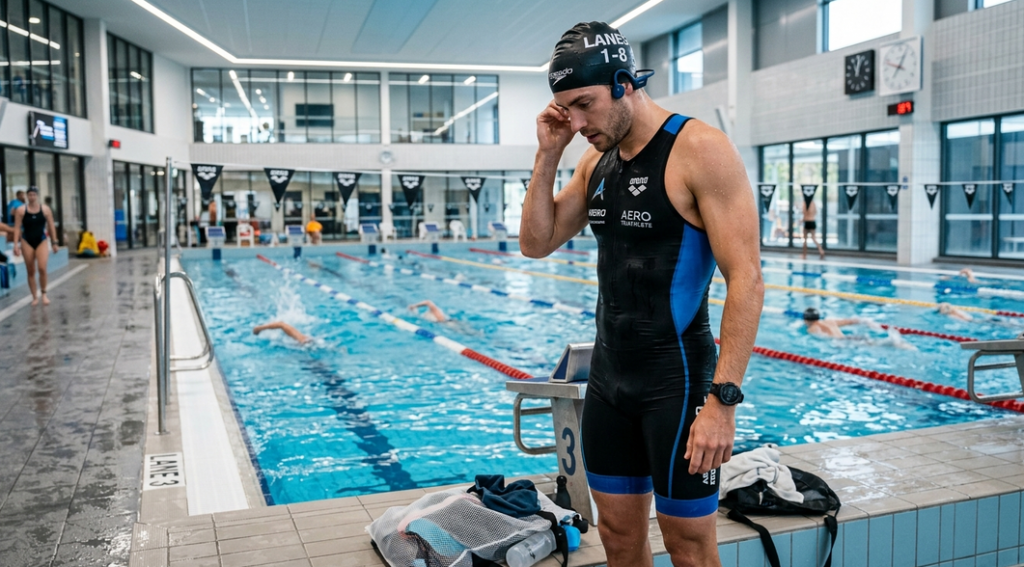
Pool swimmers should prioritize secure placement and easy track controls. A loose frame becomes distracting during flip turns, underwater streamlines, and fast intervals.
Open-water swimmers have additional concerns. Headphones should remain stable beneath a cap, resist saltwater exposure, and leave enough awareness to notice nearby swimmers, boats, whistles, or changing conditions.
Rinse waterproof headphones with fresh water after ocean use. Dry the charging contacts fully before connecting the cable.
For paddleboarding, kayaking, or aqua fitness, Bluetooth may work while your head stays above the surface. You still need a secure fit in case you fall or get splashed.
Frequently Asked Questions
Can Bluetooth headphones work while swimming?
Bluetooth may work when the headphones and phone remain above water. Once the receiving unit is submerged, the signal usually becomes weak or unstable.
For continuous underwater listening, use headphones with built-in MP3 storage or another dedicated underwater transmission system.
Are IPX7 headphones safe for lap swimming?
IPX7 generally describes temporary immersion under controlled conditions. It does not automatically mean a product is designed for repeated swimming workouts.
Choose a model that clearly lists swimming as an approved use rather than relying only on the rating.
Do bone-conduction headphones sound good underwater?
They can sound surprisingly clear, especially when paired with earplugs. Water and pool noise change how audio is perceived, so the experience will not match premium over-ear headphones used on land.
Clarity, rhythm, and spoken audio are usually more important than powerful bass during a workout.
Can I listen to a streaming service underwater?
Direct streaming through Bluetooth is generally unreliable underwater. Some headphones can save compatible playlists or audio for local playback, but this depends on the model and service.
Confirm the transfer method before buying if streaming content is your main source of music.
Will swimming headphones stay on during flip turns?
A well-fitted neckband or goggle-mounted player should remain stable. Placement matters, so test the headphones during an easy session before using them for sprints or a race-pace workout.
Make Your Final Choice Based on Where You Train
The best headphones for swimmers and water workouts combine true swim-ready waterproofing, onboard storage, physical controls, and a stable fit.
Choose a dual-mode model when you want one headset for both water and land. Pick a simple goggle-mounted player when lap swimming is your only priority. For open water, add saltwater care and environmental awareness to your checklist.
Before your first session, load a short playlist, learn the button layout, and test the fit at an easy pace. A few minutes of setup on land can prevent an entire workout of adjusting equipment at the pool wall.
The responses below are not provided, commissioned, reviewed, approved, or otherwise endorsed by any financial entity or advertiser. It is not the advertiser’s responsibility to ensure all posts and/or questions are answered.