

Last Updated on: Jul 04, 2026
Workout headphones often look perfect until you start moving. Earbuds loosen during sprints, bulky headphones trap heat, and weak water resistance can turn a sweaty session into an expensive mistake.
What We'll Cover
- Start With Your Workout, Not the Headphone Brand
- Open-Ear, Bone Conduction, or Sealed Earbuds?
- Three Workout Options Worth Comparing
- How Secure Should Workout Headphones Feel?
- Battery Life Is More Than a Marketing Number
- Do Open-Ear Headphones Protect Your Hearing?
- Are Open-Ear Headphones Good for the Gym?
- Which Headphones Are Best for Running?
- Make Your Final Choice
The best workout headphones in 2026 solve those problems without creating new ones. They should remain stable, handle moisture, deliver enough battery life, and match the environment where you train.
This guide explains how open-ear headphones, bone-conduction models, and sealed workout earbuds compare. You will also find three verified product options and a simple way to choose the right design for your routine.
Start With Your Workout, Not the Headphone Brand
The right headphones for a quiet strength session may be wrong for road running. Begin by thinking about movement, noise, moisture, and how much awareness you need.
| Workout | Best Headphone Style | Fit Priority | Suggested Water Resistance |
|---|---|---|---|
| Outdoor running | Open-ear or bone conduction | Secure hooks or neckband | IP55 or higher |
| Gym training | Earhook earbuds | Stable fit and strong bass | IPX4 or higher |
| Cycling | Open-ear design | Traffic awareness | IP55 or higher |
| Walking | Open-ear earbuds | Long-term comfort | IPX4 or higher |
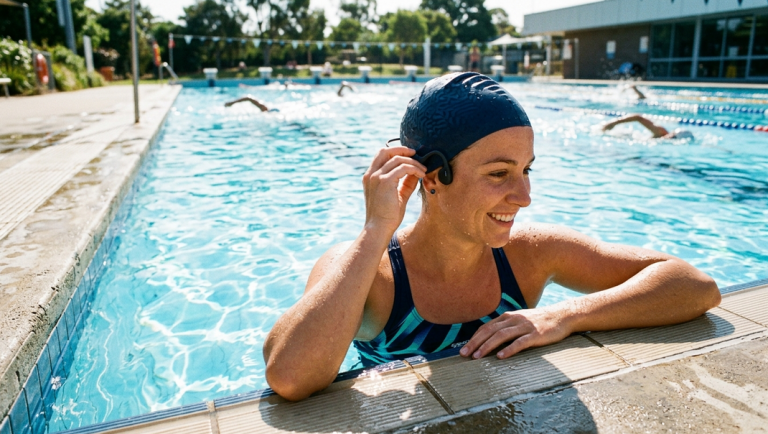
| Swimming | Waterproof MP3 headphones | Tight, low-drag fit | IP68 |
| HIIT | Earhooks or neckband | Minimal movement | IP55 or higher |
Water-resistance ratings need context. IPX4 usually protects against splashes, while IP55 adds dust protection and stronger resistance to water jets. Neither rating means a device is safe for swimming.
Open-Ear, Bone Conduction, or Sealed Earbuds?
Open-Ear Headphones
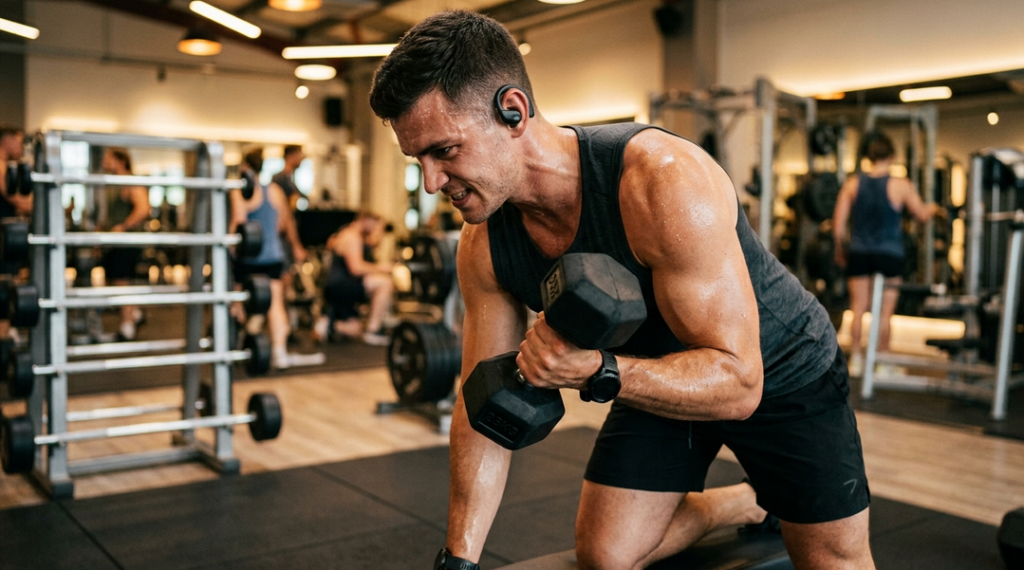
Open-ear headphones place small speakers close to the ear without blocking the ear canal. This lets environmental sounds reach you more naturally.
They work well for runners, cyclists, walkers, and anyone who dislikes the plugged-ear feeling of silicone tips. Many newer models use earhooks or clips to improve stability.
The tradeoff is weaker isolation. Music may sound less powerful in a noisy gym, and nearby people may hear some sound at high volume.
Bone-Conduction Headphones
Bone-conduction models rest against the cheekbones and send vibrations toward the inner ear. Your ear canals remain uncovered.
Their wraparound neckbands are usually secure during running, hiking, and fast-paced workouts. However, the band may interfere with helmets, hats, long hair, or exercises performed on a bench.
Bass is also less forceful than it is with sealed earbuds. Some listeners notice a mild vibration at higher volume levels.
Sealed Workout Earbuds
Traditional in-ear workout earbuds usually offer the strongest bass and noise isolation. Earhook versions add extra support for jumping, sprinting, and rapid direction changes.
These are useful in loud gyms, but they reduce awareness of traffic, voices, and warning sounds. Transparency modes can help, although they still depend on microphones and software.
Three Workout Options Worth Comparing
The following products were verified in the live catalog. Prices can change without notice, and two listings required shoppers to view the amount in the cart when checked.


The first option is designed for people who want open-ear awareness with flexible earhooks and separate left and right earbuds. Its listing specifies IP55 resistance and up to 48 hours of total playtime with the charging case.
The second is better suited to high-impact workouts where secure earhooks and stronger noise control matter. Its listing includes active noise cancellation, heart-rate monitoring, water resistance, and up to 45 hours with the case.
The third uses a clip-on open-ear design. It is a strong match for walking, moderate gym sessions, and all-day use when comfort and awareness are more important than maximum isolation.
How Secure Should Workout Headphones Feel?

A secure fit should prevent movement without creating pressure. Earhooks should sit around the ear rather than pull it backward, while neckbands should leave enough room for head movement.
Test the fit by shaking your head, jogging in place, and bending forward. If the headphones slide during this short test, they will probably move during a harder workout.
Glasses can also change the fit. Thick frames may compete for space with rigid earhooks, while clip-style headphones may press against the arms of your glasses.
Battery Life Is More Than a Marketing Number

The best workout headphones in 2026 often advertise total battery life that includes several recharges from the case. The battery life of the earbuds themselves may be much shorter.
For one-hour daily workouts, six to eight hours per charge is usually enough. Marathon runners, hikers, and travelers should look for longer single-charge battery life rather than relying only on the case total.
Fast charging is also useful. A short charge that provides one or two hours of playback can save a workout when you forget to recharge overnight.
Do Open-Ear Headphones Protect Your Hearing?
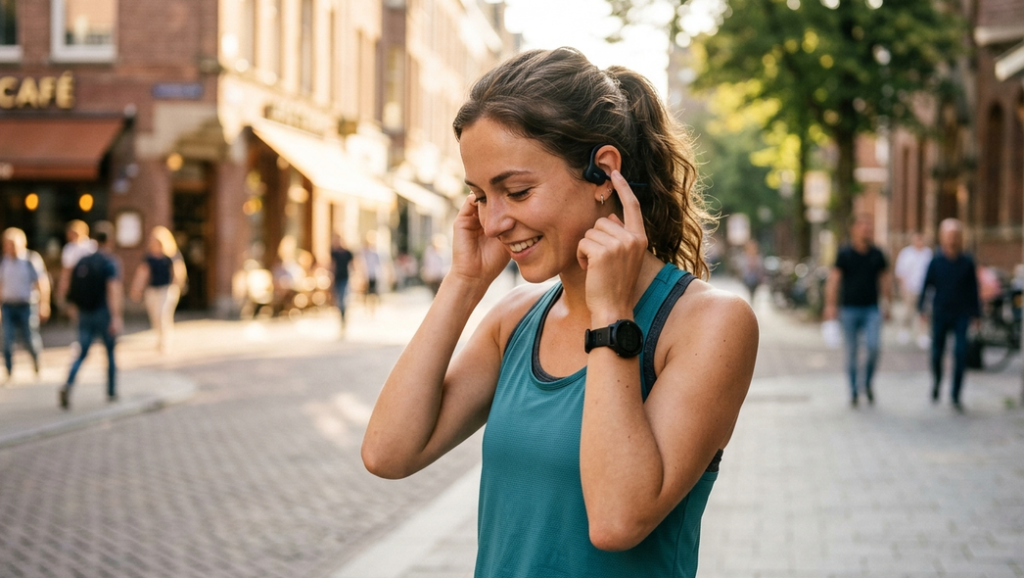
Leaving the ear canal open does not automatically make listening safe. You may raise the volume in traffic, wind, or a loud gym to overcome outside noise.
The World Health Organization recommends keeping personal listening below an average of 80 decibels and limiting volume to no more than about 60 percent of the device’s maximum setting. At 80 decibels, its guidance allows up to 40 hours of listening per week, while safe exposure drops sharply as volume increases.
Lower the volume when possible, take listening breaks, and avoid trying to overpower loud equipment or traffic with louder music.
Are Open-Ear Headphones Good for the Gym?
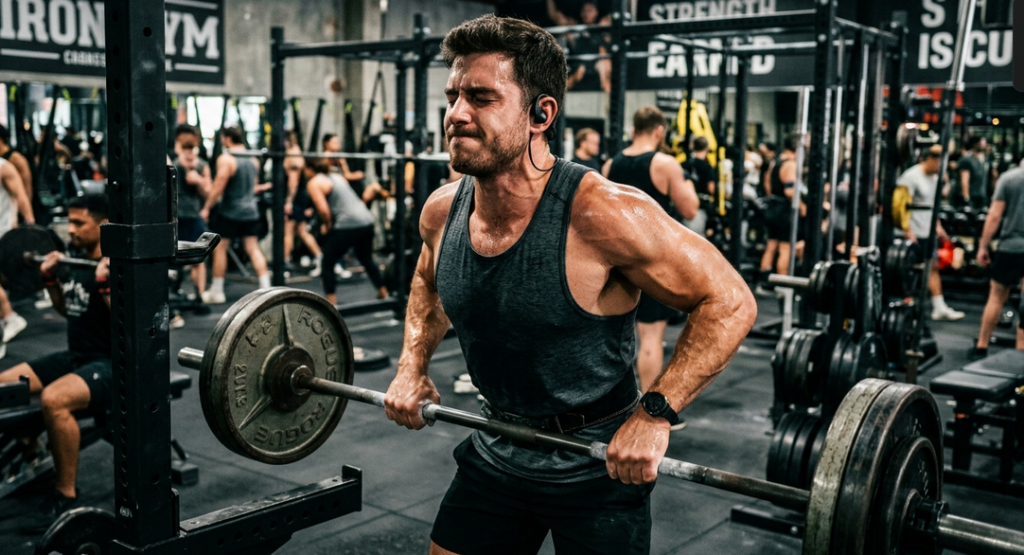
They can be, especially during strength training, walking, and moderate cardio. Their open design helps you hear instructors, training partners, and activity around you.
They are less effective beside loud treadmills, speakers, or weight machines. In those settings, sealed earbuds may produce clearer sound at a lower volume.
For floor exercises, consider where the headphone rests. A wraparound band can press against a bench or mat, while individual earhook models usually create less interference.
Which Headphones Are Best for Running?

The best open-ear workout headphones for running should combine a stable fit, physical controls, sweat resistance, and enough awareness for outdoor routes.
Neckband models tend to move as one unit, reducing the risk of losing an individual earbud. Separate earhook models are more compact and easier to store, but their fit depends more heavily on ear shape.
Runners who train before sunrise or after dark may also benefit from reflective details, although headphones should never replace visible clothing or proper lighting.
Make Your Final Choice
Choose open-ear earbuds for comfort and awareness, a bone-conduction neckband for reliable running stability, or sealed earhook earbuds for stronger bass and gym isolation.
Before buying, check the single-charge battery life, water-resistance rating, control style, and return terms. Then match the design to your hardest workout, not your easiest one.
The best workout headphones in 2026 are not simply the pair with the longest feature list. They are the ones that remain comfortable, secure, and practical from the warm-up through the final set.
The responses below are not provided, commissioned, reviewed, approved, or otherwise endorsed by any financial entity or advertiser. It is not the advertiser’s responsibility to ensure all posts and/or questions are answered.