

Last Updated on: Sep 23, 2026
Carbon monoxide is the hazard you cannot notice on your own. It has no color, no smell, and no taste, and it comes from ordinary things in a home: a furnace, a gas range, a water heater, a fireplace, or a car left running in an attached garage. A carbon monoxide alarm is the only practical way to know it is building up, and it costs less than a tank of gas.
This guide explains where CO comes from, what federal safety guidance says about alarms, the main types to choose from, where to put them, and what to do if one goes off. It ends with a range of popular alarms from current best-seller lists.
Quick Comparison
What We'll Cover
Where carbon monoxide comes from
Any appliance that burns fuel can make carbon monoxide. According to the U.S. Consumer Product Safety Commission, more than 200 people in the United States die on average every year from CO produced by non-automotive consumer products. The list includes malfunctioning furnaces, ranges, water heaters, and room heaters, engine-powered equipment such as portable generators, and fireplaces.
The CPSC warns never to run a portable generator or any other gasoline engine-powered tool in or near an enclosed space such as a garage or house, even with doors and windows open, because those spaces can trap CO and let it quickly build to lethal levels. It also advises having your heating system professionally inspected and serviced every year, and never running unvented fuel-burning appliances in a room where people are sleeping.

Symptoms to know
Because people cannot sense CO, they may not realize they are being exposed. The CPSC says the early symptoms of low to moderate CO poisoning are similar to the flu, but without the fever. They include headache, fatigue, shortness of breath, nausea, and dizziness. Higher levels cause mental confusion, vomiting, loss of muscle coordination, loss of consciousness, and ultimately death.
The agency notes that people and even doctors can mistake mild CO poisoning for the flu, sometimes with tragic results.
What federal guidance says about alarms
The CPSC recommends installing a CO alarm that meets the current UL 2034 safety standard. Its guidance on placement is simple:
- Install battery-operated CO alarms, or alarms with battery backup, on every level of the home and outside sleeping areas.
- Interconnected alarms are best, because when one sounds, they all sound.
- CO alarms can go in a plug-in outlet or high on the wall. Hard-wired and plug-in alarms should have battery backup.
- Test alarms monthly and replace batteries every year.
- Follow the maker's instructions for installation, testing, and replacement.
The CPSC also points out that an alarm adds protection but is no substitute for proper use and upkeep of the appliances that can produce CO.
Types of CO alarms
Plug-in
Plug-in alarms go straight into a standard outlet and usually have battery backup so they keep working in a power outage. They are easy to move and set up, but outlets are often low on the wall, which is fine for CO. Choose one with a battery backup, as the CPSC advises.
Battery-powered
Battery alarms can go anywhere: on a wall, a shelf, or a tabletop. Some use replaceable AA batteries, and others have a sealed battery designed to last the life of the alarm, often around 10 years. Sealed models mean no low-battery chirps and no yearly battery swaps, but the whole alarm is replaced at the end.
Combination smoke and CO
Combo alarms detect both smoke and carbon monoxide in one unit, which saves ceiling space and means fewer devices to test. They should list both UL 217, the smoke alarm standard, and UL 2034. Keep in mind that the CPSC calls for smoke alarms on every level, outside sleeping areas, and inside each bedroom, so you may need more smoke alarms than CO alarms.
Digital display
Some alarms show the current CO level in parts per million and store the peak reading. That can help a technician or firefighter understand what happened, and it can show low levels that are below the alarm point.
Where not to put one
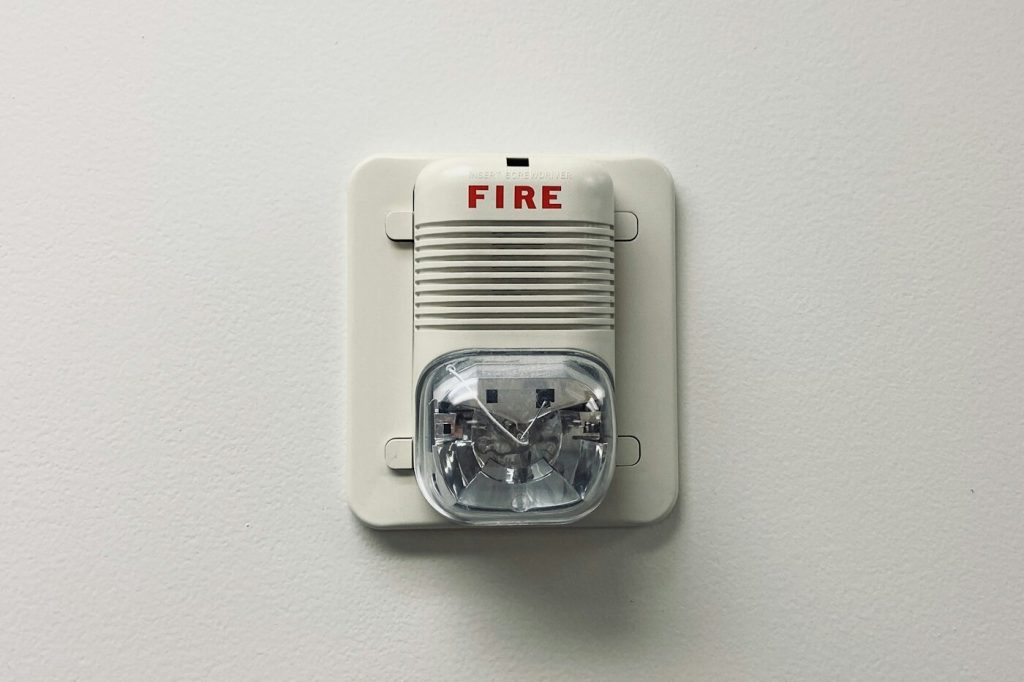
Placement matters as much as the number of alarms. Most makers' manuals advise keeping CO alarms away from spots where readings can be thrown off or the alarm can be damaged: right next to a furnace or water heater, in very humid bathrooms, near vents or fans that blow air across the sensor, in direct sunlight, and behind curtains or furniture that block airflow. Check your model's manual for exact distances, since they vary. In a garage, attic, or other unheated space, confirm the alarm is rated for the temperature range it will face.
Testing and replacing
Press the test button monthly. The CPSC notes that the test button checks whether the circuitry works, not the accuracy of the sensor. That is one reason alarms have a recommended replacement age, which you can find in the manual. Newer alarms have an end-of-life signal that tells you when the unit needs to be replaced. Write the install date on the back of each alarm so you know when it is due.
What to do if the alarm sounds
The CPSC says never ignore a CO alarm. Its steps are clear:
- Move outside to fresh air right away.
- Call emergency services, the fire department, or 911.
- Do a head count to make sure everyone is out, and do not go back inside until responders say it is safe.
- If a malfunctioning appliance was the source, do not use it again until trained personnel have serviced it.
If you have symptoms and no alarm, or the alarm is not sounding, the agency still advises getting to fresh air immediately, calling the fire department from outside or a neighbor's home, and contacting a doctor.
CO alarms worth a look
These picks come from current best-seller lists and top search results for carbon monoxide detectors. Features are from the makers, and we checked that listings name the UL standards where noted.
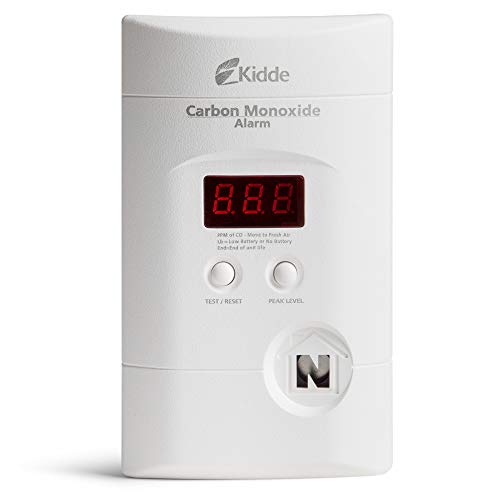
Easy Installation - simply plug-in to a standard, 120V outlet in your home
9-volt battery backup provides protection during a power outage
Digital LED display shows the level of carbon monoxide the...
Kidde's plug-in alarm with a digital display is a long-running top seller. It plugs into a standard outlet, has a 9-volt battery backup, shows the CO level on screen, and stores the peak reading.
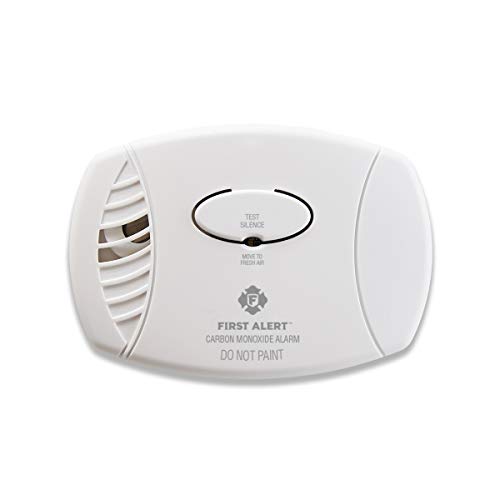
Keep your family safe with this easy to use plug in carbon monoxide alarm; It works with any standard outlet and also has a battery backup for continuous monitoring of Carbon Monoxide levels, even ...
First Alert's CO605 is a simple plug-in alarm with battery backup, an electrochemical sensor, and one test and silence button.
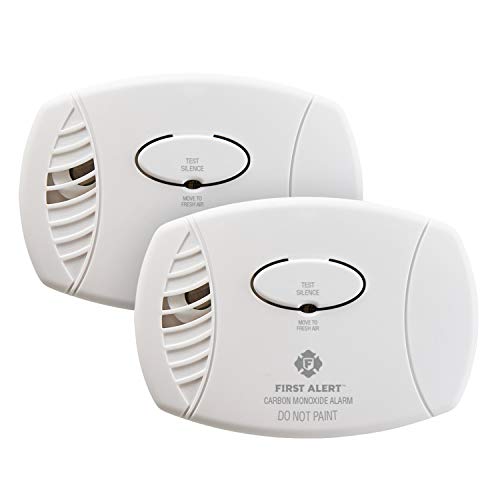
Keep your family safe with this 2-pack of easy to use, battery operated carbon monoxide alarms; Battery powered alarms provide continuous monitoring of CO levels, even if there's a power failure
Fe...
First Alert's CO400 is a battery-powered alarm that can go on any wall. The listing describes it as UL listed, and the maker recommends placing one on each level of the home.
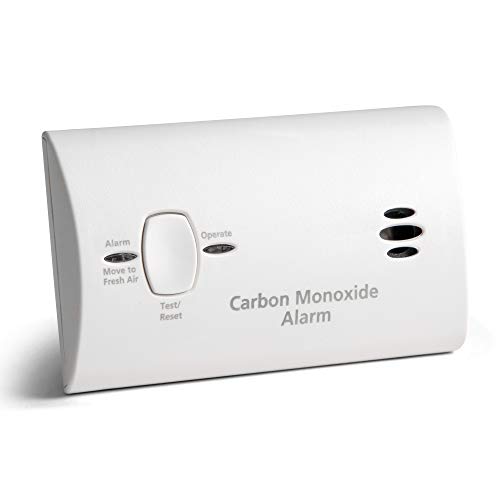
Electrochemical sensor technology detects CO gas
Easy installation, no wiring needed, detects during a power failure by operating on 2-AA batteries (included); Install on a wall of your home or pla...
Kidde's AA battery alarm meets UL 2034 according to the listing. It can mount on a wall or sit on a table, and its event memory records the last time CO was detected.
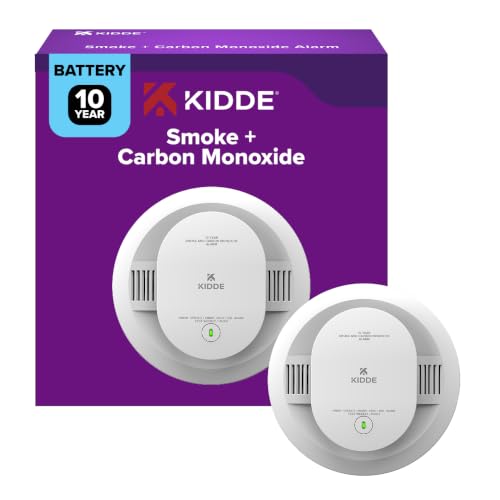
2-in-1 DETECTION: Model 30CUD10 detects both smoke and carbon monoxide with advanced sensing technology engineered with over 25% faster smoke detection*; features a red LED light for clear visual n...
Kidde's 30CUD10 is a combination smoke and CO alarm with a built-in 10-year battery, so there are no low-battery chirps. The listing names both UL 217 and UL 2034.
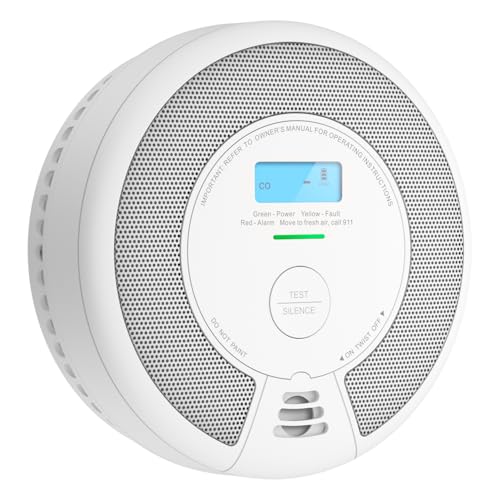
Please Note: The SC07 is a basic standalone unit. It does not support wireless interconnection, Wi-Fi, or base station connection; for wireless interconnection, search for SC07-W
10-Year Protection...
X-Sense's SC07 combo alarm pairs a photoelectric smoke sensor with an electrochemical CO sensor and a sealed 10-year battery. It is a standalone unit, and the maker sells a separate model for wireless interconnection.
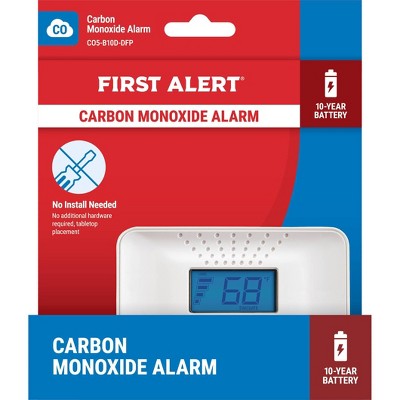
At Target, First Alert's CO710 has a built-in 10-year lithium battery, a backlit display that shows temperature and CO concentration, and a peak level feature.
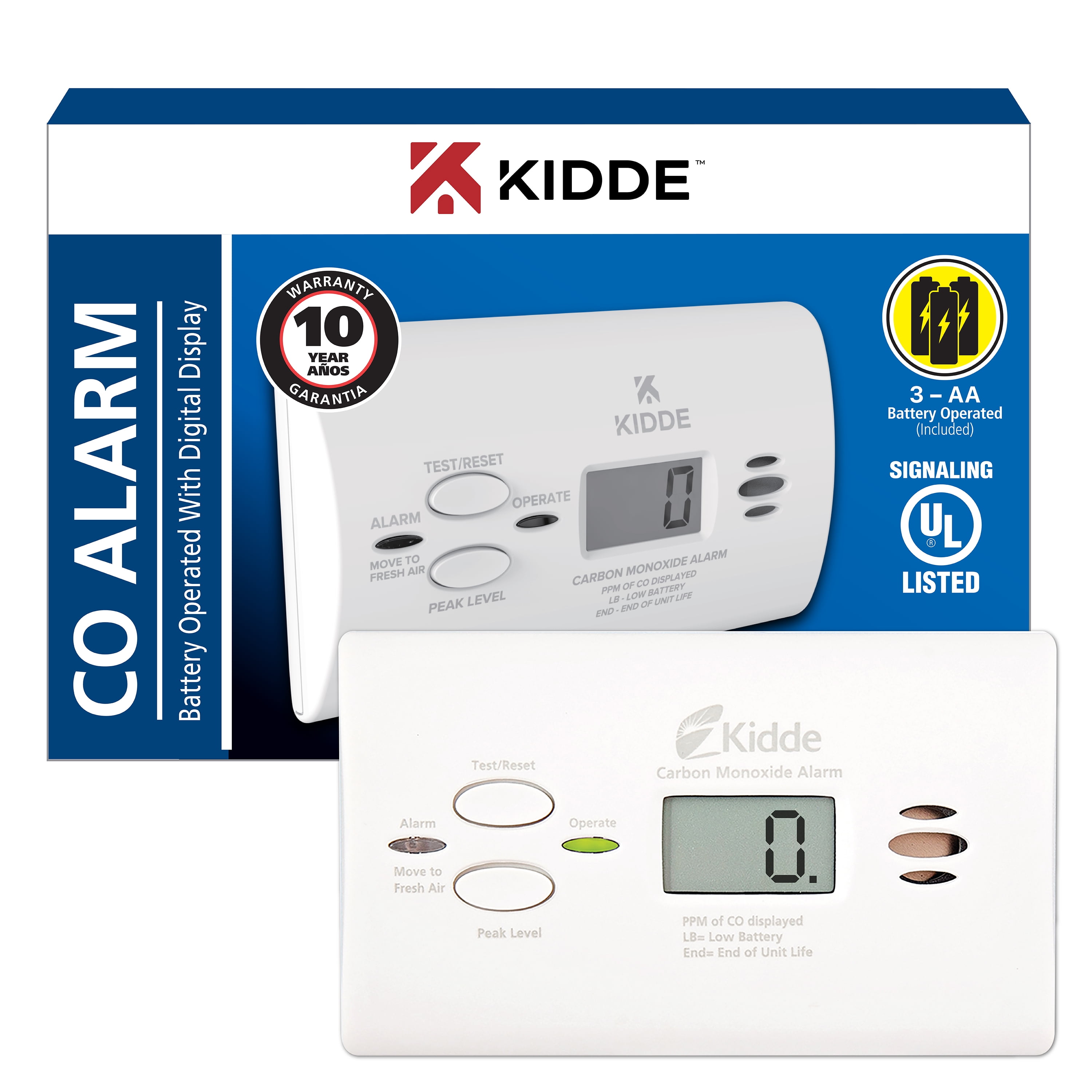
Walmart sells Kidde's battery-operated CO alarm with a digital display, the KN-COPP-B-LPM. It needs no outlet, so it can go on a wall or shelf near bedrooms, and the display shows a reading in parts per million when CO is detected.
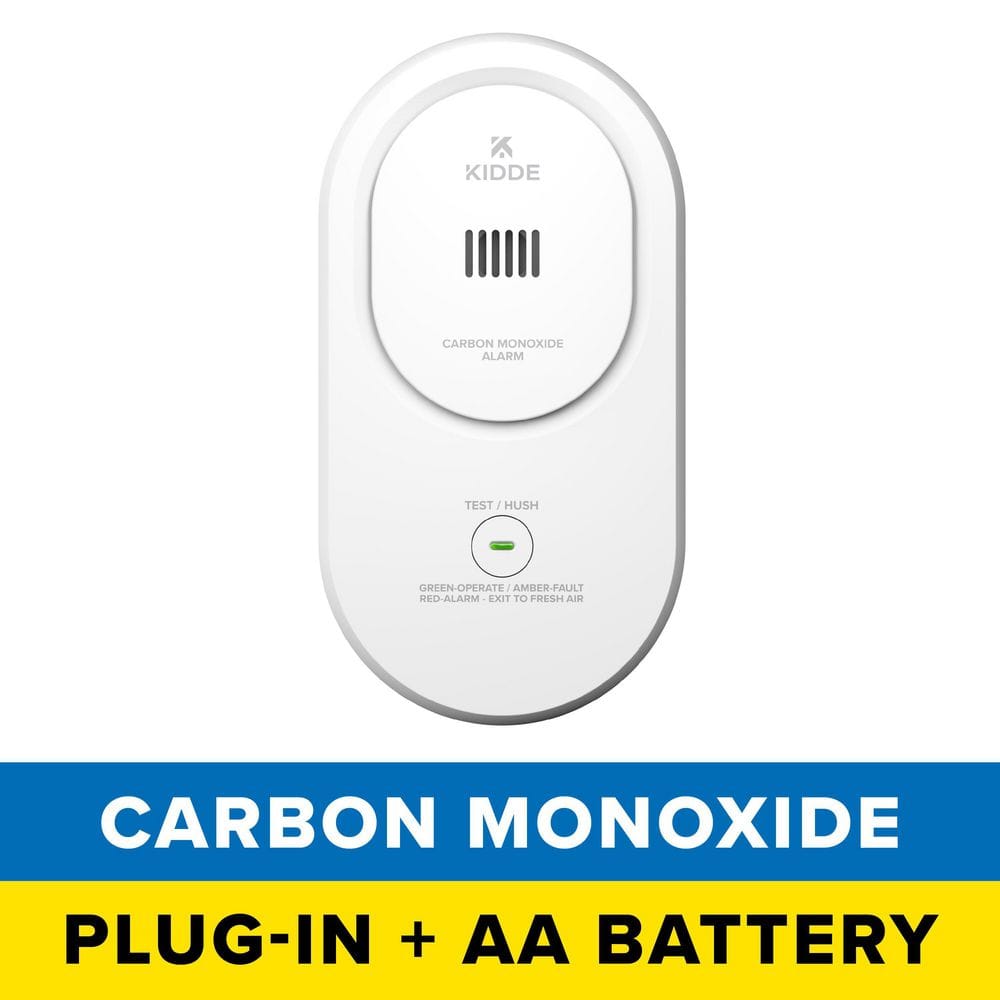
At Home Depot, Kidde's plug-in CO detector has AA battery backup and a rotating plug, so it can sit on an outlet in either direction without blocking the second socket, and it keeps working if the power goes out.
Which one to choose
Start with the CPSC's baseline: at least one UL 2034 alarm on every level of the home and one outside each sleeping area. Plug-in models with battery backup are an easy fit for hallways with outlets. Sealed 10-year battery models suit spots where you do not want to climb up for battery changes. If you are replacing old smoke alarms anyway, combo units can cover both jobs, as long as you still have smoke alarms in every bedroom.
Then test monthly, replace the whole unit when it reaches the end of its life, and have fuel-burning appliances checked every year. It is a small amount of effort for protection against something you would never notice otherwise.
The responses below are not provided, commissioned, reviewed, approved, or otherwise endorsed by any financial entity or advertiser. It is not the advertiser’s responsibility to ensure all posts and/or questions are answered.