Most of the hotel nights Americans buy are not in a lobby with a chandelier. They are in a place with a free breakfast, a decent desk, a pool that closes at ten and a parking lot full of rental cars. That middle of the market is where Marriott makes much of its volume and where its rivals fight hardest. Courtyard and Fairfield are the two flags most travelers will meet first. SpringHill Suites sits close behind. On the other side are Hampton by Hilton, Hilton Garden Inn, Hyatt Place and Holiday Inn Express.

I wanted to see how these brands compare using the best independent data available and the companies' own numbers. The headline from J.D. Power's 2025 hotel satisfaction study is not flattering to Marriott. In both of the segments where its big select-service brands compete, a Hilton brand beat them. But the details are more interesting than the headline, and one of them might change which hotel you book next time.
Two tiers, two different fights
J.D. Power sorts hotels into price tiers, and the tier matters a lot for how you read the scores. Courtyard, Hilton Garden Inn and Hyatt Place are in the upscale tier. Fairfield, Hampton and Holiday Inn Express are upper midscale, a level below. Comparing a Courtyard with a Hampton is common because the room rates in many towns overlap, but they are not formally measured in the same group. The study covered 102 brands and 39,219 guests, and scores are out of 1,000. J.D. Power redesigned the study this year, so these are only comparable with each other.
| Rank in tier | Brand | Parent | Score |
|---|---|---|---|
| 4 | Hilton Garden Inn | Hilton | 701 |
| 5 | Delta Hotels by Marriott | Marriott | 699 |
| 6 | AC Hotels by Marriott | Marriott | 693 |
| 7 | Aloft Hotels | Marriott | 687 |
| 8 | Element | Marriott | 686 |
| 10 | Courtyard by Marriott | Marriott | 681 |
| 13 | Hyatt Place | Hyatt | 676 |
| 17 | SpringHill Suites | Marriott | 661 |
| 18 | Four Points by Sheraton | Marriott | 651 |
The tier winner is Drury Hotels at 738, with Best Western Premier second at 713 and Cambria third at 703. Marriott's best-scoring upscale brand is Delta Hotels at 699, ranked fifth, followed by AC Hotels at 693. The largest, Courtyard, finished tenth with 681. Hilton Garden Inn beat it by 20 points. Hyatt Place, at 676, finished five points behind Courtyard, so the two are effectively level.
Courtyard: the biggest, and not the loudest
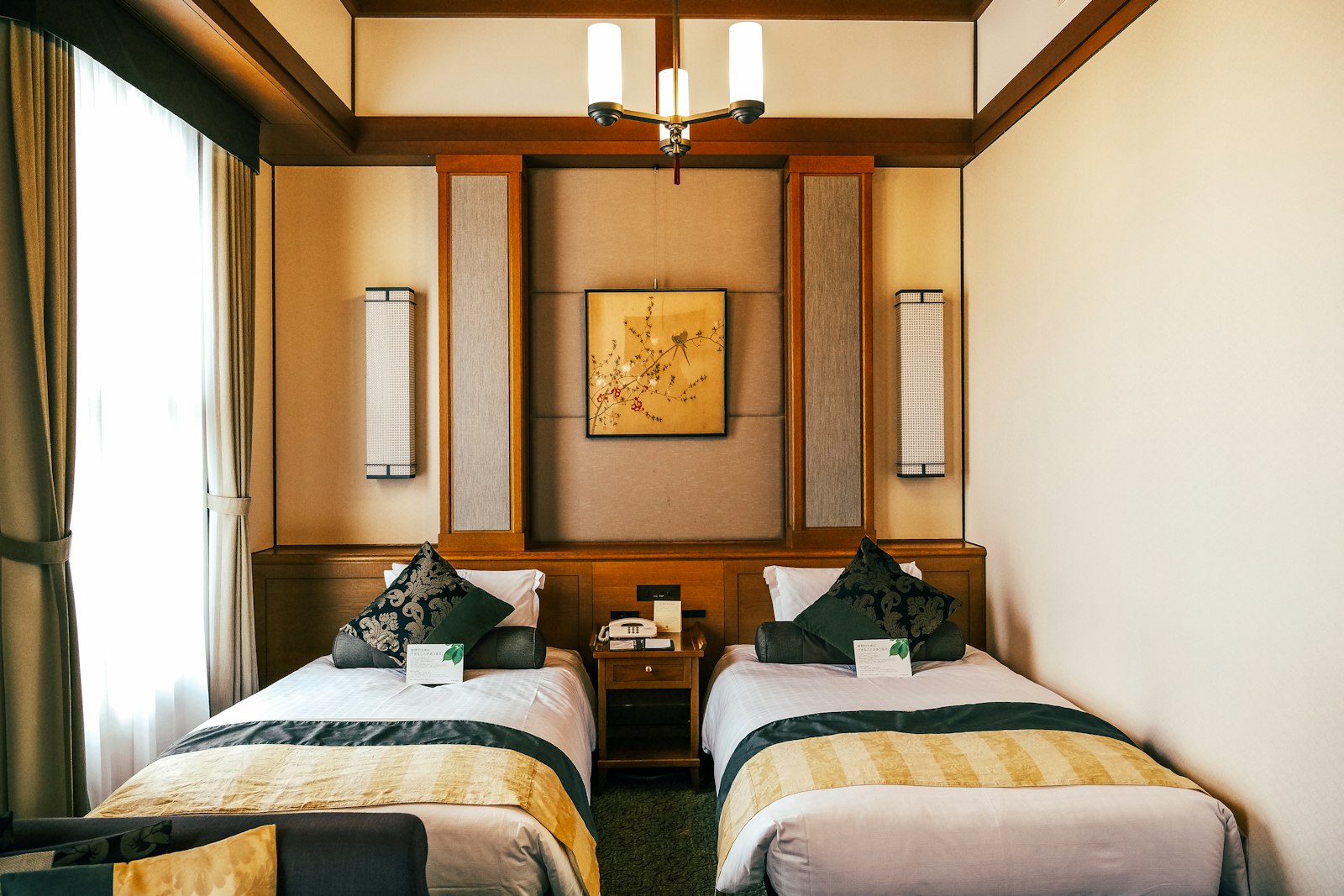
Hotel.Report counts 1,341 Courtyard hotels and 202,180 rooms, which makes it second only to the flagship Marriott Hotels brand by room count in that tally, and about 151 rooms per hotel. Skift, quoted in that article, describes it as a no-frills hotel designed for road warriors that does not have the strongest brand identity, but adds that with more than 300 additional hotels since 2015 it is unlikely Marriott is worried. I think that is the right way to think about Courtyard. It is a product people book because it is nearby, predictable and attached to the Bonvoy program.
The brand did take a visible step to add personality. In 2018 it rolled out its Bistro Bar concept across more than 900 U.S. properties, which turned part of the lobby into a bar and cafe space for guests. Lodging Magazine reported the launch date as March 1, 2018, and Marriott's own news site described the larger plan as a brand evolution for its North American portfolio. A hotel that has been through that renovation is quite different from one that has not, which brings me to the main complication with all of these scores: brands are averages of hundreds of hotels at different stages of life.
Fairfield: the quiet performer
Fairfield by Marriott is nearly as big as Courtyard by hotel count, at 1,331 hotels, but the rooms are fewer, 134,250, or about 101 per hotel. It is Marriott's main upper-midscale answer to Hampton, and it came second in its tier at 678, 16 points behind Hampton and 11 ahead of Holiday Inn Express. Skift notes that it sits below Residence Inn's price point and suggests it could be positioned as the voice of middle America and of parents traveling with families.
That ranking is better than it looks. Of the twelve brands in the upper midscale list Forbes reported, Fairfield is second, and the field falls away quickly after the top three: Best Western Plus scored 665, Holiday Inn 653, and Comfort Inn and La Quinta finished at 631 and 625. The most reliable conclusion is that Fairfield is one of the better Marriott results in this study, even though it gets little attention.
| Rank in tier | Brand | Parent | Score |
|---|---|---|---|
| 1 | Hampton by Hilton | Hilton | 694 |
| 2 | Fairfield by Marriott | Marriott | 678 |
| 3 | Holiday Inn Express | IHG | 667 |
| 4 | Best Western Plus | Best Western | 665 |
| 5 | Holiday Inn | IHG | 653 |
Hampton: the benchmark
Hampton by Hilton is the brand every other midscale brand measures itself against. Hilton's own fact sheet, dated 2024, lists more than 3,190 hotels and more than 357,000 rooms. The company highlights a free hot breakfast and the signature waffle. The brand has more than twice as many hotels as Courtyard or Fairfield, and it still tops its tier. That combination is rare. Usually, a brand that grows quickly sees its average slip, because new franchisees and older properties pull the numbers apart. Hampton's lead says something about how tightly Hilton manages a simple product.
If I were comparing it with Fairfield, I would say that Hampton is the safer bet in an unfamiliar town, and Fairfield is a strong alternative when it is the newer hotel. The 16-point gap is large enough to be meaningful but not so large that the brand name should override local reviews.
SpringHill Suites: the one Skift flagged
SpringHill Suites is a more interesting case. Hotel.Report counts 563 hotels and 66,666 rooms, about 118 rooms per hotel, and Marriott's own wording calls it the largest all-suites upscale brand. Skift says it has historically performed well and ranks unusually high with consumers on J.D. Power's annual list. The 2025 data does not show that: at 661, SpringHill was seventeenth of nineteen in the upscale tier, 20 points behind Courtyard.
That is a useful correction to a claim that was made in a trade-press summary. Whatever the brand's earlier record, the current study does not support calling SpringHill a standout. I would still consider it for a family trip because of the larger rooms, but I would read recent reviews for the specific property first.

The smaller Marriott brands people overlook
Marriott's upscale tier is crowded with brands that most travelers cannot tell apart. The study puts AC Hotels at 693, Aloft at 687 and Element at 686, all within seven points of each other and all ahead of Courtyard. Four Points by Sheraton, at 651, is the lowest Marriott brand in that tier and 87 points behind Drury. Hotel.Report counts 244 AC Hotels and 332 Four Points. The pattern is that Marriott's more distinctive, design-led brands score a little better than its largest workhorse, which suggests guests reward a hotel that feels like it has a point of view. Marriott's management seems to agree. Its 2025 results highlighted the launch of Series by Marriott and the addition of citizenM, which brought 37 hotels into the system during the year.
The difference between brands also shows up in what you pay for. Courtyard, Hilton Garden Inn and Hyatt Place usually charge more than Fairfield, Hampton and Holiday Inn Express, which is why the two tiers exist. In practice, though, a hotel that is a year old can beat a decade-old hotel in the next tier up, so a comparison of room rates for your specific dates is worth five minutes.
What a Marriott guest gets that others do not
The strongest argument for Marriott's mid-tier brands has little to do with the rooms. It is the program. Marriott reported about 271 million Bonvoy members at the end of 2025 (results released February 10, 2026) and said member stays made up 75 percent of room nights in the U.S. and Canada. A program that large has leverage: more partner offers, more credit card perks and more hotels where your points work. Marriott's own published earn rate is 10 points per dollar at most brands. Hilton's is also 10 points per dollar base, with Gold members getting an 80 percent bonus and Diamond members 100 percent, and, for Silver, Gold and Diamond members, every fifth night free on a standard-room reward stay of five or more consecutive nights, per Hilton's help center.
Value per point is where the programs differ. The Points Guy's November 2026 monthly valuations, published November 2, put Marriott points at 0.75 cents each, Hilton at 0.4, Hyatt at 1.65 and IHG at 0.6. Those are estimates, not cash or guaranteed redemption values. On those numbers a point earned at a Courtyard is worth more than a point earned at a Hampton, but a Hampton gives you a higher chance of a satisfying stay. Which one matters depends on whether you are trying to redeem points on weekends or trying to get through a weeknight in a hurry.
My picks, based on this data
For a quick overnight stop where you do not know the town, Hampton by Hilton is the pick the data supports. If a Fairfield is a few dollars cheaper or you have Marriott status, it is a respectable second choice, and the 678 score backs that up. For a longer trip with more business needs, Courtyard is fine, and Hilton Garden Inn is the stronger rated alternative. I would not pay a premium for the SpringHill name based on the latest scores, though the all-suites layout is still useful for families. And if the closest option is a Delta or an AC Hotel, those 699 and 693 scores are the best numbers Marriott posted in the upscale tier, though both brands are much smaller than Courtyard.
The rate that matters is the one you pay
Brand scores and program perks are only half of the decision. The other half is the price you actually pay on the nights you want. Select-service hotels are the most price-sensitive part of the market, because a traveler can usually find three or four brands within a mile of each other at an exit. When a Courtyard, a Hampton and a Fairfield all sit near the same highway interchange, the better-reviewed hotel at a slightly higher rate is often worth it, particularly if breakfast is included and you would otherwise spend $12 to $15 on food. Marriott's Fairfield and Hilton's Hampton both aim at this traveler, and the gap between them in J.D. Power's study, 16 points, is a reasonable tiebreaker when everything else is equal.
A quick way to compare two hotels in the same town
Open both hotels' pages on their own brand sites and check four things. First, the year of the last renovation, which hotels often mention under the photos or in reviews. Second, whether breakfast is included, since Hampton publishes a free hot breakfast as part of the brand and other brands vary by location. Third, whether the pool is indoors, which matters in winter, and the hours. Fourth, the parking fee, which in some cities exceeds the difference between the two room rates. None of this is in a brand score, and all of it affects whether you leave the hotel happy.
One more practical point is about timing. Select-service hotels price dynamically, and the cheaper brand on a Tuesday can be the pricier one on a Friday when a local event fills the area. Looking at the same two hotels across a couple of dates gives you a better sense of which brand is truly cheaper in that market than a single quote does. If you are a Bonvoy or Honors member, remember that member rates are sometimes lower than the public rate, and that booking direct is how you collect points and status credit.
It also helps to remember that none of these brands is a single product. A Hampton built in 2023 and a Hampton built in 2003 share a logo and a waffle machine, and little else. Hilton and Marriott both run renovation cycles, and a hotel just after a refresh will often feel a full tier above its brand average. When two hotels are close in price, I would pick the one with the more recent renovation date every time.
Reading these numbers with care
Everything in this article rests on brand averages. J.D. Power itself reports that when a problem happens during a stay, guest satisfaction falls by 217 points, from 677 to 460, and that only 12 percent of stays involve one. That means the difference between a good and a bad stay is mostly about whether something goes wrong, which is a property-level result. A newly renovated Courtyard with an attentive manager will beat a tired Hampton. The brand score gives you a prior, and the specific hotel's last few months of reviews should update it.
Sources: J.D. Power 2025 North America Hotel Guest Satisfaction Index Study; Forbes, "The Best Hotel Chains For 2025, According To A New Report"; Hotel.Report, "Every One of Marriott's Hotel Brands, Explained"; Hilton's Hampton by Hilton fact sheet; Lodging Magazine on the Courtyard Bistro Bar rollout; Marriott International full-year 2025 results; hilton.com Honors benefits; The Points Guy monthly valuations, November 2026.
The responses below are not provided, commissioned, reviewed, approved, or otherwise endorsed by any financial entity or advertiser. It is not the advertiser’s responsibility to ensure all posts and/or questions are answered.