Luxury hotel brands sell the same promise in different accents: attentive people, beautiful rooms, and the sense that someone thought about your stay before you arrived. What they cannot do is hide behind the promise once guests start filling in surveys. Every year J.D. Power asks tens of thousands of travelers how their stays went, and the 2025 results put the best-known luxury names on one scoreboard. The Ritz-Carlton finished first. Waldorf Astoria, owned by Hilton, finished a close second. Marriott's other luxury flags, The Luxury Collection and JW Marriott, took third and fourth. Four Seasons sat fifth, tied with InterContinental.

That is a useful snapshot, but it is not the whole story, and I want to read it carefully rather than just repeat the podium. This guide compares the luxury brands Marriott owns with the rivals people most often weigh them against, using guest-satisfaction scores, the size of each portfolio, and what the companies themselves say they are building. I will also tell you where I think the numbers stop being useful, because a six-point gap on a thousand-point scale does not mean what a headline suggests.
What the J.D. Power numbers actually measure
The 2025 North America Hotel Guest Satisfaction Index Study covers 102 brands across nine segments, from luxury down to economy extended stay. It draws on responses from 39,219 guests who stayed in branded hotels between May 2024 and May 2025, and it scores each brand out of 1,000. Seven areas feed the score: check-in and check-out, connectivity, facilities, food and beverage, the guest room, staff service, and value. J.D. Power redesigned the study for 2025, so these scores cannot be compared with last year's, and I will not try to do that here.
Two findings from the study matter for anyone choosing a luxury hotel. First, problems are rare but expensive. Only 12 percent of stays across the study involved a problem, such as a noise complaint, a housekeeping miss or a check-in dispute, but when one happened, satisfaction fell 217 points, from 677 to 460. A luxury brand is really a promise about how it handles the 12 percent. Second, guests who had the hotel brand's mobile app on their phones scored their stays 68 points higher, at 699, than guests who did not. J.D. Power also reported that the average daily rate for a U.S. hotel room hit a record $158.67 in 2024, according to CoStar and STR, yet guests in every segment said they felt they were getting better value than before.
The luxury ranking itself, as reported by Forbes from the J.D. Power release, looks like this.
| Rank | Brand | Parent | Score |
|---|---|---|---|
| 1 | The Ritz-Carlton | Marriott | 779 |
| 2 | Waldorf Astoria | Hilton | 773 |
| 3 | The Luxury Collection | Marriott | 757 |
| 4 | JW Marriott | Marriott | 746 |
| 5 (tie) | Four Seasons | Four Seasons | 740 |
| 5 (tie) | InterContinental Hotels and Resorts | IHG | 740 |
| 7 | Loews Hotels | Loews | 730 |
| 8 | Grand Hyatt | Hyatt | 722 |
| 9 | W Hotels | Marriott | 716 |
| 11 | Conrad Hotels and Resorts | Hilton | 705 |
| 12 | Fairmont | Accor | 692 |
Rank 10 in the Forbes list is Destination by Hyatt, but the score printed in that article is cut off, so I have left it out of the table. St. Regis, another Marriott luxury flag, does not appear in the twelve-brand ranking Forbes published, so I cannot tell you how guests scored it in this study.
The Ritz-Carlton: 779, and the one brand that earns its reputation on paper
The Ritz-Carlton won the luxury segment, and the margin over the field is bigger than the margin at the very top. It leads Waldorf Astoria by six points, but it leads JW Marriott by 33 and Fairmont, at the bottom of the list, by 87. In other words, the Ritz-Carlton did not squeak past one rival. It sat clear of most of the field. Forbes noted that the top three brands were the same as last year, only in a different order, which tells me this is not a one-year fluke but a pattern.
The brand is not small. The hotel industry publication Hotel.Report, citing year-end 2024 figures, puts the Ritz-Carlton at 123 hotels and 32,082 rooms, and the brand has stretched into two extensions: Ritz-Carlton Reserve, a collection of secluded estates, and The Ritz-Carlton Yacht Collection. Skift's assessment in that piece is that the brand's challenge is shedding a reputation for old-fashioned luxury and coming across as modern and relevant. The survey result suggests guests inside the hotels are not bothered. If you are choosing a luxury stay mainly on service, the data points to the Ritz-Carlton as the safest bet in this group.
Waldorf Astoria: the rival that is closer than the logo suggests
Hilton does not get as much credit as Marriott in conversations about luxury, but Waldorf Astoria's 773 is a serious number. Six points behind the Ritz-Carlton and sixteen ahead of JW Marriott, it beats The Luxury Collection, JW Marriott and W Hotels, three Marriott brands, in the study. Hilton describes the portfolio as 40 hotels in 22 countries and territories with 9,896 rooms, plus 39 more hotels in development, according to the company's own fact sheet. It points to a food and beverage program that includes Michelin-starred restaurants.
The comparison with the Ritz-Carlton is easy to make and easy to get wrong. The Waldorf Astoria is a much smaller brand, so its score reflects fewer properties and probably a more selective set of hotels. A guest who books one in a well-known city is likely getting something closer to what the survey measured than a guest who books the brand's newest openings. I would treat Waldorf Astoria as the best non-Marriott luxury alternative in North America, and the one I would check first before paying for a Ritz-Carlton when both are available at the destination.
The Luxury Collection and JW Marriott: two different jobs
The Luxury Collection took third at 757 and was the winner last year. Marriott runs it as a standalone brand rather than folding it into Autograph Collection, which Skift reads as a decision to keep it at a higher average price point. The portfolio is about 120 hotels and 28,578 rooms, and many of the properties are landmarks, such as The Royal Hawaiian in Honolulu. These are individual hotels with local character, so the brand name tells you less about the experience than the name of the specific hotel does. That is also why the brand score is worth less than a single property's reviews.
JW Marriott is a different animal. At 126 hotels and 49,979 rooms it is the largest luxury brand Marriott operates, with an average of roughly 400 rooms per hotel. Skift points out that JW Marriott is relevant for both leisure and business travelers, is popular for meetings and events, and sits below the Ritz-Carlton on price, which makes luxury more accessible. The 746 it scored is 33 points below the Ritz-Carlton, and I read that as the price of size. A hotel with a ballroom and a convention calendar will have more moving parts than a smaller resort, and guest scores tend to show it. If you are traveling for a wedding or a conference, JW Marriott is built for that. If you want to be left alone by the sea, it is probably not the first brand I would pick from this list.
St. Regis, W, Edition and Bulgari: the rest of the Marriott luxury set
Hotel.Report counts 63 St. Regis hotels with 13,467 rooms, which works out to roughly 214 rooms per hotel, the smallest average among Marriott's big luxury flags. Skift's take is that the brand's future depends on balancing expansion with consistency and using technology to personalize service. I would add that a brand that small has the most to lose from a bad hotel, which may be why Marriott has expanded it carefully.
W Hotels, at 73 hotels and 21,453 rooms, scored 716 and landed ninth. Skift notes that Starwood built its name on W and that Marriott made a bold choice to keep it after the acquisition. In a luxury survey W is playing a different game, because it is lifestyle luxury aimed at guests who want energy and design rather than formality. The lower score is probably as much a statement about fit as about quality. Edition, with 20 hotels, and Bulgari, with nine hotels and 811 rooms, are small enough that I would ignore brand-level averages entirely. Marriott's own luxury story right now is momentum. In its fourth-quarter 2025 results the company said luxury RevPAR rose more than 6 percent worldwide and that luxury continued to outperform, with performance moderating down the chain scales.
Four Seasons and the rest of the field
Four Seasons scored 740, tied for fifth with InterContinental. In a February 2026 company release it describes 135 hotels and resorts and 61 residences in 47 countries. It is a pure luxury company with no midscale brands to dilute the average, and a score of 740 puts it 39 points behind the Ritz-Carlton. That is a noticeable gap for a brand with a reputation as the service benchmark. My reading is that Four Seasons does not lose to the Ritz-Carlton so much as the Ritz-Carlton had an unusually strong year in this study.
Grand Hyatt came in eighth at 722, Conrad ranked eleventh at 705, and Fairmont closed the list at 692. Loews, at 730, is the surprise: a smaller independent company in seventh place ahead of Grand Hyatt and W. That should be a reminder that a bigger loyalty program does not buy a better hotel stay.
Size matters more than most guests realize
One thing the guest-score table hides is how different these brands are in scale. Using the rooms and hotels counts quoted above, I calculated the average number of rooms per hotel. The Marriott figures are from year-end 2024. The Waldorf Astoria numbers come from Hilton's fact sheet, which is not dated the same way, so treat the comparison as approximate.
| Brand | Hotels | Rooms | Rooms per hotel (approx.) |
|---|---|---|---|
| JW Marriott | 126 | 49,979 | 397 |
| W Hotels | 73 | 21,453 | 294 |
| The Ritz-Carlton | 123 | 32,082 | 261 |
| Waldorf Astoria | 40 | 9,896 | 247 |
| The Luxury Collection | 120 | 28,578 | 238 |
| St. Regis | 63 | 13,467 | 214 |
The pattern is not perfect, but it is suggestive. The brand with the biggest hotels, JW Marriott, scored lowest among Marriott's top three luxury flags. The Ritz-Carlton, at about 261 rooms per hotel, pairs size with the highest score, so scale alone does not explain everything. What the table does tell you is that a St. Regis or a Luxury Collection hotel is more likely to feel intimate than a JW Marriott, and that is a more practical question than a ranking.
How I would choose
If I were booking a luxury stay where service is the whole point, I would start with the Ritz-Carlton and check Waldorf Astoria as the one real alternative. The scores say they are close, and the Waldorf Astoria's smaller footprint means fewer chances for an uneven hotel. For a destination hotel with a strong local identity, I would look at The Luxury Collection and read reviews of the specific property, since the brand is a collection of individual hotels. For meetings, weddings and large groups, JW Marriott is designed for the job. Four Seasons remains a strong choice, but this year's data does not support paying a premium for the name alone.
One more thing would tip my decision: the loyalty program. Marriott reported nearly 271 million Bonvoy members at the end of 2025, and said members accounted for 75 percent of room nights in the U.S. and Canada. That scale is a benefit if you want upgrades and points on a luxury stay, but it also means elite guests compete for the same suite upgrades. If you rarely stay at luxury hotels, the points matter less than the service on the day.
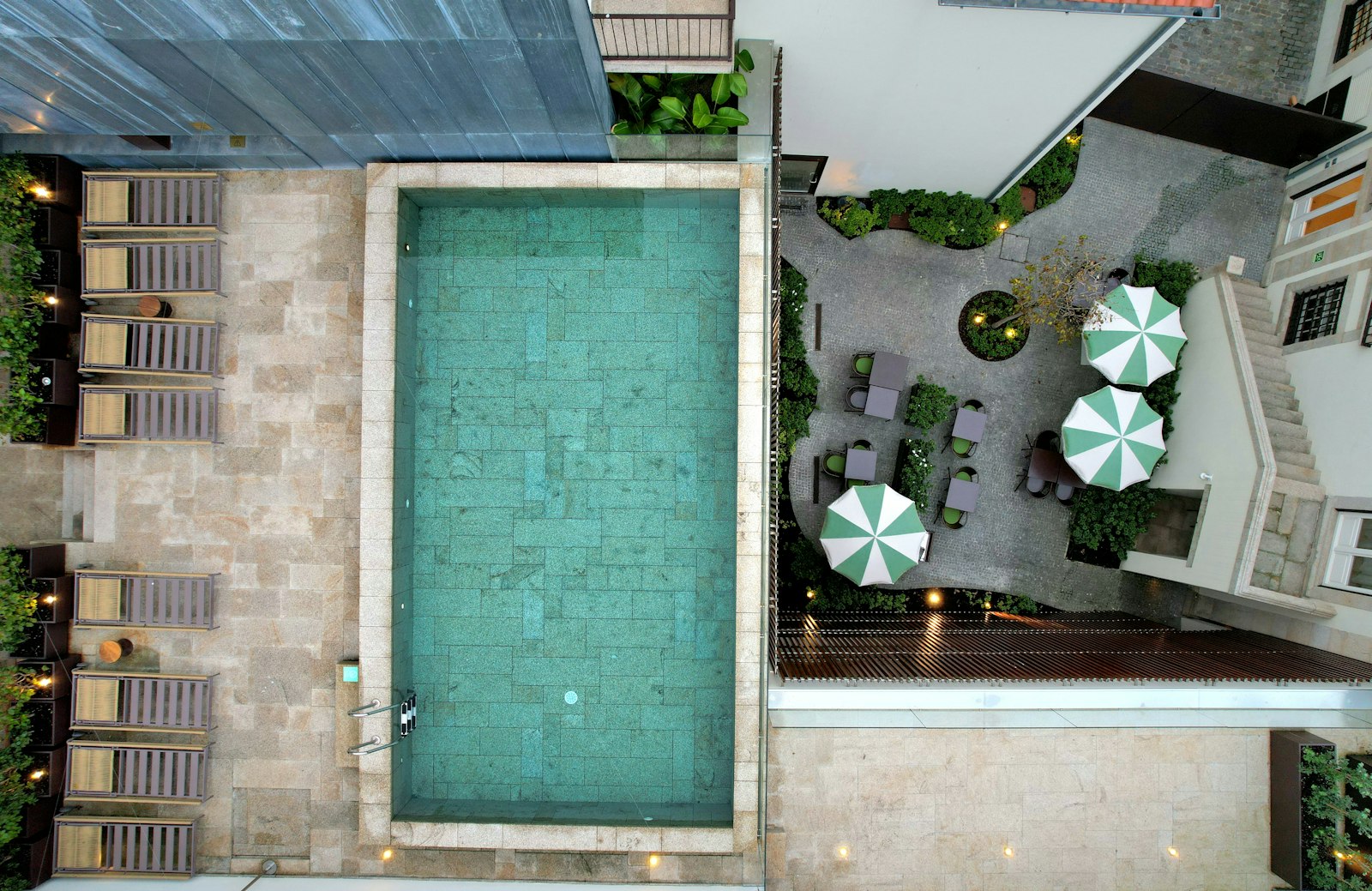
One caution about reading luxury scores: the study is a snapshot of guests who stayed between May 2024 and May 2025, and the hotels in each brand keep changing. New openings, renovations and ownership changes can move a brand's average from one year to the next. J.D. Power describes the 2025 results as a redesigned study, so there is no earlier year to check for a trend. The photographs in this article are stock images chosen to illustrate the category, and none of them shows a specific hotel named in the text.
What the guest scores cannot tell you
Brand scores average hotels with very different histories, owners and renovation cycles. A 779 does not guarantee that the specific Ritz-Carlton you book will beat the specific Waldorf Astoria across the street. J.D. Power's own summary says guests are most satisfied with hotels that invest in room condition, bathroom fixtures and bed comfort, and that is a property-level choice. Before you book, look at when the hotel was last renovated, read recent reviews for the specific building, and ask whether the services you care about, such as a spa or a club lounge, are open on your dates. Brand scores are a starting filter, not a final answer.
Sources: J.D. Power 2025 North America Hotel Guest Satisfaction Index Study press release (July 2025); Forbes, "The Best Hotel Chains For 2025, According To A New Report" (Laura Begley Bloom); Hotel.Report, "Every One of Marriott's Hotel Brands, Explained"; Marriott International fourth-quarter and full-year 2025 results (February 2026); Hilton's Waldorf Astoria fact sheet; Four Seasons press release (2026).
The responses below are not provided, commissioned, reviewed, approved, or otherwise endorsed by any financial entity or advertiser. It is not the advertiser’s responsibility to ensure all posts and/or questions are answered.