


Last Updated on: Sep 28, 2026
Choosing between these two headphones is harder than it first appears. Both keep your ears uncovered, both help you hear what is happening around you, and both are designed for comfortable listening.
What We'll Cover
- The Biggest Difference Is How They Produce Sound
- OpenRun vs OpenFit Specifications
- Which Design Feels More Comfortable?
- Sound Quality and Outdoor Awareness
- Which One Is Better for Running?
- Three Open-Ear Options to Compare
- Battery Life and Charging Convenience
- Calls, Controls, and Everyday Use
- Frequently Asked Questions
- Is OpenFit a bone conduction headphone?
- Can other people hear the audio?
- Can OpenRun be used for swimming?
- Which model is better for glasses?
- Final Verdict
- Option 4: Mojawa Run Plus Bluetooth Wireless Bone-Conduction Waterproof Open-Ear Headphones: Lightweight, Multi-Pairing, Volume Control
However, they create sound in very different ways. The search phrase “OpenRun vs OpenFit: Which Bone Conduction Headphones Win?” also contains a common misunderstanding: OpenRun uses bone conduction, but OpenFit uses air conduction.
This OpenRun vs OpenFit comparison explains how that difference affects sound, comfort, running stability, battery life, water resistance, and everyday convenience.
Quick verdict: OpenRun is the stronger choice for running, intense workouts, rain, and maximum stability. OpenFit is better for casual listening, richer music, independent earbud use, and easy storage in a pocket or bag.
The Biggest Difference Is How They Produce Sound

OpenRun rests in front of your ears and sends vibrations through your cheekbones. Your ear canals remain completely open.
OpenFit places small speakers near the ear canal without inserting them inside. Sound travels through the air, much like a tiny speaker positioned beside each ear.
This distinction shapes the entire experience.
Bone conduction usually delivers clear speech and podcasts, but bass can feel lighter than it does through traditional earbuds. Air conduction can produce fuller bass, smoother music, and a more familiar headphone sound.
Neither design blocks outside noise. That makes both useful when awareness matters, but it also means traffic, gym music, and conversations can compete with your audio.
OpenRun vs OpenFit Specifications
| Feature | OpenRun | OpenFit |
|---|---|---|
| Audio technology | Bone conduction | Open-ear air conduction |
| Wearing style | Connected neckband | Two separate ear-hook earbuds |
| Weight | 26 grams | 8.3 grams per earbud |
| Battery life | Up to 8 hours | Up to 7 hours per charge |
| Extra charging | No charging case | Up to 28 hours with case |
| Water resistance | IP67 | IP54 earbuds |
| Bluetooth | 5.1 | 5.2 |
| Quick charging | 10 minutes for 1.5 hours | 5 minutes for 1 hour |
| Best suited for | Running and workouts | Daily listening and light exercise |
The official specifications show that OpenRun has greater water and dust protection, while OpenFit gains extra listening time through its charging case.
Which Design Feels More Comfortable?

Comfort depends on whether you prefer one connected frame or two independent earbuds.
OpenRun spreads its 26-gram weight across a flexible titanium frame. Nothing sits inside the ear, and there is no pressure from ear tips. The band does rest behind the neck, which may touch a hood, high collar, bench, or bicycle helmet.
OpenFit places less weight on each side of the head. Its soft ear hooks wrap around the ears, and the separate design avoids a neckband.
People who work at a desk, travel, or listen for several hours may prefer OpenFit. Runners who dislike adjusting loose earbuds may feel more secure with OpenRun.
Both can generally be worn with glasses, although comfort depends on frame thickness and ear shape.
Sound Quality and Outdoor Awareness

OpenFit wins for overall music quality.
Its dynamic drivers produce stronger bass and a wider, more natural presentation. Vocals, acoustic instruments, and entertainment content tend to sound closer to what listeners expect from regular wireless earbuds.
OpenRun prioritizes awareness, stability, and spoken content. Podcasts, navigation instructions, and audiobooks remain easy to follow in quieter settings.
Wind and heavy traffic can overpower either model. Raising the volume may help temporarily, but open-ear headphones are not hearing protection. According to the National Institute on Deafness and Other Communication Disorders, long or repeated exposure to sound at or above 85 dBA can cause hearing loss.
Keep the volume low enough that you can still notice approaching vehicles, warning signals, and nearby people.
Which One Is Better for Running?

For most runners, OpenRun wins.
Its wraparound frame connects both sides, so there is no individual earbud to lose. The IP67 rating also provides stronger protection against sweat, dust, rain, and accidental splashes.
The stable frame works especially well for intervals, trail running, jumping, and workouts with rapid head movement. Physical buttons are also easier to operate with sweaty fingers than touch-sensitive surfaces.
OpenFit can handle jogging and moderate exercise, but its IP54 rating offers less water protection. Fit also varies more because each earbud depends on the shape of the wearer’s ear.
For walking, strength training, commuting, or office use, OpenFit’s flexibility may be more valuable than maximum stability.
Three Open-Ear Options to Compare
Prices and availability can change without notice. The listings below were checked during publication research.


The first listing was active but did not display a featured price. The other two prices were visible on their respective product pages when checked.
Battery Life and Charging Convenience

OpenRun provides up to eight hours from one charge. That is enough for most training sessions, work shifts, and long runs.
The drawback is that it must be connected directly to its charger. There is no pocket-sized case providing extra power.
OpenFit lasts up to seven hours per charge, but its case extends total listening time to about 28 hours. Placing the earbuds in the case also protects them and begins recharging them automatically.
OpenFit is therefore easier for travel and several days of mixed use. OpenRun remains simpler for users who charge their headphones once each night.
Calls, Controls, and Everyday Use

OpenFit’s separate earbuds provide more daily flexibility. You can wear one earbud for calls while leaving the other ear completely free.
Its case is also easier to place in a pocket than a rigid neckband. Multipoint connectivity lets it switch between two paired devices after the feature is enabled through the companion app.
OpenRun uses physical controls that are easy to locate without looking. Its unified frame also means there is only one device to manage.
For remote work and casual phone calls, OpenFit has the advantage. For workouts, gloves, and quick adjustments while moving, OpenRun’s buttons are more dependable.
Frequently Asked Questions

Is OpenFit a bone conduction headphone?
No. It is an open-ear air-conduction earbud. Small speakers direct sound toward the ear canal without sealing or entering it.
Can other people hear the audio?
Both models can leak sound at higher volumes. Leakage is usually less noticeable at moderate listening levels, but neither model provides complete privacy in a quiet room.
Can OpenRun be used for swimming?
No. Its IP67 rating protects against sweat, rain, and temporary water exposure, but the manufacturer does not recommend it for swimming.
Which model is better for glasses?
Both can work with glasses. OpenFit’s thin ear hooks may compete for space behind the ears, while OpenRun’s frame places light pressure around the same area. Trying the fit with your usual glasses is the best test.
Final Verdict
The OpenRun vs OpenFit decision comes down to movement versus versatility.
Choose OpenRun for running, outdoor training, wet conditions, physical controls, and a secure one-piece fit. Its lightweight frame and IP67 protection make it the more dependable sports option.
Choose OpenFit for fuller sound, independent earbud use, calls, commuting, and extended battery life through a charging case. It is the more flexible choice for daily listening.
Before buying, consider where you will use the headphones most often. The model that matches your normal routine will matter more than a small difference in battery life or weight.
Option 4: Mojawa Run Plus Bluetooth Wireless Bone-Conduction Waterproof Open-Ear Headphones: Lightweight, Multi-Pairing, Volume Control
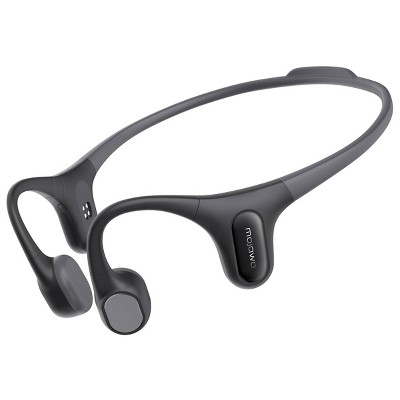
This entry is the Mojawa Run Plus Bluetooth Wireless Bone-Conduction Waterproof Open-Ear Headphones: Lightweight, Multi-Pairing, Volume Control, linked through Target. It covers the open-ear headphones angle of the guide. No open-ear headphones testing was performed for this guide.
The Target page lists these details: Water Resistance: Water-Resistant; Ear Cushion Material: Rubber; Electronics Features: Lightweight Design, Built-In Microphone, Volume Control, Multi-Pairing; Connection Type: No Wired Connection Ports. They are recorded as the page prints them, in the order the listing gives them.
The listing also names: Microphone: Built-In Microphone; Wireless Type: Wireless. The page names a bone-conduction, open-ear design with a built-in microphone, volume control and multi-pairing, and it lists no active noise cancelling.
Wording on the page such as "waterproof" or "consistent" is seller description and is quoted only as a label. It is not a sound, fit or waterproofing finding, and this guide makes no claim that the product delivers those qualities. The page title says waterproof while the specification line says water-resistant, so the rating should be read on the page. Battery hours, weight and the Bluetooth version are not settled by the labeled specifications here, so they stay unknown.
Target listings can change, and a seller can edit its labels, sizes or included parts. The details above come from the page as retrieved for this guide, so the selected page and the package are the final word on what is included, what size or version it is and how to use it. Where this guide gives a figure, it is the figure the page printed at retrieval and not a measurement taken here. Where the page is silent, the guide says unknown and does not fill the gap with a guess or a figure from a similar product.
Before choosing, confirm the connection, microphone and water-resistance labels and the included parts on the selected Target page. Compare the listings by their printed labels, then verify the details that matter before relying on one.
The responses below are not provided, commissioned, reviewed, approved, or otherwise endorsed by any financial entity or advertiser. It is not the advertiser’s responsibility to ensure all posts and/or questions are answered.