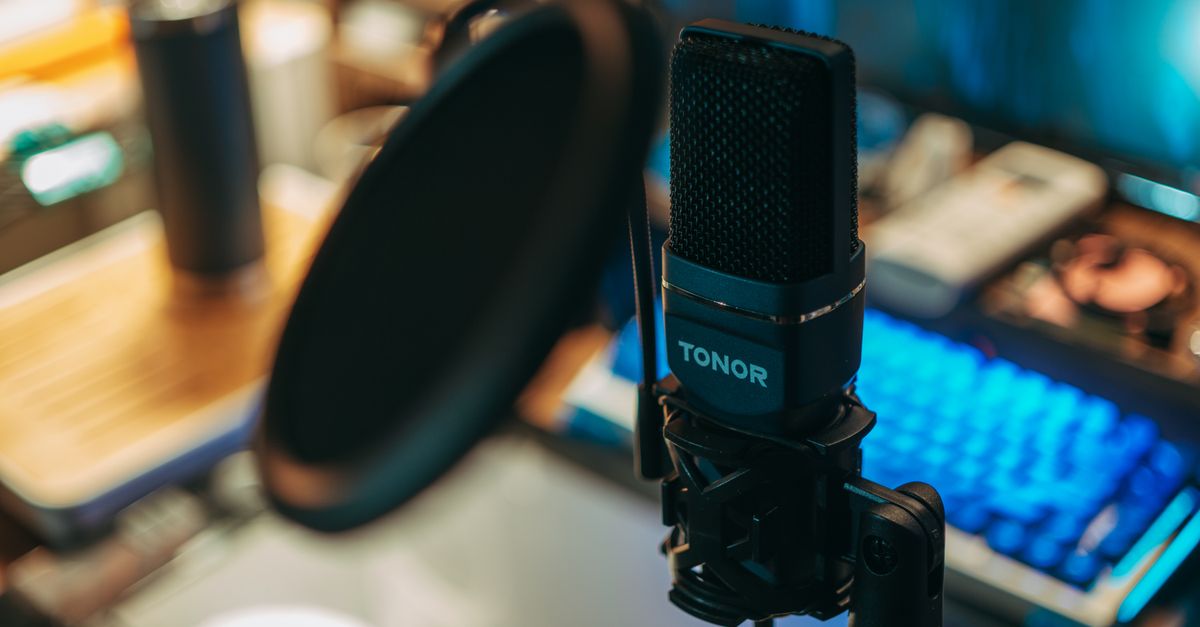
An XLR microphone or an electric guitar can't plug straight into a laptop: the mic needs a preamp, the signal needs clean conversion, and recording takes a way to hear yourself while you play. An audio interface bundles those three jobs into one box. The category has crowded up fast, and the spec sheets all read alike.
This list cuts through fifteen current options, from bare-bones budget boxes to converter showpieces, grouped by the way you actually record.
Pros
- Interfaces under $200 now record at 24-bit/192 kHz, a spec that used to cost far more
- Most boxes here are bus-powered, so a laptop is the only other thing you need
- Software bundles (DAWs, plugins, instruments) come with nearly every pick
- Loopback on several models simplifies streaming and podcast routing
Cons
- Entry boxes with one preamp cap you at one mic and one instrument at a time
- The cheapest options top out at 48 kHz or 16-bit, fine for demos but not masters
- None of these include a microphone, cables or headphones in the base box
- Advertised latency figures depend on buffer settings and your computer
The Fifteen, Grouped by the Way You Record
Rather than one long wall of boxes, the fifteen are sorted into three desks: a first trio where each box adds something beyond the baseline (a console-inspired preamp mode, a real level meter, an enhancement circuit), then one-preamp rigs for a voice and a guitar, and two-preamp setups for duos and stereo sources. The first three cards in each group are not ranked against each other; the numbering just keeps the table honest.
Preamp Color, Real Metering and Loopback
Universal Audio Volt 1
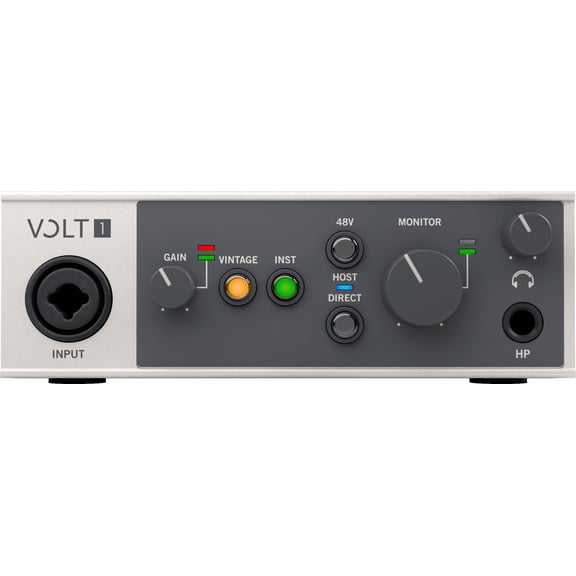
UA's entry point: a 1-in/2-out bus-powered box with 24-bit/192 kHz conversion and a Vintage Mic Preamp Mode inspired by the UA 610 tube console. Onboard MIDI in/out covers controllers and synths.
- 1-in/2-out, bus-powered USB-C
- Vintage Mic Preamp Mode
- MIDI in and out

MOTU M2
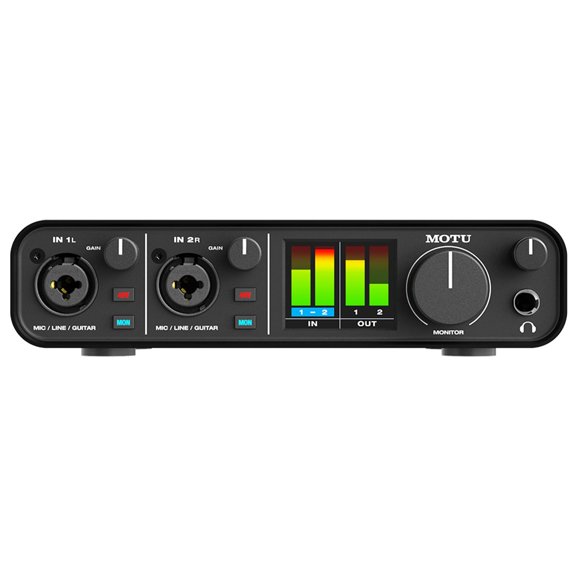
The metering pick: a full-color LCD shows input and output levels, something none of the other fourteen boxes here carry. Two combo XLR/TRS inputs with individual 48V, 24-bit/192 kHz conversion, TRS and RCA outputs, plus MIDI.
- Full-color LCD level metering
- 2 combo inputs, 24-bit/192 kHz
- TRS and RCA outputs, MIDI I/O
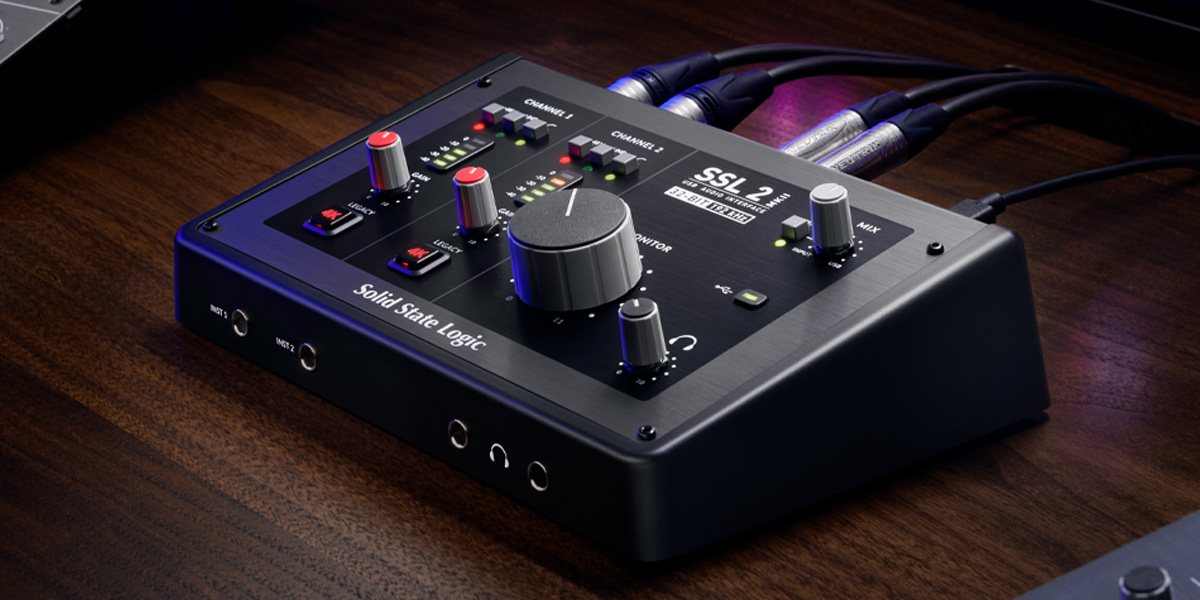
Solid State Logic SSL 2 MKII
The MkII refresh: 32-bit/192 kHz converters, two SSL-designed preamps with switchable high-pass filters, auto-detect instrument inputs, and the Legacy 4K analogue enhancement circuit inspired by the 4000-series consoles. Stereo loopback is aimed at streamers and podcasters.
- 32-bit/192 kHz converters
- Legacy 4K enhancement circuit
- Stereo loopback for streaming

One Mic, One Instrument: The Solo Rigs
One good preamp and one instrument input cover a voice-and-guitar workflow; the boxes here differ on conversion ceilings, monitoring tricks and bundled software.
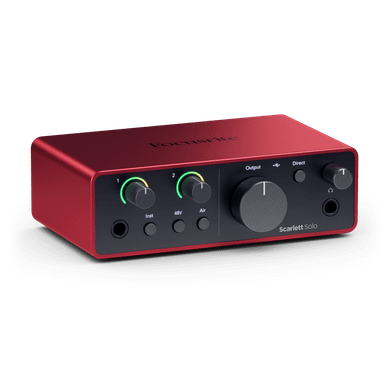
Focusrite Scarlett Solo 4th Gen
The solo rig: one mic preamp plus a Hi-Z instrument input, 24-bit/192 kHz conversion, Air mode and Dynamic Gain Halos. Focusrite rates the dynamic range at 120 dB and bundles Pro Tools Intro+, Ableton Live Lite, Cubase LE and the Hitmaker Expansion.
- 1 preamp + Hi-Z instrument input
- Air mode and Dynamic Gain Halos
- Large software bundle

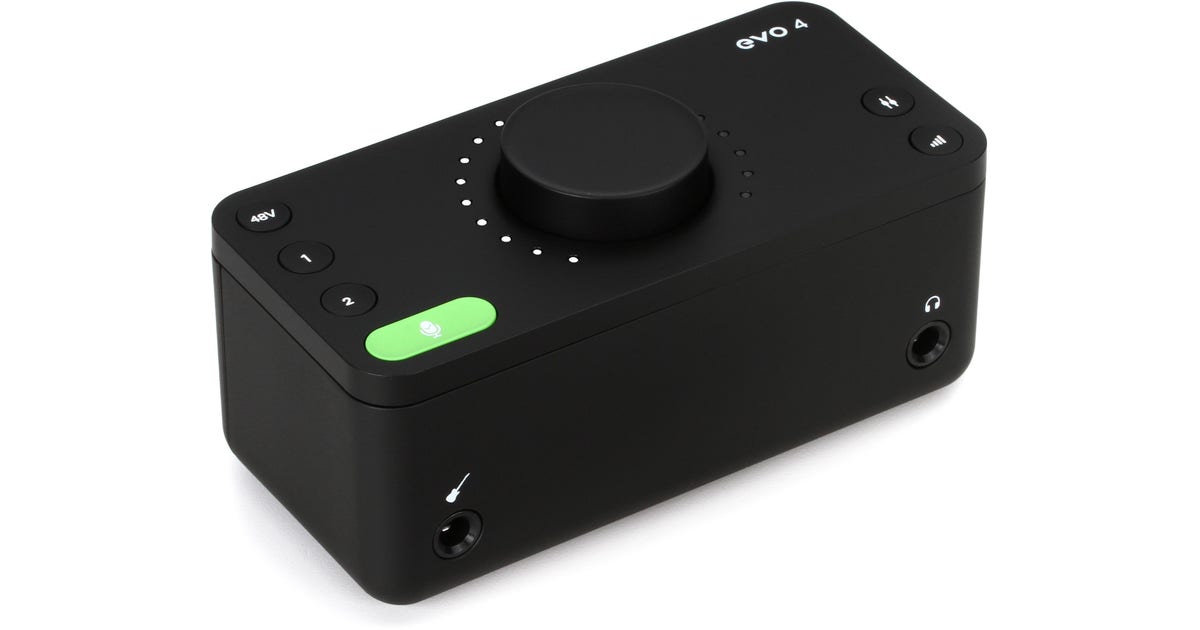
Audient EVO 4
Smartgain listens to your source and sets input levels automatically, per Audient. Two EVO preamps, a JFET instrument input, 24-bit/96 kHz conversion and loopback in a cube small enough to sit beside a laptop.
- Smartgain automatic level setting
- JFET instrument input
- Loopback, 24-bit/96 kHz
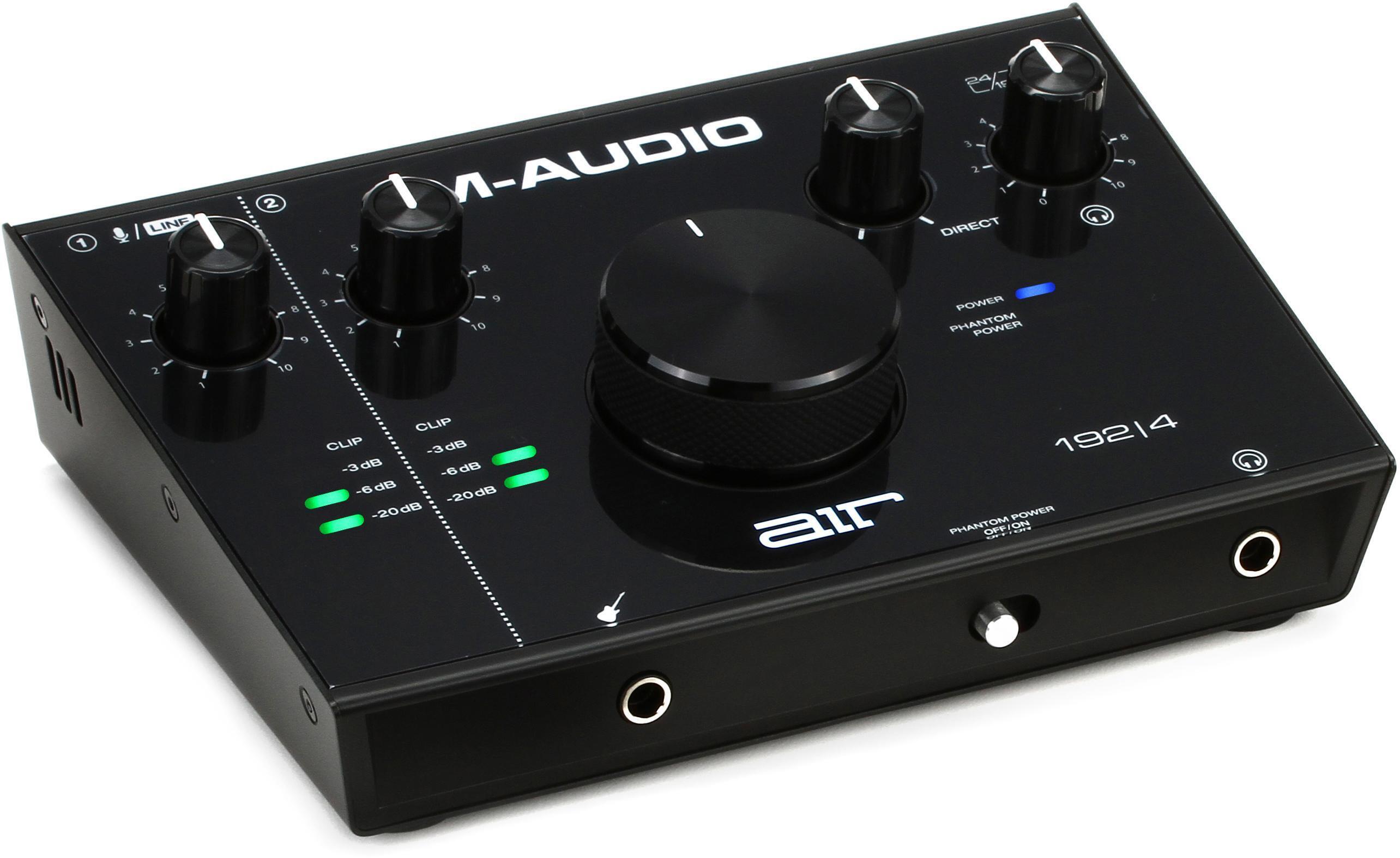
M-Audio AIR 192|4
A combo input plus a dedicated instrument input, Crystal preamps, VU-style LED meters and a large USB/Direct blend knob. M-Audio quotes a 2.59 ms round-trip latency, dependent on buffer settings and computer hardware.
- Combo + instrument inputs
- VU-style LED meters
- USB/Direct blend knob
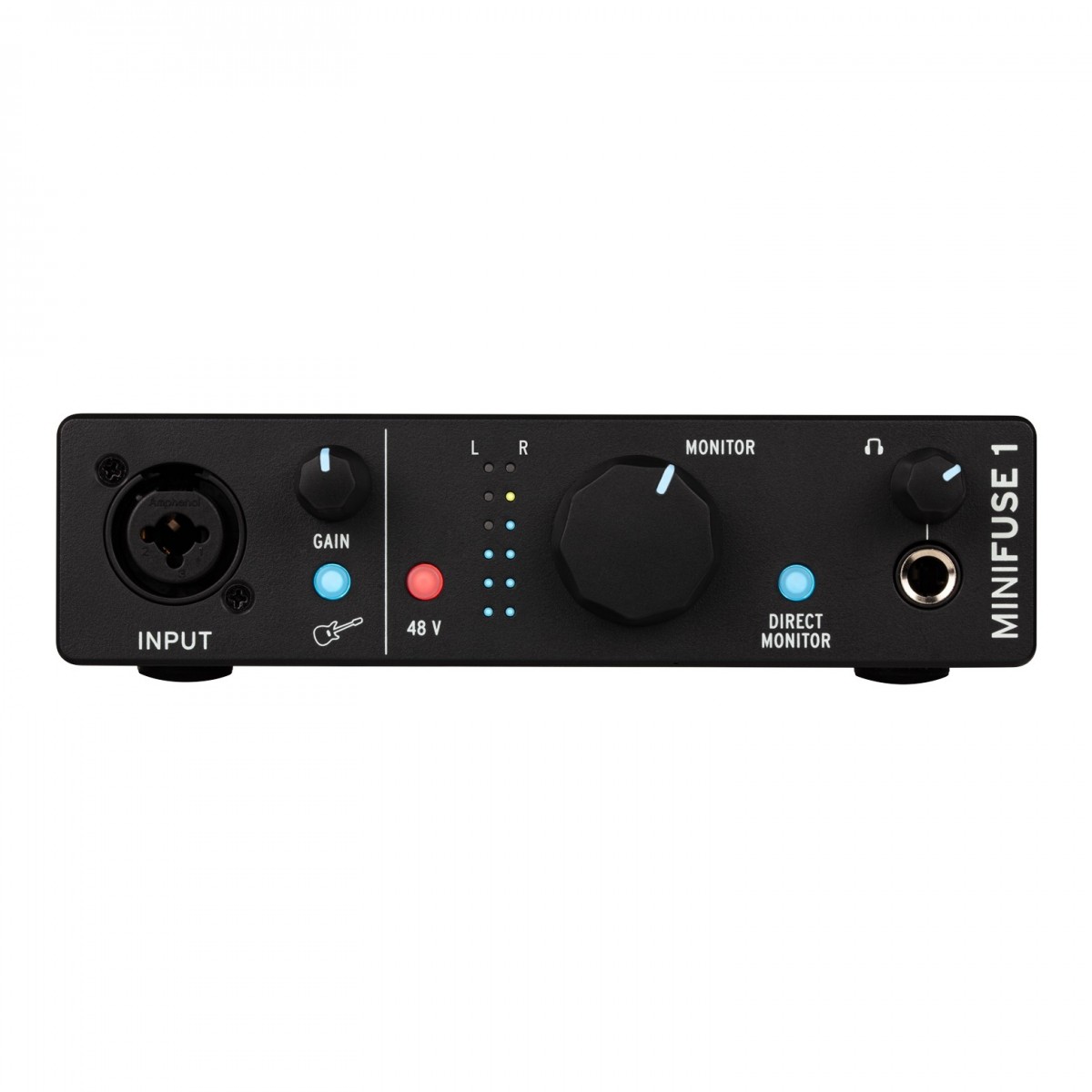
Arturia MiniFuse 1
Arturia quotes a 110 dB dynamic range and -129 dB equivalent input noise for this 1-in/2-out box, with 24-bit/192 kHz conversion, one combo input and a software bundle that includes Ableton Live Lite and Analog Lab Intro.
- 110 dB dynamic range per Arturia
- 24-bit/192 kHz
- Ableton Live Lite + Analog Lab Intro
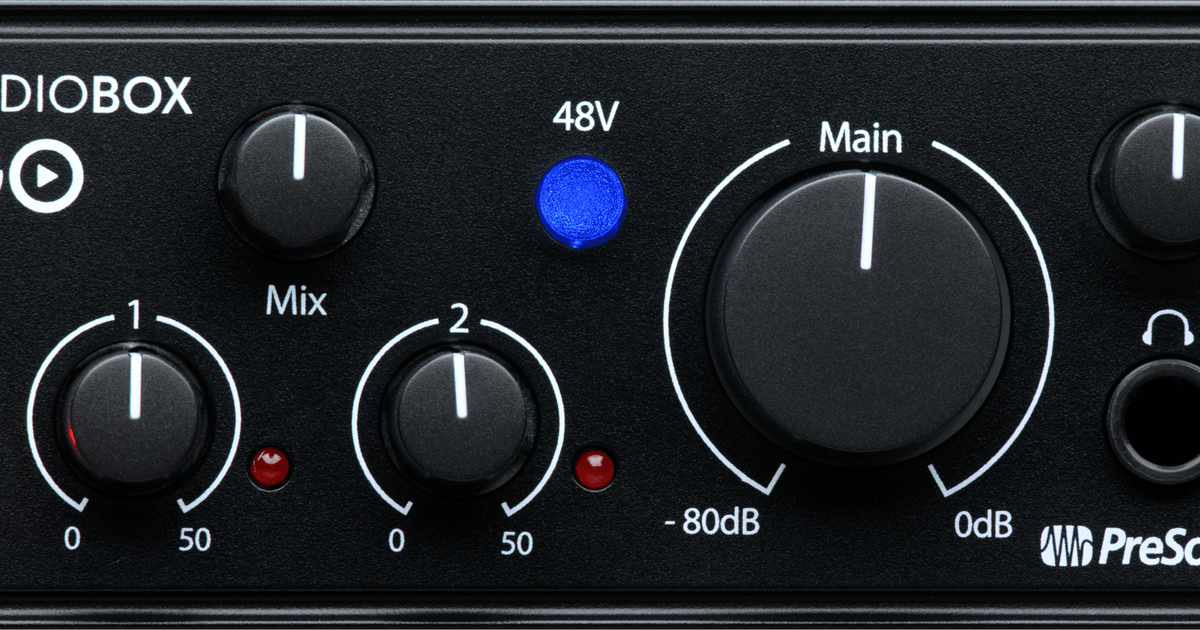
PreSonus AudioBox GO
The travel pick: 24-bit/96 kHz, one XMAX-L preamp, a combo input plus a TS instrument input, bus-powered over USB-C so it runs from a laptop, tablet or phone. Studio One Prime is bundled per PreSonus.
- 24-bit/96 kHz over USB-C
- Combo + instrument inputs
- Runs from phone or tablet
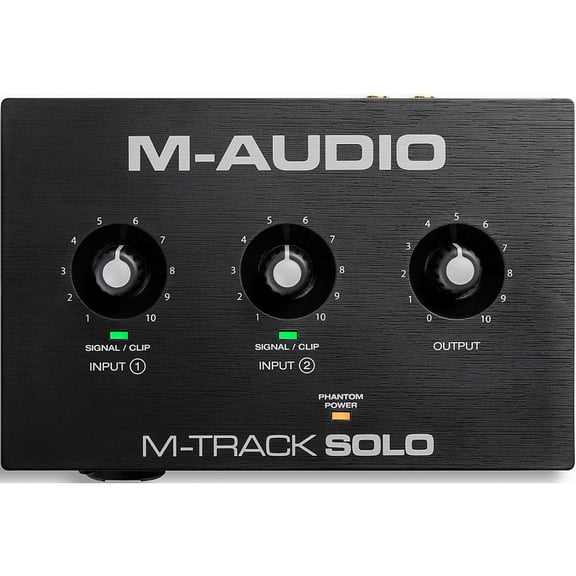
M-Audio M-Track Solo
A single-preamp box: one combo XLR/line input with phantom power, one line/instrument input, RCA outputs and a 1/8-inch headphone jack, recording at up to 48 kHz per the listing. MPC Beats software comes in the box.
- 1 combo + 1 instrument input
- RCA outputs, USB/Direct switch
- MPC Beats included
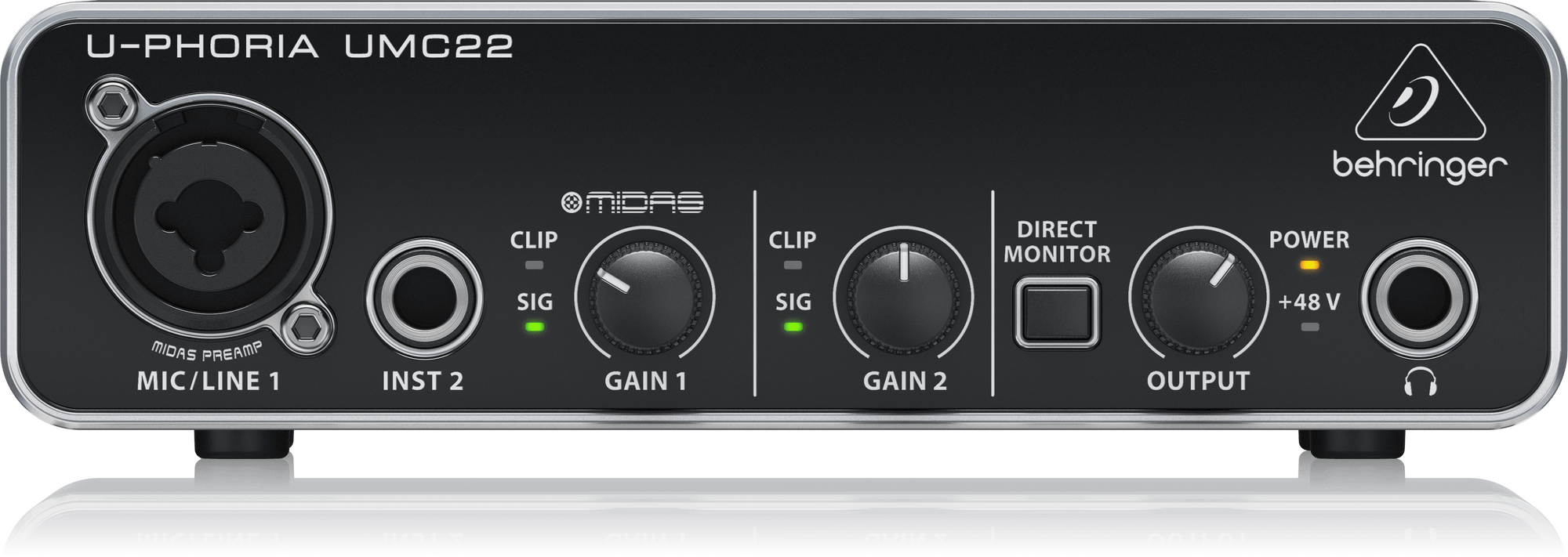
Behringer U-Phoria UMC22
The budget entry: a Midas-designed mic preamp, a separate instrument input, direct monitoring and +48V phantom power. It tops out at 48 kHz and 16-bit per the listing, so it suits demos and practice rigs more than final masters.
- Midas-designed preamp
- Separate instrument input
- Up to 48 kHz / 16-bit
Two Preamps: The Duo and Stereo Desks
Two real mic preamps mean a duet, a stereo mic pair, or vocals and guitar tracked at once without swapping cables mid-take.
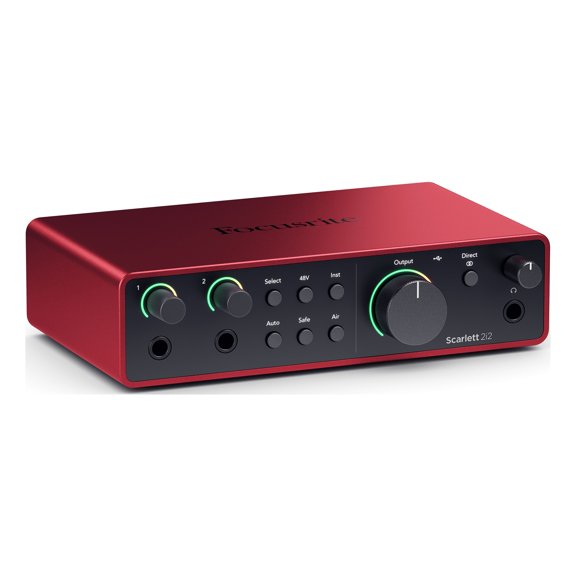
Focusrite Scarlett 2i2 4th Gen
Two preamps and two combo inputs double the Solo's input count while keeping Air mode, the gain halos and 24-bit/192 kHz conversion, per Focusrite's listing. Built for the singer who also tracks guitar or keys at the same time.
- 2 combo inputs with preamps
- Air mode, 24-bit/192 kHz
- Same 4th-gen software bundle
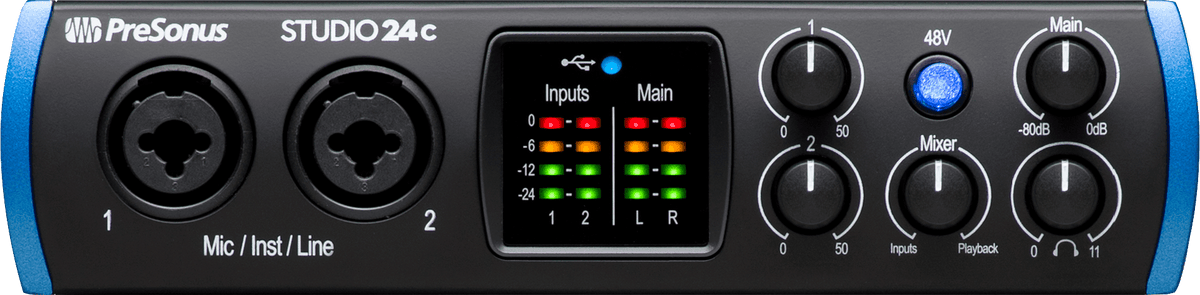
PreSonus Studio 24c
Two XMAX-L preamps, ladder-style LED metering, MIDI I/O and 24-bit/192 kHz conversion, with Studio One Artist in the box per PreSonus. The mixer knob blends live input against playback for low-latency monitoring.
- 2 XMAX-L preamps
- MIDI I/O, ladder LED meters
- Studio One Artist included
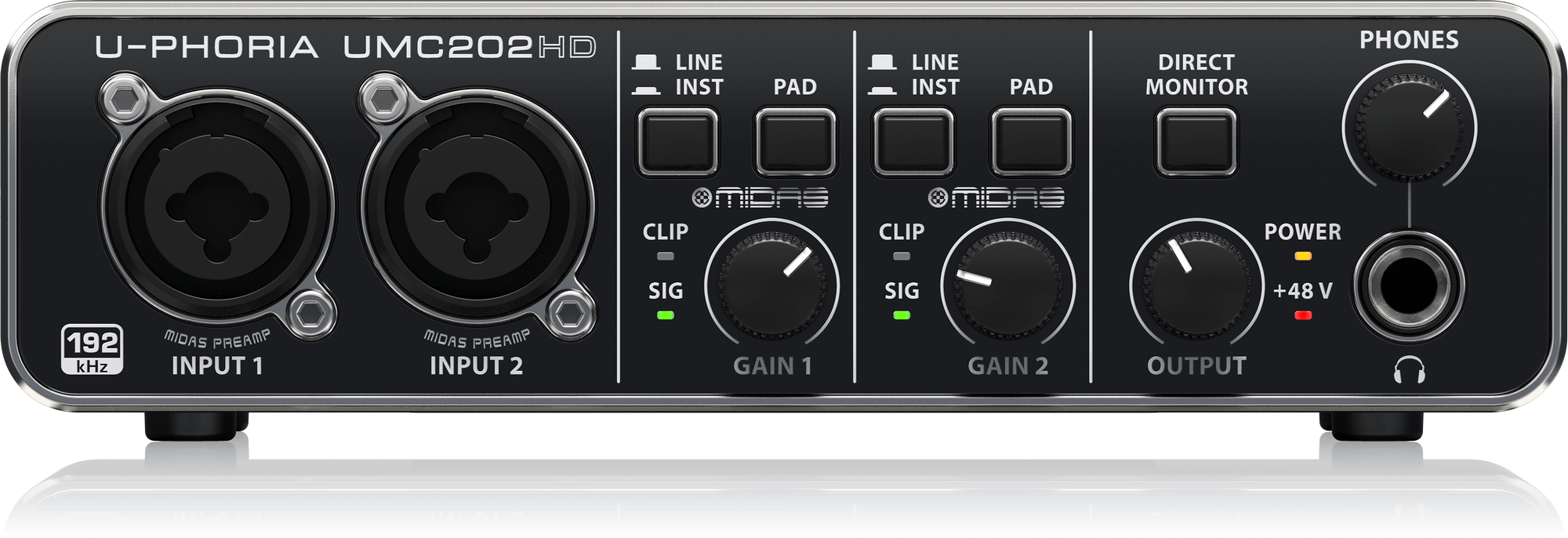
Behringer U-Phoria UMC202HD
The UMC22's step up: two Midas-designed preamps and 24-bit/192 kHz conversion in an impact-resistant metal chassis, per Behringer, with direct monitoring and a headphone level control.
- 2 Midas-designed preamps
- 24-bit/192 kHz
- Metal chassis
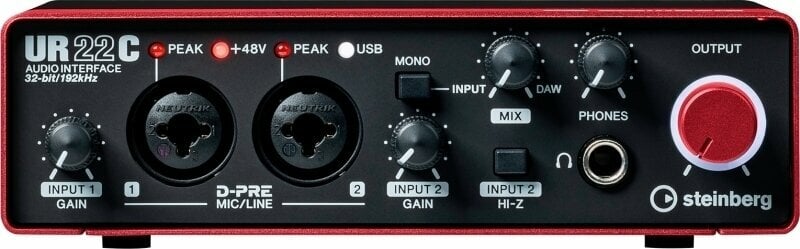
Steinberg UR22C
USB 3.0 with 32-bit/192 kHz support, two Yamaha D-PRE preamps, and dspMixFx latency-free monitoring with onboard DSP effects, per Steinberg's operation manual. MIDI I/O and Cubase AI round it out.
- USB 3.0, 32-bit/192 kHz
- 2 D-PRE preamps
- dspMixFx DSP monitoring
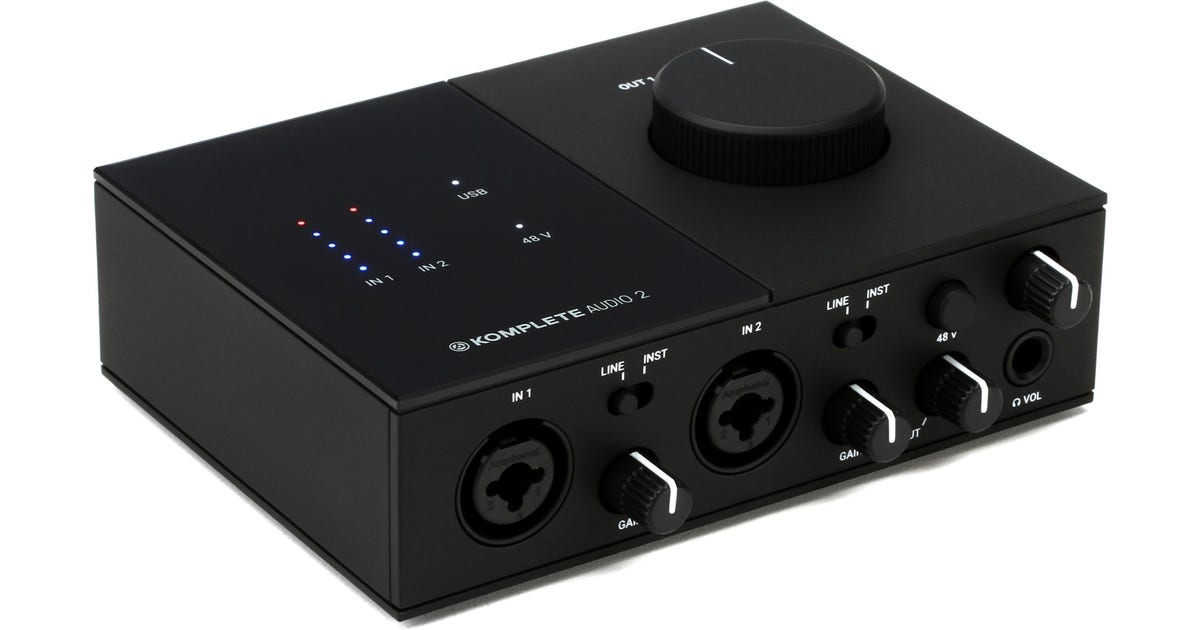
Native Instruments Komplete Audio 2
Two combo mic/line/instrument inputs, 24-bit/192 kHz conversion, five-segment LED meters and a direct-monitor blend knob, with NI's software collection of instruments and effects bundled per the listing.
- 2 combo mic/line/instrument inputs
- 24-bit/192 kHz
- NI software bundle
Side by Side
| Interface | Mic Preamps | Max Resolution | MIDI I/O |
|---|---|---|---|
| Universal Audio Volt 1 | 1 | 24-bit/192 kHz | Yes |
| MOTU M2 | 2 | 24-bit/192 kHz | Yes |
| SSL 2 MKII | 2 | 32-bit/192 kHz | No |
| Scarlett Solo 4th Gen | 1 | 24-bit/192 kHz | No |
| Scarlett 2i2 4th Gen | 2 | 24-bit/192 kHz | No |
| Audient EVO 4 | 2 | 24-bit/96 kHz | No |
| PreSonus Studio 24c | 2 | 24-bit/192 kHz | Yes |
| Behringer UMC22 | 1 | 16-bit/48 kHz | No |
| Behringer UMC202HD | 2 | 24-bit/192 kHz | No |
| M-Audio AIR 192|4 | 1 | 24-bit/192 kHz | No |
| M-Audio M-Track Solo | 1 | 48 kHz | No |
| PreSonus AudioBox GO | 1 | 24-bit/96 kHz | No |
| Arturia MiniFuse 1 | 1 | 24-bit/192 kHz | No |
| Steinberg UR22C | 2 | 32-bit/192 kHz | Yes |
| NI Komplete Audio 2 | 2 | 24-bit/192 kHz | No |
Three Rooms, Three Starting Points
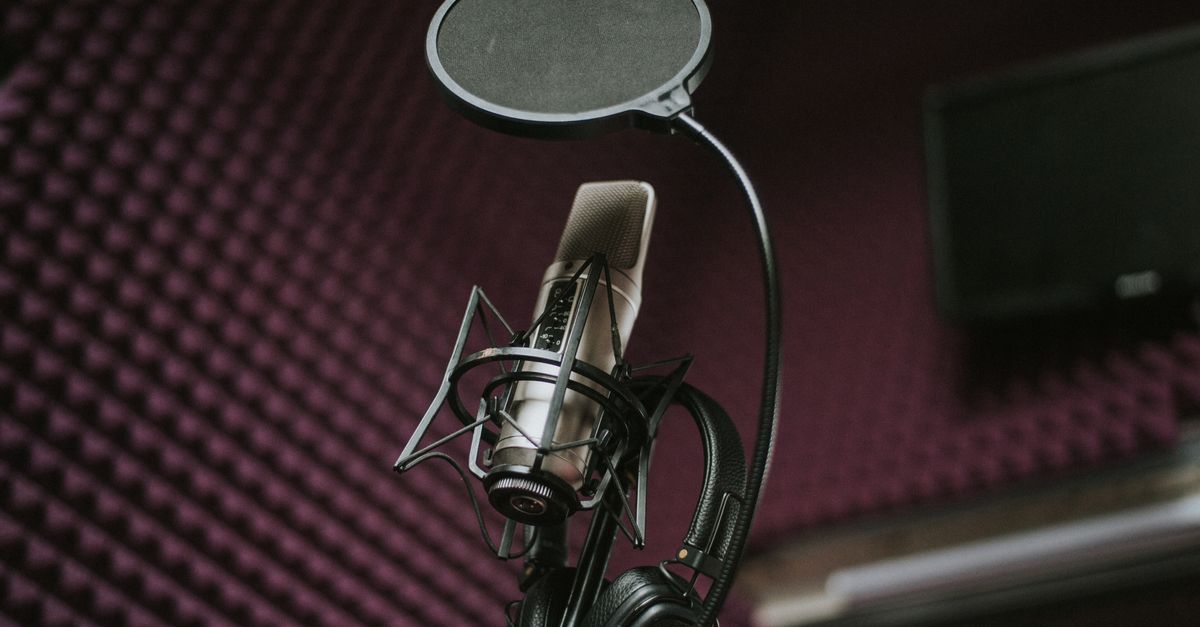
The spare-bedroom singer-songwriter should start with a single-preamp box and spend the savings on the microphone: the Scarlett Solo 4th Gen and the Volt 1 both put one good preamp and one instrument input in reach, and the Volt's Vintage mode adds console-style warmth without a plugin.
The podcaster or streamer has different plumbing. Loopback matters more than preamp count, because the computer's audio has to fold back into the stream. The SSL 2 MKII and the EVO 4 both handle it, and the SSL's two front headphone outputs make a two-host recording session simple.
The mobile recorder should look at the AudioBox GO first. It draws power over USB-C from whatever it plugs into, including a phone, which turns a hotel room into a workable vocal booth.
Inputs deserve a closer look than they get. A combo jack accepts both XLR and quarter-inch plugs, which is why the input count on a spec sheet can mislead: the Scarlett Solo's two inputs are one mic and one instrument, while the 2i2's two combo jacks will take two microphones at once. If a second vocal mic is even a possibility, buy the second preamp now rather than a second interface later.
Outputs matter once monitors enter the picture. Balanced TRS outputs, standard on most boxes here, reject interference over longer cable runs; the RCA outputs on the budget M-Track and the M2's mirrored RCA pair are aimed at consumer speakers and DJ gear. Headphone amps vary more than spec sheets admit, which is one reason the SSL 2 MKII's dual high-current headphone outs suit shared sessions.
Preamps, Converters and Latency, in Plain Terms
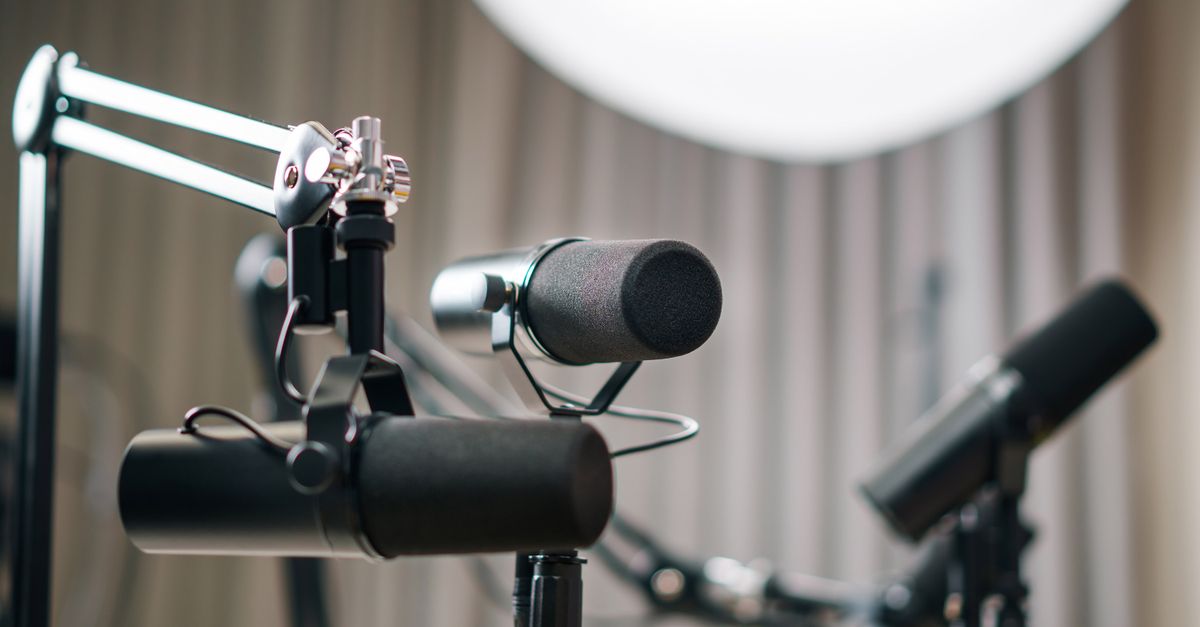
The preamp is the first amplifier your microphone sees, and it sets the noise floor of the whole recording. Every box here includes at least one, and the differences between competent preamps at this level are subtle; a clean recording depends more on gain staging and room noise than on the badge on the preamp. That is why the budget Behringer boxes, which use Midas-designed preamps, still make respectable demos.
Conversion numbers are the loudest spec on every product page. Bit depth and sample rate (24-bit/192 kHz and so on) describe the ceiling of the recording format, not a guarantee of sound. Recording at 24-bit/48 kHz already exceeds what most streaming platforms deliver; the higher numbers matter for heavy processing and headroom, not bragging rights. The 16-bit ceiling on the UMC22 is the one real limit in this list, and only for quiet, dynamic sources.
Latency is the delay between playing a note and hearing it in your headphones. Direct monitoring, present on nearly every box here in one form or another, sidesteps it by feeding the input straight to the output. DSP-based monitoring, like Steinberg's dspMixFx, adds effects into that zero-latency path. Quoted round-trip figures, like M-Audio's 2.59 ms, assume specific buffer settings and hardware.
Phantom power, marked +48V, is what condenser microphones need to operate; every interface here supplies it. Dynamic and ribbon mics ignore it, so a box is never wrong for having the switch.
Loopback routes the computer's playback back into the recording stream. It is invisible for pure music tracking and essential for streaming, so it separates the podcast-friendly boxes (SSL 2 MKII, EVO 4, and the Scarlett 4th-gen line) from the rest.
Finally, the software bundle is real value. Ableton Live Lite, Studio One Artist, Cubase AI and the various plugin collections would cost meaningful money bought separately, and for a first studio they remove the need to buy a DAW at all.
Start with the number of things you record at once, then let loopback, metering and the bundled software break the tie. Every box on this list will record a clean track; the right one is the one whose inputs match your desk.
The responses below are not provided, commissioned, reviewed, approved, or otherwise endorsed by any financial entity or advertiser. It is not the advertiser’s responsibility to ensure all posts and/or questions are answered.