A portable power station is a simple promise: a wall outlet, wherever you happen to be. No gasoline, no exhaust, no pull cord, just a big battery in a tough box that keeps the fridge cold, the CPAP humming and the phones alive through a blackout, a storm or a long weekend off the grid. The category has matured fast. LiFePO4 batteries now last 3,000 to 6,000 cycles, which works out to a decade of use, and charging speeds that once took overnight now take an hour.
For this list we pulled together the 2026 lab-tested roundups from Wirecutter, Popular Mechanics and OutdoorGearLab, whose teams ran refrigerators, miter saws and space heaters on these boxes and measured how many watt-hours actually came out. Sixteen stations made the cut, from a seven-pound lunchbox to five-kilowatt-hour home backup towers. The four available at big-box stores lead off; prices live at the top of this page.
The Big-Box Four: Grab One Today
EcoFlow River 2 Pro
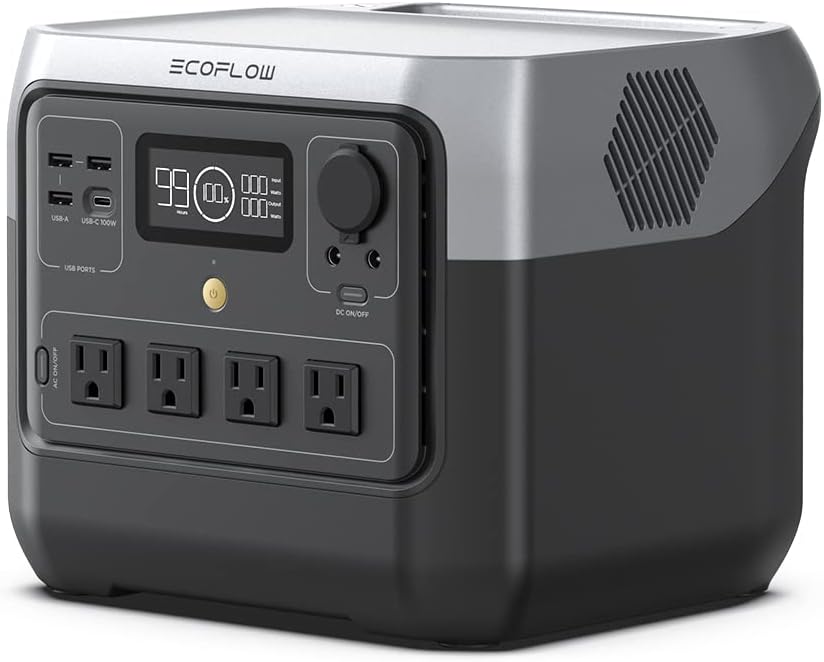
The River 2 Pro is Wirecutter’s top pick after seven years of testing, and the case is simple: it packs 768 watt-hours and 800 watts of output into a 17.2-pound box the size of a toaster oven, yet in their tests it ran even the most power-hungry household appliances, including a full-size refrigerator. You get four AC outlets, a USB-C port and three USB-A ports, cables for wall, car and solar recharging, an easily readable display showing input, output and reserve, and a five-year warranty. For one person carrying backup power to a campsite, a tailgate or a bedroom during an outage, this is the default answer.
Jackery Explorer 1000 v2
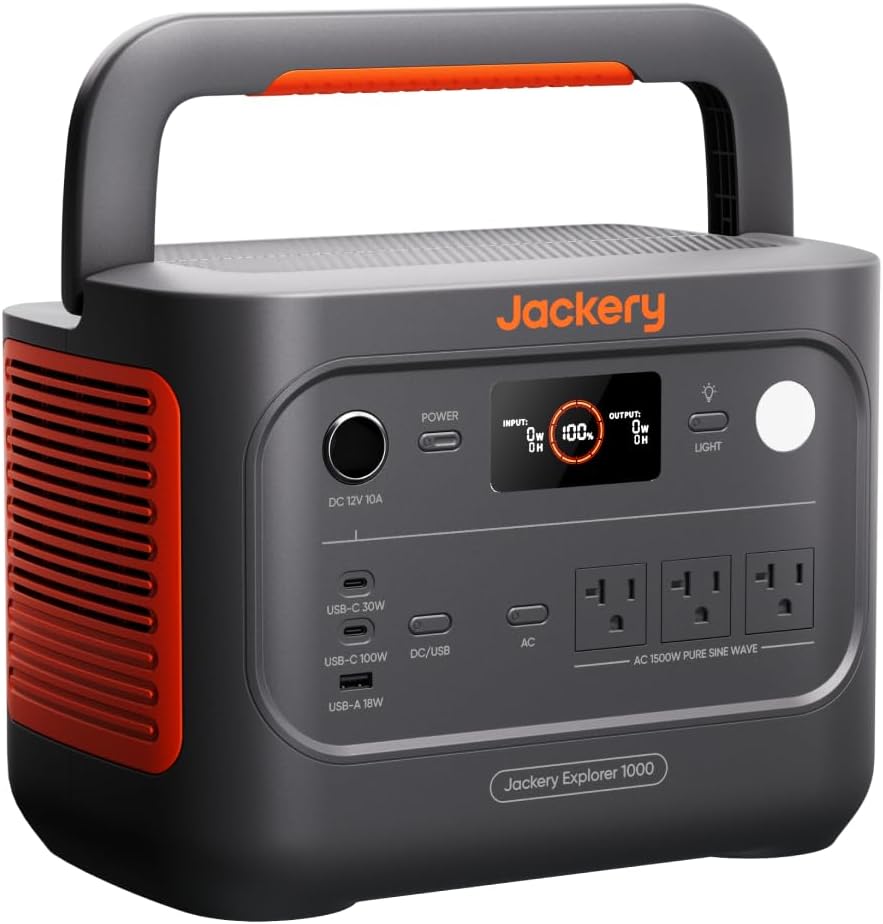
The Explorer 1000 v2 is Popular Mechanics’ best value pick, and the upgrade over the original is dramatic: output jumped 50 percent to 1,500 watts (3,000 watts surge) while capacity grew to 1,070 watt-hours, all in the same carryable 23.8-pound chassis with a folding handle. In their hands-on testing it ran a 25-cubic-foot refrigerator for 18 hours and 22 minutes, better than any other 1,000-watt-class station they have tried. Wall charging takes under two hours, and the Jackery app monitors charge and estimated runtime over Bluetooth or Wi-Fi. It will not power your house, but dollar for dollar it is one of the strongest all-rounders sold anywhere.
Bluetti Elite 200 V2
Popular Mechanics named the Elite 200 V2 its best power station overall after instrumented testing, and the numbers explain why. It delivered 92 percent of its rated 2,073.6 watt-hours, well above the 85 percent category average, shrugged off a 4,000-watt startup spike from a miter saw while simultaneously running a blender and space heater, and recharged from empty to 80 percent in 81 minutes. The LiFePO4 battery is rated for 6,000 cycles before dropping below 80 percent health, which works out to well over a decade of regular use. Four AC outlets, four USB ports and up to 1,000 watts of solar input complete the package.
Jackery Solar Generator 300 (with 40W Panel)
The littlest Jackery is the one Wirecutter recommends for short-term use, and this Target bundle throws in a 40-watt solar panel. At 7.1 pounds the Explorer 300 is genuinely grab-and-go: two AC outlets, a USB-C port and two USB-A ports handle phones, laptops, cameras, fans and LED lanterns for a beach day, a park work session or the first night of a blackout. You will not run an air conditioner on 300 watts, and OutdoorGearLab notes there is no built-in light or discharge-time estimate, but for device charging and low-wattage duty nothing this size is sturdier or simpler.
Camping and Off-Grid: Power You Can Carry
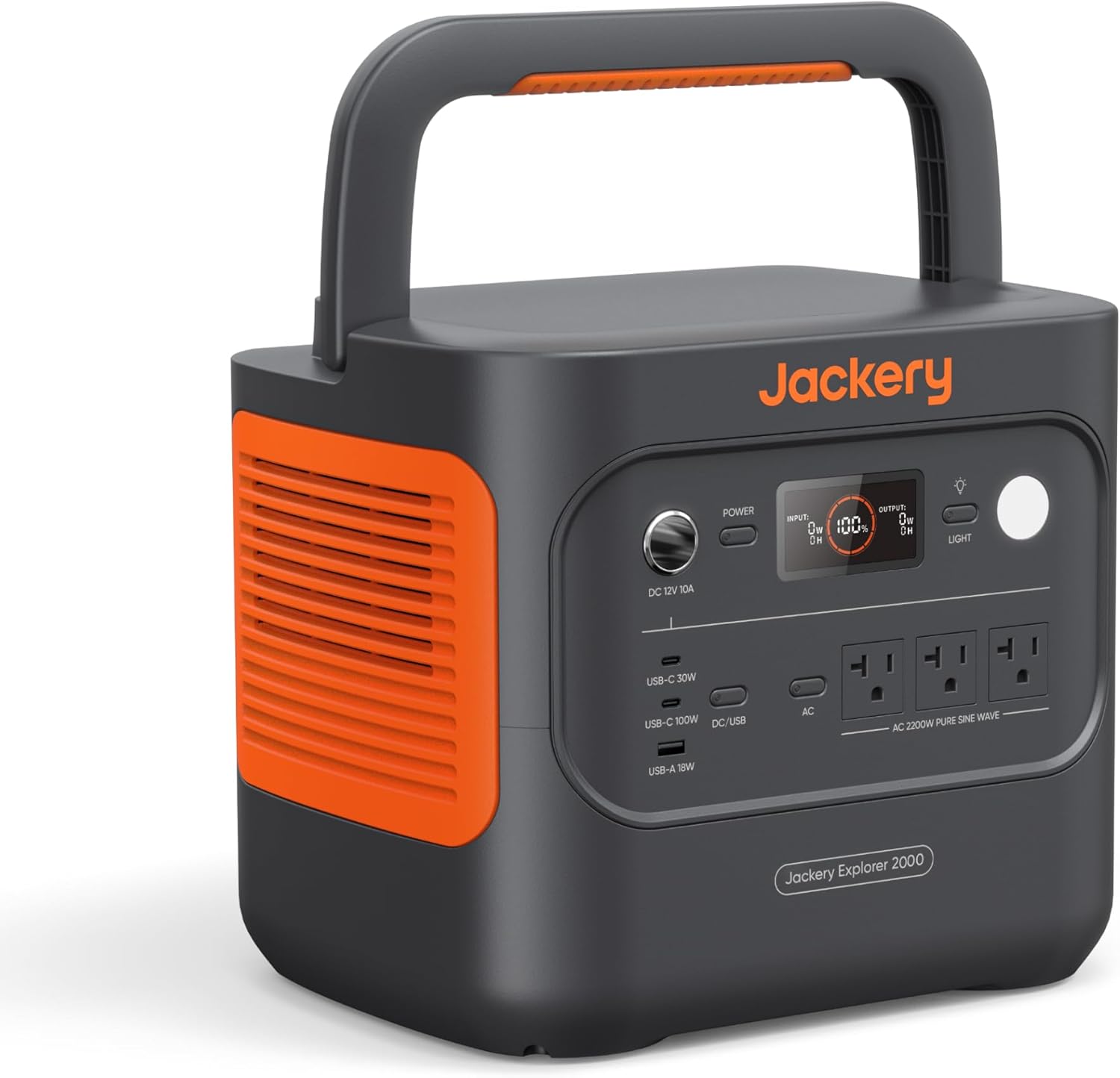
For multi-day camping and off-grid weekends, the balance of weight, capacity and solar support matters more than raw output. These five earned the testers’ trust outdoors.
Jackery Explorer 2000 v2
OutdoorGearLab’s number-one ranked power station of 2026, full stop. The 2000 v2 pairs a 2,042 watt-hour battery with 2,200 watts of output in a 38.9-pound box most adults can move solo, and their lab measured 1,710 watt-hours of actual usable AC power, one of the best efficiency figures in the test. It recharges completely in 2.5 hours from the wall and pairs easily with one or two 200-watt solar panels for multi-day off-grid stretches. Testers used it for string lights, an electric cooler and device charging over long weekends. The only structural caveat: capacity is not expandable, so buy the size you need.
Anker Solix C1000 Gen 2
OutdoorGearLab’s pick as the best value for most people nails the cost-power-weight triangle. The C1000 Gen 2 stores 1,056 watt-hours, pushes up to 1,800 watts and weighs just 25.2 pounds, with five AC outlets plus USB-C and USB-A. Its party trick is charging speed: a full refill in 56 minutes, among the fastest ever measured, which their lead tester called priceless before a weekend off-grid. The honest caveats: the fan is loud enough that it is a poor bedside CPAP companion, and unlike the original it no longer accepts expansion batteries. For blackouts, camping and remote work on a budget, it is the sweet spot.
Bluetti Elite 100 V2
The Elite 100 V2 is Bluetti’s value play in the one-kilowatt-hour class, and OutdoorGearLab’s testers slotted it into their top ten, praising its dialed power output and enticing feature set at the price. It squeezes 1,800 watts of output from a 25-pound body, matches the fastest-charging stations in its class, and carries four AC outlets plus USB-C and USB-A. Think of it as the Bluetti formula, high cycle-life LiFePO4 and strong inverter efficiency, scaled to a box one person can carry to a campsite kitchen or a garage workbench without thinking twice.
Jackery Explorer 1500 Ultra
The Explorer 1500 Ultra is the power station you stop worrying about. It carries an IP65 weatherproof rating, molded rubber port covers, a shockproof enclosure and a bottom drainage system, and its cooling is handled by an internal titanium alloy plate instead of multiple fans and vents, so there are fewer paths for water and dust. Popular Mechanics found the design genuinely clever in testing. The 1,800-watt output and 1,536 watt-hours suit a weekend of camping, lighting and small appliances. Just do not expect to run a space heater on it for long, physics still applies.
Goal Zero Yeti 1500
The 2026 Yeti 1500 rebuilds Goal Zero’s classic for the elements: an IPX4 water-resistance rating, illuminated outlet shields that cover every port, and sections you can toggle individually by button or app. Popular Mechanics simulated a home blackout and ran a modem and router, a lamp, a TV and a tower fan while charging a phone and laptop, with over two days of power showing on the display. Four AC outlets and six USB ports is the most generous USB selection here. At 53 pounds it needs muscle to move, and the Bluetooth pairing can be fussy, but for dusty, damp campsites it is purpose-built.
Home Backup: When the Grid Drops
When the outage stretches past a day, capacity and inverter quality decide whether you are comfortable or camping in your own living room. These are the heavy hitters.
EcoFlow Delta Pro 3
If the goal is real home backup, this is where the conversation starts. The Delta Pro 3 puts out 4,000 watts through seven AC outlets, stores 4,096 watt-hours, and accepts expansion batteries up to a staggering 48 kilowatt-hours, enough to bridge multi-day outages. EcoFlow’s optional transfer-switch kit wires it straight into your breaker panel, and it accepts up to 2,600 watts of solar input. OutdoorGearLab’s tester called it their go-to for building out a home backup setup. The trade-off is literal weight: at 114 pounds it lives where you put it, rolling on smooth floors only.
EcoFlow Delta 2 Max
Wirecutter’s upgrade pick doubles down on capacity: 2,048 watt-hours, 2,400 watts of output, six AC outlets plus two USB-C and four USB-A, all backed by EcoFlow’s five-year warranty. It pushes against the 50-pound one-person lifting limit at 50.7 pounds, which is the price of keeping more devices running longer during an outage or a long camping trip. If the River 2 Pro is the right answer for a day, the Delta 2 Max is the right answer for a weekend, and it recharges fast enough from the wall to be practical between storms.
Anker Solix S2000
Anker’s S2000 wins on the metric that matters most in a blackout: runtime. Its inverter recognizes what is plugged in and adjusts frequency to cut wasted power, and in Popular Mechanics’ testing that meant a full-sized refrigerator ran for just over 24 hours, nearly six hours longer than comparable-capacity rivals. Five AC outlets (two tucked in back), a 10-millisecond UPS mode for computers and medical devices, and a 35.7-pound chassis round it out. The 1,500-watt ceiling means a big microwave or four-slice toaster is asking too much, but for keeping the essentials alive for a day or more, nothing in its class lasts longer.
Anker Solix S5000
The S5000 is Anker’s big gun: 5,024 watt-hours, 4,500 watts of continuous output with an 8,000-watt surge, and a 240-volt 30-amp outlet for RVs and transfer switches. Popular Mechanics measured its inverter efficiency at roughly 97 percent against an industry average around 89; left idling for 18 hours, the battery still read 100 percent while a rival lost a fifth of its charge. It is also about half the size of other 5 kWh stations and accepts up to 3,000 watts of solar. At 99 pounds it is a stay-put unit, and a true whole-home system is a step above it, but for critical circuits and long outages it is formidable.
EcoFlow Delta Pro
The original Delta Pro is no longer EcoFlow’s flagship, but it remains a monster: 3,600 watt-hours, 3,600 watts of output, and 4,500 watts with X-Boost engaged. In Popular Mechanics’ hands-on test it ran a full-size 25-cubic-foot refrigerator for 51 hours and 24 minutes, recharged from empty in 2 hours and 36 minutes, and ships with an adapter for EV charging stations. EcoFlow’s app was the most polished of any tested, with remote outlet control over Wi-Fi. It is heavy at 99 pounds, but as the core of a dual-unit whole-home kit it has already proven itself through real Northeast winters.
The Specialists
DJI Power 1000 V2
DJI built its reputation keeping drones in the air, and the Power 1000 V2 applies that battery expertise to a 31.5-pound station with a serious 2,600-watt output, the strongest inverter in the one-kilowatt-hour class OutdoorGearLab tested. They rated it ideal for off-grid camping and studio work, where charging camera batteries, laptops and lights at speed is the whole job. The caveat that keeps it from a higher rank: several ports and accessories are proprietary DJI designs, which limits flexibility. If your kit is already DJI-heavy, that caveat becomes a feature.
EcoFlow Delta 3
The Delta 3 is the dialed mid-sizer in EcoFlow’s current line: 1,024 watt-hours, 1,800 watts of output and 28.1 pounds, with the lightning-fast charging and UPS capability OutdoorGearLab highlighted in its ranking. It slots neatly between the compact River series and the heavy Delta Pro family: big enough to keep a fridge, modem and laptops alive through an evening outage, small enough to toss in the trunk for a weekend. If you like the EcoFlow ecosystem and app but the Pro models are more money and mass than you need, this is the sensible middle.
EcoFlow River 2 Pro
Wirecutter’s top pick: 768 Wh and 800 W in a toaster-oven-sized, 17-pound box that ran a full-size fridge in testing. Five-year warranty.
- 768 Wh, 800 W output
- 17.2 lb, four AC outlets
- 5-year warranty

Jackery Explorer 1000 v2
Popular Mechanics’ best value: 1,500 W output jumped 50% over the original, and it ran a 25-cu-ft fridge for over 18 hours.
- 1,070 Wh, 1,500 W (3,000 W surge)
- 23.8 lb, folding handle
- Under 2-hour wall charging
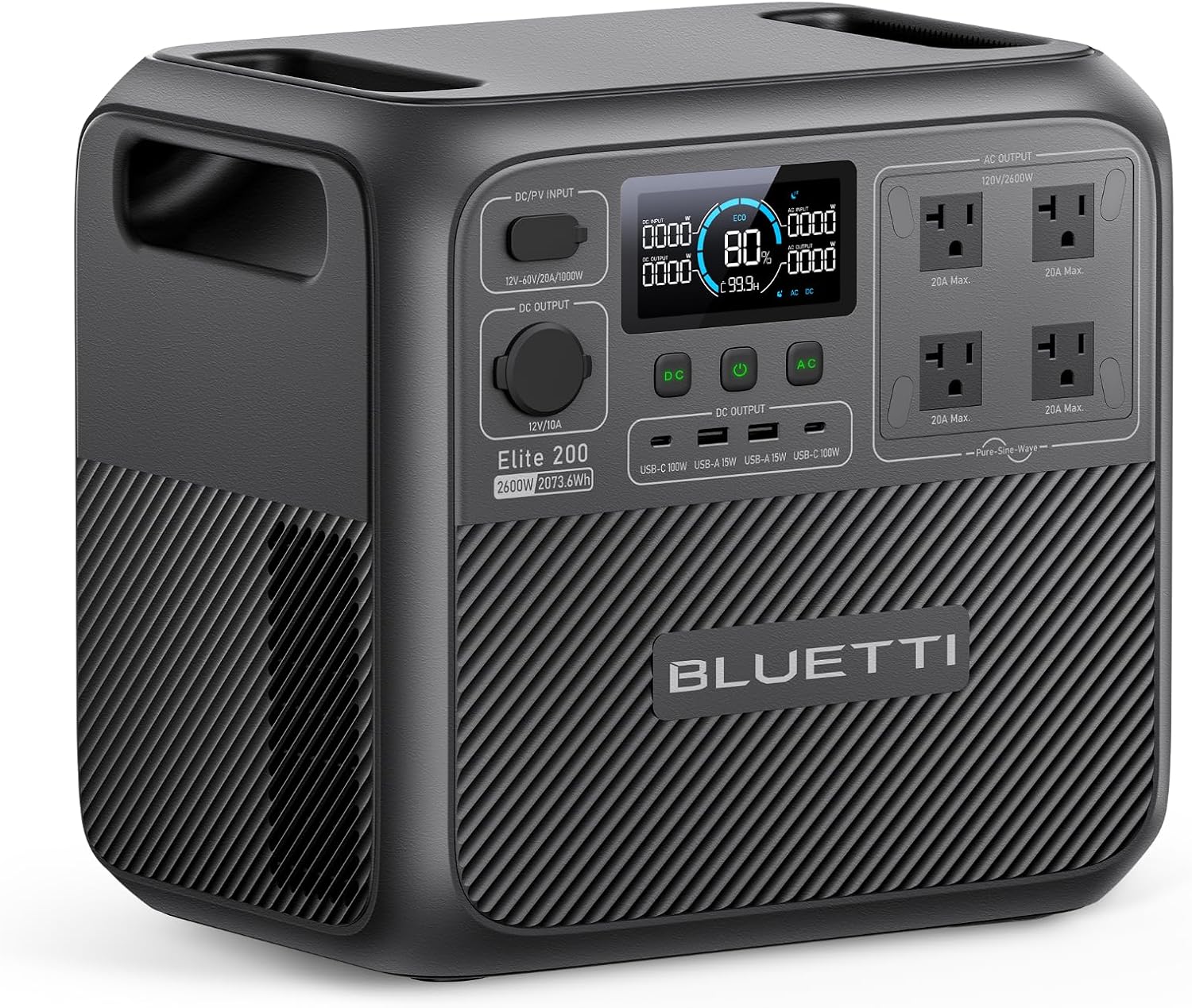
Bluetti Elite 200 V2
Popular Mechanics’ best overall: 2,073 Wh that delivered 92% of its rated capacity, with a 6,000-cycle LiFePO4 battery.
- 2,073.6 Wh, 2,600 W (3,900 W peak)
- 0-80% in 81 minutes
- 6,000-cycle battery
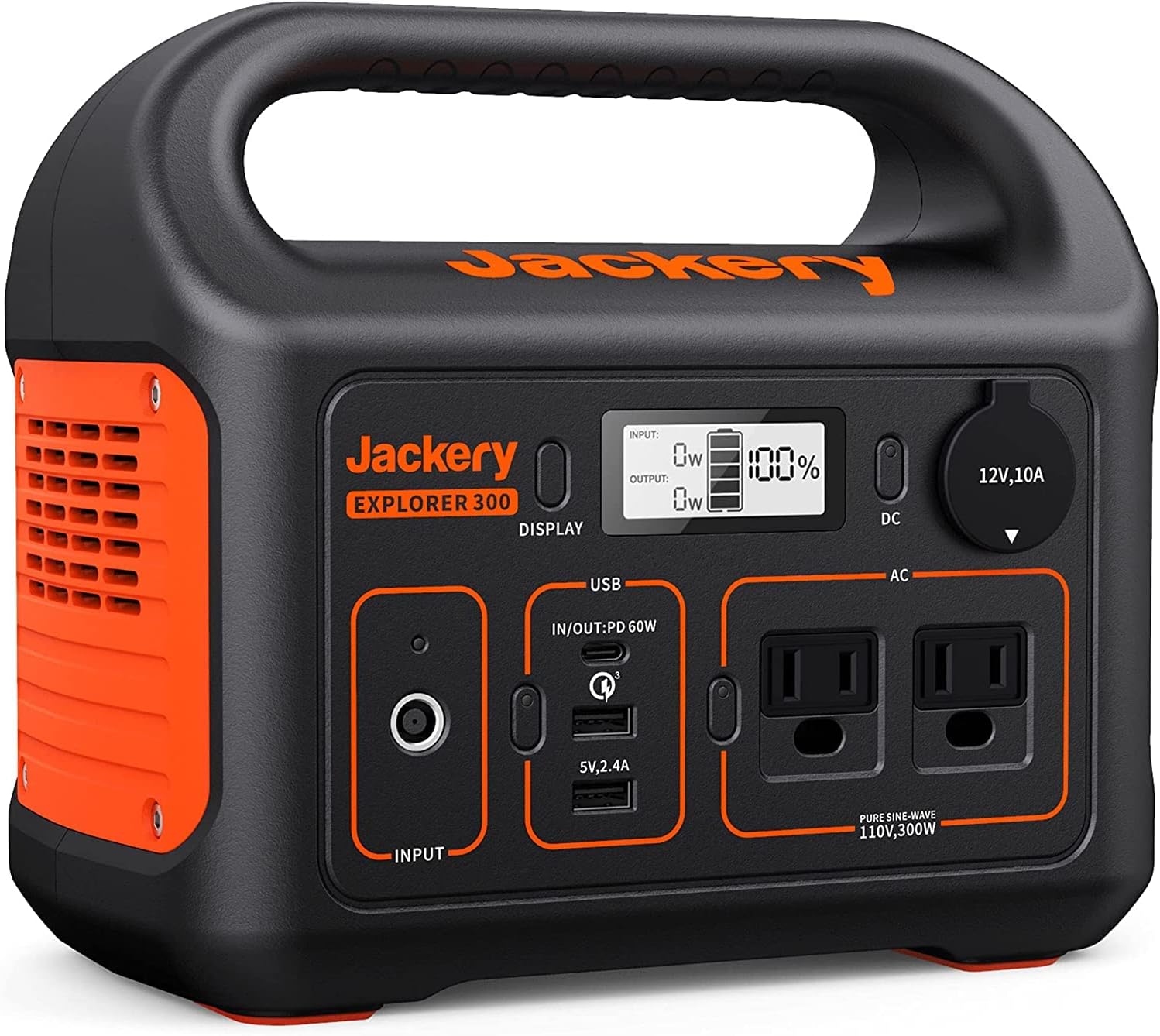
Jackery Solar Generator 300 (with 40W Panel)
The 7.1-pound Explorer 300 bundled with a 40W solar panel: Wirecutter’s pick for short trips, phones, laptops and fans.
- 293 Wh, 300 W output
- 7.1 lb grab-and-go
- Solar panel included

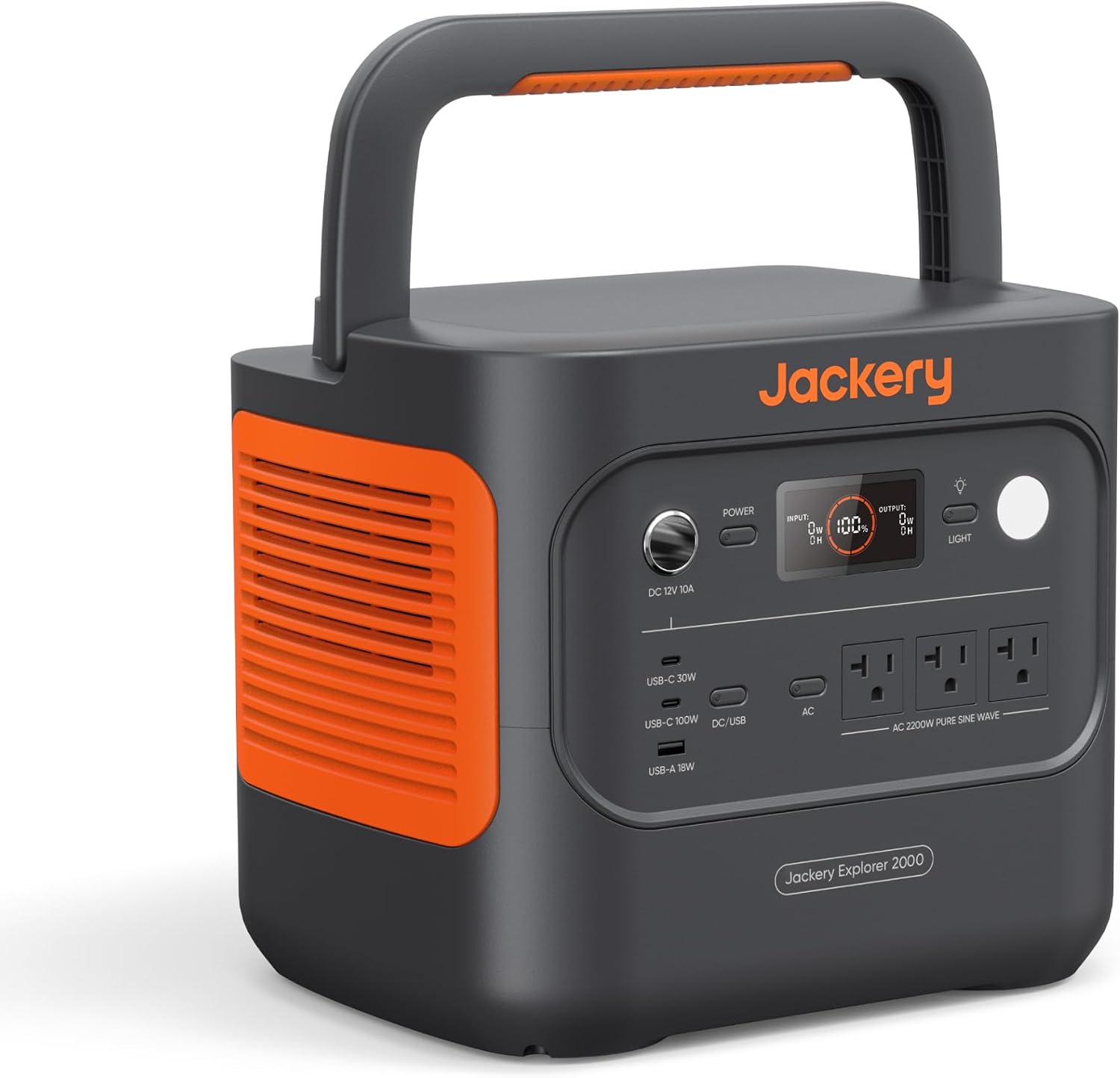
Jackery Explorer 2000 v2
OutdoorGearLab’s #1 overall: 2,042 Wh, 1,710 Wh measured usable, 39 lb, and a 2.5-hour full recharge. The camping default.
- 2,042 Wh (1,710 Wh measured)
- 2,200 W output, 38.9 lb
- 100% charge in 2.5 hours

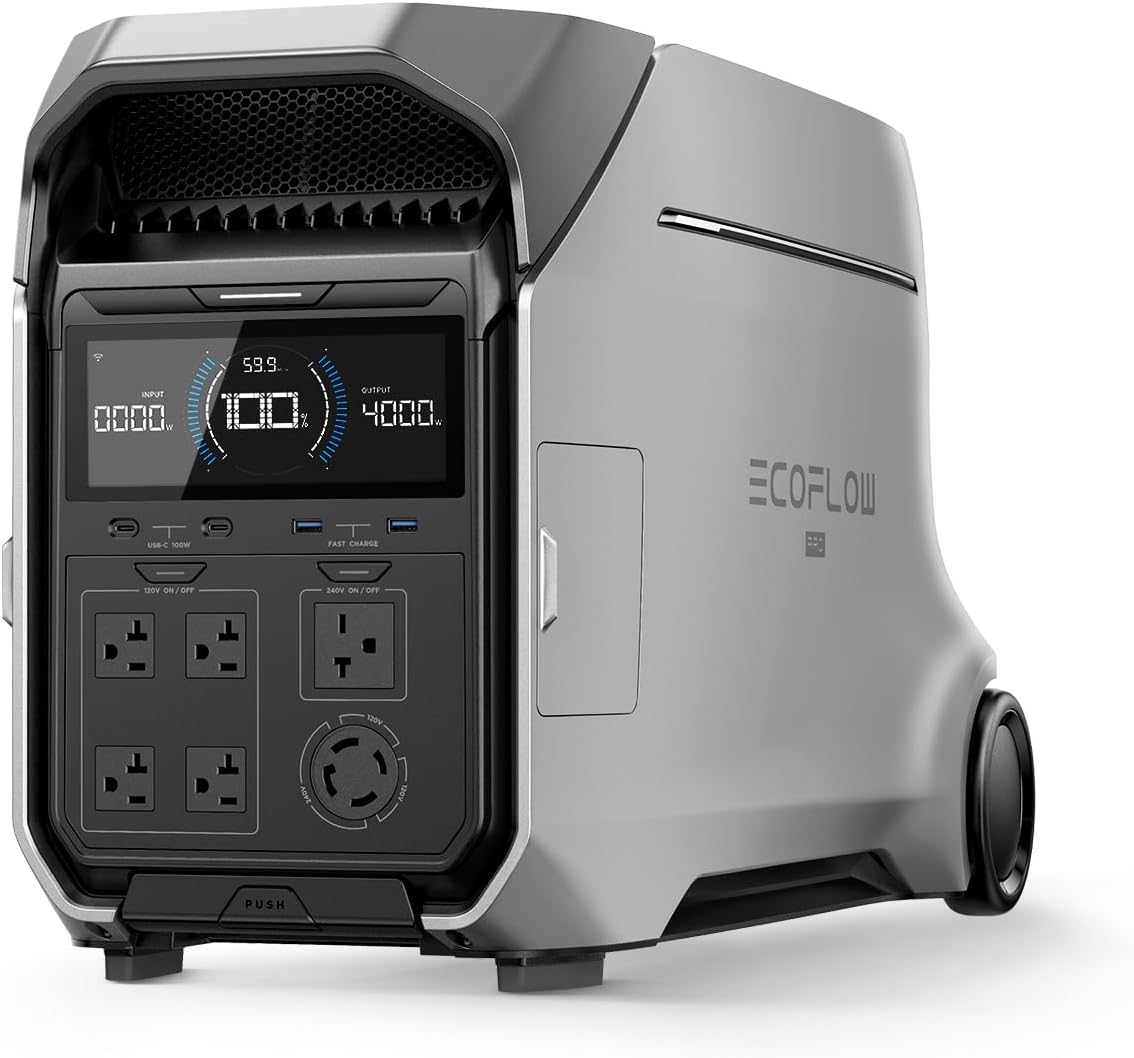
EcoFlow Delta Pro 3
The home-backup flagship: 4,096 Wh expandable to 48 kWh, 4,000 W output and an optional transfer-switch kit for your breaker panel.
- 4,096 Wh, expandable to 48 kWh
- 4,000 W output, 7 AC outlets
- 2,600 W solar input
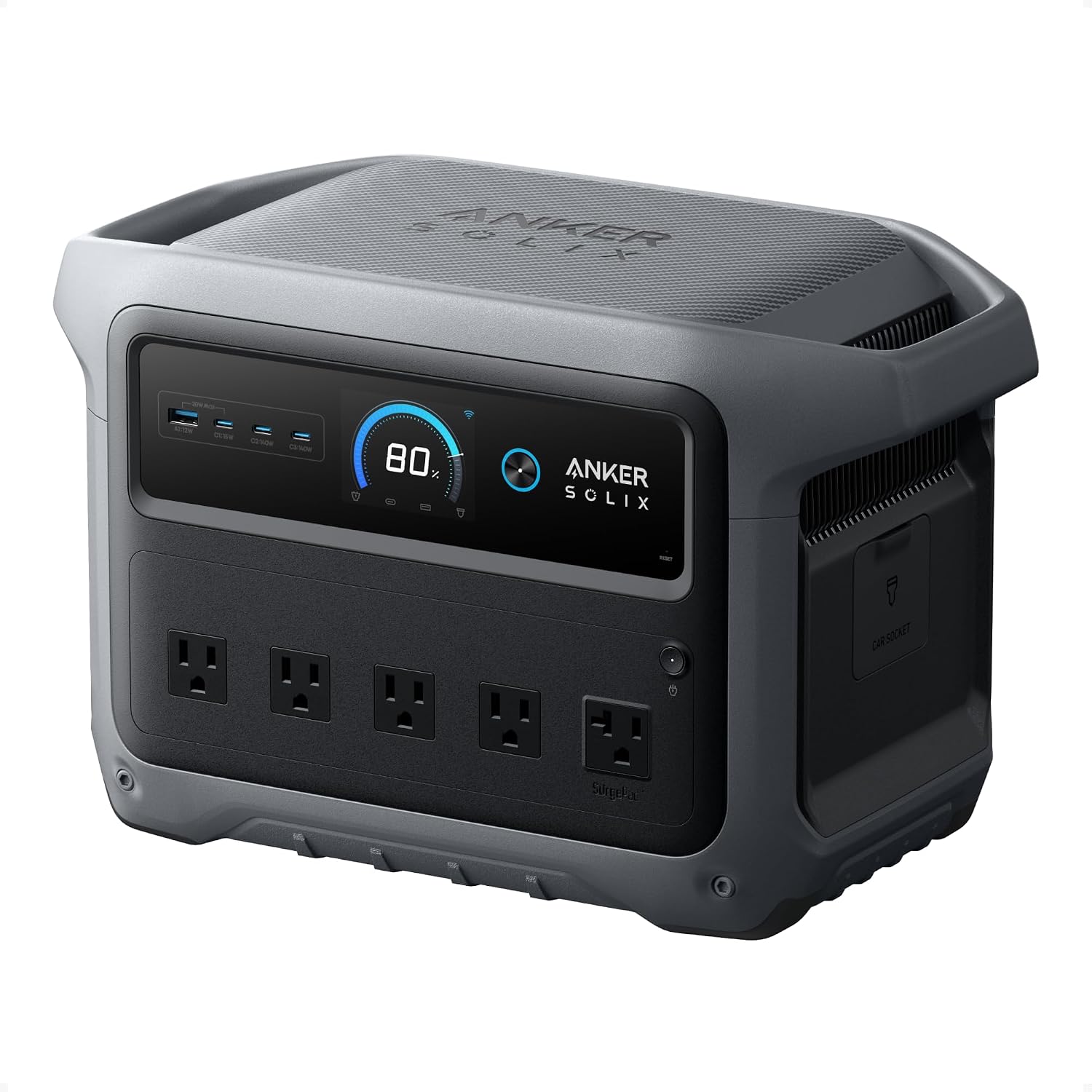
Anker Solix C1000 Gen 2
OutdoorGearLab’s best value for most people: 1,056 Wh in 25 pounds with a stunning 56-minute full recharge.
- 1,056 Wh, 25.2 lb
- 1,800 W max AC output
- 56-minute full charge
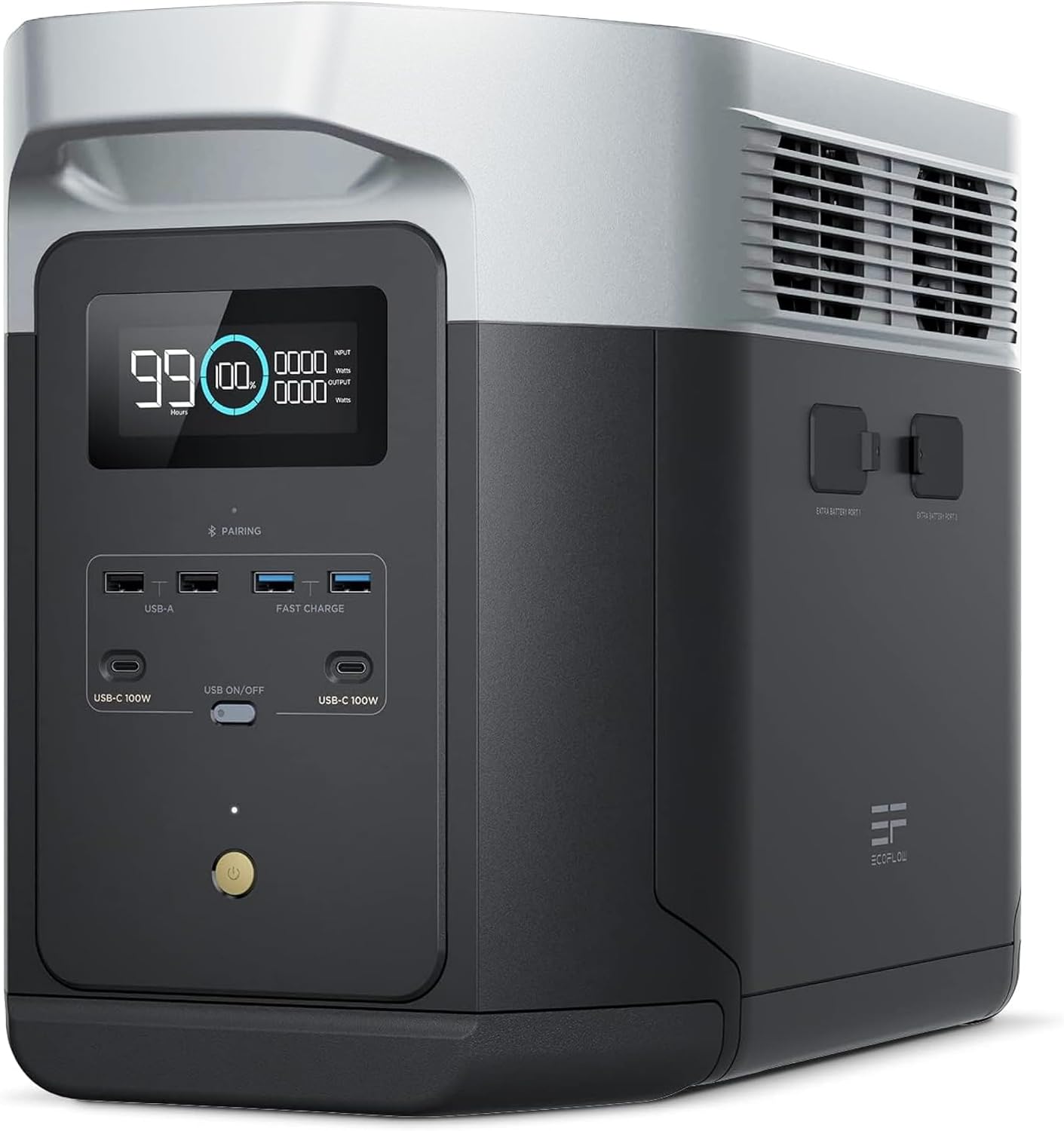
EcoFlow Delta 2 Max
Wirecutter’s upgrade pick: 2,048 Wh, 2,400 W, six AC outlets and the same five-year warranty, at the edge of one-person lifting.
- 2,048 Wh, 2,400 W output
- Six AC outlets
- 50.7 lb, 5-year warranty
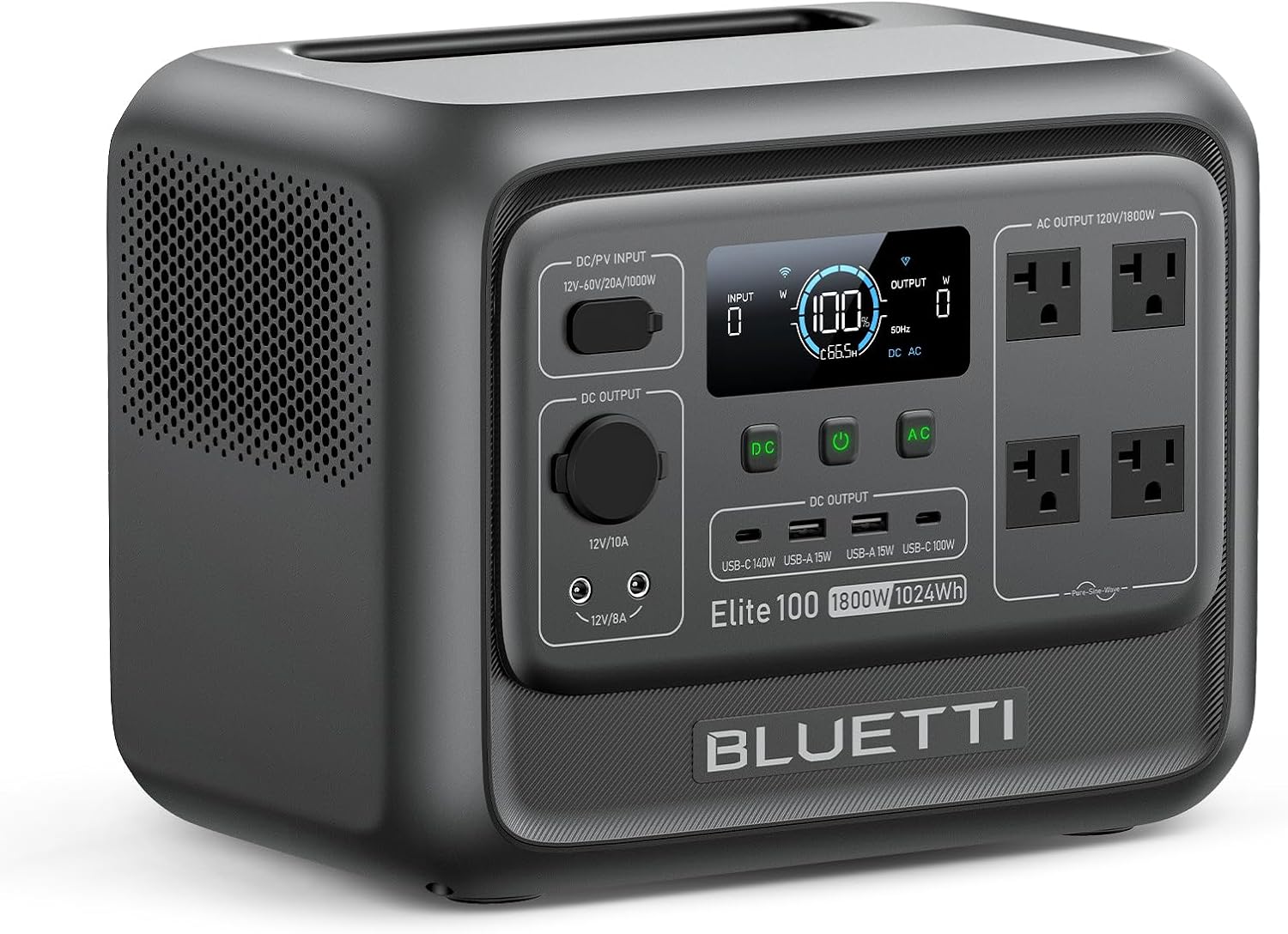
Bluetti Elite 100 V2
A value-oriented 1 kWh station with dialed power output: 1,800 W from a 25-pound box, ranked in OutdoorGearLab’s tested top ten.
- 1,024 Wh, 1,800 W output
- 25 lb compact body
- Fast 0.6-hour-class recharge
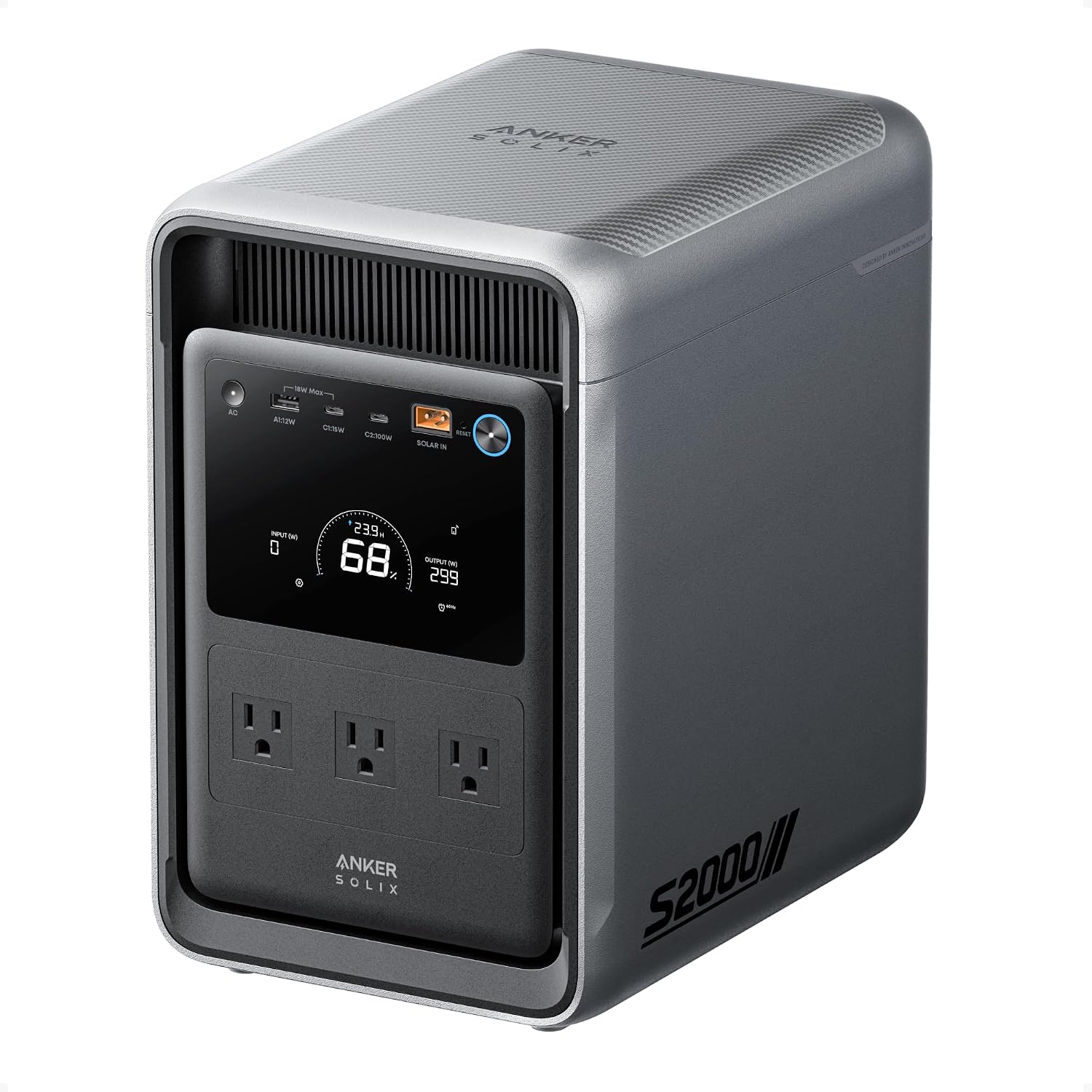
Anker Solix S2000
The runtime king: adaptive inverter tech ran a full-size fridge over 24 hours, six hours longer than comparable stations. 10ms UPS built in.
- 2,010 Wh, 35.7 lb
- 1,500 W (3,000 W surge)
- 10ms UPS switchover
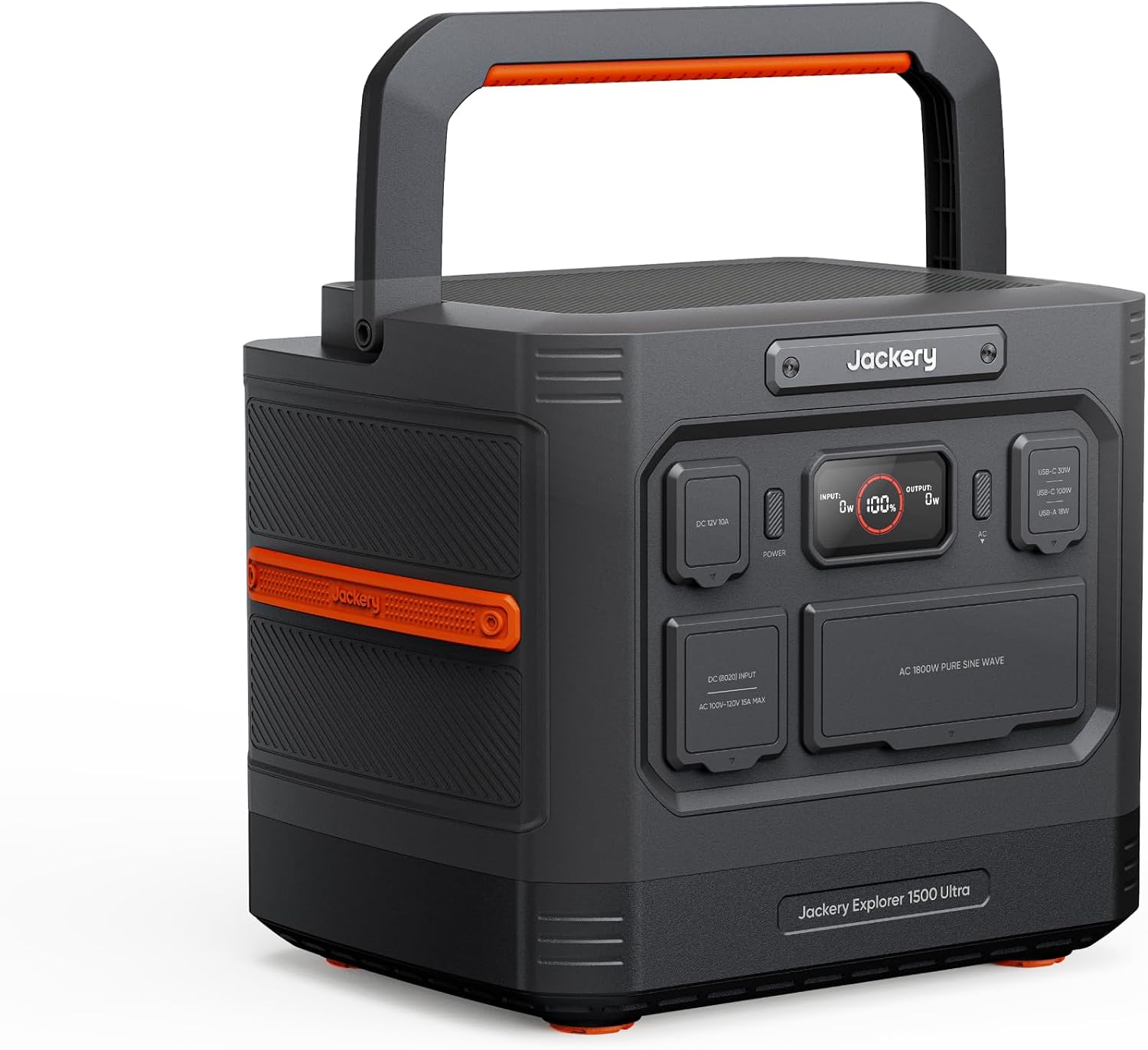
Jackery Explorer 1500 Ultra
The rugged one: IP65 weatherproofing, a shockproof enclosure and fanless titanium-plate cooling. Built for dusty, wet campsites.
- 1,536 Wh, 1,800 W output
- IP65 dust and water resistant
- 38.6 lb, sealed port covers
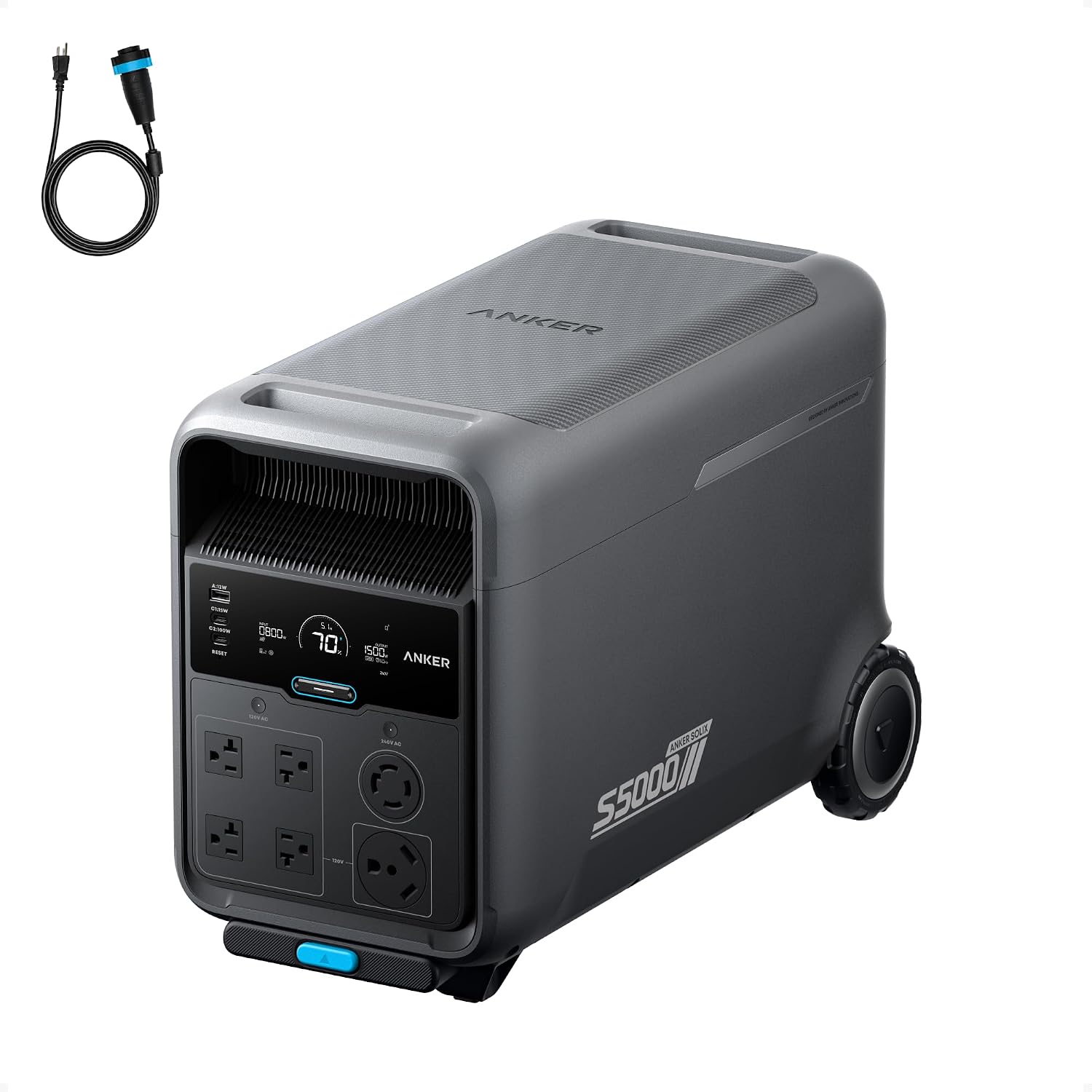
Anker Solix S5000
5 kWh at 97% measured efficiency, half the size of rivals, with a 240V/30A outlet and 3,000 W of solar input. Serious backup.
- 5,024 Wh, 4,500 W (8,000 W surge)
- 97% inverter efficiency
- 240V outlet, 3,000 W solar
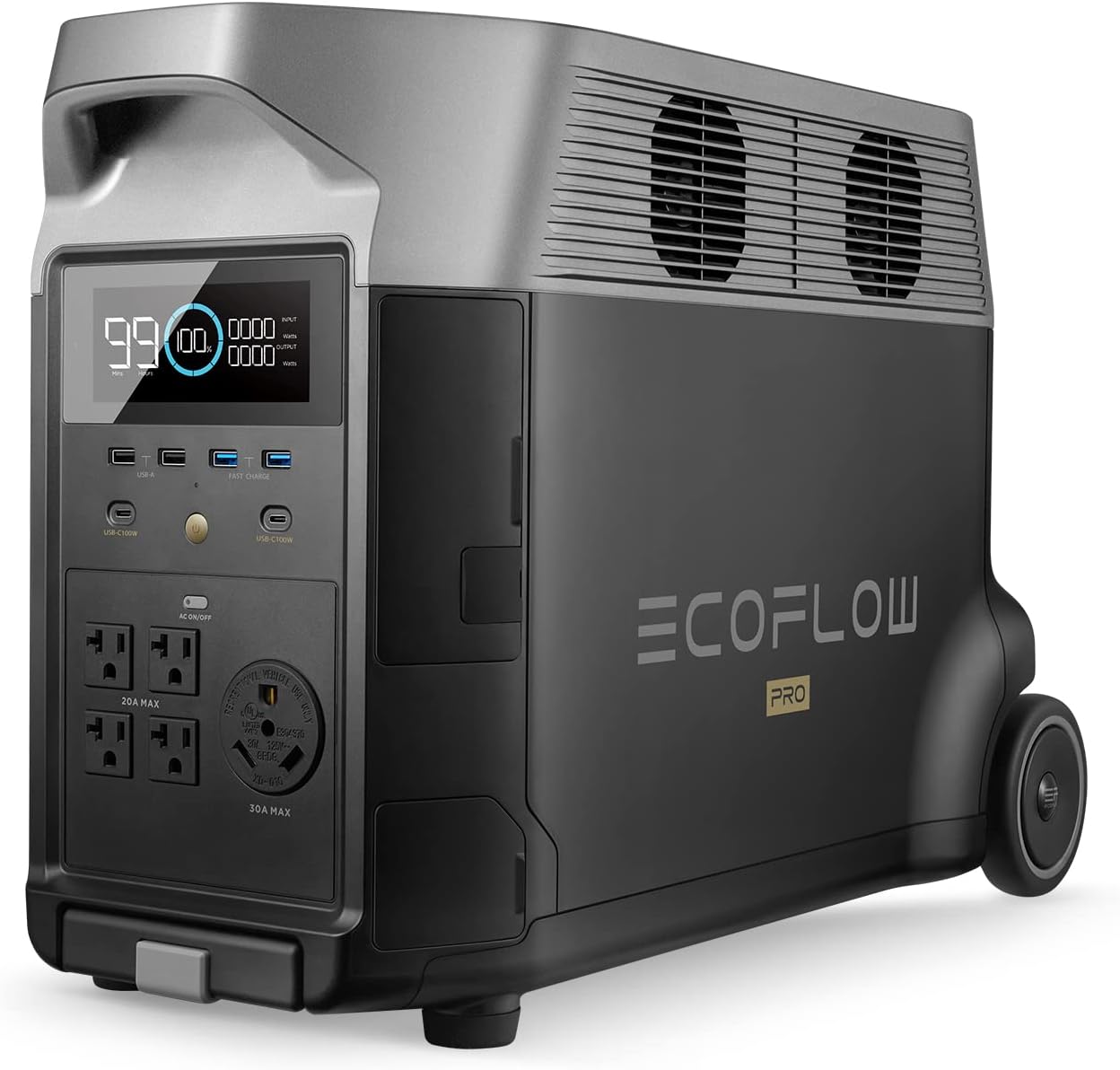
EcoFlow Delta Pro
The veteran flagship: 3,600 Wh that ran a 25-cu-ft fridge for 51 hours straight in Popular Mechanics’ test, with EV-station charging.
- 3,600 Wh, 3,600 W (4,500 W X-Boost)
- 51-hour fridge runtime
- EV charging adapter included
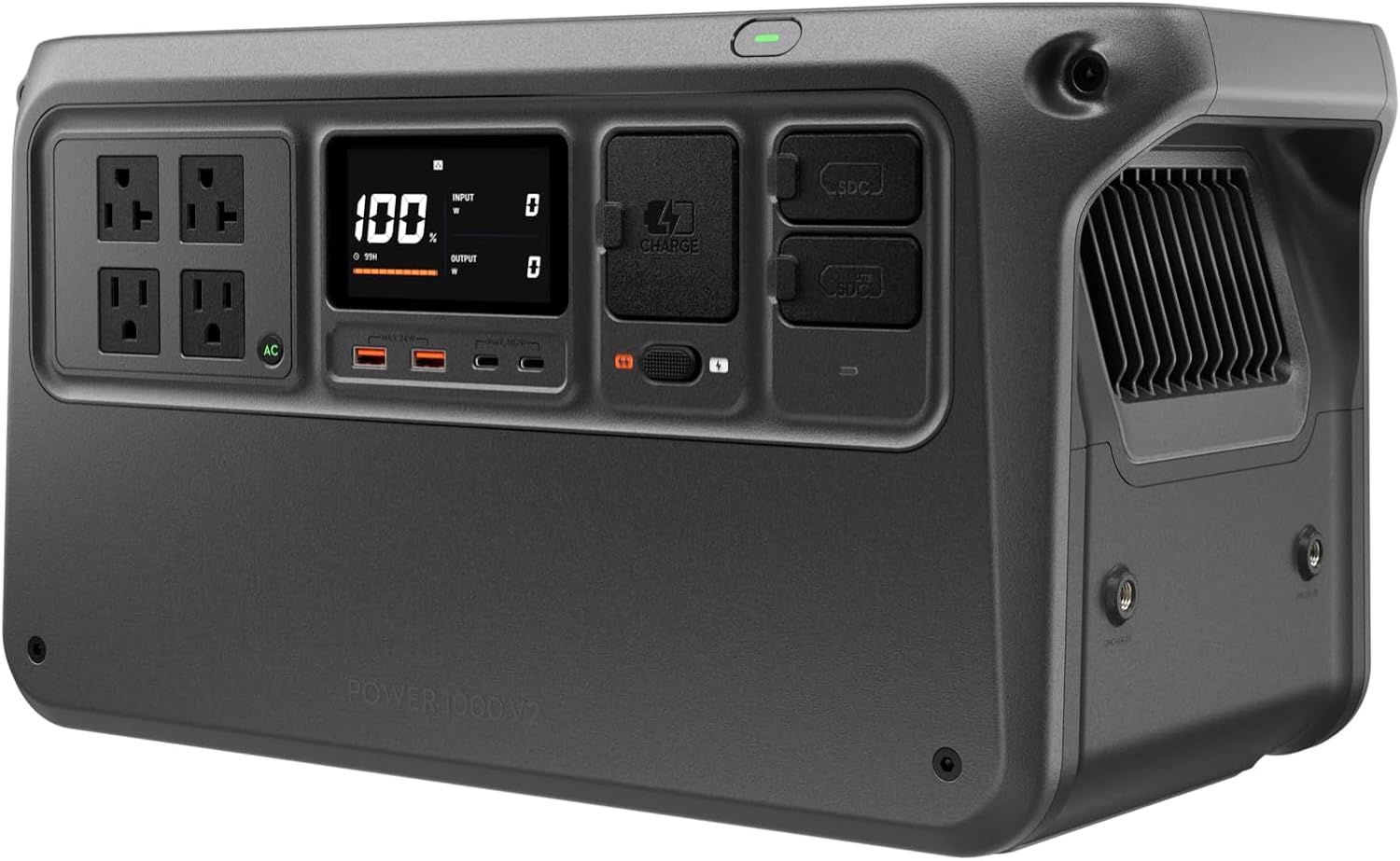
DJI Power 1000 V2
From the drone maker: 2,600 W output and fast charging, ideal for off-grid studio and camera work, though some ports are proprietary.
- 1,024 Wh, 2,600 W output
- 31.5 lb mid-size format
- Fast recharge class
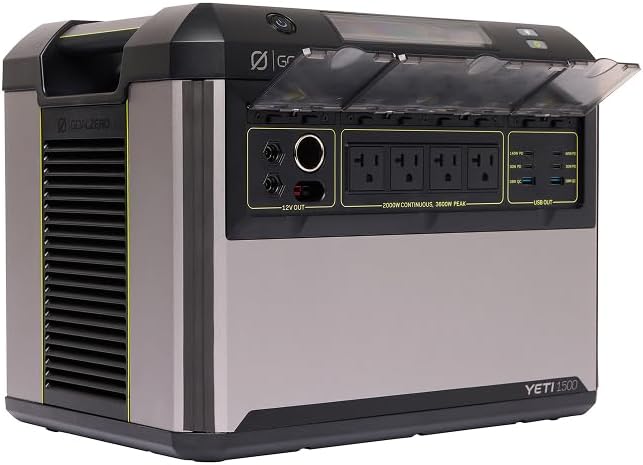
Goal Zero Yeti 1500
The 2026 Yeti: IPX4 weather resistance, illuminated port shields, four AC outlets and six USB ports for long off-grid weekends.
- 1,505 Wh, 2,000 W (3,600 W surge)
- IPX4, port shields
- 4 AC + 6 USB ports
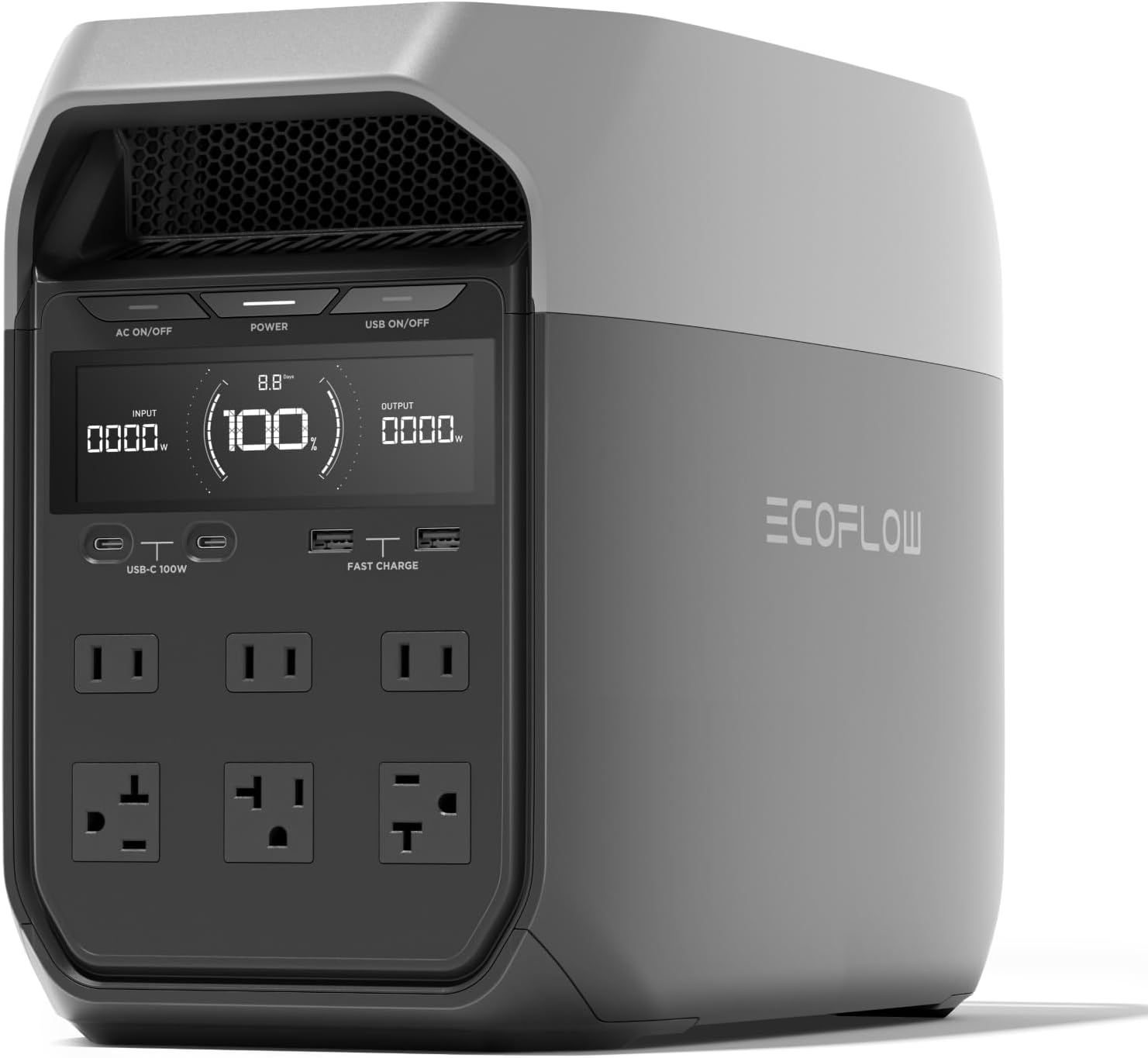
EcoFlow Delta 3
A dialed mid-size station with lightning-fast charging and UPS duty, rated 1,800 W in a 28-pound body.
- 1,024 Wh, 1,800 W output
- 28.1 lb
- UPS capable, fast charging
All Sixteen, Side by Side
| Power station | Capacity | Max output | Weight |
|---|---|---|---|
| EcoFlow River 2 Pro (walmart.com) | 768 Wh | 800 W | 17.2 lb |
| Jackery Explorer 1000 v2 (walmart.com) | 1,070 Wh | 1,500 W | 23.8 lb |
| Bluetti Elite 200 V2 (walmart.com) | 2,073.6 Wh | 2,600 W | 53 lb |
| Jackery Solar Generator 300 (target.com) | 293 Wh | 300 W | 7.1 lb |
| Jackery Explorer 2000 v2 | 2,042 Wh | 2,200 W | 38.9 lb |
| EcoFlow Delta Pro 3 | 4,096 Wh | 4,000 W | 114.1 lb |
| Anker Solix C1000 Gen 2 | 1,056 Wh | 1,800 W | 25.2 lb |
| EcoFlow Delta 2 Max | 2,048 Wh | 2,400 W | 50.7 lb |
| Bluetti Elite 100 V2 | 1,024 Wh | 1,800 W | 25 lb |
| Anker Solix S2000 | 2,010 Wh | 1,500 W | 35.7 lb |
| Jackery Explorer 1500 Ultra | 1,536 Wh | 1,800 W | 38.6 lb |
| Anker Solix S5000 | 5,024 Wh | 4,500 W | 99 lb |
| EcoFlow Delta Pro | 3,600 Wh | 3,600 W | 99 lb |
| DJI Power 1000 V2 | 1,024 Wh | 2,600 W | 31.5 lb |
| Goal Zero Yeti 1500 | 1,505 Wh | 2,000 W | 53 lb |
| EcoFlow Delta 3 | 1,024 Wh | 1,800 W | 28.1 lb |
How to Choose
Start with the job, not the spec sheet. To run a fridge and the internet through an overnight outage, you want at least 1,000 watt-hours and 1,500 watts of output: the Jackery 1000 v2, Anker C1000 Gen 2 and Bluetti Elite 100 V2 all qualify at friendly prices. Multi-day camping points to the Jackery 2000 v2 or the rugged 1500 Ultra. True home backup starts at the Delta 2 Max and climbs to the Delta Pro 3 or Anker S5000, ideally with a transfer switch installed by an electrician. Whatever you buy, remember the 85 percent rule: expect about 85 percent of the label capacity as usable power, and size up if your plan is tight. Store the unit at 20 to 80 percent charge somewhere temperate, and a modern LiFePO4 station will still be working a decade from now.
Pros
- Silent and fume-free, safe for indoor use during outages
- LiFePO4 batteries rated for a decade of charge cycles
- Solar recharging extends every station off-grid indefinitely
- UPS modes on larger units protect computers and medical devices
Cons
- Heavy high-capacity models trade portability for runtime
- Expect about 85 percent of label capacity as usable power
- Space heaters and big cooking appliances drain even 2 kWh units fast
- Proprietary ports and apps vary widely between brands
The responses below are not provided, commissioned, reviewed, approved, or otherwise endorsed by any financial entity or advertiser. It is not the advertiser’s responsibility to ensure all posts and/or questions are answered.