The AAA shelf looks simple until you actually compare it. Every cell is the same size and shape, yet the listings behind them promise very different things: a decade or more in a drawer, hundreds or thousands of recharge cycles, sub-zero operation, bulk counts that cover a household for years. Picking well is less about brand loyalty and more about matching chemistry and pack format to the devices you actually own.

How to Read a AAA Listing
Chemistry is the first fork. Standard alkaline cells run at 1.5 volts, cost the least per battery and suit low-drain gear like remotes, clocks and flashlights. Lithium AAA cells stay at 1.5 volts but handle cold, weigh less and store far longer, which is why they show up in outdoor sensors and emergency kits. Rechargeables use NiMH chemistry at 1.2 volts; most modern devices accept the lower voltage without complaint, but a few older gadgets read 1.2 volts as half-empty from the start, so it is worth testing one device before converting a whole drawer. A handful of devices, smoke alarms included, spell out alkaline-only requirements in their manuals, and that instruction overrules any preference for rechargeables.
Treat capacity numbers with care, because they are not measured the same way across chemistries. A milliamp-hour rating on a NiMH rechargeable is a rated figure you can compare cell to cell, while an alkaline cell's effective capacity shifts with how hard the device drains it, so no single number describes it.
The second fork is how you count value. Disposables are measured in storage life, with current listings citing ten to twenty-five years depending on chemistry. Rechargeables are measured in cycles and charge retention: a cell rated for two thousand charges that keeps most of its capacity on the shelf behaves very differently from a high-capacity cell that trades cycle count for longer runtime per charge. Neither is better in the abstract; the right answer depends on how fast you drain them.
Finally, check the pack itself. Reclosable boxes and slider packs keep loose cells from rolling into a junk drawer, date-coded cells help anyone rotating stock, and plastic-free cardboard packaging is now a real option rather than a niche one.
Pros
- Bulk alkaline packs cover a whole household for years at the lowest cost per cell
- Lithium cells handle deep cold and sit in storage for decades
- Modern NiMH rechargeables arrive pre-charged and hold most of that charge for a year or more
- Reclosable and plastic-free packs keep spares organized and recyclable
Cons
- A 1.2V rechargeable can fool older devices into early low-battery warnings
- Rechargeables need a charger, which no listing in this lineup includes
- Long-storage guarantees only apply to unused, properly stored cells
- High-capacity NiMH cells trade total recharge cycles for runtime
Moving from the disposable picks to the rechargeable ones changes what the numbers mean. Storage guarantees give way to cycle ratings, and pack counts get smaller because each cell is meant to come back. If you go through a set of batteries every few weeks in a game controller or a camera flash, a rechargeable pack pays for its charger quickly; if a remote lasts two years on one set, alkaline bulk still wins on effort alone.
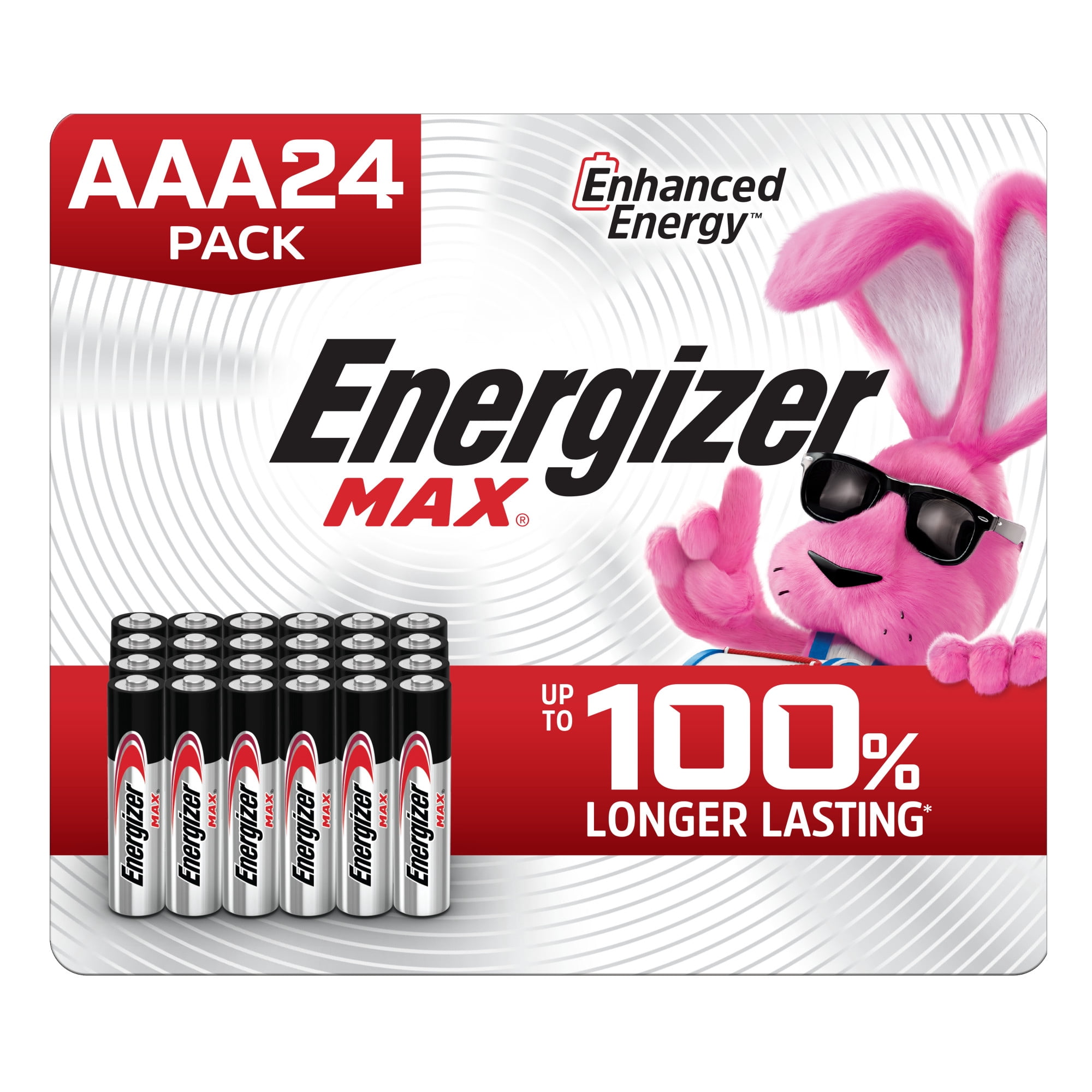
Energizer MAX AAA (24-Pack)
The household bulk pick from the alkaline aisle: a 24-pack of 1.5-volt cells the listing rates at up to 15 years in storage, built around the brand's Enhanced Energy cell design.
- 1.5V alkaline, 24 per pack
- Listing rates up to 15 years of storage life
- Enhanced Energy cell design per the listing

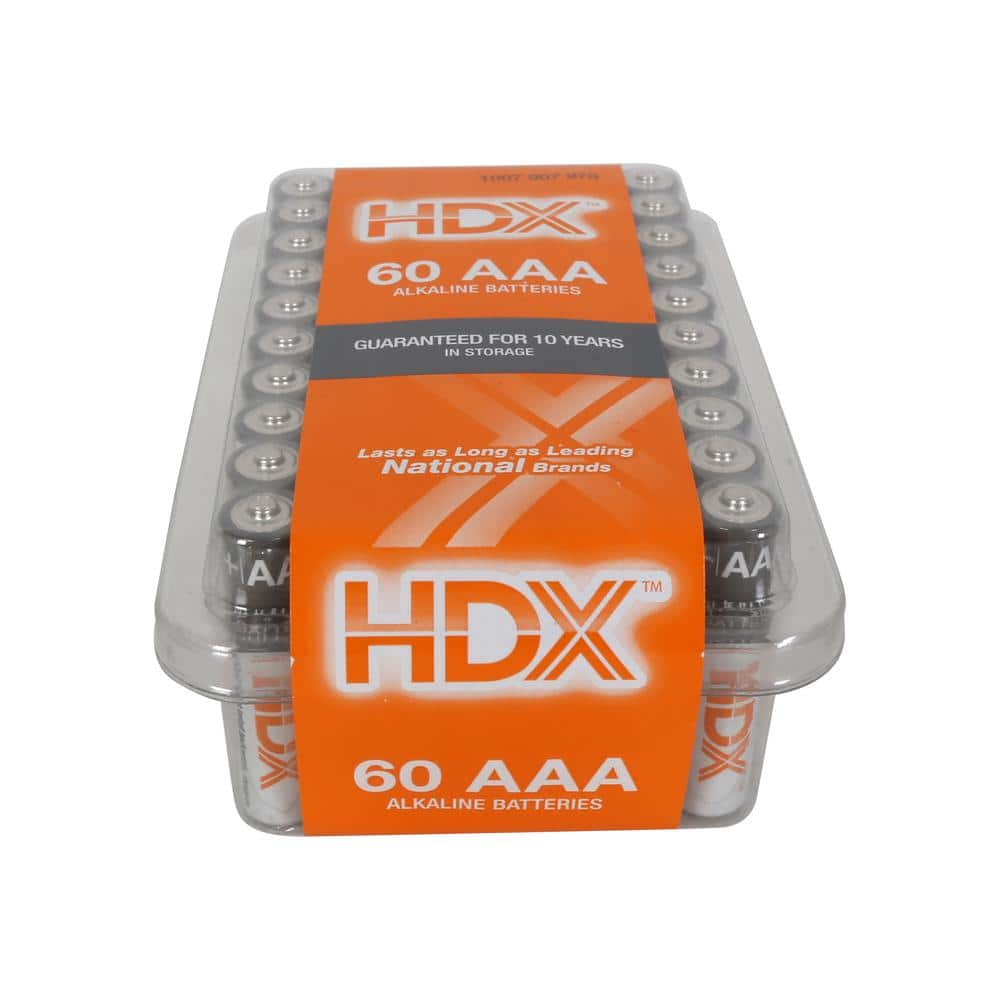
HDX AAA Alkaline Battery (60-Pack)
The hardware-store bulk case: 60 alkaline cells the listing rates at up to 10 years of power in storage, with a stainless steel cover the maker says guards against leaks and rust corrosion, and no added mercury or cadmium.
- 1.5V alkaline, 60 per case
- Holds power up to 10 years in storage per listing
- Stainless steel cover; no added mercury or cadmium

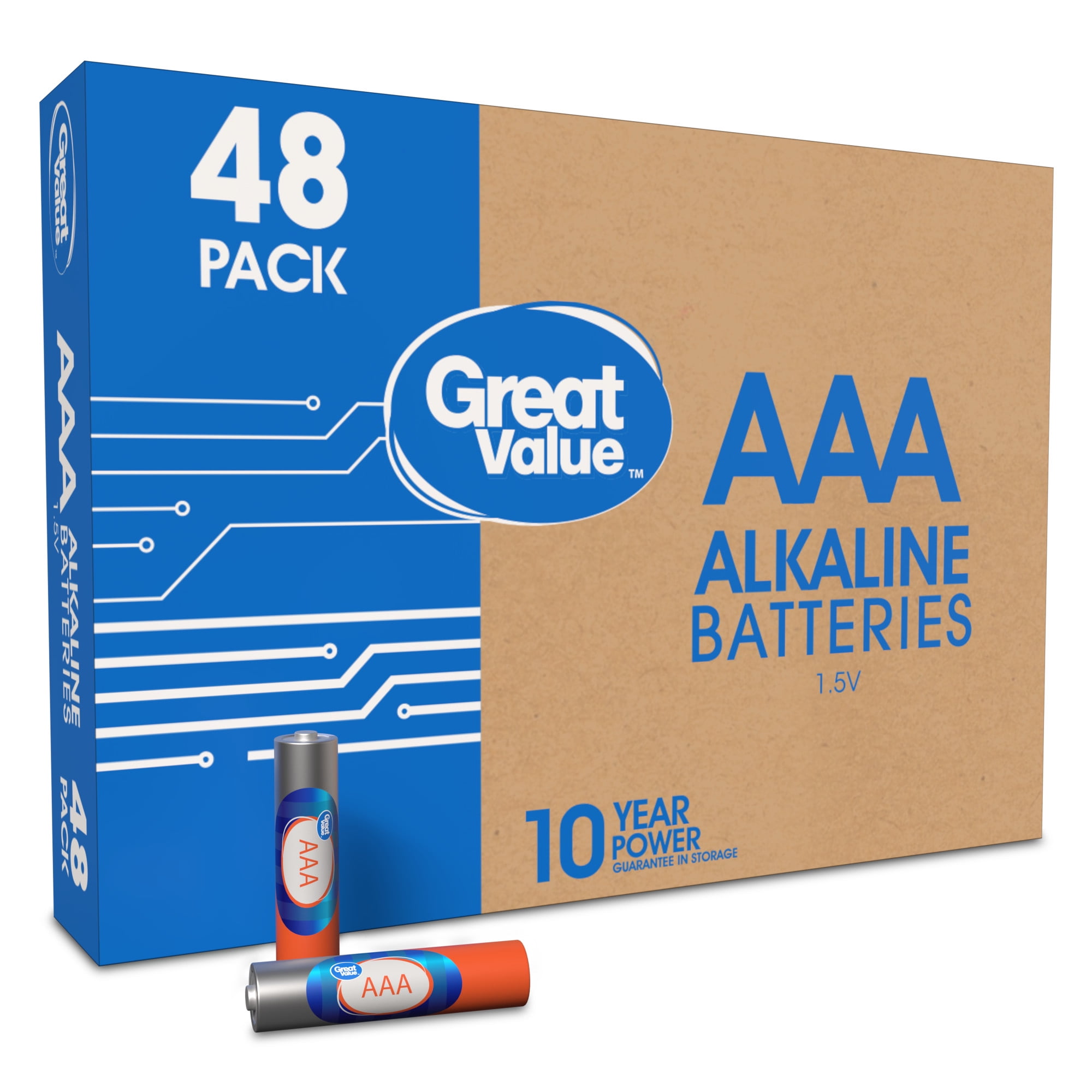
Great Value Alkaline AAA (48-Pack)
The store-brand volume option: 48 alkaline AAA cells in one box, aimed at households that burn through remotes, toys and flashlights and shop by the count.
- 1.5V alkaline, 48 per box
- Store-brand pack from Walmart's own line
- Single-use cells for everyday devices
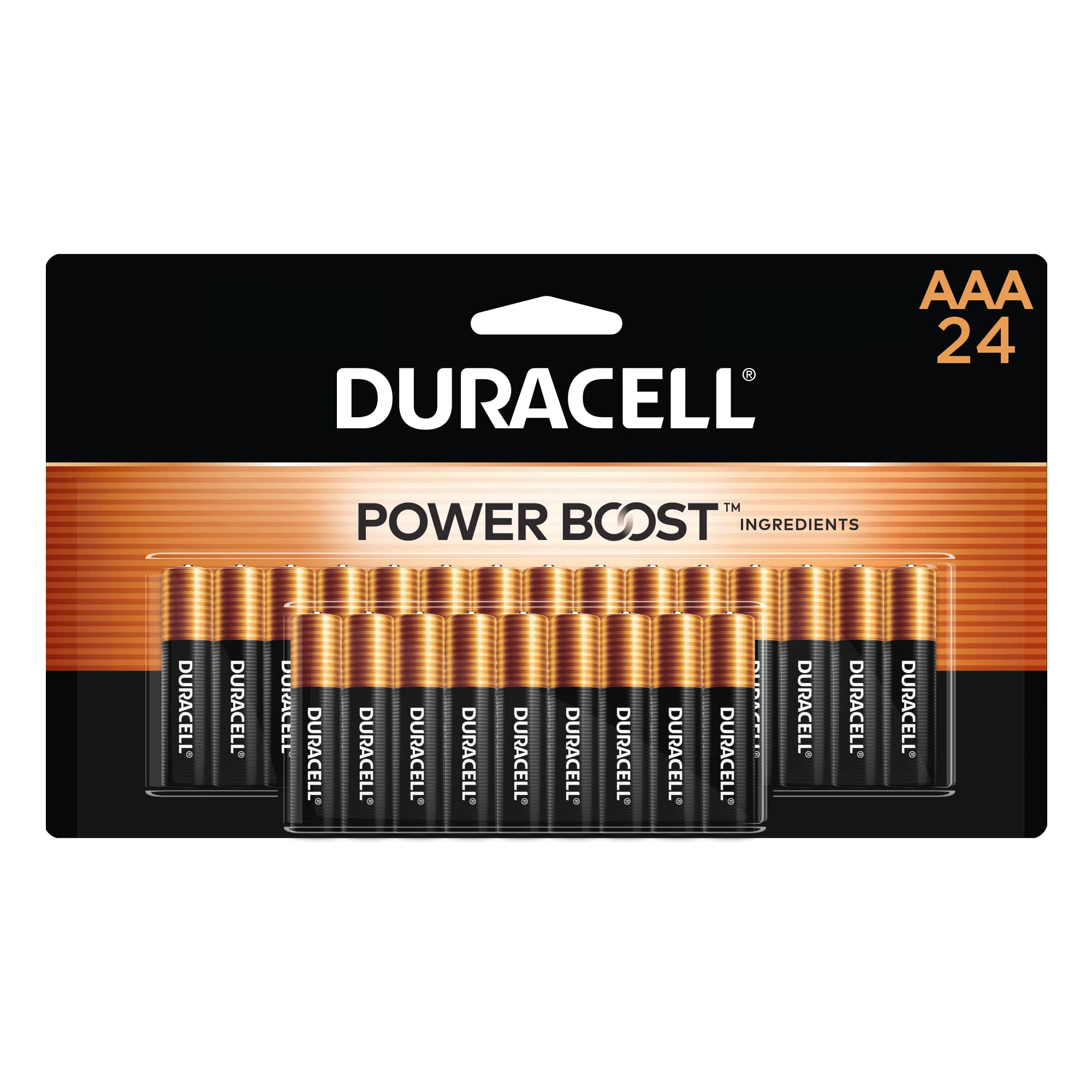
Duracell Coppertop AAA (24-Pack)
The anchor of this lineup: model MN2400 in a 24-count reclosable pack, formulated with the brand's Power Boost Ingredients and guaranteed for 12 years in storage per the listing.
- 1.5V alkaline, model MN2400
- Guaranteed 12 years in storage per listing
- Reclosable 24-count pack

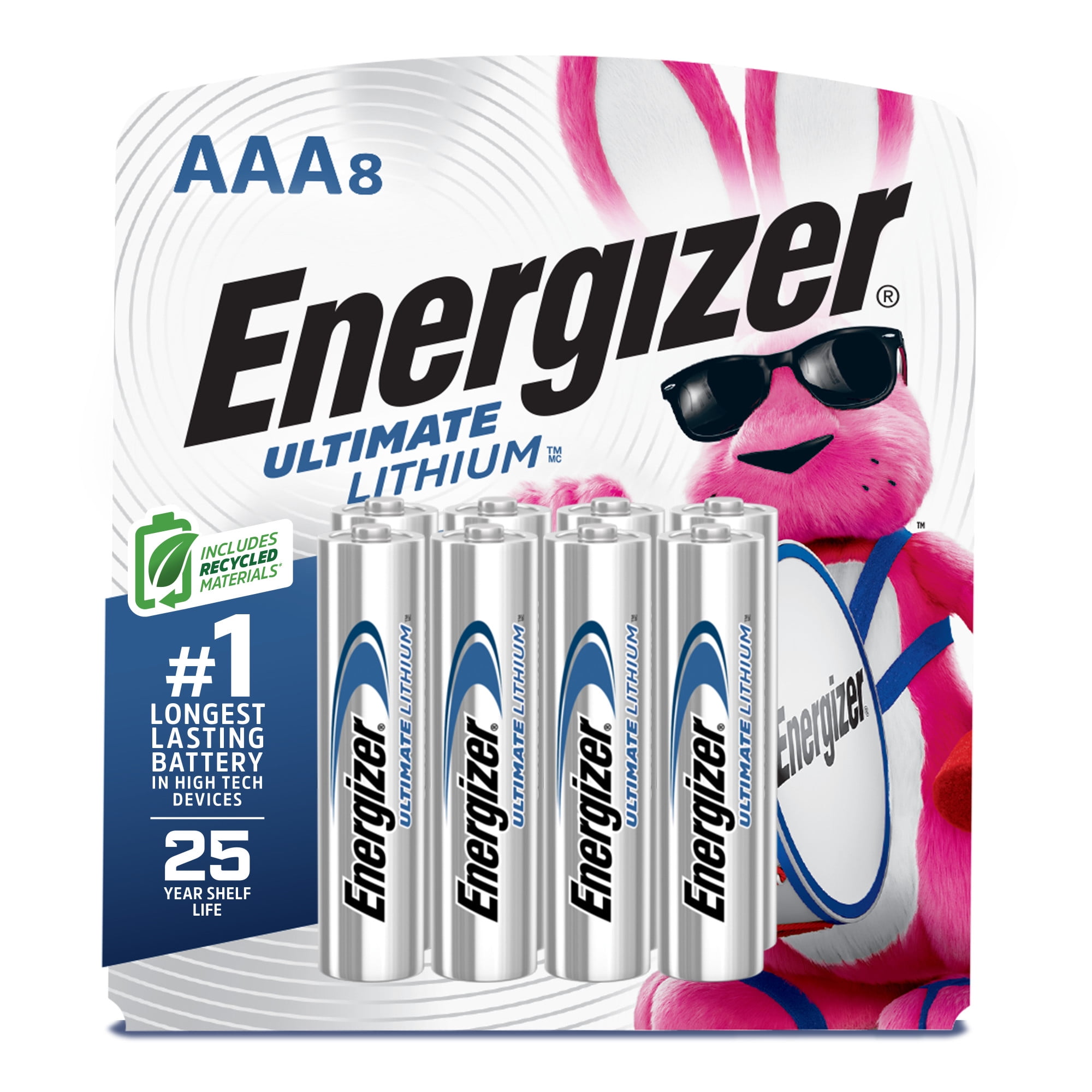
Energizer Ultimate Lithium AAA (8-Pack)
The extreme-conditions cell: model L92SBP-8 in lithium chemistry, rated for storage up to 25 years and operation from -40°F to 140°F, and lighter than an alkaline AAA per the listing.
- 1.5V lithium, 8 per pack
- Listing rates up to 25 years in storage
- Rated for -40°F to 140°F operation
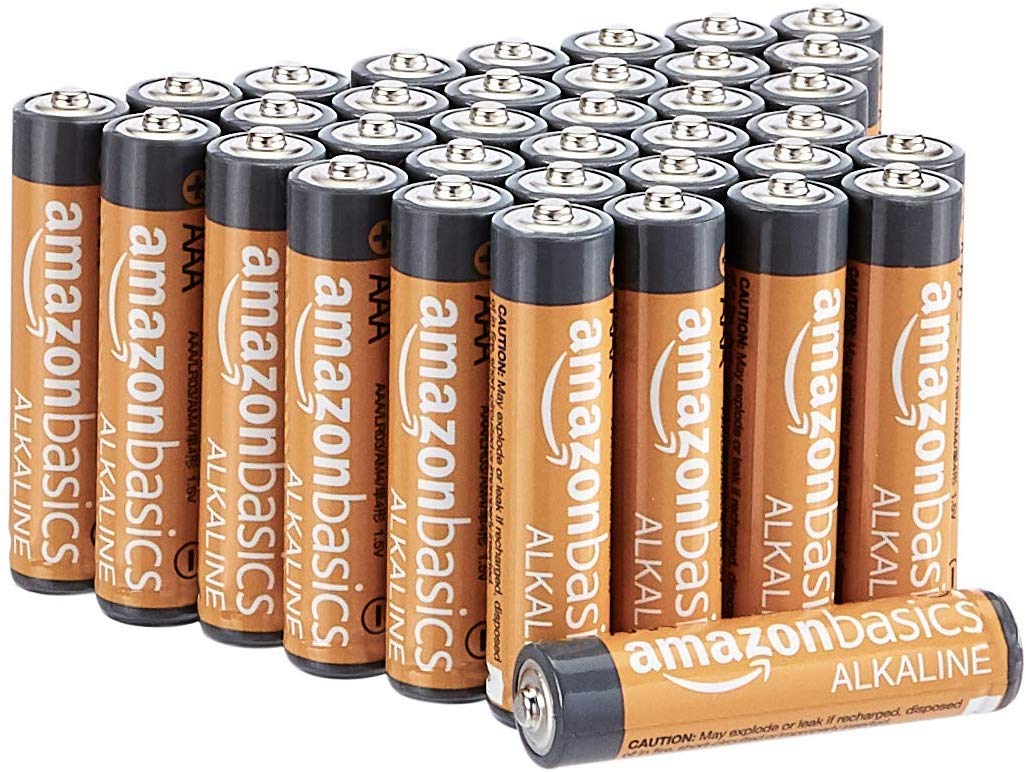
Amazon Basics AAA Alkaline (36-Pack)
The marketplace value staple: 36 single-use 1.5-volt alkaline cells with a 10-year shelf life per the listing, in easy-to-open frustration-free packaging.
- 1.5V alkaline, 36 per pack
- 10-year shelf life per listing
- Frustration-free, easy-open packaging
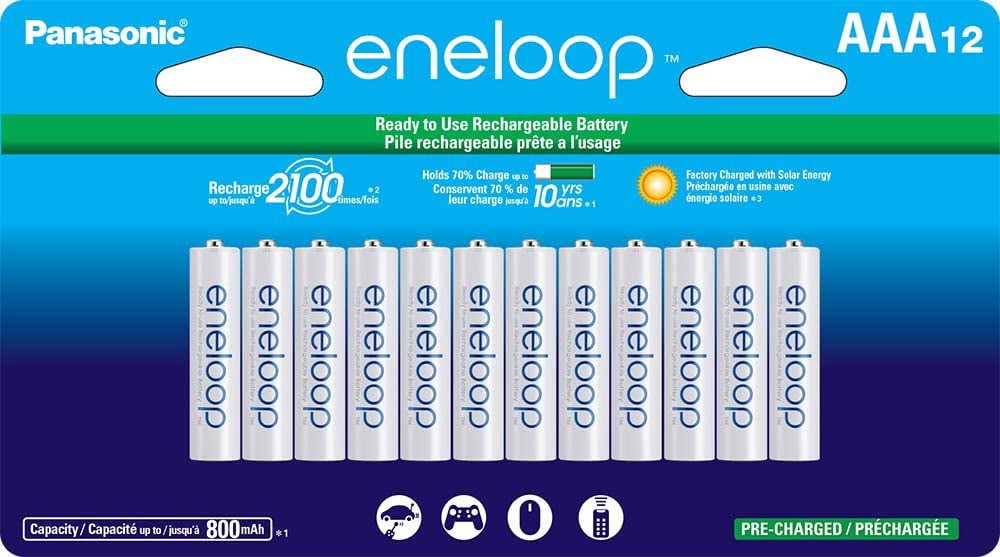
Panasonic eneloop AAA (12-Pack)
The rechargeable benchmark's standard cell: NiMH at 800 mAh minimum, rated for up to 2,100 recharge cycles, pre-charged by solar power at the factory, and holding up to 70% of charge after 10 years stored per the listing.
- 1.2V NiMH, 850 mAh typical / 800 minimum
- Up to 2,100 recharge cycles per listing
- Holds up to 70% charge after 10 years stored
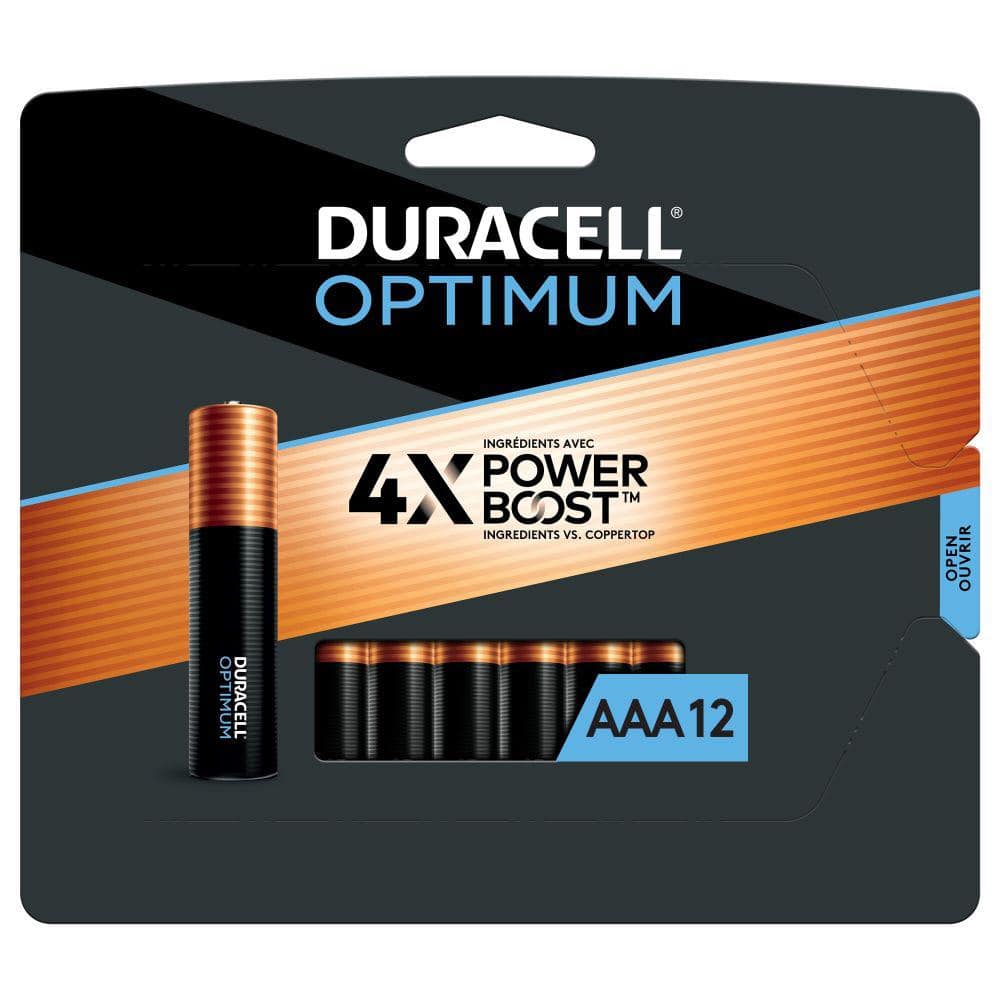
Duracell Optimum AAA (12-Pack)
The brand's step-up alkaline: four times the Power Boost Ingredients of Coppertop per the brand, in a resealable slider pack, with the same 12-year storage guarantee.
- 1.5V alkaline, 12 per slider pack
- 4x Power Boost Ingredients vs Coppertop, per brand
- Guaranteed 12 years in storage per listing
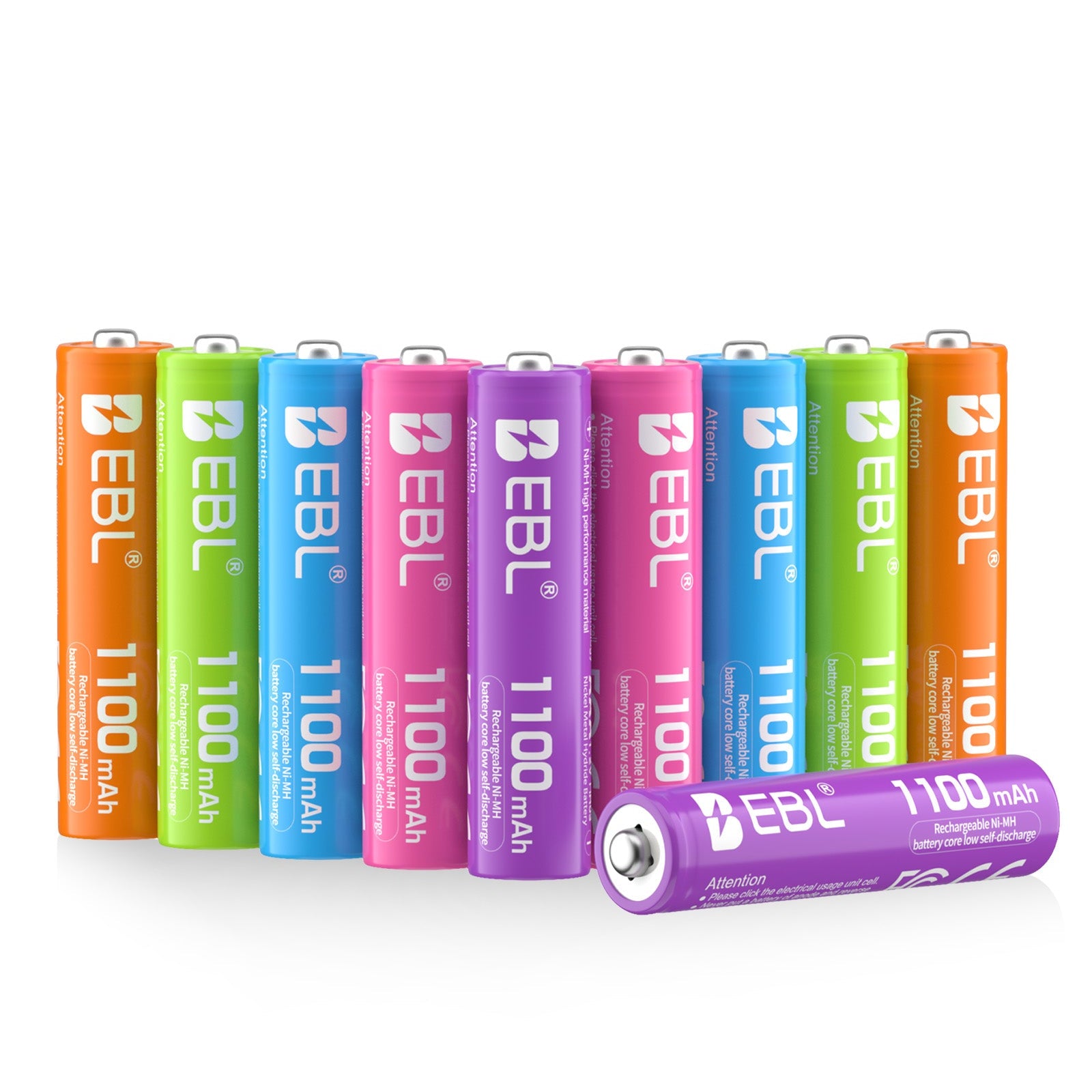
EBL AAA 1100mAh Rechargeable (10-Pack)
The color-coded rechargeable: ten 1.2V NiMH cells at 1,100 mAh in five bright pairs, with the listing citing 80% capacity retention after three years idle and a steel shell against leaks.
- 1.2V NiMH, 1,100 mAh
- Five color pairs to track charged vs spent
- Listing cites 80% capacity after 3 years idle
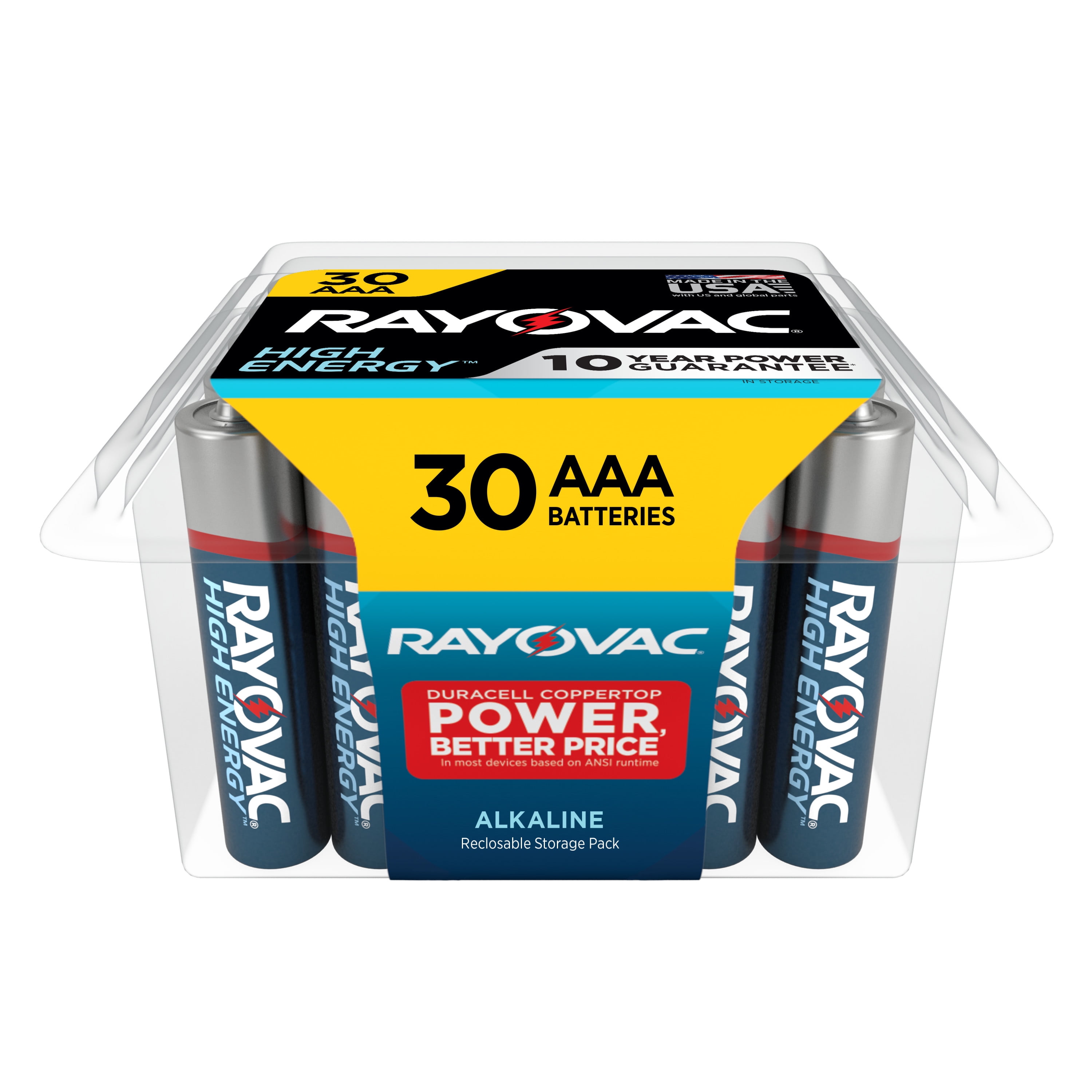
Rayovac High Energy AAA (30-Pack)
The American-made alkaline: 30 cells holding power up to 10 years in storage per the listing, produced in Fennimore, Wisconsin with US and global parts.
- 1.5V alkaline, 30 per pack
- Holds power up to 10 years in storage per listing
- Made in the USA per the listing
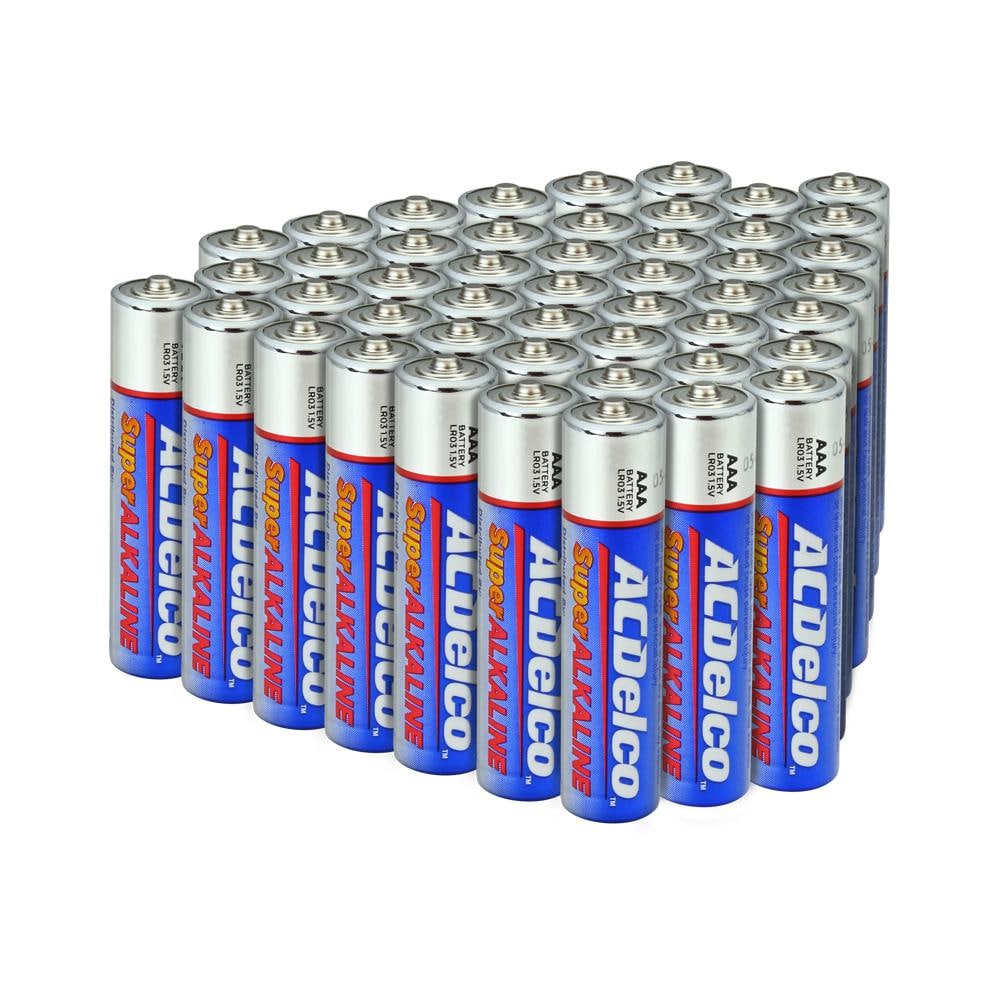
ACDelco Super Alkaline AAA (48-Pack)
The garage-brand bulk box: 48 super alkaline cells (model AC274P) with a 10-year shelf life per the listing, in reclosable packaging, with no mercury or cadmium.
- 1.5V super alkaline, 48 per pack
- 10-year shelf life per listing
- Reclosable box; no mercury or cadmium
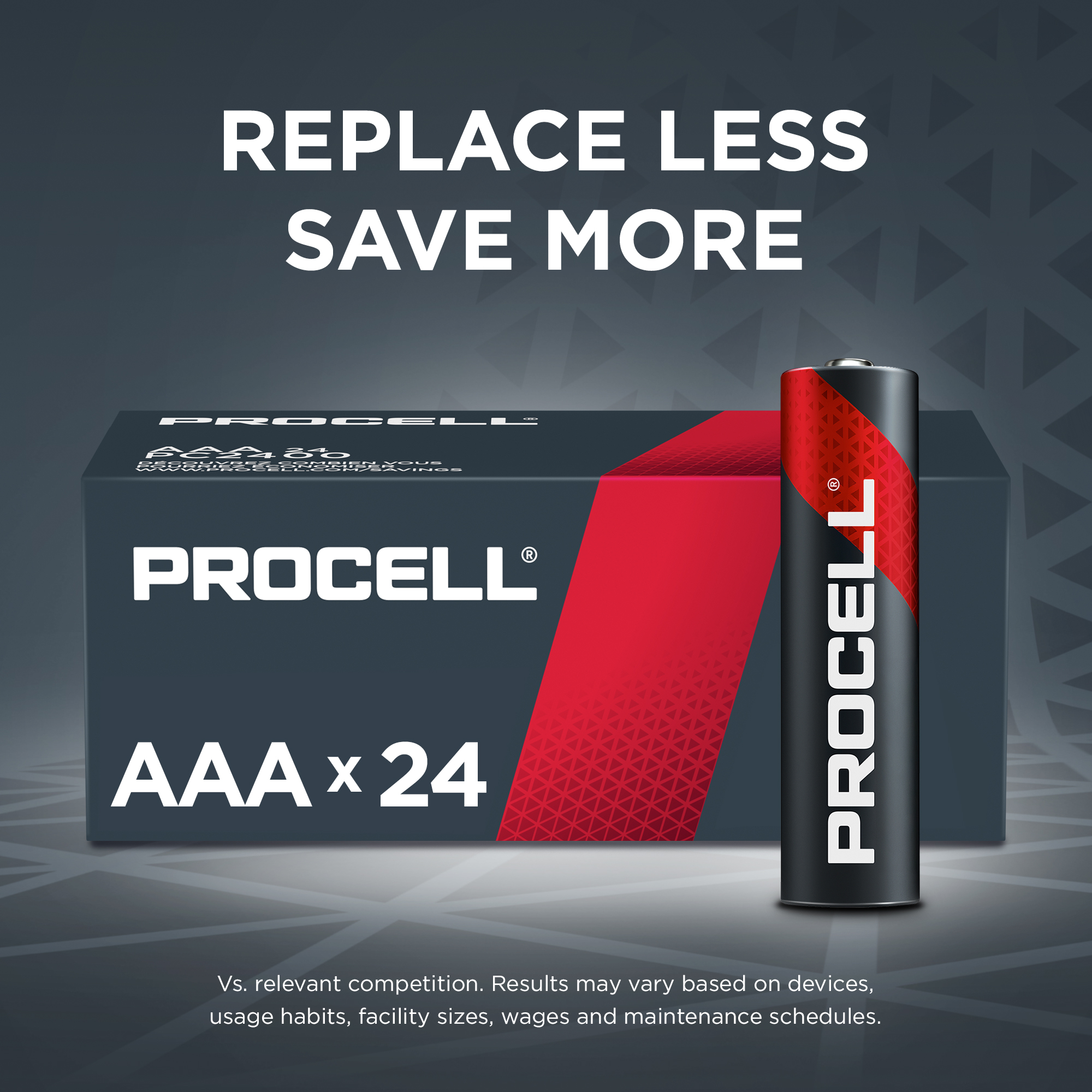
Duracell Procell AAA (24-Pack)
The professional line: PC2400 cells individually date-coded for stock rotation, rated from -4°F to 129°F, and packaged in a 24-count box aimed at facilities and field teams.
- 1.5V alkaline, model PC2400
- Individually date-coded cells
- Rated for -4°F to 129°F operation
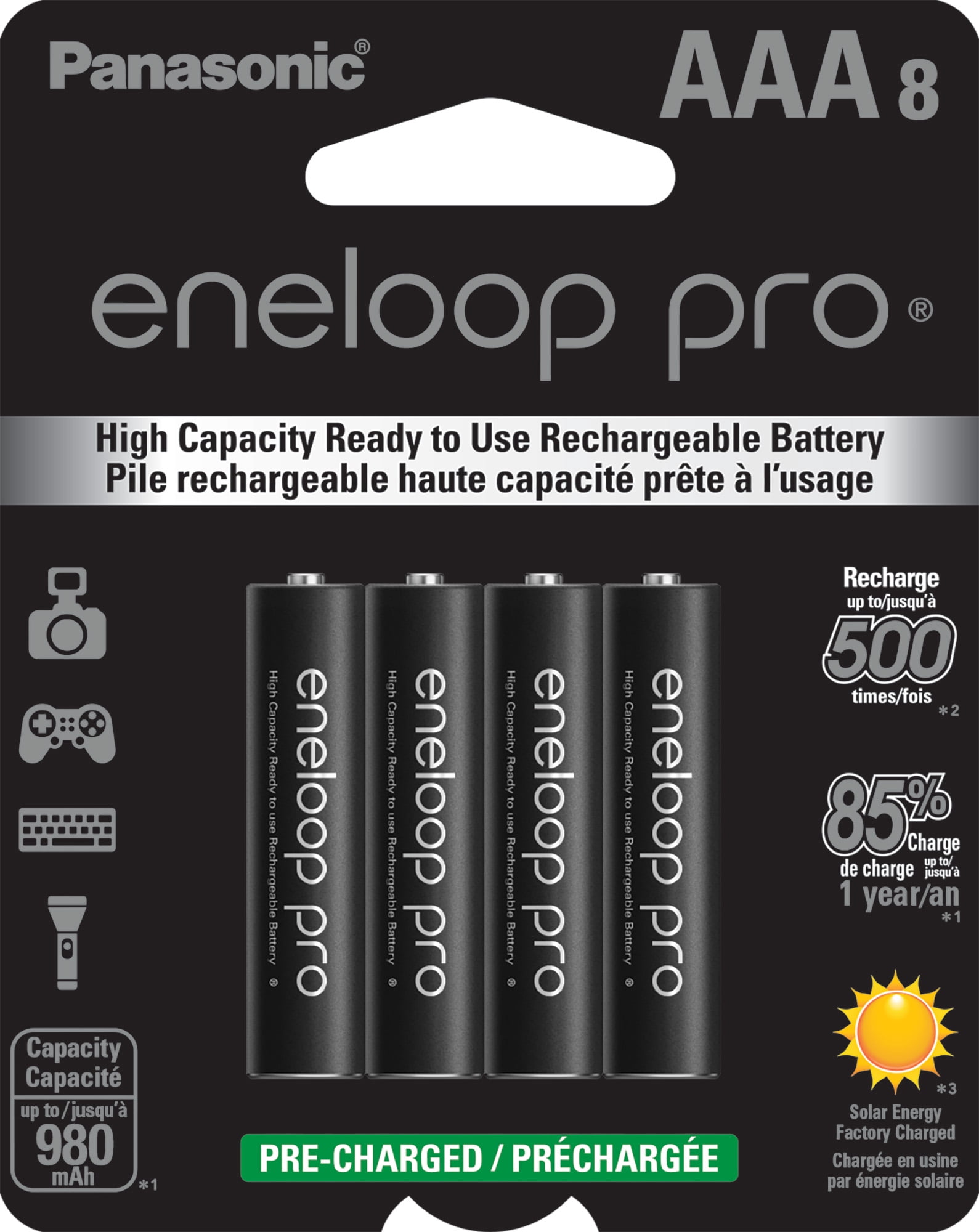
Panasonic eneloop pro AAA (8-Pack)
The high-capacity rechargeable: 980 mAh typical (930 minimum) per cell, trading cycle count for runtime with up to 500 recharges and 85% charge retained after one year stored per the listing.
- 1.2V NiMH, 980 mAh typical / 930 minimum
- Up to 500 recharge cycles per listing
- Holds up to 85% charge after 1 year stored
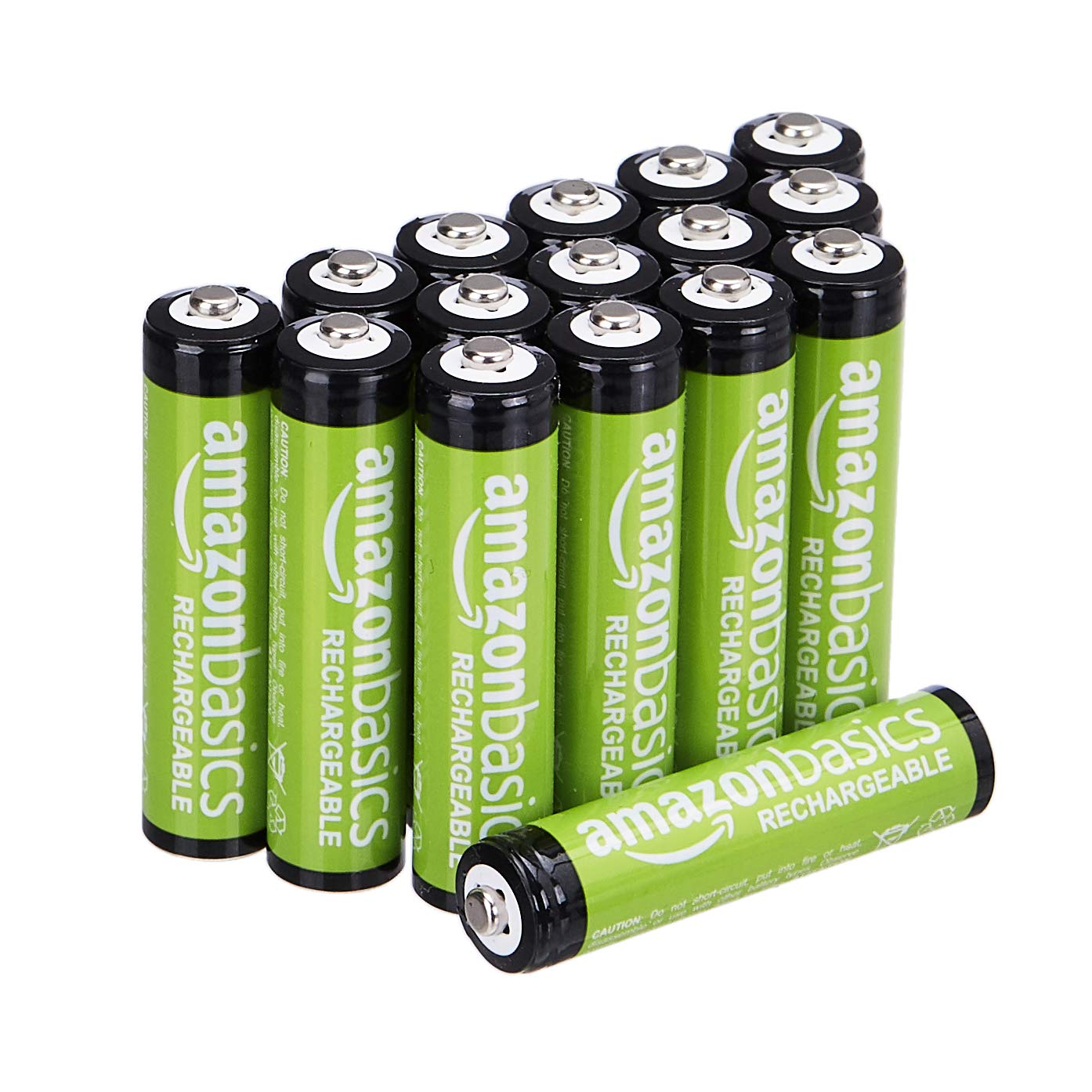
Amazon Basics Rechargeable AAA (16-Pack)
The high-count rechargeable: sixteen 1.2V NiMH cells at 800 mAh, pre-charged out of the box, rated for up to 1,000 recharges and 80% capacity retention over 24 months per the listing.
- 1.2V NiMH, 800 mAh, 16 per pack
- Up to 1,000 recharges per listing
- Maintains 80% capacity for 24 months
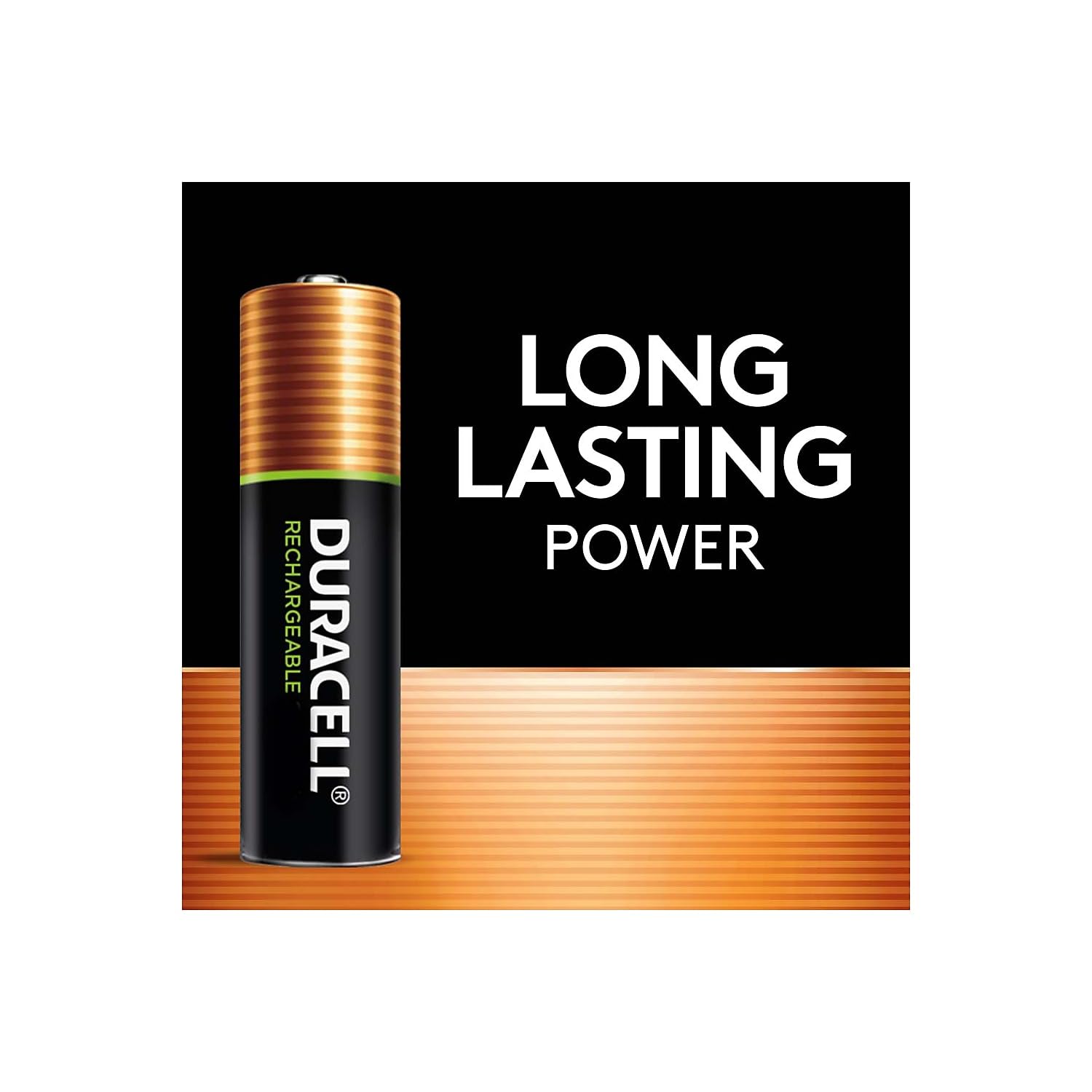
Duracell Rechargeable AAA (4-Pack)
The small-batch rechargeable: a 4-count of 700 mAh NiMH cells holding a charge up to one year in the drawer, with the brand guaranteeing them for 10 years or 400 recharges, whichever comes first.
- 1.2V NiMH, 700 mAh, 4 per pack
- Up to 400 recharges per listing
- Brand guarantee: 10 years or 400 recharges, whichever comes first
Storage Habits That Protect Any Cell
However long the guarantee, storage life assumes a cool, dry drawer at roughly room temperature. Heat is the enemy: a glovebox in summer or a windowsill above a radiator shortens the life of alkaline and lithium cells alike, and loose cells rattling against keys or coins can short and leak. Keep spares in their original pack or a plastic case, terminals apart.
Rechargeables add one habit of their own. NiMH cells are happiest cycled regularly rather than left drained for months, and a smart charger that stops at full is gentler than an overnight timer plug. The pre-charged kind in this lineup arrive ready to use, so the first cycle starts the day they land.
When a disposable finally dies, most curbside programs will not take it, but big-box electronics and hardware stores run free battery drop bins in much of the country, and the same bins accept exhausted rechargeables.
Two habits matter more than any guarantee. Never mix old and new cells, or alkaline and rechargeable, in the same device: the weaker cell drains the stronger one and is the one most likely to leak. And when a device sits unused for months, pull the batteries out entirely, since a forgotten cell is how corroded battery compartments happen.
The Lineup at a Glance
Use the table to compare chemistry, pack size and storage claims side by side before picking a card to open.
| Battery | Chemistry | Pack | Storage or retention claim | Listing standout |
|---|---|---|---|---|
| Energizer MAX AAA | Alkaline | 24 | Up to 15 years stored | Enhanced Energy design |
| HDX Alkaline AAA | Alkaline | 60 | Up to 10 years stored | Stainless steel cover |
| Great Value Alkaline AAA | Alkaline | 48 | Not stated | Store-brand bulk box |
| Duracell Coppertop AAA | Alkaline | 24 | 12 years guaranteed | Power Boost Ingredients |
| Energizer Ultimate Lithium | Lithium | 8 | Up to 25 years stored | -40°F to 140°F rated |
| Amazon Basics Alkaline | Alkaline | 36 | 10-year shelf life | Frustration-free pack |
| Panasonic eneloop | NiMH 850 mAh | 12 | 70% after 10 years stored | 2,100 cycles rated |
| Duracell Optimum | Alkaline | 12 | 12 years guaranteed | Resealable slider pack |
| EBL 1100mAh | NiMH 1,100 mAh | 10 | 80% after 3 years idle | Five color-coded pairs |
| Rayovac High Energy | Alkaline | 30 | Up to 10 years stored | Made in the USA |
| ACDelco Super Alkaline | Alkaline | 48 | 10-year shelf life | Reclosable bulk box |
| Duracell Procell | Alkaline | 24 | Not stated | Date-coded cells |
| Panasonic eneloop pro | NiMH 980 mAh | 8 | 85% after 1 year stored | High-capacity cell |
| Amazon Basics Rechargeable | NiMH 800 mAh | 16 | 80% capacity for 24 months | 1,000 cycles rated |
| Duracell Rechargeable | NiMH 700 mAh | 4 | Charge holds up to 1 year | 400 cycles rated |
The Bottom Line
No single AAA wins every drawer, and the lineup makes that plain. For a household that just wants remotes and toys covered for years, the bulk alkaline boxes do the job at the lowest cost per cell. For an emergency kit, a car glovebox or anything that lives outdoors through winter, the lithium pack's storage and temperature ratings are the reason it exists. And for the devices that eat batteries weekly, a rechargeable set changes the economics entirely: the standard-capacity cells stretch to thousands of cycles, while the high-capacity versions buy longer runtime at fewer recharges.
The practical move is to split the drawer: one bulk alkaline box for the low-drain sprawl, lithium cells reserved for the cold or the long wait, and a rechargeable rotation for the two or three devices you feed constantly. Match the chemistry to the device and any of these 15 listings will do exactly what its label says.
The responses below are not provided, commissioned, reviewed, approved, or otherwise endorsed by any financial entity or advertiser. It is not the advertiser’s responsibility to ensure all posts and/or questions are answered.